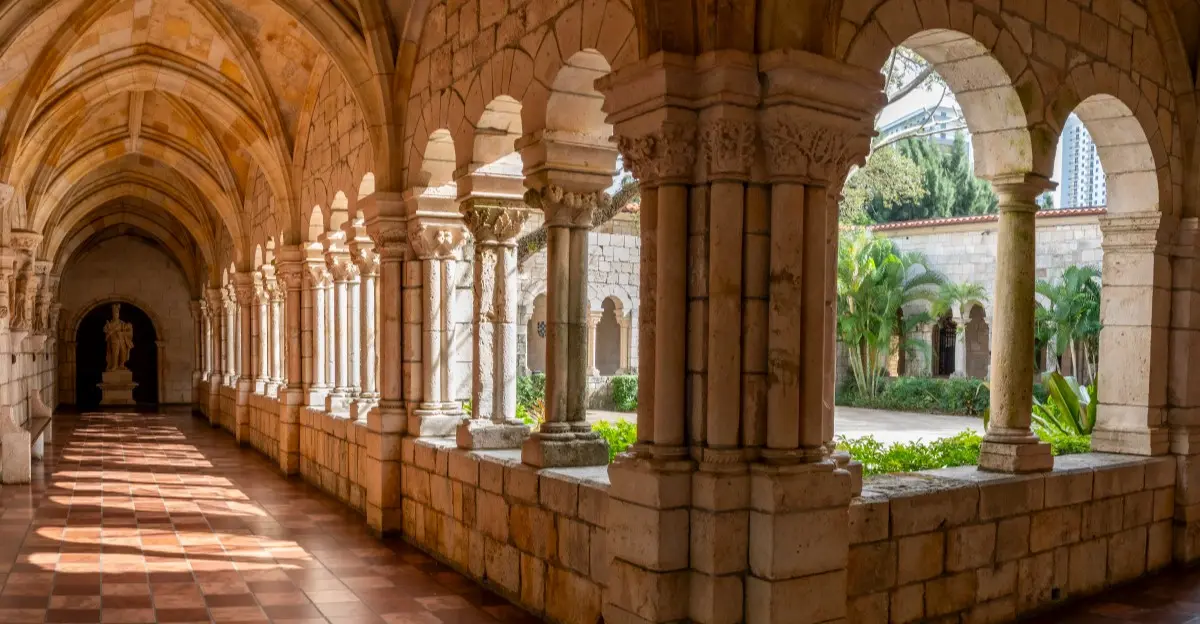
A turn off a busy South Florida road can lead somewhere that feels centuries away. Behind the gates of The Ancient Spanish Monastery in North Miami Beach, weathered stone arches, quiet cloisters, and leafy gardens create an unexpected scene at 16711 W Dixie Hwy.
The monastery contains pieces of a Spanish religious complex built centuries ago, later brought to the United States and carefully reconstructed here.
Walking through the grounds, the contrast is striking: palm trees and Florida sunshine frame stonework shaped by a very different time and place. The chapel adds another layer of quiet, while the enclosed courtyards invite visitors to slow down and notice details in the masonry, gardens, and architecture.
It is the sort of destination that can change the feel of an ordinary afternoon, revealing a remarkable piece of history where few might expect it. There is much more to notice once you step inside the gates.
Medieval Stones With a Surprisingly Modern Address
Imagine finding medieval Spain tucked behind the palms of South Florida. That unexpected contrast is the first reason to visit, but the story becomes even better when you learn that the old stonework is not simply a modern imitation.
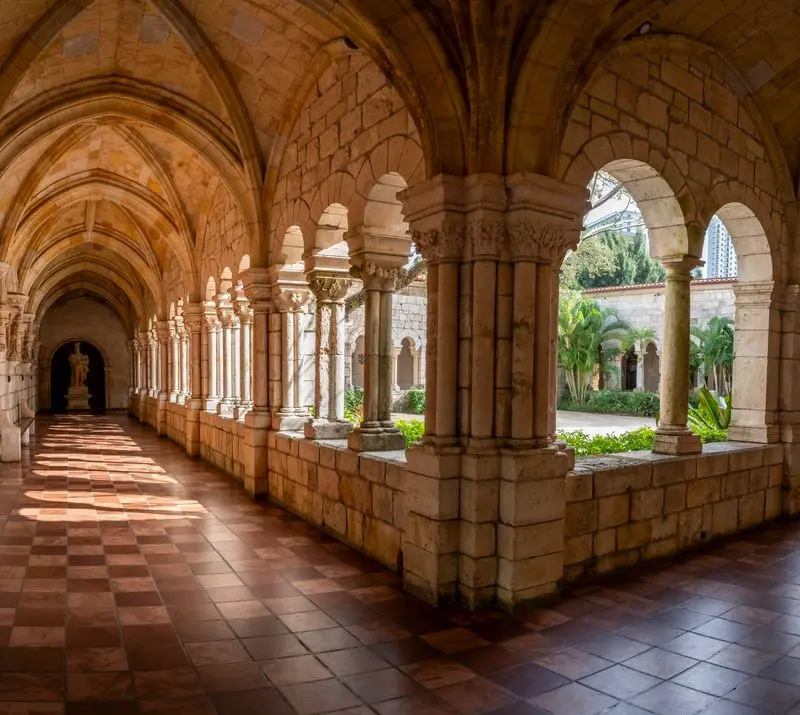
The Ancient Spanish Monastery preserves reconstructed portions of a monastery originally built in Sacramenia, Spain, during the twelfth century. Its cloisters traveled across the Atlantic long after their original religious community had changed, giving these stones a second life in a very different setting.
Look closely at the weathered surfaces instead of rushing straight toward the prettiest arch. Small changes in color and texture help you appreciate the age of the material, even though its present arrangement belongs to a later rebuilding project.
Keep one distinction in mind: this is relocated Spanish architecture, not a monastery built in medieval Florida. That simple fact makes the visit more interesting, because you are seeing how a historic place can survive removal, travel, and reconstruction while still carrying traces of its distant beginnings into a landscape its builders could never have pictured centuries ago.
An Ocean Crossing That Sounds Almost Impossible
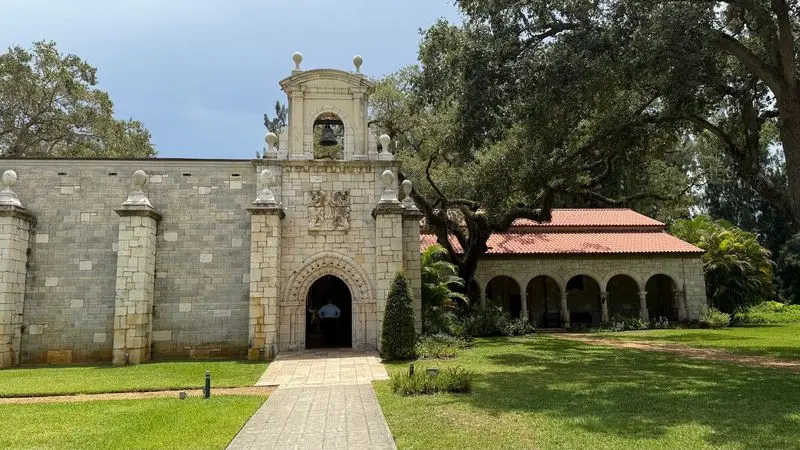
A building usually stays where its builders leave it. Here, the remarkable part is that pieces of an entire medieval complex were taken apart, packed for travel, and eventually fitted together again thousands of miles from home.
William Randolph Hearst purchased the monastery’s cloisters and outbuildings in the 1920s. The stonework was shipped to the United States, spent years in storage, and was later reconstructed in North Miami Beach during the 1950s.
At The Ancient Spanish Monastery, that journey gives every passage a different meaning. You are not only looking at old architecture; you are looking at the result of a huge effort to move and rebuild it, with all the planning and problems such a task could bring.
Before walking through the grounds, read the available history displays or ask staff where to learn more about the relocation. Children may enjoy imagining the stones as pieces of an enormous puzzle, while adults can consider the harder question of what changes when a historic building leaves its original landscape.
Either way, the story makes an ordinary sightseeing stop feel far more memorable.
Covered Walkways Made for Looking Slowly
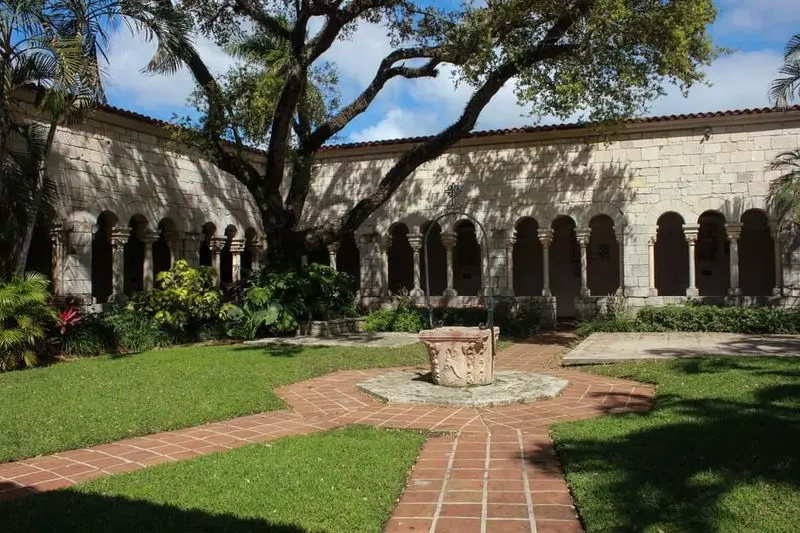
One arch invites you forward, then another pulls your eyes farther down the passage. The repeating shapes make a simple walk feel special, especially when sunlight falls beyond the shade and brightens the courtyard outside.
The cloisters are the architectural heart of The Ancient Spanish Monastery. A cloister is a covered walkway arranged around an open courtyard, a layout that once helped organize daily life within religious communities.
Rather than treating the passage as a shortcut, pause at several openings and notice how the view changes. From one angle, the stonework feels heavy and protective; from another, the arches create a surprisingly open frame around plants and sky.
Comfortable shoes are a sensible choice, and visitors should watch their footing around older surfaces. Keep your pace easy, leave room for others to pass, and avoid touching delicate details simply to get a closer look.
You do not need an architecture degree to enjoy the space: following the rhythm of the arches is enough to understand why these walkways remain such a memorable part of the property for visitors of nearly every age.
A Small Museum That Gives the Visit Meaning
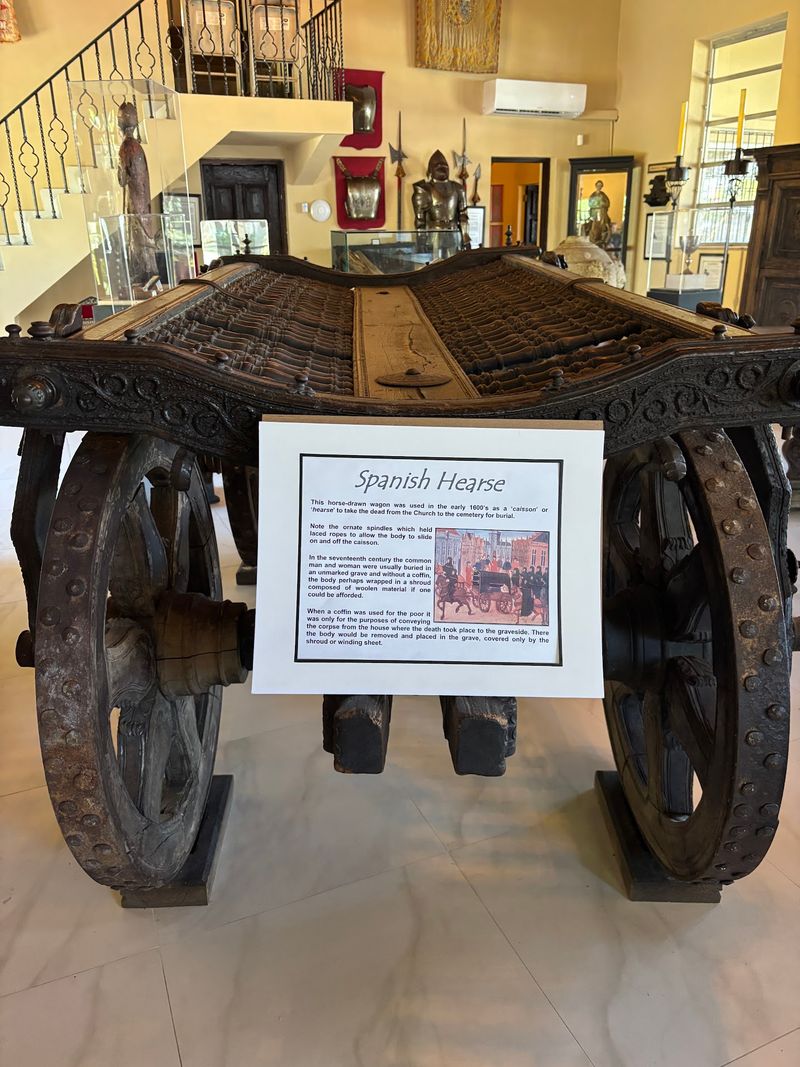
The best detail in a historic building is sometimes the one you would have missed without a little background. A few minutes spent reading can turn a pleasant collection of arches into a place with people, purpose, and a complicated past.
Visitors describe a small museum near the ticket area at The Ancient Spanish Monastery. Make that an early stop when it is available, rather than saving it for the moment when everyone is ready to leave.
Ask whether a brochure or other visitor guide is offered, since having the story in hand can help connect different parts of the property. Look for information about the Spanish origins and later reconstruction, then carry those ideas with you into the cloisters.
Families can keep the experience light by asking each person to remember one surprising fact. There is no need to read every line or turn the outing into a lesson; even a short pause adds depth.
Once you return outside, the building may feel less like a beautiful backdrop and more like a survivor whose long journey deserves a closer look today.
Tropical Gardens Around European Stone
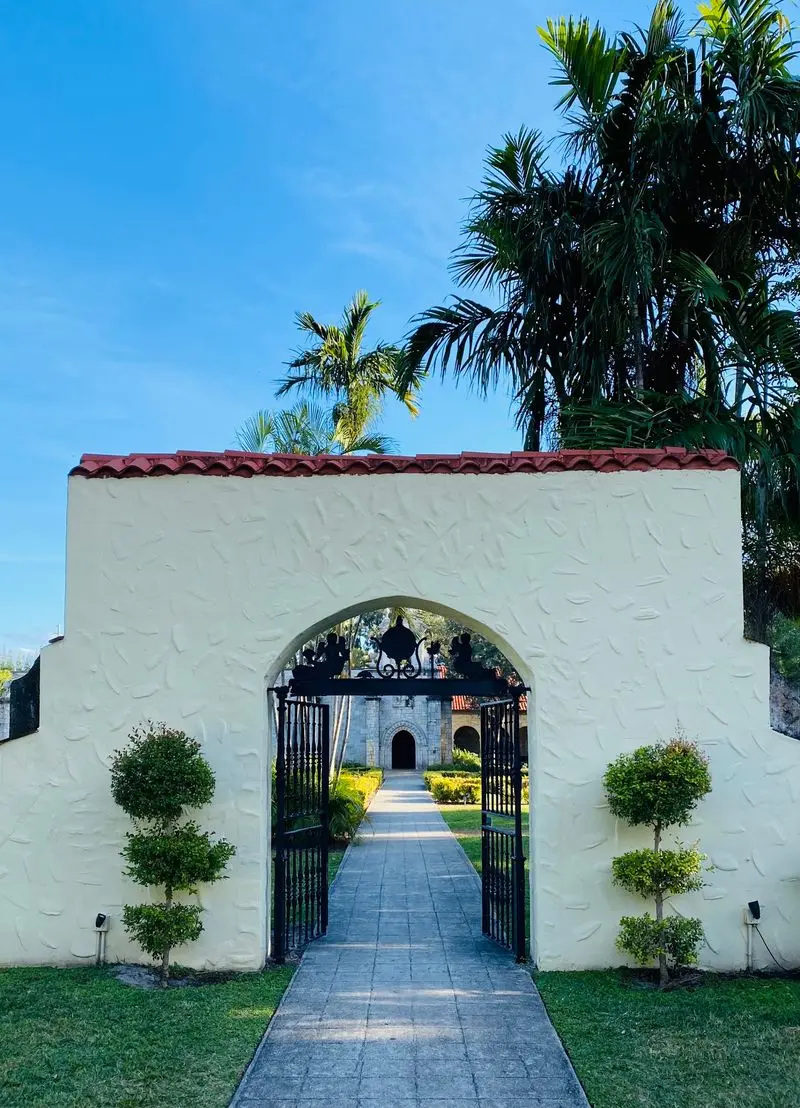
Palms beside medieval masonry create a pairing you will not soon forget. The stone belongs to a story that began in Europe, while the plants remind you that your feet are still firmly planted in South Florida.
Around The Ancient Spanish Monastery, the gardens offer a welcome change of pace after studying the building. Visitors often praise the maintained grounds, where greenery softens the edges of the architecture and gives the property its distinctive local setting.
Walk slowly enough to notice the contrast between rough walls and living leaves. Instead of searching only for a grand view, try looking at a single arch framed by foliage or a patch of sunlight resting against old stone.
Florida heat can make even a short outing tiring, so bring water and consider sun protection for the outdoor portions. Stay on permitted paths and leave planted areas undisturbed.
The grounds are not a giant park, and that smaller scale is part of their appeal: you can enjoy a meaningful garden stroll without planning a full day around it or feeling pressured to cover a long route.
A Chapel That Still Serves a Living Community
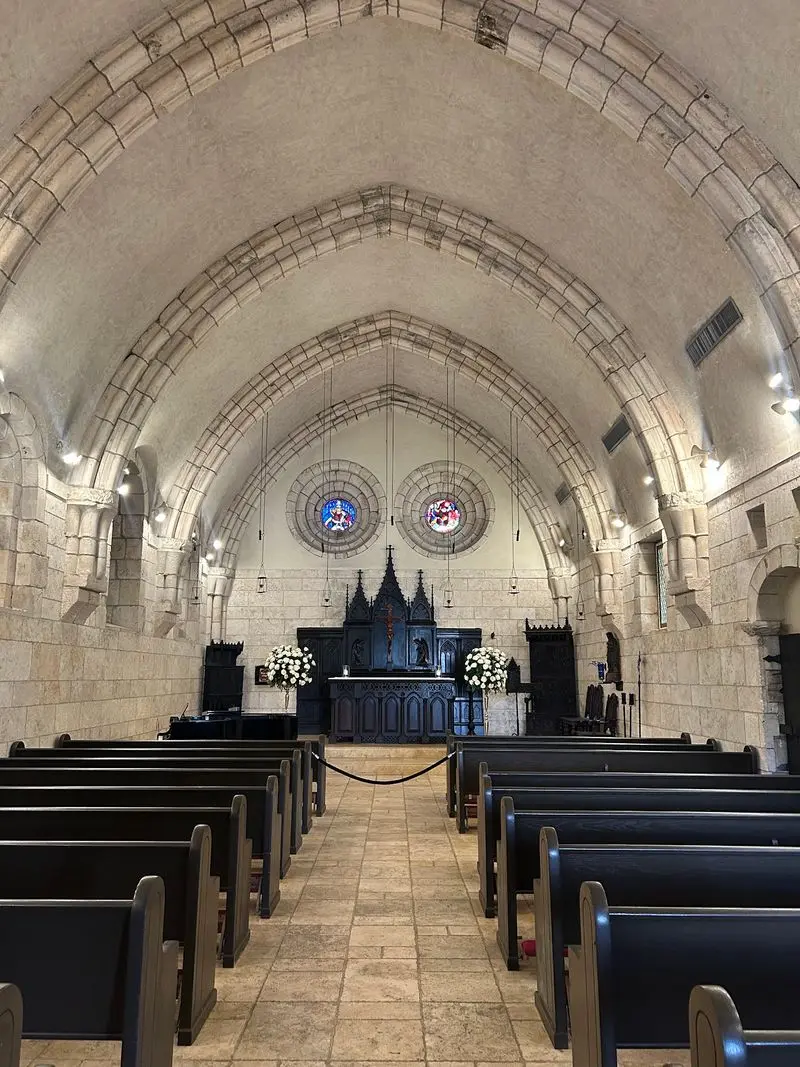
A quiet room can change the mood of an entire outing. After the brighter gardens and open passages, the chapel invites a different kind of attention, one focused less on collecting sights and more on simply being present.
The Ancient Spanish Monastery is not only a historic attraction. The site is also home to an active Episcopal congregation, so religious life remains part of the property’s purpose rather than just a subject from its past.
If the chapel is open during your visit, enter respectfully and keep voices low. Look around without interrupting anyone who may be praying, and ask before taking photographs if the rules are unclear.
Travelers of any faith, or none, can appreciate the room’s atmosphere while remembering that it has meaning beyond tourism. Worship times and sightseeing hours are not necessarily the same, so check current information if attending a service is your goal.
For a casual visit, let the chapel be a brief pause instead of another box to check. A little consideration helps preserve the experience for both visitors and the people who worship here regularly today.
Photographs With More Than a Pretty Background
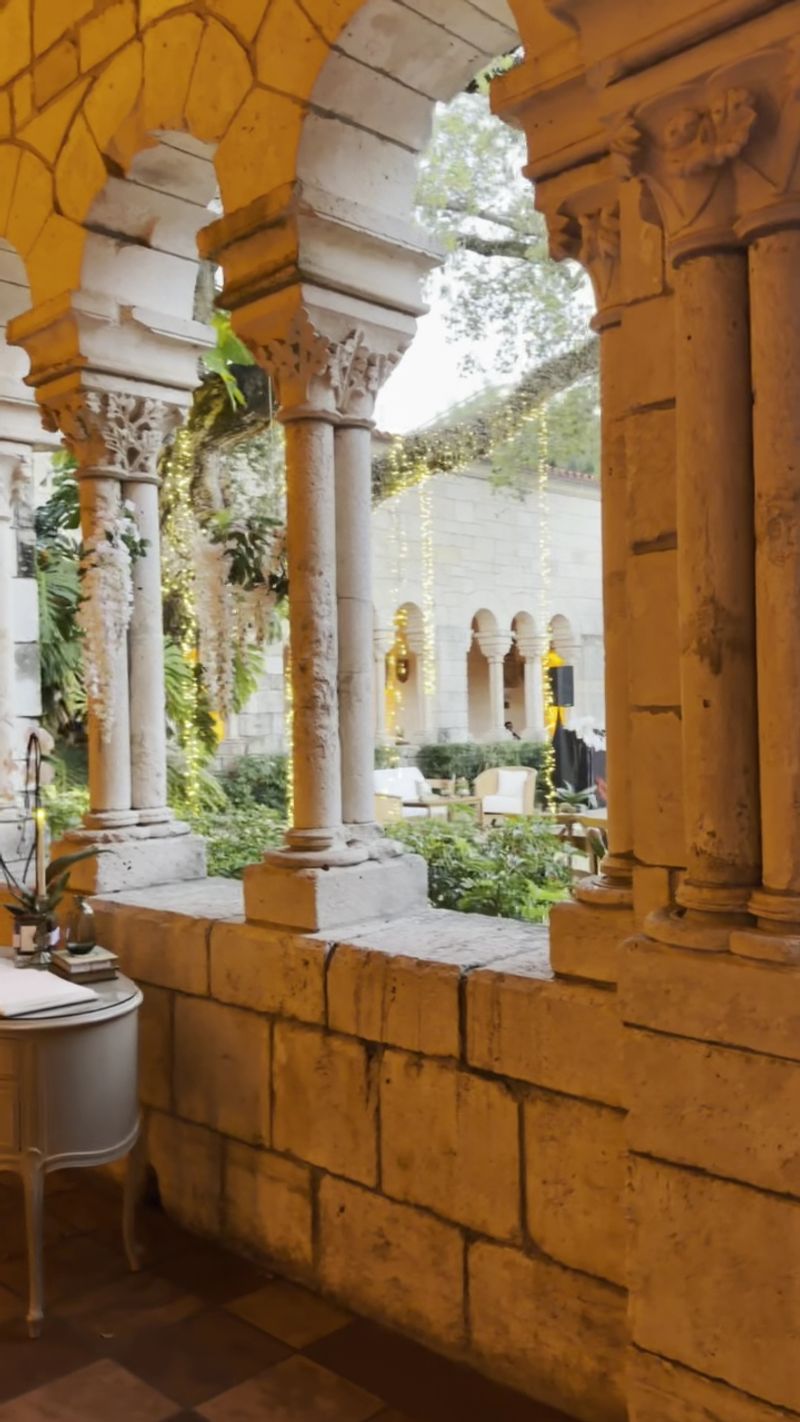
Your camera may come out before you have finished your first lap. Repeated arches, worn stone, and greenery offer plenty to photograph, but the most satisfying image often comes from waiting rather than taking dozens of quick shots.
At The Ancient Spanish Monastery, try framing a courtyard view through an arch or focusing on the texture of a wall. Both approaches show something specific about the property instead of producing another general picture of an old building.
Notice where sunlight meets shade, and adjust your position before assuming you need better equipment. A phone can capture strong compositions here, especially when you keep the frame simple and avoid crowding it with unrelated details.
Professional sessions, engagement portraits, and other planned photography may involve separate rules or fees, so ask the venue before arranging one. Ordinary visitors should also expect to share space with photographers and event guests.
Do not block walkways or climb onto historic features for a shot. Giving people room and protecting the stonework makes the visit better for everyone, while encouraging photographs that feel thoughtful rather than rushed or staged.
Celebrations Beneath Centuries-Old Arches
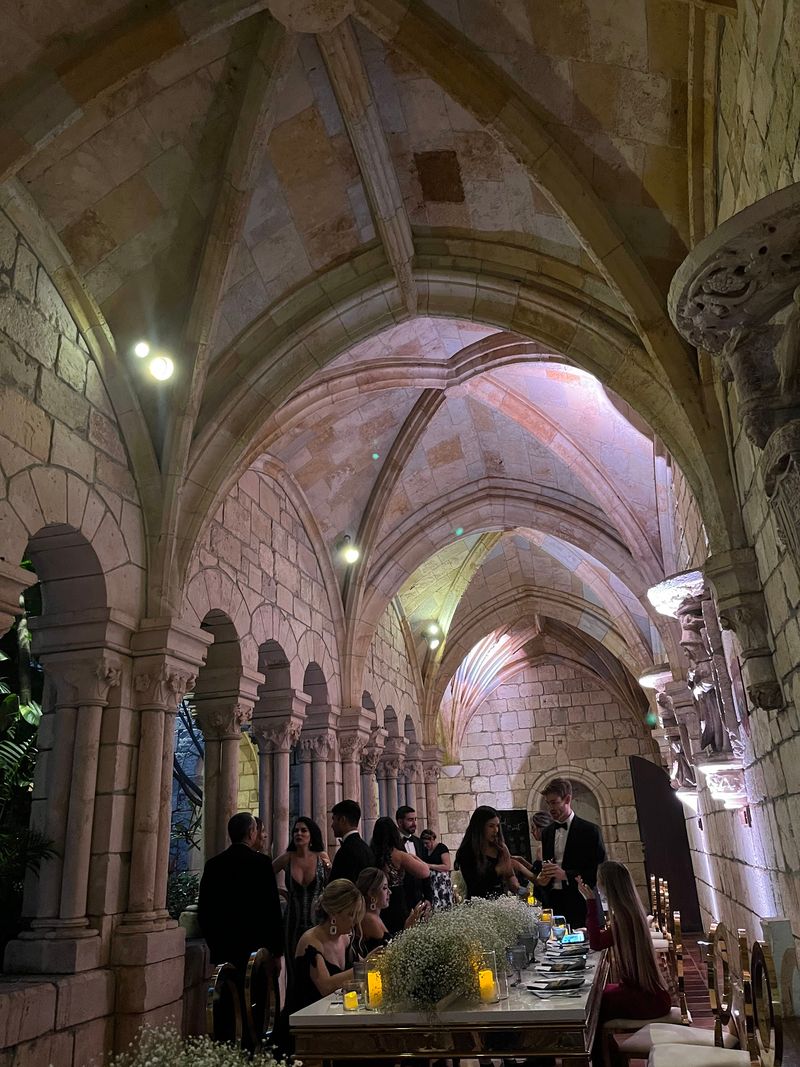
Some settings need very little decoration to feel special. With old stone overhead and greenery nearby, a celebration here can draw much of its character from the building itself rather than from an elaborate temporary backdrop.
The Ancient Spanish Monastery hosts weddings and other events, and visitors frequently mention its appeal as a wedding venue. The cloisters and grounds provide the kind of setting that can make even a small gathering feel distinct.
If you are considering an event, contact the venue directly about available spaces, capacity, pricing, and photography policies. Ask how weather plans work, which areas your booking includes, and whether public visitors may be present during any part of the day.
For travelers who are only sightseeing, the event calendar matters too. Private functions can affect access, and portrait sessions may bring extra activity to otherwise quiet corners.
Checking ahead helps match your expectations to the day you choose. Whether you arrive for a ceremony or a simple walk, remember that the property balances several roles: historic landmark, place of worship, and gathering space for some very personal moments.
A Little Planning Prevents a Locked-Gate Surprise
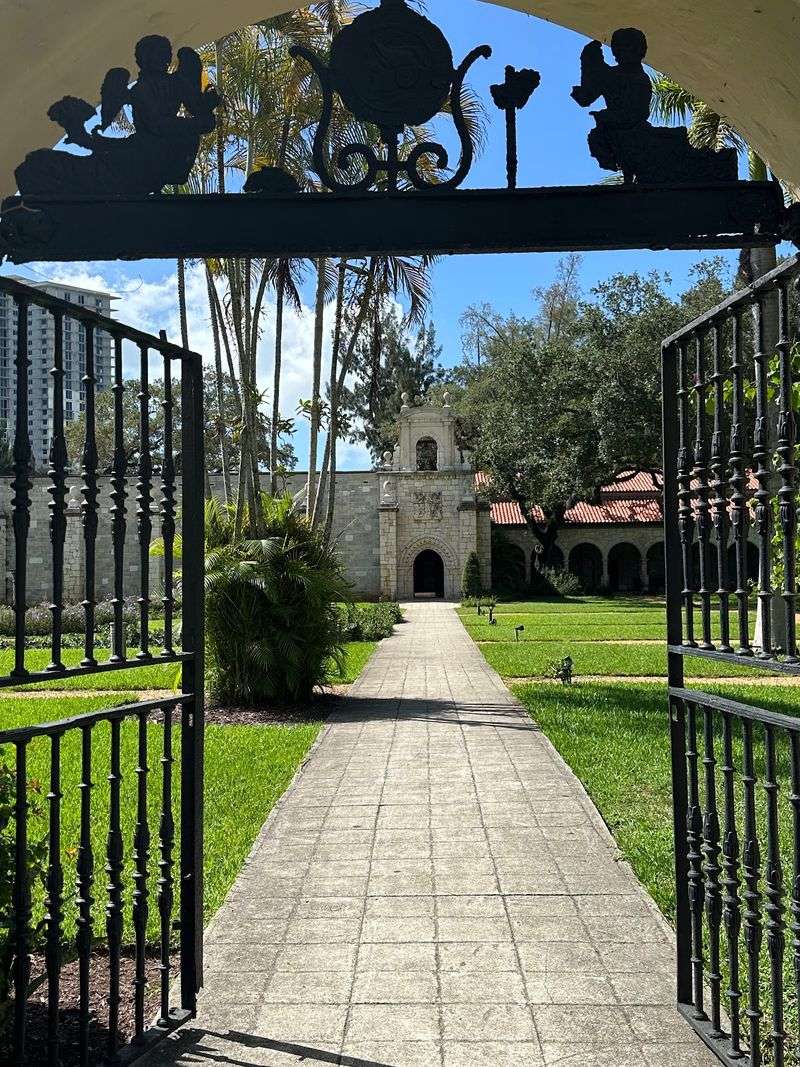
Nothing takes the shine off a promising outing faster than arriving when the gates are closed. A quick schedule check is especially useful here, because sightseeing hours are limited and the property also accommodates worship and private events.
The Ancient Spanish Monastery is located at 16711 W Dixie Hwy, North Miami Beach, FL 33160. The supplied schedule lists Wednesday through Saturday from 10 a.m. to 4 p.m., Sunday from 2 to 5 p.m., and closures on Monday and Tuesday.
Confirm those hours before traveling, since schedules and access can change. The official website is spanishmonastery.com, and the listed phone number is 305-945-1461; calling can also clarify admission prices, accessibility, and any event restrictions.
Recent visitor accounts mention ten dollar admission and convenient parking, but treat those details as reports rather than guaranteed current terms. Allow roughly an hour for a relaxed visit, with extra time if you enjoy reading displays or taking pictures.
Arriving with the practical questions settled gives you more freedom to enjoy the grounds instead of spending your visit sorting out details at the entrance with your group waiting nearby.
An Unhurried Escape Without Leaving the City
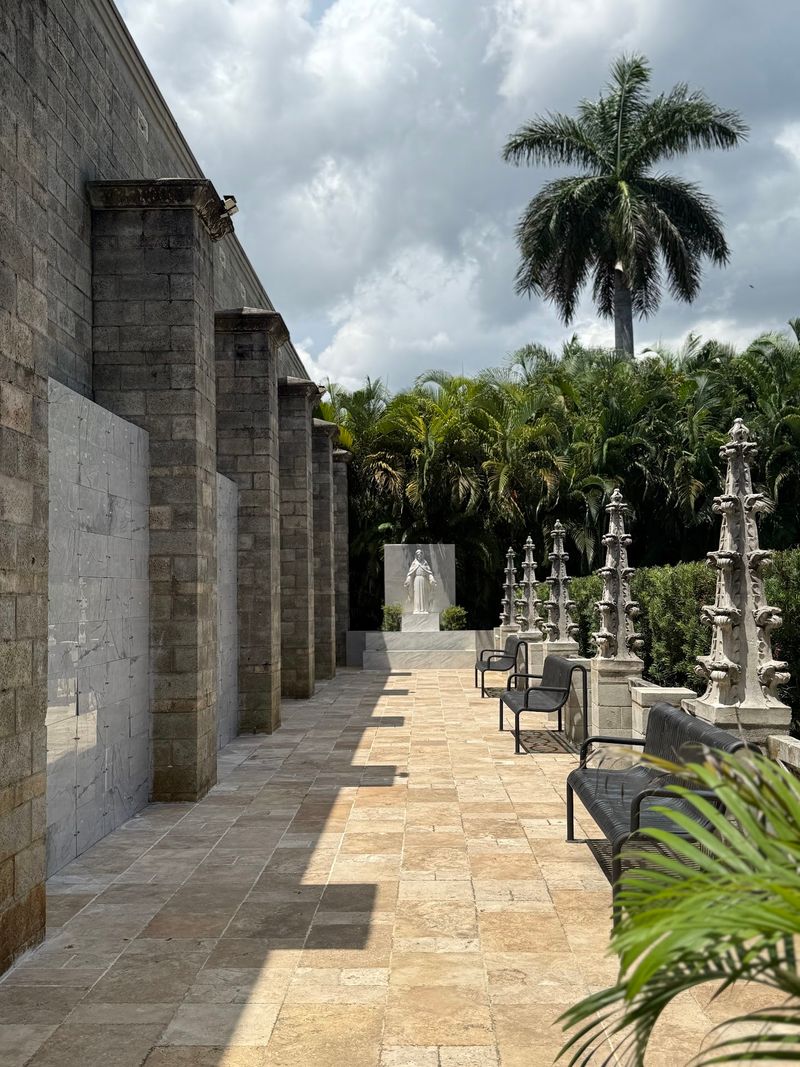
Not every memorable stop needs a packed schedule or a dramatic activity. Sometimes the best part of an afternoon is finding a place where you can walk a little slower and pay attention to what is directly around you.
That is a large part of the appeal of The Ancient Spanish Monastery. Its compact grounds, covered passages, and historic setting give visitors a different experience from the busy roads just outside the property.
Try putting your phone away after taking a few photographs, then make another short walk through the cloisters. Listen to the sounds around you, notice which views hold your attention, and allow time for a pause wherever visitor access permits.
The atmosphere will vary with events, services, and other guests, so silence is not something any visit can promise. Still, arriving without a long checklist leaves room for the place to make its own impression.
You might remember a particular arch, the garden’s colors, or the unlikely journey of the stones. Those small observations are often what turn a modest historic stop into a story you want to share later.