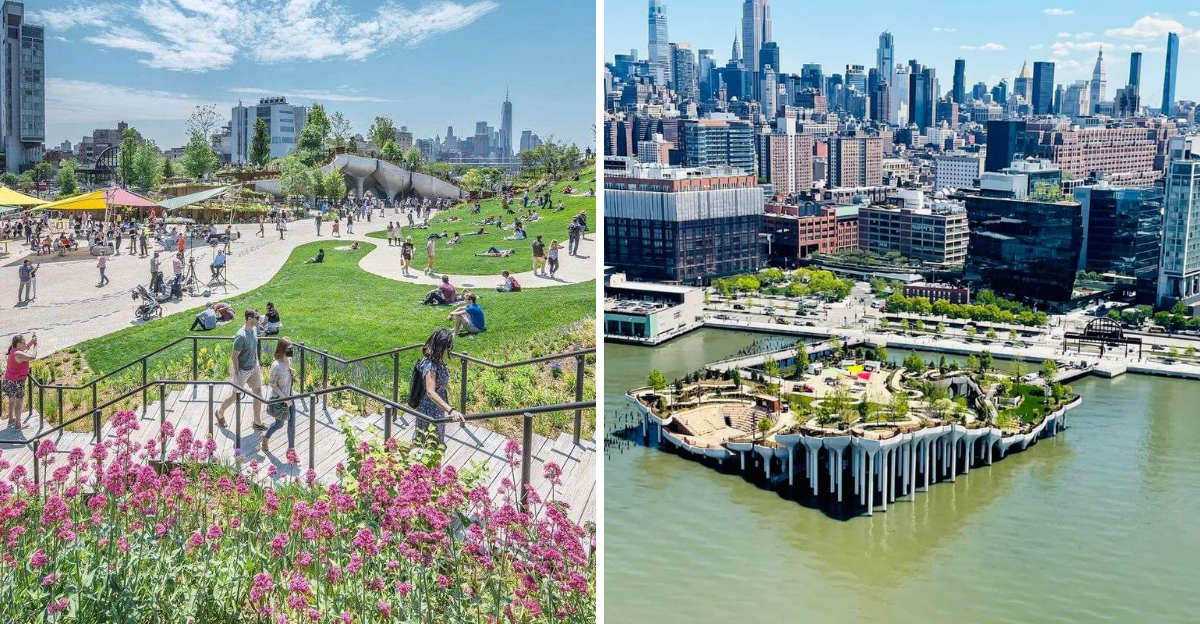
New York has a park that looks like it floated straight out of a dream.
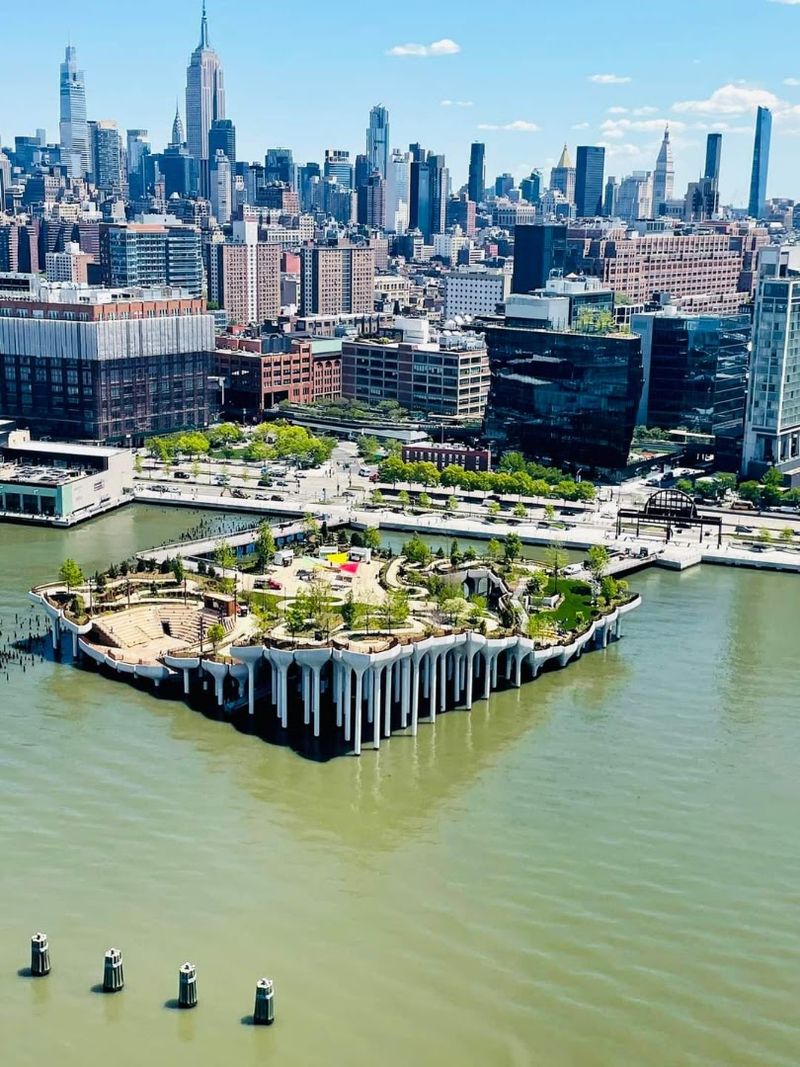
Rising above the Hudson River, Little Island sits on 132 enormous concrete columns shaped like giant tulips, creating a scene that feels part city park, part fantasy garden.
Opened in 2021 on the site of a former waterfront pier, this unusual destination gives visitors a completely different way to experience Manhattan’s riverfront. Winding paths climb through greenery, dramatic views open toward the Hudson, and every turn seems to reveal another surprising angle.
Then there are the performances, outdoor spaces, and elevated viewpoints that make this more than a quick photo stop. Little Island is wonderfully strange, wildly memorable, and unlike anything else in New York.
One visit is all it takes to understand why this floating park has become such a talked-about waterfront destination.
The First Look At Little Island Feels Almost Unreal
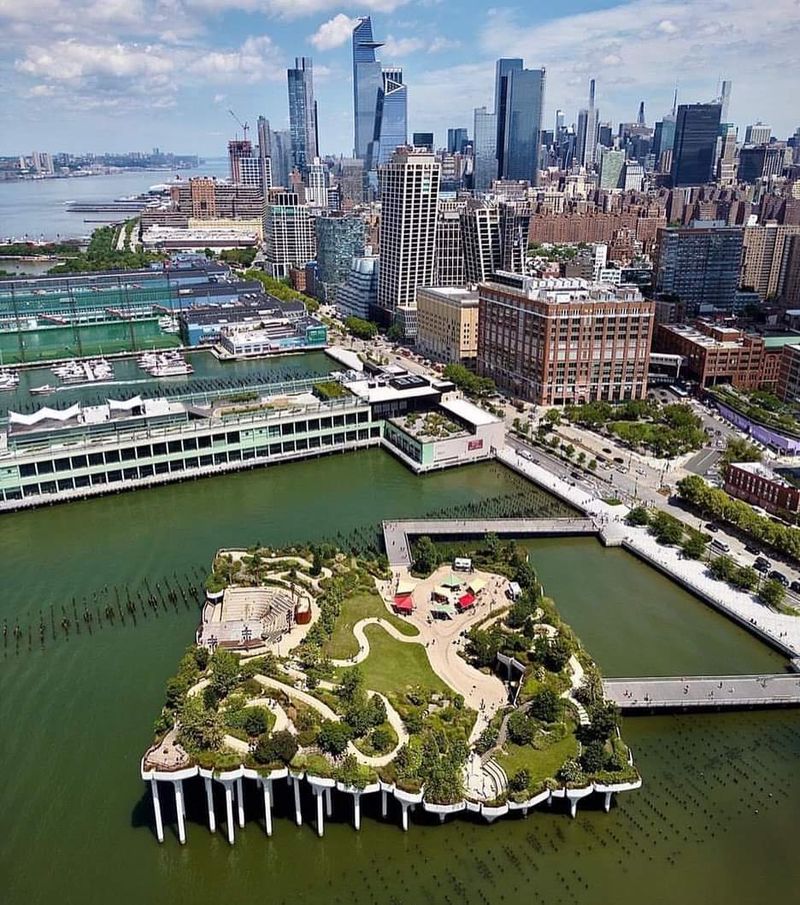
Walking toward the entrance, you might think your eyes are playing tricks on you. A massive green island appears to hover above the Hudson River, held up by what looks like a collection of enormous concrete mushrooms or flowers.
Nothing about this scene matches what most people expect from a city park. Where are the flat lawns and straight sidewalks?
Instead, this floating landscape curves and rises like a piece of art come to life.
The whole structure seems to defy gravity, making you wonder how something so heavy can balance on such unusual supports. Even before you step onto the park itself, the view from the waterfront pathway stops people in their tracks.
Kids often point and ask if it’s real, while adults pull out their cameras to capture something they’ve never seen before. That first impression never really goes away, even after multiple visits.
Every angle reveals another surprising detail about how this place was designed and built.
132 Giant Concrete Tulips Hold The Park Above The Water
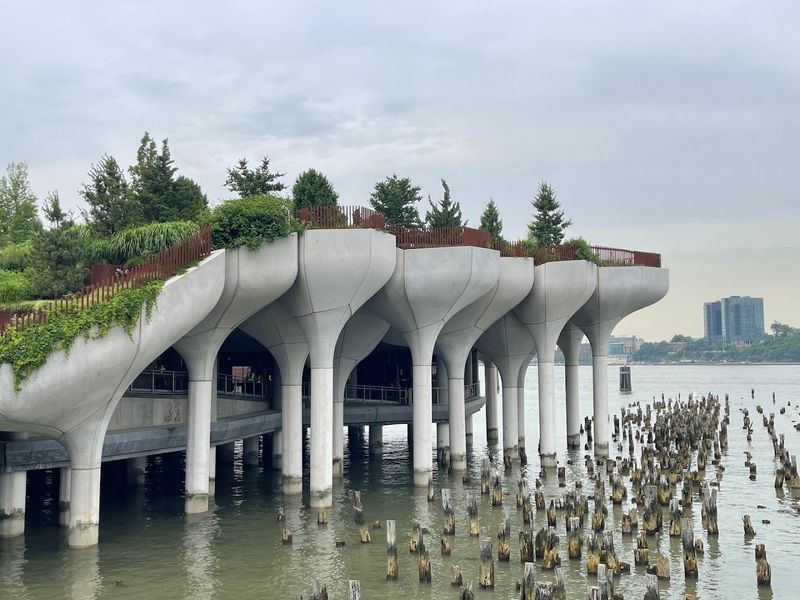
Engineers created something remarkable when they designed the foundation for Little Island. Each of the 132 concrete pots rises from the riverbed at a different height, ranging from about 15 feet to nearly 62 feet tall.
People often call them tulips because of their flared shape at the top, though they also resemble champagne glasses or mushroom caps. These aren’t just decorative—each one is a carefully engineered structure that carries specific loads.
The varying heights create the park’s signature rolling landscape above. Some columns hold more soil weight than others, and together they support the entire park’s plants, pathways, amphitheater, and thousands of daily visitors.
Walking beneath the park from the Hudson River Greenway gives you a whole different perspective. You can see how the concrete forest creates dramatic shadows and geometric patterns.
The design team made function look magical, turning what could have been ordinary support beams into sculptural art that people photograph constantly.
A Former Pier Was Reimagined Into An Entirely New Kind Of Public Space
Before Little Island existed, this spot on the Hudson River held a piece of New York history. Pier 54 once stood here, famous as the place where Titanic survivors arrived in 1912 and where the Lusitania departed before its sinking in 1915.
By the early 2000s, the pier had fallen into serious disrepair. Hurricane Sandy in 2012 damaged it even further, and the city faced tough questions about what to do with this crumbling waterfront space.
Rather than simply rebuilding another conventional pier, designers and philanthropists imagined something completely different. Construction began in 2016, and five years later, Little Island opened to the public as a brand-new type of urban park.
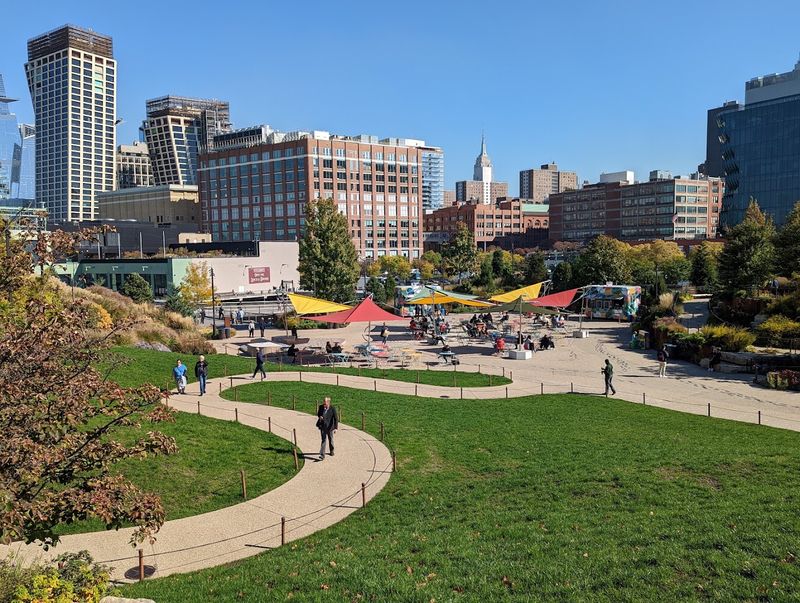
Some remnants of the old pier still poke through the water around Little Island, serving as reminders of the site’s past. The transformation shows how creative thinking can turn abandoned infrastructure into beloved public spaces that serve entirely new purposes for future generations.
The Landscape Rises And Falls Like A Tiny Natural World
Forget everything you know about walking across a typical flat pier. Little Island’s paths wind upward and downward through carefully designed hills, creating the feeling of hiking through a miniature mountain range.
As you climb toward the highest points, reaching about 62 feet above the river, the landscape opens up in unexpected ways. Then the path dips down into lower areas where the plantings create cozy, enclosed spaces that feel miles away from the busy city.
Designers intentionally built these elevation changes to make a relatively small space feel much larger and more varied. Your experience changes depending on whether you’re standing on a hilltop outlook or wandering through a valley path surrounded by tall grasses and flowering plants.
The undulating topography also serves practical purposes, creating natural amphitheater seating and gathering spaces. Children love running up and down the slopes, while visitors seeking quiet moments can find tucked-away spots.
This vertical variety makes repeated visits worthwhile since different paths reveal completely different perspectives each time.
More Than 100 Species Of Trees And Plants Make Every Visit Look Different
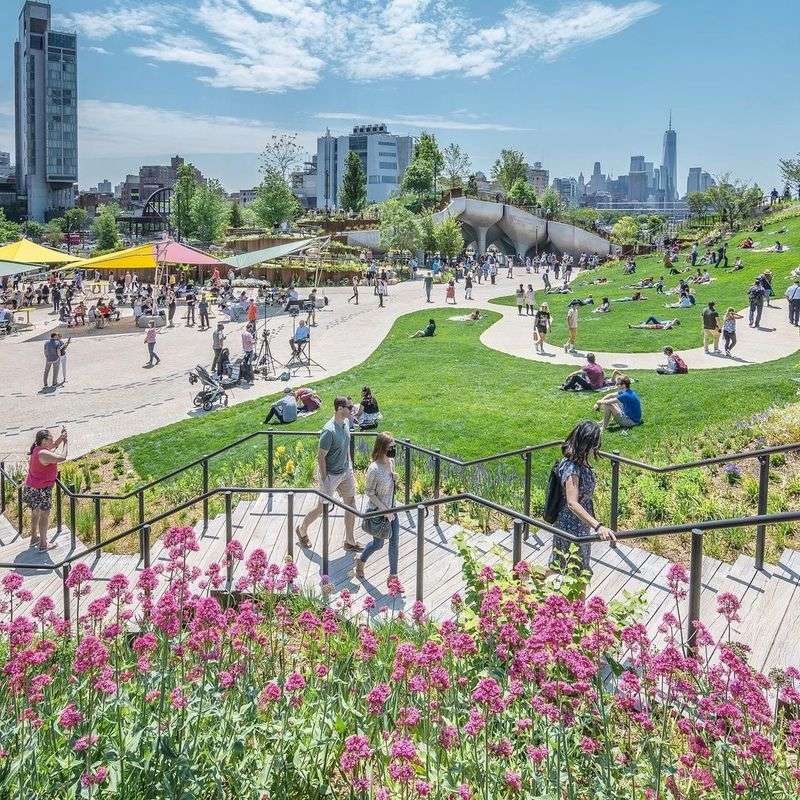
Horticulturists filled Little Island with an impressive collection of plants that transform throughout the calendar year. The park features over 100 species of trees, shrubs, perennials, grasses, and bulbs chosen to thrive in the challenging conditions of a structure surrounded by water.
Spring brings waves of tulips and flowering trees that paint the landscape in soft pastels. Summer shifts the palette to lush greens punctuated by bright blooms, while fall turns the foliage into warm oranges and reds.
Even winter has its charm, with structural grasses and evergreen plants creating texture against the river views. The diverse plantings also attract birds and butterflies, adding movement and life to the carefully designed gardens.
Plant experts selected species that could handle salt spray from the river, strong winds, and the unique growing conditions of elevated planters. Walking through the park in different seasons feels like visiting completely different places, making it worth returning throughout the year to see what’s currently blooming or changing color.
The Amph Turns A Waterfront View Into An Outdoor Theater Experience
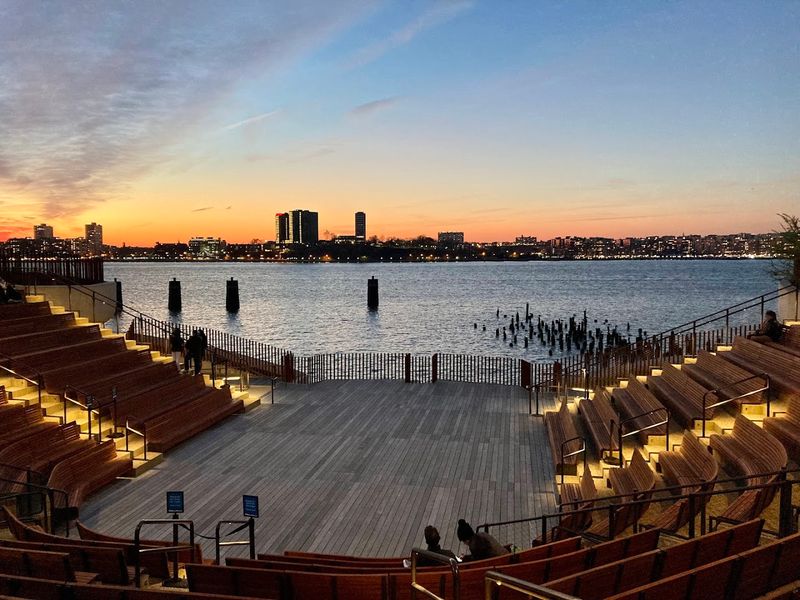
Most parks have benches where you might catch street performers, but Little Island built something far more ambitious. The Amph is a 687-seat amphitheater carved directly into the park’s landscape, where the sloping lawn serves as stadium-style seating.
During performances, the Hudson River and New Jersey shoreline become part of the show’s backdrop. Musicians, dancers, theater groups, and other artists perform on a stage that feels both intimate and grand at the same time.
The venue hosts everything from concerts and comedy shows to Shakespeare productions and dance performances. Many events are free, though some require advance reservations or tickets depending on the performance.
What makes The Amph special isn’t just the quality of performances but the complete experience of watching art unfold with sunset views and passing boats behind the stage. The outdoor setting means weather can affect shows, but when conditions cooperate, there’s hardly a more memorable place to see live entertainment in New York City.
The Lookout Points Deliver Big Manhattan And Hudson River Views
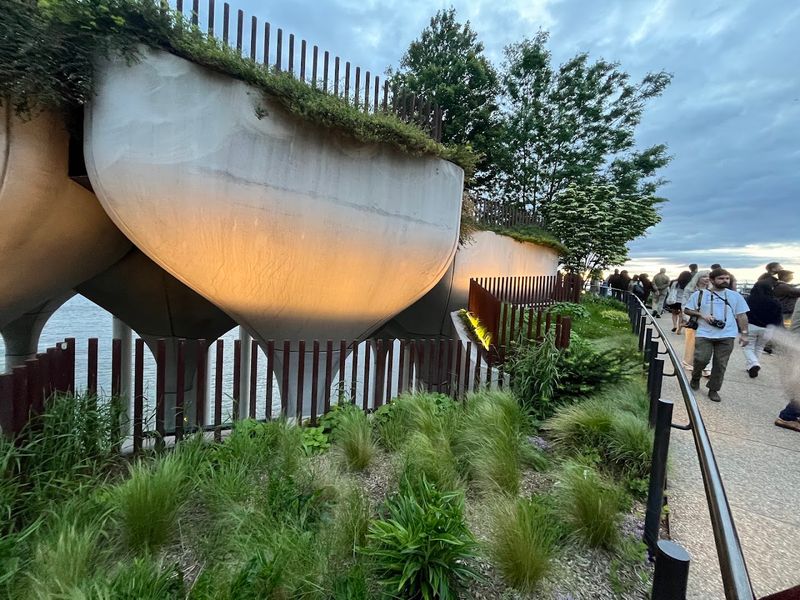
Because Little Island sits above the water on varied-height columns, it creates viewing platforms you won’t find on a regular riverside path. Several designated lookout points take advantage of the park’s elevation to frame spectacular scenes of the surrounding city and waterway.
From the highest spots, you can see up and down the Hudson River, across to New Jersey, and toward the iconic Manhattan skyline. Photographers love golden hour here when the setting sun paints everything in warm light.
The views change as you move through the park, with each lookout offering something slightly different. Some face north toward Midtown’s towers, others look south toward downtown, and western-facing spots give you unobstructed river vistas.
On clear days, you can watch boats passing by below while planes approach nearby airports in the distance. The elevated perspective makes familiar city views feel fresh and new.
Many visitors find themselves lingering at these overlooks far longer than planned, mesmerized by the combination of natural water views and urban architecture framed together.
Little Island Blends Nature, Architecture, And Free Public Programming
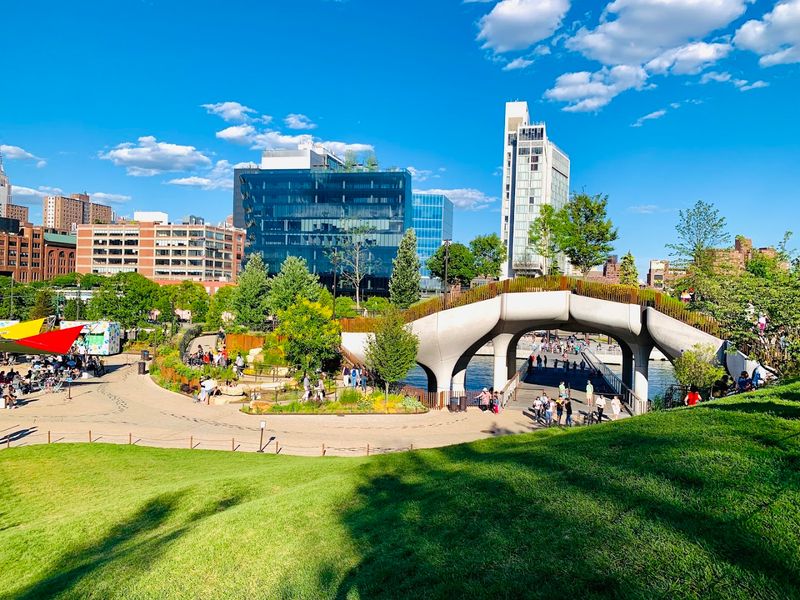
What started as a visionary design concept has become a multi-layered destination that serves many purposes. Beyond the striking architecture and beautiful gardens, Little Island functions as a true public park with programming designed for diverse audiences.
General admission is completely free, meaning anyone can walk on and enjoy the space without tickets or reservations except during certain special events. Families picnic on the lawns, students study in quiet corners, tourists photograph the views, and locals stop by during lunch breaks.
The park offers free performances, educational workshops, fitness classes, art activities for kids, and seasonal celebrations throughout the year. There’s even a concession stand serving snacks and drinks for visitors who want to stay longer.
This combination of elements—architectural wonder, botanical garden, performance venue, and community gathering place—makes Little Island more than the sum of its parts. The fact that most experiences here cost nothing removes barriers, letting people from all backgrounds discover this extraordinary space and return as often as they wish to explore different aspects of what the park offers.
Visitor Info And Tips For Planning A Little Island Visit
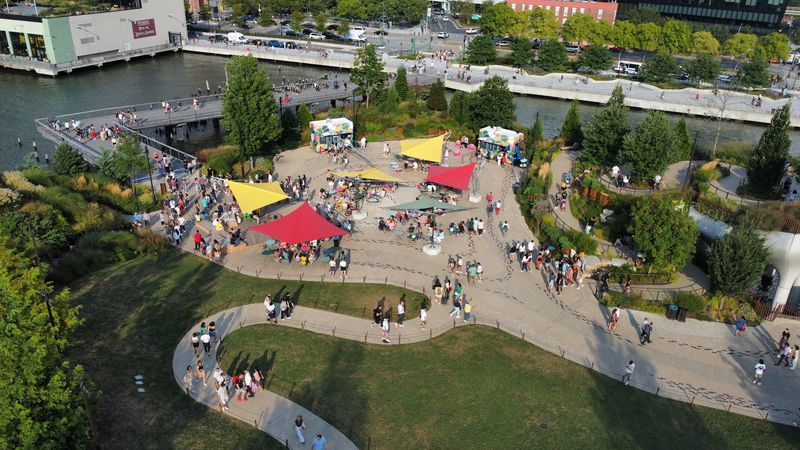
Planning your visit requires knowing a few key details. Little Island is located at Pier 55, accessible from the Hudson River Greenway between West 13th and 14th Streets in Manhattan’s Chelsea neighborhood.
The park opens daily, though closing times vary by season—generally staying open later during summer months and closing earlier in winter. Checking the official website before you go is smart since weather can occasionally affect access and special events might require advance registration.
There’s no dedicated parking lot, so public transportation works best. Several subway lines stop within walking distance, and the park is easily reachable by bus or bike along the Hudson River Greenway.
Little Island is fully ADA accessible, with ramps and elevators serving all levels.
Current rules prohibit alcohol, smoking, and dogs (except service animals), and some lawn areas may be closed for maintenance or events. Arriving early on weekends helps avoid the biggest crowds.
The park is particularly magical at sunset, though that’s also when it’s busiest. Weekday mornings often provide the most peaceful experience for those seeking quiet time in this remarkable floating garden.