
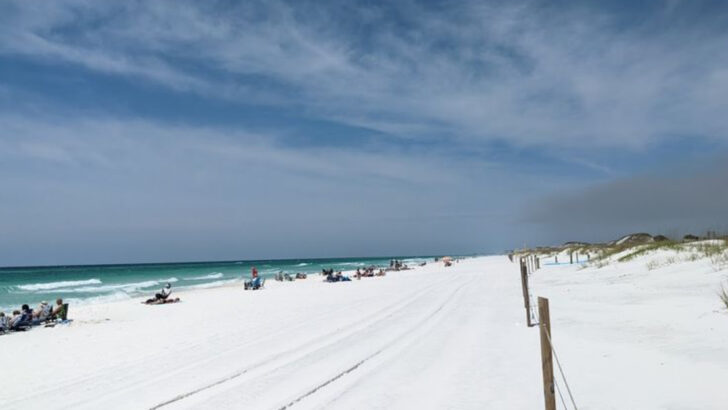
Florida’s brightest beaches are not scattered randomly – they follow a fascinating Gulf Coast story written in quartz, rivers, and time.
The whitest sand in the state comes from ancient Appalachian rock, ground down and carried south until it settled along some of America’s most dazzling shores.
Start in the Panhandle and the sand is almost blindingly white, then watch it slowly change as shell content increases farther south.
If you want the science, the scenery, and the best places to dig your toes into truly powdery sand, this lineup delivers.
Perdido Key Beach
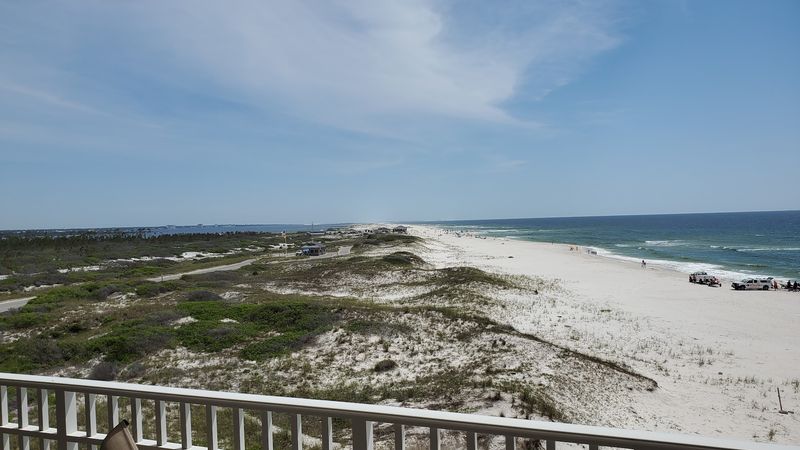
Perdido Key Beach feels like one of those places you almost want to keep secret.
Tucked into Florida’s far northwest corner, this narrow barrier island gives you that rare sense of seeing both Gulf and bay at once, with brilliant white sand stretching between them.
The sand here shares the same Appalachian quartz origin as the rest of the Emerald Coast, so it looks bright, clean, and strikingly pale against the water.
What makes Perdido Key especially appealing is how relaxed it feels compared with busier neighbors like Pensacola Beach or Destin.
You can actually hear the surf, watch shorebirds working the tideline, and enjoy long walks without feeling boxed in by crowds.
If you want a white-sand beach that still delivers natural beauty, soft footing, and that classic Panhandle glow, this is a fantastic place to start your Gulf Coast beach trip.
Pensacola Beach
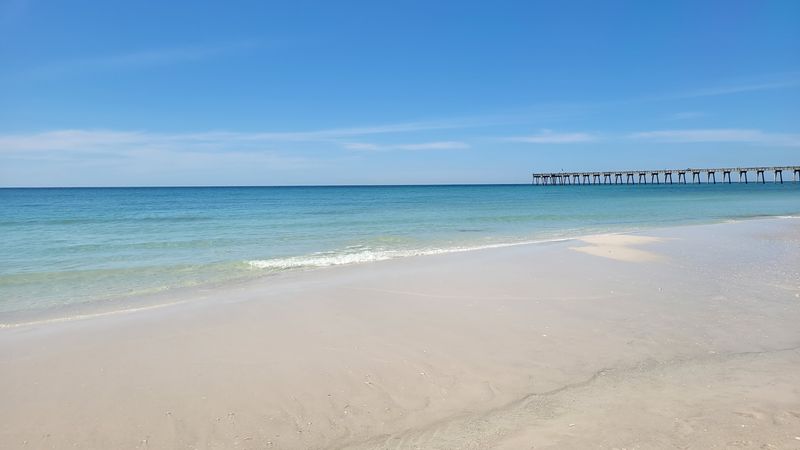
Pensacola Beach is one of the classic showcases for Florida’s whitest sand, and you notice it the second your feet hit the shore.
The quartz here is so fine that it famously squeaks underfoot, and even in peak summer it tends to stay cooler than darker beaches because quartz disperses heat so well.
Set on Santa Rosa Island, it is framed by stretches of protected Gulf Islands National Seashore on both sides.
That protected landscape helps the beach feel scenic even when town gets lively, especially during air show season when the Blue Angels bring serious local pride.
You get a broad shoreline, clear Gulf water, and some of the brightest sand anywhere in the state.
If you want a beach that balances postcard beauty, easy access, and a strong sense of place, Pensacola Beach earns its reputation without needing any exaggeration at all.
Navarre Beach
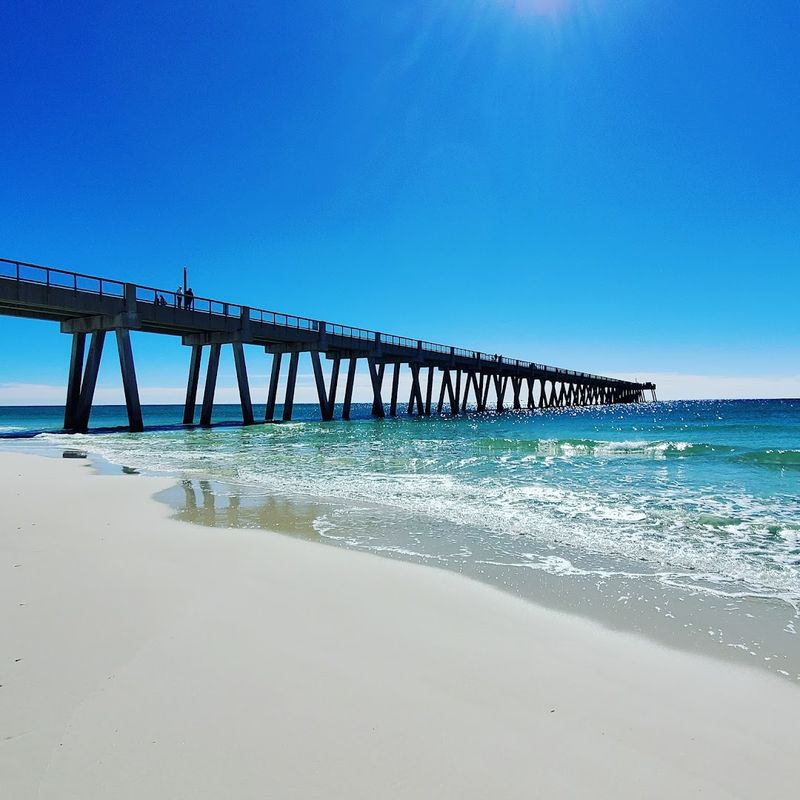
Navarre Beach has the same gorgeous barrier-island setting as Pensacola Beach, but the mood is noticeably calmer the moment you arrive.
Often called Florida’s Most Relaxing Place, it pairs bright white quartz sand with long open views and fewer distractions, making it easy to focus on the water, the wind, and the simple pleasure of being here.
Much of the surrounding coastline is protected federal land, so the beach keeps a more natural feel.
That protected setting is part of why Navarre stands out if you want white sand without the heavier commercial scene found in busier resort areas.
The shoreline feels spacious, the Gulf looks clear and inviting, and the whole experience leans peaceful instead of performative.
If your ideal beach day involves quiet walks, a good umbrella, and room to breathe, Navarre Beach delivers one of the most soothing white-sand experiences on Florida’s Gulf Coast.
Destin Beach and Henderson Beach State Park
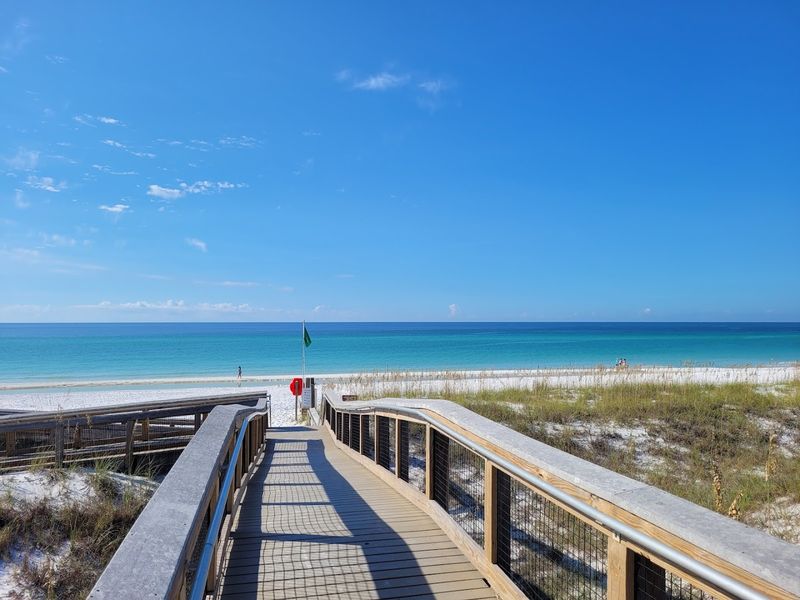
Destin is the anchor of the Emerald Coast, and its beach scene makes the region’s famous color combination look almost unreal.
The water turns that vivid green-blue people always talk about, while the sand stays brilliantly white thanks to quartz that began in the Appalachian Mountains and traveled south through river systems, especially the Apalachicola.
It is one of Florida’s clearest examples of geology creating a vacation fantasy.
For the most pristine stretch, Henderson Beach State Park is the place to focus your attention.
The preserved dunes, broad shoreline, and less developed feel make it easier to appreciate just how pure and soft this sand really looks.
Destin proper has plenty of energy, dining, and easy access, but Henderson gives you the scenic reset that many beach lovers actually want.
Together, they offer one of the strongest white-sand combinations anywhere in the state.
Grayton Beach
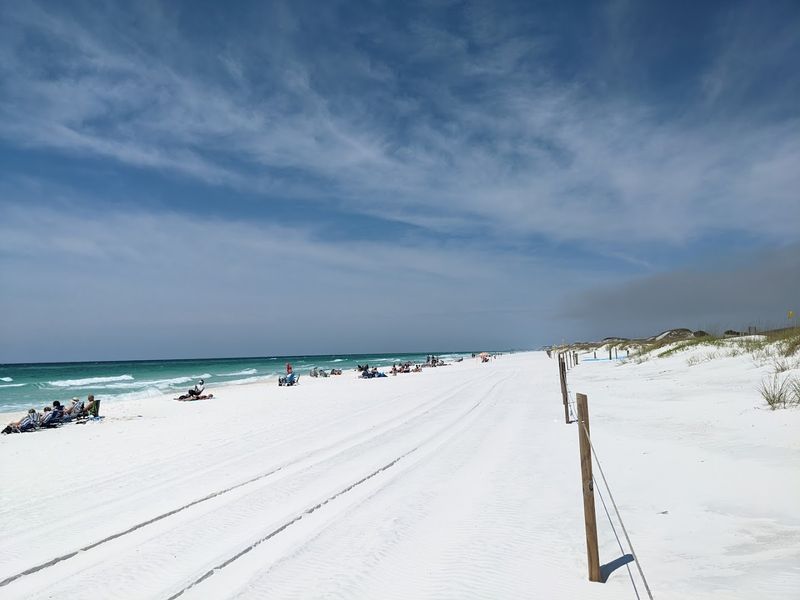
Grayton Beach brings together some of the finest white sand in Florida with one of the most unusual coastal landscapes in the country.
Inside Grayton Beach State Park, the shoreline is bright, soft, and beautifully natural, but what really elevates the setting are the rare coastal dune lakes nearby, a feature found in only a few places worldwide.
That combination gives the beach a wild, almost dreamlike character you do not get everywhere.
More than half of the South Walton coastline is protected state or federal parkland, and you can feel that conservation ethic here.
Instead of nonstop development, you get dunes, open sky, and a beach that has repeatedly ranked among America’s best for good reason.
If you want sugar-white sand with a more scenic, nature-forward personality, Grayton Beach offers one of the most distinctive experiences on the entire Gulf Coast, and it never feels overhyped.
Panama City Beach
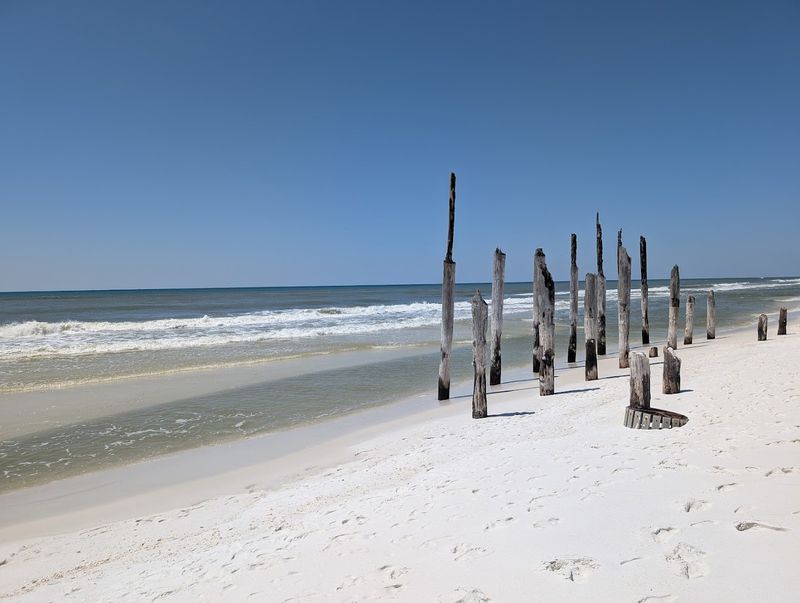
Panama City Beach proves that a beach can be both famous and genuinely impressive when it comes to sand quality.
With 27 miles of sugar-white shoreline, it delivers one of the longest continuous stretches of pale Gulf Coast sand in Florida, so there is no shortage of room to spread out and enjoy the color contrast between the beach and the water.
Even with all its popularity, the natural beauty still lands immediately.
If you want the most pristine section, look toward Shell Island, where the beach feels wilder and more untouched because access is by boat.
That extra effort rewards you with cleaner views, fewer buildings, and a stronger sense of what this coastline looked like before heavy development arrived.
Panama City Beach gives you easy fun, plenty of amenities, and serious white-sand credentials, which is exactly why it remains such a reliable favorite for Gulf Coast travelers.
St. Pete Beach
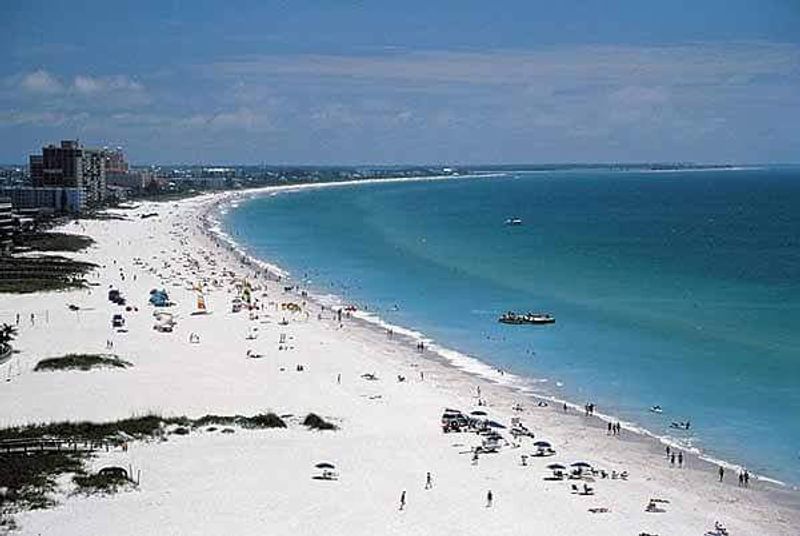
St. Pete Beach sits in an interesting part of Florida’s Gulf Coast story, where the ultra-bright Panhandle quartz begins transitioning into the central Gulf beaches farther south.
You still get a wide, inviting shoreline with fine white sand, but the setting feels a little softer and more urban than the wilder stretches up north.
That balance makes it especially appealing if you want beautiful sand without giving up comfort and convenience.
The beach is broad enough for long walks, easy lounging, and those classic sunset evenings that seem to pull everyone toward the water at once.
It is also consistently ranked among Florida’s best Gulf beaches, which makes sense once you see how approachable and photogenic it is.
If you want a white-sand beach that feels polished but not overly intense, St. Pete Beach offers an easygoing, reliable version of the Gulf Coast experience that keeps people coming back.
Clearwater Beach
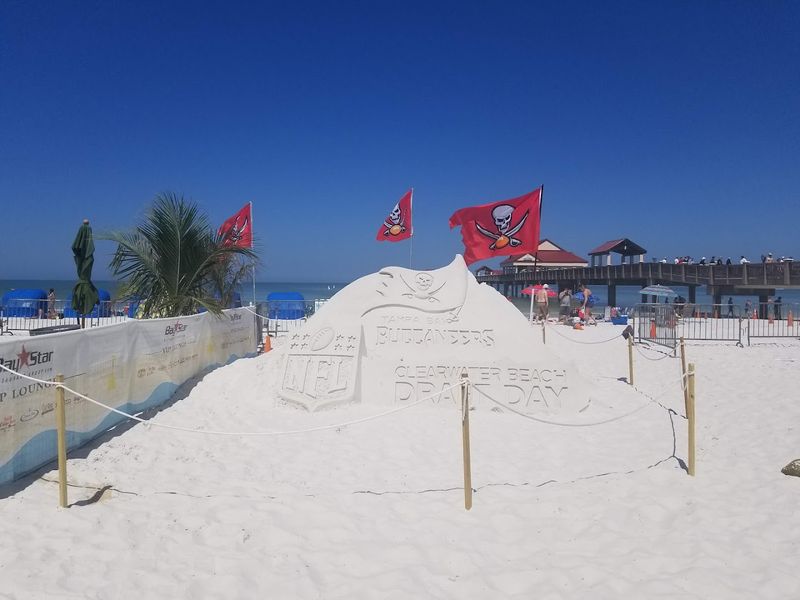
Clearwater Beach is one of Florida’s most recognizable beach names, and the sand is a huge part of the reason why.
The shoreline is wide, soft, and impressively white, with enough quartz content to give it that bright, clean look people expect from a top Gulf beach.
It is also home to the annual Pier 60 Sugar Sand Festival, which says a lot about how central the sand itself is to the beach’s identity.
Unlike hidden or hard-to-reach spots, Clearwater makes its beauty incredibly accessible.
You can enjoy the pale shoreline, calm Gulf views, and lively atmosphere without feeling like you need to sacrifice convenience for quality.
That makes it a strong choice if you want white sand, plenty of things to do, and a beach day that can be as active or as relaxed as you want.
Clearwater Beach feels popular because it is, but it earns that popularity with every bright step.
Anna Maria Island
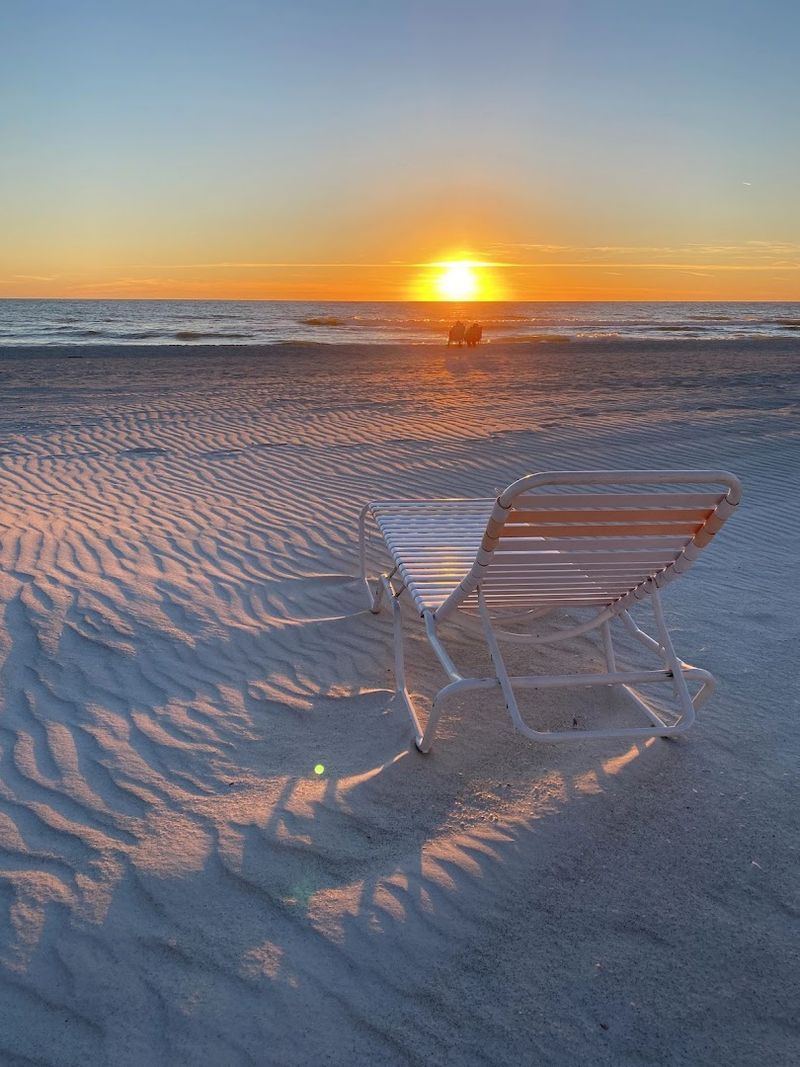
Anna Maria Island offers powdery white sand with a personality that feels different from Florida’s bigger-name resort beaches.
Spread across the small communities of Anna Maria, Holmes Beach, and Bradenton Beach, the island has held onto an old Florida atmosphere that feels refreshingly low-key.
Instead of towering high-rises dominating the view, you get a more intimate coastal setting where the beach remains the real star.
The sand is bright and soft, the Gulf is usually inviting, and the entire island encourages you to slow down a little.
That old-school charm matters because it changes how you experience the shoreline – less like a crowded attraction, more like a place you can settle into for the day.
If you love white sand but also care about character, walkability, and a setting that still feels human-scaled, Anna Maria Island gives you one of the most endearing beach escapes on Florida’s Gulf Coast.
Longboat Key
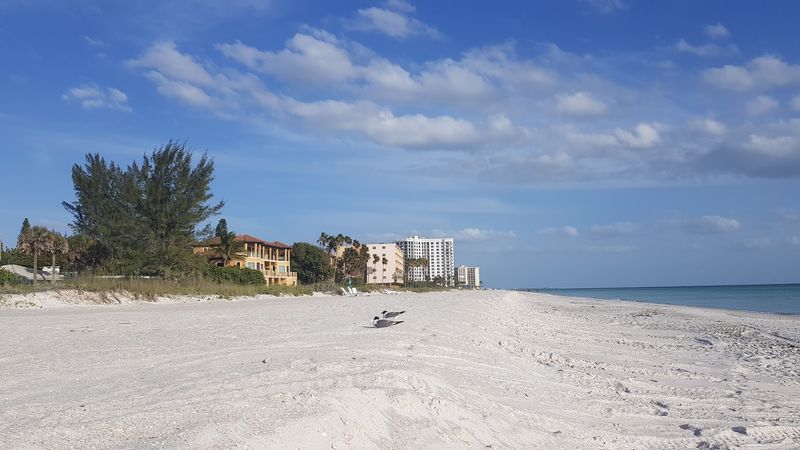
Longboat Key stretches for miles with white sand that feels quieter and more refined than many of Florida’s busier Gulf beaches.
Spanning parts of Manatee and Sarasota counties, it offers a long ribbon of coastline where you can often find a calmer patch of shore without much effort.
The beach experience here leans peaceful, scenic, and slightly tucked away, which is a big part of the appeal.
If you are after seclusion, Whitney Beach on the southern end is worth seeking out, while Greer Island on the northern tip adds a wilder touch thanks to its place on the Great Florida Birding Trail.
That mix of comfort and nature gives Longboat Key a versatile personality.
You get pale sand, beautiful Gulf views, and the option to choose between quiet relaxation and a more natural shoreline experience.
For travelers who want white sand without nonstop energy, this is an excellent middle ground.
Siesta Key Beach
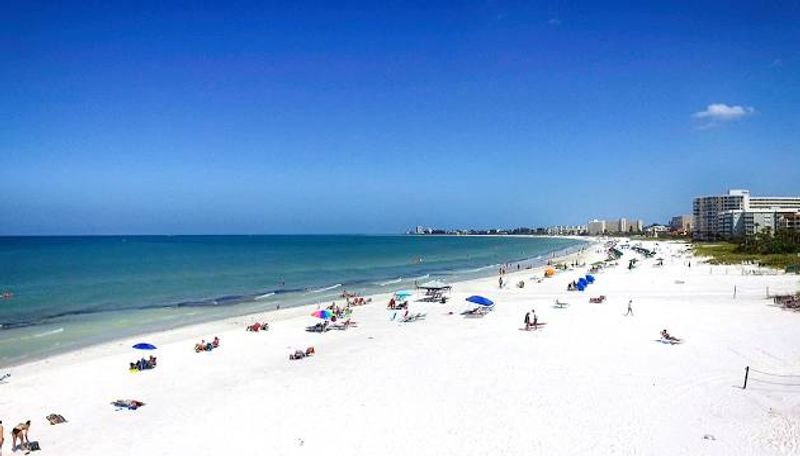
Siesta Key Beach is the crown jewel of Florida’s white-sand story, and the science behind it makes the place even more impressive.
The sand is about 99 percent pure quartz crystal, a famously high concentration verified by Harvard geologists, which helps explain its brilliant color and its cool-to-the-touch feel even on brutally hot days.
This beach does not just look different – it behaves differently under your feet.
Its reputation is loaded with receipts, from winning the 1987 World’s Finest, Whitest Sand competition to being named America’s top beach by Dr. Beach in 2011.
Even more remarkably, the beach is actually growing rather than eroding because of the barrier island’s structure.
That combination of beauty, rarity, and proven credentials makes Siesta Key feel like Florida’s ultimate white-sand outlier.
If you only visit one beach on this list, this is the one most likely to reset your standards completely.
Caladesi Island State Park
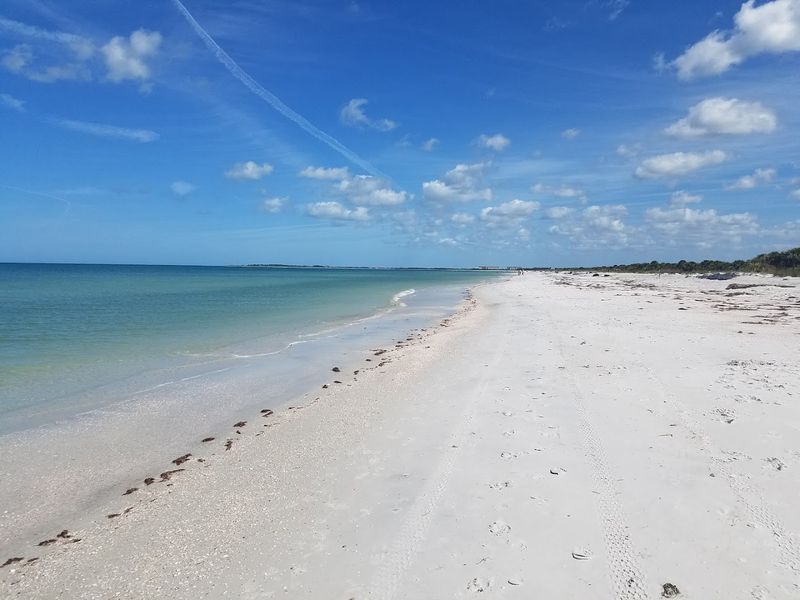
Caladesi Island State Park feels like a reminder of what much of Florida’s Gulf Coast once looked like before roads, condos, and traffic took over.
Because you reach it by ferry or kayak, the experience begins with a little separation from the everyday, and that makes the arrival feel special.
Once you step onto the island, the fine white quartz sand and undeveloped shoreline do the rest of the work.
No cars, no dense commercial strip, and no visual clutter means the beach gets to be the full focus here.
That natural setting is a major reason Caladesi is so often ranked among America’s top beaches, and it absolutely deserves that praise.
If you want a white-sand beach that feels quiet, scenic, and genuinely preserved, this is one of the strongest picks in the state.
Caladesi is not just beautiful by Florida standards – it feels beautifully unspoiled, which is much rarer.
Fort Myers Beach
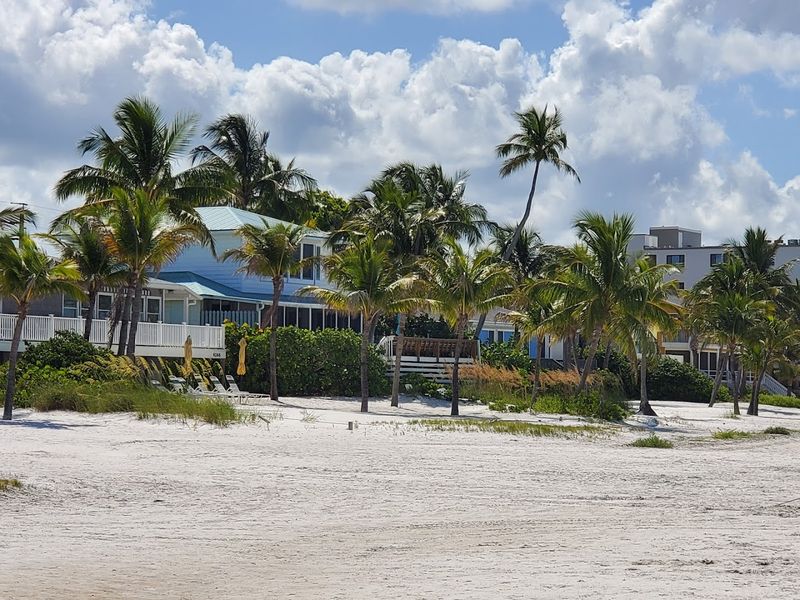
Fort Myers Beach closes this list farther south on Estero Island, where the sand remains attractively white but starts showing a different texture story from the Panhandle’s purest quartz stretches.
Here, the beach is known for angular quartz grains that make it especially good for sand sculpting, which is why the annual American Sandsculpting Championship feels so perfectly at home.
That texture gives the sand a character all its own.
You still get the broad Gulf shoreline and inviting beach-town energy people come here for, but there is also a fun, tactile quality that sets it apart.
This is a place where the sand is not just pretty to look at – it is part of the entertainment.
If you like white beaches with a lively, creative side, Fort Myers Beach is a worthy final stop on a Gulf Coast sand tour.
It shows how the same geologic story can produce slightly different, equally memorable beach experiences.