Florida may be famous for its beaches, but some of the state’s most unforgettable experiences happen far from the shoreline.
Across the state, travelers can explore natural springs, historic towns, gardens, wetlands, caves, and quiet communities that reveal a completely different side of the state.
The slower pace of these places often makes them feel even more memorable, especially for travelers looking to experience something beyond crowded beaches and resort strips.
Whether you enjoy outdoor adventures, history, nature, or peaceful weekend escapes, Florida offers far more diversity than many people expect.
I’ve crisscrossed the state to find spots that prove the state’s appeal stretches well beyond sand and ocean views.
1. Everglades National Park, Homestead, Miami-Dade County
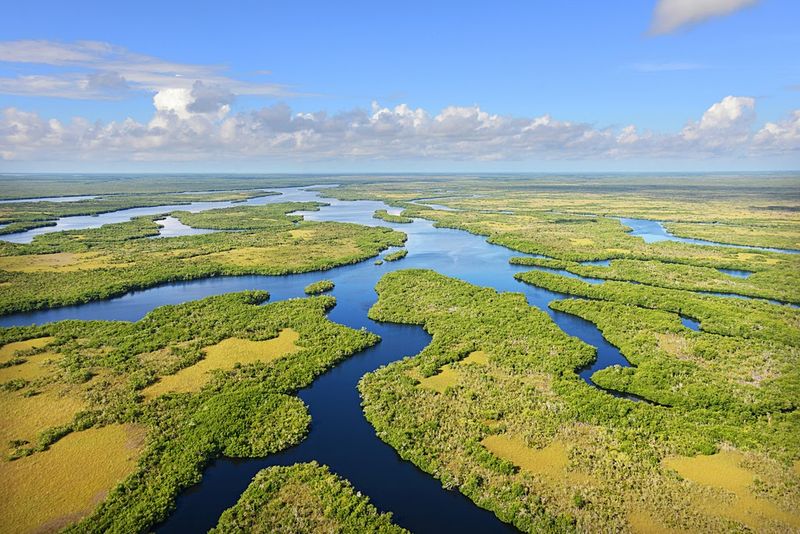
Silence can feel surprisingly loud when grass, water, and sky stretch in every direction.
Everglades National Park near Homestead in Miami-Dade County showed me a side of Florida that felt raw, slow, and deeply alive.
Instead of chasing a landmark, I watched movement itself become the attraction, with herons lifting off, alligators drifting past, and clouds changing the whole mood in minutes.
The scale of the landscape is what stays with you.
This vast subtropical wilderness protects wetlands, mangroves, pinelands, and wildlife that make patience worth it, especially along Anhinga Trail and Shark Valley.
If you visit early, bring water, bug spray, and binoculars, because the heat builds quickly and the best sightings often happen before midday.
There is history under the surface too, from Indigenous connections to decades of restoration efforts.
I liked pausing at overlooks and ranger stops, where the landscape began to make sense rather than just look scenic.
By the time I left, Florida felt less like a beach state and more like a living system with its own rhythm.
2. Bok Tower Gardens, Lake Wales, Polk County
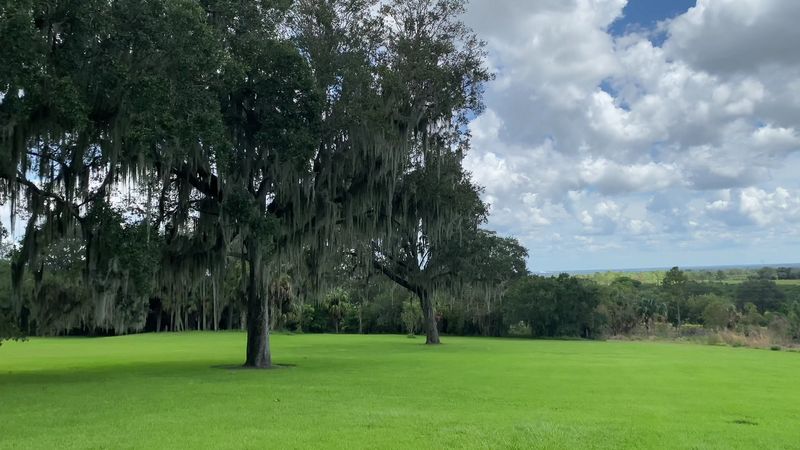
Some places lower the volume the moment you arrive. Bok Tower Gardens in Lake Wales, Polk County, did that for me with winding paths, shady oaks, and a carillon tower that seems to rise out of the landscape rather than dominate it.
The calm feels intentional here, which makes sense once you learn the gardens were designed as a place for reflection.
The famous Singing Tower is the centerpiece, and hearing the bells carry across the grounds adds a quiet drama to the visit.
I liked walking slowly through the Olmsted-designed gardens, where birdlife, flowering plants, and small elevation changes keep the scenery shifting.
Pinewood Estate is worth adding if you enjoy architecture, and the visitor center helps connect the garden’s beauty to Edward Bok’s larger vision.
This spot also reminds you that Florida is not flat in spirit, even when the map suggests otherwise.
Because Lake Wales sits on the Lake Wales Ridge, the area supports rare plant communities and a slightly different feel from much of the state.
There’s a certain pride when you leave a place with dirt on your shoes, a plethora of stunning photos, and a much better mood.
3. Weeki Wachee Springs State Park, Spring Hill, Hernando County
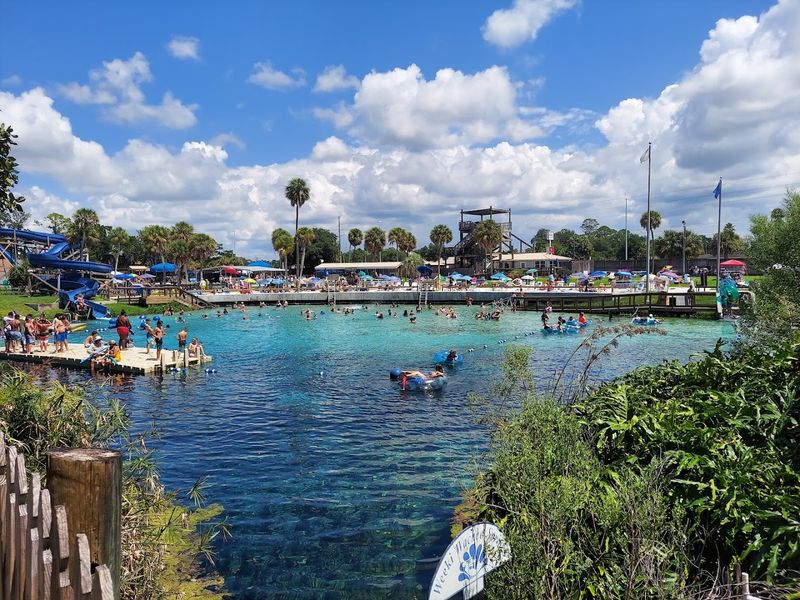
Clear water has a way of stealing the spotlight before anything else can.
Weeki Wachee Springs State Park in Spring Hill, Hernando County, pairs that bright spring water with one of Florida’s strangest and most charming traditions: live mermaid shows.
It sounds kitschy on paper, yet the place feels genuinely rooted in old Florida rather than manufactured nostalgia.
The spring itself is the main event, and the water stays clear enough to make every paddle stroke look theatrical.
I liked renting a kayak on the Weeki Wachee River, where the current does part of the work and turtles, fish, and wading birds keep you looking over the edge.
Arriving early helps, especially on warm weekends when boat launches, Buccaneer Bay, and theater seating fill quickly.
There is a playful confidence to this park that makes it memorable.
One minute you are learning about the deep first-magnitude spring, and the next you are watching synchronized swimmers perform underwater through a theater window.
Florida can be wonderfully odd when it wants to be, and this stop wears that quality beautifully.
4. Devil’s Den Prehistoric Spring, Williston, Levy County
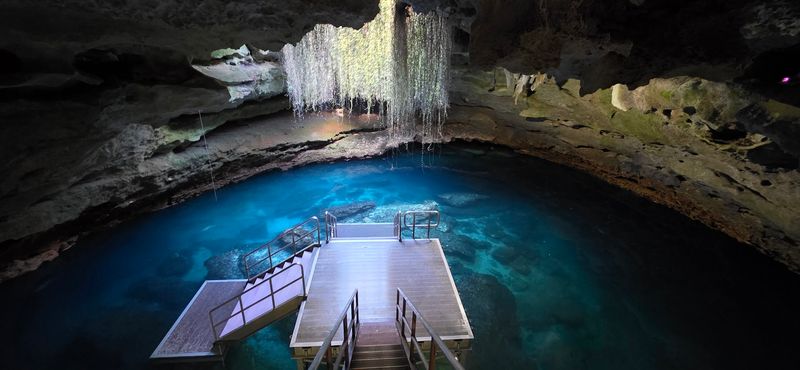
Few entrances in Florida make a stronger first impression than a hole in the earth breathing out cool air. Devil’s Den Prehistoric Spring in Williston, Levy County, sits inside a dry cave where sunlight pours through the ceiling and catches steam above the water.
The setting feels hidden, but the atmosphere is more inviting than eerie once you climb down and look around.
The spring is popular with snorkelers and certified divers because visibility can be excellent and the rock chamber adds real drama.
I found the experience surprisingly peaceful, with the sound shifting as soon as I reached the water and every ripple bouncing light across the stone walls.
Reservations are smart, and water shoes help, since the steps and surfaces can be slick.
The prehistoric name is not just clever branding.
Fossils from long-vanished animals have been discovered here, which gives the place a time-layered feel beyond its photogenic surface.
It is one of those rare Florida stops where geology takes center stage, and for once, the state lets the underground do the talking.
5. Dry Tortugas National Park, Key West, Monroe County
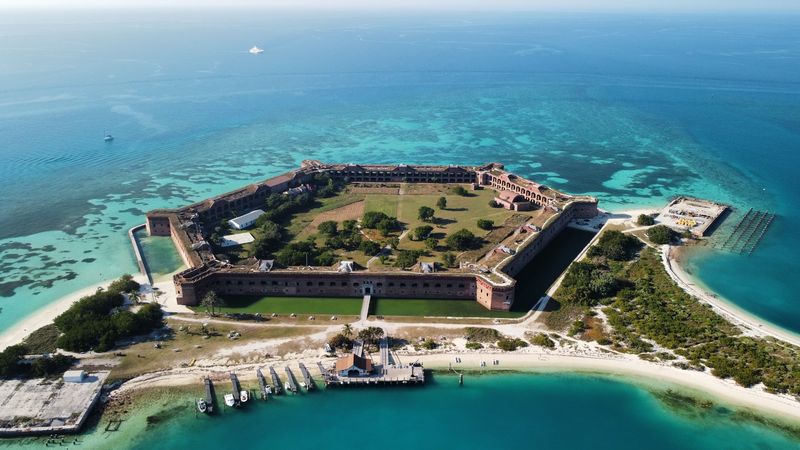
Getting there is part of the story, and that is usually a good sign.
Dry Tortugas National Park, reached from Key West in Monroe County, feels remote in a way few Florida destinations do, with open water replacing highways and Fort Jefferson appearing almost suddenly from the sea.
The journey by ferry or seaplane gives the park an earned, far-off feeling before you even step ashore.
The massive brick fort is the visual anchor, but the surrounding water deserves equal billing.
I spent time walking the walls, watching birds circle overhead, and then slipping into the clear shallows for snorkeling near coral and seagrass.
Shade is limited, so bringing plenty of water, sunscreen, and food matters here more than at most day trips.
History and isolation make a strong pair in this place.
The fort carries stories of military ambition, difficult logistics, and the imprisonment of Dr. Samuel Mudd, while the surrounding islands protect nesting birds and marine life.
In the afternoon, the horizon looked endless enough to make the rest of the state feel very far away.
6. St. Augustine Historic District, St. Augustine, St. Johns County
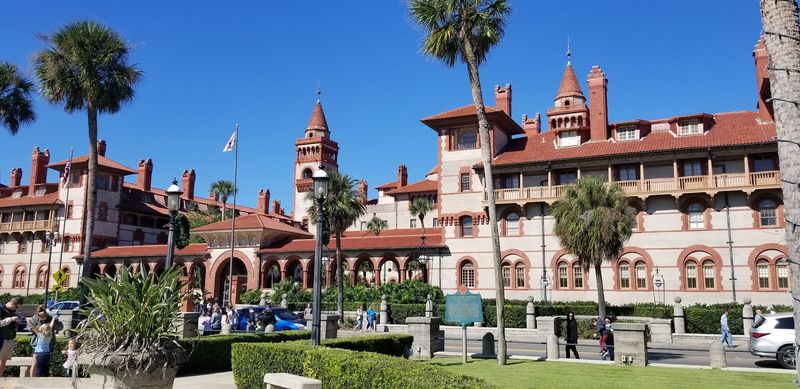
Old streets can change your walking speed without asking permission.
St. Augustine Historic District in St. Augustine, St. Johns County, rewards wandering with narrow lanes, stone buildings, shaded courtyards, and a layered past that never feels trapped behind museum glass.
I found myself looking up as much as ahead, because balconies, church towers, and weathered details keep interrupting the route.
Founded in 1565, the city claims the title of the oldest continuously occupied European-established settlement in the continental United States.
That history shows up everywhere, from Castillo de San Marcos to quieter corners near Aviles Street, where galleries and older homes soften the tourist buzz.
If you go, mornings are best for photos and cooler walks, while evenings bring a livelier restaurant scene.
This district works because it balances storytelling with actual daily life.
I liked stepping into small museums, then grabbing coffee and watching horse-drawn carriages roll past storefronts that now sell books, sweets, and souvenirs.
Florida often gets framed as new and fast growing, but this place wears time in a way the rest of the state rarely can.
7. Morikami Museum and Japanese Gardens, Delray Beach, Palm Beach County
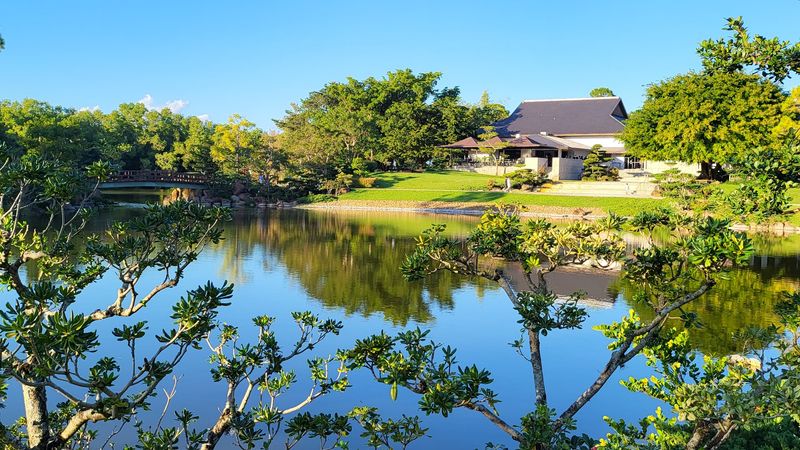
Calm arrives here in careful layers of water, stone, and shade.
Morikami Museum and Japanese Gardens in Delray Beach, Palm Beach County, tells a Florida story many visitors do not expect, rooted in the history of early Japanese farming communities in the region.
That connection gives the beauty substance, so the gardens feel meaningful instead of merely pretty.
The museum adds cultural context, but I spent most of my time outside on the garden paths.
Each garden area reflects a different style and era, and the transitions between bridges, bonsai displays, ponds, and stone features make the walk feel quietly cinematic.
Comfortable shoes help, and if you want a slower visit, try a weekday morning when the paths feel especially unhurried.
Small details do most of the work here.
I remember the flash of koi under a bridge, the clean lines of raked gravel, and the way a simple bench suddenly seemed worth claiming for ten minutes.
This state can sometimes feel loud by default, and this place proves how memorable restraint can be when it is done with care.
8. Mount Dora, Mount Dora, Lake County
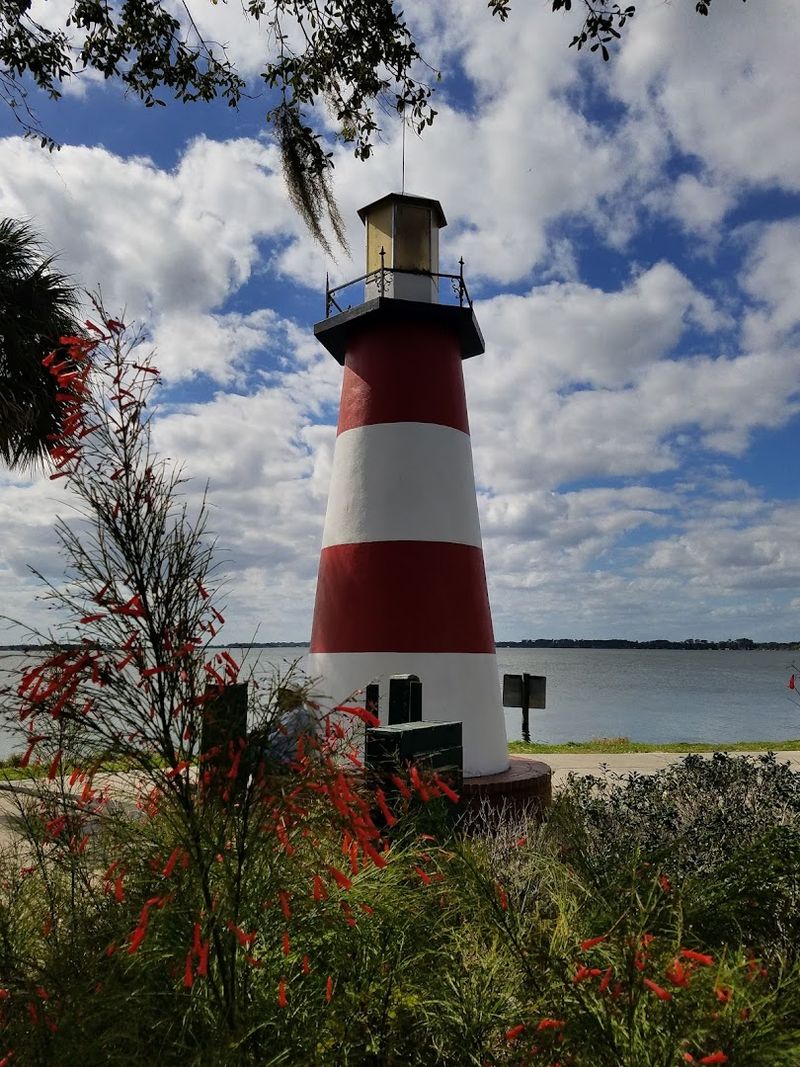
Not every Florida escape needs a swimsuit or a sand bucket.
Mount Dora in Lake County leans into brick streets, antique shops, lake views, and a downtown that feels built for slow browsing rather than rushing between attractions.
I like places where you can improvise the day, and this town makes that easy.
The setting beside Lake Dora gives the area a relaxed backdrop, while festivals and local businesses keep it from feeling sleepy.
I wandered through bookstores, paused at cafes, and noticed how many storefronts still feel personal instead of polished into sameness.
If you visit during one of the larger art or craft events, arrive early for parking and expect the sidewalks to stay busy.
There is enough history here to give the charm some backbone.
The town grew in the late nineteenth century and still carries a vintage feel that suits its inns, train excursions, and old-fashioned signs.
As the sunset creeps up
near the waterfront, the whole place felt like a reminder that inland Florida knows how to keep good company with itself.
9. Florida Caverns State Park, Marianna, Jackson County
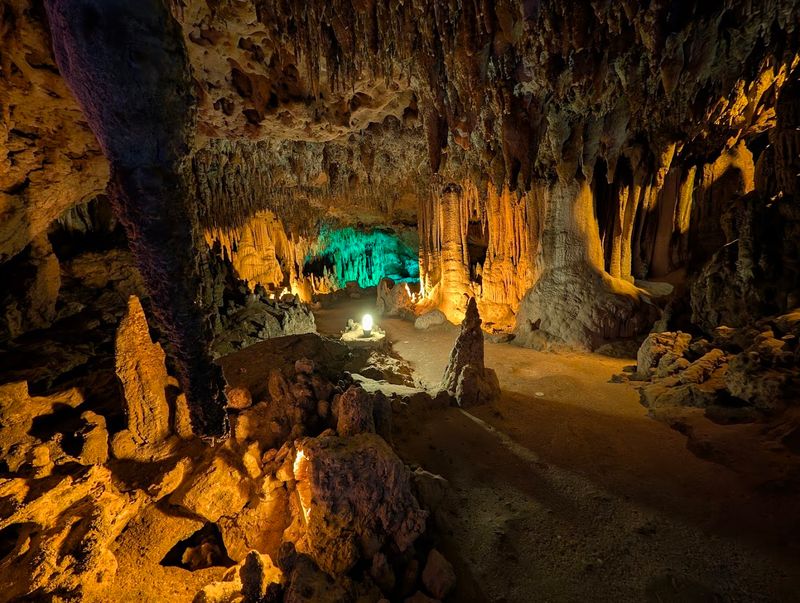
Going underground is not the first thing most people associate with Florida.
Florida Caverns State Park in Marianna, Jackson County, changes that assumption fast with limestone passages, stalactites, stalagmites, and guided tours that reveal a cooler, darker side of the state.
I was struck by how quickly the landscape shifted from sunny Panhandle woods to echoing rooms shaped by water over time.
The cave tour is the headline, but the park gives you more than one reason to stay awhile.
Above ground, there are hiking trails, a river, campsites, and spots for paddling, so it works well if your group wants variety.
Bringing a light jacket is not a bad idea, because the cavern temperature can feel surprisingly crisp after a humid day outside.
There is also some New Deal history tucked into the setting.
Civilian Conservation Corps workers helped develop parts of the park in the 1930s, and that legacy adds another layer to the visit.
Florida often sells itself with endless sunlight, yet this place earns attention by showing what has been hiding underneath it all along.
10. Cedar Key, Cedar Key, Levy County
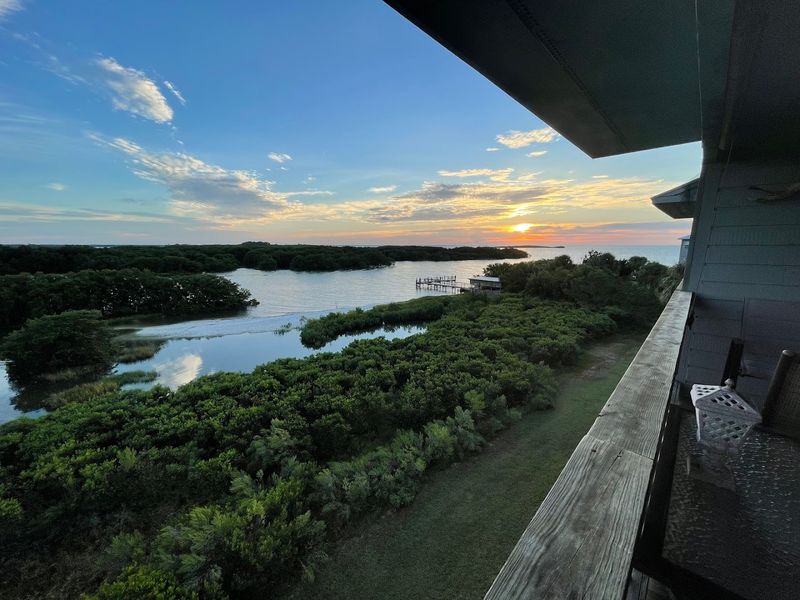
Some towns feel like they opted out of the rush on purpose.
Cedar Key in Levy County has that quality, with weathered docks, seafood spots, art galleries, and a low-slung waterfront that feels more working village than polished resort.
I noticed almost immediately that nobody seemed interested in hurrying, which improved my own pace.
This cluster of islands on the Gulf has long depended on fishing, clamming, and resilience, and that history still shapes the atmosphere.
I liked wandering the historic center, watching pelicans near the marina, and ordering local seafood without needing a complicated plan for the day.
Sunsets get deserved attention here, but the quieter pleasure is simply seeing how much character survives in such a small place.
Cedar Key also tells a broader Florida story about storms, adaptation, and communities that keep going. The Cedar Key Museum State Park adds useful context if you want to understand the town beyond its postcard angles.
By the time evening settled over the water, the appeal was clear: this was Florida without the performance, and that felt refreshing.