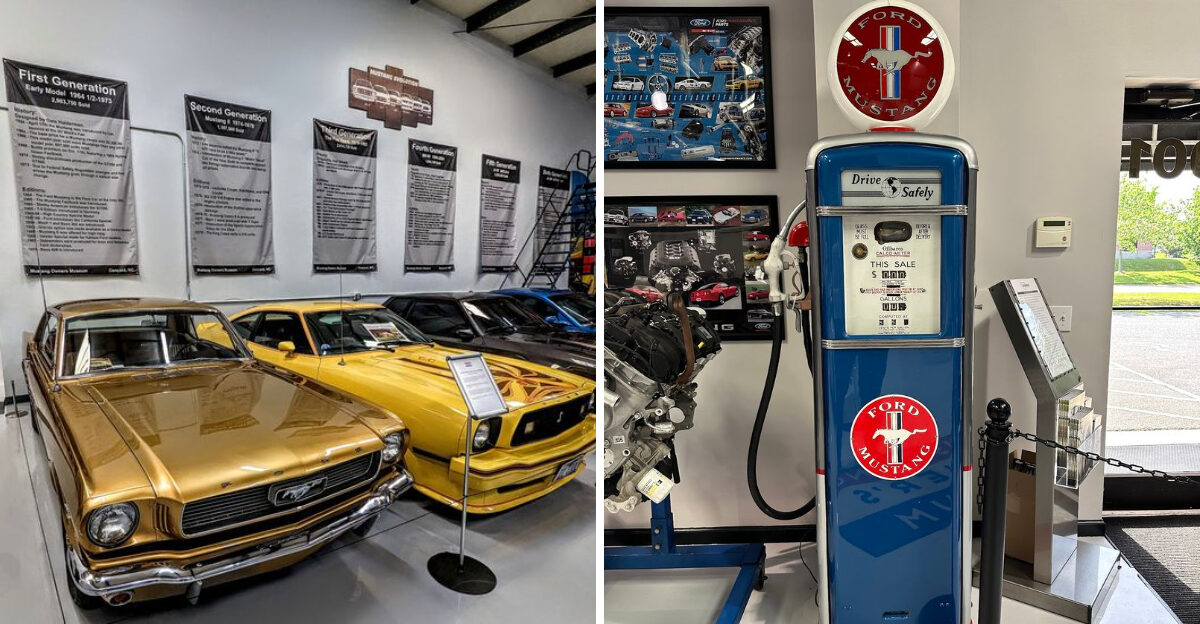
If the roar of a Mustang engine makes your heart beat faster, you’ll want to put this North Carolina museum on your radar.
The Mustang Owner’s Museum in Concord is a dream stop for anyone who loves Ford’s legendary pony car.
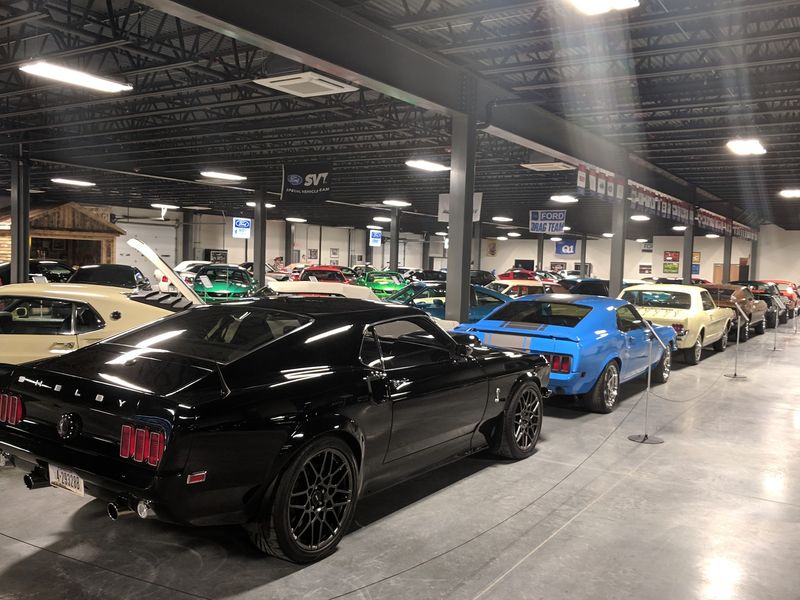
Inside, rows of Mustangs showcase decades of style, speed, horsepower, and personality.
You’ll find everything from classic early-generation cars to rare finds, racing models, and eye-catching builds that show just how many ways owners have made the Mustang their own.
There’s plenty of memorabilia, too, giving fans a closer look at the people and stories behind the cars.
Whether you grew up dreaming about a ’65 Mustang or simply appreciate American muscle, this Concord attraction delivers plenty of reasons to stop, stare, and maybe fall in love with the Mustang all over again.
A Museum Built Entirely Around the Ford Mustang
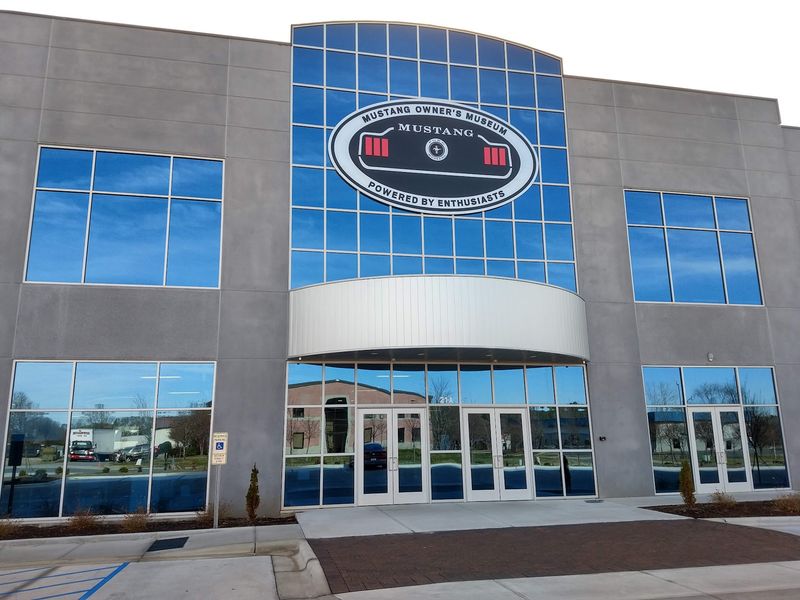
Most car museums try to cover everything from classics to sports cars. Not this place.
The Mustang Owner’s Museum exists for one reason: celebrating the Ford Mustang and the people who love it.
Created by enthusiasts who wanted a permanent home for the pony car legacy, this museum focuses entirely on one model. That dedication means every display, every exhibit, and every story centers on what makes the Mustang special.
From design evolution to racing history, it’s all Mustang, all the time.
Walking through the doors feels different than visiting a typical automotive museum. The atmosphere reflects genuine passion rather than corporate polish.
You’ll see cars owned by real people who saved, restored, and cherished their Mustangs for decades.
This concentrated focus creates something unique. Instead of spreading attention across dozens of brands, the museum goes deep into Mustang culture.
That depth makes it valuable even for visitors who already know plenty about these cars.
See Mustangs From Different Generations Under One Roof
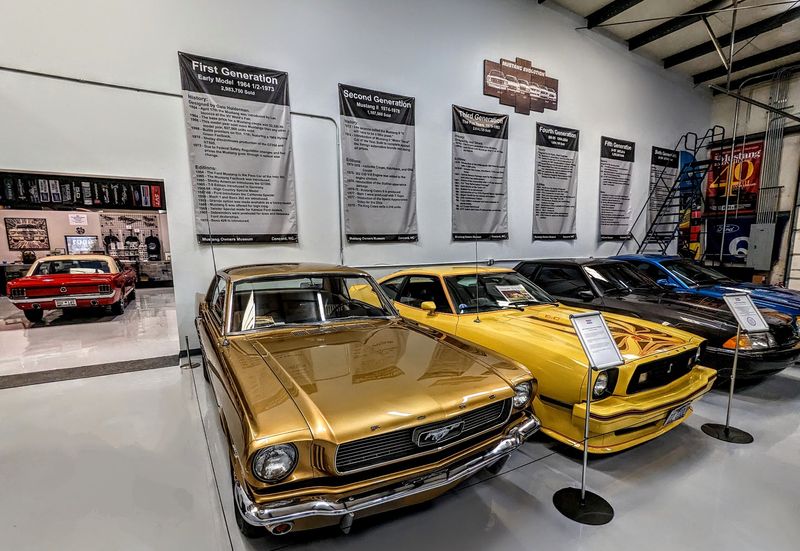
Ever wondered how the Mustang changed between 1964 and today? The museum answers that question visually.
Visitors encounter first-generation classics sitting near Fox Bodies, SN95 models, and modern Mustangs with advanced technology.
Each generation brought different styling, engineering, and performance. Early models emphasized affordable fun with long hoods and short decks.
Later versions added muscle during the horsepower wars. The 1980s brought efficiency challenges, while recent decades returned to performance roots.
Seeing these generations side-by-side reveals how designers balanced tradition with innovation. The basic Mustang identity remained recognizable even as headlights, body lines, and powertrains evolved dramatically.
Some changes honored heritage, while others broke new ground.
For younger visitors, older models offer a glimpse into automotive history before computers controlled engines. For longtime Mustang fans, the display sparks memories of which generation they first fell in love with.
Everyone leaves with greater appreciation for how the pony car adapted across six decades while staying true to its original spirit.
Explore the Mustang’s Journey From the 1964 New York World’s Fair
April 17, 1964 changed American car culture forever. The museum dedicates significant space to the Mustang’s legendary introduction at the New York World’s Fair, where Ford unveiled a sporty, affordable car that captured millions of imaginations.
Historical displays explain the genius behind Ford’s timing and marketing. The company didn’t just launch a car.
They created an entire lifestyle around youth, freedom, and personal expression. Within the first year, Ford sold over 400,000 Mustangs, shattering all predictions.
Exhibits feature period advertisements, magazine covers, and documentation showing how quickly Mustang mania spread. Photos capture the excitement at dealerships where customers literally lined up to see the new model.
The cultural impact went beyond transportation, influencing fashion, music, and attitudes.
Understanding this origin story helps visitors appreciate why Mustangs matter so much to owners today. The car represented possibility and adventure from day one.
That spirit continues decades later, connecting generations of enthusiasts who see their Mustangs as more than mechanical objects.
Get Up Close to Rare, Modified, and Racing Mustangs
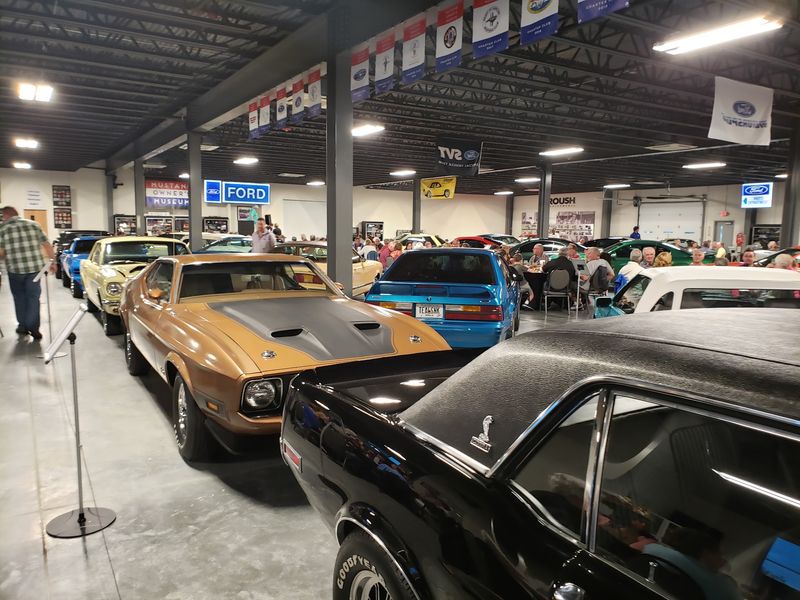
Stock Mustangs tell only part of the story. The museum showcases how owners transformed their cars into personalized expressions, competition machines, and one-of-a-kind creations that push boundaries.
Racing Mustangs demonstrate the model’s competitive success. From drag strips to road courses, Mustangs proved their performance credentials against purpose-built sports cars.
Seeing race-prepped examples up close reveals modifications like roll cages, racing seats, and engine upgrades that turned street cars into track weapons.
Modified Mustangs represent individual creativity. Some owners prioritized straight-line speed with superchargers and nitrous systems.
Others focused on handling with suspension upgrades and wider wheels. Custom paint, unique interiors, and personalized details show how Mustangs became canvases for automotive art.
Rare factory options and limited editions add another dimension. Special trim packages, anniversary editions, and low-production variants attract serious collectors.
The museum rotates these gems through its displays, giving visitors chances to see Mustangs they might never encounter elsewhere. Each tells a different story about the model’s versatility and enduring appeal.
The Barn Find Exhibit Shows Another Side of Mustang History
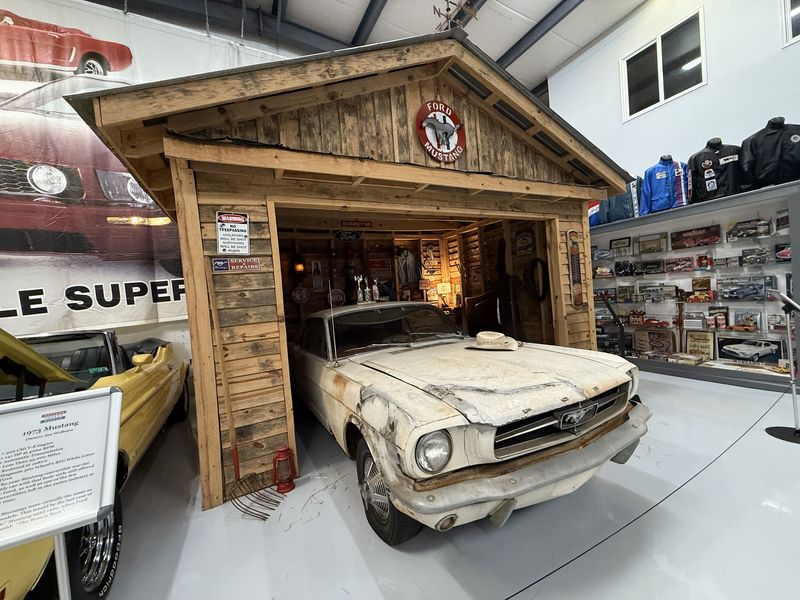
Not every Mustang enjoyed careful preservation. The Barn Find exhibit celebrates discovery, featuring forgotten cars pulled from barns, garages, and storage buildings after years or decades of sitting idle.
These unrestored Mustangs carry visible history. Original paint shows age and weathering.
Interiors reveal decades of dust and wear. Some have minor damage or missing parts.
Rather than immediately restoring them, the museum displays these time capsules as found, preserving their authentic condition.
Barn finds fascinate enthusiasts because they represent treasure hunting. Each discovery includes a story about how someone located a forgotten Mustang and brought it back to light.
Some owners found cars inherited from relatives. Others tracked down rumors and leads for years before making a find.
This exhibit adds emotional depth beyond polished show cars. Visitors see Mustangs that survived through neglect rather than careful care.
The display proves even abandoned examples retain value and interest. For many fans, rescuing and preserving barn finds represents the ultimate restoration challenge and a way to save automotive history.
It’s Not Just About Cars – There’s Mustang Memorabilia Too
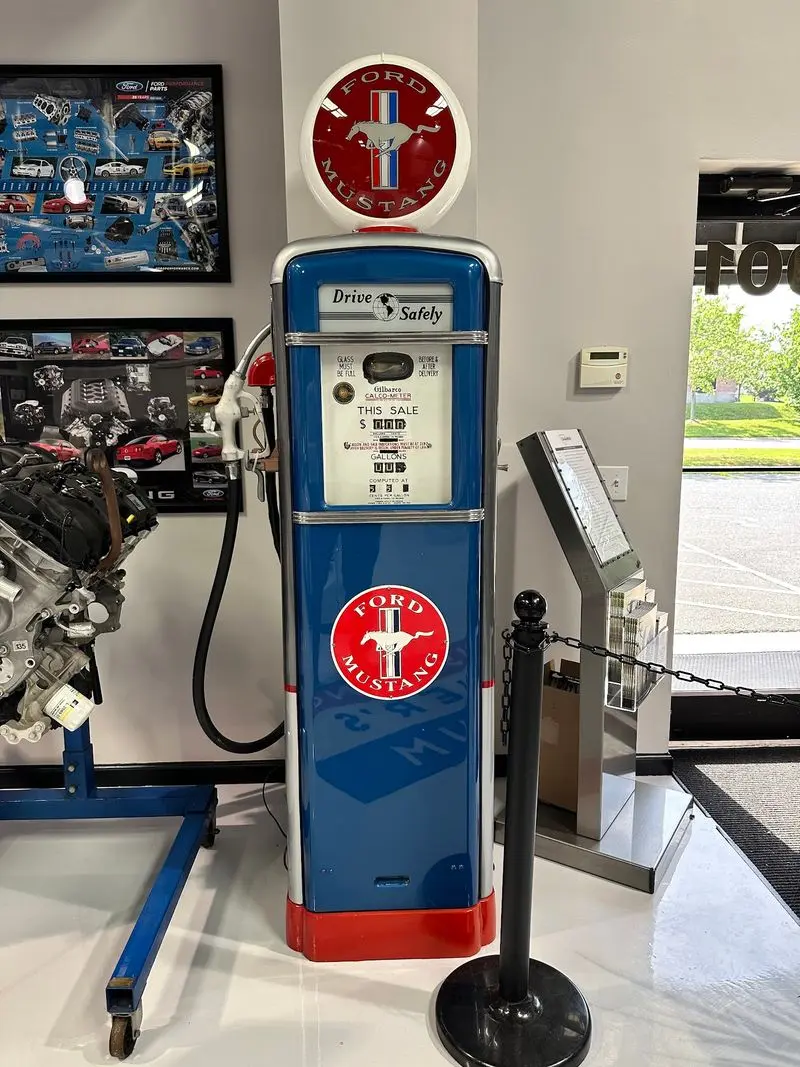
Mustang culture extends far beyond four wheels and an engine. The museum houses extensive memorabilia collections that document how the car influenced popular culture, advertising, and collecting hobbies.
Original sales brochures and dealer literature show how Ford marketed different generations. These materials reveal changing strategies, from emphasizing economy in early years to highlighting performance during muscle car eras.
Reading vintage descriptions provides fascinating perspectives on what buyers valued across different decades.
Collectibles range from model cars and toys to clothing, watches, and household items bearing Mustang branding. Seeing this merchandise diversity demonstrates the car’s commercial impact.
Companies licensed the Mustang image for countless products because it sold.
Rare items particularly interest serious collectors. Limited edition pieces, employee-only merchandise, and prototype materials occasionally appear in displays.
Historical photographs document Mustang events, gatherings, and moments that shaped the community. Together, these artifacts tell stories that complement the vehicles themselves.
They prove Mustang enthusiasm involves more than owning a car. It’s about participating in a shared cultural phenomenon.
The Exhibits Keep Changing, So Repeat Visits Can Pay Off
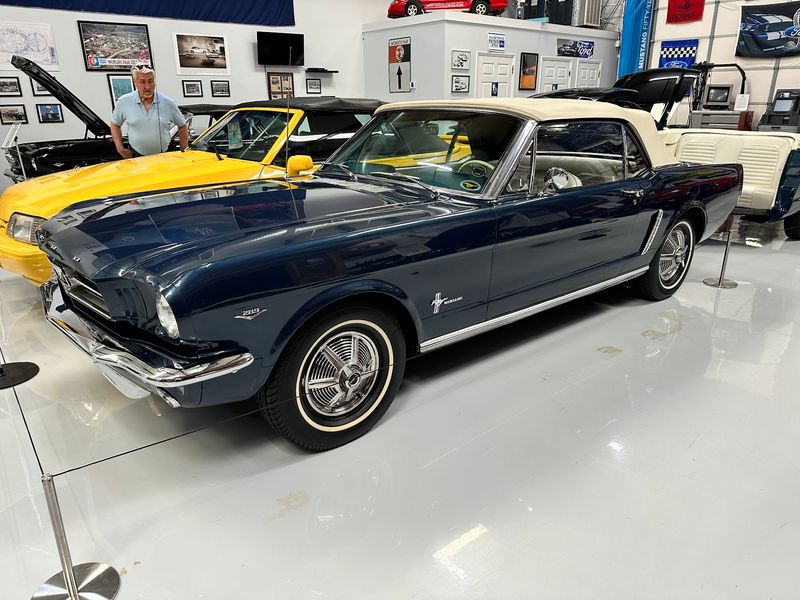
Unlike museums with permanent collections, the Mustang Owner’s Museum regularly rotates vehicles and exhibits. Return visits often reveal different cars and displays than your first trip.
This rotating approach keeps the museum fresh for repeat visitors. Local enthusiasts who visit multiple times per year discover new examples each time.
The variety also means no single visit captures everything the museum offers. Different periods, styles, and stories emerge with each rotation.
Limited space requires careful curation. The museum can’t display every Mustang simultaneously, so curators select vehicles that represent different themes or time periods.
As one group of cars returns to owners, another collection arrives for display. This system benefits everyone by sharing more examples over time.
Before planning a visit, check the museum’s current exhibits and event schedule. Special displays might feature specific generations, racing history, or owner clubs.
Mustang gatherings and car shows occasionally bring additional vehicles beyond regular exhibits. Following the museum’s updates ensures you catch displays matching your interests.
Dedicated fans often plan multiple visits to experience the full range of what’s available.
Mustang Owners Are Part of the Story
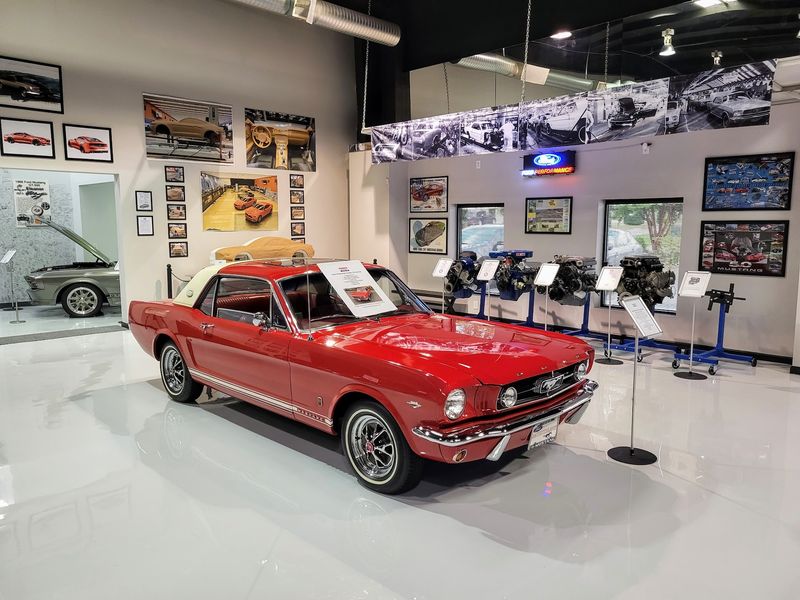
Traditional automotive museums display vehicles as historical artifacts behind velvet ropes. This museum operates differently because it celebrates the people who own, restore, and enjoy Mustangs today.
The community aspect makes the experience more personal. Many displayed vehicles belong to real enthusiasts who submitted their cars for consideration.
These aren’t corporate show pieces or trailer queens that never see roads. They’re driven, loved, and maintained by regular people who happen to be passionate about their Mustangs.
Owners can apply to have their Mustangs or memorabilia featured in displays. The museum reviews submissions and selects vehicles that fit current exhibit themes.
While acceptance isn’t guaranteed, the opportunity exists for enthusiasts to share their pride and joy with other fans. Rotations occur periodically, giving multiple owners chances to participate.
This approach creates stronger connections between visitors and vehicles. Reading about an owner’s restoration journey or learning why someone chose a particular model adds human interest.
The museum documents not just Mustang history, but the ongoing story of people keeping the legacy alive through their dedication and enthusiasm.
Leave Room for the Museum Store and Mustang Community Experience
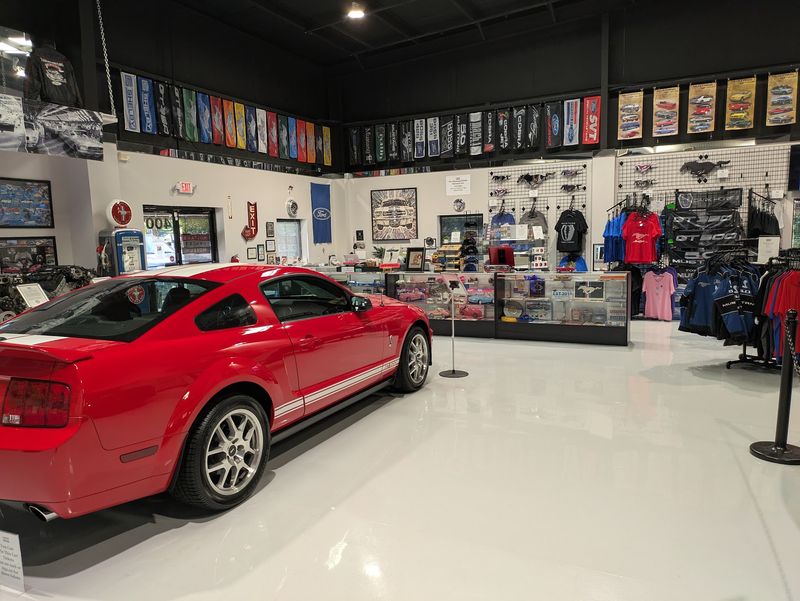
Before leaving, check out the museum store stocked with Mustang-themed merchandise. Fans find shirts, hats, stickers, magnets, calendars, and other items celebrating the pony car.
It’s a practical way to remember your visit or find gifts for fellow enthusiasts.
The merchandise selection goes beyond generic souvenirs. Many items specifically reference the museum or feature unique designs unavailable elsewhere.
Clothing quality matters to buyers who want wearable items rather than thin tourist shirts. Accessories like keychains and decals let fans show Mustang pride without major purchases.
Beyond shopping, the museum fosters community connections. Visitors often chat with staff members who share their own Mustang stories and knowledge.
Fellow guests might compare ownership experiences or discuss favorite models. These interactions remind everyone they’re part of something larger than individual car ownership.
The museum also hosts events that strengthen community bonds. Car shows, meetups, and special gatherings bring enthusiasts together beyond regular visiting hours.
Checking the calendar before your trip might reveal opportunities to connect with other fans. For devoted Mustang lovers, the museum offers more than a quick look at cars.
It provides genuine community experience.
Visitor Info and Tips for Planning Your Visit
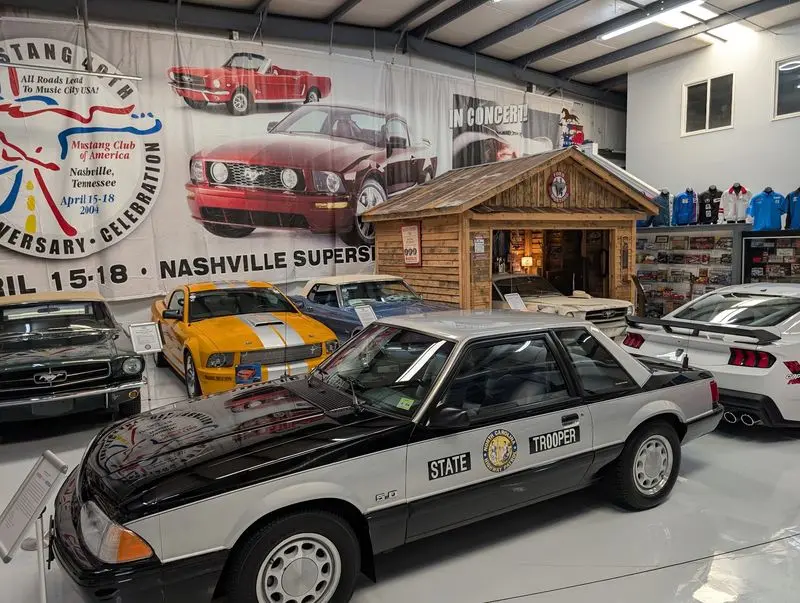
Ready to visit? Here’s everything you need to know.
The museum is located at 4001 Dearborn Place NW, Concord, NC 28027. Hours are Monday through Saturday, 10 a.m. to 5 p.m., and Sunday, noon to 5 p.m.
Admission costs are reasonable. Adults pay $10, while seniors 62 and older, veterans, and active duty military receive discounted admission at $8.
Children 12 and under enter free, making it family-friendly. Tickets can be purchased at the museum or online, with contactless admission options available.
For information, call 980-439-5653.
Plan approximately one to two hours for your visit. That timeframe allows proper appreciation without rushing through displays.
Serious enthusiasts might stay longer examining details, while casual visitors can tour more quickly.
Smart tip: Check current exhibits and the event calendar before visiting. Since displays rotate and special Mustang events occur periodically, your experience changes based on timing.
Arriving during a car show or themed display enhances the visit. The museum’s website and social media provide updates about what’s currently featured, helping you maximize your time and see exhibits matching your interests.