
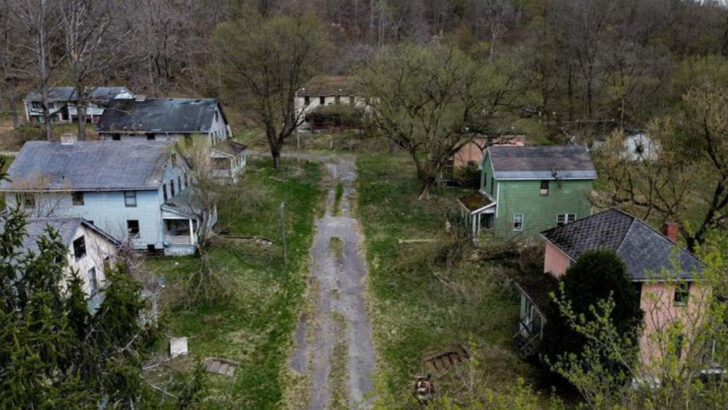
Pennsylvania hides secrets in the woods—and some of them refuse to stay quiet.
Drive down a lonely back road and you might stumble across crumbling foundations, silent cemeteries, or entire streets that vanished long ago. These places once buzzed with miners, factory workers, and families chasing opportunity.
Then the industries collapsed, the mines closed, or disaster struck… and the towns slowly faded away.
In places like Centralia, the ground still smolders from a coal fire that began decades ago. Others, such as Pithole, exploded with life almost overnight before disappearing just as fast.
These nine forgotten Pennsylvania ghost towns still carry whispers of the past—and for visitors willing to wander their empty paths, the chills come quickly.
Centralia
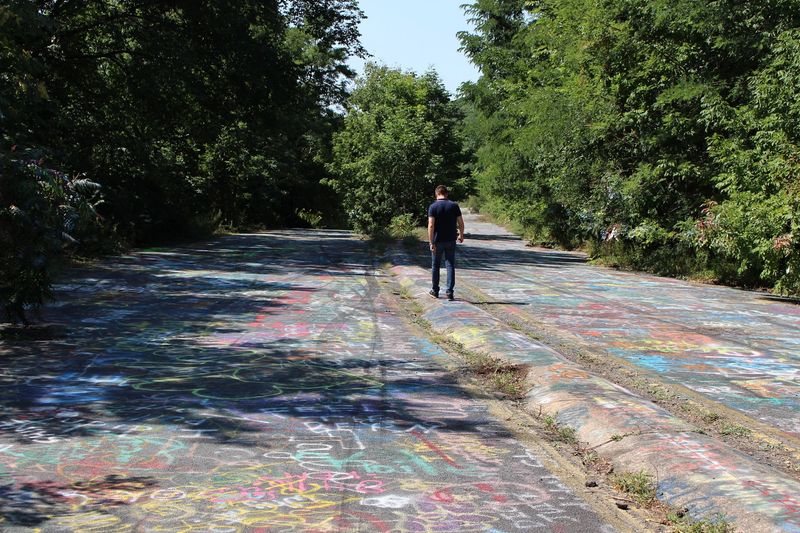
Centralia is the ghost town most people picture first, and once you see it, the reputation makes sense. A coal mine fire ignited beneath the community in 1962, and the blaze still burns underground today.
That slow disaster released dangerous gases, opened sinkholes, and pushed nearly every resident to leave.
What makes Centralia so unsettling is how normal it used to be. It had homes, churches, blocks of neighbors, and the rhythms of an ordinary Pennsylvania mining town before the ground itself became the threat.
By the 1990s, most buildings were demolished, leaving a patchwork of empty land, roads, and scattered reminders.
Visiting now feels like stepping into a place erased in sections rather than all at once. You might pass open streets that lead nowhere, brush-covered lots where houses stood, and stretches of silence broken only by wind.
Even without many structures left, the absence is exactly what chills you.
If you go, treat Centralia with respect and keep to legal access points. The town is famous, but it is not a theme park, and the hazards are real.
That mix of ongoing danger, vanished homes, and national notoriety makes it Pennsylvania’s most haunting ghost town.
Rausch Gap
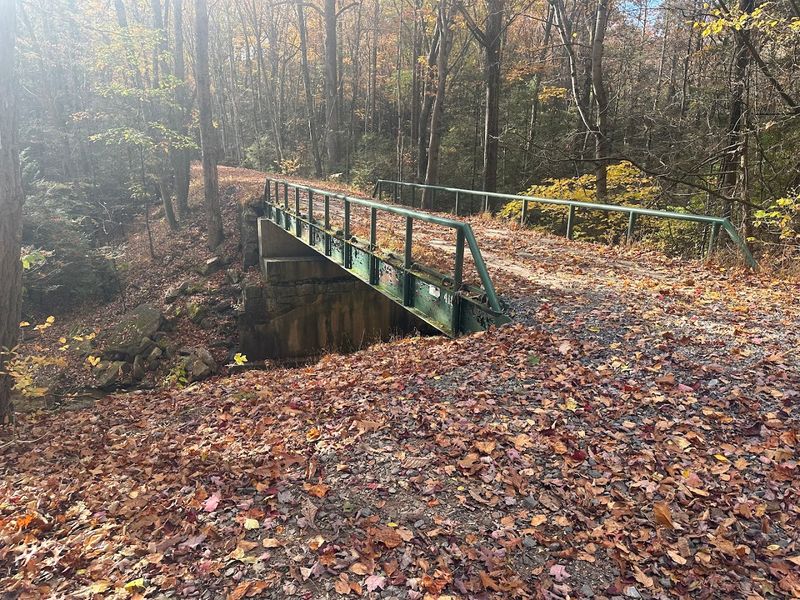
Rausch Gap feels like the kind of place you could miss entirely unless you know where to look. Hidden along the Stony Valley Rail Trail, this former coal town began in the early 1800s and faded after the mines and transportation links lost importance.
What remains now is tucked quietly into the woods, which somehow makes it more unnerving.
Instead of dramatic ruins, you get subtler evidence that a town once stood here. Stone foundations, cellar holes, and an old cemetery appear between trees, as if the forest has been patiently swallowing the place for more than a century.
That slow takeover gives Rausch Gap an especially intimate kind of abandonment.
I think this site works so well for history lovers because you have to imagine the missing pieces yourself. There are no big surviving streetscapes to explain everything for you, only fragments that hint at daily life, hard labor, and sudden decline.
When birdsong is the loudest sound, those fragments feel even heavier.
Today, hiking to Rausch Gap is part of the experience. You earn the eerie atmosphere one wooded mile at a time, and the isolation builds anticipation beautifully.
By the time you reach the foundations and graves, the quiet is so complete it feels almost staged.
Frick’s Lock
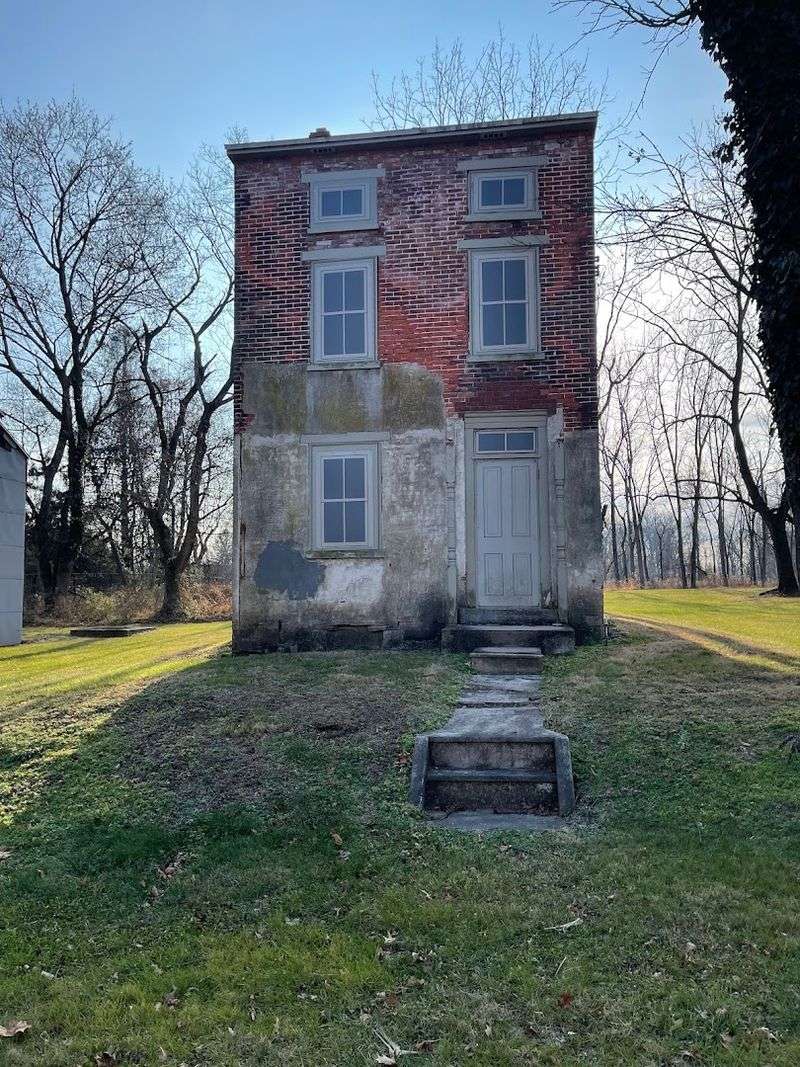
Frick’s Lock has a different mood from Pennsylvania’s mining ghost towns, and that is part of its appeal. This small village grew beside the Schuylkill Canal in the 1800s, where transportation once gave the area its purpose and rhythm.
Later, residents left during the era surrounding construction of the nearby Limerick Nuclear Power Plant, and the settlement slowly slipped into abandonment.
What survives is unusually atmospheric. Weathered stone buildings, canal features, and riverside scenery combine to create a place that looks suspended between preservation and disappearance.
You are not just seeing ruins here, you are seeing a transportation landscape that once connected people, goods, and opportunity.
That quiet canal setting adds a strange calm to the chills. Instead of dramatic destruction, Frick’s Lock unsettles you through emptiness, boarded structures, and the sense that life simply drifted away.
It is easy to picture families, workers, and boats moving through this corridor before everything stilled.
Because of safety and preservation concerns, access has changed over time, so it is smart to check local guidance before visiting. Even from a respectful distance, the site carries a haunting presence.
Frick’s Lock proves that ghost towns do not need fires or disasters to feel eerie, only silence and a strong memory of what was lost.
Eckley Miners’ Village
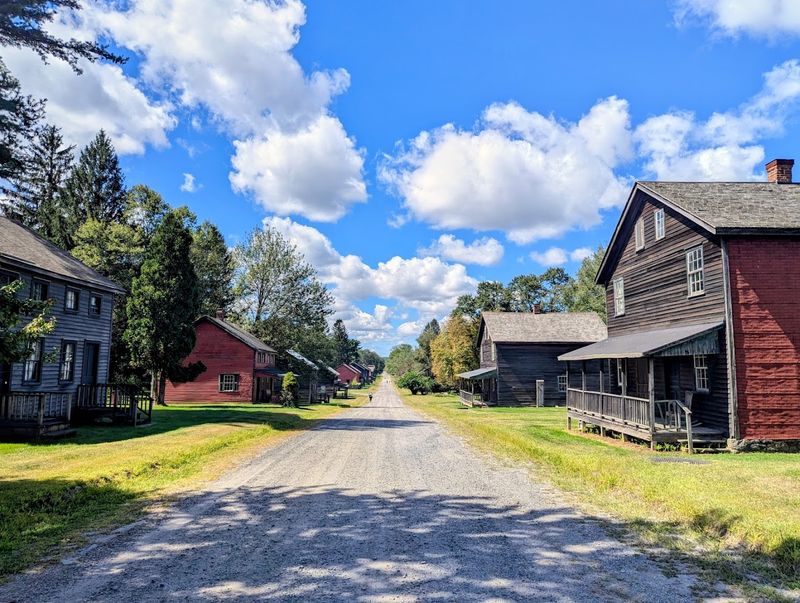
Eckley Miners’ Village is not forgotten in the same way as some other places on this list, but it still delivers chills. Founded as a nineteenth-century company town, it preserves the stark layout and plain buildings that shaped coal workers’ daily lives.
Walking here, you are not imagining a patch town, you are standing inside one of the state’s most complete survivors.
That authenticity is exactly what makes it feel haunting. The rows of homes, communal spaces, and industrial landscape reveal how tightly controlled life could be in mining communities, where work and home were tied together.
You can sense the hardship even before you read a single interpretive sign.
The village also has a cinematic edge because it served as a filming location for The Molly Maguires. Even without the movie connection, the streets feel ready-made for stories about labor struggle, secrecy, and loss.
Preserved buildings often hit harder than ruins because they leave less to the imagination.
If you visit, take your time instead of rushing for photographs. The details matter here, from the spacing of the houses to the plainness of the architecture and the setting against the region’s mining history.
Eckley is chilling not because it vanished, but because it lets the past stand in front of you almost intact.
Pithole
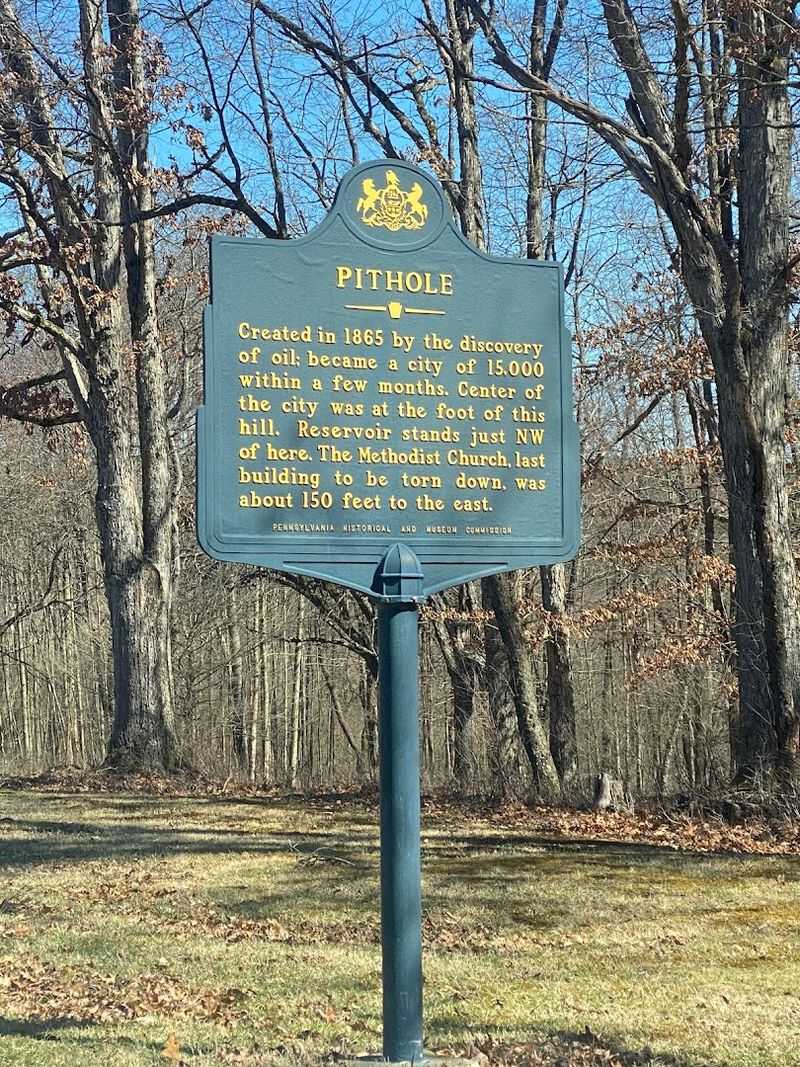
Pithole may be Pennsylvania’s most dramatic example of a boomtown that flamed out almost overnight. In the 1860s oil rush, its population reportedly shot to around fifteen thousand people within months, transforming open land into a bustling, rough-edged center of speculation and ambition.
Then production declined, fortunes shifted, and the town collapsed with stunning speed.
That rise and fall is what gives Pithole its eerie power. You are not looking at a settlement that faded slowly over generations, but at one that exploded into existence and then became obsolete almost as quickly.
The idea that hotels, businesses, homes, and entire streets could vanish after such a brief frenzy feels deeply unsettling.
Today the site is more interpretive landscape than ruin field, which can make it even more haunting. Open space forces you to imagine the crowded energy that once defined the valley, from muddy streets to oil money optimism.
Sometimes absence tells a bigger story than surviving buildings ever could.
If you like ghost towns with larger-than-life history, Pithole belongs near the top of your list. It captures the speed, greed, and instability of Pennsylvania’s early oil era in one unforgettable place.
Standing there now, it is hard not to think about how temporary even the loudest success can be.
Scotia
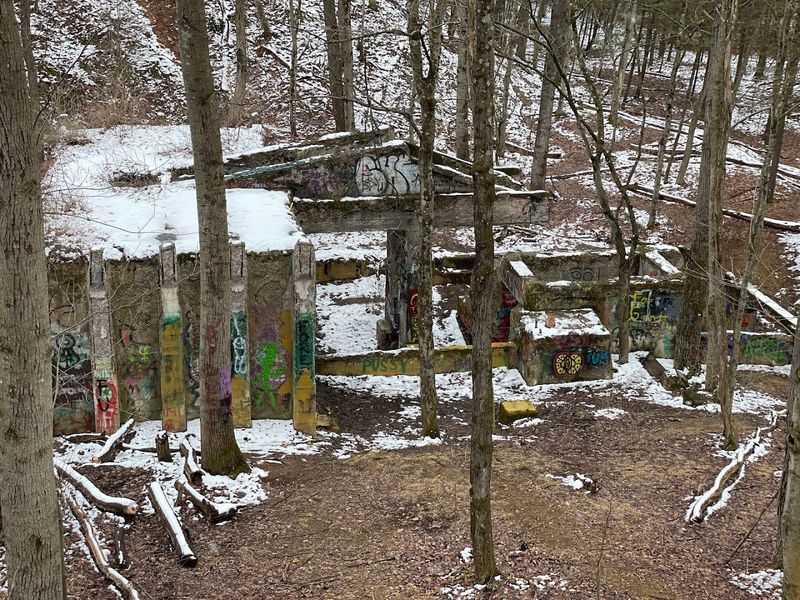
Scotia offers a different kind of ghost town experience because its roots are in iron rather than coal, oil, or lumber. Founded in the late nineteenth century as a company town tied to local iron mining and furnace operations, it grew with industrial purpose and then declined when that purpose disappeared.
Today its remnants lie within and around the Scotia Barrens, where history and unusual landscape meet.
That setting is a big part of the atmosphere. The barrens feel open, scrubby, and slightly otherworldly compared with the state’s denser forests, so old foundations and industrial traces seem even more exposed.
You get the sense of a place stripped back to essentials, with only fragments left to explain what once happened there.
Scotia is fascinating because it combines domestic and industrial loss in one area. You can think about workers and families on one hand, then imagine furnaces, ore, and railroad activity on the other.
Few ghost towns make the machinery of a vanished economy feel this close to the surface.
It is also one of the easier forgotten places to visit if you are already near State College. That accessibility does not lessen the chill.
In some ways it heightens it, because the remains sit surprisingly close to modern life while still feeling detached from it, like a hidden chapter beside familiar roads.
Byrnesville
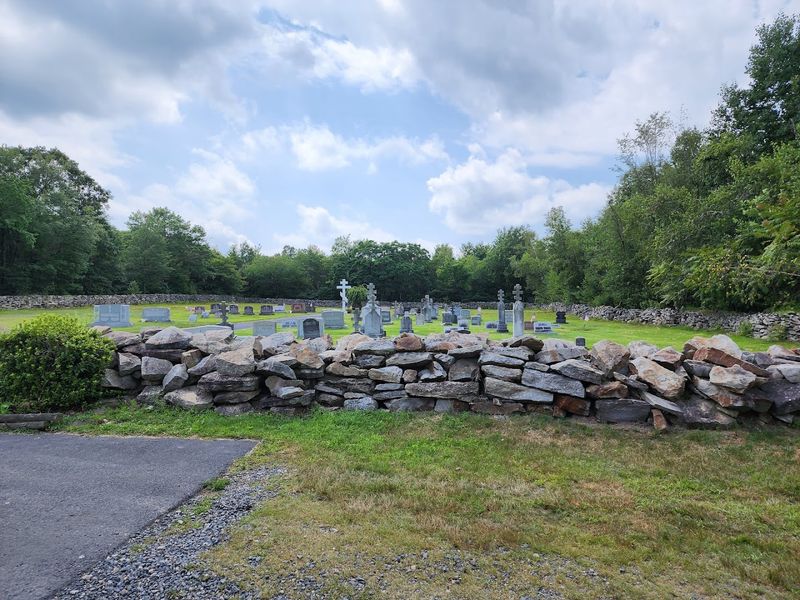
Byrnesville is often overshadowed by nearby Centralia, but its story is chilling in a quieter, more heartbreaking way. Founded in 1856 as a coal town, it survived for generations before the effects of the Centralia mine fire forced residents to relocate in the 1980s.
The disaster next door did not just consume one community – it erased neighboring lives too.
What makes Byrnesville so haunting is that very little dramatic ruin remains to tell the tale. Instead, the site is largely open land where a village once stood, and that emptiness carries its own emotional force.
You are standing in a space defined less by visible destruction than by total removal.
Because the town disappeared in the modern era, Byrnesville can feel closer to the present than older ghost towns. This is not some distant nineteenth-century collapse caused by exhausted resources alone, but a place where families were uprooted within living memory.
That immediacy gives the landscape an especially raw kind of silence.
If you are already exploring the Centralia area, Byrnesville adds important context. It reminds you that regional disasters spread beyond municipal lines and that maps do not always capture human loss.
In some ways, Byrnesville is the chill after the headline, a blank space that proves how far the consequences really reached.
Alvira
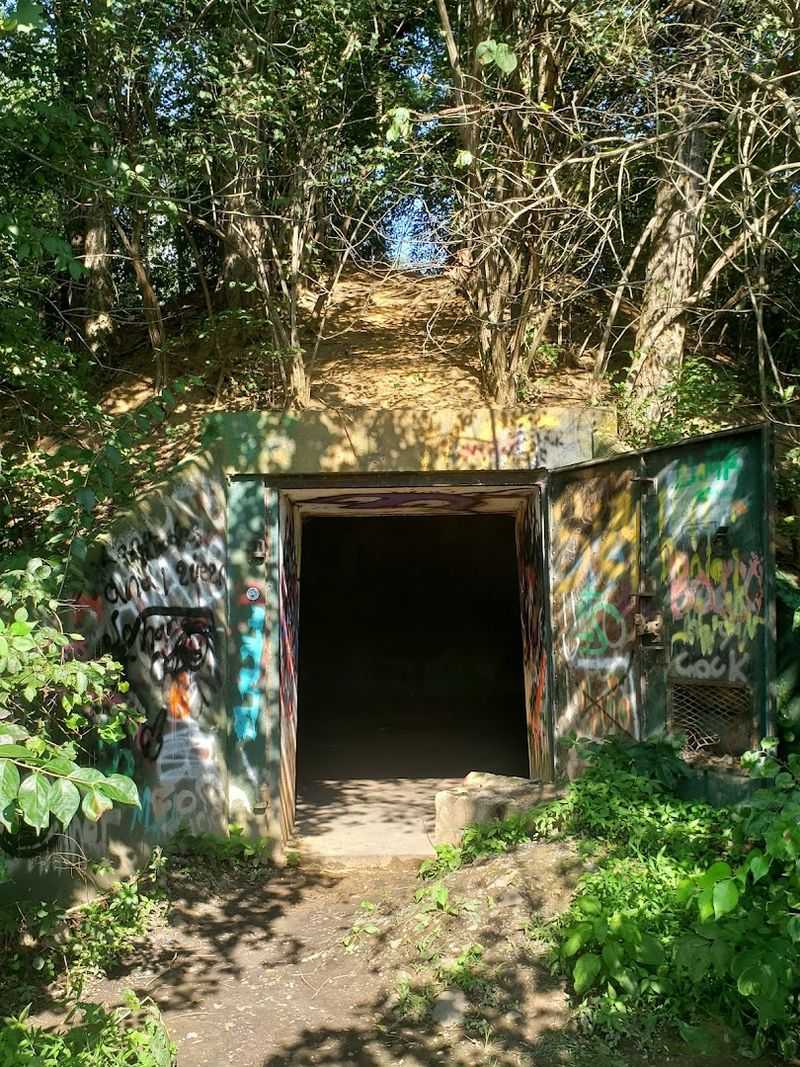
Alvira feels eerie because it was not abandoned by slow decline alone – it was erased by wartime urgency. In 1942, the federal government condemned the village to build the Pennsylvania Ordnance Works, forcing families from homes, farms, and churches with almost no time to adjust.
Today, you can still find scattered foundations and the haunting stone remnants of nearby cemeteries hidden in State Game Lands 252. Walking the quiet roads, you get the strange sense that ordinary life was interrupted mid-sentence, then buried beneath weeds, deer trails, and decades of uneasy silence that still cling to the hillsides here.
Yellow Dog Village
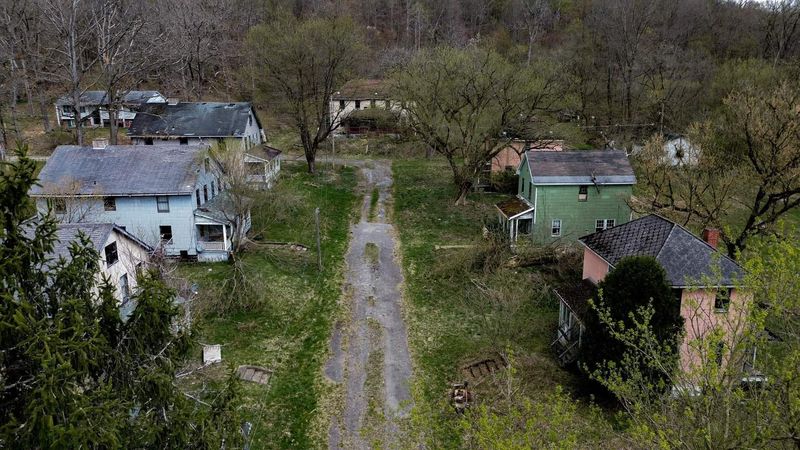
Yellow Dog Village has the kind of name that sounds almost playful, which makes the reality even creepier. This former company town in Armstrong County was tied to the limestone industry, and after the jobs disappeared, empty houses and decaying buildings were left to weather in uneasy rows.
Fire, vandalism, and time have stripped much of the village, but the surviving shells still carry a stubborn sense of presence. Standing there, you can picture porches, conversations, and lights in windows, then feel that image collapse all at once when the woods press in and the silence takes over around you.