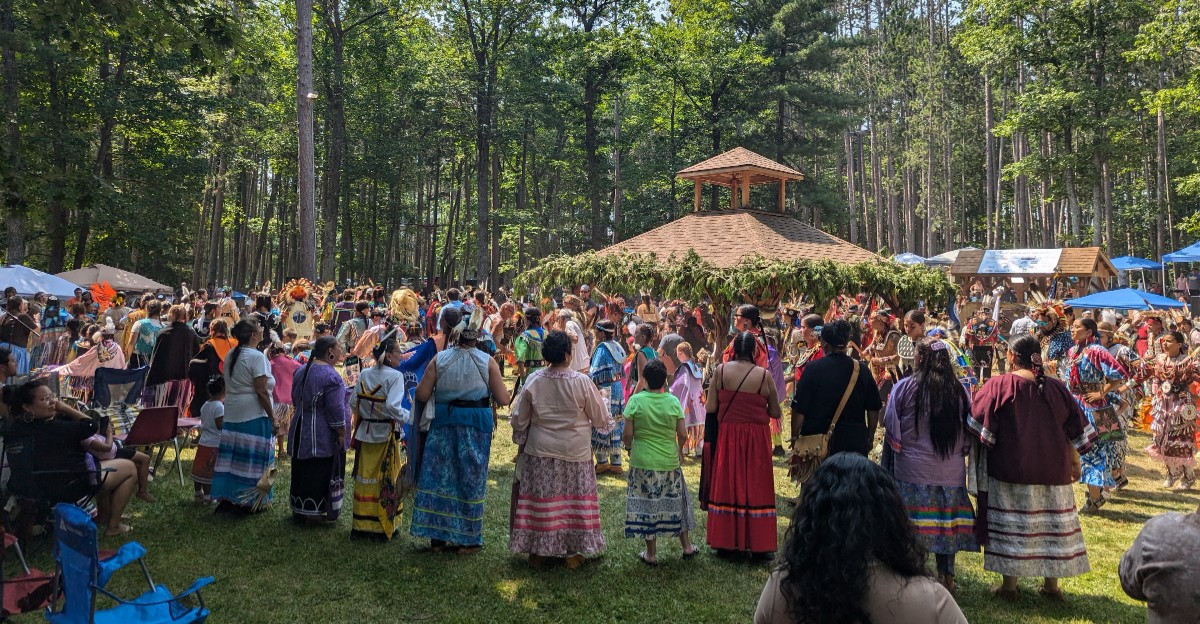
When the drums start, generations gather.
Every summer, the sound of drums carries across Keweenaw Bay as families make their way to Ojibwa Campground in Baraga for the Maawanji’iding Pow Wow.
Grandparents, parents, children, dancers, singers, and visitors all come together for a weekend filled with music, movement, food, and friendship.
This is more than a summer gathering.
It is a chance to see Ojibwe traditions shared from one generation to the next, with dancers filling the circle, drums setting the rhythm, and families returning year after year.
For longtime attendees, the powwow can feel like a homecoming.
For first-time visitors, it offers a memorable introduction to a celebration shaped by community, heritage, and pride.
Come for the drums, stay for the stories, and discover what makes this Upper Peninsula gathering so special.
A Powwow Rooted In Keweenaw Bay Ojibwe Community
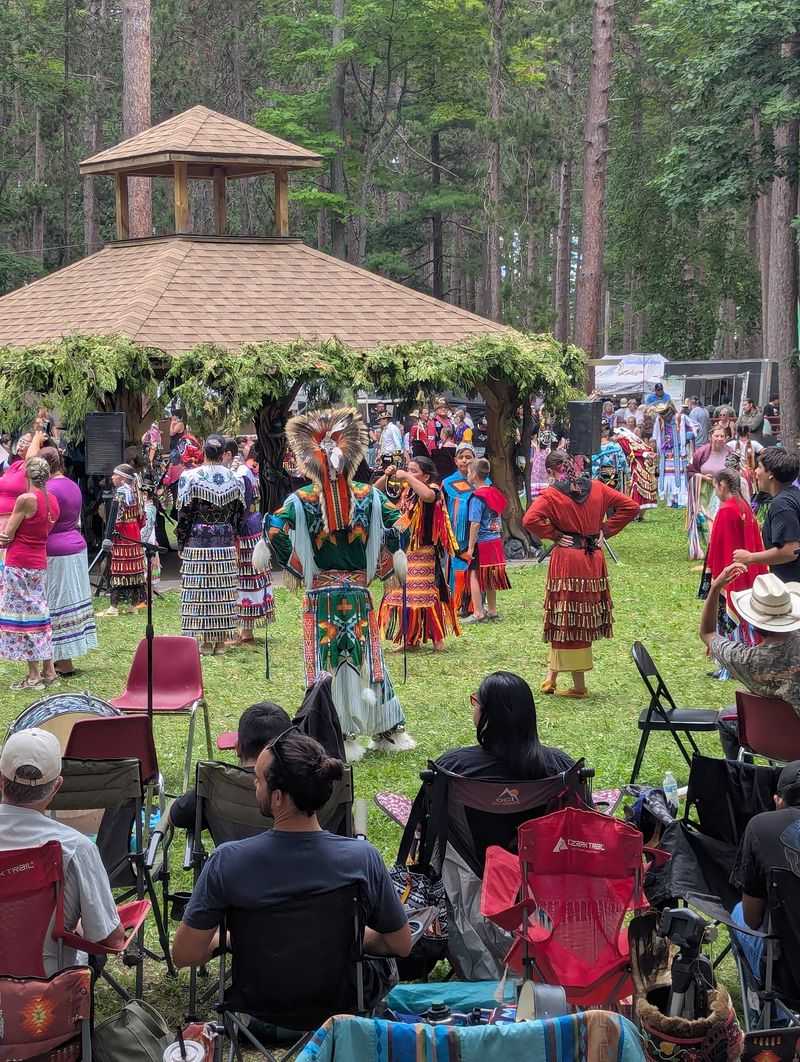
Picture a summer weekend where old friends hug, kids run between camp chairs, and the smell of wood smoke drifts off Lake Superior. That is the feeling of Maawanji’iding, an annual gathering tied closely to the Keweenaw Bay Indian Community.
The word Maawanji’iding comes from the Ojibwe language and is often understood as gathering together. The name fits perfectly.
For decades, the event has been held at Ojibwa Campground in Baraga, right along the shore of Keweenaw Bay.
Families return year after year, and many can point to the spot where their grandparents once sat. Visitors are welcome too, and they often leave feeling like part of something bigger than a festival.
At its heart, the powwow celebrates Native music, dance, food, and fellowship. It is a chance for the community to honor its traditions in public while sharing them with neighbors.
If you want to understand Upper Peninsula culture on a deeper level, spending a weekend here is one of the best ways to start.
Hear The Drums That Bring Everyone Into The Circle
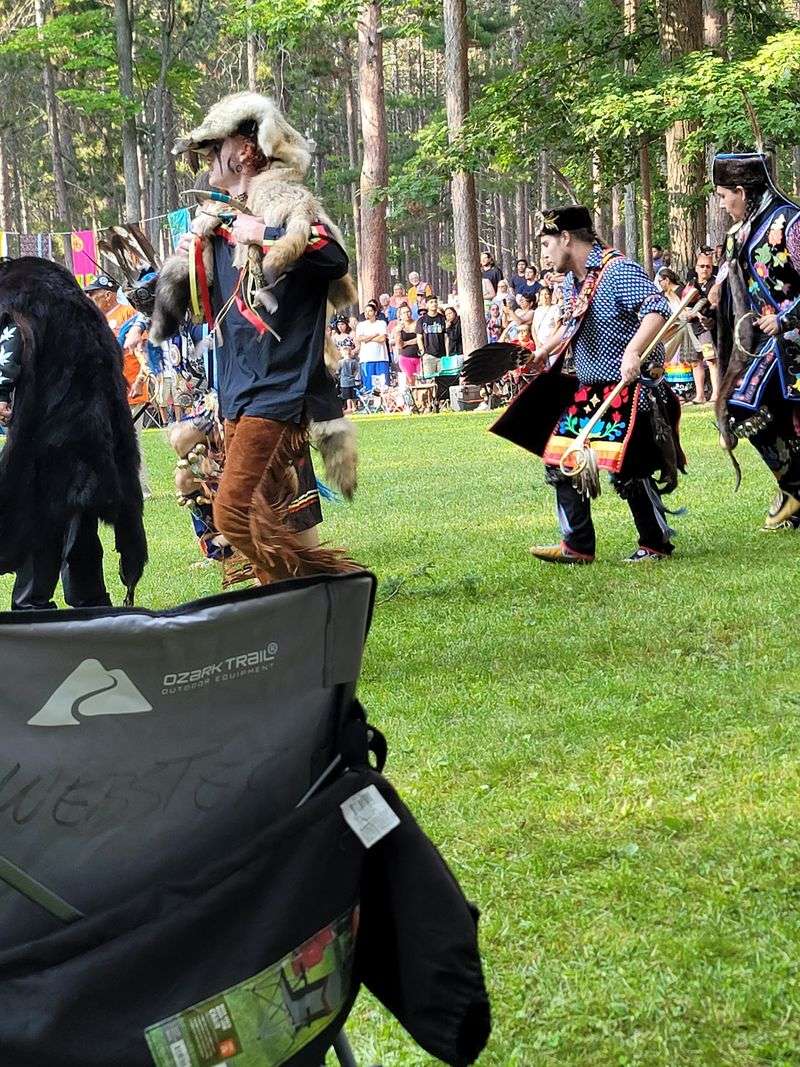
Boom. Boom.
Boom. You will feel it in your chest before you even reach the arena.
Many people describe the drum as the heartbeat of the powwow, and once you hear it, you will understand why.
A drum at a powwow means more than the instrument itself. It also refers to the group of singers who sit around it, keeping a steady beat while they sing songs passed down through generations.
Without them, no dancing happens.
One group gets a special honor as the host drum. They often open important songs and help guide the flow of the weekend.
Past Maawanji’iding events have featured home drums, host and co-host drums, plus invited drums from other communities.
Here is a helpful tip. Find a seat near the arbor for a while and simply listen.
Notice how the songs change in speed and feeling. Some are lively, while others are slow and serious.
You may start to recognize favorites by Sunday afternoon.
Watch Grand Entry Begin The Celebration
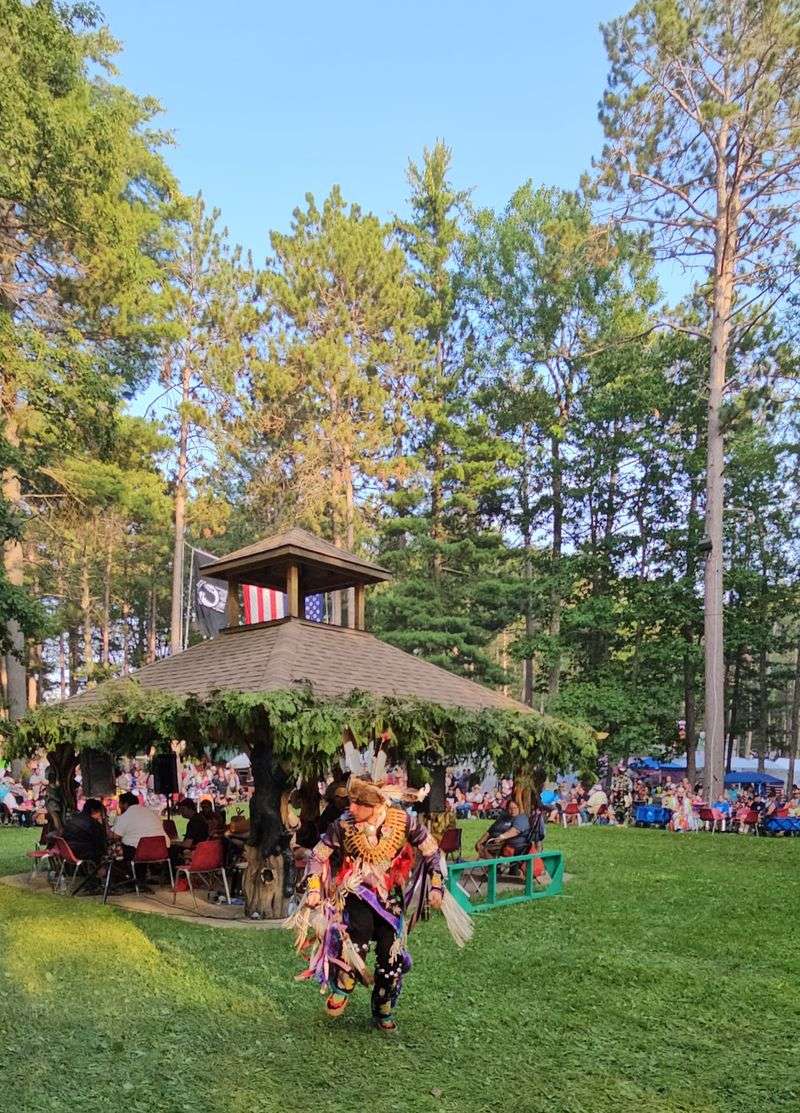
Ask anyone who has attended which moment gives them goosebumps, and many will say Grand Entry. It is the official start of each dance session, and the energy is impossible to miss.
During Grand Entry, dancers walk into the arena together in a long, colorful line. Eagle staffs and flags usually lead the way, followed by veterans, honored guests, and then dancers grouped by style and age.
The drum sings a special song as the circle slowly fills.
Recent Maawanji’iding schedules have included Grand Entries on Friday evening, two on Saturday, and one on Sunday afternoon. That gives you several chances to catch it, even if your weekend is busy.
Plan to arrive early so you can grab a good viewing spot. When the announcer asks everyone to stand and remove their hats, please do so.
It is a sign of respect. Then just watch as hundreds of dancers move as one, turning the grass circle into a swirl of color and sound.
See Generations Of Dancers Carry On Family Traditions
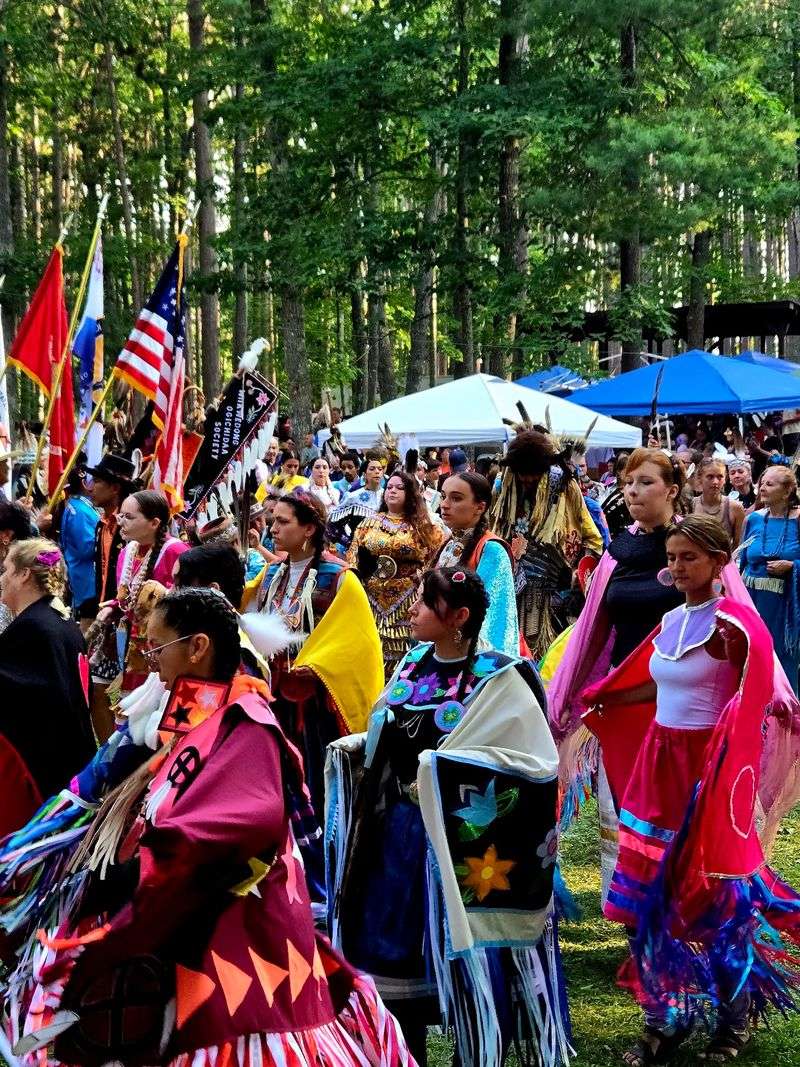
A tiny girl, maybe five years old, bounces along behind her mother, copying every step. A few feet away, an elder moves slowly and proudly.
Scenes like that are what make this powwow so special.
Dancing at Maawanji’iding is truly for every age. Recent programs have included junior girls and boys divisions alongside adult competitions.
Kids learn by watching older relatives, and many of them wear regalia that was made by a grandmother or aunt.
Honored elders hold a respected place in the circle too. Their knowledge keeps songs, steps, and stories alive for the next generation.
When you see an elder dance, you are watching decades of practice and memory.
For families visiting, this is a wonderful lesson to share with your own children. Talk with them about how traditions are passed down, maybe even ones from your own family.
You might be surprised how much young visitors connect with seeing kids their age dancing with such confidence and pride.
Notice The Regalia, Movement And Meaning
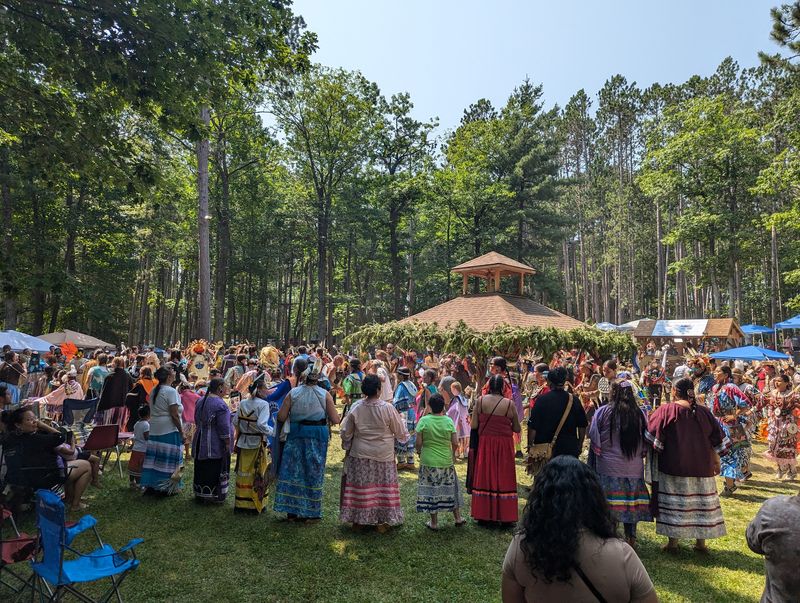
Some dancers spend months, even years, finishing a single outfit. Every bead, ribbon, and feather is placed with care.
That is why you will hear people call it regalia, never a costume.
Regalia connects to a dancer’s identity, family, and community. Floral beadwork, a common Ojibwe design, might honor a relative or reflect a teaching.
Many pieces are gifts, and some are handed down through families for generations.
Each dance style also has its own kind of regalia. Jingle dresses, fancy shawls, and woodland outfits all look different because each one matches the movements and history of that dance.
Michigan’s official tourism information encourages visitors to learn and observe respectfully at powwows. So while you admire the colors, try to look deeper.
Notice how fringe sways during a spin or how footwork matches the drumbeat. Never touch someone’s regalia without permission.
If a feather or item falls, let dancers or arena staff handle it, since some objects carry special meaning.
Experience The Food, Vendors And Social Side
Fair warning: you will probably smell the fry bread before you see it. Golden, puffy, and best eaten warm, it is a must-try at almost every powwow.
Food stands at Maawanji’iding often serve Native favorites alongside classic summer snacks. Past programs have even featured feasts and fry bread competitions, where cooks show off family recipes.
If you get the chance to try a winner, take it.
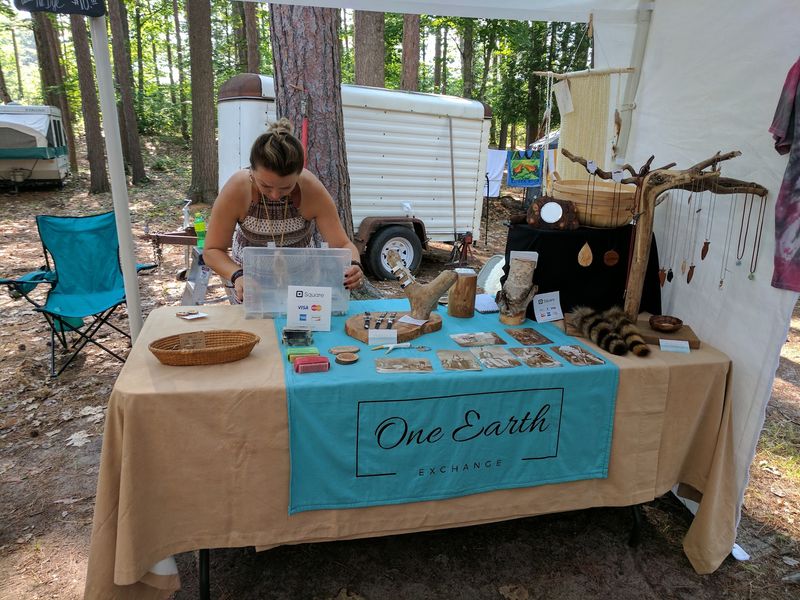
Wander through the vendor area too. You will find beadwork, quilts, jewelry, art, and other handmade items.
Buying directly from Native artists supports their craft and lets you take home something truly meaningful.
The social side matters just as much as the arena program. Between scheduled events, people catch up, share meals, and listen to visiting drums.
Sometimes the announcer invites everyone to join intertribal or social dances. If you are invited, feel free to step in and dance respectfully.
Bring some cash, since not every vendor takes cards, and connections at outdoor events can be spotty.
See How Veterans And Elders Are Honored
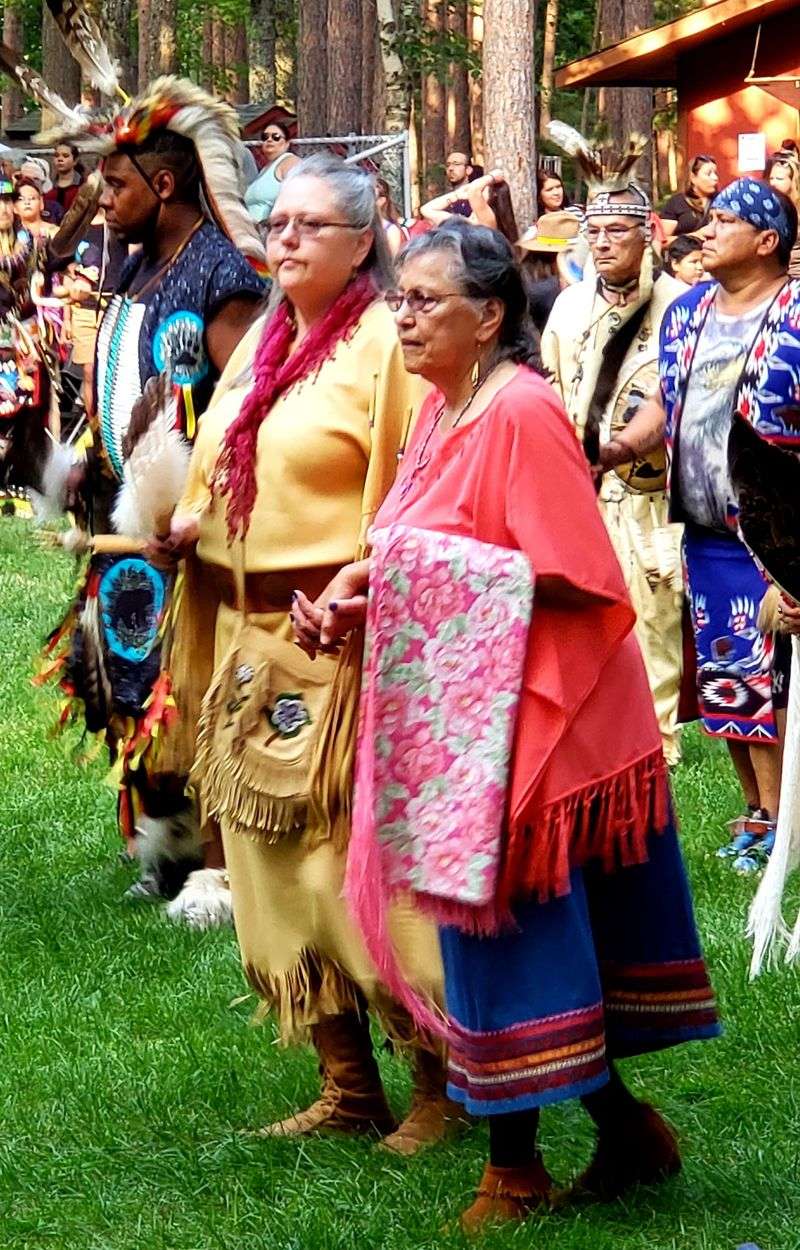
Native Americans have served in the U.S. military at very high rates compared to other groups. At a powwow, that service is never forgotten.
Veterans often carry the eagle staff and flags during Grand Entry. Special songs honor them and the flag, and everyone is asked to stand.
Past Maawanji’iding programs have included veteran specials, giving the whole crowd a chance to show gratitude.
Elders receive deep respect too. Past programs have named honored elders, recognizing people whose wisdom and leadership guide the community.
In many families, elders are the keepers of language, songs, and stories.
As a visitor, you can join in the respect. Stand when asked, stay quiet during honor songs, and listen to the announcer explain each moment.
If a veteran or elder is offered a seat or served food first, that is the custom. These moments are a powerful reminder that powwows celebrate people, not just performances.
Many visitors say the honor songs are what they remember most.
Understand The Respect Expected Inside The Circle
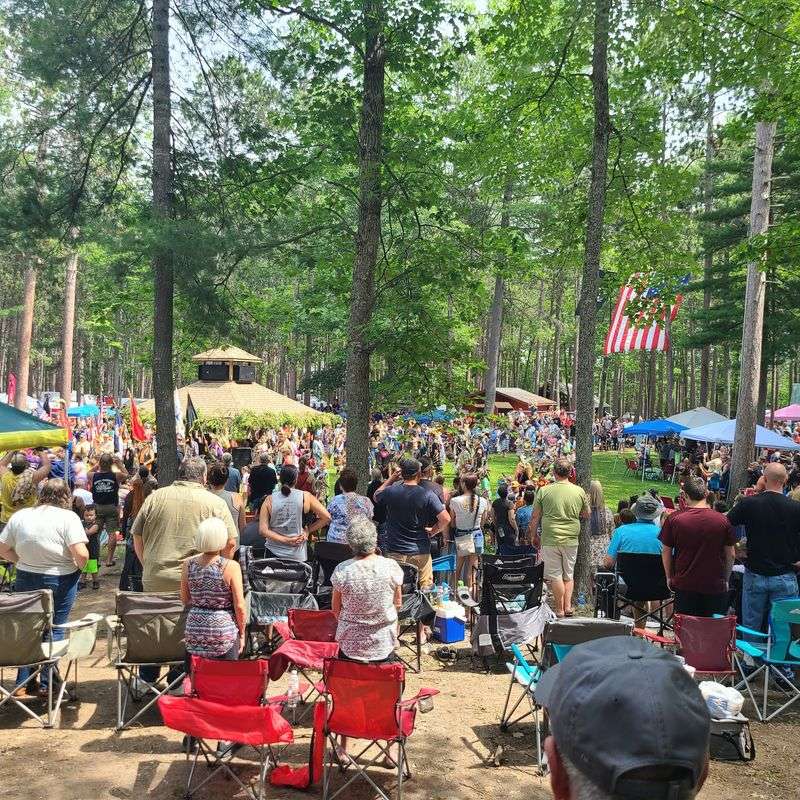
Think of the announcer as your best friend for the weekend. That voice over the loudspeaker explains what is happening, when to stand, and when photos are not allowed.
Listen closely and you will rarely go wrong.
Some parts of a powwow are spiritual or ceremonial. They are not shows put on for an audience.
During those times, stay quiet, put your phone away, and remove your hat if asked.
Always ask before taking pictures of dancers or their regalia. Most people are happy to say yes, but asking shows respect.
Never walk across the arena unless you are invited, and keep children from running into the dance area.
Michigan’s tourism guidance encourages visitors to learn about powwow customs before attending. Doing a little reading ahead of time helps you feel comfortable and confident.
If you are unsure about something, politely ask a volunteer. People are usually glad to answer respectful questions from curious guests, and you will learn far more that way.
Plan Your Visit To Ojibwa Campground
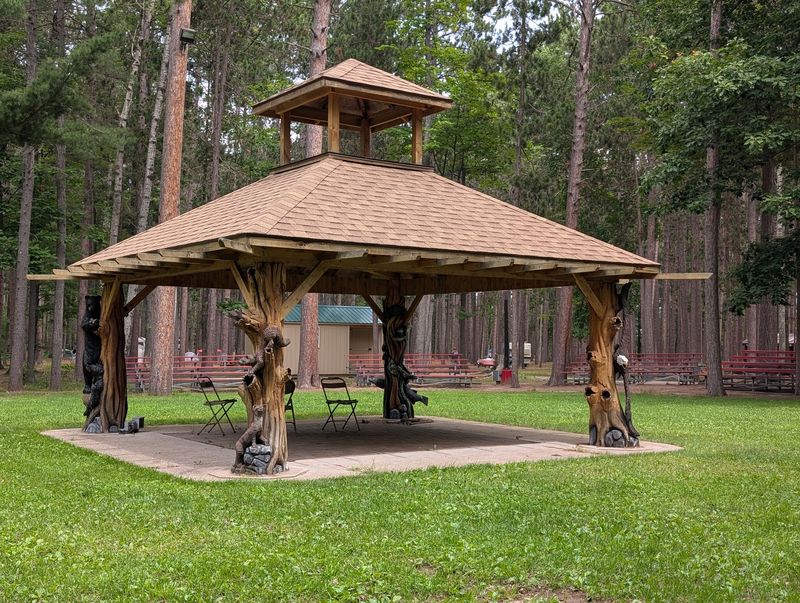
Ready to go? A little planning makes the trip much smoother.
Maawanji’iding takes place each year in late July at Ojibwa Campground in Baraga, Michigan 49908.
The 2026 event ran July 24 to 26. Grand Entries were Friday at 7 p.m., Saturday at noon and 7 p.m., and Sunday at noon.
Check for updated times each year, since schedules can shift.
Admission details are announced closer to the event, so watch for news from the Keweenaw Bay Indian Community. You can also call (906) 353-7611 or (906) 353-6955 with questions about parking, camping, or vendors.
Camping right at the campground makes it easy to enjoy every session, but spots may fill fast. Pack lawn chairs, sunscreen, bug spray, water, a rain jacket, and a warm layer for chilly lakeside nights.
Bring cash for food and crafts. Finally, follow any posted rules about alcohol, pets, or photos.
Arriving prepared lets you relax and soak in the whole experience.