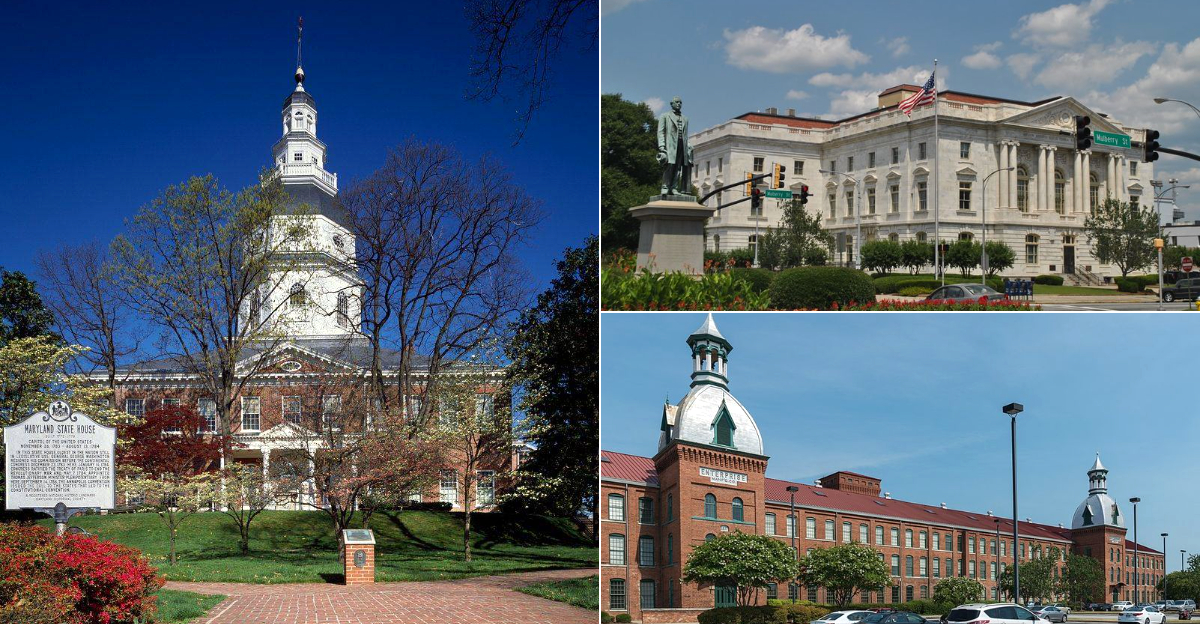
Georgia’s history isn’t confined to museums and historic sites; it often unfolds along streets that have witnessed centuries of change while retaining much of their original character.
Across the state, these storied roads pass by preserved homes, historic storefronts, churches, and landmarks that reflect Georgia’s colonial beginnings, agricultural heritage, and Southern traditions.
Some streets are famous for their architecture, while others tell stories through the communities that have gathered there for generations.
Walking these thoroughfares offers a chance to experience history in a way that feels personal and immediate, with every block revealing another connection to the past.
Many remain vibrant centers of local life, blending modern businesses with buildings that have stood for well over a century.
Together, these Georgia streets offer some of the most immersive ways to experience the state’s rich Southern heritage.
1. River Street – Savannah, Chatham County
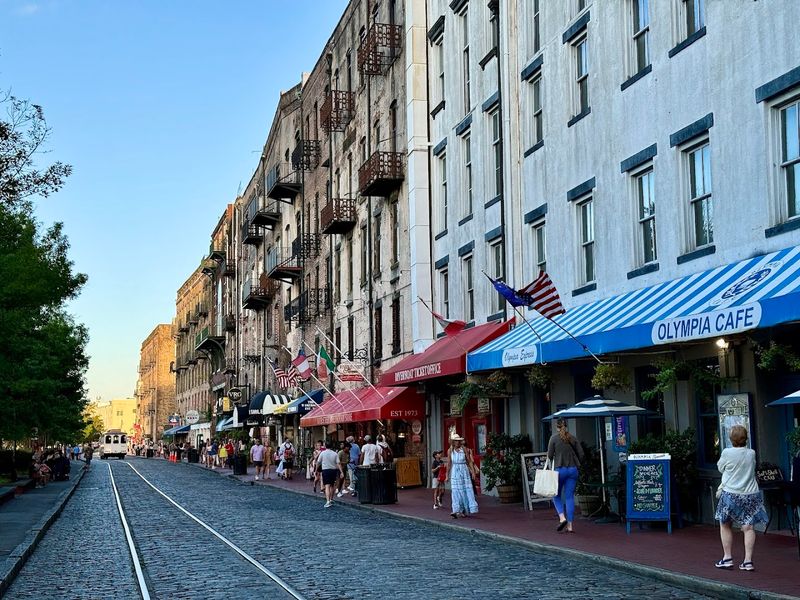
Brick warehouses, worn cobblestones, and the smell of the river create an atmosphere that feels older than modern Georgia itself.
You can sense commerce, conflict, and reinvention layered into every step before the name River Street in Savannah fully comes into view.
This waterfront corridor began as the economic heartbeat of colonial and nineteenth-century Savannah, where cotton, timber, and enslaved labor shaped fortunes and the port defined the city.
Today, the old storage buildings hold shops, galleries, and restaurants, yet their heavy walls still hint at the work once done inside.
Staircases and ramps climbing the bluff remind you that Savannah was built between river trade below and planned elegance above.
Looking outward, the passing cargo ships make the street feel connected to a larger Atlantic story rather than frozen in nostalgia.
What makes this place memorable is how openly it shows the rough edges of history alongside postcard beauty.
Markers, preserved structures, and nearby museums help you understand the realities of maritime trade, yellow fever, fires, and wartime uncertainty.
Either way, River Street turns Georgia history into something tactile, immediate, and impossible to separate from the present.
2. Jones Street – Savannah, Chatham County
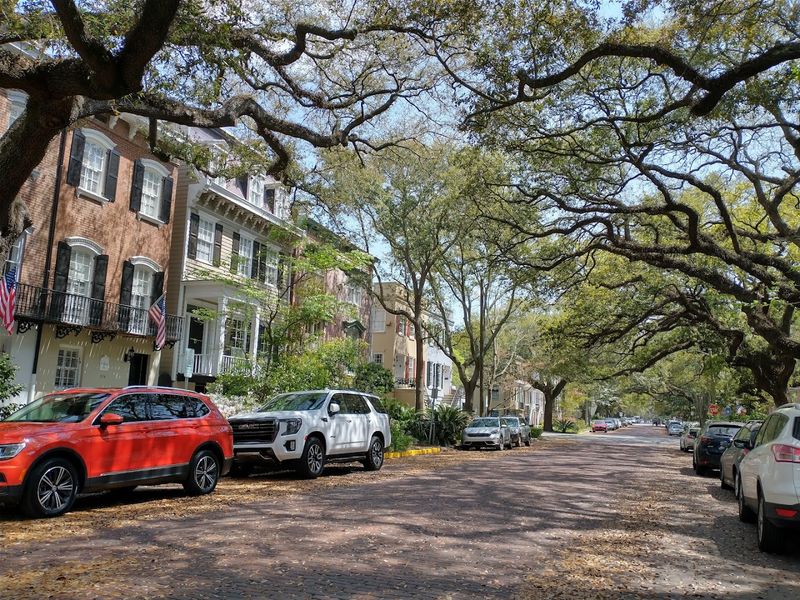
Shade from live oaks, iron railings, and rows of townhouses create a kind of quiet grandeur that feels almost cinematic.
Before you even notice the street sign, you understand why Jones Street in Savannah is often described as one of the most beautiful residential streets in America.
Its appeal is not flashy, but rooted in proportion, walkability, and the deep consistency of Savannah’s nineteenth-century urban design.
Laid out within the city’s celebrated grid, the street reflects how public squares, modest setbacks, and harmonious architecture can create an enduring sense of place.
Many homes here date to the mid nineteenth century and show off the brick, stucco, stoops, and restrained ornament that define Savannah’s historic district.
As you walk, the atmosphere feels intimate, yet never cramped, because the planning leaves room for light, trees, and human scale.
History here is domestic rather than commercial, which makes it especially revealing.
This is where you can imagine everyday life unfolding through wars, epidemics, economic swings, and preservation battles that could have erased the whole scene.
The street’s survival says a lot about Savannah’s commitment to protecting neighborhood character, not only landmarks with famous names.
3. Broad Street – Augusta, Richmond County
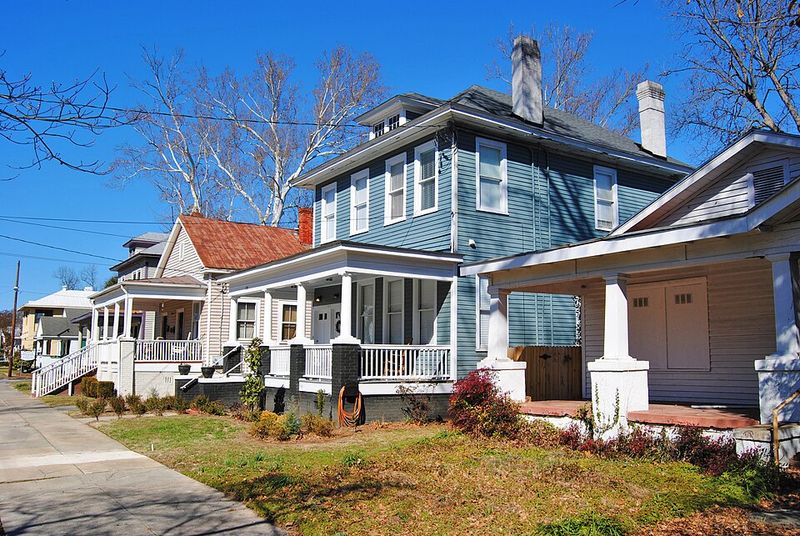
Wide views, old storefronts, and a steady sense of civic importance give this corridor an immediate feeling of permanence.
Long before you reach the center of Broad Street in Augusta, the scale tells you this was built to be seen, used, and remembered.
Founded in one of Georgia’s earliest inland cities, the street became a commercial and political spine where trade, transportation, and public life converged.
Its remarkable width reflects planning decisions from the eighteenth century, and that physical openness still shapes your experience today.
Historic churches, theaters, hotels, and commercial blocks reveal how Augusta evolved from frontier settlement to cotton market to modern regional hub.
Walking here, you can trace layers of prosperity, disaster, and renewal in architecture that ranges from restrained masonry facades to grand civic landmarks.
Broad Street also carries the memory of conflict and resilience.
Augusta’s role during the Civil War, its later industrial expansion, and repeated efforts to revive downtown all left marks that reward a slower look.
Public art, preserved facades, and active local businesses keep the district from becoming a static museum piece.
4. Main Street – Madison, Morgan County
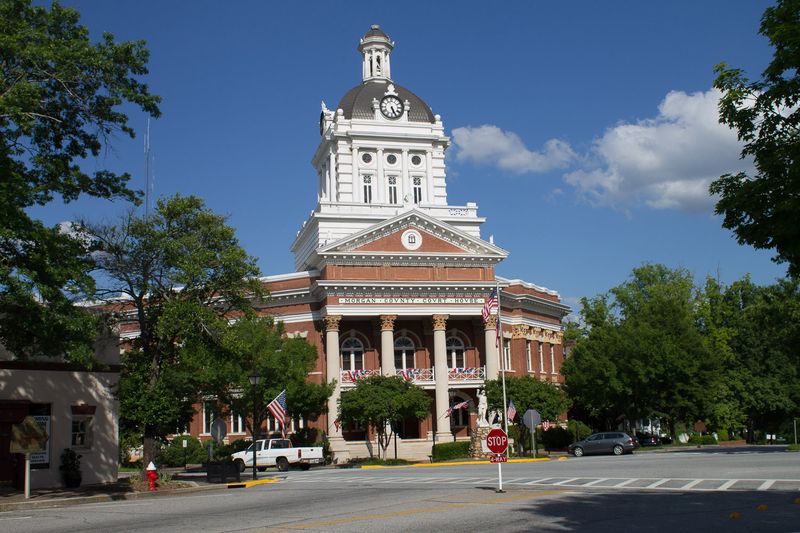
Gentle shade, church steeples, and storefronts that still seem scaled for conversation set the tone before the destination is fully clear.
In Madison, Main Street unfolds as a polished small-town corridor where prosperity, preservation, and local pride have worked together for generations.
The result is one of Georgia’s most rewarding places to see how nineteenth-century architecture can remain central to everyday community life.
Madison is especially known for its antebellum heritage, and the broader historic district surrounding Main Street gives that reputation real depth.
Brick commercial buildings, nearby mansions, civic institutions, and mature trees create a setting that feels both refined and approachable.
As you walk, you notice how the town’s scale invites looking up, pausing often, and connecting the downtown core to the neighborhoods beyond it.
History here is shaped by agriculture, rail connections, and the town’s ability to adapt without sacrificing character.
Stories of Civil War survival, postwar recovery, and later preservation efforts all contribute to the atmosphere you experience now.
Shops and restaurants animate the blocks, but they do not drown out the sense that this place has been carefully carried forward.
Main Street in Madison works because it never feels staged for visitors alone.
5. Mulberry Street – Macon, Bibb County
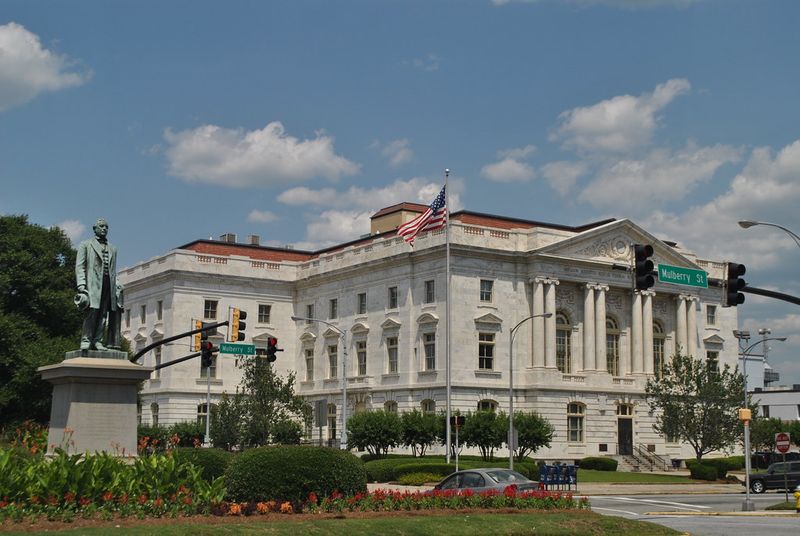
Red brick facades, church towers, and the hum of a city that once imagined itself as a major Southern capital set the mood immediately.
Only after taking in those layers does Mulberry Street in Macon reveal why it matters so much to Georgia history.
This corridor links religion, commerce, architecture, and civic ambition in a way that feels distinctly central Georgian rather than coastal or mountain inspired.
The street is closely tied to several of Macon’s most recognizable landmarks, including impressive churches and historic institutional buildings.
Its surrounding downtown fabric reflects the city’s rise in the nineteenth century as a transportation center, cotton market, and cultural crossroads.
Walking here, you can see how broad avenues and substantial buildings projected confidence during periods when Macon was expanding rapidly.
Mulberry Street also benefits from Macon’s layered identity.
Indigenous history, railroad growth, African American heritage, and later music culture all shape the wider context, making a simple stroll feel unexpectedly rich.
You are never far from reminders that this city helped connect rural Georgia to national markets and to new cultural currents.
What makes the street memorable is the blend of monumentality and accessibility.
6. Greene Street – Augusta, Richmond County
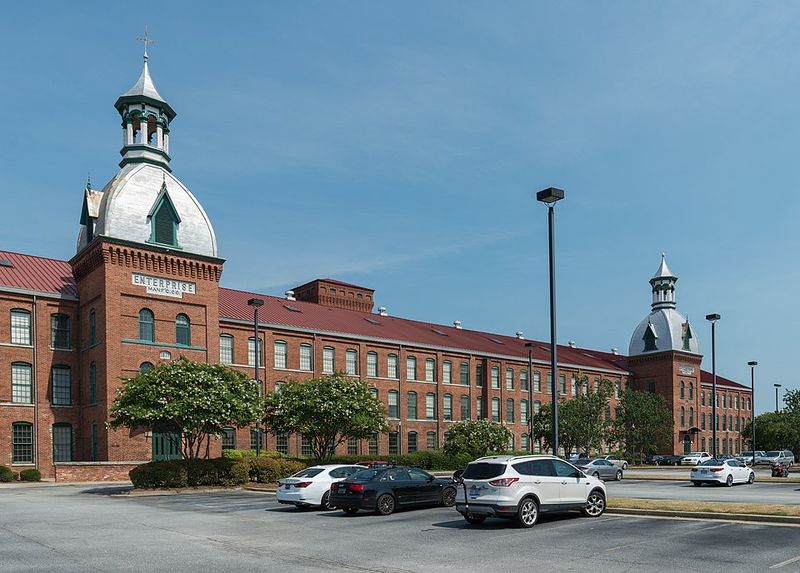
A broad green median, stately houses, and old trees immediately create a quieter kind of historic drama than the nearby commercial core.
Greene Street in Augusta feels residential, ceremonial, and deeply layered, as though the city decided to showcase refinement in boulevard form.
Originally planned as one of Augusta’s principal streets, it evolved into a distinguished corridor lined with homes, churches, and institutions.
The landscaped center gives the street an almost park-like rhythm, softening the urban setting while emphasizing the architecture around it.
As you move along the blocks, styles from different eras reveal how Augusta’s elite and civic leaders reshaped the avenue over time.
You can read changing tastes, economic confidence, and urban planning priorities through porches, columns, setbacks, and masonry details.
Greene Street also reflects Augusta’s resilience.
The city faced fires, war, economic shifts, and modernization pressures, yet this avenue retains a strong sense of continuity that links those experiences together.
Its preservation helps you understand that history is not only told in famous battle sites or bustling main streets, but in residential spaces built to express stability and status.
Today, the street remains one of Augusta’s most graceful historic landscapes.
7. Broad Street – Rome, Floyd County
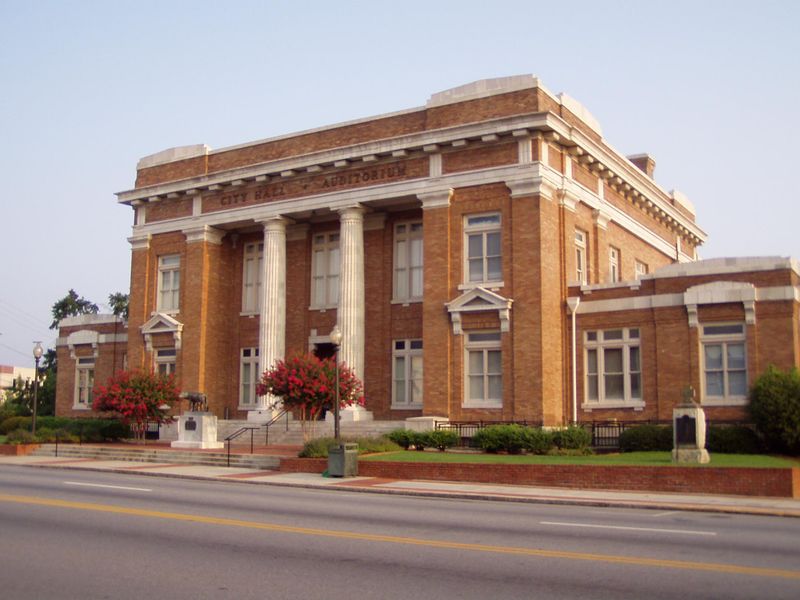
Between rivers, hills, and brick storefronts, the setting already feels different from Georgia’s larger historic cities.
Then Broad Street in Rome comes into focus as a downtown corridor where local commerce and civic identity still feel tightly intertwined.
Founded in the 1830s near the meeting of the Etowah, Oostanaula, and Coosa river system, Rome developed around transportation, trade, and regional influence.
The street’s scale is inviting rather than grand, which makes its history feel especially approachable.
Historic commercial blocks, upper-story windows, and long views toward landmarks like the town clock create a downtown that remains visually coherent.
As you walk, you can sense how this was built to serve farmers, merchants, travelers, and professionals in a growing north Georgia center.
Broad Street also carries the memory of the Civil War and the Reconstruction era that followed.
Rome’s strategic importance brought destruction and upheaval, yet the city’s later recovery shaped the business district you see today.
Preserved buildings and active storefronts make the street feel less like a relic and more like an inherited framework still doing its job.
What I find most compelling is the balance between everyday usefulness and historic atmosphere.
8. Green Street – Gainesville, Hall County
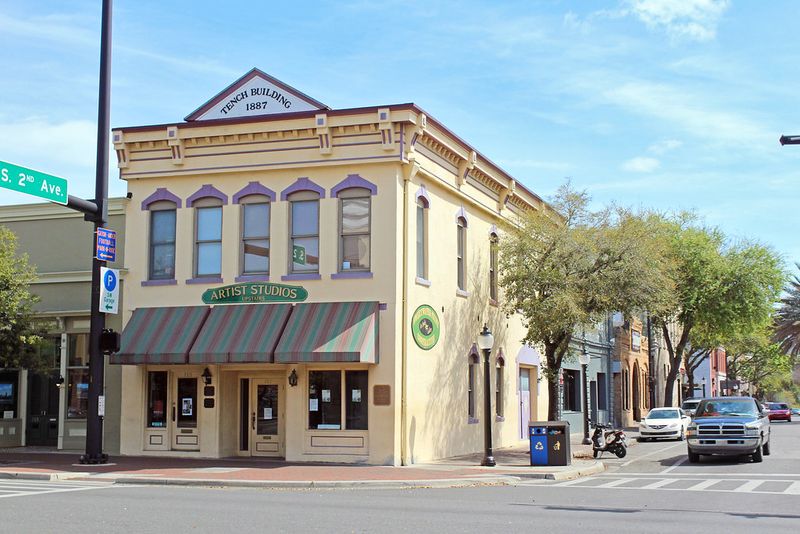
Large lawns, mature trees, and gracious homes give this avenue a dignified calm that feels instantly set apart from ordinary city traffic.
As Green Street in Gainesville unfolds, you begin to see it as a residential showcase built to express confidence, taste, and regional prominence.
Its history is closely tied to Gainesville’s rise as an important northeast Georgia center for commerce, health tourism, and later industry.
Many of the houses along the street date from the late nineteenth and early twentieth centuries, when prosperous families invested in architecture meant to impress.
Victorian, Classical Revival, and other period styles create an outdoor survey of changing aspirations and decorative preferences.
Because the homes are set within generous landscapes, the street feels simultaneously grand and breathable, preserving the atmosphere that first made it desirable.
Green Street also tells a story about recovery.
Gainesville endured devastating tornadoes and economic shifts, yet this corridor remains a strong visual reminder of the city’s endurance and reinvention.
Walking here helps you understand how elite residential districts can preserve community memory just as powerfully as courthouse squares or railroad depots.
You are not looking at isolated mansions, but at a continuous streetscape shaped by decades of local ambition and stewardship.
9. Washington Street – Jefferson, Jackson County
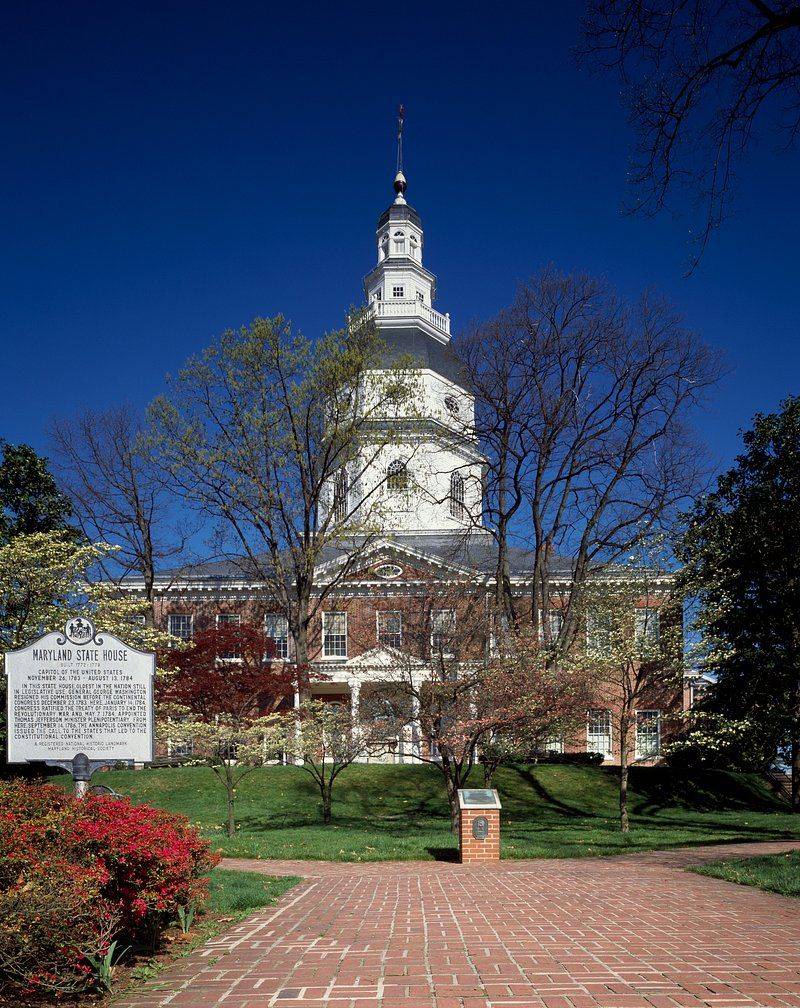
Courthouse-town rhythms, brick storefronts, and a pace that encourages lingering make this stretch feel grounded in civic tradition.
On Washington Street in Jefferson, history comes through not in spectacle but in the steady familiarity of a county seat built to serve its region.
That modesty is part of the appeal, because it lets you focus on how daily life and public life have long overlapped here.
Jefferson developed as the seat of Jackson County, and Washington Street reflects that administrative role through its downtown layout and enduring institutions.
Historic commercial buildings, nearby government functions, and traditional small-town streetscapes create a setting that feels practical, legible, and rooted.
When you walk these blocks, you can imagine farmers, lawyers, shopkeepers, and families using the same corridor across generations.
The street also reveals the broader story of northeast Georgia’s transition from agricultural economy to more diverse modern development.
Preservation efforts have helped maintain a recognizable historic core even as the region has changed rapidly around it.
That continuity matters, because it preserves a sense of civic memory that newer suburban growth often struggles to provide.
Washington Street will not overwhelm you with monumental scale, but that is exactly why it resonates.
10. Main Street – Jonesboro, Clayton County
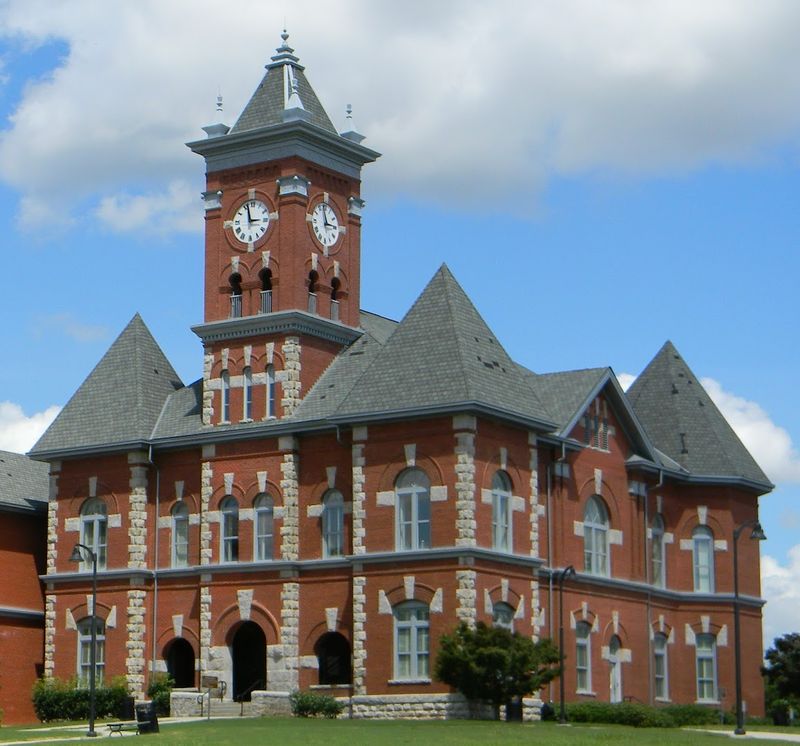
Railroad echoes, old storefront lines, and a courthouse-town layout give this district a sense of purpose before any plaque fills in the details.
Main Street in Jonesboro carries a weight far beyond its size because the town sits at a crossroads of transportation and Civil War memory.
What you experience here is a compact downtown where regional history remains visible in the street plan, surviving buildings, and local storytelling.
Jonesboro grew with the railroad and became strategically important during the Atlanta Campaign.
The Battle of Jonesborough and the disruption that followed left a lasting mark on local identity, turning this community into one of the key historical touchpoints south of Atlanta.
Walking Main Street today, you can feel how commerce and conflict once overlapped in very immediate ways.
The built environment reflects both damage and persistence.
Historic structures, civic spaces, and interpretive sites help connect the downtown to wartime events while also showing how the town rebuilt and continued serving its county.
Because the district remains active, the history feels inhabited rather than staged for occasional remembrance.
For a street where railroad growth, wartime upheaval, and community endurance converge, Main Street in Jonesboro offers a powerful stop.
11. Prince Avenue – Athens, Clarke County
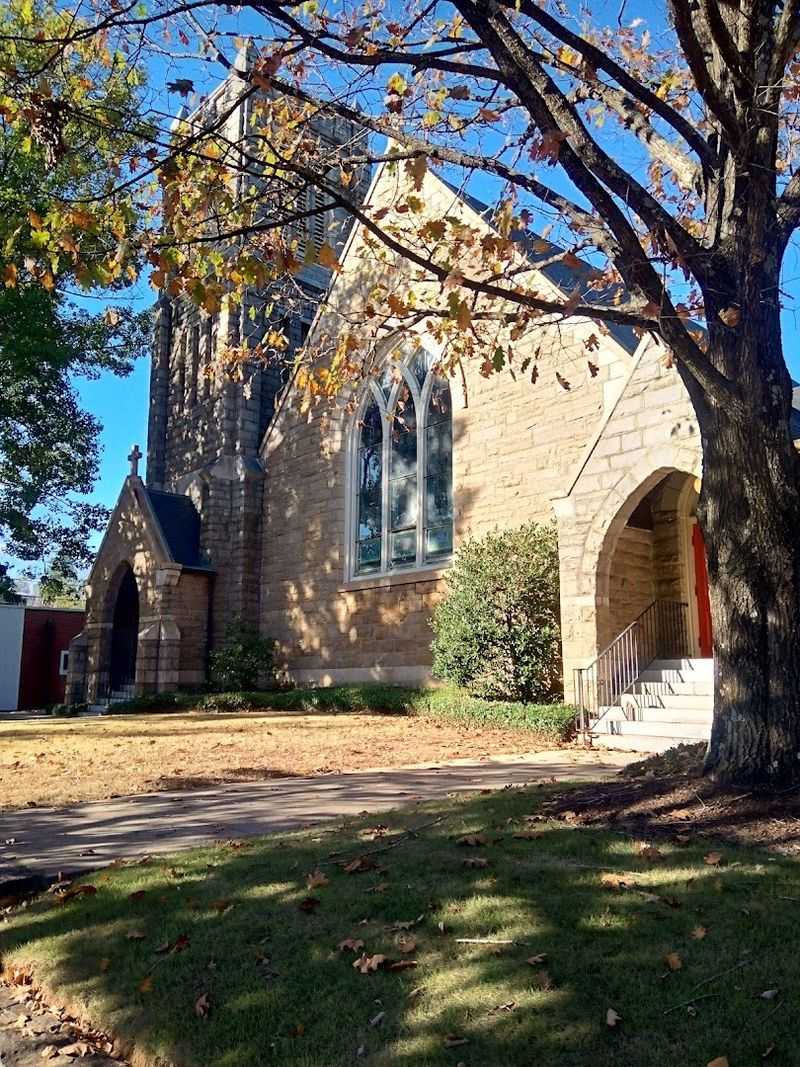
Porches, old trees, and the subtle energy of a university town give this corridor a history that feels lived in rather than preserved under glass.
Prince Avenue in Athens reveals itself gradually as a route where residential elegance, institutional growth, and cultural change have met for well over a century.
Its importance comes from connection, linking the historic heart of Athens with neighborhoods shaped by education, medicine, religion, and commerce.
The architecture along and around the avenue reflects Athens at several stages of development.
You will find substantial older homes, churches, and civic buildings that speak to the city’s nineteenth- and early twentieth-century expansion beyond the original downtown core.
Because the street has remained active, layers from different eras coexist in a way that feels honest rather than overly curated.
The presence of the University of Georgia, a strong music legacy, and long traditions of local activism add depth to what might otherwise seem like a pleasant historic thoroughfare.
Walking here, you can sense that ideas, art, and social change have traveled this route as surely as carriages and automobiles once did.
It has adapted to new uses while retaining enough architectural continuity to keep its past legible to anyone paying attention.
12. Newcastle Street – Brunswick, Glynn County
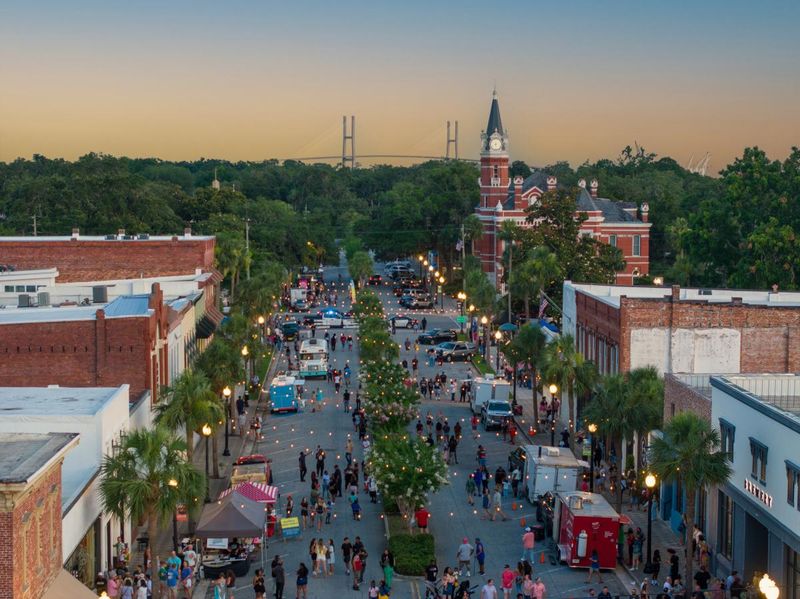
Salt air, brick facades, and the sense of a port city looking outward to the world set this street apart immediately.
Newcastle Street in Brunswick carries the layered history of coastal trade, urban ambition, and architectural survival in a way that feels distinctly tied to Georgia’s shoreline.
As the spine of downtown Brunswick, it reflects the fortunes of a city shaped by shipping, timber, naval stores, and rail connections.
The historic buildings along the corridor give the street much of its character.
Late nineteenth- and early twentieth-century commercial blocks, civic landmarks, and carefully detailed facades show how Brunswick presented itself during periods of growth and confidence.
Walking here, you can sense the conversation between local business life and the wider Atlantic economy that helped build the community.
Newcastle Street also anchors stories that reach beyond commerce alone.
Brunswick’s diverse coastal heritage includes Gullah Geechee influence, immigration, military connections, and the environmental realities of living near marshes and tidal waterways.
That broader context gives the downtown streetscape emotional depth, reminding you that port cities are shaped by movement, exchange, and adaptation.
Today, the street remains one of the clearest windows into Brunswick’s historic identity.