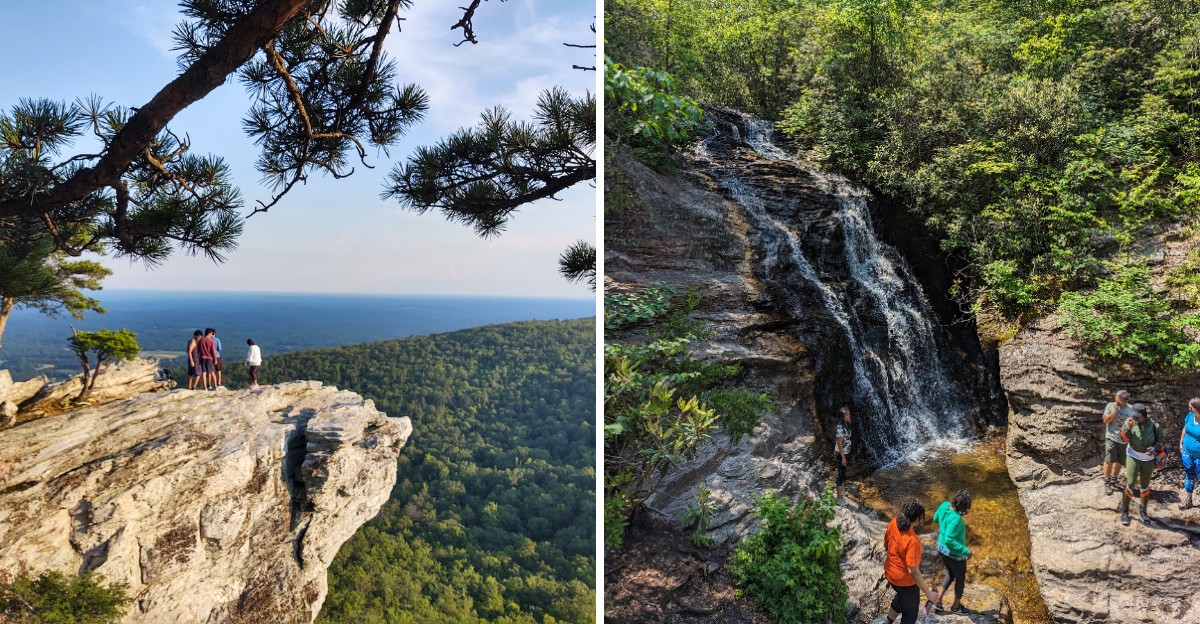
Most people in the Triad think real mountains start somewhere past Boone. That idea falls apart about 45 minutes north of Winston-Salem, where a small range rises out of the farmland like it took a wrong turn on the way to the Blue Ridge.
Out there, five waterfalls tumble through quiet hollows, rocky cliffs hang over the treetops, and a lake waits at the bottom for anyone who needs a break after the climb. There is no long road trip and no overnight bag required.
A full day of trails, history, and big views fits neatly between breakfast and dinner. The sections ahead cover where to go, which falls to see first, when to visit, and the small tips that make a day trip here run smoothly from the first parking spot to the last summit photo.
A Mountain Escape Hiding In Stokes County
Mountains are not supposed to show up this close to the Triad, yet here they are. Hanging Rock State Park sits at 1790 Hanging Rock Park Rd, Danbury, NC 27016, in Stokes County, North Carolina.
The drive from downtown Winston-Salem usually takes less than an hour. Greensboro and High Point folks can make it in a little over an hour, which makes a spontaneous Saturday very doable.
The park belongs to the Sauratown Mountains, a small range that stands apart from the Blue Ridge. Geologists call these isolated peaks monadnocks, which is a fancy word for hard rock that stayed put while the land around it wore away.
That quirk explains why the cliffs look so dramatic over flat farmland. The park covers more than 9,000 acres, so there is plenty of room to spread out.
Plan to enter through the main road and stop at the visitor center first. Rangers there can share trail conditions, maps, and updates on any closures before the hiking begins.
Five Falls Worth The Climb
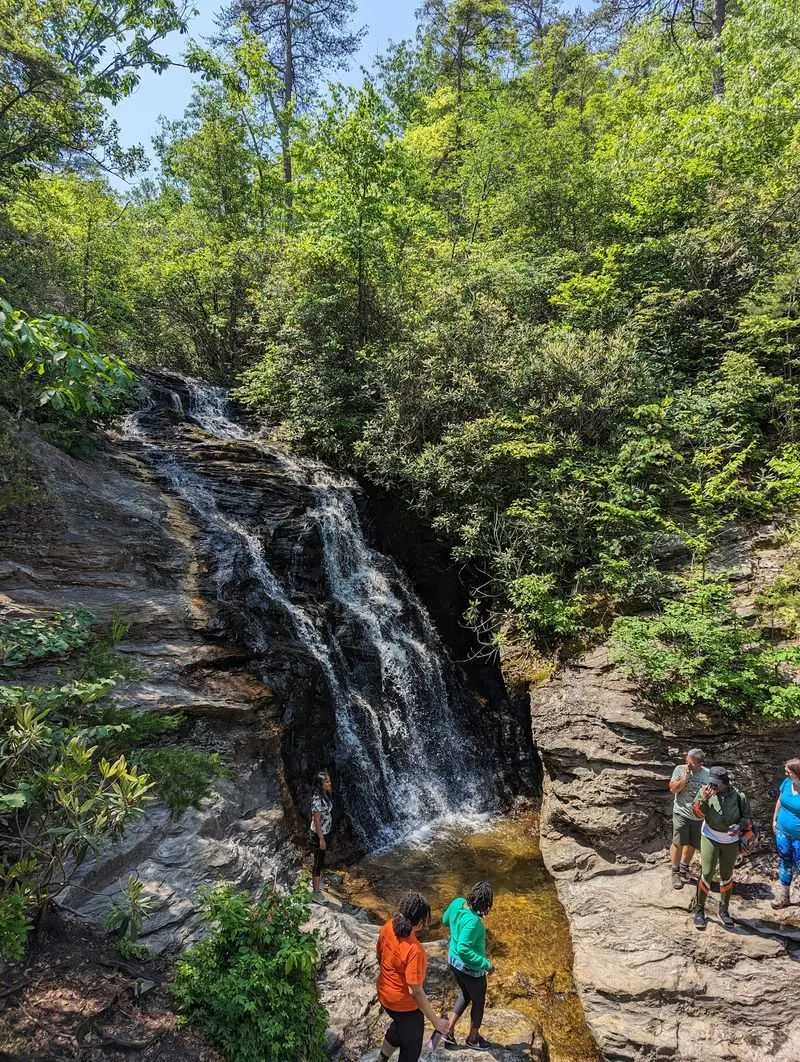
Waterfall fans get a real treat here, because the park holds five named falls. Upper Cascades, Lower Cascades, Hidden Falls, Window Falls, and Tory’s Falls each have their own personality.
Upper Cascades is the easiest pick for families. The trail from the main parking area is short, mostly paved at the start, and ends at a viewing platform.
Hidden Falls and Window Falls share one trail from the visitor center area. Window Falls gets its name from a hole in the rock that frames the water, which makes it a favorite for photos.
Lower Cascades sits off a separate parking area outside the main park road. A set of stairs leads down to a pool below the falls, so take it slow on the way back up.
Tory’s Falls is the tallest in the park, though it often runs thin in dry weather. Visit after a good rain, and all five falls tend to put on a much better show.
The Rock That Named The Park
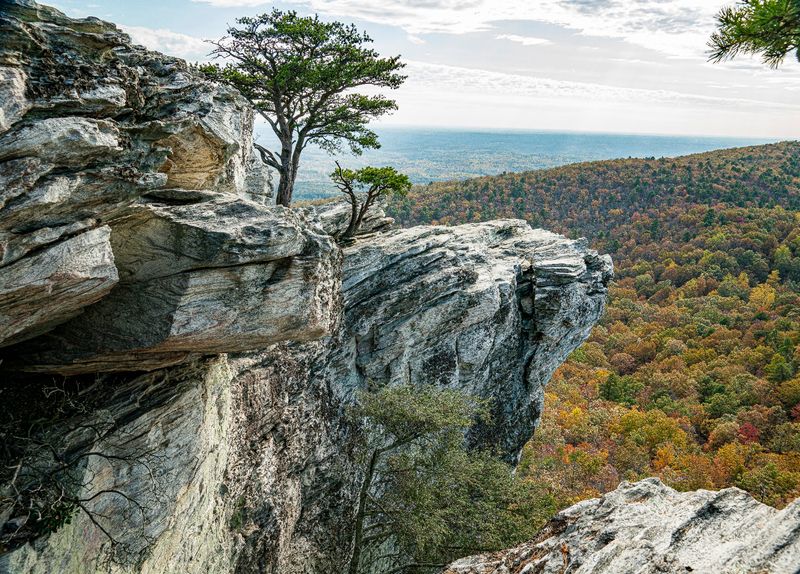
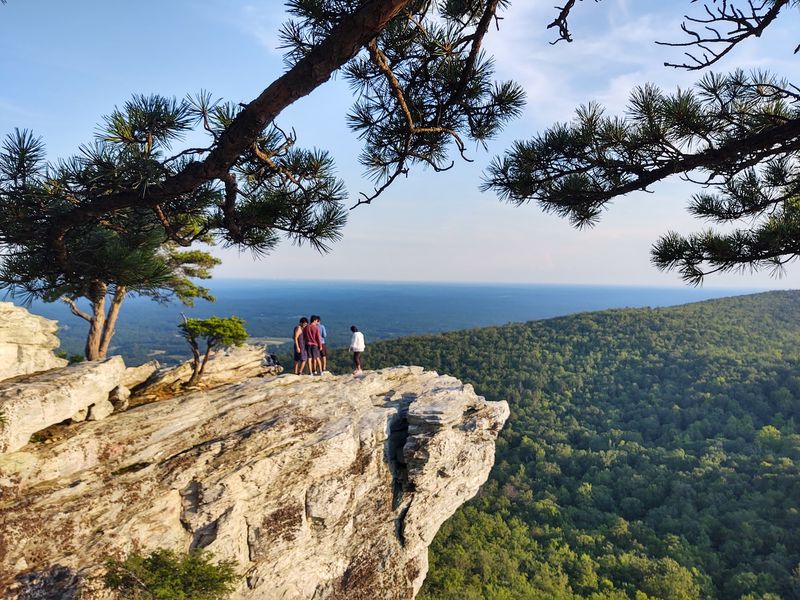
Every park needs a headliner, and this one is a giant rock ledge that juts out from the mountain. The Hanging Rock Trail climbs about 1.3 miles each way to reach it.
Do not let the short distance fool you. The path gains a good amount of elevation, with stone steps and steep stretches near the top.
Most hikers finish the round trip in around two hours. That leaves plenty of time to rest at the summit and take in the long views across the Piedmont.
On clear days, the Winston-Salem skyline can sometimes be spotted in the distance. Pilot Mountain also shows up nearby, standing like a neighbor down the road.
Wear shoes with real grip, since the rocks near the top can be slick. Kids love the scramble, but it helps to keep a close eye on them around the edges.
The summit is busy on nice weekends, so an early start pays off.
Cliffs With A Lot To Say
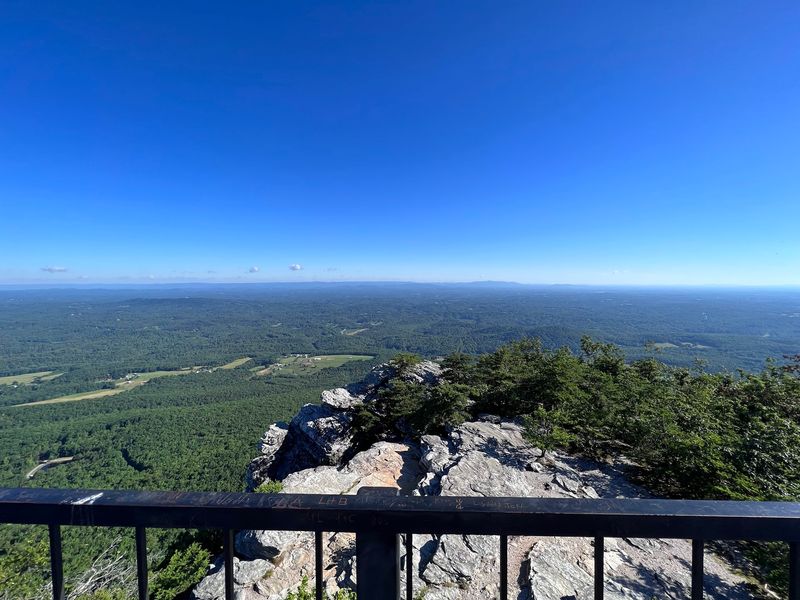
Ask locals for the best view in the park, and many will skip the famous rock entirely. Their answer is often Moore’s Wall, the highest point in the park at about 2,579 feet.
The Moore’s Wall Loop Trail runs a little over four miles. It is longer and tougher than the Hanging Rock climb, but it rewards the effort with a stone observation tower on top.
From the tower, the views stretch across the Sauratown range and beyond. Many hikers call this the best panorama in the whole park.
Cook’s Wall is another rugged option on the eastern side. It pairs nicely with stops at House Rock and Wolf Rock along the way.
Wolf Rock is a broad, flat ledge that works well for a snack break. The trail to it is less crowded than the summit routes.
Pack extra water for these longer hikes. Cell signal can be spotty, so a printed trail map is a smart backup.
Built By Young Hands In The 1930s
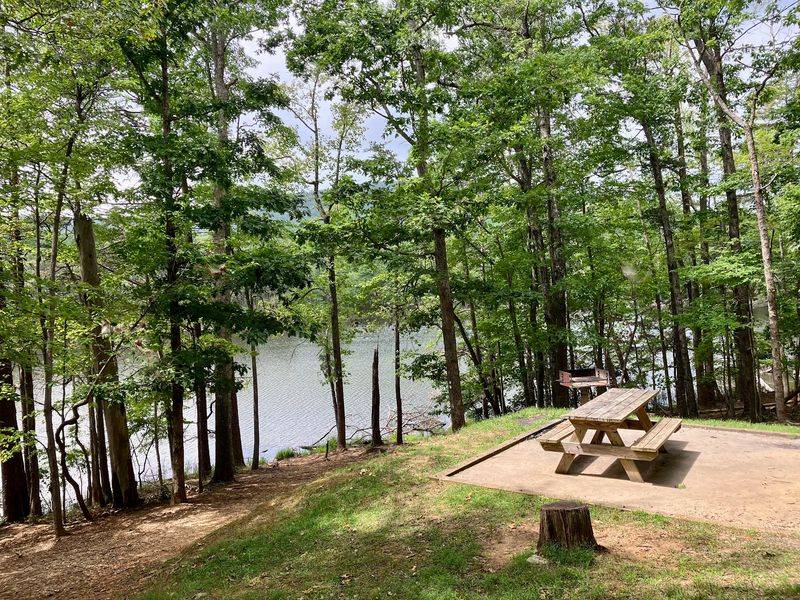
History buffs, this part is for you. Much of the park’s charm comes from work done during the Great Depression.
The land was donated in the mid-1930s, and the park opened soon after. Young men in the Civilian Conservation Corps arrived to build roads, trails, and structures.
Their biggest project was the 12-acre lake and its stone bathhouse. The bathhouse still stands today and is listed on the National Register of Historic Places.
The workers used local stone for much of their building. That is why so many walls and steps blend right into the mountain setting.
Look for small details on the trails, like stone stairs and drainage channels. Many of those pieces have lasted for nearly a century.
The visitor center offers exhibits that explain this chapter of the park’s story. Stopping in for a few minutes adds real meaning to the hike, since every step on those old trails connects back to a crew that started from scratch.
Lake Days And Summer Swims
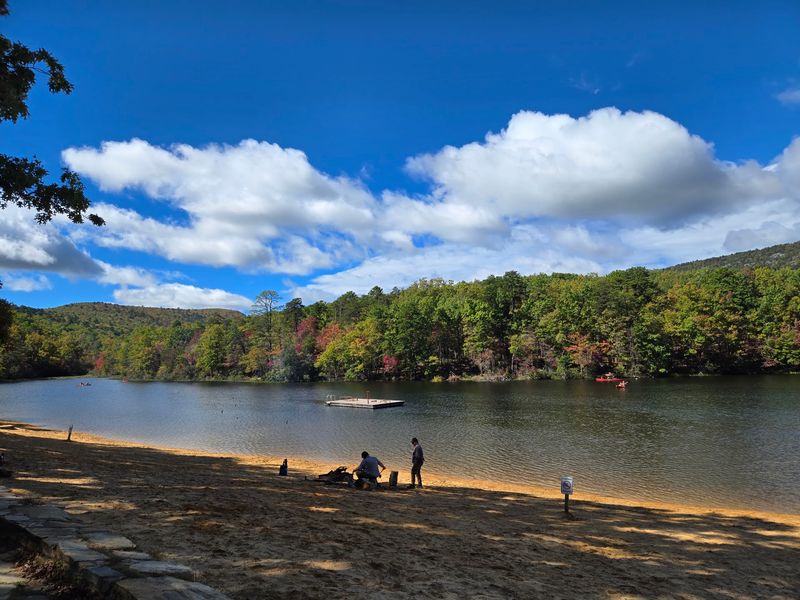
After a sweaty climb, nothing beats a dip. The park’s lake offers a swimming area with a sandy beach during the summer season.
Lifeguards are usually on duty during set hours, and there is a small fee to swim. Check the park website before heading out, since the season and hours can change from year to year.
Paddlers have options too. Canoes and kayaks can often be rented at the lake in warmer months.
Fishing is allowed in the lake with a valid North Carolina fishing license. Bass, bream, and catfish are among the fish found there.
The beach area gets crowded on hot weekends. Arriving before lunch is a good way to grab a spot on the sand.
Families often split the day in half, with a morning hike and an afternoon at the water. That plan keeps young legs from getting worn out and gives everyone a reward to look forward to after the trail.
Paddling The Dan River
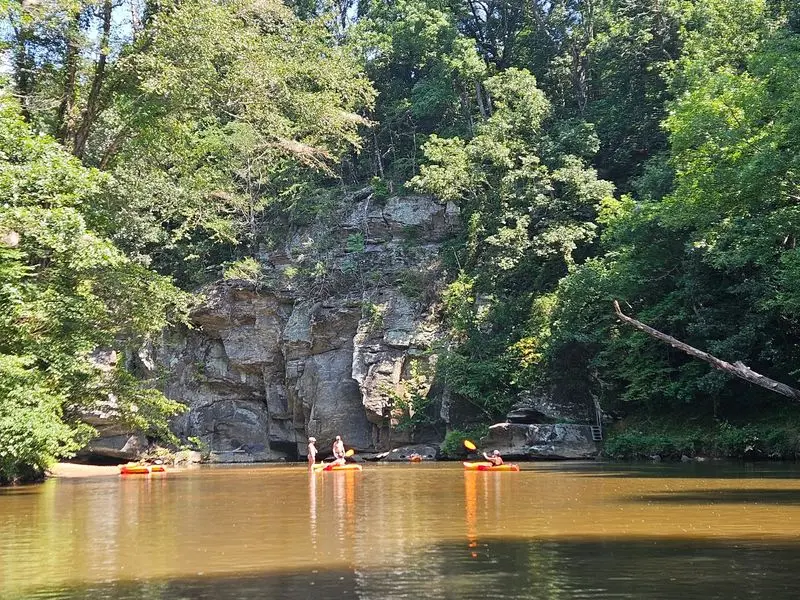
Not every adventure here happens on foot. The Dan River runs along the park’s northern edge, and it has become a favorite spot for paddlers.
The park has river access points for canoes, kayaks, and tubes. The water is mostly gentle, which works well for beginners and families.
Local outfitters in the Danbury area offer rentals and shuttle service. That means there is no need to own a boat to give it a try.
Trips can range from a quick hour to most of a day. Water levels change with the weather, so ask about conditions before launching.
Wear a life jacket, even in calm stretches. Bring a dry bag for phones and keys, because a surprise splash happens to everyone eventually.
Paddling gives a totally different look at the area. Instead of gazing down from cliffs, the river lets paddlers look up at the forested hills, which is a fun way to see the same mountains from the opposite angle.
Climbers, Bikers, And Trail Riders Welcome
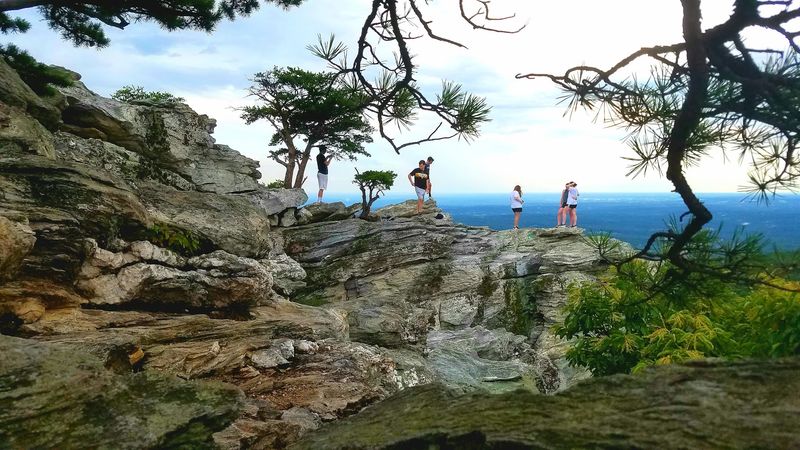
Hiking boots are only one way to explore. The park also welcomes rock climbers, mountain bikers, and horseback riders.
Climbing is allowed in certain areas, including Moore’s Wall and Cook’s Wall. Climbers need to register first, and the routes are best suited for people with experience and proper gear.
Mountain bikers can enjoy a network of trails built in the area in recent years. The routes offer a mix of beginner and intermediate riding.
Horseback riders have their own bridle trails, too. Those paths give riders a quieter way to see the forest.
Each activity has its own rules, so read the posted signs. Rangers want everyone to share the land safely.
With so many choices, the park works well for groups with different interests. One person can climb, another can ride, and the rest can hike, then everyone meets back at the picnic tables to swap stories about their part of the mountain.
Sleep Under Mountain Skies
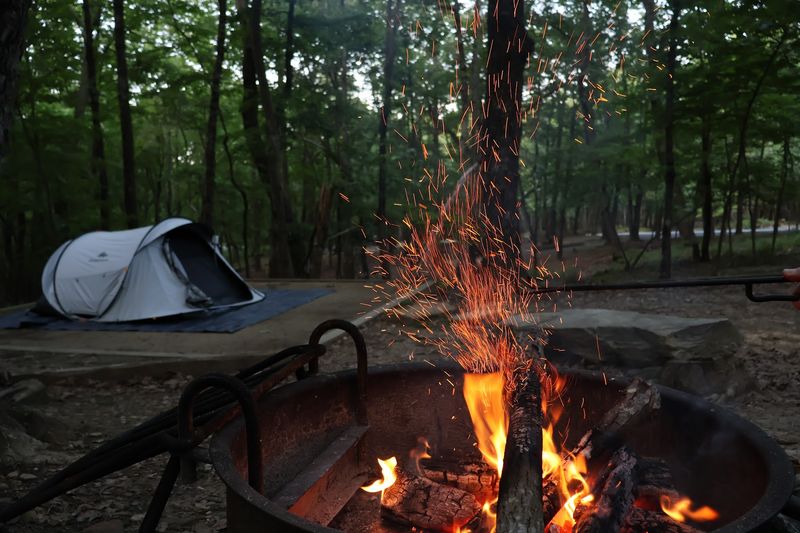
Day trips are easy, but staying the night has its perks. The park offers a family campground with tent and trailer sites.
Many sites come with picnic tables and fire rings. Restrooms and hot showers are nearby during the main camping season.
For a little more comfort, the park also has vacation cabins. They are popular in summer and fall, so booking early is a must.
Groups can reserve group campsites, which work well for scout troops and youth clubs. Reservations are handled through the North Carolina State Parks system.
Camping lets hikers start trails at dawn, before the day crowds show up. That early start can mean a quiet summit all to yourself.
Remember to store food properly, since wildlife lives in these woods. Pack a flashlight and warm layers, because nights in the mountains can turn cooler than expected.
A night here turns a quick outing into a mini vacation, all without straying far from home.
Smart Timing For A Better Trip
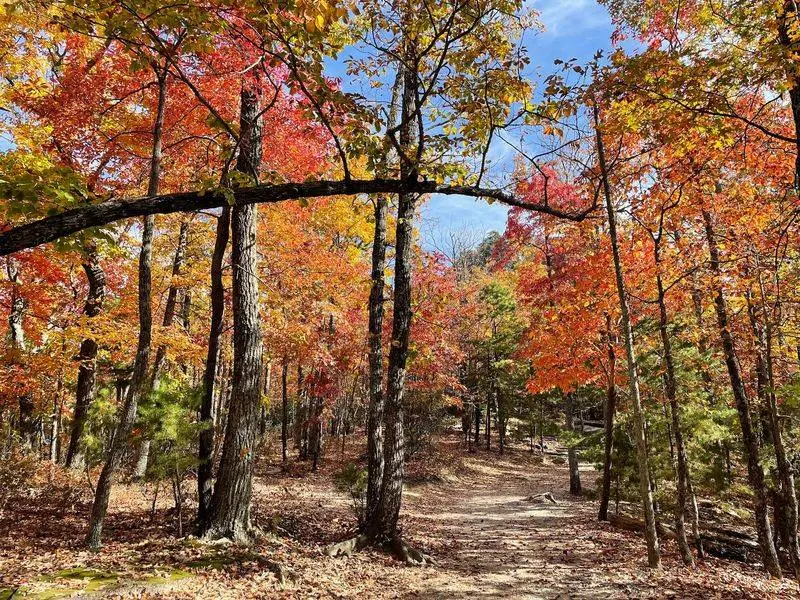
Timing can make or break a visit. Fall is the most popular season, when leaves change color across the Sauratown Mountains, usually peaking in late October.
Spring is a close second. The waterfalls tend to flow strongest after spring rains, and wildflowers pop up along the trails.
Summer brings swimming and long days, but also heat and bigger crowds. Hike early, then cool off at the lake later.
Winter is the quiet season. Bare trees open up wider views, though icy steps can make some trails tricky.
Weekends fill the parking lots fast, especially near Hanging Rock Trail. On busy days, the park may temporarily stop letting cars in until spots open up.
Weekday trips are the easiest way to avoid the rush. Entry to the park is free, which makes return visits simple.
So pick a season, pack some snacks, and point the car north. The mountains are closer than most of the Triad realizes.