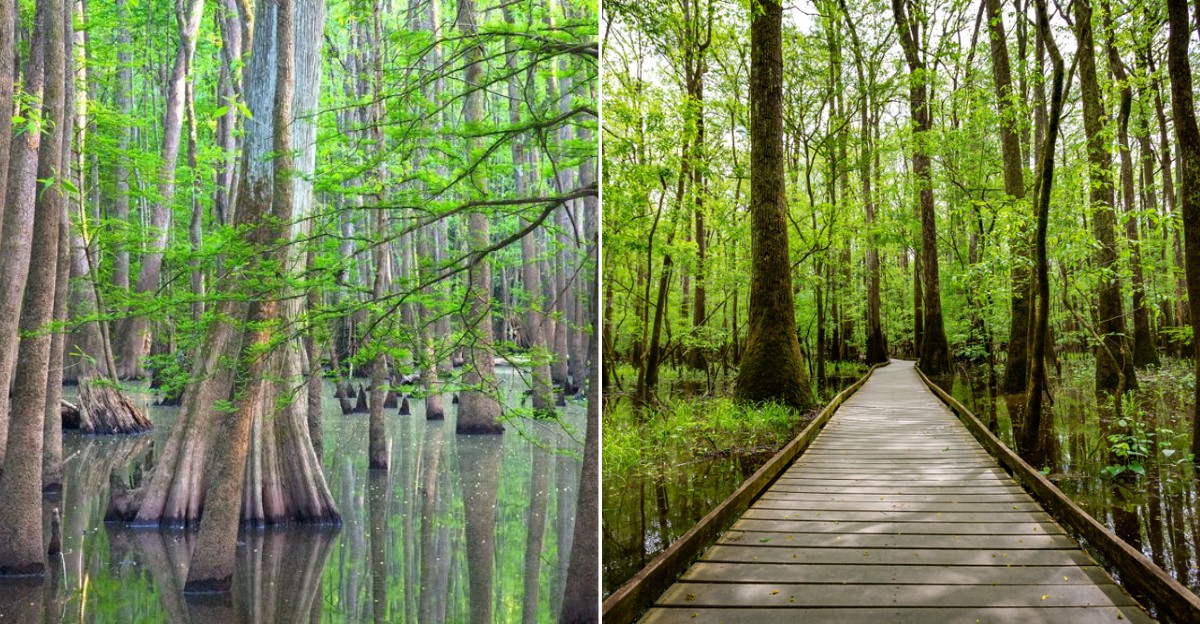
Some of the tallest trees in eastern North America grow in a swamp just outside Columbia, South Carolina.
Most people only hear about the mosquitoes, and in summer those stories are true. Winter tells a different tale.
Mosquito activity usually drops with the colder temperatures, while bare branches reveal towering trunks, quiet waterways, and a different side of the forest.
A single afternoon is enough to walk among champion trees, spot owls and woodpeckers, and learn how floods shaped this rare old forest.
The guide below covers where to start, which trails to pick, what to pack, and the small tricks that make a cold-weather visit feel easy.
Winter brings a quieter kind of adventure to Congaree, with peaceful boardwalks, remarkable old-growth trees, and wildlife encounters that make the colder months worth exploring.
Start At The Harry Hampton Visitor Center
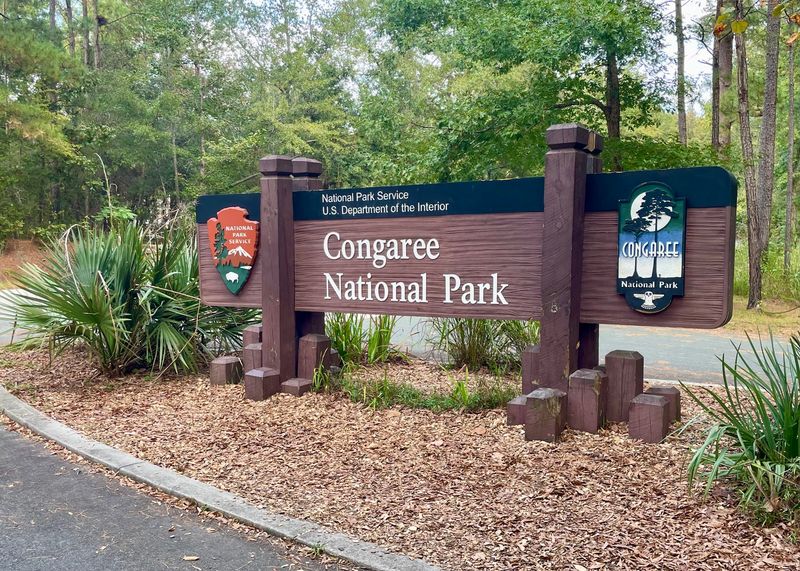
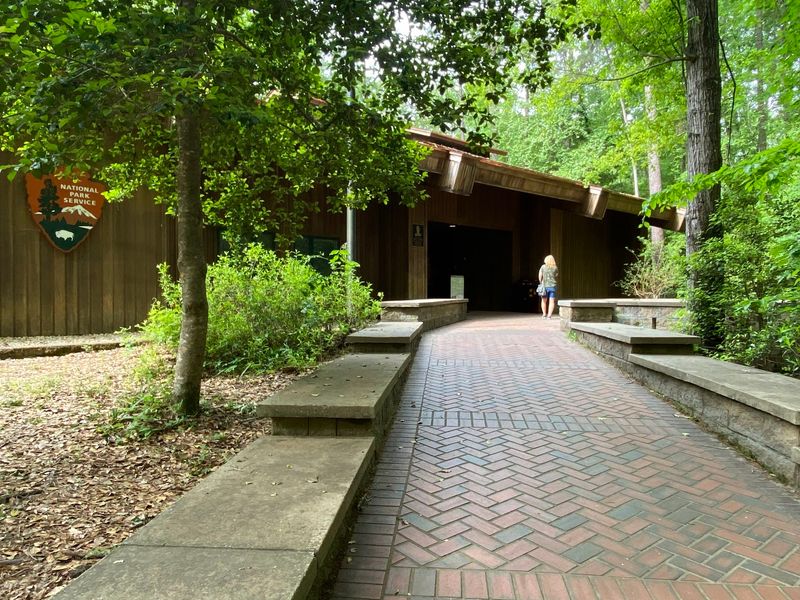
Every good afternoon here begins at the front door of the Harry Hampton Visitor Center. Congaree National Park sits at 100 National Park Road in Hopkins, South Carolina, about 20 miles southeast of Columbia in Richland County.
The park protects roughly 26,000 acres of old-growth bottomland hardwood forest. Entry is free, which leaves more room in the budget for snacks and gas.
Inside, a short film explains how the forest formed and why people fought to save it. The exhibits are clear and kid friendly, and the restrooms are clean.
Rangers and volunteers staff the desk and happily point out trail conditions. In winter, that advice matters, since some paths can flood after heavy rain.
Grab a free trail map and the self-guided boardwalk booklet before heading out. A small gift shop also sells books and souvenirs.
Picnic tables sit near the building for a quick lunch before or after a walk. Fifteen minutes here sets up the whole afternoon nicely.
Why Winter Beats Summer Here
Summer at Congaree has a reputation, and it is not about the trees. Mosquitoes can be fierce from spring through fall, and the park even posts a mosquito meter near the visitor center.
Cold weather changes everything. Once temperatures drop, the meter often sits at its lowest levels, and many winter guests barely notice a bug all day.
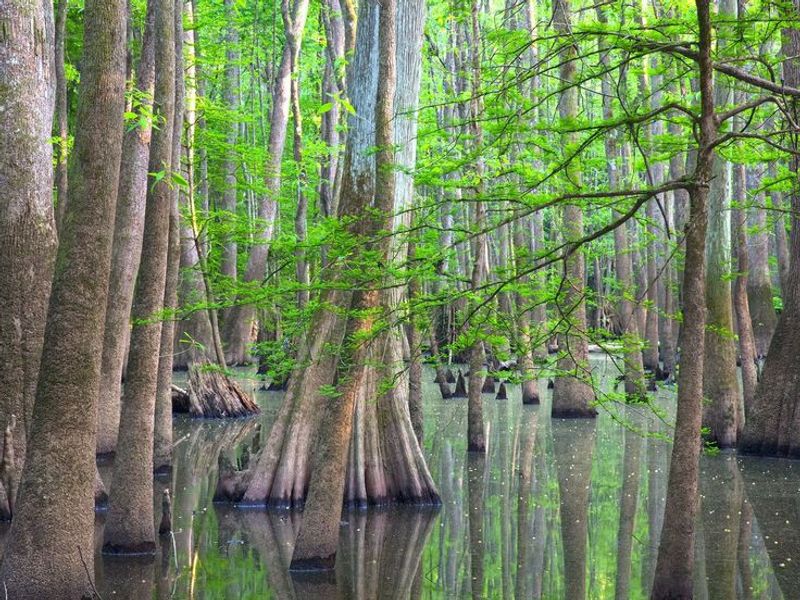
Fewer leaves also means wider views. The massive trunks of loblolly pines, cypress, and tupelo stand out clearly against the open forest.
Crowds shrink as well. The boardwalk feels calm, and quiet stretches with nobody else around become common.
Winter is also a wetter season, so the river may spill into the forest. That flooding is part of what keeps this ecosystem healthy and fascinating to see.
Layers work best, since mornings start chilly and afternoons warm up. Check the meter anyway, because a warm spell can wake a few stragglers.
Most days, though, the only thing biting will be the cold air on bare fingers.
Loop The Famous Boardwalk
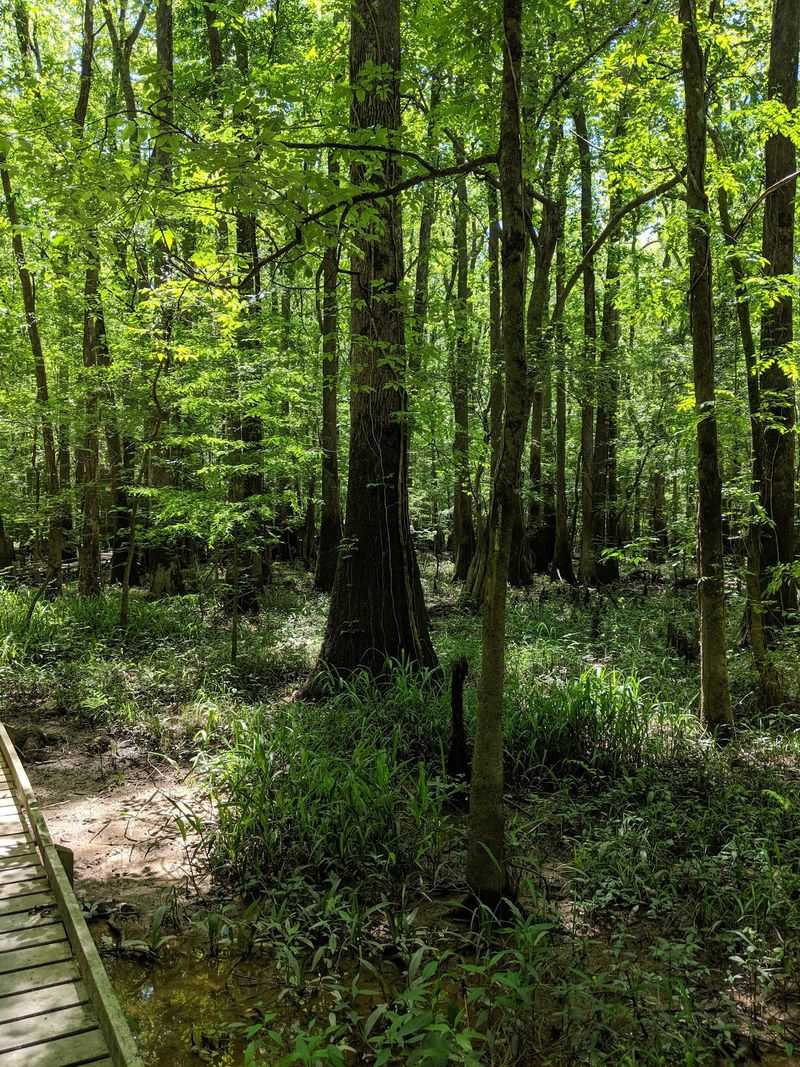
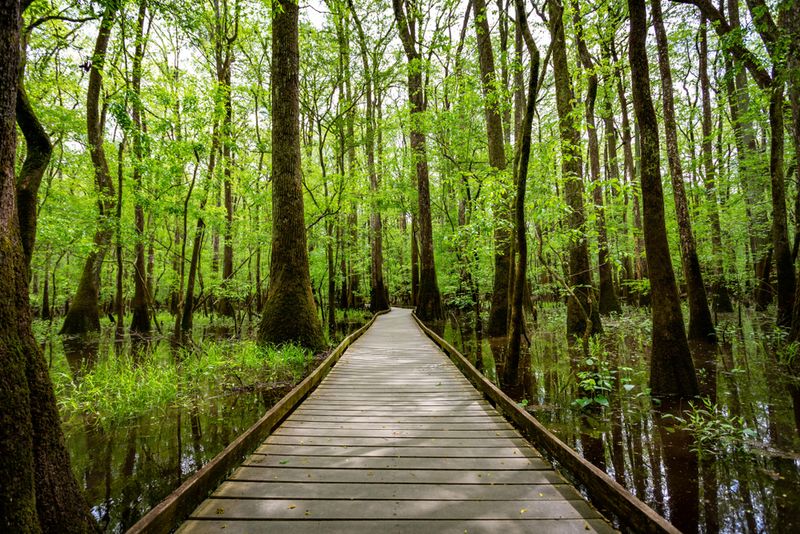
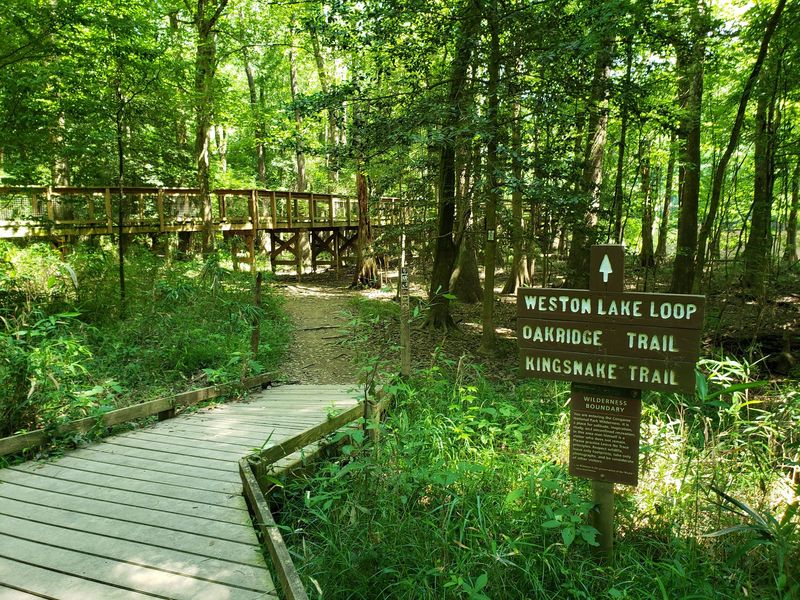
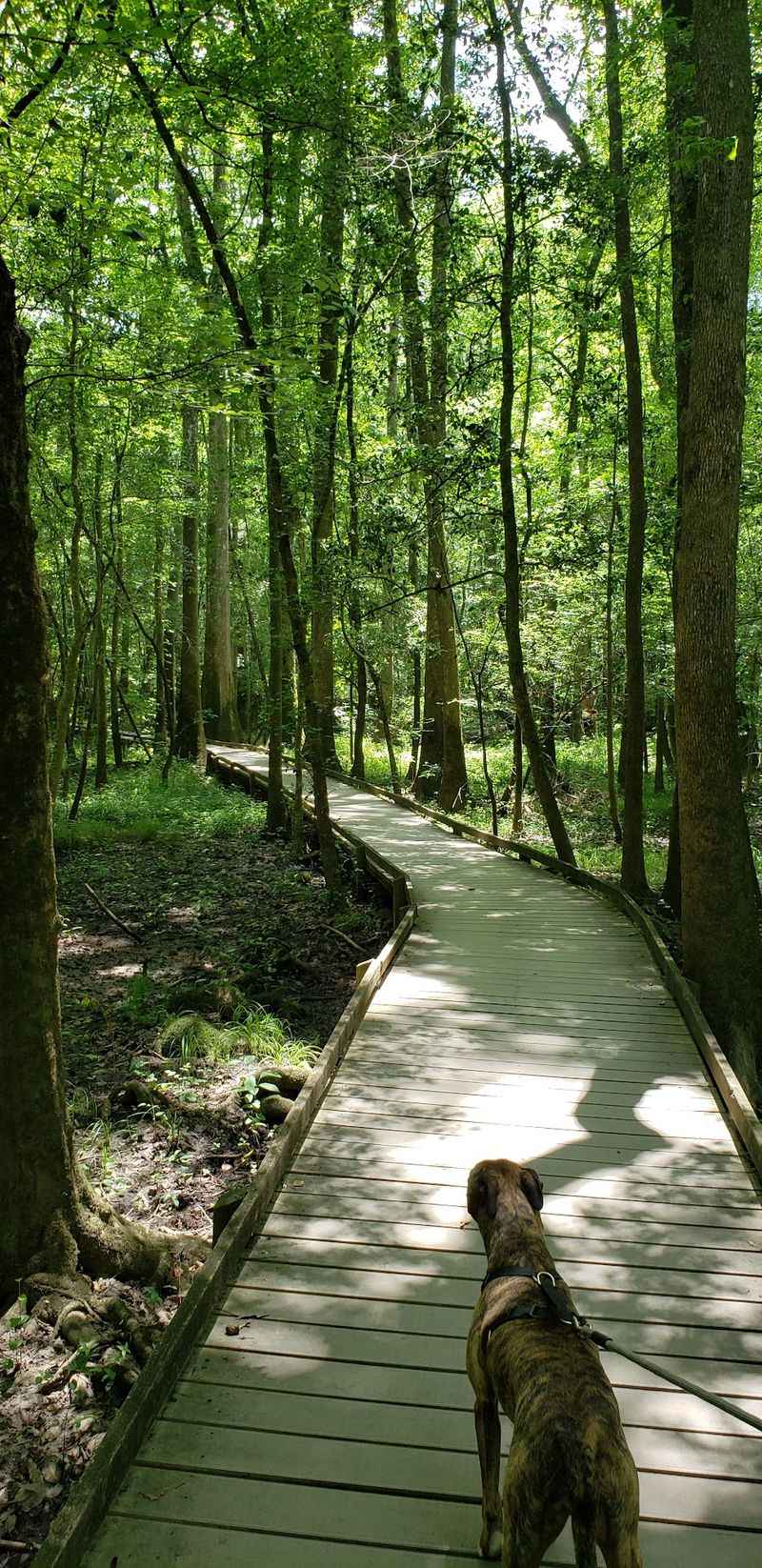
About 2.6 miles of wooden planks carry walkers above the floodplain, and this loop is the heart of most visits. Locals and park staff simply call it the Boardwalk Loop Trail.
The route is flat and easy. Strollers and wheelchairs can handle much of it, and benches appear often enough for regular breaks.
Raised sections keep feet dry even when water creeps across the forest floor. Lower sections may close during big floods, so ask at the desk first.
Along the way, the trail passes cypress knees poking up from the ground. These knobby growths rise from the roots of bald cypress trees, and scientists still debate exactly what they do.
The loop also leads to Weston Lake, an old river channel that holds still water. Turtles and fish show up there on mild days.
Plan on about one to two hours at a relaxed pace. Faster walkers can finish sooner, but rushing through this forest misses the point entirely.
Follow The Numbered Trail Guide
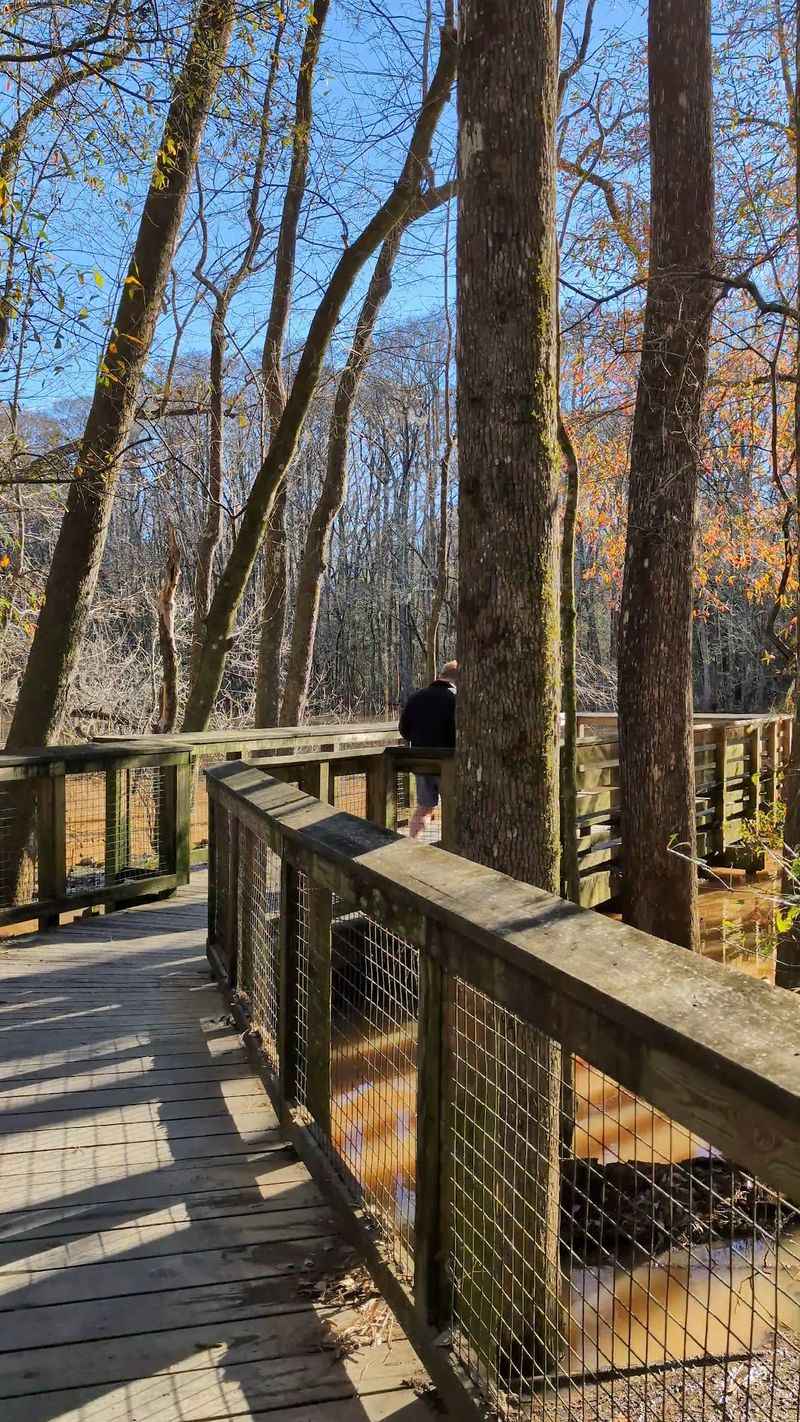
Small numbered posts line the boardwalk, and each one has a story waiting in the free trail guide. The booklet from the visitor center turns a simple stroll into an outdoor classroom.
Every stop explains something specific. One marker might cover how floods carry nutrients into the soil, while another points out a certain tree type or a sign of wildlife.
Kids enjoy hunting for the next number. Adults usually end up just as curious, reading ahead to see what comes next.
The guide also helps with tree names. Learning to tell a water tupelo from a bald cypress makes the rest of the walk far more interesting.
Families can pair the booklet with the Junior Ranger program. Young explorers complete activities and earn a badge from the rangers at the end.
Hang onto the guide after the walk, since it works as a handy keepsake. Better yet, return it to the bin so another curious hiker can use it next.
Meet The Champion Trees
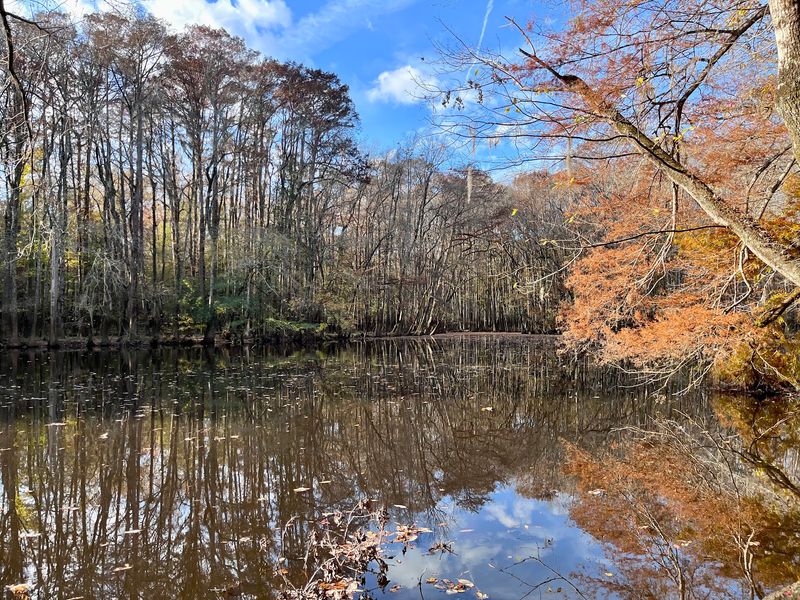
Big is an understatement for the trees in this forest. Congaree holds one of the largest remaining stretches of old-growth bottomland hardwood forest in the southeastern United States.
Many of its trees qualify as state or national champions, meaning they are the largest known of their species. The canopy here ranks among the tallest of any temperate deciduous forest in the world.
Loblolly pines reach well above 150 feet. Some bald cypress trees are believed to be several hundred years old.
Winter is the best time to appreciate their size. With the leaves gone, the full height of these giants is easy to follow from root to crown.
A fun tip is to stand at the base of a big pine and look straight up. Phones rarely capture the full height in one photo, so try a vertical panorama.
Rangers can share which trails pass the most famous trees. Ask before setting out, and the hike gains a treasure-hunt feel.
Add The Weston Lake Loop
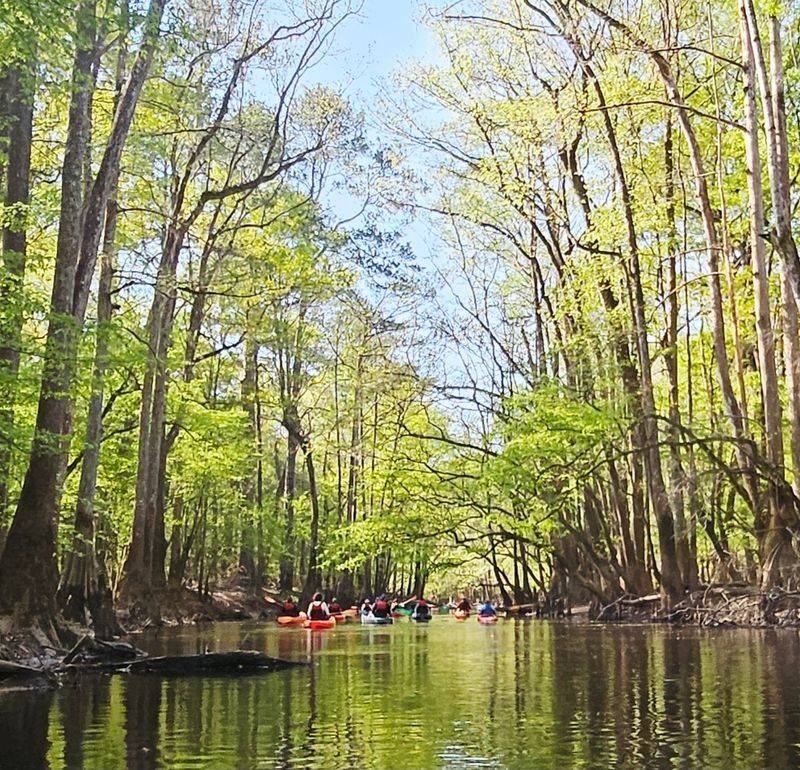
Got extra energy after the boardwalk? For visitors ready for a longer adventure, the Weston Lake Trail offers a 4.5-mile round-trip hike from the Harry Hampton Visitor Center, leading deeper into the floodplain and offering scenic views of Cedar Creek.
This route leaves the boardwalk and follows dirt paths along Cedar Creek. Footing is natural ground, so waterproof boots make a real difference in winter.
Mud is common after rain. Some low spots may hold standing water for days, which is exactly why checking conditions at the visitor center is smart.
The reward is a quieter walk. Fewer people travel past the boardwalk, and the forest feels more remote within minutes.
Cedar Creek views are a highlight, with dark water winding between tall trunks. Wildlife sightings often improve once the foot traffic thins out.
Give yourself two to three hours for the full loop with the boardwalk. Winter sunsets arrive early, so start by early afternoon.
Finishing with daylight to spare beats fumbling down a muddy trail with a phone flashlight.
Keep An Eye Out For Wildlife
Owls are the stars of a winter visit, and barred owls live throughout this forest. Listen in late afternoon for their famous call, often described as who cooks for you.
Woodpeckers are another easy win. The park hosts several species, including the large pileated woodpecker, and bare trees make them simpler to spot.
Squirrels stay busy all season. Lucky hikers may catch the southern fox squirrel, a larger and often darker cousin of the common gray squirrel.
Wild hogs also roam the floodplain. They usually avoid people, but keep a respectful distance if one appears.
Beavers and river otters live along the waterways too. Signs like chewed stumps are more common than the animals themselves.
Binoculars help a lot on open winter branches. A field guide app can identify bird calls on the spot.
Patience matters most, since the forest rarely performs on schedule, but it often rewards those who wait quietly.
Paddle Cedar Creek On A Mild Day
Water is the true road through this forest. Cedar Creek is a marked canoe and kayak trail, and winter paddling can be wonderful on calm, mild days.
Paddlers can bring their own boats or book a trip with a local outfitter. Guided tours need advance planning, so reserve early.
Water levels change often in winter. High water may make currents stronger, while low water can expose logs and shallow spots.
Check the park website for creek conditions before launching. Rangers can also share the latest updates.
Cold water deserves respect. Wear a life jacket, pack dry layers in a waterproof bag, and avoid paddling alone.
From the boat, the scale of the trees looks different. Trunks rise straight out of the water on both sides, and wildlife often ignores quiet paddlers.
A morning paddle followed by an afternoon boardwalk walk makes a full day. Even a short float shows a side of the park most hikers never see.
Learn The Story Of A Saved Forest
Logging crews came close to clearing this forest more than once. Much of the South lost its old-growth bottomland trees, yet this patch survived.
Frequent floods and remote location made logging difficult here. Some cutting happened in the late 1800s, but large areas stayed untouched.
In the 1950s and 1960s, Harry Hampton, a Columbia newspaper writer, pushed hard to protect the forest. The visitor center now carries his name.
Grassroots support grew through the 1970s. In 1976, Congress created Congaree Swamp National Monument.
The area became a national park in 2003, and the name changed to Congaree National Park. It is also recognized as a Wilderness Area and an International Biosphere Reserve.
Fun fact: despite its old nickname, the park is technically a floodplain rather than a true swamp. Water flows in and out instead of staying put year round.
Knowing this backstory makes the trees feel even more special. Every trunk standing today is a small victory for patient, stubborn people.
Pack Smart And Time It Right
A little planning keeps a winter afternoon smooth from parking lot to sunset. Start with the basics: layers, a warm hat, and waterproof boots.
Bring water and snacks, since there is no restaurant inside the park. Picnic tables near the visitor center make a handy lunch stop.
Check the park website for hours and flood alerts. Visitor center hours can change by season.
Arrive by early afternoon. Winter daylight fades fast in the floodplain, and shaded trails grow dim before the sky does.
Even in winter, packing a small bottle of insect repellent is a good idea, especially if warmer temperatures bring out a few mosquitoes.
Visitors planning an overnight stay can reserve a campsite at Longleaf Campground. Backcountry camping requires a free permit, which should be requested at least 72 hours before the trip.
Leave pets on a leash, and they are welcome on the boardwalk. Take every wrapper home.
Plan well, and this quiet floodplain will reward a winter afternoon far better than any summer swat-fest.