Some places get a polite thank you from kids at the end of the day. Others get a full-blown protest at the exit door, complete with pleading and promises to be good forever.
In downtown Des Moines, one building has mastered the art of the second kind.
It mixes rockets, LEGO bricks, live animals, and a star-filled dome into one busy day of learning that never feels like homework.
Families drive in from all over the state, and plenty of grown-ups who visited as children now bring their own kids back.
Stick around to find out what makes this spot so hard to leave, plus smart tips for planning a visit that keeps everyone happy.
A Downtown Spot Built for Curious Minds
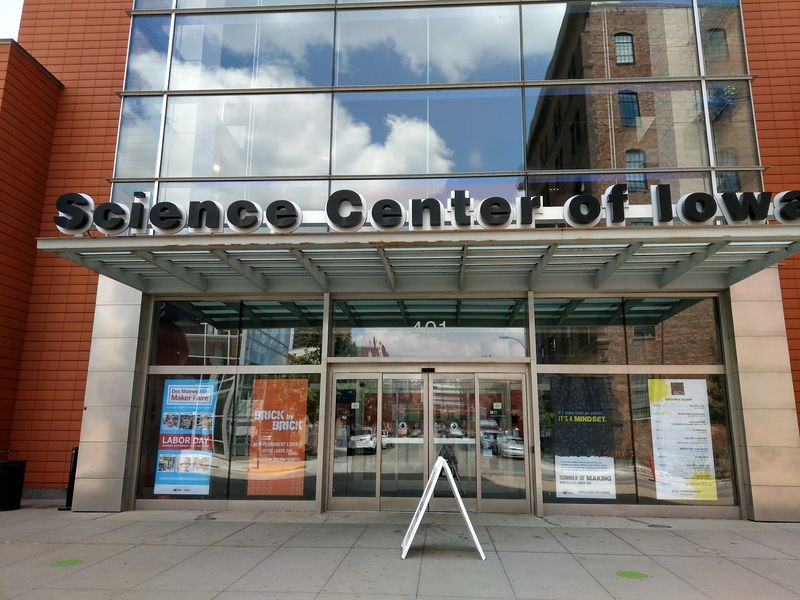
Right in the heart of Iowa’s capital city sits a place that has been sparking big questions for generations. The Science Center of Iowa is found at 401 W Martin Luther King Jr Pkwy, Des Moines, IA 50309.
The museum is packed with hands-on galleries, learning labs, a planetarium, and a giant dome cinema. Everything is designed so kids can touch, build, test, and try again.
Doors open at 9 AM and close at 4 PM from Wednesday through Sunday. Mondays and Tuesdays are closed, so plan your trip around those days.
Tickets are required to get in. Buying them online ahead of time can save a couple of dollars per person, which adds up fast for a big family.
Parking is easy in a nearby garage, and the downtown setting makes it simple to grab a meal afterward. Many families spend five or six hours inside and still leave with a list of things they missed.
That list is usually the first reason kids start asking about the next trip.
Rockets, Ramps, and a Ball Wall
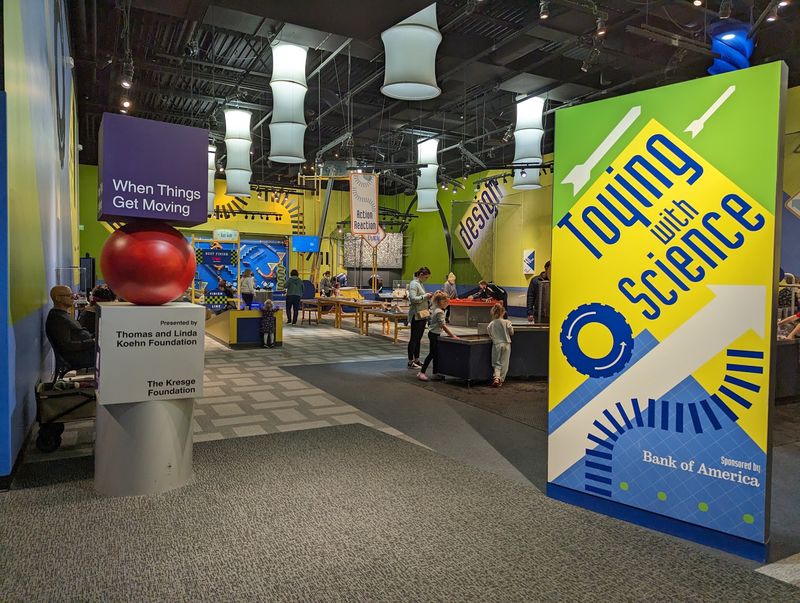
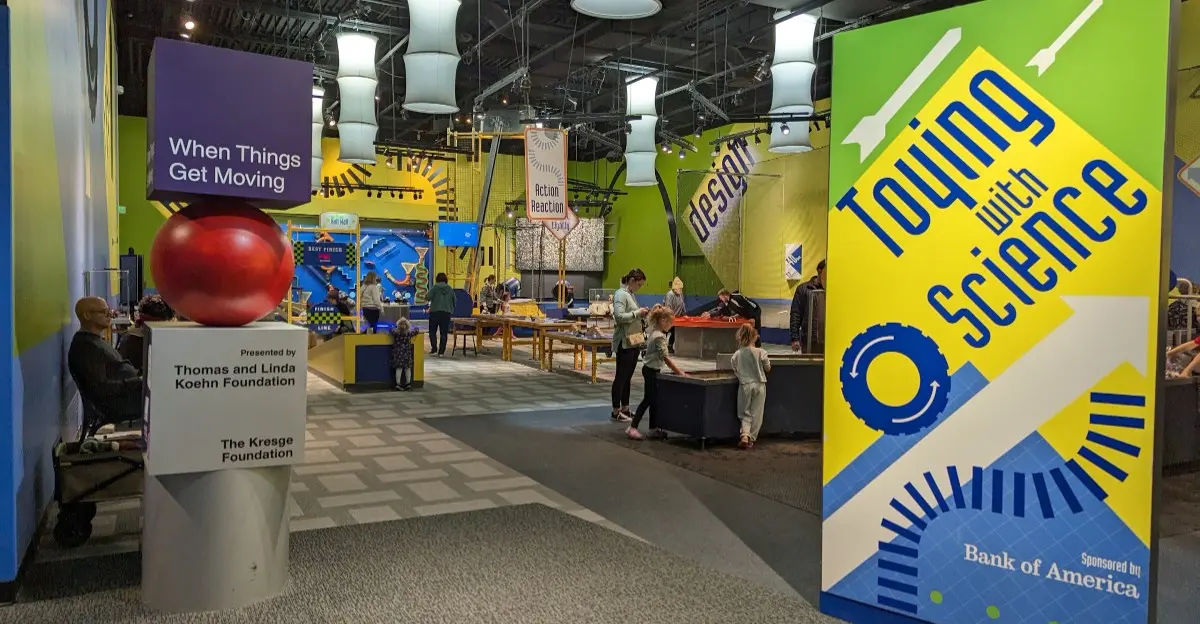
Ask any kid what they remember most, and there is a good chance the answer involves something flying across a room. The Toying with Science area is where that magic happens.
Kids can build paper rockets and launch them with a blast of air. Then they tweak the fins, try again, and see if the next one goes higher.
That is real engineering, even if it feels like pure play.
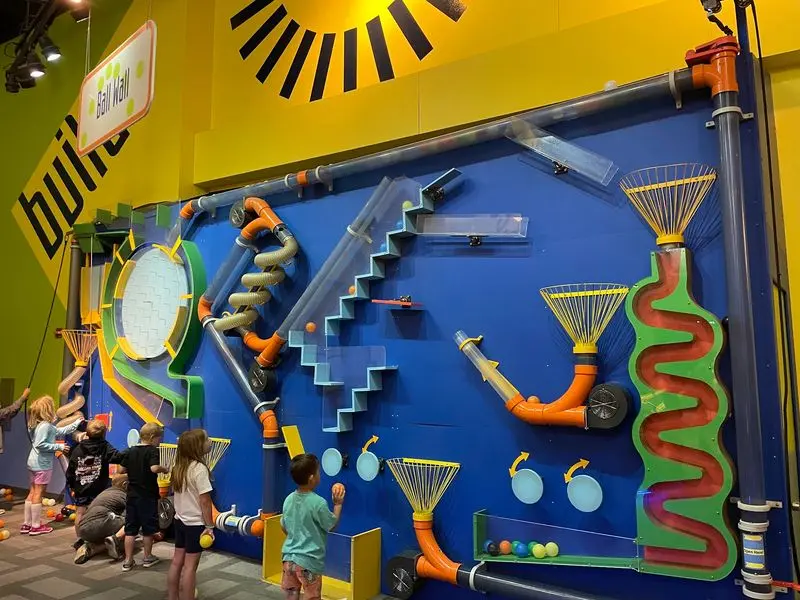
Nearby, the ball wall lets young builders set up tracks and send balls rolling, bouncing, and dropping in all directions. It teaches gravity and motion without a single worksheet.
There is also a water table where kids can build little dams and watch how water moves around them. Some children get a bit wet, so a spare shirt in the car is a smart idea.
Many families find they lose track of time in this one room. It is the kind of space where a quick look turns into an hour, and nobody complains about it.
LEGO Builds That Steal the Show
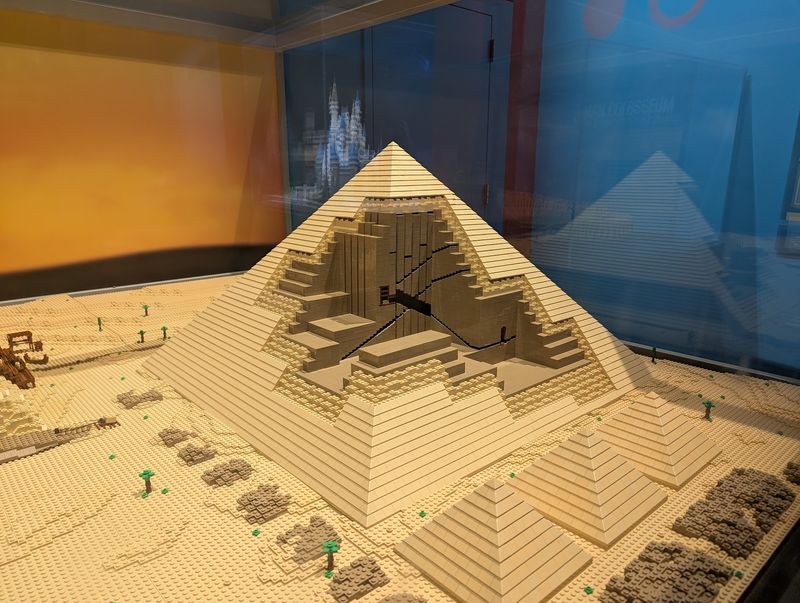
Bricks rule here, and kids know it. The LEGO areas are among the most talked-about parts of the whole building.
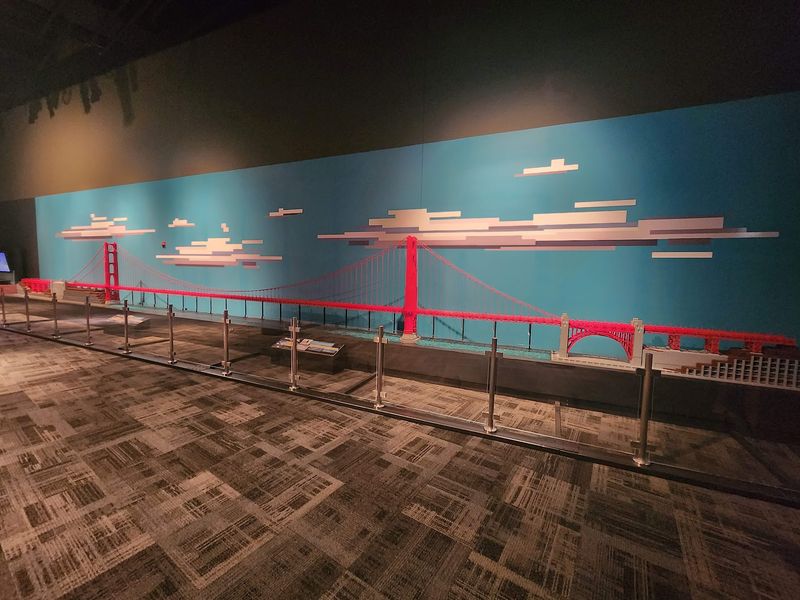
On one side, there are big professional LEGO structures on display. These detailed builds show what is possible with enough patience and a whole lot of tiny pieces.
On the other side, kids get to make their own creations. A popular activity lets them build LEGO cars and test them to see how well they roll.
If a car falls apart, that just means it is time for version two.
Fun fact: building with bricks helps kids practice planning, problem solving, and spatial thinking. Teachers love that part, and kids love that it does not feel like school.
Parents often say this is the room where their children want to stay the longest. A good tip is to visit it later in your trip.
Otherwise, the rest of the museum might have to wait until next time, which is exactly how the begging to return begins.
Stars Overhead in the Planetarium
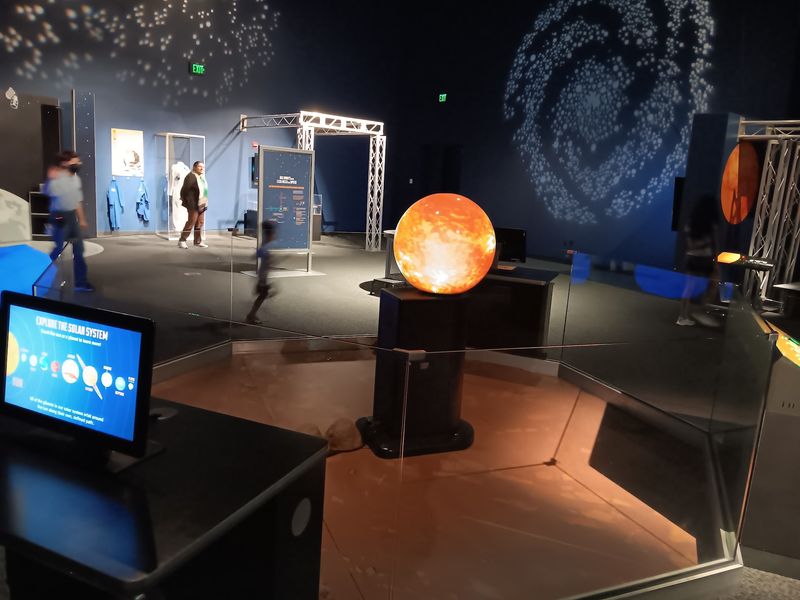
Few things quiet a room of excited kids like the lights going down under a dome full of stars. The planetarium is easily one of the biggest hits at the center.
Shows take you on a tour of the night sky, the planets, and space beyond. Even college students have called it a highlight, saying it feels like being five again and hearing a bedtime story.
Here is a practical tip. The seating has you lean your head back to see the whole dome, so a show can feel a bit long for some.
Sitting toward the middle can make viewing easier.
Best of all, the shows have been included with general admission, which not every science museum does. Check the schedule as soon as you arrive so you can plan the rest of your day around showtimes.
Kids walk out with questions about black holes, moons, and why stars twinkle. Those questions tend to follow them all the way home.
Snakes, Turtles, and a Busy Beehive
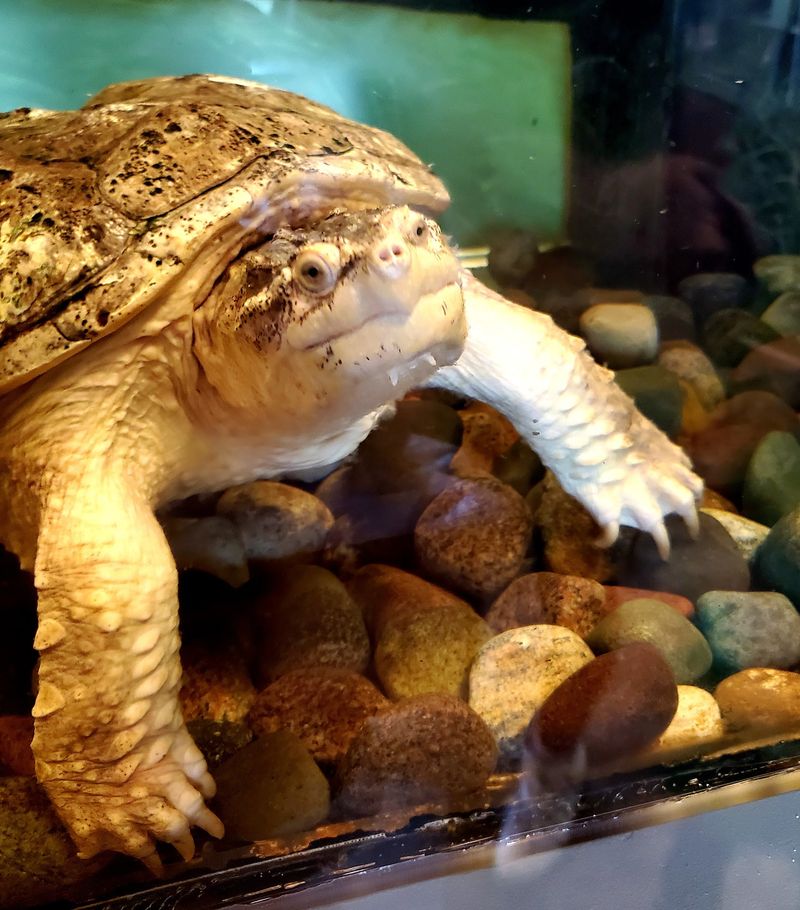
Not every exhibit is made of plastic and buttons. The nature area brings real living creatures into the mix, and kids are hooked.
Snakes are a favorite, and seeing them up close is a thrill for brave little explorers. There is also a snapping turtle, and catching a feeding time is a special treat if you happen to be there at the right moment.
The real star might be the bees. A glass hive connects to the outdoors, so the bees fly in and out while kids safely watch them work inside.
It is surprisingly hard to look away.
The animals appear healthy and well cared for, which matters to families who want kids to learn respect for nature.
This area has received a nice upgrade in recent years. Even grown-ups who feel the museum leans young often call it their favorite part.
Spend some time here and let kids count how many bees zip through the tunnel in one minute.
Giant Dinosaurs and Fossil Finds
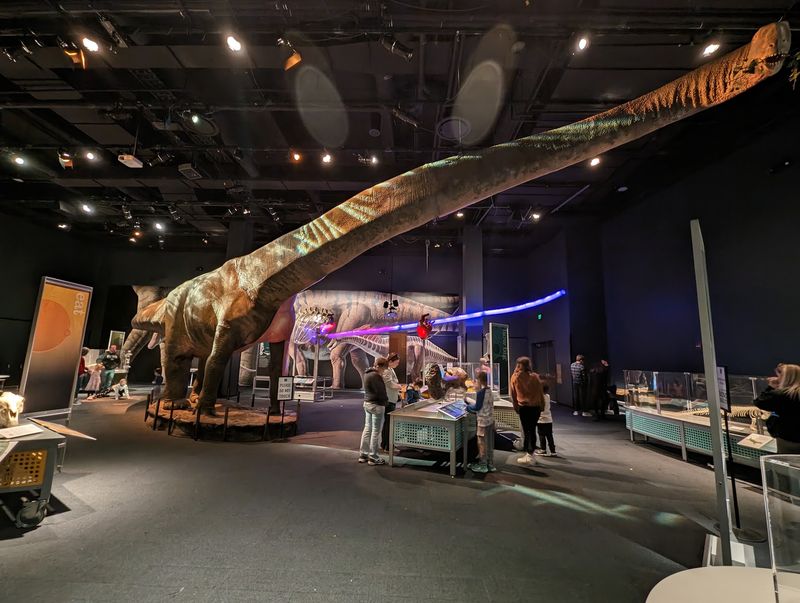
Some kids are born with a dinosaur fact for every occasion. For them, this museum has a gallery that feels like a dream come true.
Giant dinosaurs and fossils were added in recent years, giving the center a fresh look. Seeing creatures that size helps kids understand just how huge these animals really were.
Fossils are a great way to talk about how scientists learn about the past. Kids can look closely at bones and shapes, then guess what kind of animal they came from.
The space section was updated around the same time. That means kids can jump from ancient Earth to outer space in one visit.
Here is a fun idea for families. Before you go, ask your child to pick a favorite dinosaur.
Then challenge them to find something about it inside the gallery.
It turns the visit into a mini mission. And mini missions have a sneaky way of making kids want to plan the next one.
Tiny Explorers Get Their Own Zone
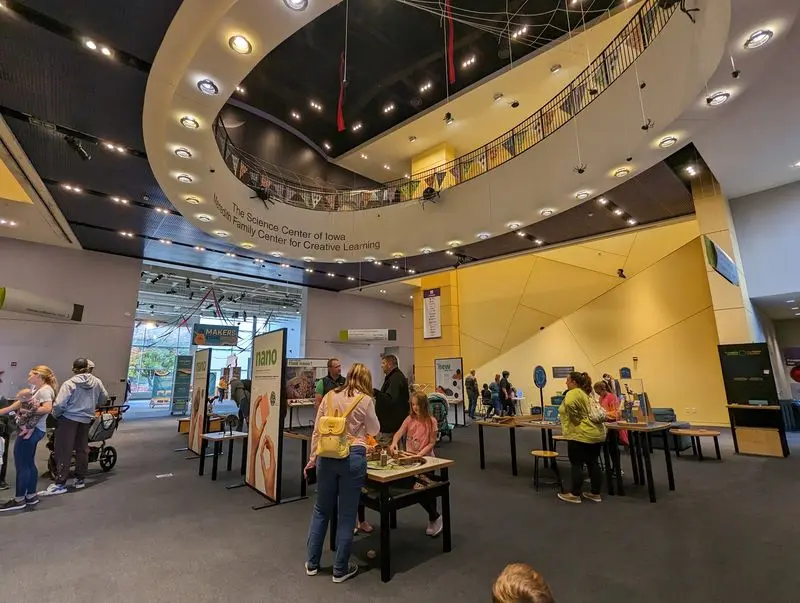
Little ones are not an afterthought here. Kids as young as six months old can find something to enjoy, and toddlers have a space made just for them.
A younger kids area includes a tiny grocery store, pretend farm play, and a spot to practice milking a cow. Kids can pick corn and apples and gather chicken eggs, which is a very Iowa way to play.
There is also a block area with a conveyor belt and water play. Children often leave a little damp but very happy.
Parents of toddlers say their kids stayed busy for hours. One family’s three-year-old played until he was completely worn out, which every parent knows is a win.
Quick heads up: the infant area has been under remodeling, so check the website before you go if you have a baby. Bring snacks for breaks outside the exhibits and a change of clothes.
Small kids, big fun, and very sleepy car rides home.
Calm Evenings for Sensitive Senses
Crowds and noise can make a fun day hard for some kids. The center has an answer for that, and families who use it call it a game changer.
Once a month, the museum offers a sensory friendly evening. Fewer families attend, so the building feels open and calm.
Kids can explore at their own pace without the usual rush.
The space itself also helps. Rooms are big enough that kids who need to move, stim, or burst with excitement have room to do it.
One family shared that their son with autism did everything the other kids did and had a happy, successful day. Stories like that are why these programs matter so much.
If loud places are tough for your family, check the website calendar for the next sensory friendly date. It could turn a stressful outing into a favorite tradition.
And when kids feel comfortable somewhere, they naturally want to go back.
Special Events Worth Marking on the Calendar
Regular days are great, but special events add an extra spark. Keeping an eye on the calendar can lead to some unforgettable outings.
A girls’ science day has brought in booths from groups like Corteva, Microsoft, Drake, Vermeer, the Heart Center, and the Iowa DNR. Girls got to try hands-on activities, meet people working in science, and even win prizes and treats.
Families have felt safe letting older kids explore on their own during these events. The staff is friendly, and the building stays clean and organized.
Some nights also bring astronomers outside with telescopes. Kids can peek at the sky and ask real experts their questions, which tends to blow young minds.
There has even been a fireworks show tied to the center’s events. On some visits, kids have joined a live local news weather broadcast from the nature room.
Every event offers a reason to come back. That is a pretty smart way to keep curious kids coming through the doors.
Smart Ways to Make Every Visit Count
A little planning goes a long way here. With a few tricks, families can stretch both their time and their budget.
Start by buying tickets online. It can save money compared to buying at the door.
Memberships are popular with families who visit often. One grandparent bought a grandparent plus membership after a single trip because the grandkids wanted to return again and again.
Members of museums in other towns may also get discounts or free entry, so check your own membership card.
Know who the museum fits best. It shines brightest for kids 12 and under, while teens may find less to keep them busy.
Adults often enjoy the planetarium and nature area most.
Exhibits change over time, and some may be closed for updates. A quick look at the website before you go helps avoid surprises.
Plan for a long day, too. Some families stay six hours and still hear the same question in the car: when can we come back?