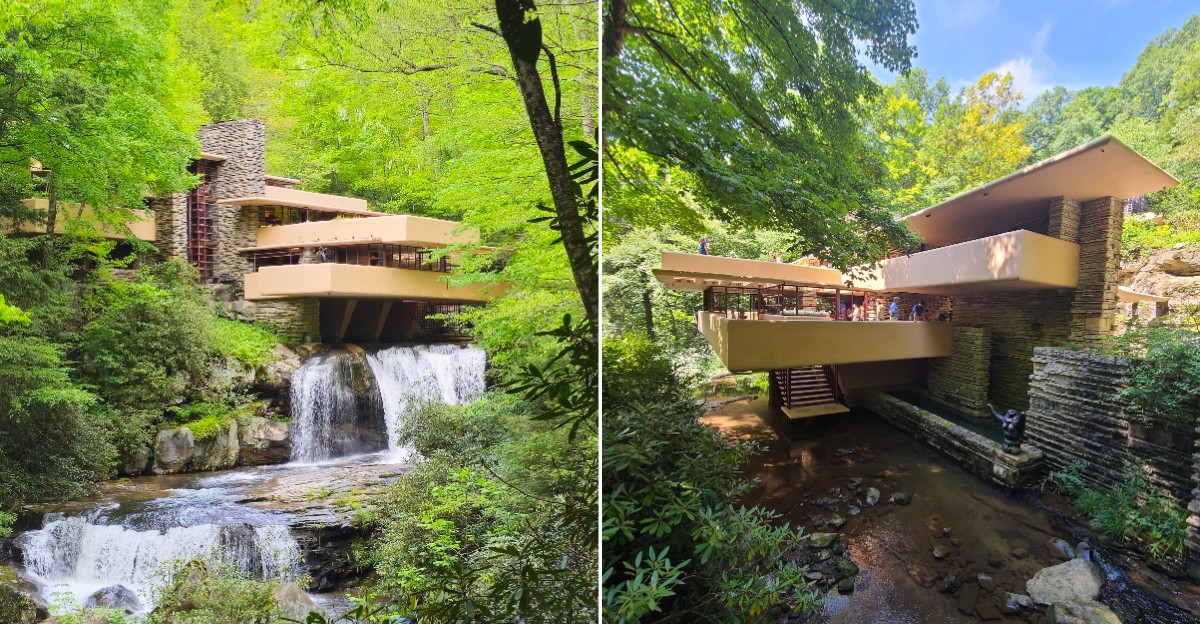
A house with a waterfall running beneath it sounds impossible, yet that is exactly what waits in the forest of western Pennsylvania. At Fallingwater in Mill Run, Frank Lloyd Wright designed the home so closely around the landscape that rushing water, sandstone, trees, and glass seem to belong to the same composition.
Long terraces extend over the stream, while broad windows bring the surrounding woods right into the rooms.
From 1491 Mill Run Rd, visitors can experience one of America’s most distinctive examples of organic architecture while listening to the water moving below the house. Stone walls echo the rocky landscape outside, and quiet views through the glass make it easy to understand why the setting matters as much as the structure itself.
Walking through Fallingwater reveals thoughtful details at nearly every turn, from its terraces to its carefully framed views. There is much more to discover as the house and forest unfold together.
The First Glimpse Through the Trees
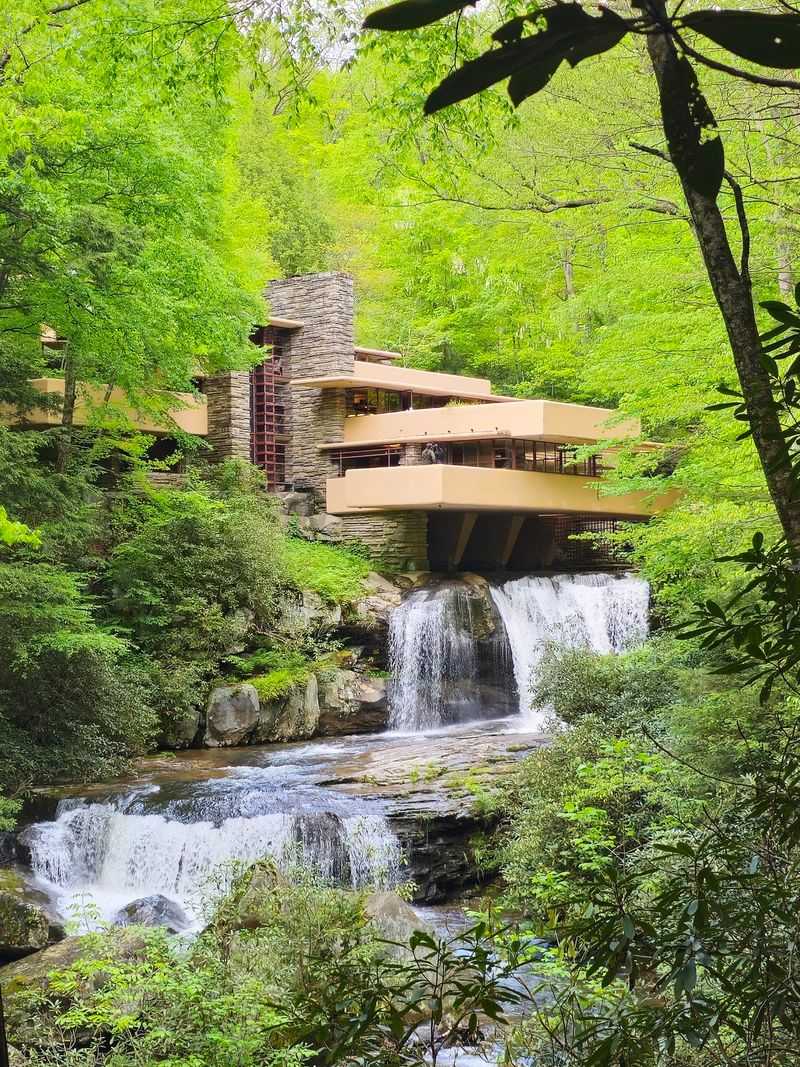
For a moment, the woods seem to hide everything. Then straight lines appear between the trees, and a house comes into view where you might expect only rocks and water.
At Fallingwater in Mill Run, that first glimpse is part of the excitement.
Frank Lloyd Wright designed the home for the Kaufmann family as a place to escape city life. Its pale terraces reach out from stone walls, while the surrounding trees soften their sharp edges.
Look closely as you approach, and you can see why the building feels bold without looking out of place.
Give yourself time to enjoy the walk rather than rushing straight to your tour. The paths can be hilly, so comfortable shoes make a real difference.
If you are visiting with someone who has limited mobility, ask about available shuttle service before your trip.
That slow arrival helps you notice the cleverest part of the design. Fallingwater does not reveal itself all at once.
Each turn offers a new piece of the picture, making the walk feel like the opening scene of a story you get to step inside.
A House Built Over Moving Water
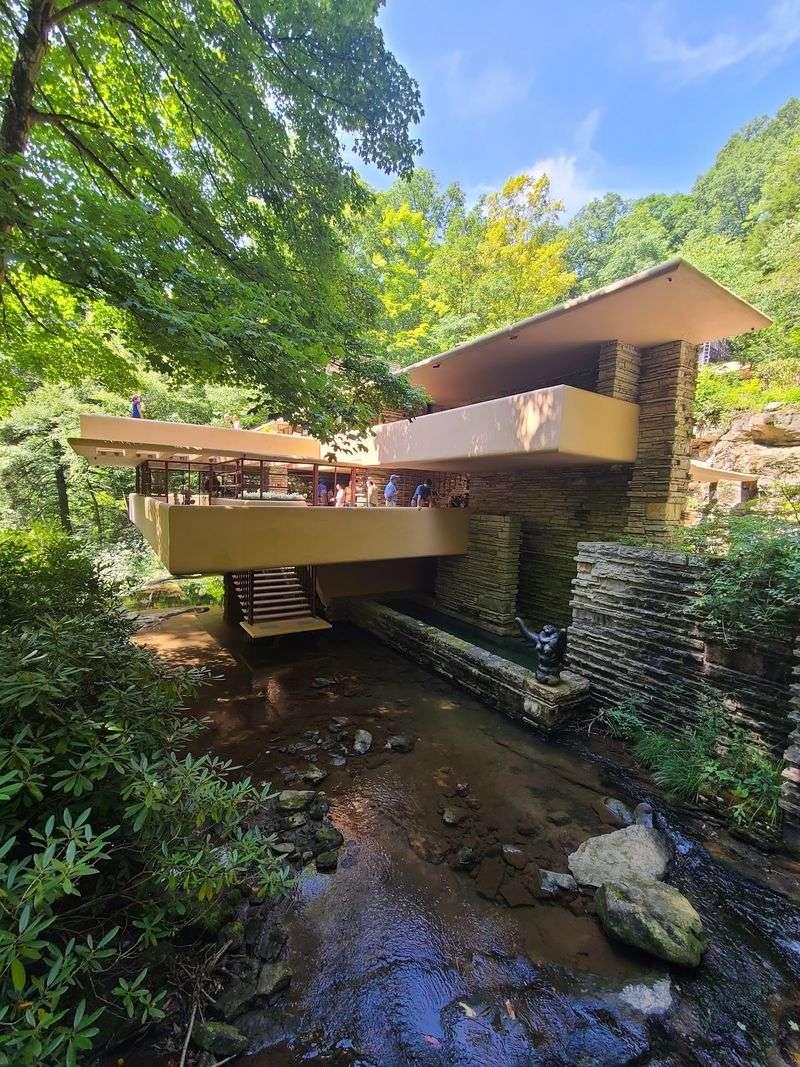
The sound arrives before the full view. Water tumbles over rock beneath the house, making the setting feel alive even when everyone around you is quiet.
At Fallingwater, the waterfall is not simply scenery nearby; the home stands directly above it.
Wright’s choice was surprising. The Kaufmann family loved the falls, and a more ordinary plan might have placed their house across the stream, facing them.
Instead, he made the water part of everyday life inside the home. Visitors can still hear it as they move through the rooms.
Pause at a safe viewing spot and listen for a minute before taking pictures. Notice how the sound changes as you move between the paths, terraces, and sheltered spaces.
After rain, the stream may seem especially lively, though conditions always depend on the weather.
Knowing where the house sits changes how you see every photograph of it. The long concrete platforms do more than create a dramatic outline.
They place people close to a stream that never stops moving, giving this famous design a rhythm no drawing could quite capture.
Glass Walls That Bring the Forest In
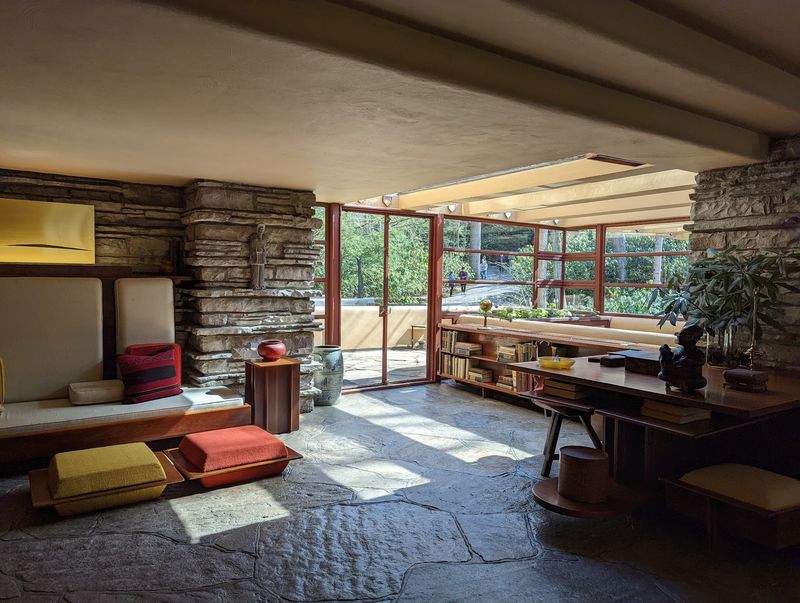
Imagine sitting indoors while the woods seem only an arm’s length away. Fallingwater’s long window walls make that feeling possible, opening views toward leaves, stone, and moving water.
The glass gives the house its surprising lightness, even though much of it is made from sturdy materials.
On an interior tour, watch how your eye keeps traveling outside. Wright used windows, corners, and open areas to connect the rooms with their setting.
The forest is not treated like a picture hanging on a wall. It becomes part of what you notice while walking, talking, and resting.
Try visiting without looking at every space through your phone screen. Take a moment to find a favorite view, then notice the smaller details around its edges.
You may spot how the stone inside seems to continue the rocky landscape beyond the glass.
Tour options and photography rules can vary, so check the official Fallingwater website when booking. Whether you come for architecture or scenery, these windows make a strong case for slowing down.
They show how a room can feel sheltered and open to the world at the same time.
Terraces That Reach Into the Air
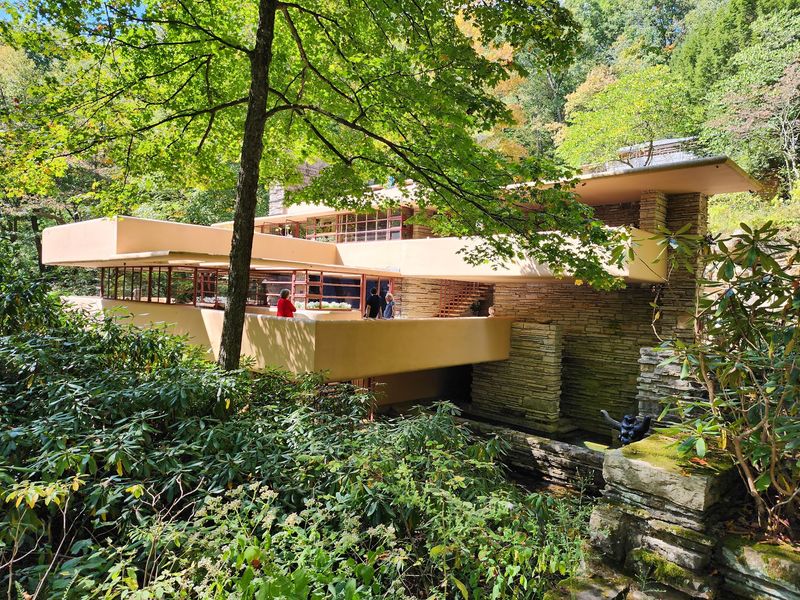
Some balconies barely leave the wall. The terraces at Fallingwater seem to leap into open space, stacking one above another over the stream.
From below, their strong horizontal lines make the house look almost weightless against the wooded hillside.
Those platforms are called cantilevers, which means they project outward while being supported from one end. You do not need an engineering background to appreciate the effect.
Stand where you can see the terraces together, and notice how their edges echo the layers of rock near the waterfall.
During a guided visit, look for the change in mood as you move from a smaller interior area toward an outdoor terrace. The view suddenly grows wider, and the trees feel much closer.
Wright used that contrast to make each outdoor space feel like a reward.
Do not lean past barriers or leave marked visitor areas to find a better angle. There are plenty of striking views from approved paths.
Bring patience instead of a long shot list, because the best surprise may be a terrace you notice only after changing your position by a few steps.
Stone That Feels at Home in the Hills
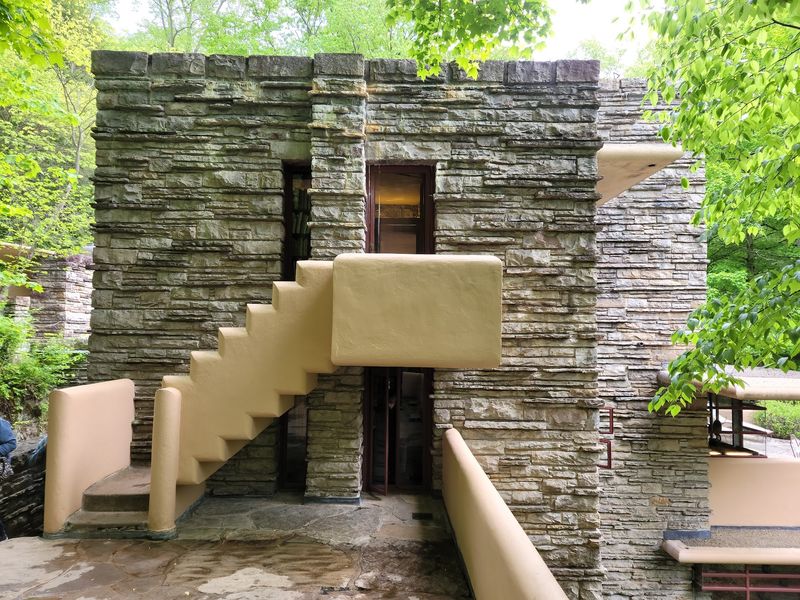
Run your eyes along the walls, and the stone begins to look familiar. Its layered surfaces recall the rock ledges around the stream, giving the building a strong link to the land beneath it.
At Fallingwater, those rough textures are as memorable as the glass and terraces.
Wright used local sandstone throughout the house. Paired with smooth concrete and broad windows, it keeps the design from feeling too cold or polished.
Even visitors who know little about building materials can spot the contrast between the uneven stone and the clean, flat terrace edges.
On your tour, compare a wall inside with one outside if your route allows it. Notice how the same material helps connect rooms to the surrounding woods.
It is a simple idea you can take home: the materials in a space can change how close you feel to nature.
Remember that Fallingwater is a carefully preserved historic home, not a hands-on exhibit. Follow your guide’s instructions about what you may touch.
Looking closely is enough to discover how much thought went into making this unusual house feel rooted in western Pennsylvania.
Rooms Made for Gathering
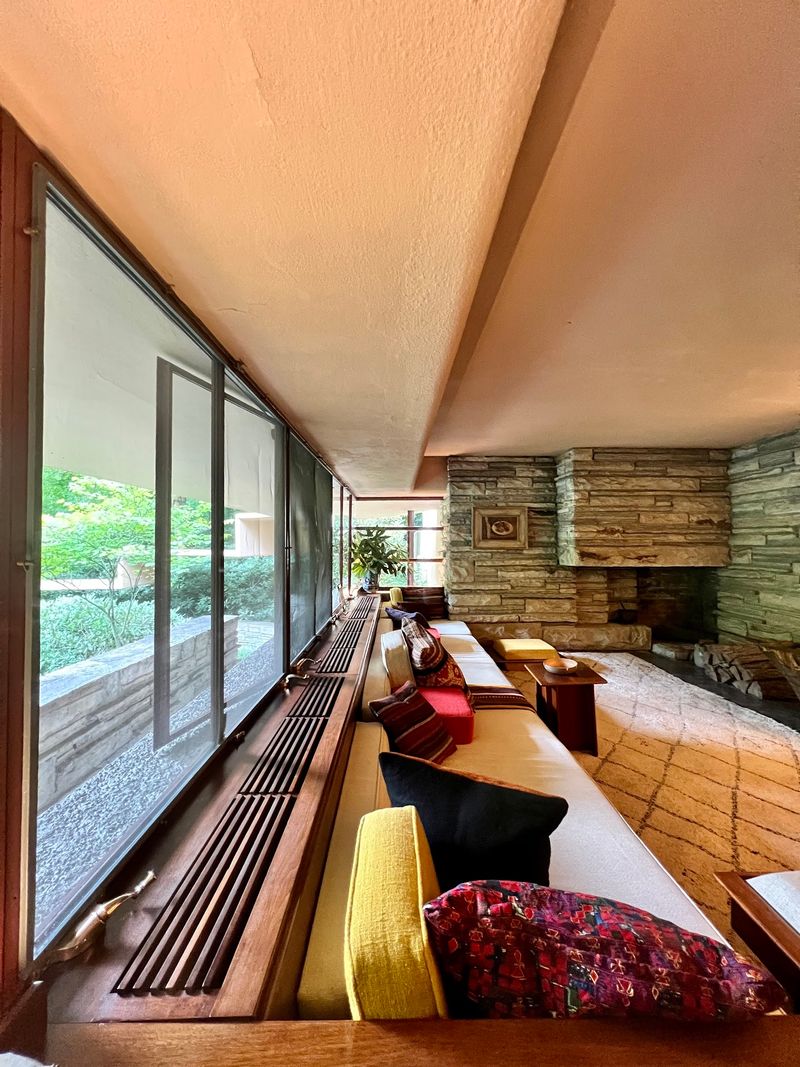
A huge house does not have to feel stiff. Inside Fallingwater, the living areas invite you to imagine family members gathering after a day outside.
The rooms balance broad views with lower ceilings and sheltered corners, creating spaces that can feel both social and calm.
Wright designed the home for the Kaufmann family, whose visits offered a break from their busy lives in Pittsburgh. A guided tour can help you picture how they used the house, rather than seeing it only as a famous work of art.
Small bedrooms and larger shared areas reveal where daily life centered.
Pay attention to how your mood changes as you pass from a tighter entrance into a more open room. That shift is part of the experience, not an accident.
It can make the windows and outdoor views feel even bigger when they finally appear.
Visitors must respect the furnishings and follow the guide’s rules, which generally means leaving furniture untouched. That care protects the house for future guests.
It also encourages a different kind of visit: one where you notice how a family home can tell a story through its layout.
The Stairway Toward the Stream
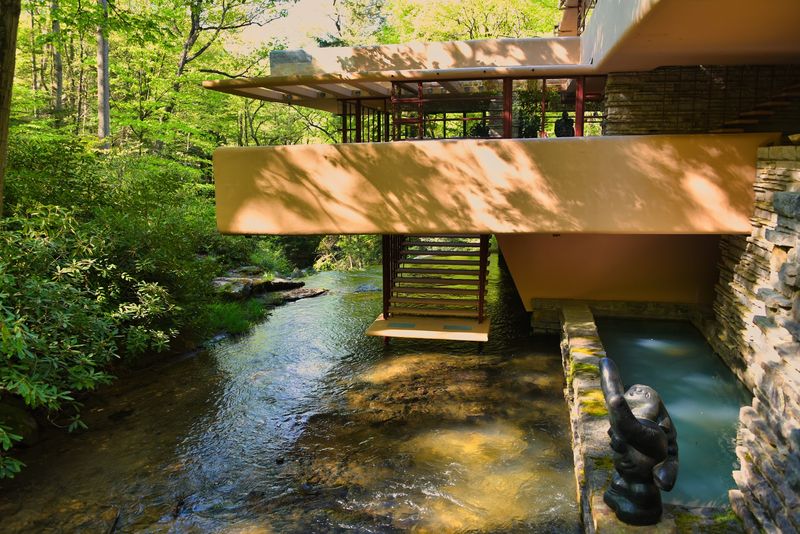
Just when you think you understand the house, a stairway points toward the water. Fallingwater includes an interior route leading down toward the stream below, a detail that makes the connection between home and landscape feel unusually direct.
It is easy to imagine how exciting that idea sounded to the family.
The feature also shows how Wright thought beyond pretty views. He wanted the sounds and presence of Bear Run to shape life in the house.
Even when the water is out of sight, you know it is there. That makes a walk through the rooms feel different from a visit to a typical historic mansion.
Ask your guide about the stairway and listen for how it fits into the home’s larger design. Access to particular areas depends on the tour, so do not expect to use every feature yourself.
You can still appreciate the idea from the spaces visitors are shown.
There are many stairs throughout the property, not just this memorable one. If steps are difficult for you, review tour details and accessibility information before buying tickets.
A little planning makes it easier to enjoy the story without worrying about the route.
The View from Downstream
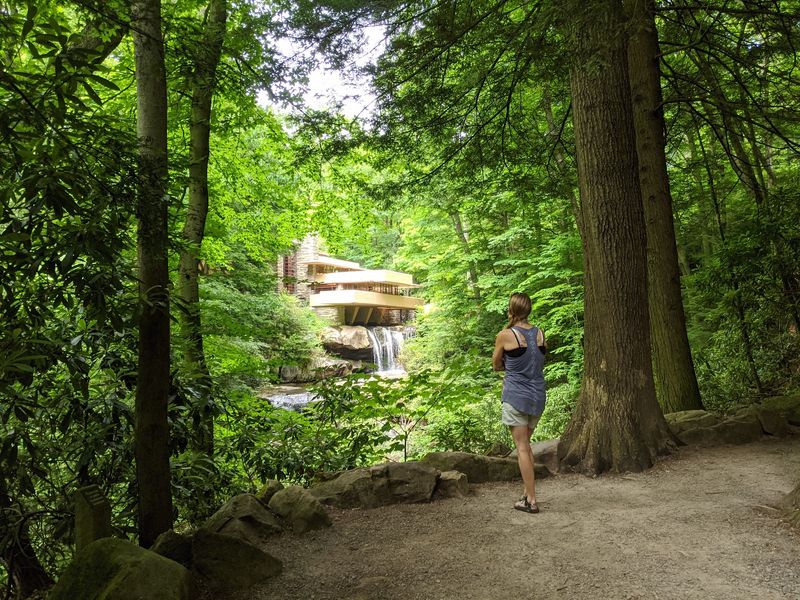
Then comes the view that makes people stop talking. From a downstream overlook, Fallingwater appears above the falls, with terraces, stone, trees, and water finally fitting into one scene.
It is the picture many visitors know before they arrive, yet seeing it in person brings a new sense of scale.
Leave extra time after your house tour to walk to a designated viewpoint. The path gives you a chance to enjoy the grounds at your own pace, although the walk can involve slopes and uneven surfaces.
Good walking shoes help, especially if the weather has been wet.
Try taking one wide photo, then put the camera away for a few minutes. Watch where the terrace lines end and the rocky ledges begin.
Listen to the falls while the house sits quietly above them. That mix of movement and stillness explains why the view stays with so many travelers.
If photography is your main goal, check current visitor rules and available ticket options before leaving home. Whatever you bring, respect barriers and other guests.
The most satisfying view is not the one you rush to capture, but the one you give yourself time to see.
A Forest Walk Beyond the House
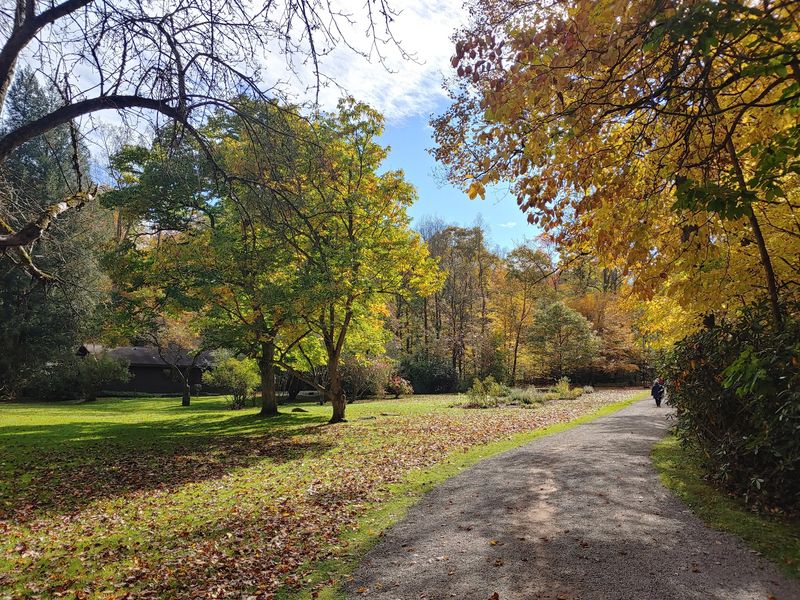
The house may be the star, but the trees deserve some attention too. Around Fallingwater, wooded paths let you step back from the busy tour experience and notice the landscape that helped inspire it.
The air, changing light, and sound of the stream give the visit room to breathe.
Set aside time for the grounds instead of planning to leave as soon as your tour ends. Depending on your ticket and the areas open that day, you may be able to explore paths and enjoy different views of the home.
Check current access details with Fallingwater before you go.
Walking here also makes Wright’s idea easier to understand. From one spot, the concrete terraces stand out sharply.
Move farther along, and the stone and tree colors seem to pull the house back into the hillside. The building can look different within the space of a short walk.
Keep to marked routes, carry water when the day is warm, and allow for hills and gravel underfoot. You do not need to be an architecture expert to enjoy this part of the property.
Curiosity and a comfortable pace are enough.
A Visit Worth Planning Well
Anticipation is part of the trip, but a little planning keeps it fun. Fallingwater attracts visitors from far beyond Pennsylvania, and guided house tours can fill up.
Choose your tour on the official website before making the drive to 1491 Mill Run Road.
Look closely at the options rather than assuming every ticket offers the same access. A grounds visit and an interior tour provide different experiences, and photography rules may differ too.
Current prices, schedules, and available programs can change, so rely on the site’s latest information instead of an old review.
Leave time for the visitor center, where you can find a cafe and shop, as well as a chance to get oriented. Expect walking, slopes, and stairs around the property.
If anyone in your group has mobility needs, contact Fallingwater ahead of time to ask which options will work best.
Most of all, avoid squeezing this stop into a rushed afternoon. The house rewards people who listen to the waterfall, study the views, and ask questions along the way.
Thoughtful planning gives you more space to enjoy what makes it unforgettable.