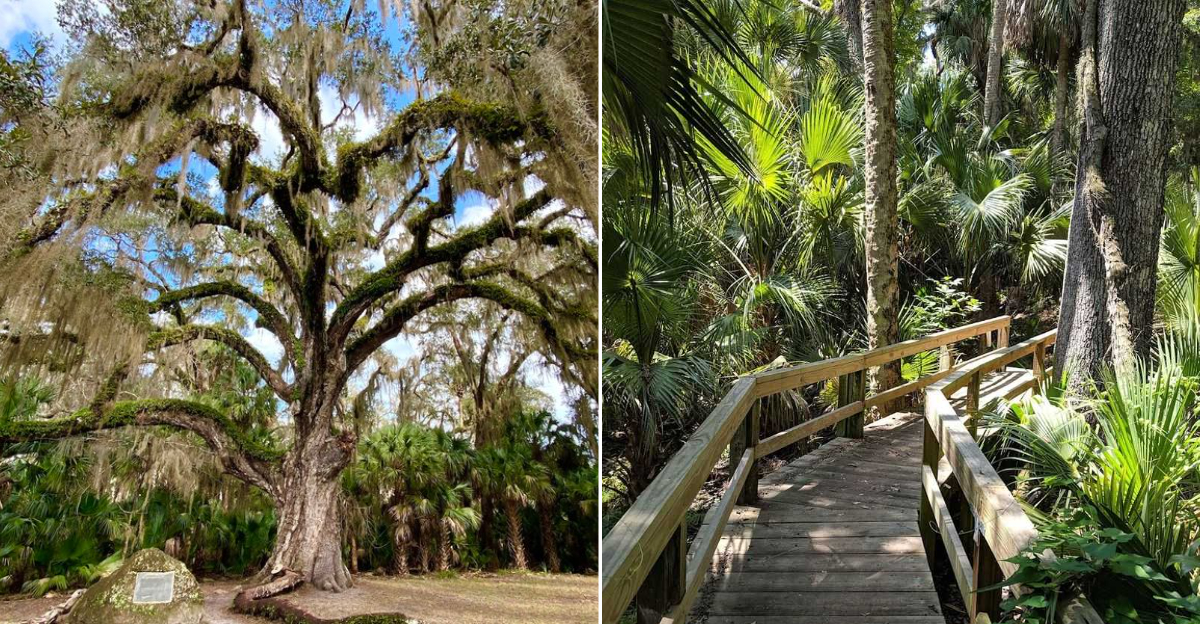
Located near Ormond Beach, the Bulow Creek State Park is best known for the Fairchild Oak, one of the largest and oldest live oak trees in the South.
Walking trails wind through dense coastal forest and along scenic stretches of Bulow Creek, making the park especially appealing for hiking, birdwatching, and slow outdoor exploration.
Nearby historic ruins from the Bulow Plantation add another layer to the experience, connecting the landscape to Florida’s early history.
Bulow Creek State Park stands out as one of those places where Florida’s beauty feels quieter, greener, and surprisingly peaceful.
It is, of course, a must-visit destination for the upcoming warmer days, so keep on reading for all the tips you’ll need.
1. The Oak Canopy Trail
Some places make you slow down before you even realize it.
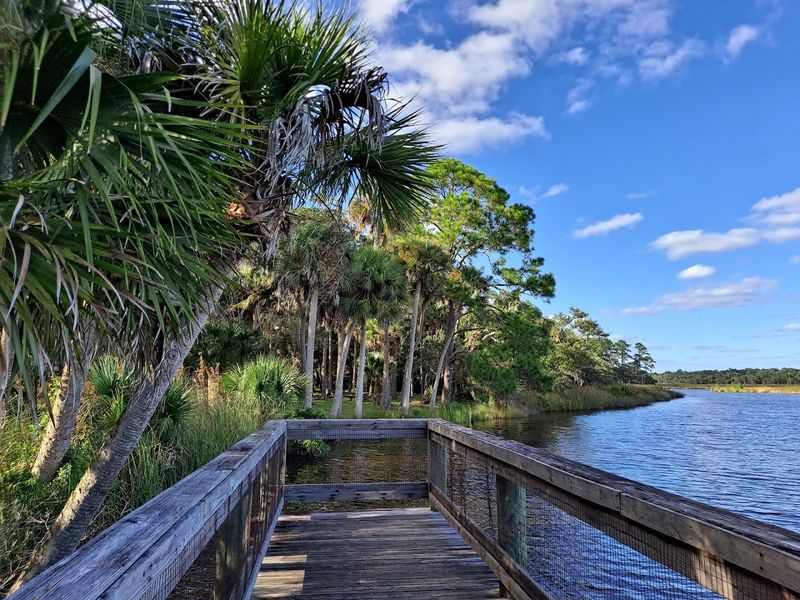
The Oak Canopy Trail is the park’s signature walk, and it earns that reputation with a ceiling of sprawling live oaks that cast cool, shifting shade over the path.
I liked how the branches seemed to lean inward just enough to create a tunnel effect without making the forest feel closed off.
That balance is what makes this trail memorable.
You get a sense of age here, especially when the trunks thicken and the roots begin to ripple beside the trail, but the route still feels approachable for casual walkers.
The ground is mostly even, though I would still wear shoes you do not mind getting dusty or a little muddy after rain.
Timing matters more than speed on this one.
Early morning gives you softer light, fewer bugs, and better odds of hearing birds before other footsteps join the soundtrack.
If you pack all your essentials, water, bug spray, and a little patience, this shaded stretch turns an ordinary walk into the kind of outing you replay later.
2. Historic Bulow Woods Path
History sneaks up on you here in the best way.
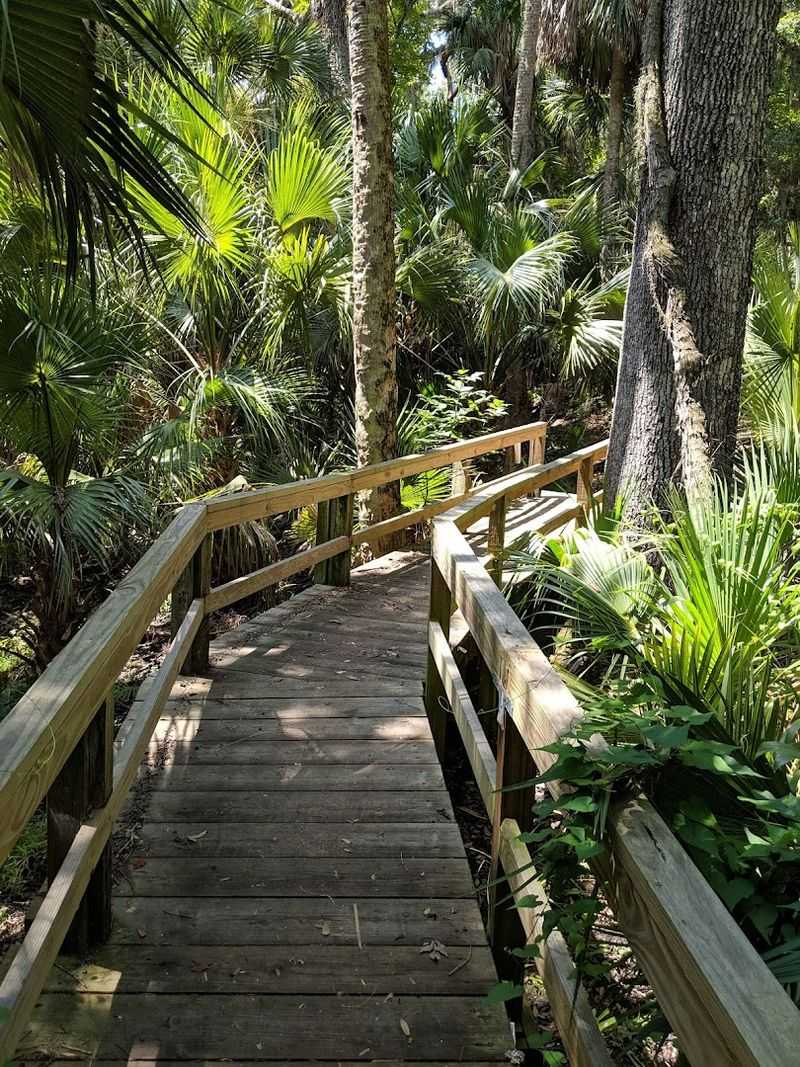
The Historic Bulow Woods Path threads through old growth forest with a quiet confidence, and every turn feels like it is guiding you toward a story instead of just a destination.
I enjoyed that the route never feels staged, because the landscape still leads the experience.
The path connects the park to the nearby Bulow Plantation Ruins area, so you get a mix of natural beauty and historical context without needing to force either one.
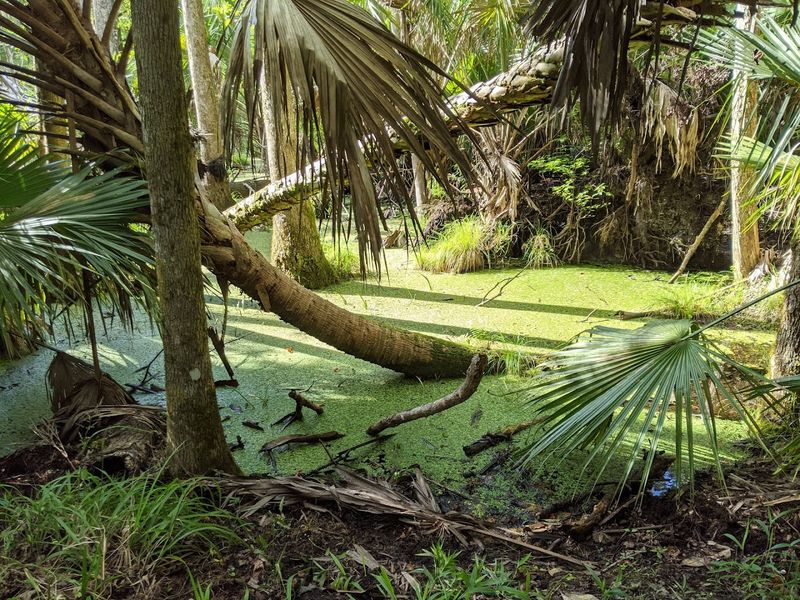
Along the way, the oaks, palms, and pockets of swampy terrain keep things visually varied, which helps the walk feel longer in interest than in effort.
If you like trails that reward curiosity, this one gives you something to notice every few minutes.
A little preparation makes the outing smoother.
I would pack water, especially on warm days, and keep an eye on the ground for muddy patches after recent rain.
It is also smart to start earlier than you think, because once the filtered light hits the trees just right, you may find yourself stopping often and losing track of time.
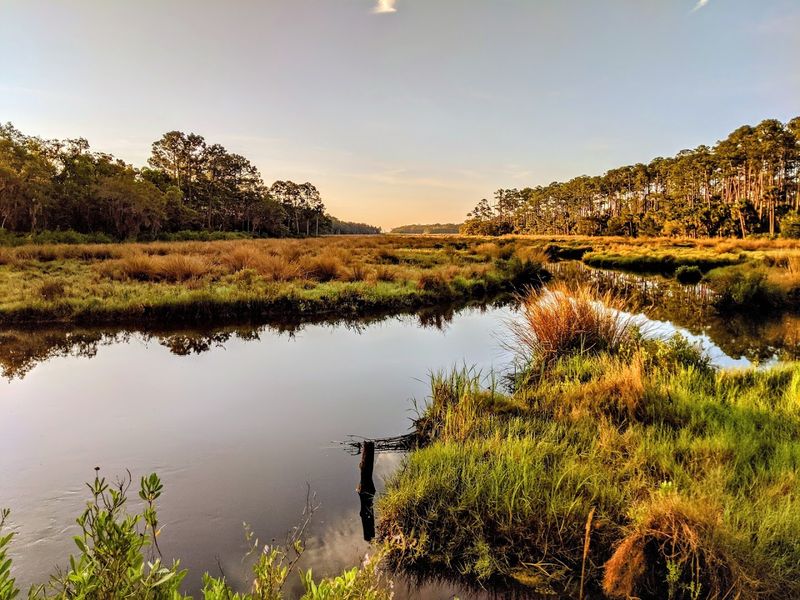
3. Wildlife Watching Along The Marsh
The stillness here is rarely empty, and it will say so much to those willing to listen.
Wildlife Watching Along The Marsh is one of those experiences that depends less on luck than on paying attention, because movement often begins as a rustle, a ripple, or a flash of color near the water.
I found that the more quietly I walked, the more the park seemed willing to introduce itself.
Birds are usually the first stars of the show, especially around wetter sections where calls bounce through the trees and reeds.
Depending on the day, you may also spot deer, turtles, squirrels, lizards, or even an alligator resting in the distance, which is a good reminder to admire wildlife respectfully and never crowd the edge.
Closed-toe shoes help, and so does scanning ahead rather than staring only at your phone or camera screen.
Bugs can be the unofficial welcoming committee, so repellent is not optional in warmer months.
I would also wear lighter, breathable clothes and keep your pace relaxed, since wildlife tends to reward patience more than mileage.
The real treat is that nothing feels curated – you are simply stepping into a living habitat and learning to notice what was already there.
4. The Fairchild Oak
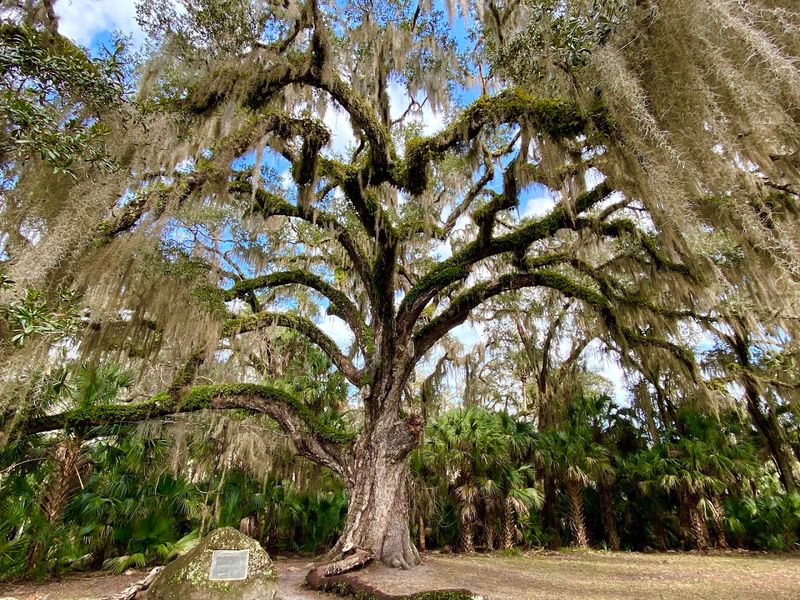
It is not every day that a tree is the star of the show, but it should be considering how incredible trees are.
The Fairchild Oak does exactly that, standing with the kind of presence that makes everyone lower their voice a little when they approach.
I have seen big trees before, but this one feels less like scenery and more like a host that has been welcoming visitors for centuries.
Its size is the obvious draw, yet the details are what kept me lingering.
The twisting limbs stretch outward in broad, confident lines, and the bark has that deeply textured look that practically begs for a closer stare.
Photos help, but they flatten the scale, so I would give yourself time to walk around it slowly instead of rushing in for one quick picture.
This is also the easiest wow moment in the park, which makes it ideal if you are short on time.
Families, casual sightseers, and serious nature fans can all appreciate it without much effort.
Bring a camera, pause under the shade, and let the tree do what it does best – make a regular day feel older, quieter, and more grounded.
5. Picnic Area And River Access
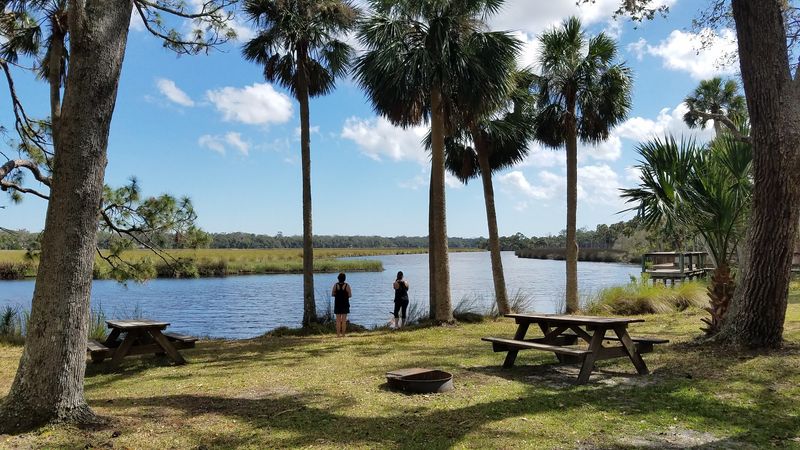
Not every memorable stop has to involve miles on a trail.
The Picnic Area And River Access gives the park a relaxed social side, with tables, grills, and easy places to pause when you want nature without turning the day into a full workout.
I liked that it felt simple and functional rather than overbuilt, which keeps the setting calm.
Shade is the quiet luxury here.
Under the oaks, lunch feels less hurried, and the nearby water adds just enough breeze and movement to make lingering easy.
If you are traveling with family or mixing hikers with non-hikers, this is the smart compromise spot because some people can wander while others stay put and still enjoy the scenery.
A few small habits make the experience better.
I would bring your own drinks since reliable potable water is not always something to count on, and packing a trash bag helps you leave the area as clean as you found it.
This is also a good place to reset after a walk, swap trail stories, and admit that a sandwich somehow tastes better when old oaks are handling the shade duty.
6. A Peaceful Ride Through The Park
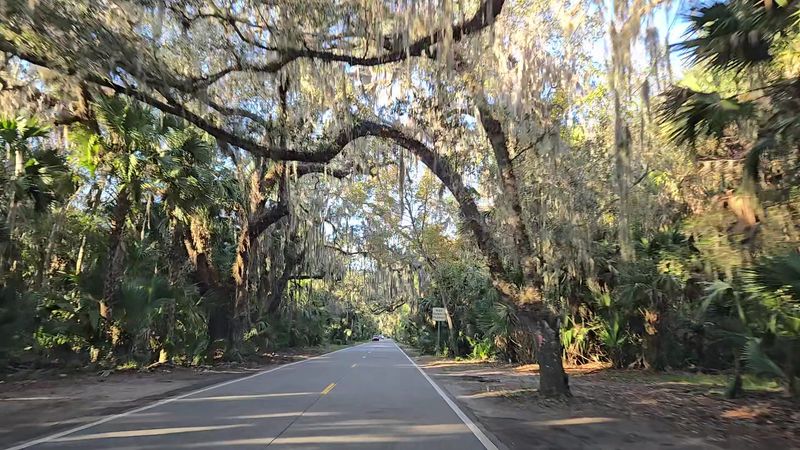
Wheels change the rhythm in a refreshing way.
A Peaceful Ride Through The Park lets you cover more ground while still keeping that close-to-nature feeling that makes this place special.
I have always liked parks that work for both walkers and cyclists, and this one handles that balance with surprising ease.
The riding here is less about speed and more about texture.
Sandy sections, shaded stretches, and occasional uneven spots keep you alert, so a comfortable bike and moderate expectations go a long way.
If you are used to smooth paved greenways, this will feel more natural and a bit more rugged, but that is exactly why the ride stays interesting.
Courtesy matters on shared routes, and it improves the whole experience.
I would keep your pace reasonable, announce yourself when passing, and stop now and then because this is not a place to race through with your head down.
The reward is a ride that feels grounded and unhurried, with old trees overhead, birds cutting through the quiet, and just enough challenge to keep your attention honest.
7. Why It Feels So Hidden
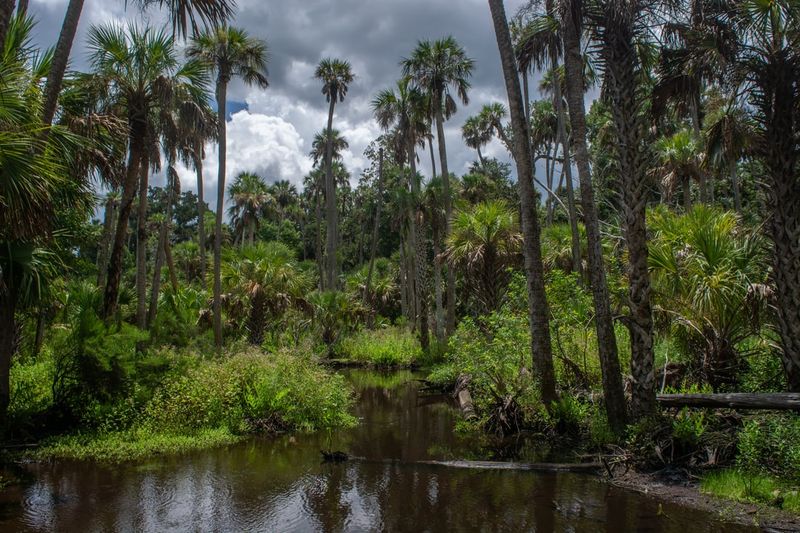
The best surprise is how easy it is to miss.
Bulow Creek State Park sits at 3351 Old Dixie Highway in Ormond Beach, Florida, yet it feels removed from the usual beach-town pace almost immediately after you arrive.
I think that contrast is part of its charm, because the setting does not advertise itself loudly even though the experience stays with you.
The entrance area is modest, and that first impression can fool you into thinking the park will be quick or limited.
Instead, once you step onto the trails, the forest opens into a much richer outing with ancient trees, quieter corners, and enough variety to turn a casual stop into a half-day plan.
Reviews often mention that hidden quality, and after visiting, I understood why so many people talk about returning.
This is the kind of place that rewards a little intention.
I would arrive earlier in the day if possible, especially since parking can feel tight when the lot fills up.
Bring what you need before starting, including water and bug spray, and you will spend less time troubleshooting and more time enjoying what makes the park feel like a secret worth sharing carefully.
8. Tips For A Better Visit
A little planning turns a good outing into a smooth one.
Tips For A Better Visit may not sound glamorous, but this is where the small decisions save you from the classic Florida trio of heat, bugs, and soggy shoes.
I have learned that parks like this are more enjoyable when you prepare for comfort instead of winging it.
Start with the basics: water, insect repellent, decent walking shoes, and a phone charged enough for photos and maps.
The trails are generally manageable, but muddy spots can appear, and benches are limited, so I would not count on frequent rest stops once you get going.
If you are bringing kids, snacks help, and if you are bringing a camera, morning light tends to flatter both the trees and the mood.
It also pays to respect the park’s pace.
Move quietly if you want wildlife sightings, check yourself for bugs afterward, and give yourself more time than the trail mileage suggests because the shade invites lingering.
My favorite strategy is simple: arrive curious, stay flexible, and let the day unfold under the oaks without trying to rush a place that clearly prefers a slower tempo.