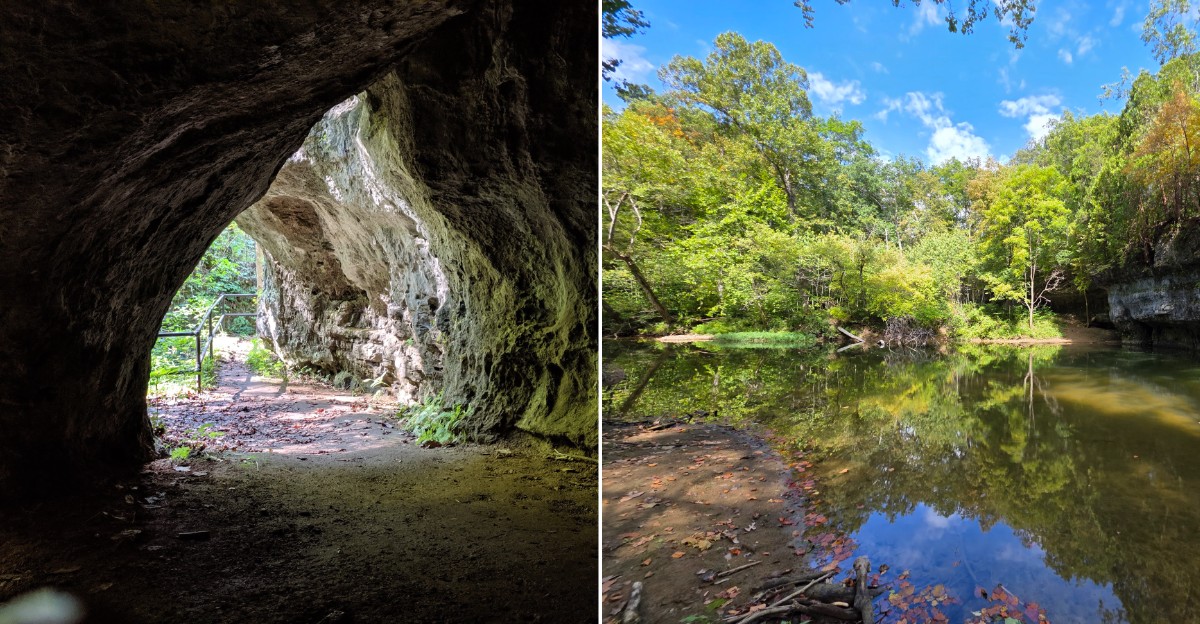
You can follow a quiet trail in southern Ohio and suddenly find yourself beside a waterfall, beneath towering rock walls, or standing at the mouth of a cave. That sense of discovery is part of what makes Highlands Nature Sanctuary in Bainbridge so memorable, especially when you realize these natural features are open to explore without an admission fee.
Across its wooded trails, the sanctuary reveals layers of Ohio’s landscape, from shaded gorges and mossy cliffs to rushing water and rocky formations shaped over thousands of years. Wildflowers brighten the forest floor, birds move through the canopy, and the cave adds another unexpected dimension to the walk.
Each trail offers a different glimpse of the land, making it easy to slow down and pay attention to the details around you. Here are ten ways to experience this remarkable corner of southern Ohio and make the most of your visit.
The Rocky Fork Gorge
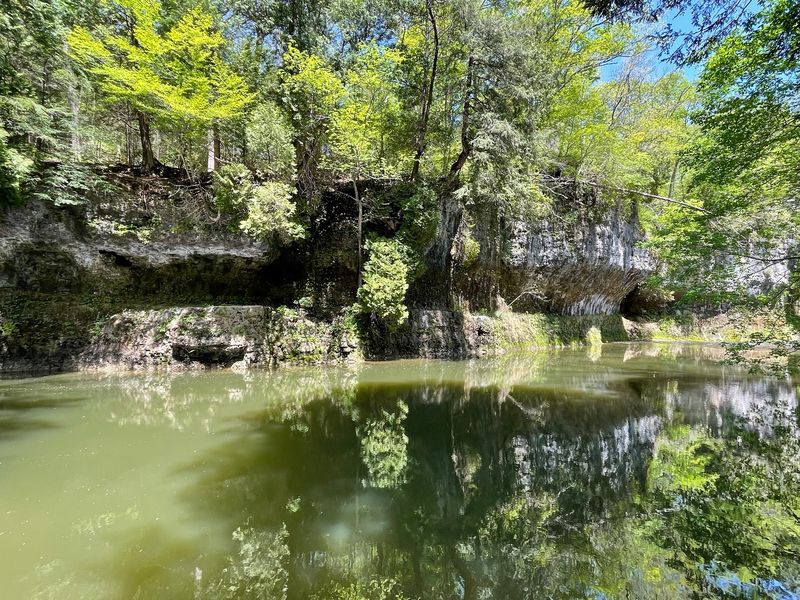
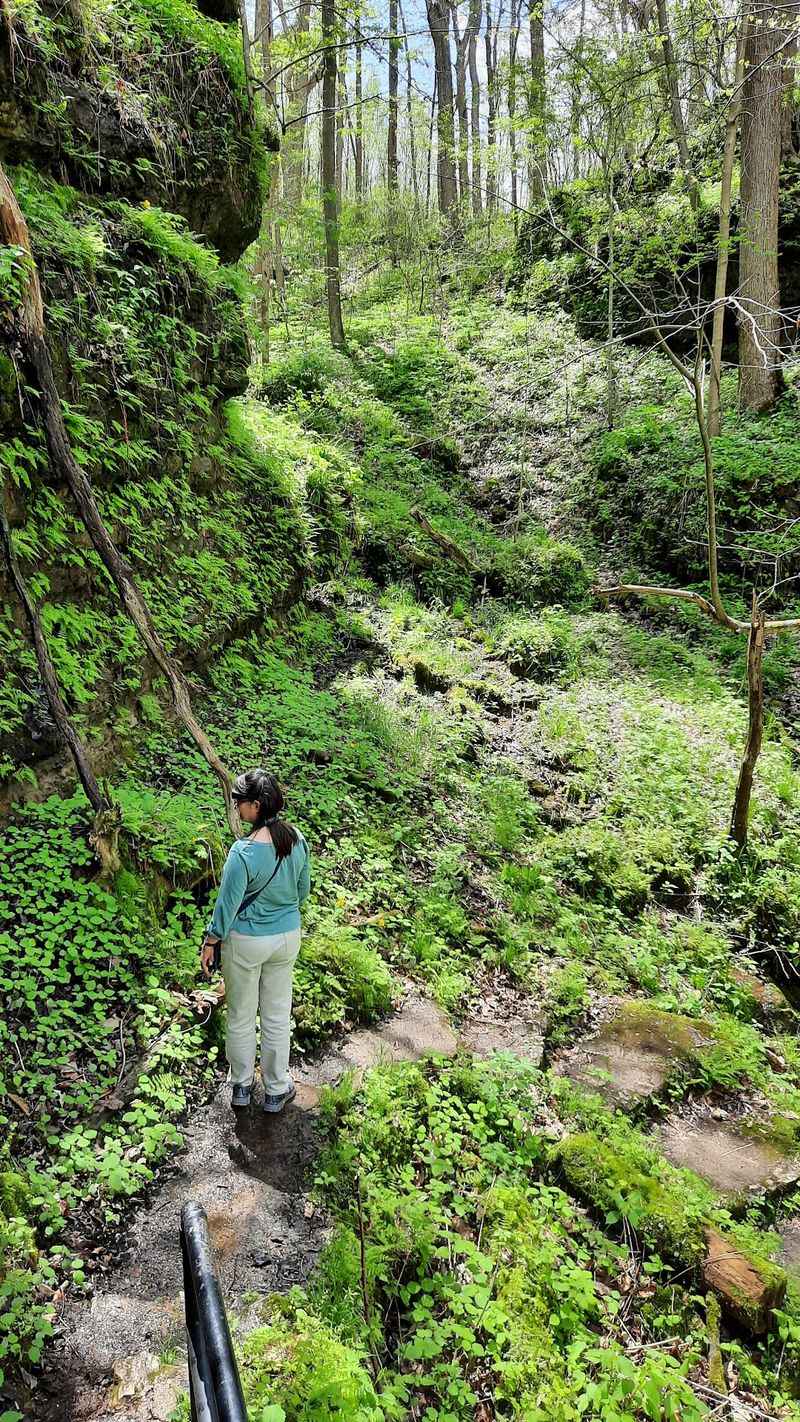
The trees suddenly give way to a view that feels much bigger than the walk that brought you there. Rocky Fork Gorge cuts through Highlands Nature Sanctuary, with high dolomite walls rising above the creek.
Look closely at the layers in the stone and you can begin to picture water shaping this place over a very long time.
A gorge walk rewards slow feet. Pause at marked viewpoints to notice how the light changes on the cliffs, then listen for water below.
The rocky setting can also make parts of the route damp or uneven, so shoes with good grip are a better choice than sandals. Give yourself time for the climb back out, especially if stairs are hard on your knees.
Staying on the trail protects plants growing in small cracks and keeps visitors away from steep edges. Bring water, check the trail map before setting off, and keep children close near drops.
The gorge is the sanctuary’s boldest sight, but its small details may be what you remember: a fern on a ledge or a creek heard before it comes into view. Even a short visit can feel wonderfully far from the road.
Valley of the Ancients Trail
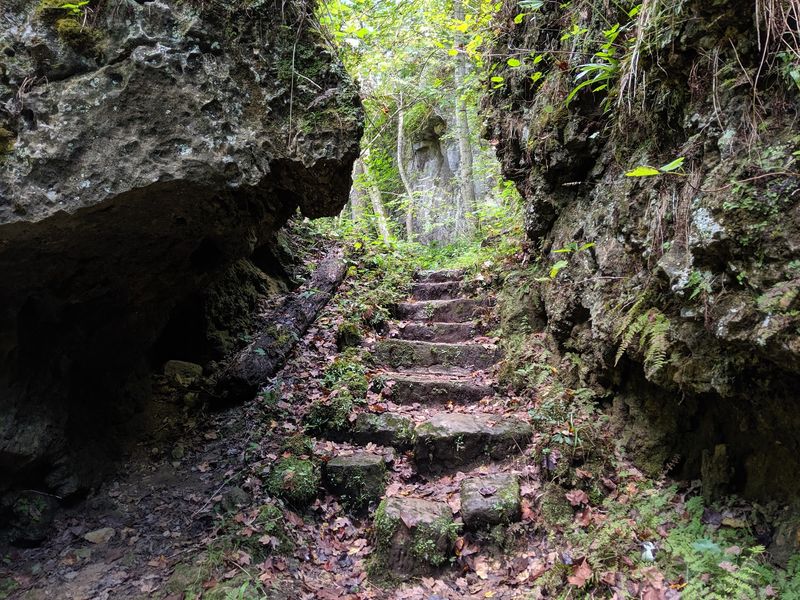
A staircase into the woods can feel like the start of a secret. On the Valley of the Ancients Trail at Highlands Nature Sanctuary, the route drops toward the gorge and passes huge fallen pieces of rock.
The short loop packs plenty of scenery into a small area, making it tempting to hurry from one sight to the next.
Try taking the opposite approach. Stop where the path allows and study the spaces between boulders, the damp cliff walls, and the plants tucked beside the trail.
In spring, trilliums can add bright patches to the forest floor. Leave every flower where it grows so the next walker gets the same surprise.
A photo from the path is a better keepsake than a picked bloom.
Short does not always mean easy here. Steps and uneven ground can slow your return, and wet stone may be slick after rain.
Ask at the visitor center about current conditions before heading down, particularly if anyone in your group has trouble with stairs. With a little patience, this walk offers the fun of a big gorge adventure without asking you to spend the whole day hiking.
It is an inviting first taste of the sanctuary.
Caves You Can Enter
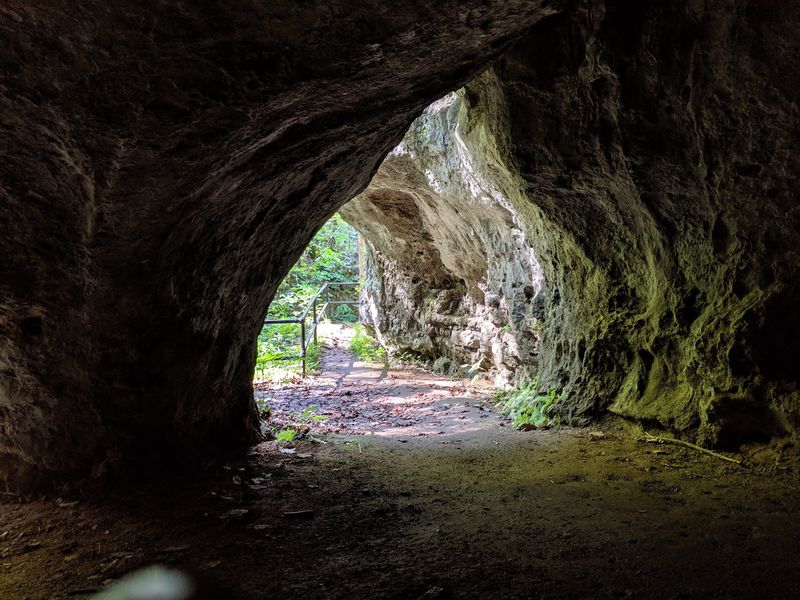
Cool air at a cave entrance makes the sunny woods feel miles away. Highlands Nature Sanctuary has caves connected to the area’s old Seven Caves history, including Marble Cave and McKimmie’s Cave.
When access is permitted, stepping inside lets you see the rock from a completely different angle.
Plan this part of the trip before you drive. Cave access is seasonal and may have special rules, so confirm current dates, hours, and any key or check-in requirement with sanctuary staff.
Some openings and passages can feel tight. Wear sturdy shoes, bring a light if staff recommend one, and turn back if the space feels uncomfortable.
Never enter a closed cave or climb around a gate.
The rules do more than keep visitors safe. Caves shelter bats and other animals that need dark, quiet places, and even a brief visit can disturb them.
Keep your voice low, do not touch wildlife, and leave rocks where they are. If the caves are closed, the gorge trails still show the same remarkable stone landscape aboveground.
Seeing an entrance and knowing what lives beyond it can be exciting enough. That sense of mystery stays with you after you return to daylight.
Small Waterfalls and Shaded Grottoes
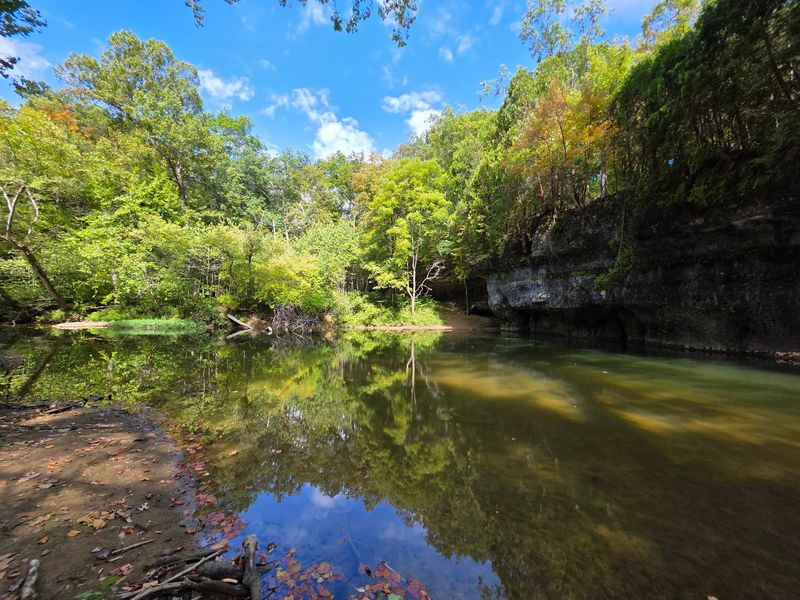
A quiet splash can lead to one of the sweetest stops on a hike. Highlands Nature Sanctuary’s gorge holds small waterfalls, springs, and shaded rock hollows called grottoes.
They may not fill the air with a roar, but that is part of their charm. You can hear water trickling over stone and spot ferns growing where the cliffs stay damp.
Water levels change with the weather. After rain, a little cascade may stand out more clearly; during a dry stretch, it may be much smaller.
Ask staff which marked trail offers a good waterfall view on the day you visit. Cedar Run is known for a small fall partly hidden by rock, while gorge paths offer other chances to notice flowing water.
Bring a camera, but keep both feet on the trail.
Mossy surfaces can be slippery, and climbing into a grotto can damage fragile plants. Instead, watch how the water and light change from a safe spot.
A few minutes of listening here can make a busy day feel calmer. The reward is not a giant waterfall.
It is the chance to notice a whole small world gathered around one wet wall of stone.
Spring Wildflowers
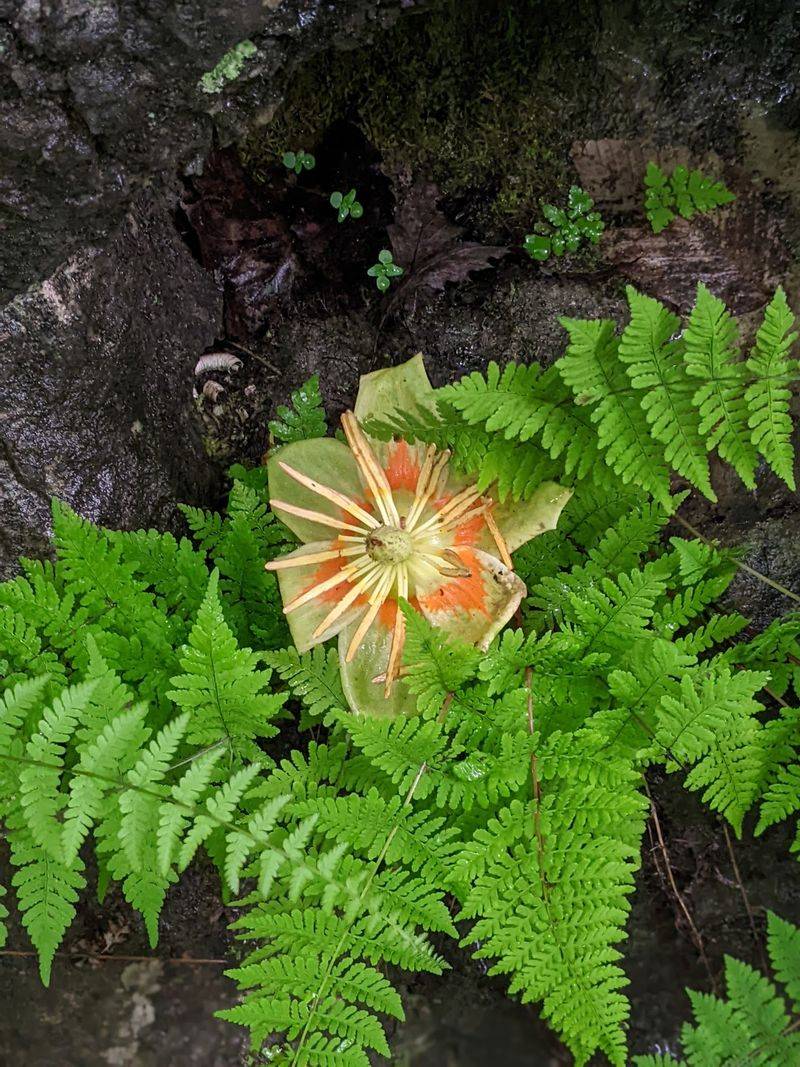
For a few weeks in spring, the ground can seem as interesting as the cliffs above it. Wildflowers spread through Highlands Nature Sanctuary’s woods, turning an ordinary walk into a search for small shapes and colors.
Large-flowered trilliums are a favorite, and visitors may also find wood poppies and columbines as the season moves along.
Bloom times shift with temperature and rainfall, so check the sanctuary’s latest updates instead of counting on one perfect weekend. Mid-April often brings strong displays, and the sanctuary has hosted a wildflower pilgrimage for people eager to learn more.
You do not need to know plant names to enjoy the show. Follow a marked path, look closely at one patch, and see how many kinds of leaves and petals you can spot.
Wildflowers are easy to harm without meaning to. Stay out of flower beds, keep pets only on trails where they are allowed, and skip the urge to pick a bouquet.
A phone photo lets you share the find without taking anything away. Come back in another season and the same stretch of woods will tell a different story.
That change makes spring here feel especially precious.
The Three Sisters and Other Rock Shapes
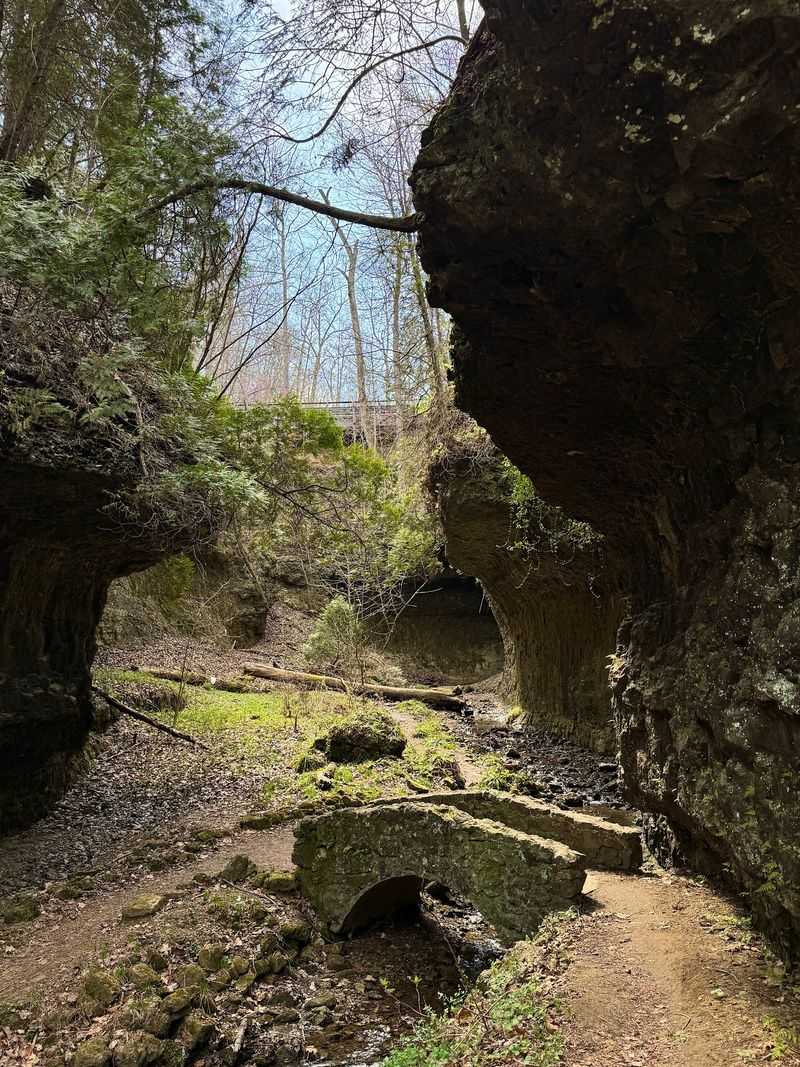
Some rocks are so large they make the trees beside them look small. In Rocky Fork Gorge, fallen blocks of dolomite create shapes that invite a second look.
The Three Sisters are among the best-known formations at Highlands Nature Sanctuary, and their great size helps show just how much this landscape has changed.
People sometimes call these fallen masses slump blocks. You do not have to remember the term to enjoy them.
Picture pieces breaking from a cliff long ago and settling into the gorge, where weather and plants kept working on them. From an approved trail viewpoint, notice whether a tree has taken root on a block or whether ferns soften its edges.
Other rock faces, including the formation called the Lady of the Gorge, add to the fun of looking for natural shapes.
Take your time finding a clear view, but do not scramble onto the rocks for a better picture. Loose surfaces, steep drops, and sensitive plant life make that a poor trade.
A zoomed photo from the trail often shows more detail anyway. These formations give the walk a playful side: every bend might reveal another unexpected shape made by time and stone.
The Appalachian Forest Museum
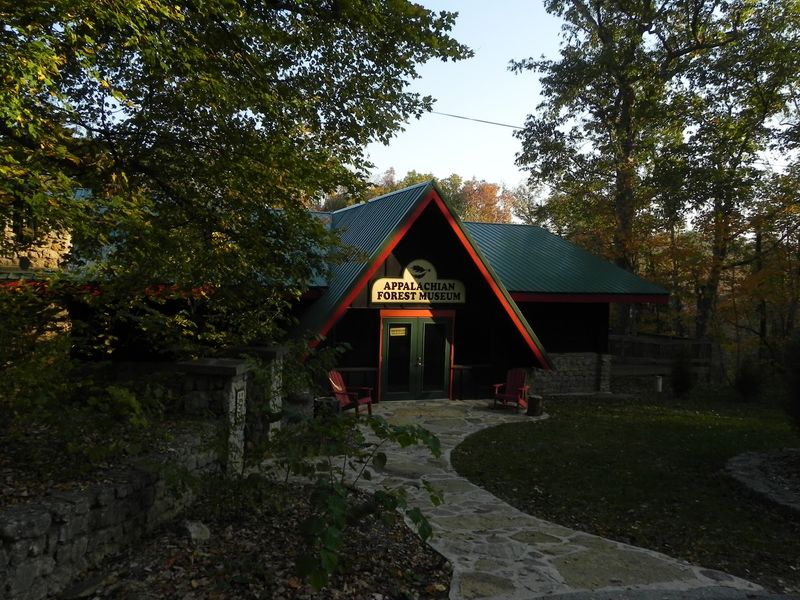
Before your shoes get muddy, a few minutes indoors can change what you notice outside. The Appalachian Forest Museum at Highlands Nature Sanctuary introduces visitors to the story of eastern forests.
Its murals and exhibits give a sense of how old and connected this living landscape is.
It is also a practical first stop. Ask for a current trail map, check which routes are open, and find out whether cave visits are available.
Staff can help you choose a walk that fits your time and comfort with stairs. Restrooms are available at the museum, so use them before heading onto the trails.
If you are visiting with children, ask them to pick one thing from an exhibit to look for outdoors.
Museum and visitor center hours can change by season, so confirm them before leaving home. Admission to the sanctuary’s public areas is free, though donations help support the preserve.
Even if you came mainly for the gorge, do not rush past this stop. Understanding a little about the forest makes a bird call, a spring flower, or a towering cliff feel like part of a much larger story.
It is a useful start, not a detour.
A Trail for Another Kind of Day
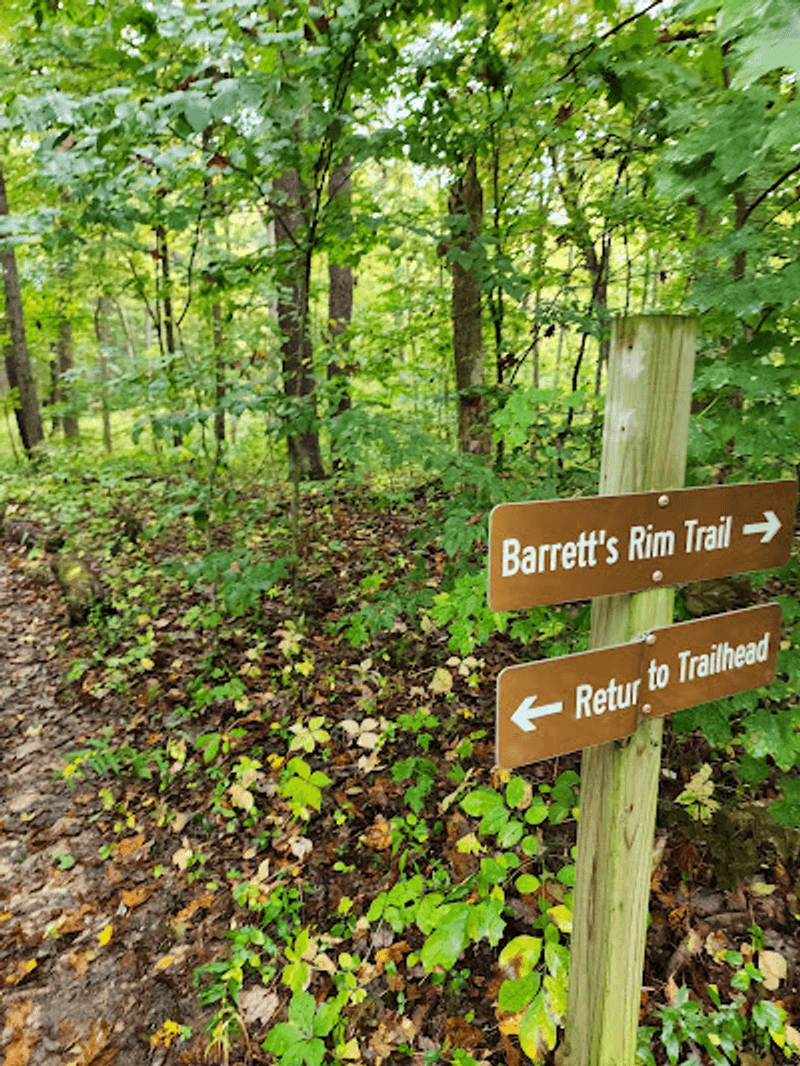
One visit rarely shows you every side of a forest. Highlands Nature Sanctuary has a network of trails that reaches beyond the best-known gorge walk.
Some routes focus on tall trees, others pass meadows, and rim paths offer a different view of the rocky valley.
Choose by conditions, not only by distance. A short path with many steps may feel harder than a longer walk on gentler ground.
Ask at the museum for a map and current advice about routes such as Etawah Woods, Barrett’s Rim, or the Big Beech Loop. Trail access, pet rules, and closing times can vary, so read signs at each trailhead.
If you plan a longer hike, carry water and leave enough time to return before parking areas close.
Phone service may be unreliable in the woods. Save a map ahead of time or carry a paper one, and tell someone where you plan to walk.
You do not need to cover miles to have a satisfying afternoon. Pick a route that lets you pause for the views, and the sanctuary can feel new each time you return.
That variety makes repeat trips part of the fun.
A Visit That Helps Protect the Place
Leaving a beautiful place exactly as you found it is a quiet kind of thank-you. Highlands Nature Sanctuary is protected by the Arc of Appalachia, and public access comes with a shared job: caring for the land while enjoying it.
Free entry makes a day here easier to plan, but the cliffs, caves, plants, and animals still need thoughtful visitors.
Pack out every wrapper, stay on marked paths, and check rules before bringing a dog. Many trails do not allow pets.
A small donation, if it fits your budget, can support the work behind the trails and visitor information. You can also look for a guided hike or educational program if you want to learn more about the place you just walked through.
Before making the trip to 7660 Cave Rd in Bainbridge, confirm current hours, trail conditions, and cave access through the sanctuary’s official information. Bring a snack and water, since you should not count on finding food at the visitor center.
Whether you stay for a short walk or return for another season, a little planning helps protect the experience. The best souvenir may simply be a reason to come back.