Ohio backroads hide some of the most charming historic sights in the Midwest, and these covered bridges prove it.
Around each bend, you get a mix of craftsmanship, river views, and small-town character that feels wonderfully removed from the highway rush.
If you love scenic drives, easy photo stops, and places with real stories behind them, this list delivers.
These 13 bridges are more than landmarks – they are memorable detours you will be glad you took.
Smolen-Gulf Covered Bridge
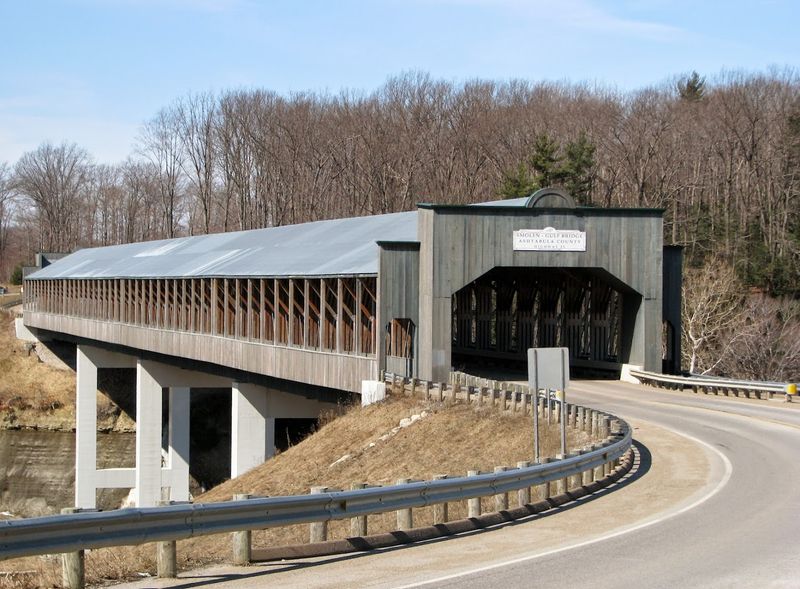
If you want a covered bridge stop that feels instantly iconic, Smolen-Gulf Covered Bridge is hard to top. Stretching an impressive 613 feet, it proudly holds the title of the longest covered bridge in the United States.
Even though it opened in 2008, the design honors traditional craftsmanship in a way that still feels rooted in Ohio history.
Driving toward it, you really notice how gracefully it spans the Ashtabula River valley. The red exterior pops beautifully against the surrounding woods, especially during fall when the hills turn bright shades of orange and gold.
It is the kind of place where you will want to pull over, linger a bit, and take far more photos than planned.
What makes this bridge especially memorable is how it blends scale with charm. It feels grand, yet it still delivers that nostalgic covered bridge atmosphere you came for.
If you are exploring Ashtabula County, this is the star attraction that explains exactly why the area is known as Ohio’s covered bridge capital, and it is absolutely worth building a scenic day around.
Harpersfield Covered Bridge
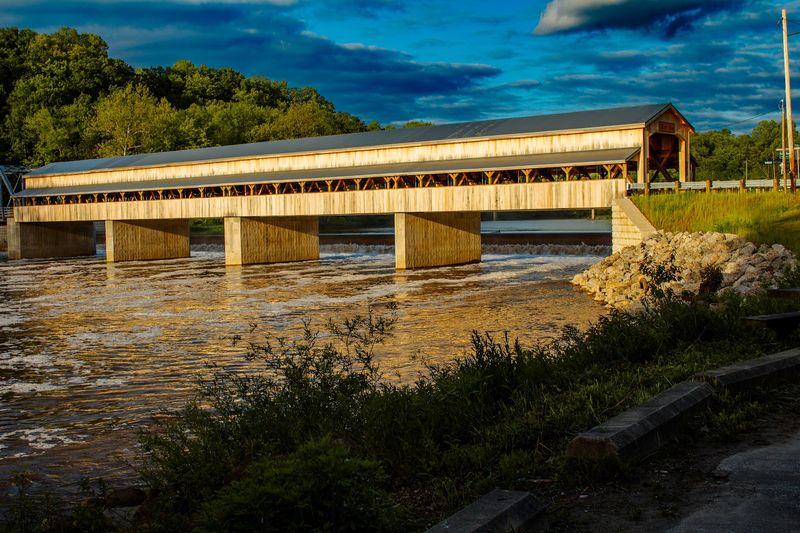
Harpersfield Covered Bridge has the kind of historic presence that makes you slow down the moment it comes into view. Built in 1868, it is one of Ohio’s oldest and longest original covered bridges, and that age gives it an authenticity you can truly feel.
Standing near the Grand River, you get the sense that this bridge has watched generations pass through.
The setting adds a lot to its appeal. The river creates a calm backdrop, and the bridge’s long timber form feels especially elegant when framed by trees and open sky.
If you enjoy places where engineering and landscape work together beautifully, this stop delivers that balance in a very satisfying way.
I think what makes Harpersfield especially worth the detour is its combination of history and atmosphere. It is not just a bridge you check off a list, but one you remember for its age, scale, and quiet scenic charm.
Pair it with other Ashtabula County bridges and you have the foundation for an excellent day trip, but even on its own, this classic crossing gives you a strong taste of Ohio’s covered bridge legacy and character.
Mechanicsville Covered Bridge
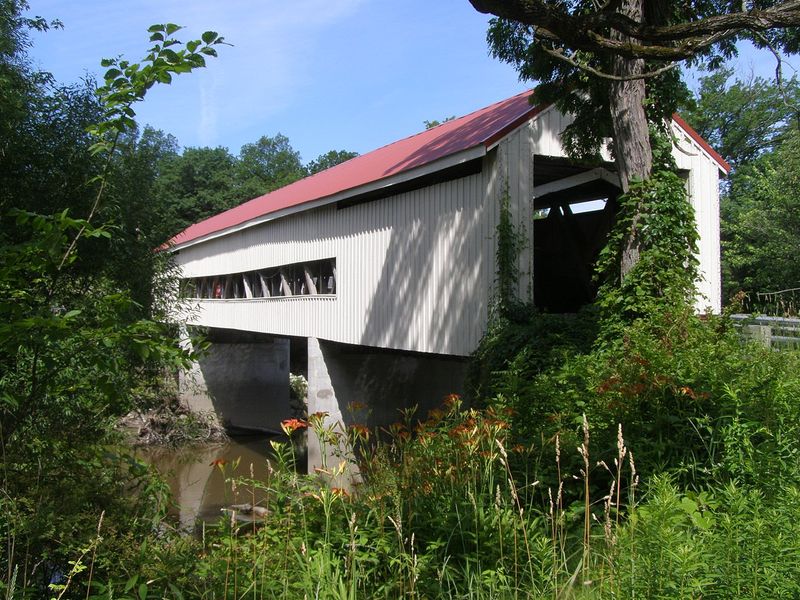
Mechanicsville Covered Bridge offers something that feels increasingly rare and surprisingly exciting – the chance to actually drive across a historic covered bridge. Built in 1867, this Howe truss bridge is still active for vehicle traffic, which gives your visit an immediate sense of connection to the past.
Instead of simply viewing history from a parking pull-off, you get to move through it.
That experience makes this bridge especially memorable. The wooden interior, filtered light, and rhythmic sound of tires crossing the deck create one of those travel moments that is simple but unforgettable.
Outside, the rural setting is just as appealing, with open land and quiet roads that make the whole detour feel relaxed and scenic.
What I love most here is how practical history still feels. Mechanicsville is not preserved as a frozen monument, but as a working piece of Ohio heritage that remains part of everyday life.
If you are exploring Ashtabula County’s famous collection of bridges, this one deserves a high spot on your route. It combines craftsmanship, authenticity, and a little thrill in a way that turns a brief stop into a real highlight of the trip.
Everett Covered Bridge
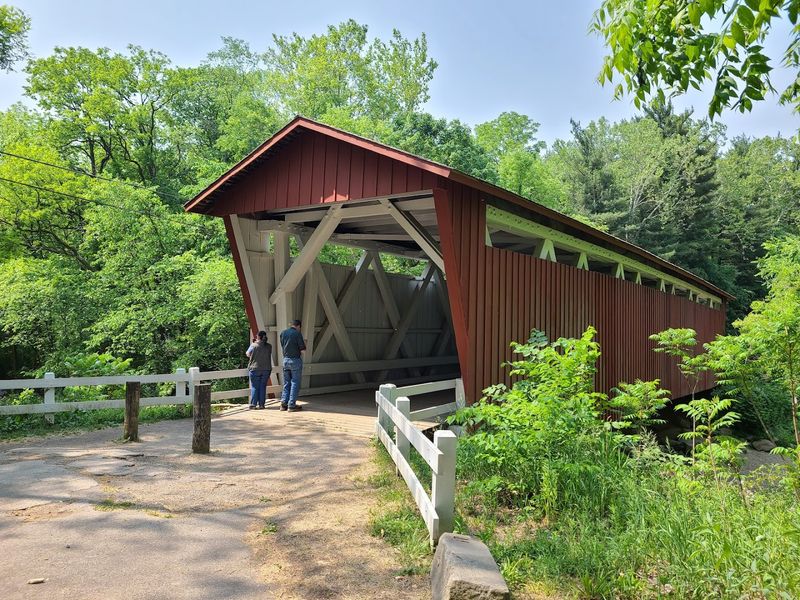
Everett Covered Bridge feels like it belongs in a storybook, tucked into a wooded valley inside Cuyahoga Valley National Park. The current bridge is a reconstruction, but it carries forward the spirit of the original in a setting that is undeniably beautiful.
If you are looking for one of Ohio’s most photogenic bridge stops, this one absolutely earns its reputation.
The approach is part of the experience. Surrounded by trees, rolling terrain, and the calm atmosphere of the park, the bridge feels wonderfully sheltered from the modern world.
It is easy to see why photographers love it, especially when soft morning light or peak fall color adds even more texture to the scene.
What makes Everett so appealing is that the bridge is only one part of a larger outing. You can pair it with hiking, biking, wildlife spotting, or a leisurely drive through the park, which makes the stop feel richer than a quick roadside attraction.
For anyone who wants historic charm without sacrificing natural beauty, this is one of the strongest picks in the state. It delivers exactly the kind of peaceful, scenic detour that turns a good day trip into a memorable one.
Hildreth Covered Bridge
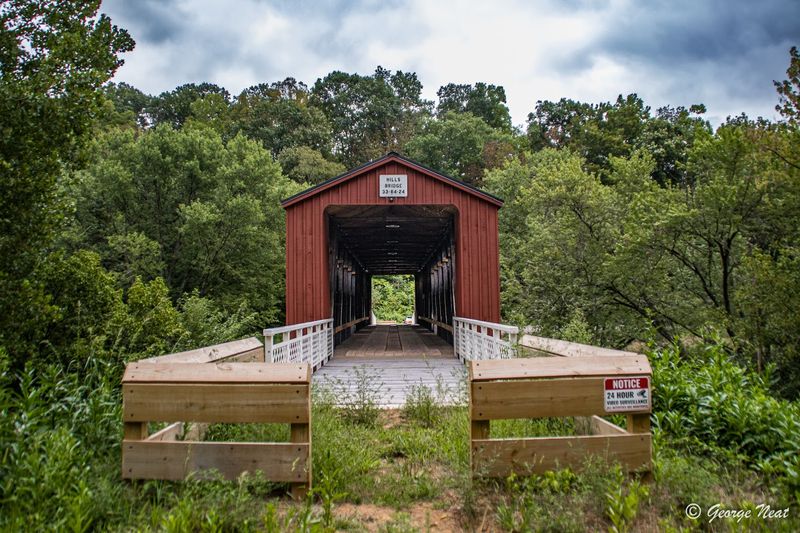
Hildreth Covered Bridge has a dramatic presence that sets it apart from many of Ohio’s other covered crossings. Built in 1878, this Howe truss bridge rises high above the Little Muskingum River, and that extra clearance gives it an almost towering look.
When you first see it, the structure feels both sturdy and elegant, with a silhouette that is hard to forget.
The surrounding landscape adds to that effect in a big way. Tucked into a quieter part of the state near Newport, the bridge feels wonderfully remote, with wooded riverbanks and a peaceful atmosphere that invites you to slow down.
It is the kind of place where you can hear the water, take in the craftsmanship, and appreciate the setting without much distraction.
If you are drawn to covered bridges that feel especially scenic and a little more dramatic than expected, Hildreth is a standout. The height, the river crossing, and the age of the structure all work together to create a stop that feels distinctly memorable.
It may not always get the same attention as some better-known bridges, but that only adds to its appeal. This is a rewarding detour for travelers who like their history with a bit of grandeur.
Harra Covered Bridge
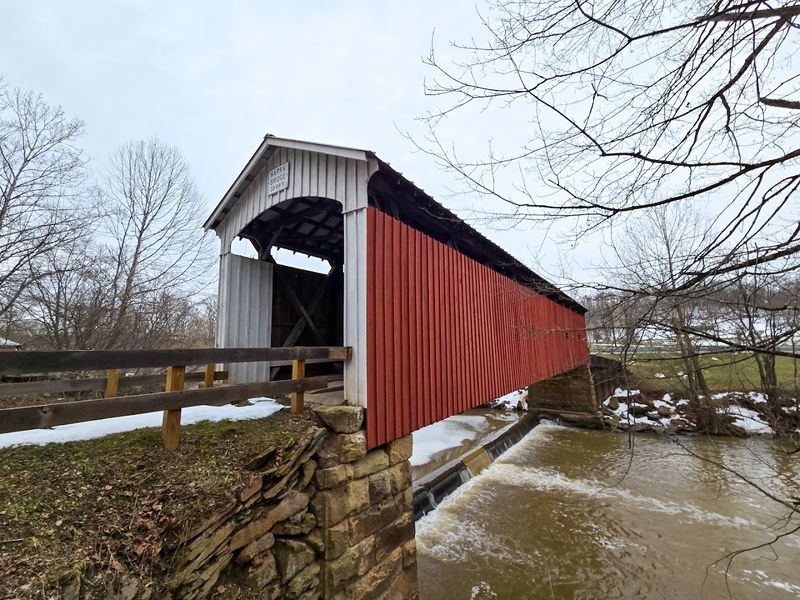
Harra Covered Bridge is one of those places that feels especially rewarding because it is both historic and a little uncommon. Built in 1875 near Otway, it is notable for its rare Long truss design, a style that survives in only a handful of Ohio bridges.
If you enjoy finding places with distinctive engineering stories, this stop gives you something genuinely special.
The bridge sits in a peaceful rural setting that suits it perfectly. Around here, the landscape has that quiet Appalachian character that makes every curve in the road feel more scenic than rushed.
The bridge itself carries a simple, weathered beauty that becomes even more interesting once you realize how unusual its construction really is.
What makes Harra worth the detour is the way rarity and atmosphere come together. You are not just visiting another pretty bridge, but one that represents a less common chapter in Ohio’s bridge-building history.
That added context makes the stop feel richer, especially if you like seeing craftsmanship that has survived against the odds. It is a great choice for travelers who prefer quieter destinations, meaningful details, and the satisfaction of discovering a historic landmark that feels both humble and remarkable at the same time.
Shinn Covered Bridge
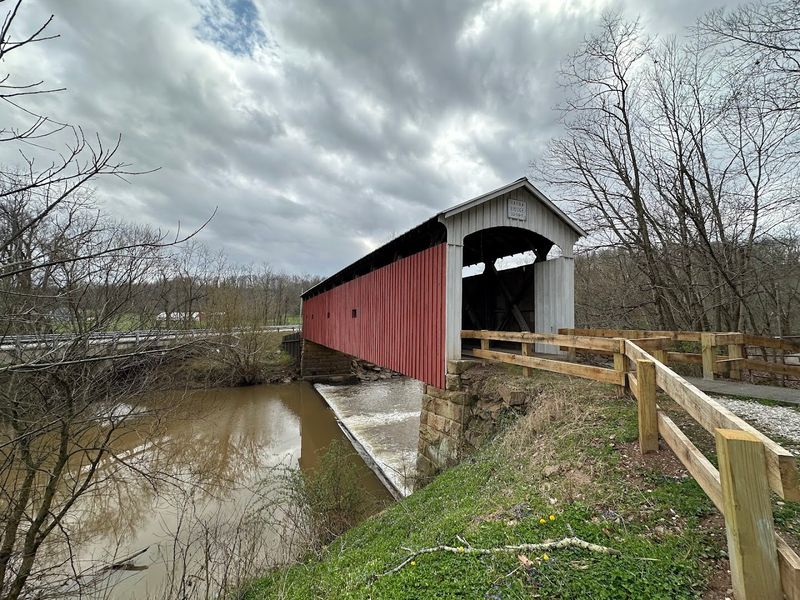
Shinn Covered Bridge delivers the kind of quiet charm that makes a scenic drive through southeastern Ohio feel so worthwhile. Built in 1886 near McArthur, it features a Burr arch truss, a design known for combining strength with graceful lines.
That mix of utility and elegance gives the bridge a personality that feels both practical and beautiful.
The setting plays a big role in its appeal. Surrounded by a rural Appalachian landscape, the bridge feels pleasantly tucked away, with the sort of peaceful atmosphere that encourages you to slow your pace and notice the details.
There is a sense of stillness here that makes the crossing feel less like a roadside stop and more like a small travel moment you actually get to savor.
I think Shinn stands out because it captures a softer side of Ohio history. It is not the biggest or most famous bridge on this list, but it has a warmth that is easy to appreciate, especially if you love hidden gems.
The craftsmanship, the setting, and the low-key beauty all work together beautifully. If your ideal detour includes rural scenery, historic design, and a place that feels genuinely unhurried, Shinn Covered Bridge is a very rewarding stop to add to your route.
Bridge of Dreams
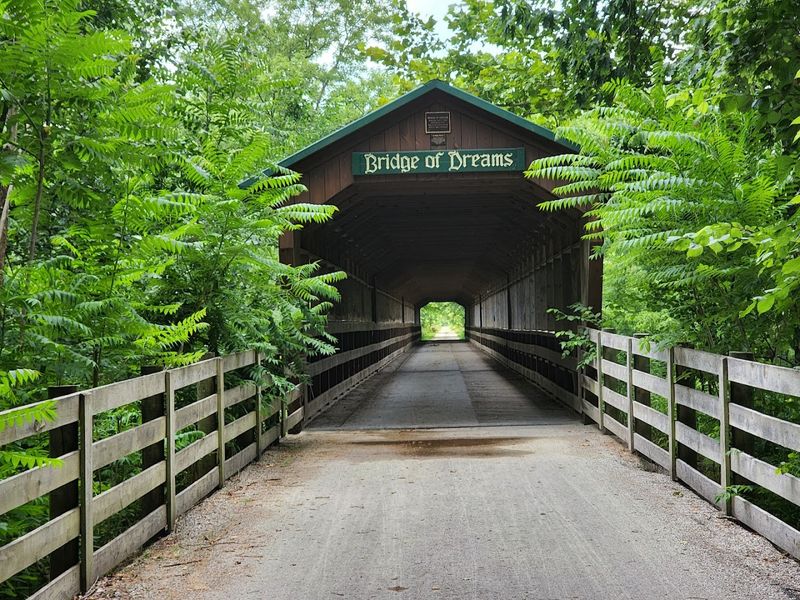
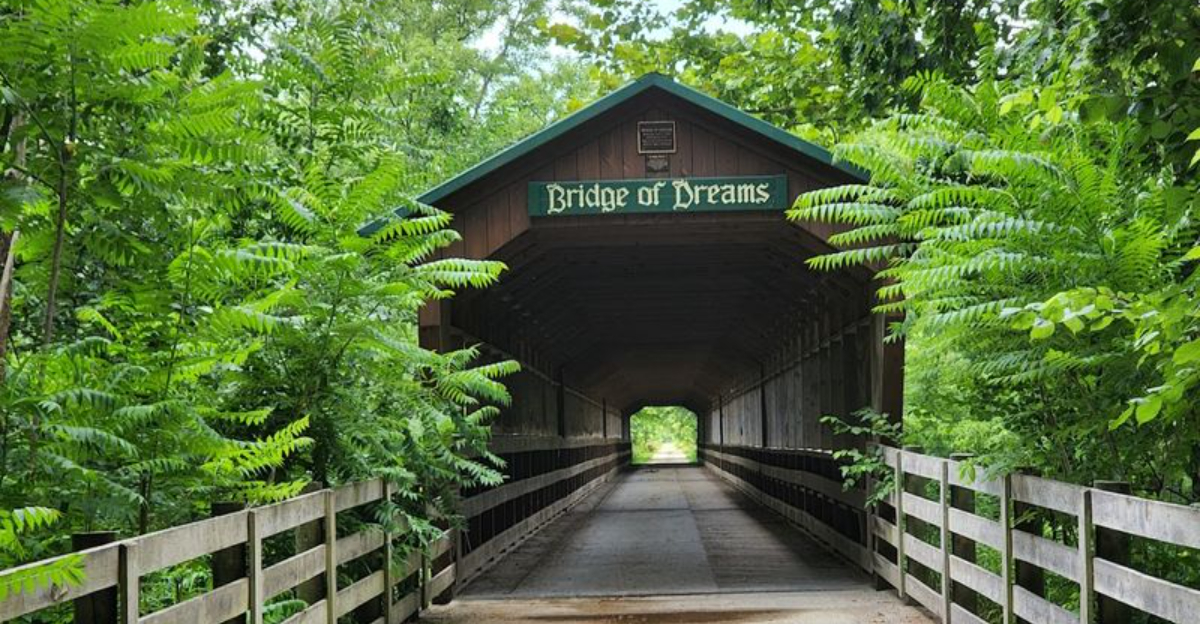
Bridge of Dreams feels a little different from many of Ohio’s historic covered bridges, and that is exactly why it is so memorable. Stretching 370 feet between Brinkhaven and Fredericktown, this former railroad bridge now serves as a scenic pedestrian crossing along the Kokosing Gap Trail.
The name alone sets a mood, and once you step onto it, the wide views and peaceful setting make it easy to see how it earned that reputation.
Because it is no longer carrying cars or trains, the experience here feels slower and more immersive. You can walk or bike across at your own pace, take in the river and countryside, and enjoy a bridge that invites lingering rather than rushing through.
That makes it an especially good stop if you want scenery with a little room to breathe.
What I like most about Bridge of Dreams is how it connects history with recreation. It preserves the charm of a covered crossing while giving you a completely different kind of visit than a standard driving route.
If your perfect detour includes trail time, river views, and a bridge that feels both nostalgic and uplifting, this one belongs high on your Ohio list. It is scenic, accessible, and wonderfully memorable.
Rock Mill Covered Bridge
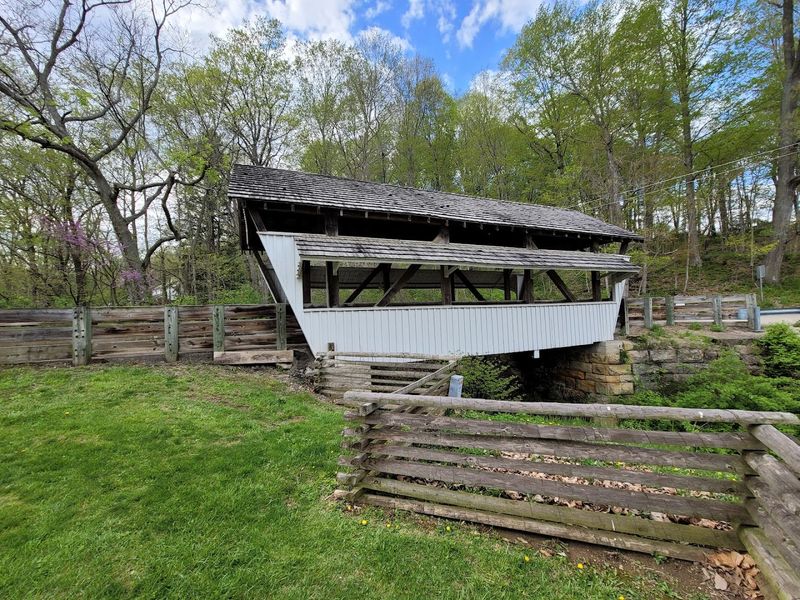
Rock Mill Covered Bridge is one of those rare places where the bridge is only part of the visual drama. Originally built in 1901 and later reconstructed, it stands beside historic mill ruins and a gorge near Lancaster, creating one of the most photogenic historic scenes in Ohio.
If you are drawn to destinations with texture, atmosphere, and a strong sense of place, this stop absolutely delivers.
The combination of wood, stone, water, and steep landscape makes every angle feel worth photographing. The bridge itself has classic charm, but the surrounding ruins add a layer of mood and history that makes the whole site feel richer than a typical covered bridge visit.
It is easy to spend more time here than expected, simply because there is so much to take in.
What makes Rock Mill especially memorable is its cinematic quality. You are not just looking at a preserved structure, but stepping into a setting that feels shaped by time, industry, and nature all at once.
That blend gives the site a distinctive character you will not find everywhere. For travelers who want a scenic detour with a little extra drama and storytelling built into the landscape, Rock Mill Covered Bridge is one of Ohio’s most rewarding places to explore.
Johnson Road Covered Bridge
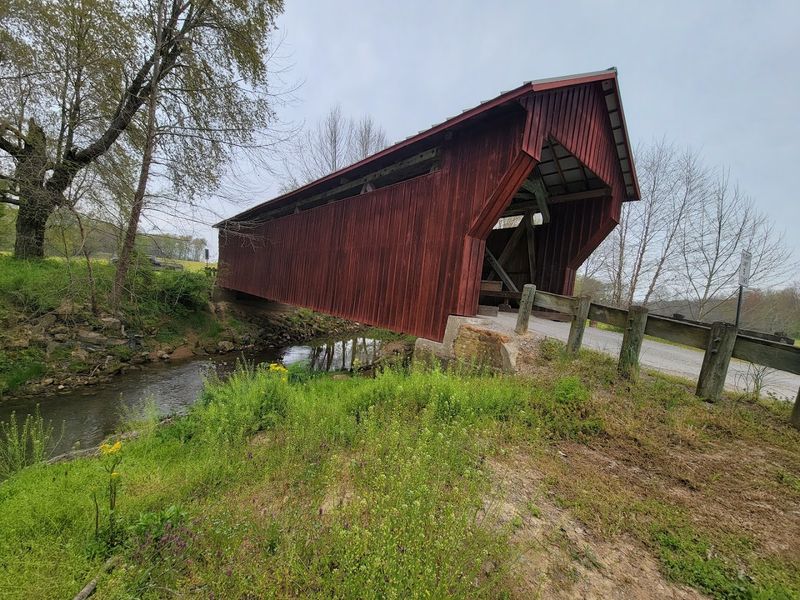
Johnson Road Covered Bridge proves that a smaller, quieter stop can still be one of the most satisfying on a scenic route. Built in 1887 near Lancaster, this charming bridge is part of Fairfield County’s well-known covered bridge driving tour, and it fits that landscape beautifully.
The appeal here is not about grand scale, but about simple historic character in a peaceful rural setting.
As you approach, the bridge feels like a classic postcard scene. The road, the surrounding countryside, and the bridge’s weathered beauty all create the kind of moment that makes you glad you left the main highway behind.
It is easy to imagine horse-drawn traffic once passing through, which gives the stop a pleasantly nostalgic atmosphere.
What I appreciate most about Johnson Road Covered Bridge is how approachable it feels. You do not need a long hike or a major detour to enjoy it, yet it still offers the craftsmanship and scenery that make covered bridge hunting so fun.
If you are exploring Fairfield County, this is a natural addition to your route and one that helps round out the experience. It is charming, photogenic, and exactly the kind of roadside treasure that makes Ohio backroads worth exploring more slowly.
Geeting Covered Bridge
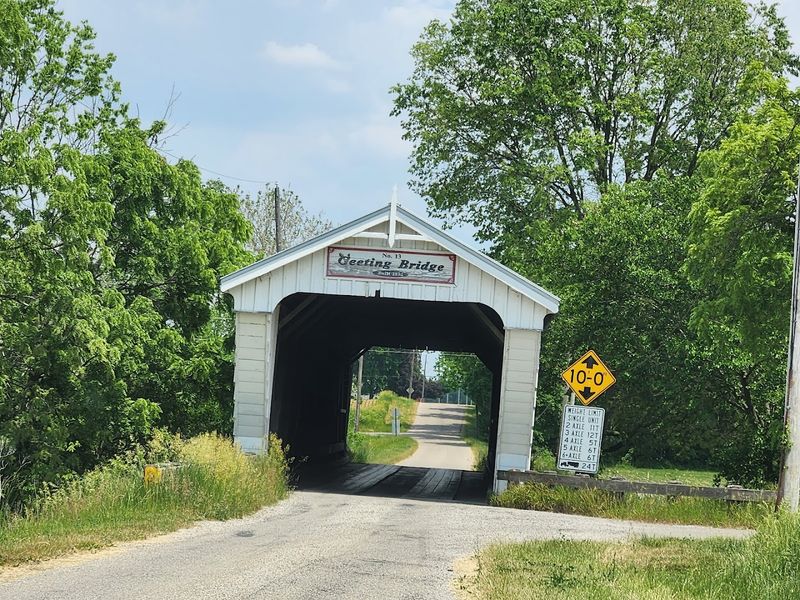
Geeting Covered Bridge is a great stop if you appreciate the finer details of historic craftsmanship. Dating to 1894 in Baltimore, Ohio, it is a well-preserved example associated with master builder Everett Sherman, and that connection gives the bridge an added layer of significance.
Even at a glance, you can sense the care and skill that went into creating something built to last.
The setting is pleasantly understated, which lets the workmanship take center stage. Rather than relying on dramatic scenery alone, Geeting wins you over with proportion, texture, and the enduring appeal of a classic 19th-century covered bridge.
It is the kind of place where you find yourself paying attention to the woodwork, the shape of the span, and the way the structure sits so naturally in the landscape.
For travelers exploring Fairfield County and nearby areas, this bridge is a rewarding addition because it deepens the story behind Ohio’s covered bridge tradition. It is not just scenic, but educational in a way that still feels relaxed and enjoyable.
If you like visiting places where history is visible in the details, Geeting Covered Bridge deserves your time. It offers charm, craftsmanship, and a tangible connection to one of the skilled builders who shaped the state’s rural infrastructure.
Glen Helen Covered Bridge
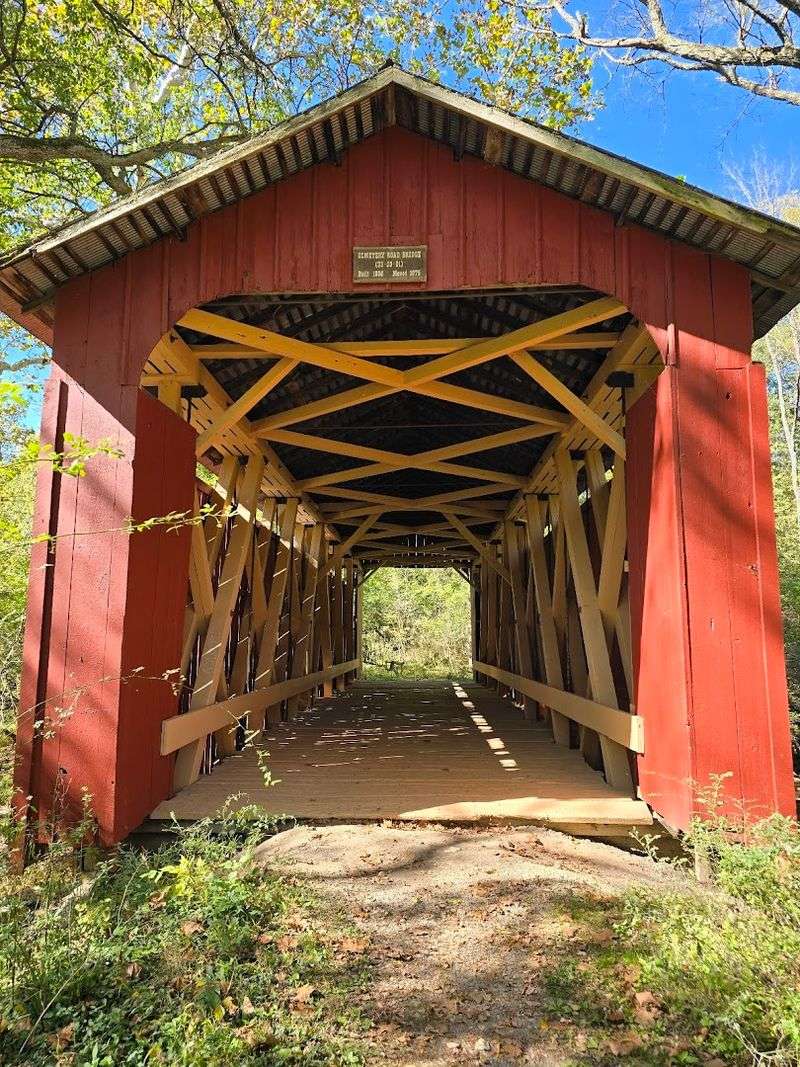
Glen Helen Covered Bridge combines two things that make any scenic detour better – local history and a beautiful nature preserve. Originally built in 1886 and later relocated, the bridge now sits within Glen Helen near Yellow Springs, where lush woods and walking trails create an especially inviting setting.
It feels less like a quick roadside attraction and more like part of a peaceful outdoor experience.
The surrounding preserve gives this bridge a softer, more immersive atmosphere than many drive-up stops. You can enjoy the structure itself, then keep exploring the trails, streams, and shaded landscape that make Glen Helen such a beloved destination.
If you like your historic sites with birdsong, greenery, and a little room to wander, this place hits the mark.
What makes Glen Helen Covered Bridge so appealing is how naturally history blends into the landscape. The bridge does not feel isolated from its environment, but woven into it, which adds to the sense of calm and discovery.
Yellow Springs already has plenty of charm, and this bridge fits that vibe perfectly. For travelers who want scenic beauty, easy outdoor recreation, and a covered bridge that feels quietly enchanting, this is one of Ohio’s most satisfying and refreshing stops.
Benetka Road Covered Bridge
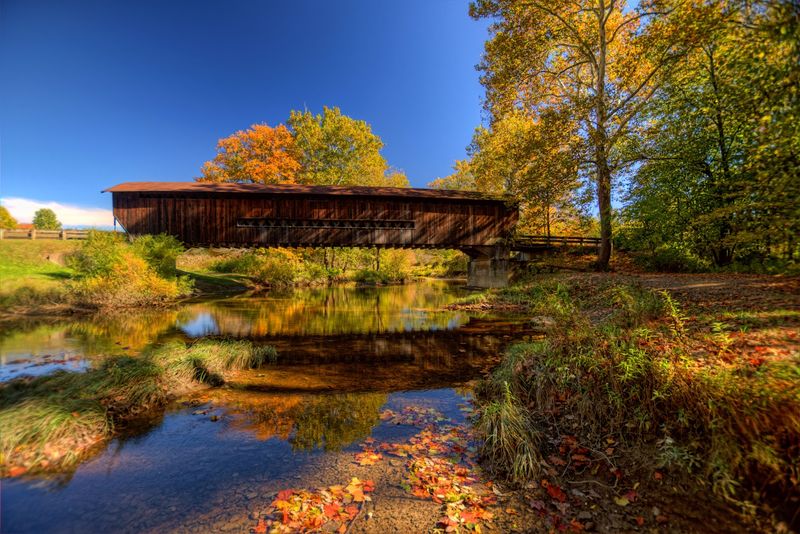
Benetka Road Covered Bridge is a wonderful final reminder of why Ashtabula County remains such a rewarding place for bridge lovers. Originally built in 1900 and later reconstructed using portions of the original structure, it spans the Ashtabula River with a handsome Town lattice truss design.
That combination of preservation and restoration gives the bridge both authenticity and renewed life.
The setting is exactly what you hope for on a scenic detour. Tucked into a peaceful wooded area along the county’s covered bridge driving route, the bridge feels calm, classic, and pleasantly removed from busy traffic.
Its length adds to the experience, making the crossing feel substantial without losing the cozy charm that makes covered bridges so appealing in the first place.
What I like most about Benetka Road is how balanced it feels. You get notable engineering, a meaningful connection to the original structure, and a setting that encourages you to slow down and enjoy the moment.
It may not always be the first bridge visitors mention, but it absolutely deserves a spot on your itinerary. For anyone craving a classic Ohio covered bridge experience with history, scenery, and a strong sense of place, Benetka Road Covered Bridge is a very satisfying stop.