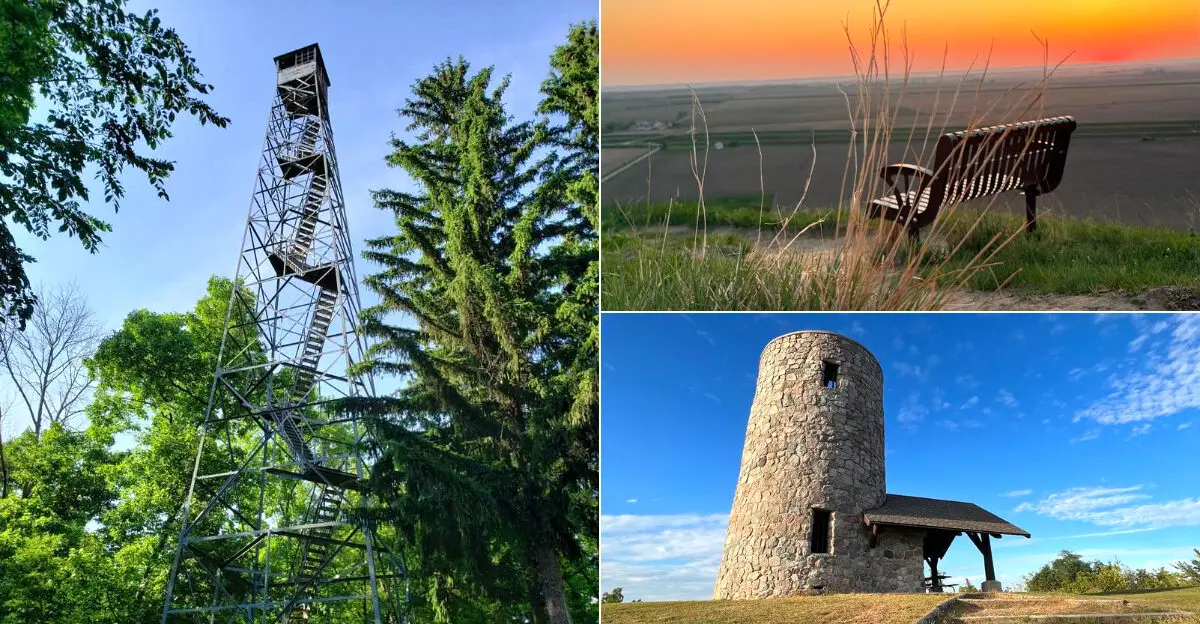
Iowa isn’t the state most people picture when they think of sweeping views, and that’s exactly what makes these spots so surprising.
Scattered across bluffs, forests, and old fire lookout points, a handful of towers quietly offer some of the best scenery in the Midwest.
Climb one and you’ll see rolling farmland stretch to the horizon, or watch the Mississippi River bend through limestone bluffs below.
Some of these towers date back nearly a century, built by hand long before scenic overlooks became a tourism draw.
We climbed eleven of Iowa’s observation towers and came away genuinely surprised every time.
Here’s where to find them the next time you want Iowa from a whole new angle.
1. Cordova Observation Tower in Otley, Marion County,
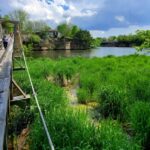
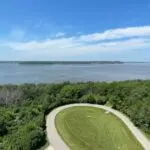
A wide lake breeze meets you before the first step, and the climb feels like a small adventure.
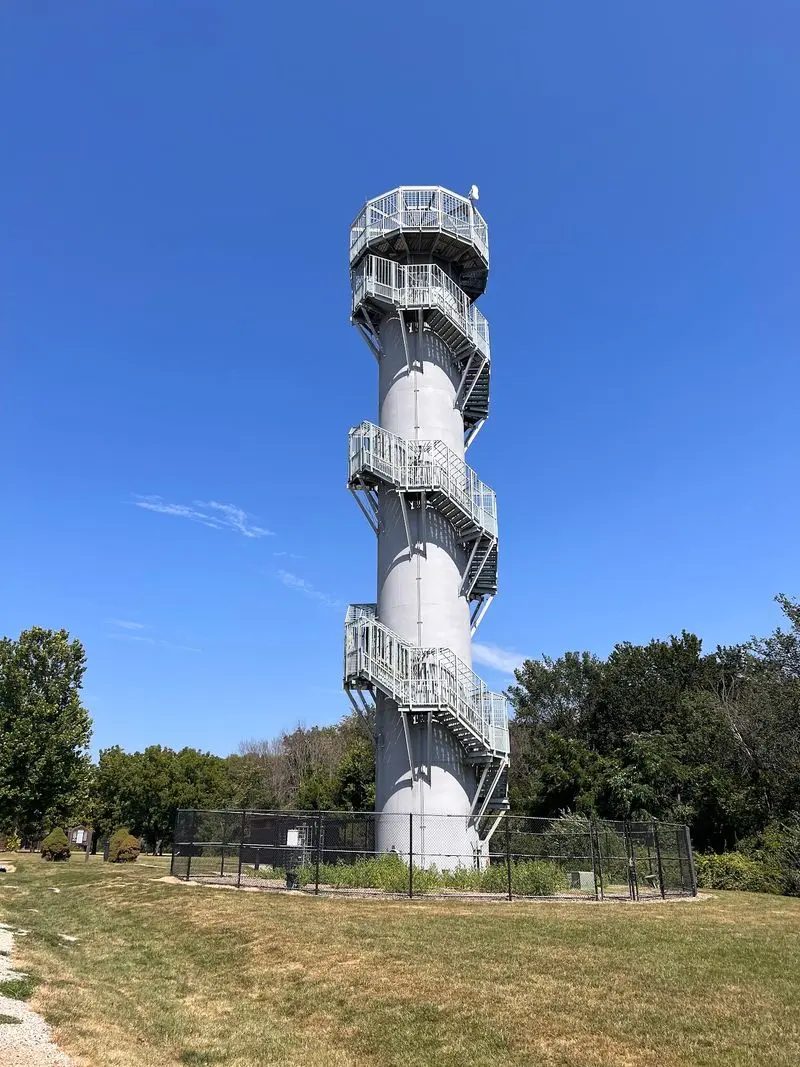
Near Otley in Marion County, Cordova Observation Tower rises above Cordova Park and gives one of the best looks at Lake Red Rock.
The tower is especially fun because the view changes with the season, from bright green summer trees to warm fall color.
From the top, you can spot long stretches of water, wooded coves, campgrounds, and the big open sky that makes central Iowa feel larger than expected.
Bring binoculars if you like watching birds, because the lake area attracts pelicans, eagles, herons, and plenty of smaller songbirds.
Families should know that the stairs are tall, so younger kids may need patience and a steady hand.
Wear shoes with good grip, since wind and weather can make metal steps feel slick.
Afterward, the park has picnic areas, trails, and lake access, so the tower can be part of a longer day outside.
Sunset is a favorite time, but morning light is quieter and often better for photos.
If you only have time for one Marion County lookout, this one feels both easy to reach and surprisingly grand.
2. Pilot Knob Tower in Forest City, Hancock County,
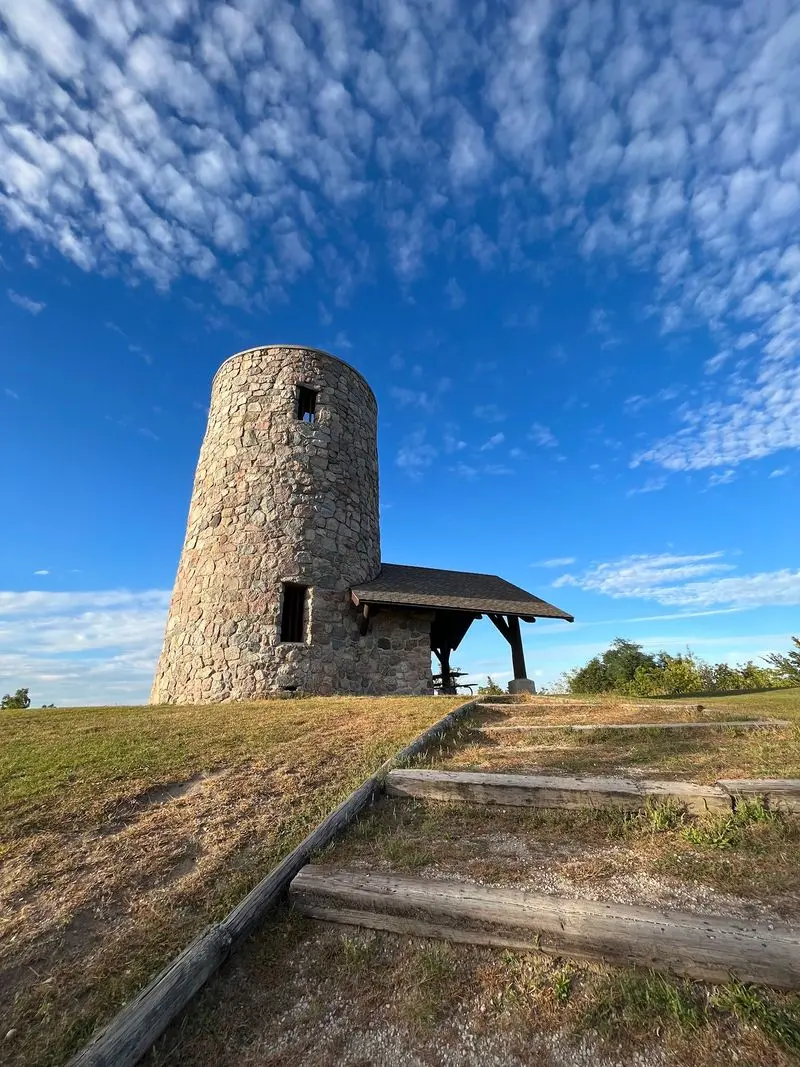
Old stone has a way of making a view feel earned, even before you reach the top.
In Forest City, Hancock County, Pilot Knob Tower stands inside Pilot Knob State Park, one of Iowa’s older and more character-filled parks.
The tower sits on one of the highest natural points in the area, so the surrounding farm fields and woodlands spread out in every direction.
On a clear day, the mix of prairie, trees, and distant roads creates a peaceful patchwork that feels very northern Iowa.
The structure itself adds charm, with a sturdy, historic look that makes it popular for photos.
Plan a little extra time for the nearby trails, especially the path around Dead Man’s Lake, which adds a calm, slightly mysterious stop to the trip.
Bug spray helps in warmer months, and a light jacket is smart when the wind picks up near the tower.
Fall is beautiful here, but late spring brings fresh greens and bird calls.
The climb is not just about height, because the park’s quiet setting makes the whole visit feel like a break from busy screens and schedules.
It is a classic Iowa stop with a view that sneaks up on you.
3. Clark Tower in Winterset, Madison County,
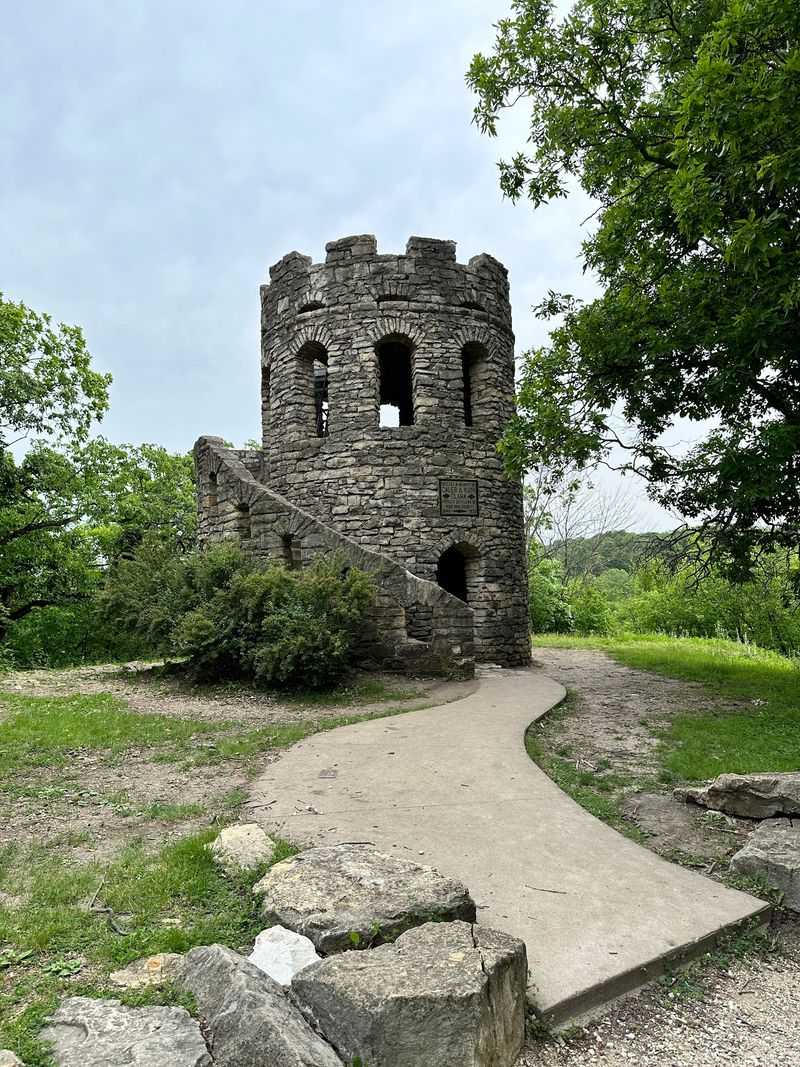
A castle shape tucked into an Iowa park sounds like a storybook trick, but the view is real.
Clark Tower in Winterset, Madison County, sits in Winterset City Park and looks like a small stone fortress watching over the woods.
Built as a memorial, the tower has become one of the area’s most loved photo stops.
The climb rewards visitors with leafy views, rolling ground, and a sense of being above a hidden corner of town.
It pairs nicely with Winterset’s famous covered bridges, so you can make a full afternoon of simple, scenic stops.
The road through the park can be narrow and winding, so drive slowly and watch for walkers.
Comfortable shoes help because the area around the tower may include uneven ground and steps.
Autumn is a standout season, when the trees turn red, orange, and gold around the stone walls.
Still, summer shade makes the park pleasant, and winter can give the tower a quiet, almost magical look.
Bring a camera, but also take a minute without it.
The best part is how Clark Tower blends local history, playful design, and a peaceful view into one memorable Madison County stop.
4. Yellow River State Forest Fire Tower in Waukon, Allamakee County,
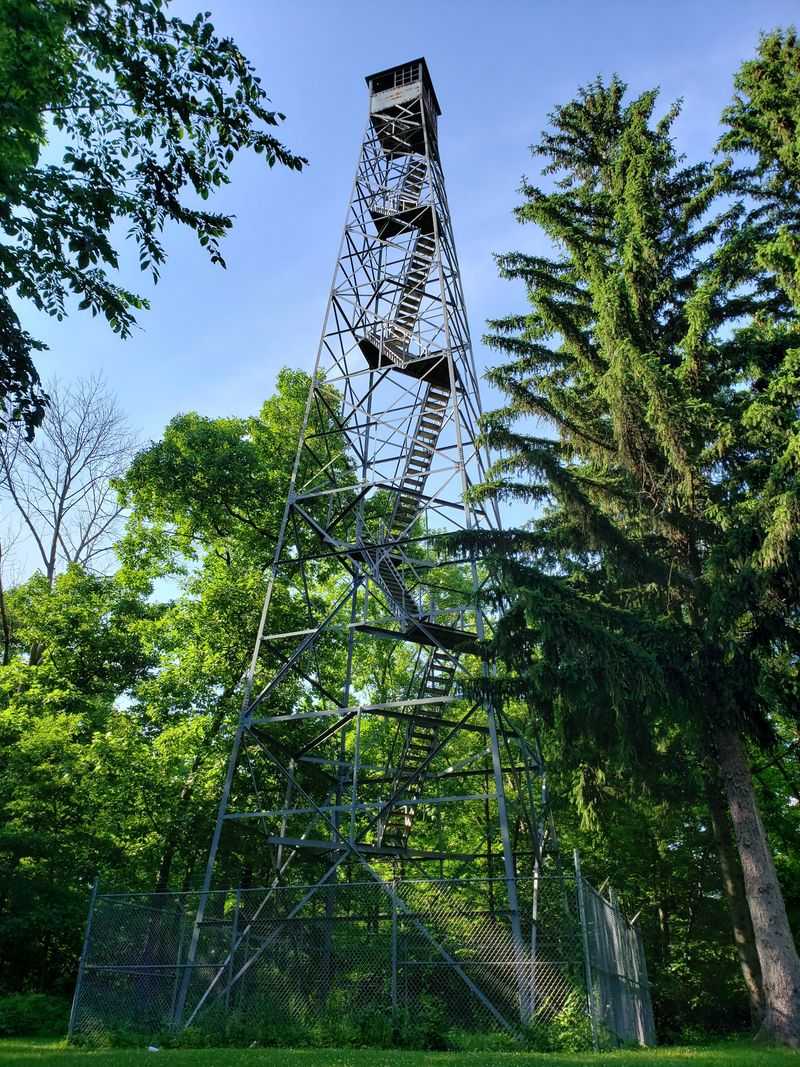
Rugged hills are not the first thing many people expect in Iowa, which makes this spot feel like a secret.
Near Waukon in Allamakee County, the Yellow River State Forest Fire Tower stands in a landscape shaped by steep ridges, timber, and winding valleys.
The forest is part of Iowa’s Driftless Area, a region missed by the last glaciers, so the land has sharper slopes than much of the state.
That geography makes the tower view feel wild, layered, and far away from flat highway scenes.
Visitors should check current access before going, since fire towers can have safety rules or seasonal limits.
Even if the tower itself is not open for climbing, the surrounding forest roads and trails still offer excellent scenery.
Pack water, download a map, and expect limited cell service in some pockets.
Hikers will enjoy the mix of hardwood forest, trout streams, and quiet campsites nearby.
Fall color can be outstanding, but spring wildflowers and summer shade are also strong reasons to visit.
The mood here is more backwoods than roadside stop, so come prepared and give yourself time.
This corner of Allamakee County proves Iowa can feel surprisingly rugged.
5. Horseshoe Bluff Lookout in Dubuque, Dubuque County,
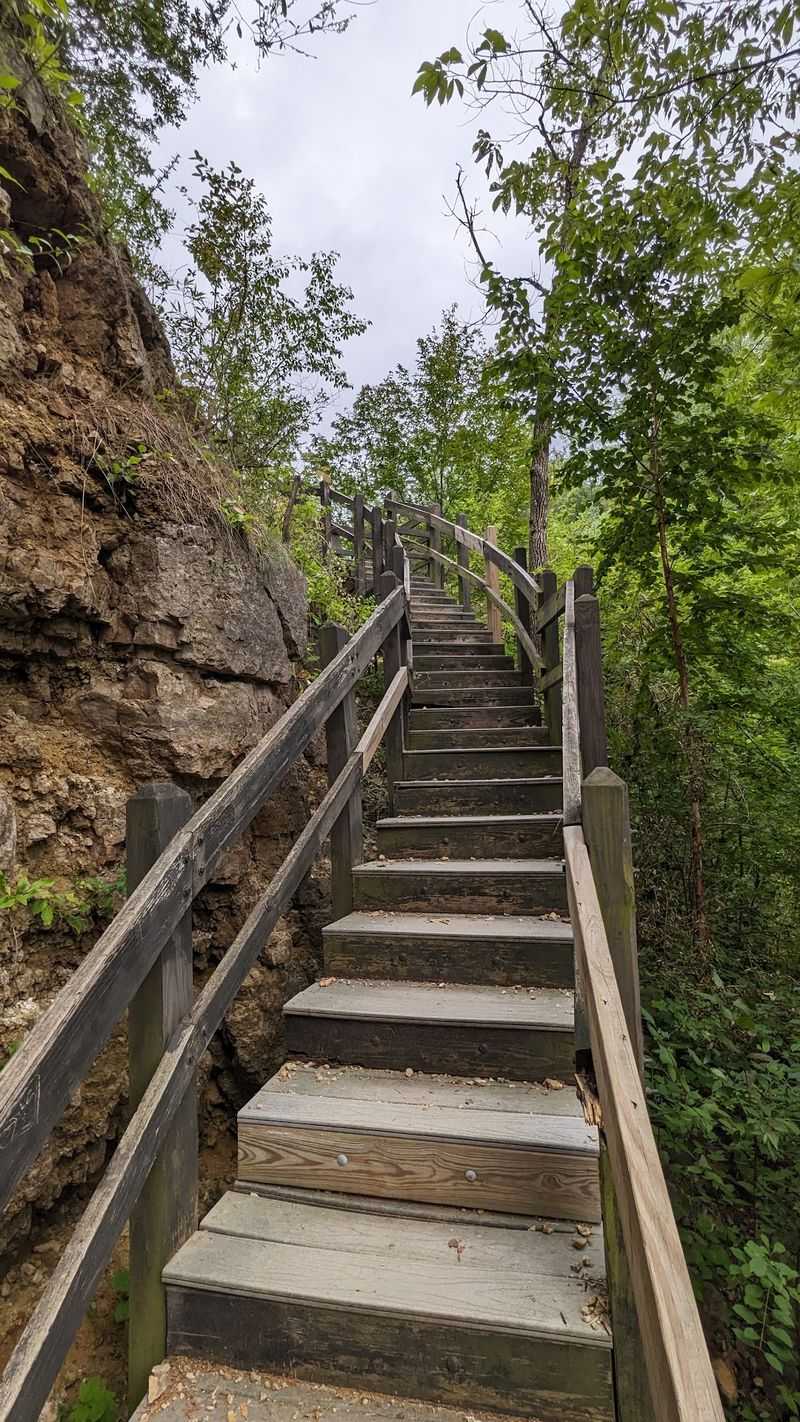
Limestone cliffs and river air give this overlook a bold, rocky personality.
Horseshoe Bluff Lookout in Dubuque, Dubuque County, is found within the Mines of Spain Recreation Area, a place rich with trails, wildlife, and local history.
The bluff gets its name from the curved shape of the rock area, and the views mix forest, prairie, and dramatic stone edges.
Unlike a tall metal tower, this lookout feels connected to the land beneath your feet.
You can see why the Mississippi River valley has drawn people for centuries, from Native communities to miners, traders, and modern hikers.
The trails near Horseshoe Bluff can be uneven, so sturdy shoes are a smart choice.
Stay behind safe edges, because cliffs can be dangerous even when they look easy to approach.
Spring and fall are especially pleasant, with cooler air and strong colors across the slopes.
Birdwatchers may spot hawks circling overhead or songbirds moving through the brush.
After visiting, consider stopping at the nearby Julien Dubuque Monument for another impressive river view.
Horseshoe Bluff works well for curious travelers who like scenery with a little geology, history, and trail dust mixed in.
6. Fire Point Overlook Tower in Harpers Ferry, Allamakee County,
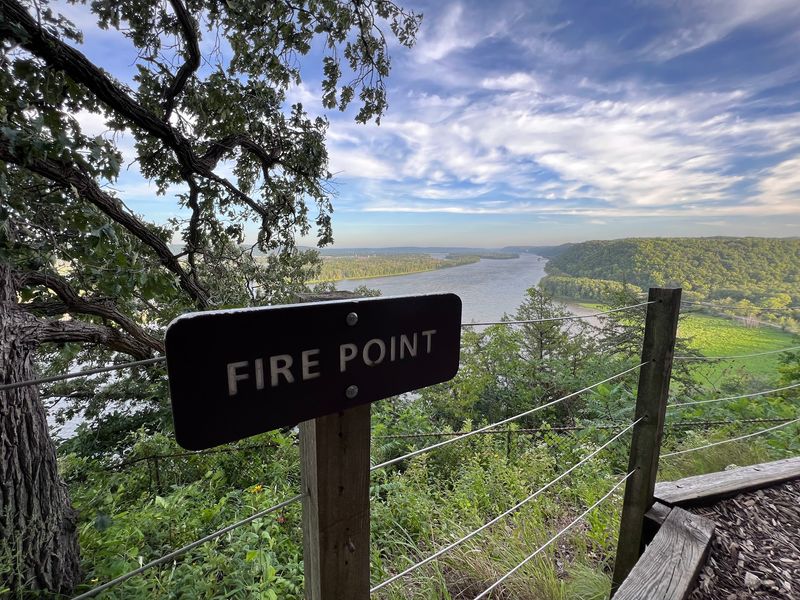
Some views ask you to slow down because the ground around them carries deep meaning.
Fire Point Overlook Tower in Harpers Ferry, Allamakee County, is connected with the high bluffs near Effigy Mounds National Monument and the Mississippi River.
The area is known for ancient American Indian mound sites, including earthworks shaped like animals.
Because of that history, visitors should treat the trails and overlooks with extra respect and stay on marked paths.
The reward is a sweeping look over wooded ridges, river channels, islands, and backwaters that sparkle in changing light.
The hike to Fire Point can take effort, so bring water and give yourself enough time instead of rushing.
Morning often brings softer light and fewer people, while late afternoon can make the river glow.
Watch for eagles, especially during cooler months when they gather near open water.
Good walking shoes matter, because bluff trails may include roots, slopes, and muddy spots after rain.
This is not just a photo stop.
It is a place where landscape, memory, and quiet beauty meet, making the view feel bigger than the map suggests.
7. Pikes Peak Overlook in McGregor, Clayton County,
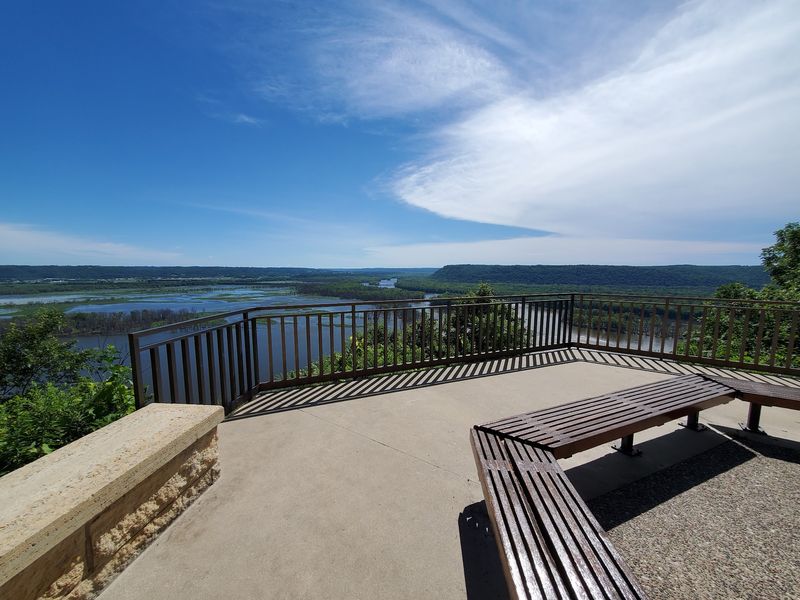
The first look over the railing can make even a chatty group go quiet.
Pikes Peak Overlook in McGregor, Clayton County, is one of Iowa’s most famous scenic viewpoints, and it earns that reputation quickly.
From the high bluff at Pikes Peak State Park, you can look across the Mississippi River valley and toward the meeting area of the Mississippi and Wisconsin rivers.
The view is broad, bright, and easy to reach compared with many rugged overlooks.
That makes it a good choice for families, road trippers, and visitors who want a big payoff without a long hike.
Still, the park has trails if you want more adventure, including paths to Bridal Veil Falls and wooded ravines.
Arrive early on busy weekends, since parking can fill when the weather is nice.
Cloudy days can still be beautiful here, because the river and bluffs take on softer colors.
Bring a picnic and use the overlook as the highlight of a slow day in McGregor.
Nearby shops and river town streets add extra charm after the park visit.
For many people, this overlook becomes the Iowa view they remember most clearly.
8. Scenic Overlook Tower at Loveland Overlook in Honey Creek, Mills County,
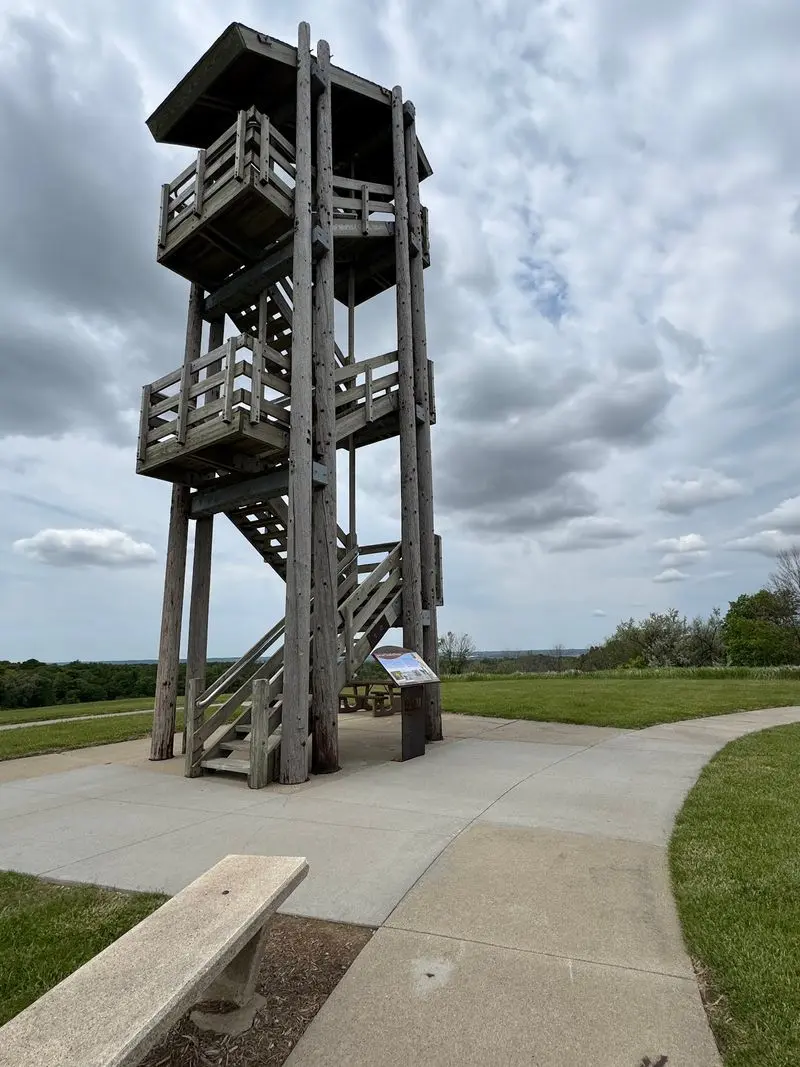
Wind moves differently across the Loess Hills, almost like it is combing the grass.
The Scenic Overlook Tower at Loveland Overlook in Honey Creek, Mills County, gives visitors a strong look at this rare western Iowa landform.
Loess hills are made from fine windblown soil, and only a few places in the world have deposits as deep and dramatic as this region.
From the overlook, ridges roll away in soft folds, with prairie patches, trees, and distant valley views changing with the light.
The tower is a helpful stop for understanding why the Loess Hills Scenic Byway is worth the drive.
Bring a hat, because exposed overlooks can be breezy and sunny.
Late afternoon is lovely for photos, when shadows bring out the shape of the hills.
Be careful after rain, since loess soil can erode and some paths may be slippery.
This is a great place to compare Iowa’s western edge with the river bluffs in the northeast.
They feel completely different, yet both are beautiful.
If you like landscapes that seem quiet at first but grow more interesting the longer you stare, Loveland Overlook is worth your time.
9. Murray Hill Scenic Overlook in Little Sioux, Harrison County,
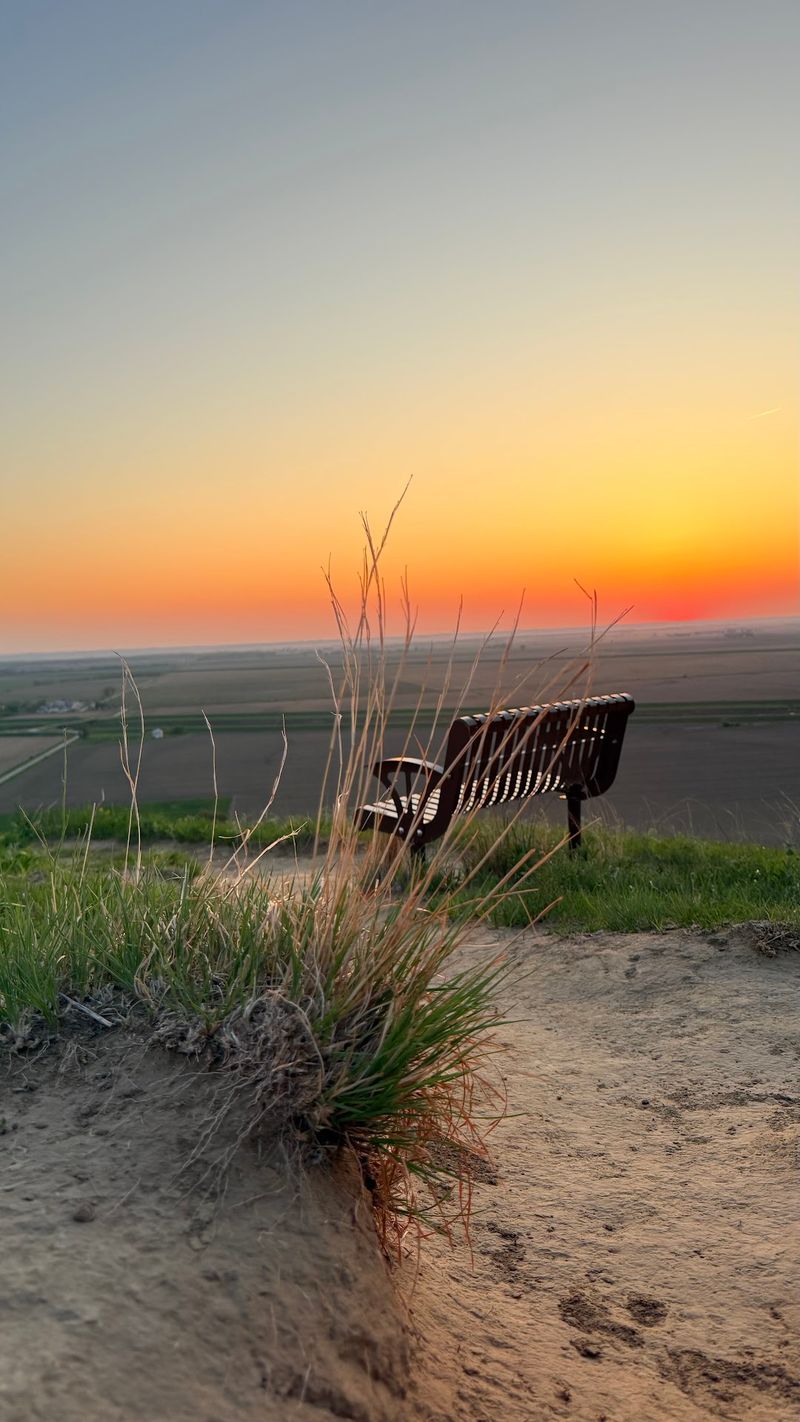
A quiet road, a sudden rise, and then the land opens like a folded map.
Murray Hill Scenic Overlook in Little Sioux, Harrison County, is one of those places that proves a small detour can change the whole mood of a trip.
Set in the Loess Hills, the overlook offers layered views of ridges, draws, prairie, and the broad Missouri River valley area.
The shapes here are soft but steep, which makes the scenery feel unusual for Iowa.
Drivers along the Loess Hills Scenic Byway should mark this stop because it gives a clear sense of the region’s height and texture.
The overlook is especially pretty when grasses turn gold in late summer or fall.
Spring brings fresh green slopes, while winter can reveal the bones of the hills through bare trees.
Use care on narrow rural roads, and do not block driveways or traffic when stopping for photos.
There may be fewer services nearby than in larger parks, so carry water and snacks.
The best visits here are unhurried.
Stand still for a minute, listen to the wind, and you may understand why the Loess Hills have such a loyal following.
10. Waubonsie State Park Scenic Overlook in Hamburg, Fremont County,
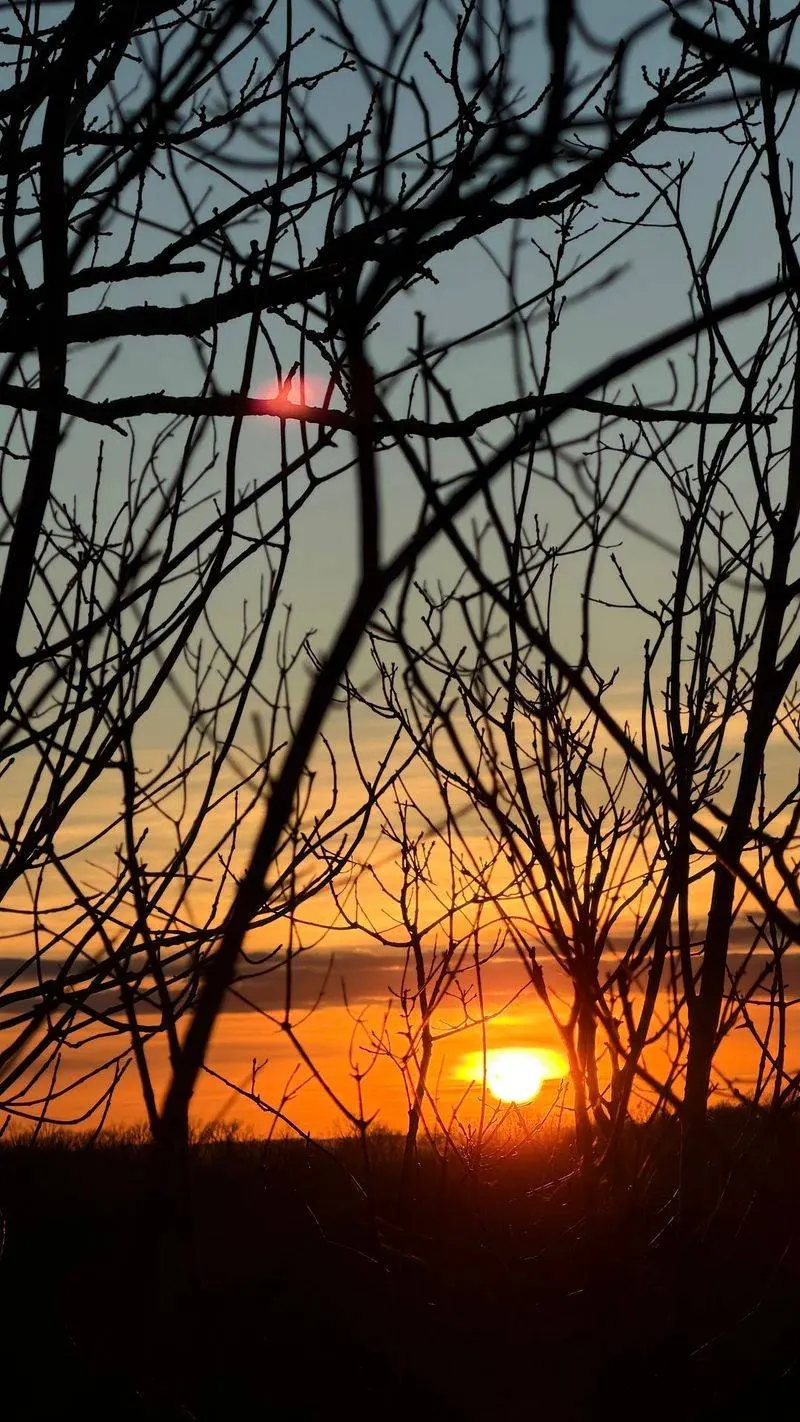
Down in Iowa’s southwest corner, the hills seem to rise with a quiet confidence.
Waubonsie State Park Scenic Overlook in Hamburg, Fremont County, gives visitors a sweeping view of the Loess Hills near the Missouri River valley.
The park is named for Chief Waubonsie, a Potawatomi leader, and the area carries both natural beauty and cultural history.
From the overlook, wooded slopes and prairie ridges stretch outward, creating a scene that feels far from the flat Iowa stereotype.
This is a strong stop for campers, hikers, and anyone driving through the far southwestern part of the state.
Several trails let you explore beyond the viewpoint, though some routes can be steep enough to raise your heartbeat.
Pack water, check trail conditions, and watch the weather, because storms can move quickly across open country.
Sunset can be stunning, but do not forget that park roads are darker after the light fades.
Wildlife sightings may include deer, turkeys, and circling raptors.
The overlook also makes a peaceful breakfast stop if you are camping nearby.
Waubonsie feels like Iowa showing a wilder side, with big views and a calm, outdoorsy spirit.
11. Hitchcock Nature Center Observation Tower in Honey Creek, Pottawattamie County,
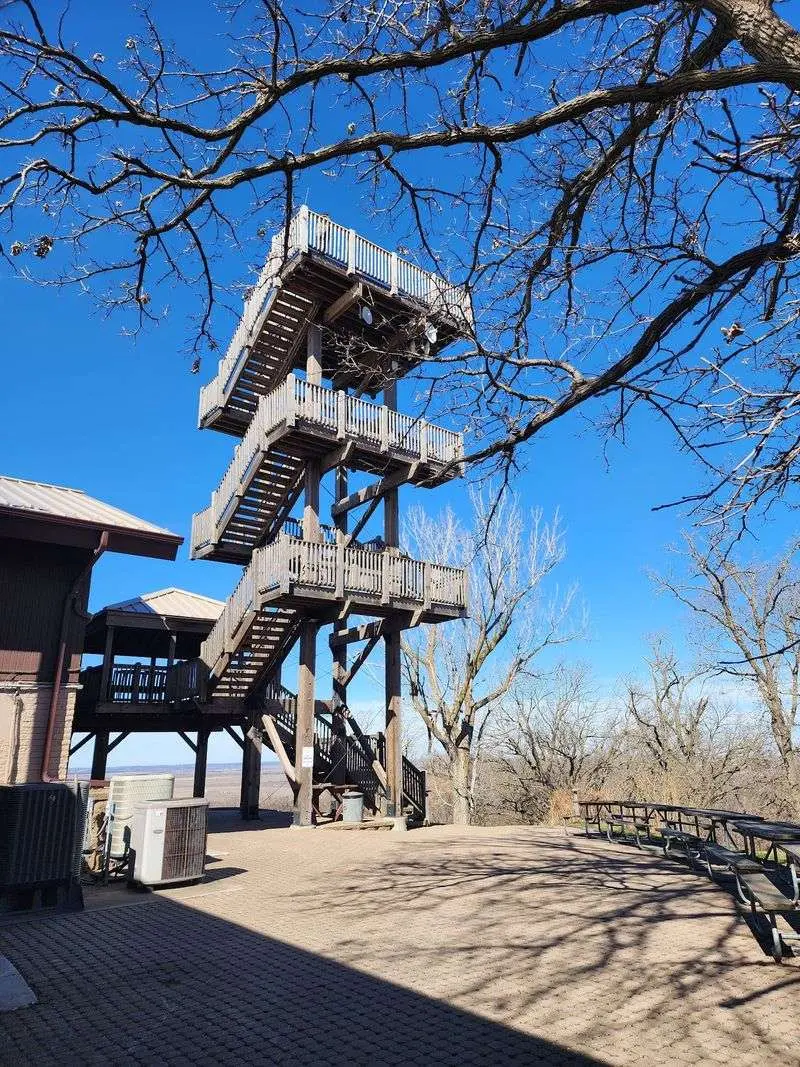
A wooden tower above a bird-filled ridge can turn an ordinary afternoon into a sky-watching lesson.
Hitchcock Nature Center Observation Tower in Honey Creek, Pottawattamie County, is a standout Loess Hills viewpoint just north of Council Bluffs.
The tower rises over forest and prairie, giving visitors a wide look at ridgelines, valleys, and, on clear days, distant urban edges near the Missouri River.
It is especially famous for hawk watching, because migrating raptors ride air currents along the hills in fall.
Even casual visitors may spot turkey vultures, red-tailed hawks, or bald eagles if they pause and scan the sky.
The nature center has trails, educational displays, and helpful staff or signs, making this a good stop for families and first-time Loess Hills explorers.
Wear layers in spring and fall, since the tower can feel cooler than the parking area.
Binoculars are useful, but patient eyes work too.
Plan for a trail walk if time allows, because the land below the tower is as interesting as the view above it.
With easy access and strong scenery, Hitchcock offers one of western Iowa’s best mixes of learning, hiking, and lookout fun.