
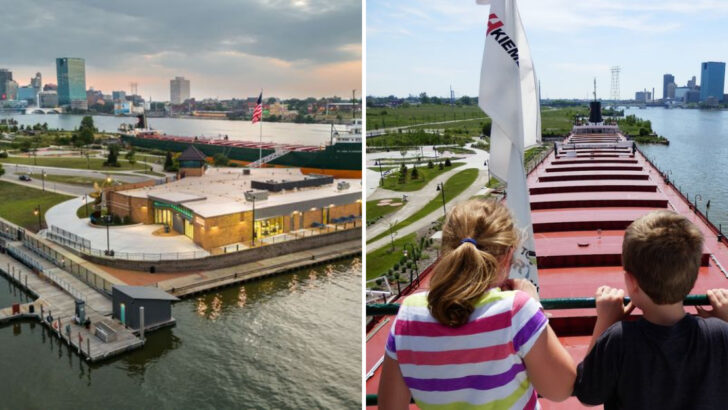
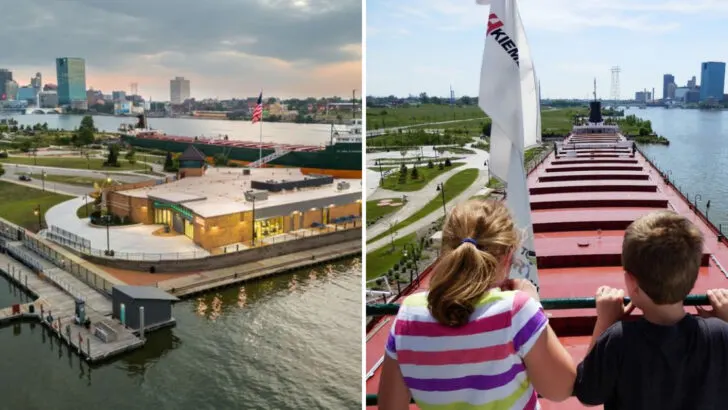
The Great Lakes don’t give up their stories easily — this place does.
Inside the National Museum of the Great Lakes in Toledo, Ohio, shipwreck history rises from the depths and stands right in front of you. Massive propellers, weathered nameplates, and recovered relics pull you straight into tempests that once ruled these inland seas.
You won’t just read about storms — you’ll feel them.
Galleries echo with tales of freighters caught in sudden gales, crews battling icy decks, and rescue missions racing against time. The scale is gripping, the details personal.
Every artifact carries weight, every display feels earned.
Step outside to the dock and the water glints beside historic vessels, steady and calm for now.
It’s a powerful reminder: beneath those rolling waves lies a world of courage, loss, and endurance — and here, it refuses to be forgotten.
Orientation: Your First Look At Great Lakes Shipwreck History
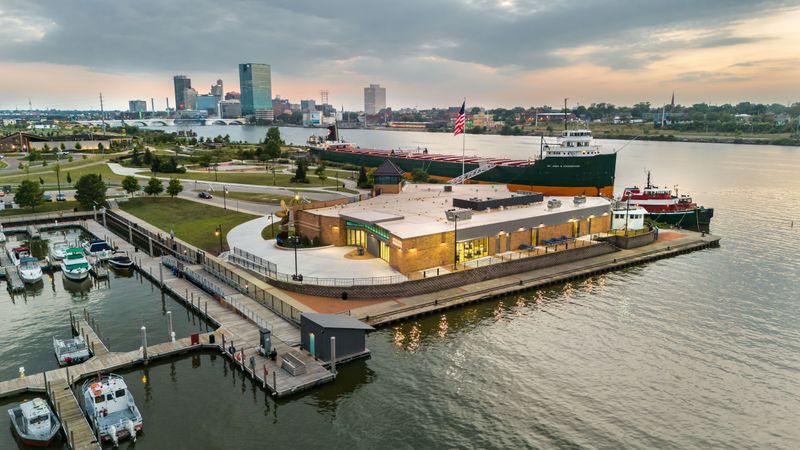
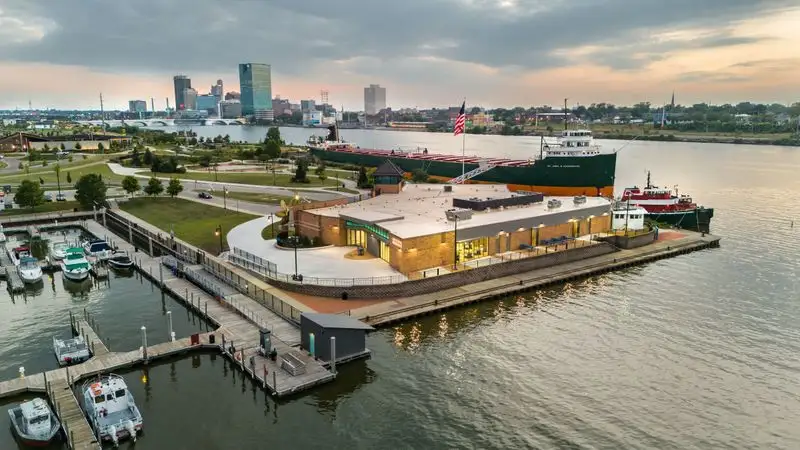
Start at the museum entrance on Front Street, where the Maumee River frames a panoramic first impression. Inside, orientation panels sketch the sweep of Great Lakes history, from Indigenous canoes to steel freighters.
You will immediately sense a promise: shipwrecks here are not just tragedies, but windows into engineering, commerce, and community resilience.
Docents often set the tone by highlighting the museum’s mission and how each gallery layers context. A short introductory film offers storms, whistles, and charts that prime your curiosity without overwhelming you.
As you step forward, you realize the exhibits are designed for all ages, blending tactile stations with detailed scholarship.
The vibe is welcoming, like joining a knowledgeable friend who loves the lakes. Staff answer questions patiently, whether you ask about ice navigation or lighthouse signals.
You can move at your own pace, slowing for artifacts that tug at your attention.
Before diving deeper, grab a gallery map and check today’s schedule for tours. Hours typically run 10 AM to 5 PM on Wednesdays, but always confirm current times.
With your bearings set, you are ready to trace lifelines, weather patterns, and courageous decisions that still echo across the water.
The Edmund Fitzgerald: Memory, Mystery, and Meaning
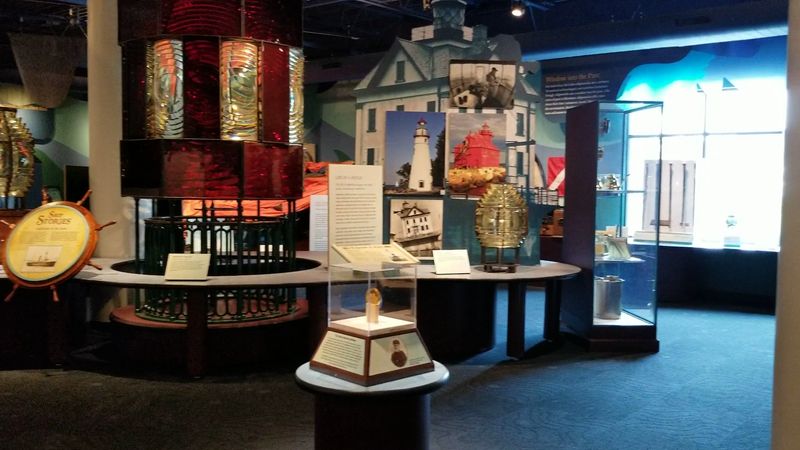
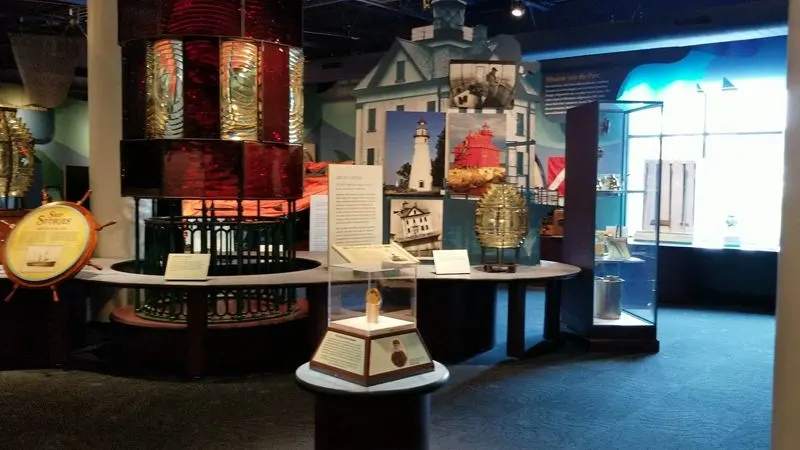
Step into the Edmund Fitzgerald section and you will feel the room quiet itself. Panels, audio, and artifacts balance hard data with compassion for the 29 crew lost.
A skilled guide might echo a line you will keep with you: remember the people behind the steel and statistics.
Timelines untangle weather reports, radio calls, and final sightings. The exhibit avoids sensationalism, emphasizing seamanship, cargo dynamics, and the navigational challenges of November gales.
You will come away with a fuller picture of how rapidly risk can compound on inland seas.
Interactive elements let you examine bathymetric charts and wind tracks. If you visit near anniversary programming, expect thoughtful talks that center remembrance over spectacle.
It is powerful, but never gratuitous, and you can step back when needed.
Ask a docent about ongoing research and how technology reshapes understanding over time. You will leave carrying a respectful weight and sharper questions.
That mix of empathy and inquiry is the museum’s hallmark, making this gallery a vital stop in your shipwreck journey.
Inside The James S. Schoonmaker: Walking A Giant
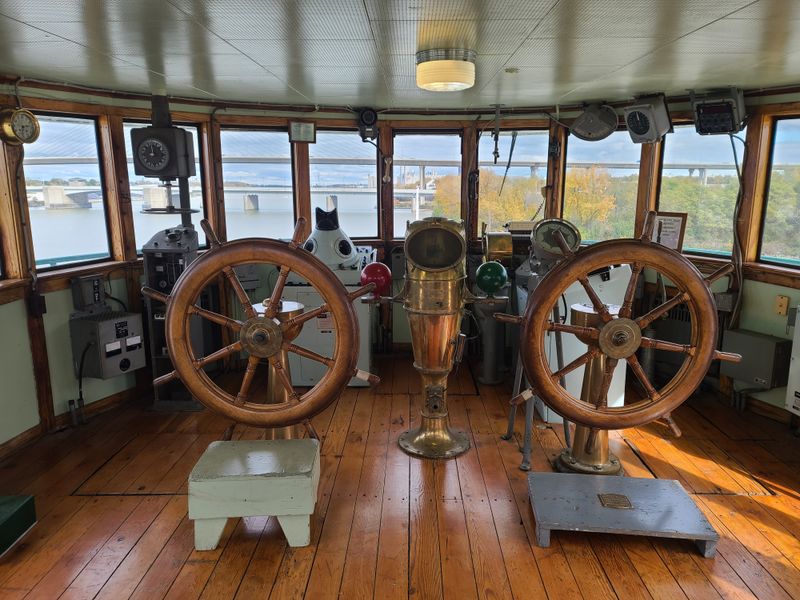
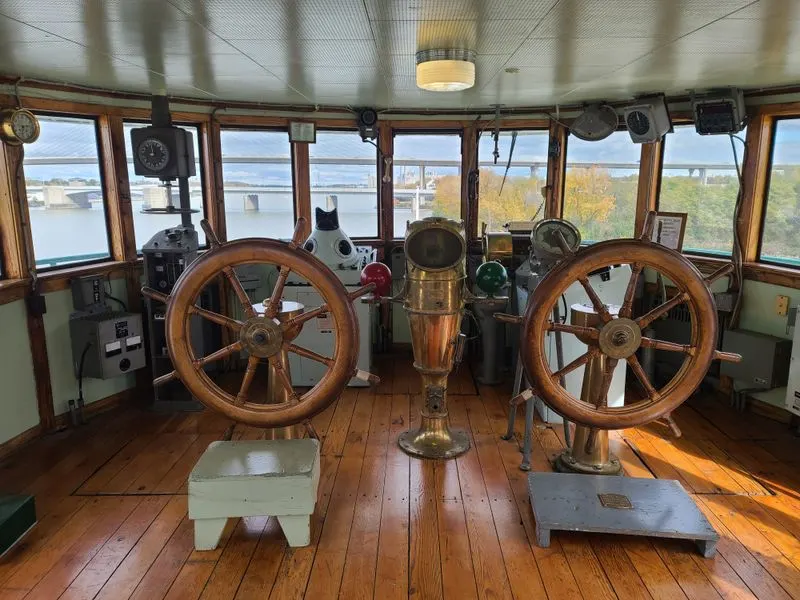
Board the James S. Schoonmaker and you will feel the steel breathe history.
Guides like Tom make ballast, hatches, and pilothouse instruments come alive with stories. As you climb ladders and step through narrow passages, you will sense how crews lived, worked, and solved problems at sea.
From the engine room to the galley, each space invites questions about fuel, cargo trim, and crew rotations. The deck views are superb, framing the Maumee and Toledo’s waterfront industry.
Expect heat on sunny days; bring water and curiosity.
The wheelhouse is a star, with commanding sightlines and brass that feels both robust and elegant. When the guide describes approaching storms or threading a lock, you will picture decisions tightening in real time.
It is immersive, without gimmicks.
Photography is welcome, but pause to listen for small details about line handling and watch structure. Those human touches elevate the tour beyond hardware.
You will step off with new respect for sailors and the choreography of lake commerce.
Shipwreck Artifacts: Voices From The Lakebed
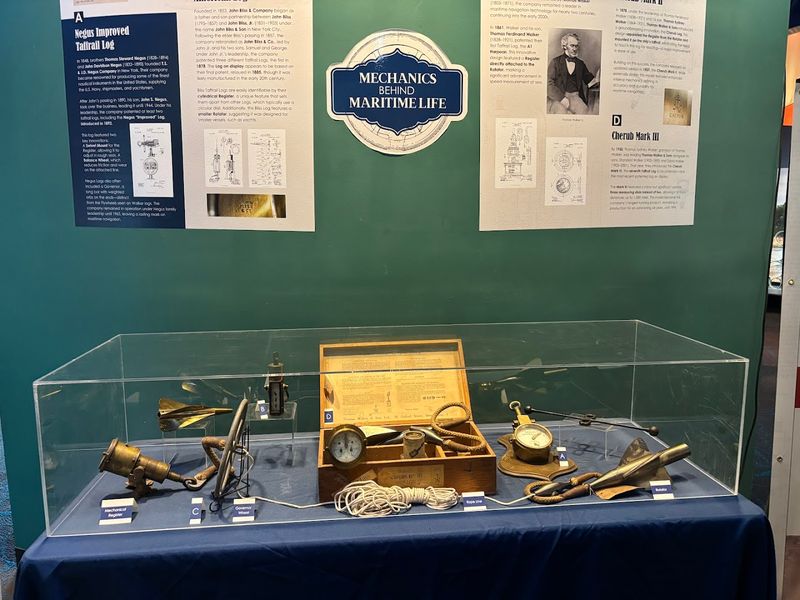
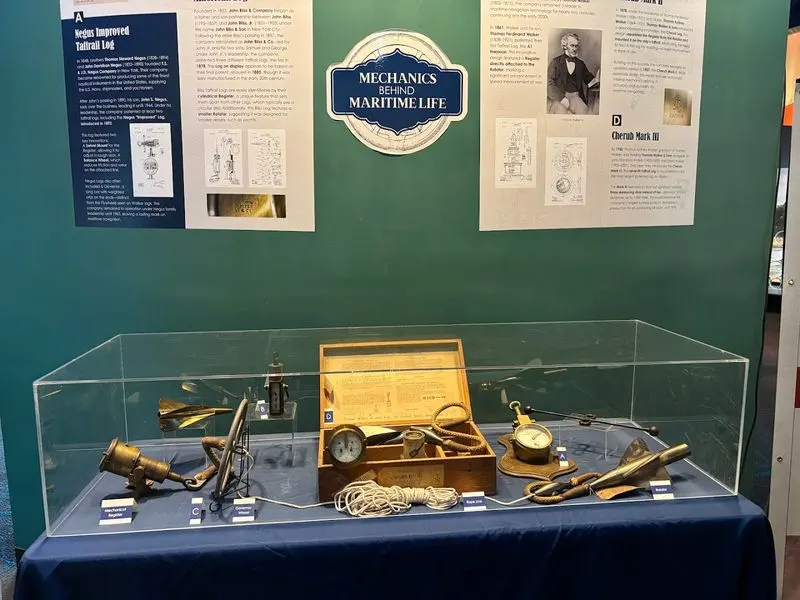
In the artifact galleries, small objects tell outsized stories. Rivets, lanterns, nameplates, and personal effects endure as quiet anchors of memory.
You will lean closer, reading labels that place each item on a map of risk, repair, and hope.
Conservation notes explain why some metals bloom with patina while others fracture. The museum avoids treasure-hunt vibes, focusing on provenance and ethics of recovery.
You start to see shipwrecks as archaeological sites, not trophies.
Audio clips and photos round out each artifact’s last working day. Tools become fingerprints of trade, maintenance, and improvisation.
This is where material culture meets the lake’s chemistry and temperature gradients.
Take your time with the explanatory panels on freshwater preservation versus saltwater decay. You will leave appreciating how careful documentation keeps context intact.
The objects feel less like relics and more like conversations, carried carefully from depth to display.
Navigation And Weather: Reading The Inland Seas
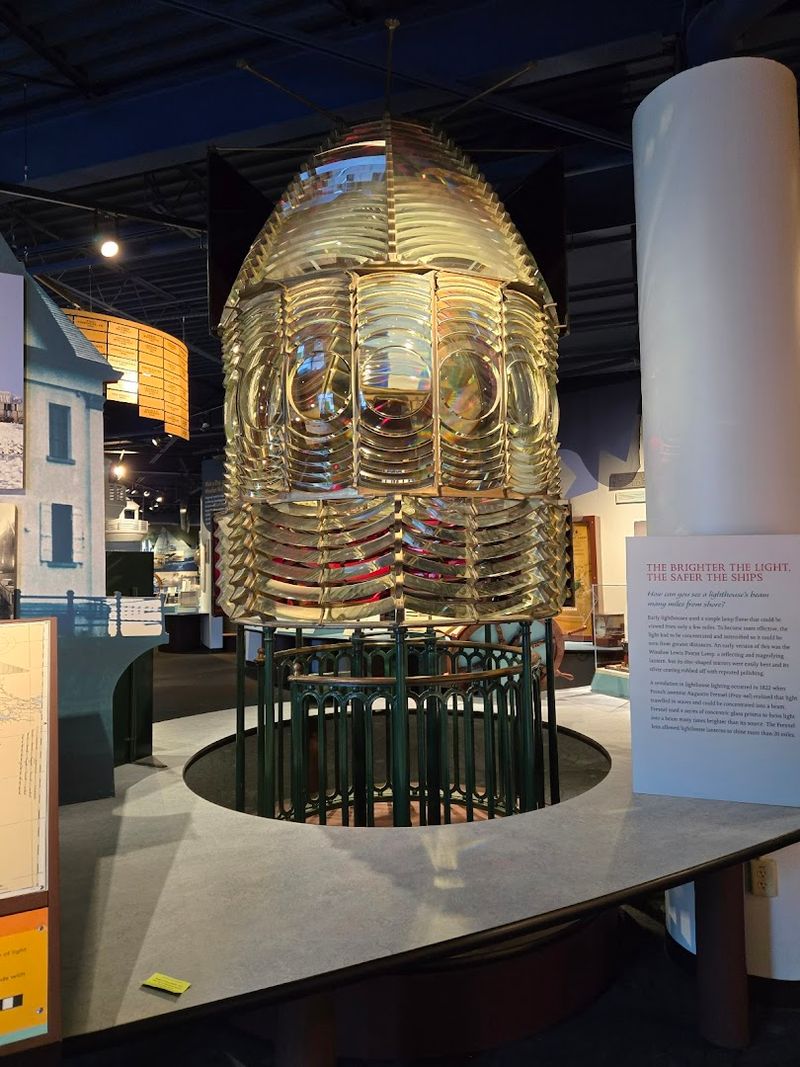
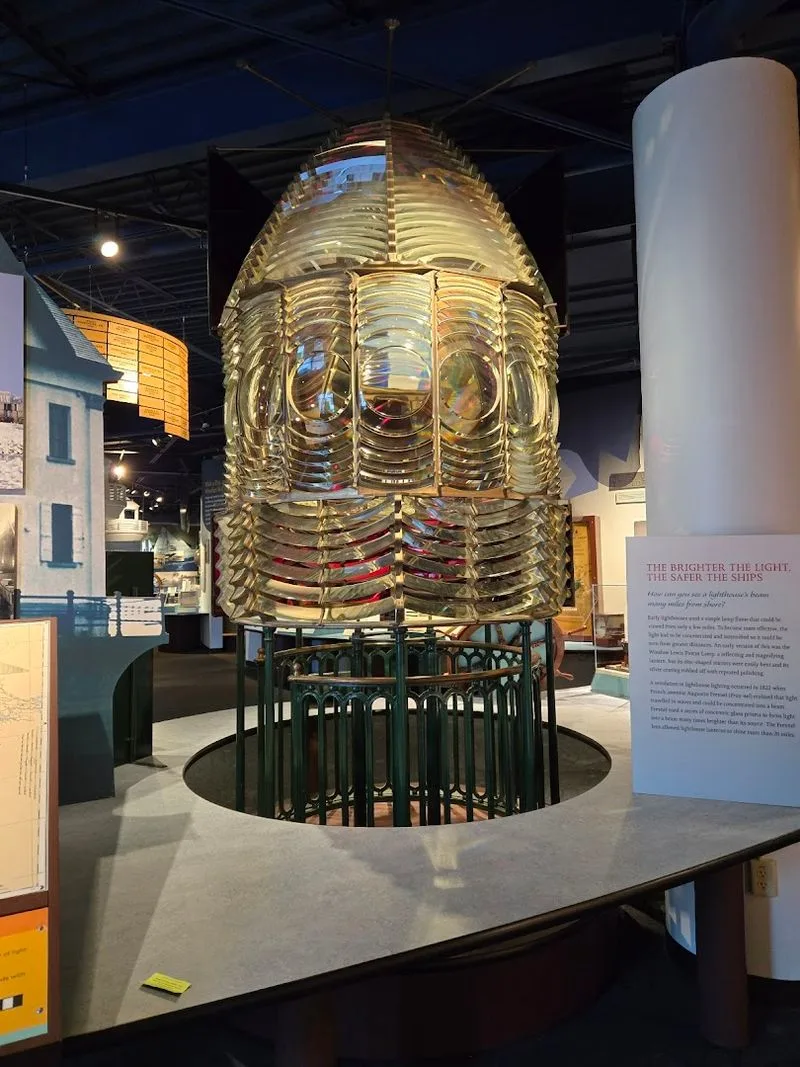
This gallery turns climate and cartography into tools you can touch. Signal flags, lighthouse lenses, and historic charts show how mariners translated shifting skies into safe passage.
You will try interactive stations that model wind, fetch, and wave heights across the five lakes.
Docents explain why freshwater storms build fast and why shoals can punish small errors. You will trace shipping lanes and discover how bathymetry funnels weather into trouble.
It is equal parts science and seamanship, presented with clarity.
Comparisons between paper charts and electronic systems reveal tradeoffs in awareness and redundancy. Hands-on exhibits let you attempt route choices under changing forecasts.
You feel the tension between schedule pressure and safety margins.
Before leaving, glance at the lighthouse timeline and lifesaving innovations. You will understand how each improvement reduced casualties without erasing risk.
It reframes shipwrecks as the endpoint of cascading decisions, not isolated misfortune.
The Col. James M. Schoonmaker’s Era: Industry And Community
While touring the Schoonmaker, you will also explore its era ashore. Photographs of ore docks, grain elevators, and union halls trace how lake shipping shaped neighborhoods.
The museum ties family life, pay scales, and port rhythms to broader industrial growth.
Panels unpack how cargoes like iron ore, coal, and grain moved through integrated systems. You will see why precision logistics underpinned booming Midwestern cities.
It is a study in regional identity, forged by whistles and shift changes.
Oral histories add warmth and grit, from lunch pails to winter layup repairs. Kids light up at the machinery displays, while adults connect dots to present supply chains.
The storyline never drifts far from the human core.
By the time you exit, you will recognize the lakes as economic arteries that also demanded sacrifice. Communities celebrated launches and mourned losses together.
That duality gives the museum’s shipwreck focus deeper resonance and context.
Kids And Families: Interactive Learning That Sticks
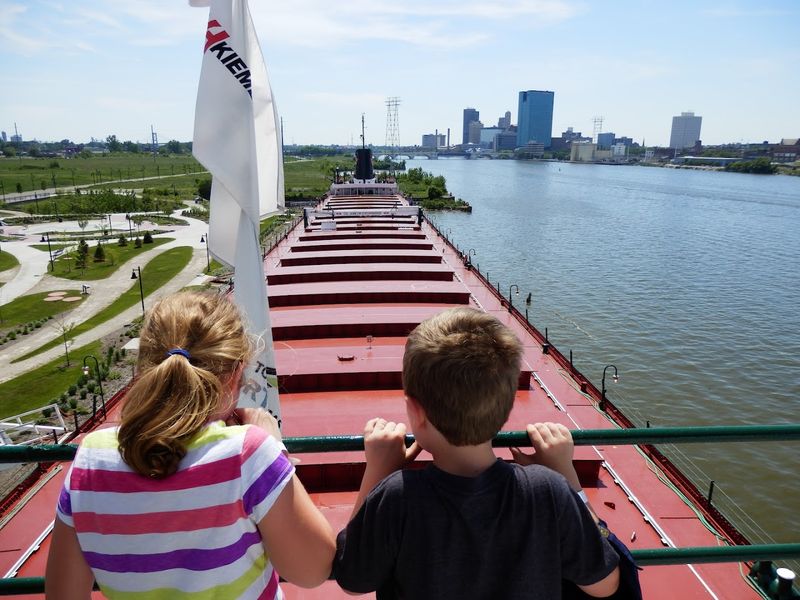
Bring kids and you will watch curiosity ignite fast. A mini movie sets the stage, then hands-on stations invite knot tying, signal decoding, and cargo balancing.
The museum’s tone stays welcoming, even when topics turn serious.
Labels use clear language without dumbing anything down. You can linger at touchscreens that visualize storms or try piloting scenarios.
Staff are patient, encouraging questions and experiments.
Seasonal programs add variety, from themed tours to creative scavenger hunts. On busy days, expect energy and the occasional joyful noise.
It feels like a learning playground with heart.
Before leaving, visit the gift shop for maps and kid-friendly lake guides. Those tools turn car rides home into follow-up lessons.
The result is a family memory anchored by real knowledge and shared discovery.
Tugs And Workboats: Small Vessels, Outsized Impact
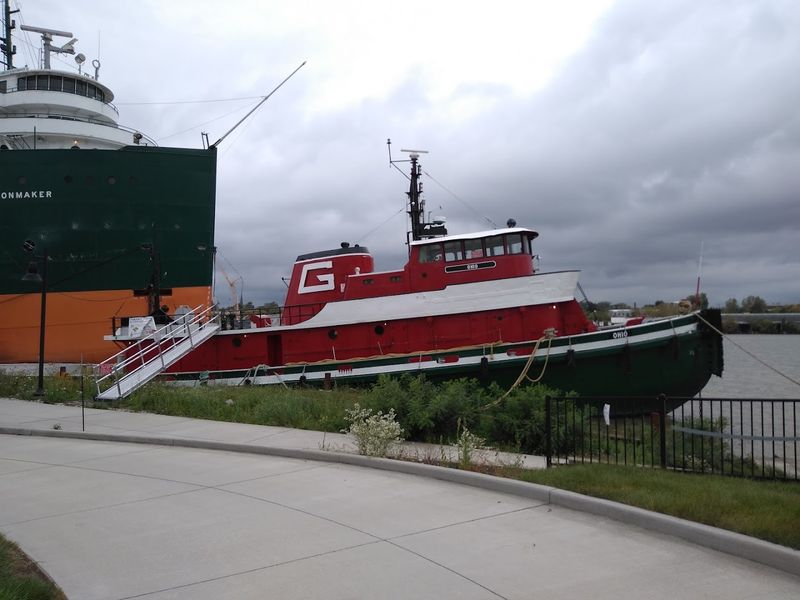
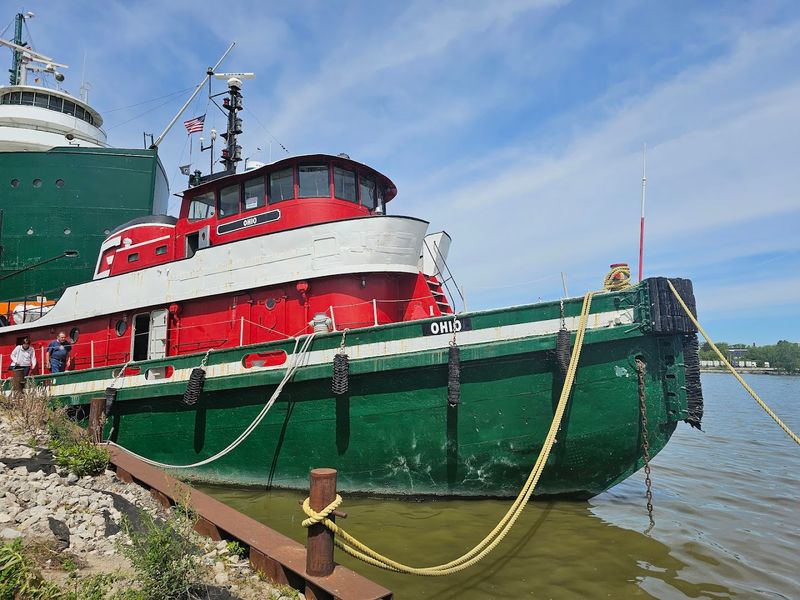
Do not skip the tugs. These compact workhorses teach propulsion, torque, and teamwork better than any diagram.
You will admire rugged fittings and learn how small boats guide giants through tight quarters.
Exhibits detail tow techniques, communication signals, and winter ice operations. You will connect the dots between harbor choreography and regional commerce.
It is a lesson in leverage and precision.
Outside on the dock, feel the river breeze and examine deck hardware up close. Guides field practical questions about crew schedules and safety drills.
The tactile reality makes classroom concepts click.
By the end, you will appreciate why tug crews are unsung heroes of the lakes. Their stories add balance to the headline shipwreck narratives.
Everyday skill prevents disasters you never hear about.
Research, Curation, And Ethics: How Stories Are Kept Honest
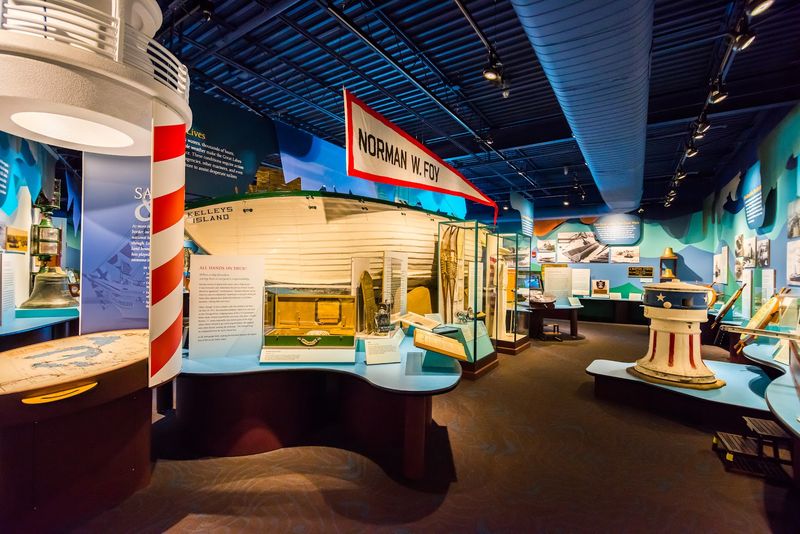
Peek behind the scenes and you will find the scholarship that anchors every display. Curators weigh provenance, interview witnesses, and cross-check logs.
The result is a narrative that resists myth in favor of verifiable truth.
Panels outline recovery permits, site protection, and partnerships with divers. Ethics matter here, especially when human remains or sensitive sites are involved.
You will appreciate the restraint that preserves dignity and context.
Archival photos, ship plans, and oral histories show how fragments become coherent stories. You will see metadata in action, linking dates, hull numbers, and weather reports.
It is meticulous work, quietly heroic.
Ask how donations are processed and conserved. You will learn why not every artifact goes on display and how rotation prevents damage.
This transparency builds trust, making each gallery feel carefully earned.
Planning Your Visit: Hours, Tickets, And Tips
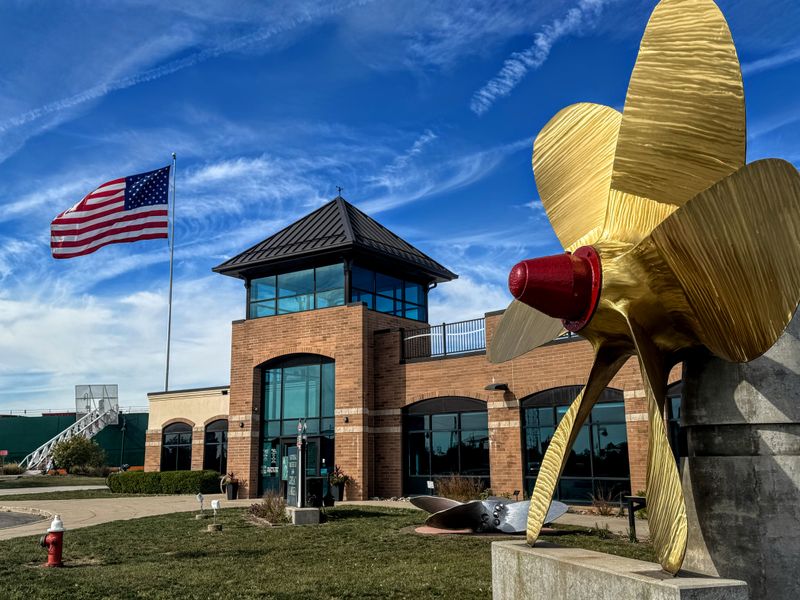
Before you go, check nmgl.org for current hours, programs, and seasonal closures. The baseline hours list Wednesday 10 AM to 5 PM, but schedules can shift.
Calling +1 419-214-5000 helps confirm tour times for the Schoonmaker.
Parking is straightforward, and the riverside setting is easy to navigate. Budget extra time for the theater and outdoor vessels, especially on sunny days.
Comfortable shoes are a must for ladders and decks.
Docent tours elevate the experience, turning technical details into memorable stories. If you have accessibility questions, staff will guide you to the best routes.
Families should plan snack breaks to keep energy high.
End at the shop for maps and thoughtful books that extend learning. You will leave with practical knowledge and a deeper emotional connection to the lakes.
It is the rare museum that satisfies both curiosity and conscience.