
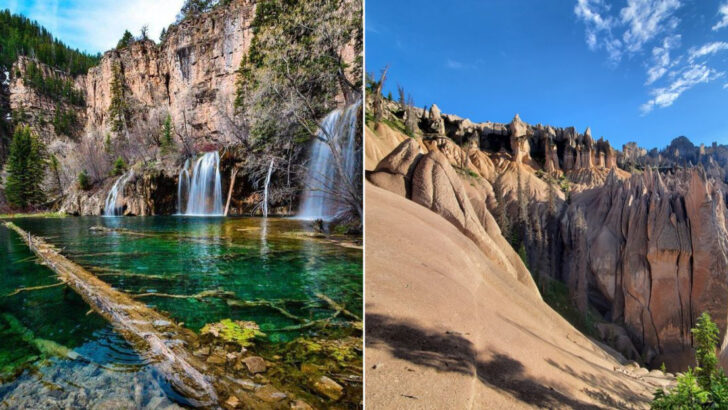

Colorado doesn’t whisper — it roars.
This is a state where dunes rise like desert mirages, mountains stab the sky, and canyons split the earth wide open. One minute you’re staring at the rippling sands of Great Sand Dunes National Park and Preserve, the next you’re craning your neck beneath the fiery red towers of Garden of the Gods.
Nothing about this place feels small.
Water crashes through the shadowy depths of Black Canyon of the Gunnison National Park. Alpine peaks glow pink above Rocky Mountain National Park.
Even the silence feels dramatic, like the earth is holding its breath.
You don’t just visit these wonders — you stand in them, hike through them, and sometimes feel wonderfully tiny inside them.
If you’re craving cliffs, color, and wide-open wild, Colorado is ready to show off.
Garden of the Gods — Colorado Springs, CO
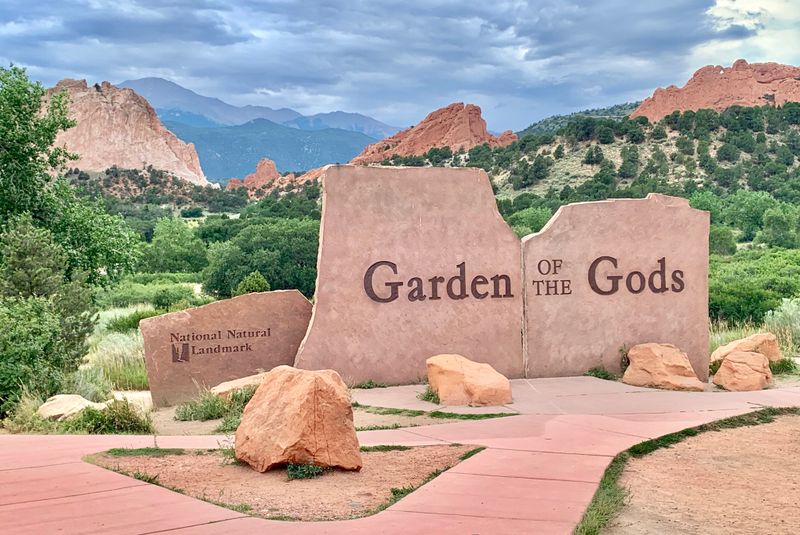

Garden of the Gods is a masterclass in geology you can stroll through before lunch. Towering red sandstone fins tilt skyward, framing views of Pikes Peak and bluebird skies.
Balanced Rock seems to defy gravity while climbers dot the walls like bright specks. The paved Perkins Central Garden Trail makes this drama accessible to almost everyone.
Arrive at sunrise to watch the formations ignite with color and to find parking. The Visitor and Nature Center explains the park’s uplift and erosion, plus wildlife you might spot, like mule deer and prairie falcons.
Trails weave among junipers and yucca, offering easy loops or longer wanderings. You can also join guided walks to learn cultural and natural history.
Climbing is permitted with proper permits and gear, and closures protect raptor nests. Stay on trails to prevent erosion in this fragile foothills environment.
Photographers love winter dustings and summer monsoon clouds for added drama. Even quick stops deliver big scenery without a long drive.
The park is free, family friendly, and open year round, but crowds swell by midmorning. Pack water and sun protection, and consider weekday visits.
After exploring, loop Skyline Drive for more vantage points. You leave with red dust on your shoes and a head full of epic silhouettes.
Hanging Lake — Glenwood Canyon, CO
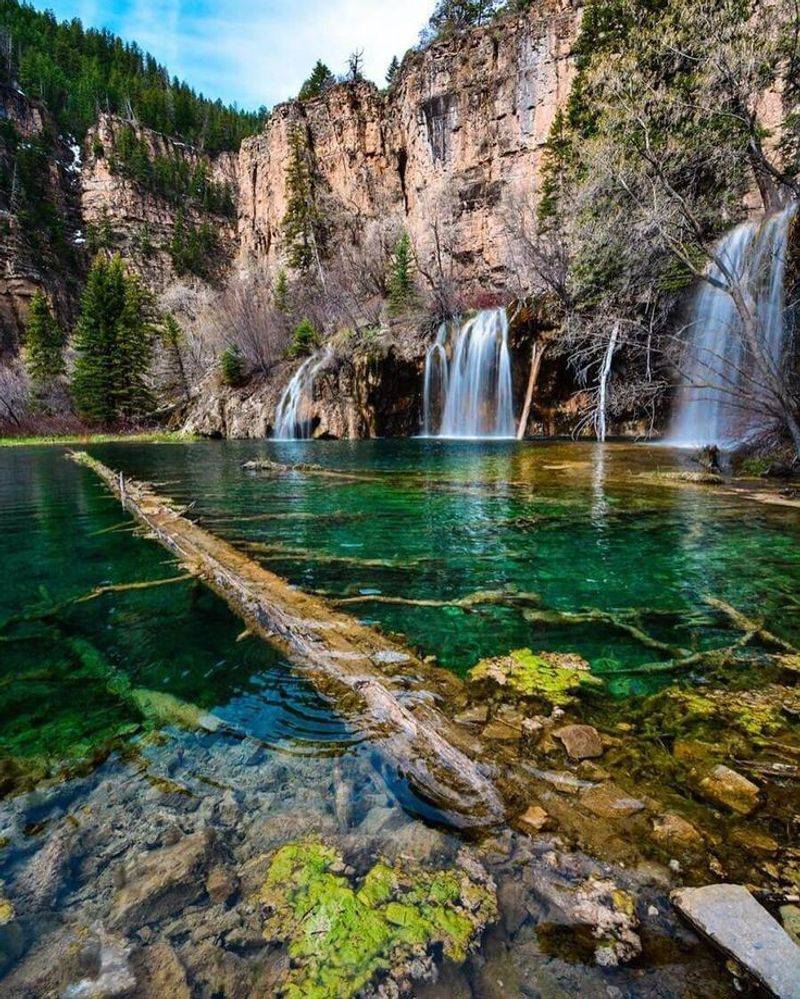
Hanging Lake feels like a secret tucked into Glenwood Canyon’s rugged walls. The trail is short but steep, switchbacking through shade and creek crossings before the payoff.
At the top, emerald water spills delicately over travertine terraces into a glassy pool. Fallen logs rest like floating sculptures beneath crystal clarity.
Permits are required, protecting this fragile National Natural Landmark from overuse. Book ahead, then pace yourself on the ascent, especially on hot days.
Boardwalks and signs keep you off the sensitive shoreline and travertine deposits. Photos are irresistible, but drones and swimming are prohibited to safeguard the ecosystem.
Spring runoff pumps the waterfalls, while autumn brings fiery canyon color. In summer, start early to avoid heat and crowds, and in winter, traction helps with icy patches.
Look for tiny bubbles in the water where calcium carbonate builds new layers. Every detail whispers a slow geologic story.
Pack light, bring water, and wear sturdy shoes for slick rock near the top. Respect closures and follow the Leave No Trace ethic to keep the lake pristine.
When you descend, the Colorado River roars far below. The memory of that luminous green lingers long after boots hit the trailhead.
Black Canyon of the Gunnison National Park — Montrose, CO
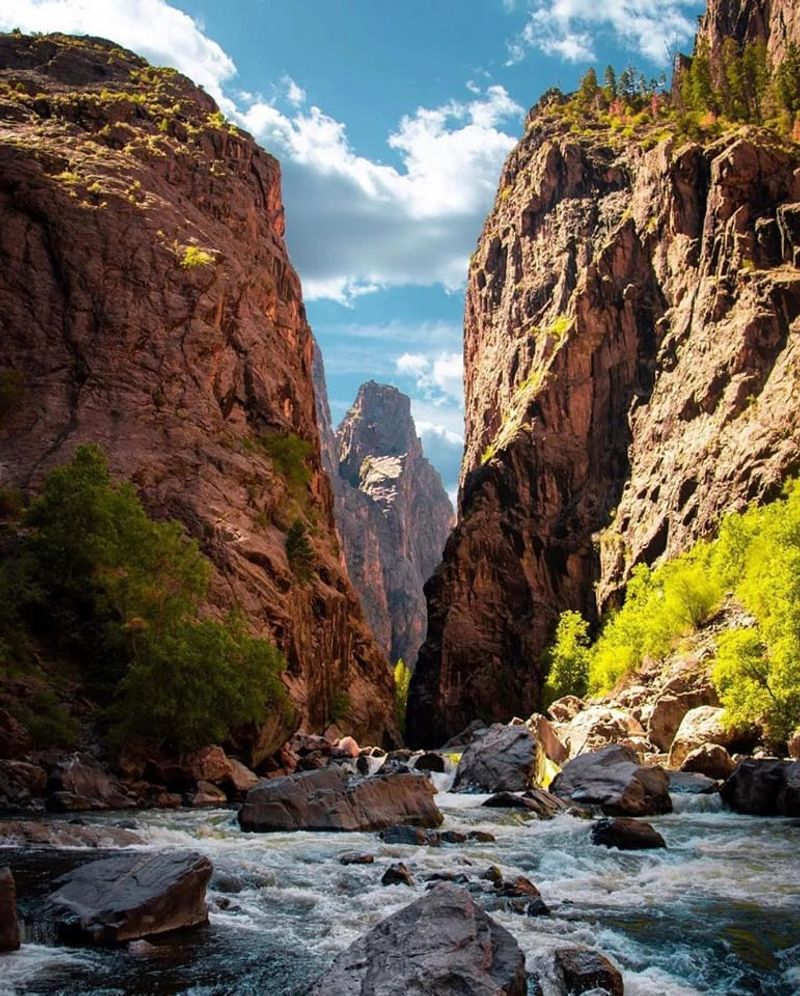
Peer over Black Canyon’s rim and your stomach flips in the best way. The Gunnison River has carved a trench so narrow and deep that sunlight barely touches some walls.
Dark metamorphic rock slashed by pale pegmatite dikes makes lightning-bolt patterns. From overlooks like Painted Wall, those streaks glow at golden hour.
The South Rim offers easy access to viewpoints and a scenic drive, while the North Rim feels quieter and wilder. Hikers can tackle Rim Rock Trail or Warner Point for broader perspectives.
Permits are required for inner canyon routes, which are more scrambles than trails. Down there, the river thunders and the air cools noticeably.
Bring binoculars for peregrine falcons riding thermals and bighorn sheep navigating ledges. Weather shifts quickly, and storms gather with little warning over the Uncompahgre Plateau.
Winter brings solitude and crystalline light, but check road conditions. Any season rewards patience with shifting shadows and echoing silence.
Carry water, sun protection, and layers for strong winds on exposed rims. Edges are unforgiving, so keep distance and supervise kids closely.
Photographers should bracket exposures to handle extremes. Standing quietly, you can feel geologic time pressing in, a reminder that nature works with fierce focus here.
Mesa Verde National Park — Cortez, CO
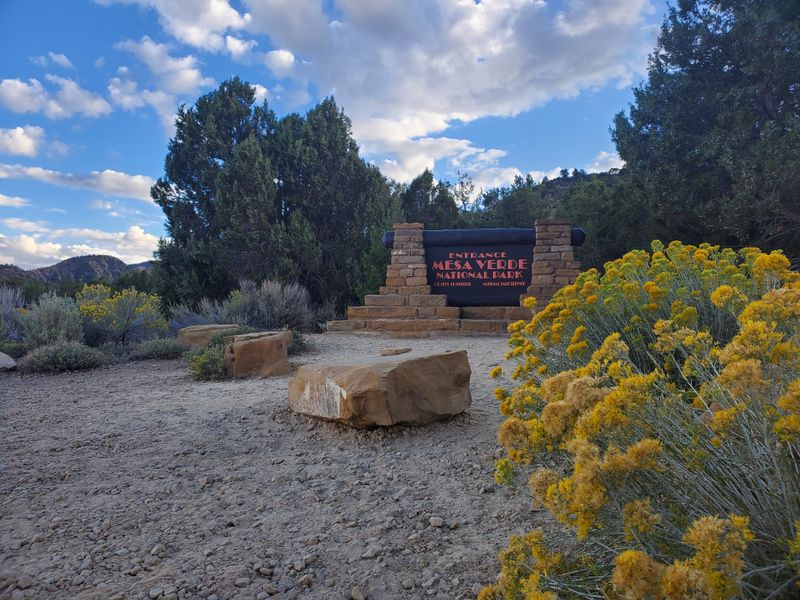
Mesa Verde pairs sweeping canyon vistas with the human story of ancestral Pueblo people. Cliff Palace, Balcony House, and Spruce Tree House sit tucked beneath protective alcoves.
Sandstone blocks, mortar, and wooden beams form multistory complexes that still feel intimate. Rangers weave cultural context into tours, connecting past lives to this landscape.
Reserve tickets early for ranger-led visits to Balcony House or Cliff Palace. Ladders and tunnels add a touch of adventure, and heights are part of the experience.
The Mesa Top Loop reveals pit houses, kivas, and overlooks that stitch the story together. Night skies here are astonishing, with the Milky Way arcing above quiet canyons.
Respect closures and avoid touching masonry, which is more fragile than it appears. Pack water, a hat, and layers, since afternoon storms can roll across the mesa.
Wildlife sightings range from coyotes to mule deer in pinyon-juniper forests. Museums and visitor centers deepen understanding before you step into the alcoves.
Fall offers crisp air and thinner crowds, while spring brings fresh color to the sage and grasses. Drive carefully on curving roads that cling to canyon rims.
You leave humbled by ingenuity and by the land that sustained it. Mesa Verde is a dialogue between stone, time, and community.
Dinosaur Ridge — Morrison, CO
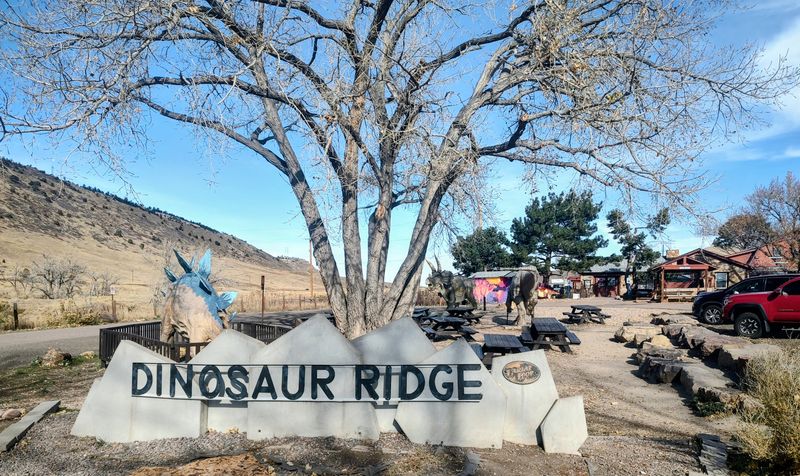
Dinosaur Ridge turns textbook pages into pavement under your feet. Along the Dakota Hogback, massive trackways stamp the rock with ancient traffic.
You can stand beside three-toed theropod prints and broad sauropod steps, imagining the swampy shoreline that once existed. Volunteers and guides bring the science to life with engaging stories.
The paved trail rises gently with views toward Red Rocks and the foothills. Stop at the bone site to see real fossil fragments still embedded in sandstone.
The Visitor Center offers exhibits, shuttle tours, and kid-friendly activities. Bring curiosity, sunscreen, and water, because shade is limited along the ridge.
Look closely for ripple marks, plant impressions, and tilted layers revealing mountain-building forces. It is a rare place where geology, paleontology, and scenery meet so accessibly.
Spring and fall bring kinder temperatures, and weekdays feel calmer. Photography pops with bright red rocks and blue skies.
Respect closures and avoid walking on the prints themselves to prevent wear. Keep an eye on little explorers near road crossings.
Pair your visit with nearby Red Rocks Park for a full day of stone and story. By the end, deep time feels closer, almost like footprints crossing your own path.
Paint Mines Interpretive Park — Calhan, CO
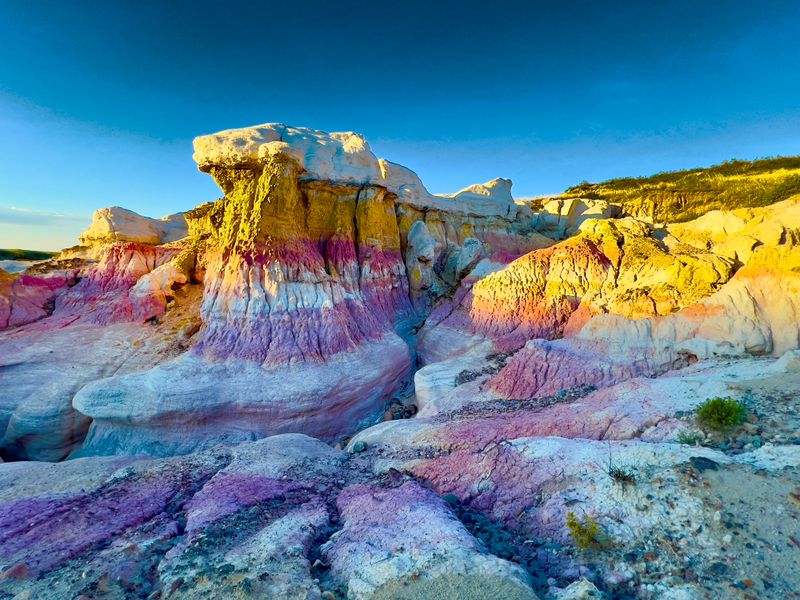
Paint Mines feels like stepping into a painter’s palette spilled across the prairie. Bands of pink, purple, orange, and cream stripe delicate hoodoos and sculpted gullies.
Ancient peoples sourced colorful clays here, leaving a link between art and land. Today, quiet trails wind through badlands that glow brightest under soft light.
Start from the main lot and follow signed routes into the heart of the formations. The park is day-use only, and dogs are not allowed to protect fragile soils.
After rain, clay becomes slick, so tread carefully and avoid damaging surfaces. Sunrise and cloudy afternoons deepen color and reduce harsh shadows.
Bring water, as shade is scarce, and treat the landscape gently. Resist climbing on hoodoos, which crumble with even light pressure.
Listen for meadowlarks and watch pronghorn graze on surrounding grasslands. Interpretive signs explain geology and human history that shaped this place.
Photographers should pack a polarizer and move slowly, noticing patterns and lines. Keep to established trails to preserve the area’s delicate features.
Calhan’s winds can whip up fast, so layer clothing and secure hats. When you leave, the colors tend to stick in memory, like brushstrokes that never quite dry.
Zapata Falls — San Luis Valley, CO
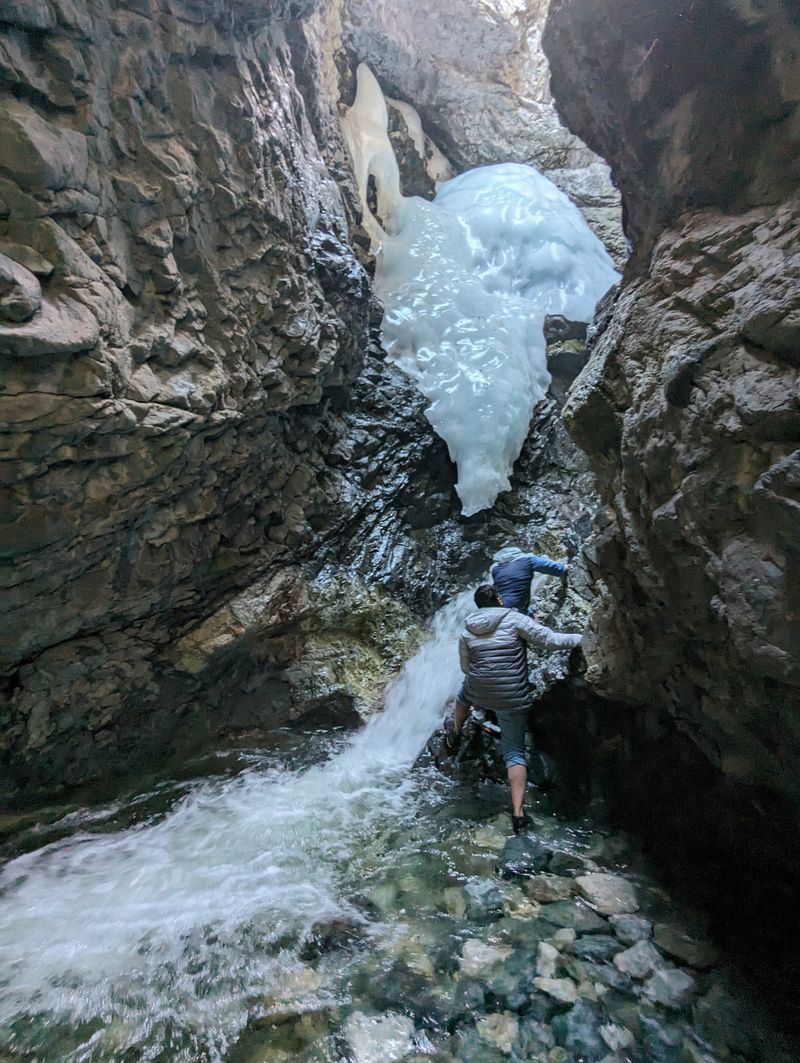
Zapata Falls hides in a cool cleft at the base of the Sangre de Cristos. The approach is short but memorable, requiring a careful wade through a chilly creek.
Step-by-step, the slot opens to a 30-foot ribbon of water plunging into mist. On hot valley days, it feels like air conditioning created by geology.
Wear water shoes with traction and bring a towel, especially during high runoff. The access road is gravel and washboarded, so drive slow and enjoy the views of Great Sand Dunes.
At the trailhead, wind can be fierce, but the canyon shelters you quickly. Summer crowds thin near dusk, when light shafts add magic.
Winter transforms the falls into a frozen sculpture, though ice cleats become essential. Spring brings the loudest flow and the trickiest footing.
Leave valuables secured and keep phones leashed with straps over the creek. As always, pack out everything and watch slippery rocks.
Pair your visit with a sunrise at the dunes or stargazing on clear nights. The juxtaposition of desert sand and icy water is pure Colorado.
Even a quick stop delivers a blast of freshness and awe. You leave tingling, from ankles to grin, ready for more valley surprises.
Slumgullion Earthflow — Lake City, CO
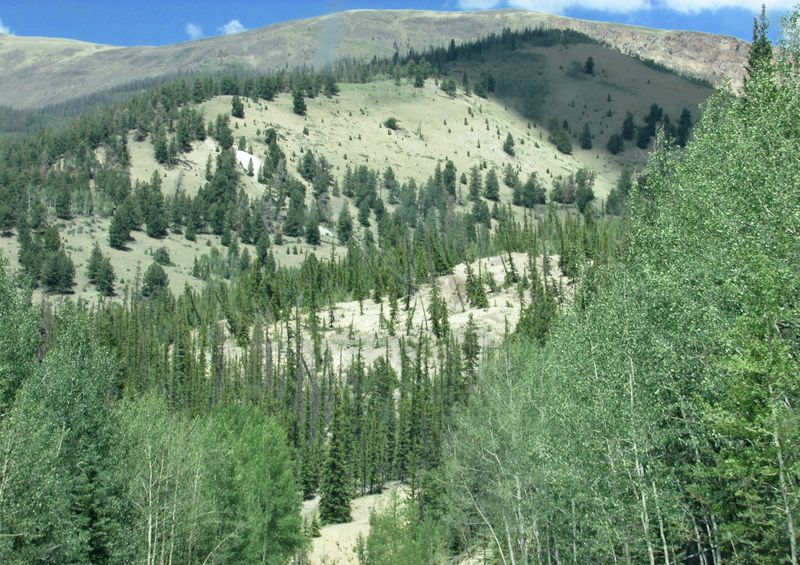
The Slumgullion Earthflow looks like a slow-motion river of land paused mid-pour. Centuries ago, a mountainside slumped, damming a creek and birthing Lake San Cristobal.
Parts of the slide still creep today, warping forests and tilting trees at odd angles. From roadside overlooks, you can trace lobes like fingerprints of moving ground.
Interpretive signs near Lake City explain the geology and the National Natural Landmark status. Short strolls reveal twisted trunks and hummocky terrain underfoot.
Bring a sense of curiosity and a camera; textures pop in angled light. Fall color adds gold ribbons through the green and gray.
Stay on established pullouts and paths, since saturated soils can be unstable. After rain, some surfaces feel spongy, reminding you this landscape is alive.
Wildlife sightings include elk and marmots near alpine edges above town. The San Juans frame everything with serrated ridgelines and a high, restless sky.
Pair a drive to the earthflow with a loop over Engineer or Cinnamon Pass if conditions allow. Always check weather and road reports in this high-country network.
The earthflow’s quiet movement feels both eerie and mesmerizing. You leave with a fresh respect for gravity’s patient power.
Wheeler Geologic Area — San Juan National Forest (near Creede, CO)
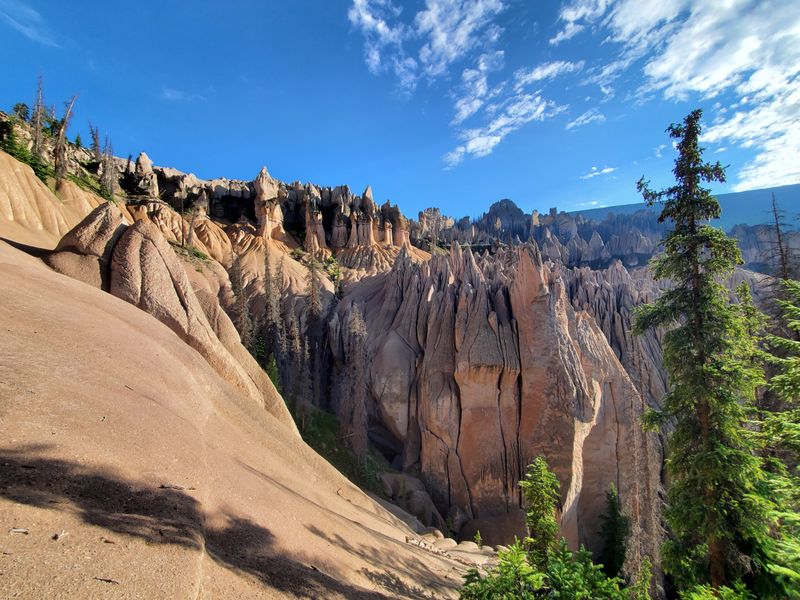
Wheeler Geologic Area is Colorado’s quiet cathedral of tuff. Eroded volcanic ash has weathered into ghostly spires, fins, and hollowed walls.
The approach is half the adventure: a long, rough road or a rewarding hike. Solitude is likely, and the formations feel like a forgotten movie set.
Start early from Creede and budget a full day for travel and exploration. High-clearance vehicles are strongly recommended if you choose the 4WD route.
Once there, short paths wrap around the amphitheater, revealing textures and hidden alcoves. Light shifts quickly, so loop twice to catch different moods.
Pack layers, food, and plenty of water; services are nonexistent beyond town. Afternoon storms can form rapidly, and clay roads become treacherous when wet.
Please avoid climbing delicate walls that crumble under touch. Expect to share space with chipmunks, jays, and the occasional deer.
Photographers should bring a midrange zoom and a polarizer to cut glare. Overcast light reveals subtle contours, while late sun carves sharp shadows.
It feels remote because it is, and that is the draw. You head back dusty, tired, and wholly satisfied by a place that still whispers.
Black Forest — Colorado Springs, CO
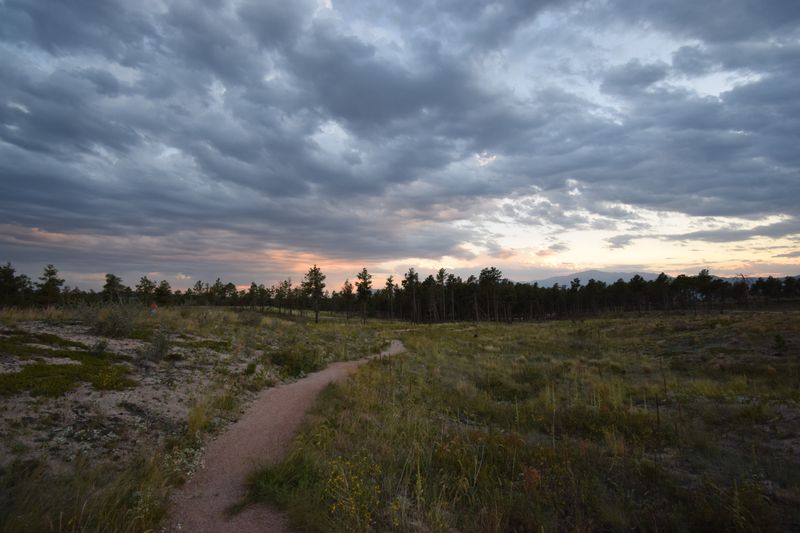
Black Forest is a sea of ponderosa pines rolling north of Colorado Springs. Needles perfume the air, and sunbeams stripe sandy trails with cathedral calm.
Open meadows reveal mountain glimpses before you slip back into shade. It is a peaceful counterpoint to the region’s red rock drama.
Trail systems thread county parks and greenbelts, great for running, biking, or mindful walks. After summer rains, mushrooms stud the duff, and birdsong fills the canopy.
Winter brings quiet crunch underfoot and long views through leafless understory. Coyotes, deer, and foxes leave tracks crisscrossing sandy paths.
Carry water year round and watch for afternoon storms and gusty winds. Respect private property boundaries that patchwork the area.
Wildfire history is part of the story here, so follow local restrictions. The smell after a light rain is pure therapy.
Photographers find moody mornings with mist and glowing trunks irresistible. Families appreciate soft grades and plenty of loop options.
Bring layers, as temperatures swing between sunlit meadows and cool groves. You leave calmer, with pine pitch on your fingers and a new favorite breathing spot.
Pawnee Buttes — Pawnee National Grassland, CO
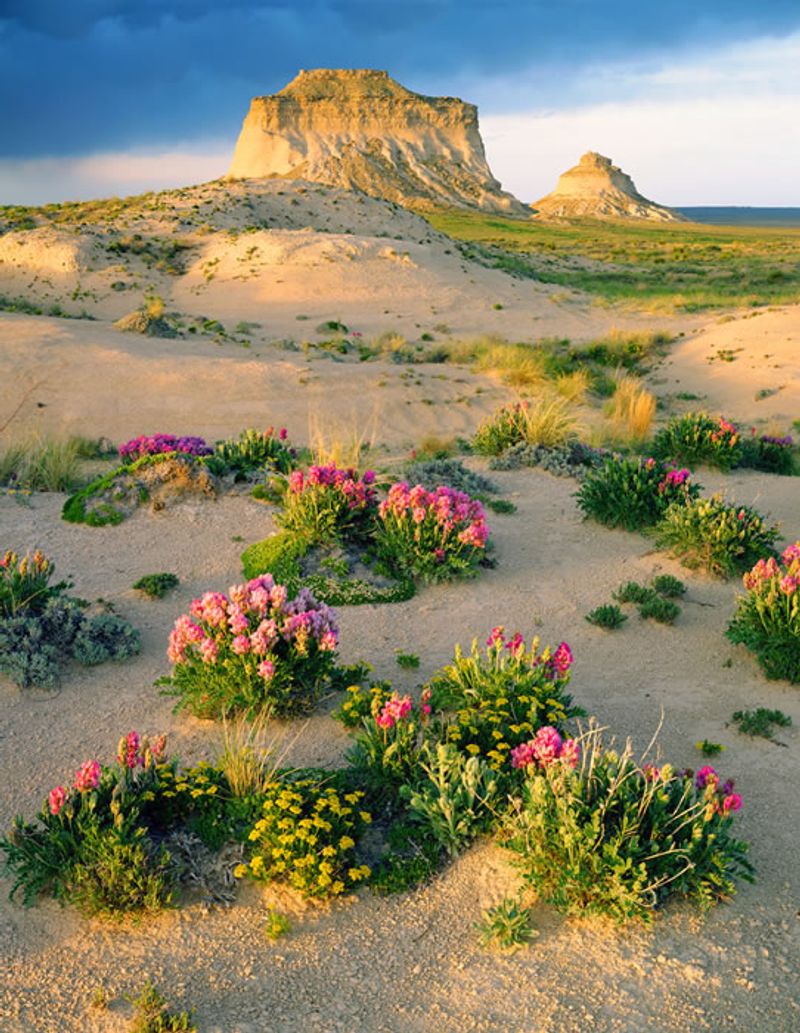
Pawnee Buttes rise like stranded mesas from an ocean of grass. Wind traces waves through bluestem while larks spiral overhead.
The hike to the second butte threads badland gullies and fossil-rich outcrops. Views roll forever, changing with every cloud shadow that sails by.
Spring brings wildflowers and mild temperatures, while winter delivers crystalline clarity and solitude. Summer sun can be fierce, so start early and carry ample water.
Respect seasonal raptor closures that protect nesting falcons and hawks on cliff faces. Dirt roads can turn slick after storms, so check forecasts before committing.
Pack binoculars for pronghorn, burrowing owls, and longspurs dancing over the prairie. The soundscape is half the show: wind, wings, and distant coyotes at dusk.
Stay on trails and avoid fragile soils near rim edges. Fossils and artifacts must stay where you find them.
Photographers should bring a wide lens for sky drama and a long lens for birds. Golden hour paints the buttes like stage props against purple horizons.
It is humble, spacious beauty that recalibrates your pace. You drive away slower, eyes raised to the big sky like a local.
Royal Gorge — Cañon City, CO
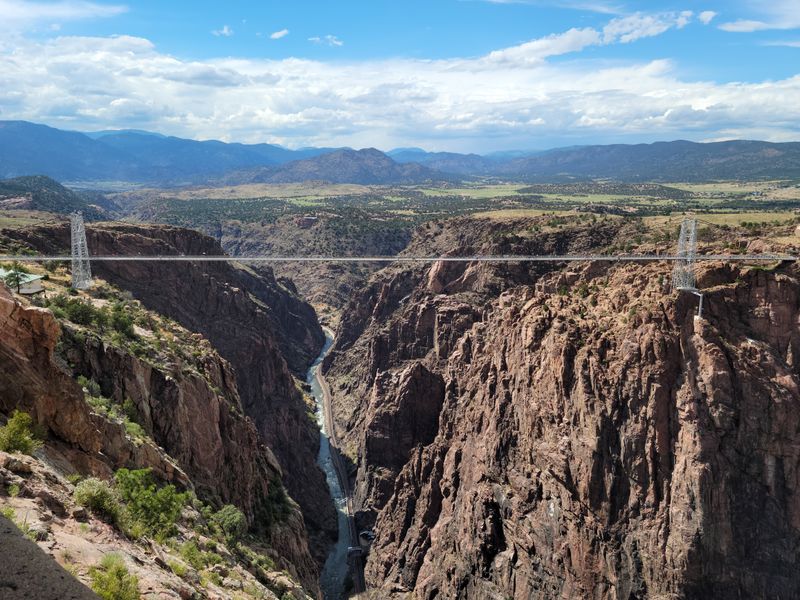
Royal Gorge is a knife slice through granite with the Arkansas River flashing below. The chasm plunges over a thousand feet, amplifying wind and whitewater.
Lookouts deliver dizzying views where trains thread the canyon floor. Storm light turns walls metallic and the river to liquid chrome.
You can walk the bridge, ride a gondola, or hike nearby trails for different angles. Rafters chase Class III to IV waves when flows rise, guided by local outfitters.
Photographers should brace for gusts and big contrast between shadow and sun. In winter, snow dustings outline every cleft and ledge.
Hydrate, secure hats, and mind phones near railings. Lightning warrants immediate shelter because exposure here is absolute.
Early and late light reduce glare and crowds alike. Keep kids close and respect posted boundaries along sheer drop-offs.
Cañon City makes an easy base with food, lodging, and post-adventure ice cream. Pair the gorge with Skyline Drive or a section of the Riverwalk.
The scale, sound, and speed of water leave a visceral imprint. You will replay the roar long after leaving the rim.
Eldorado Canyon State Park — Eldorado Springs, CO
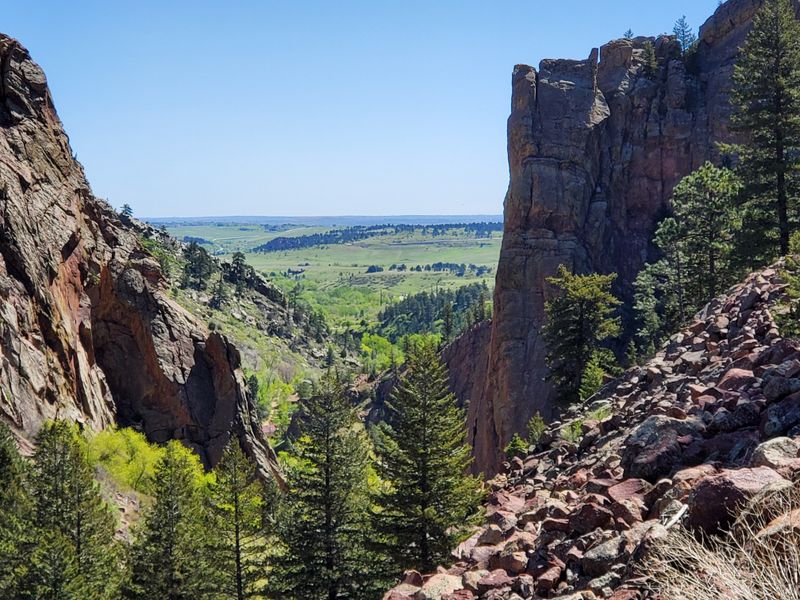
Eldorado Canyon stuffs world-class climbing and creekside hiking into a compact valley. Red sandstone walls rise abruptly, etched with classic lines and airy aretes.
South Boulder Creek chatters through willow tunnels while swallows arc overhead. Even from the picnic areas, the scenery feels cinematic.
Arrive early or use the timed-entry system during peak season. Trails like Rattlesnake Gulch climb to the historic hotel ruins and Continental Divide views.
Climbing requires permits and local ethics knowledge, especially raptor closures. Winter days can be crisp and empty, with sunlit stone holding just enough warmth.
Carry water and tread carefully on narrow paths above drop-offs. Watch for poison ivy along moist corridors near the creek.
Afternoon storms appear suddenly, so build flexibility into plans. Photographers find late-day sidelight brings out red and gold striations.
Post-hike, soak in Eldorado Springs’ mellow vibe or grab snacks in nearby towns. The canyon’s acoustics amplify laughter, birdsong, and gear clinks.
Pack layers, because shade swings the temperature quickly. You leave with forearms humming, cheeks wind-flushed, and a promise to return.
Rocky Mountain National Park — Estes Park / Grand Lake, CO
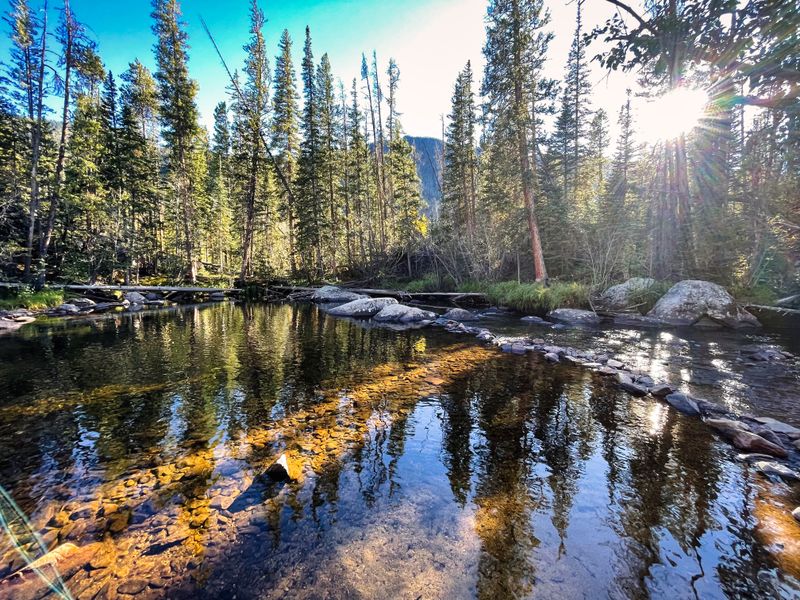
Rocky Mountain National Park distills alpine Colorado into one sublime stage. Peaks spear the sky above glacier-carved valleys and mirror-bright lakes.
Elk bugle in fall, and pikas squeak from talus gardens all summer. Every bend of Trail Ridge Road reveals a new, bigger horizon.
Reservations may be required, so check before you go and arrive early. Dream Lake and Emerald Lake offer quick wins for first timers.
For solitude, head to the Mummy Range or Wild Basin and listen for waterfalls. Afternoon storms are routine, making early starts and flexible plans essential.
At altitude, slow down, hydrate, and snack often. Tundra plants are tiny powerhouses, so stay on marked paths to protect them.
In winter, snowshoes and microspikes open quiet, glittering worlds. Wildlife demands distance; bring a long lens rather than edging closer.
Pack layers, rain gear, and patience for changing light. Dawn paints peaks pink, while dusk softens everything to velvet blue.
Whether cruising the road or racking up trail miles, awe is guaranteed. You leave with lungs rinsed clean and a map already marked for next time.
Rifle Falls State Park — Rifle, CO
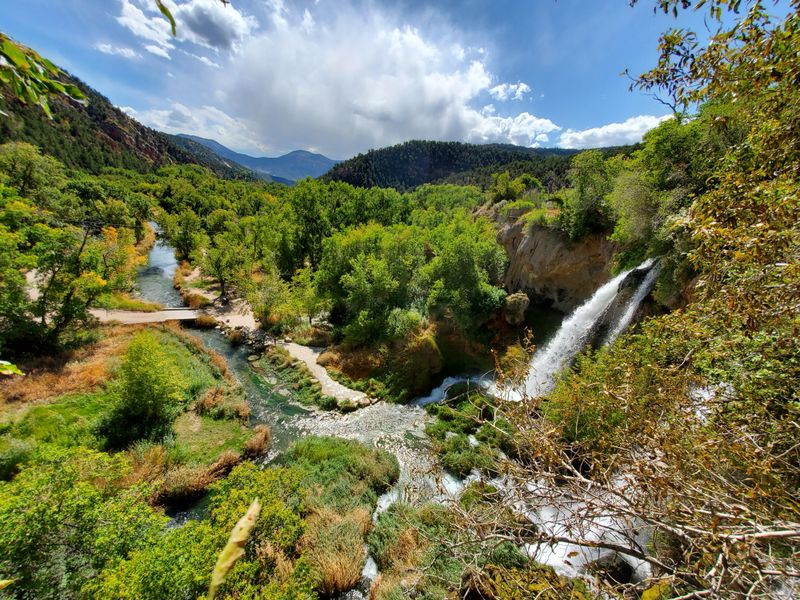
Rifle Falls feels like a tucked-away rainforest moment in Western Colorado. Three side-by-side curtains pour over mossy limestone into a turquoise pool.
The canyon’s cool mist and birdsong hush the nearby highway to nothing.
Short trails loop behind the falls into shallow caves, where dripping stone frames the water like theater curtains. Sunbeams find the spray and break it into quick rainbows.
Kids love the tunnels, and photographers love the constant motion.
It is small, which also means intimate. Arrive early or slide in late to dodge crowds and harsh light.
The picnic spots and campground make lingering easy.
Spring rumbles loudest, but winter’s icing turns the falls sculptural. Watch your footing and protect the fragile moss.
You leave rinsed clean, ears ringing happy.