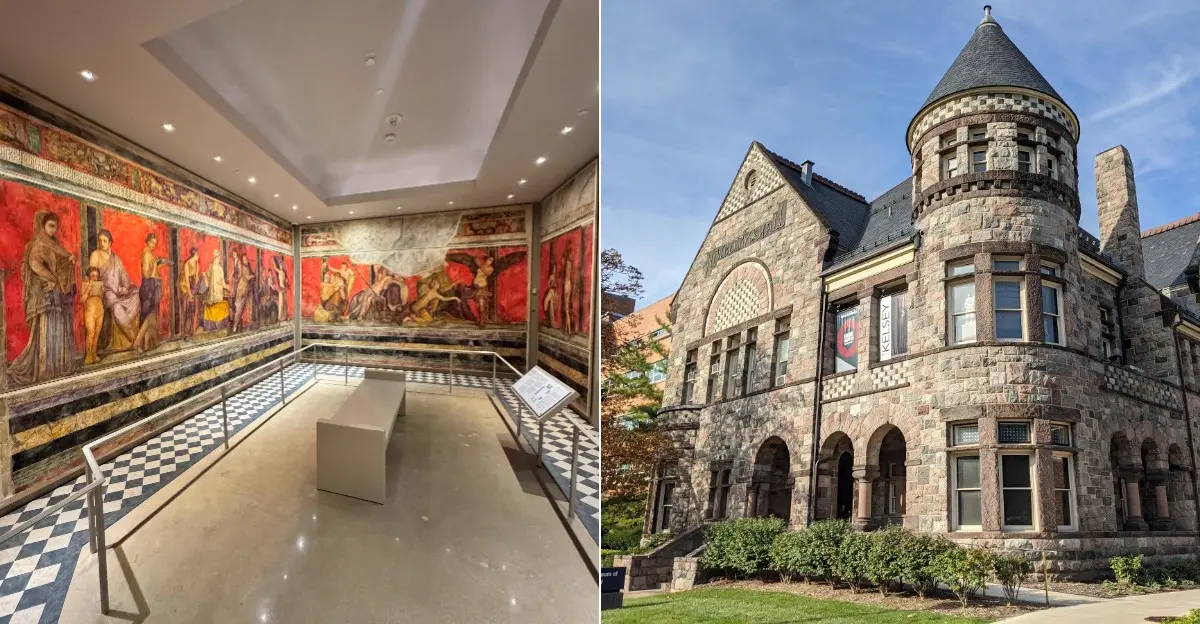
An Italian artist spent just over 18 months painting a full copy of the famous murals from Pompeii’s Villa of the Mysteries. That giant artwork now fills a special room in a free museum in Michigan.
The murals were commissioned back in 1924. They wrap around visitors, so kids stand right inside an ancient Roman story.
I can’t imagine a better way to make history feel real.
The surprises keep coming in the next rooms. A light show brings Roman wall paintings to life, and display drawers slide open to reveal even more treasures.
I like how this place treats curious kids as real explorers. Over 150,000 artifacts live here, covering 5,000 years of human history.
So how does a college building end up holding so much of the ancient world?
Stand Inside A Pompeii Room Without Buying A Plane Ticket
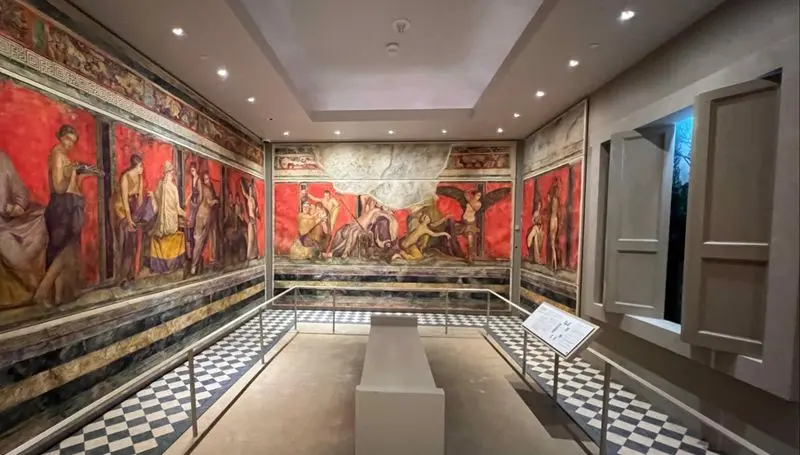
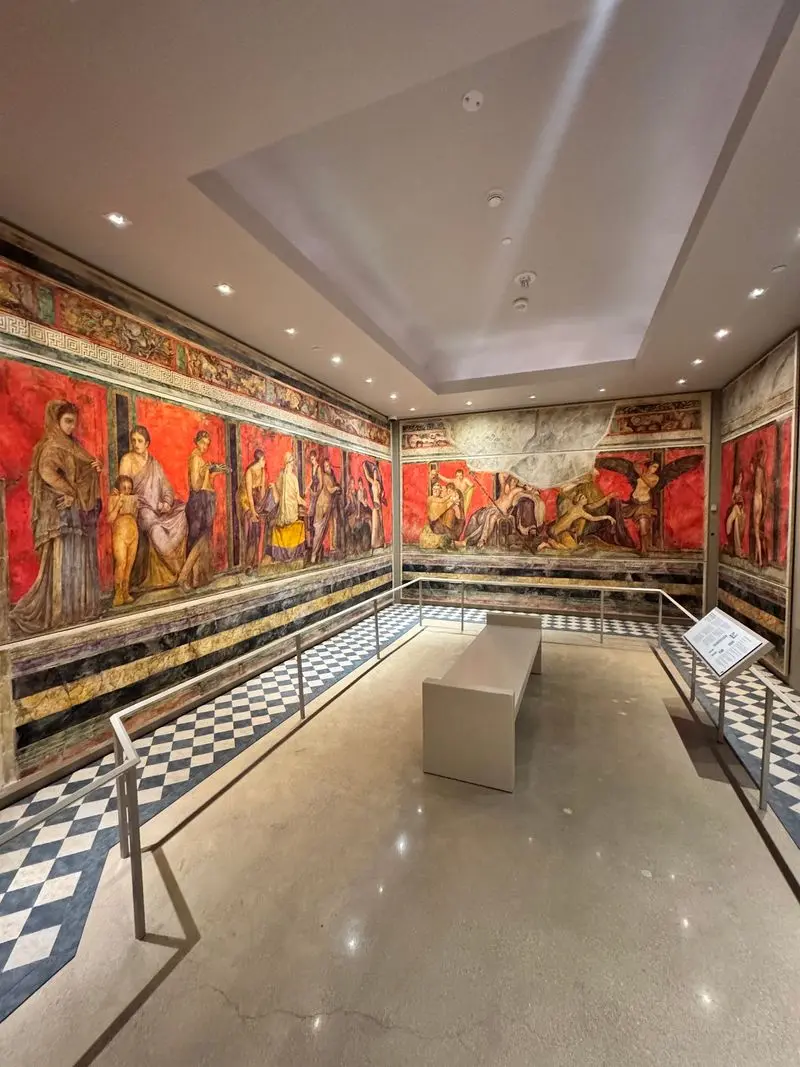
Red walls covered in life-sized Roman figures surround you in one special gallery. The Kelsey Museum of Archaeology holds a huge watercolor copy of the Villa of the Mysteries murals from ancient Pompeii.
Francis W.Kelsey commissioned the project in 1924. Italian artist Maria Barosso then spent just over 18 months bringing the scenes to paper.
Kids don’t just peek at a framed picture here. They stand in the middle of the story, with painted people on nearly every side.
That scale matters for young visitors. A textbook photo feels flat, but a full room feels like a place where someone once lived.
The murals sit in a dedicated room inside the William E. Upjohn Exhibit Wing.
They’re part of the permanent exhibition, so you won’t have to race a closing date.
A conservation project in 2008 helped protect the paintings for future visitors. That means today’s kids see colors that experts worked hard to preserve.
Try asking your children to spot repeating colors or poses. Simple questions like that turn a quiet gallery into a friendly detective game.
Honestly, it’s a pretty great deal for a museum that charges no admission at all.
Watch Roman Walls Glow With A Modern Light Show
Ancient paint meets modern projectors in one of the museum’s newest displays. A light-projection installation featuring Roman wall painting fragments was unveiled in December 2023.
Six real fragments from the Kelsey collection sit at the center of the show. Projected light fills in the missing pieces, placing each fragment back into a reimagined original setting.
Kids love this part because the walls seem to change before their eyes. One moment you see a broken chunk of plaster, and the next it belongs to a full room.
The display traces interior mural painting in Pompeii from the 3rd century BCE until 79 CE. That covers a long stretch of Roman decorating history in one spot.
Along the way, it explains the famous four styles of Roman wall painting. Think of them as ancient design trends, a bit like how home decor changes over decades.
Pair this room with the Villa of the Mysteries copy for the full effect. One shows a complete painted space, while the other shows how experts piece history back together.
Fair warning: your kids may start judging your living room walls afterward.
Pull Open The Drawers, Because That’s Where Secrets Hide
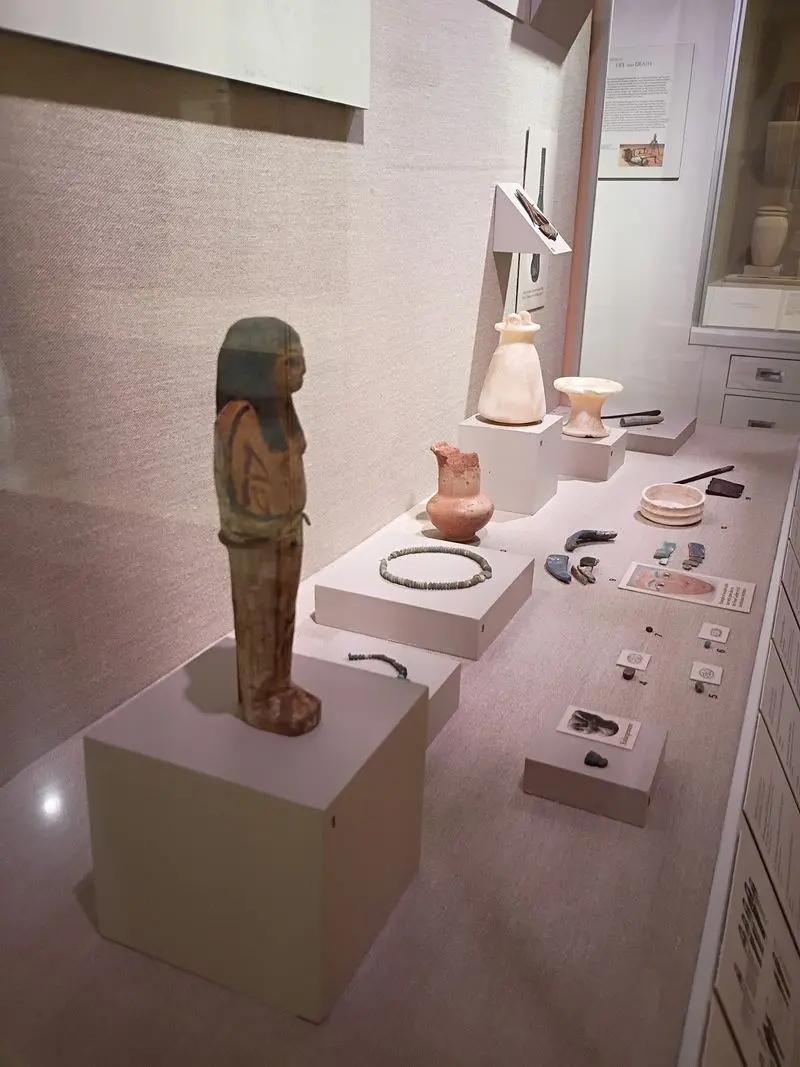
Most museums ask kids to keep their hands to themselves. Here, many display cases come with drawers that visitors can actually pull open.
Each drawer reveals more artifacts connected to the case above. Some of them are interactive, which adds a hands-on twist to the visit.
For children, this changes the whole mood. Suddenly the museum feels less like a quiet library and more like a treasure chest waiting to be searched.
Give each kid a mission before you start. Maybe one hunts for coins, while another looks for glass or tiny tools.
The Kelsey Museum of Archaeology has plenty to find. Its collection includes more than 40,000 ancient coins and around 1,300 provenanced glass fragments and vessels.
Not everything fits on the shelves at once, of course. The drawers help show more of that huge collection without crowding the cases.
Move slowly and open drawers gently, especially with younger hands. A calm pace lets everyone actually look rather than just slam and run.
You might be surprised who gets hooked first. Grown-ups often turn into the most eager drawer-pullers in the family.
See What Everyday Life Looked Like In An Ancient Egyptian Town
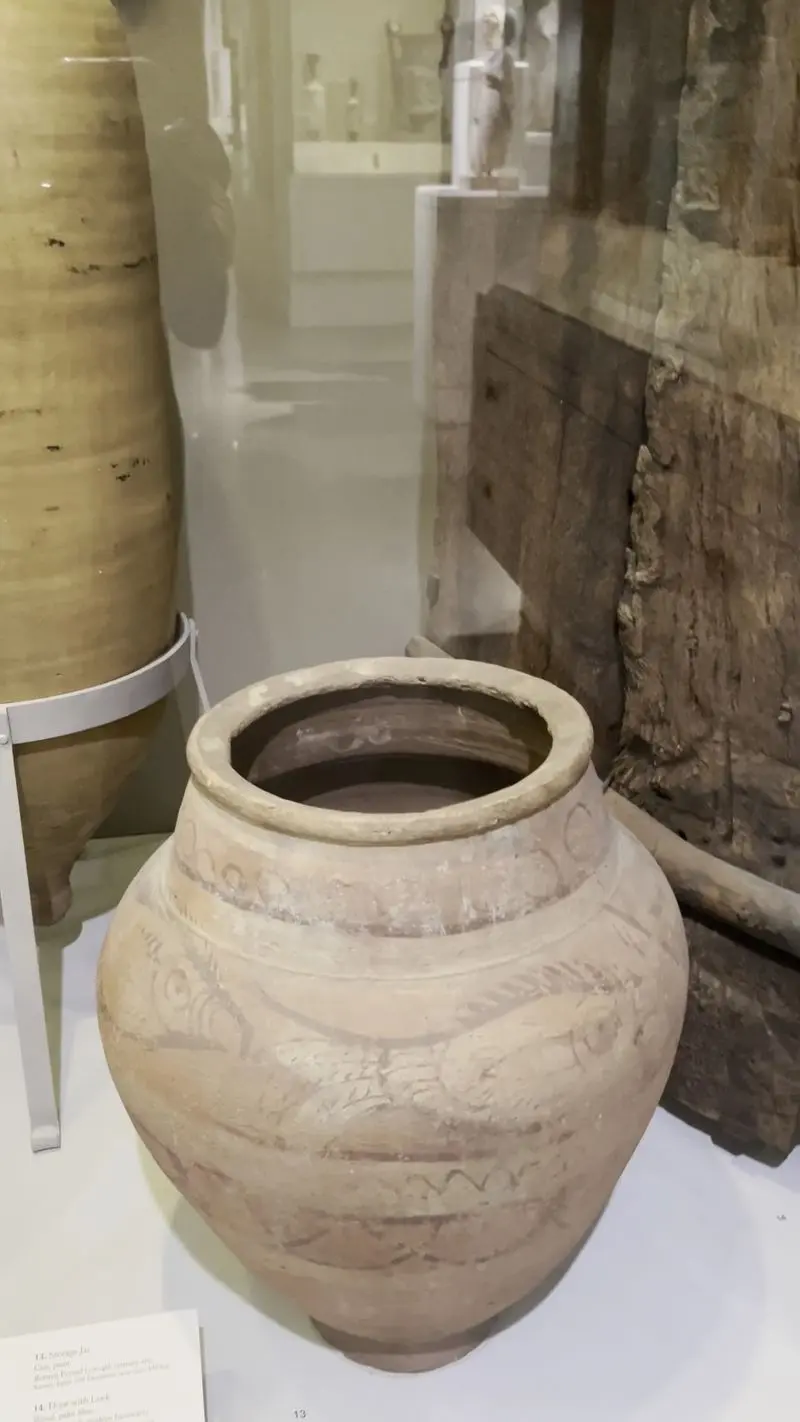
About 45,000 daily-life objects came to Ann Arbor from a single Egyptian town. That town was Karanis, a Graeco-Roman community, and the collection is the largest of its kind outside the Cairo Museum.
Those numbers sound big, but the objects feel personal. These were things regular people used while cooking, working, and raising families.
Kids connect with this section because it skips the royal drama. Instead, it shows how ordinary families lived long ago in Egypt.
The items arrived thanks to University of Michigan excavations. Francis Kelsey secured funding for the school’s first digs in the region in 1924.
Encourage your children to compare old objects with modern ones. Ask what they would use instead today, and the conversation tends to roll on its own.
It’s a smart way to make history feel familiar. A kid who sees an ancient household item may never look at their own kitchen the same way.
The Kelsey also displays ancient Egyptian mummy masks and Greek pottery. Together, they help children see that people across time had surprisingly similar needs.
Five Thousand Years Of History Fit On Two Floors
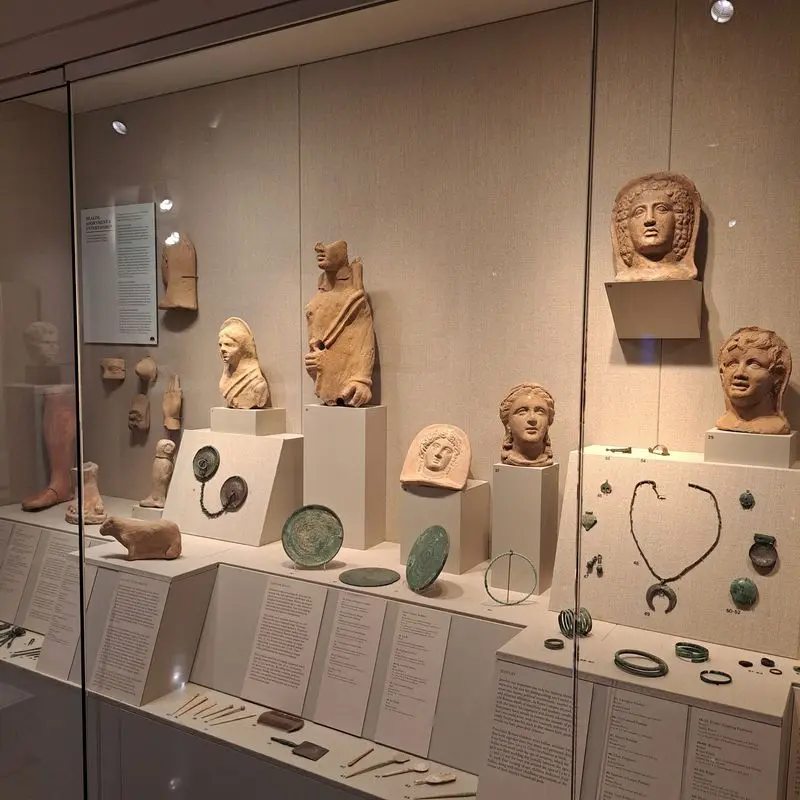
Over 150,000 artifacts belong to this collection, which sounds almost impossible for one building. They come from the ancient Mediterranean, North Africa, and the Middle East.
The objects span about 5,000 years of human history. That stretches from the Neolithic era all the way through the Middle Ages.
Visitors explore two floors of permanent gallery space. Rotating special exhibitions add something new to see on return trips.
The range is impressive for curious kids. You’ll find Egyptian, Near Eastern, Greek, Roman, Etruscan, Coptic, Persian, and Islamic artifacts under one roof.
Some holdings stand out even among experts. The museum keeps about 375 Latin inscriptions, the largest group in the Western Hemisphere.
There’s also roughly 8,500 pieces of Parthian pottery. Many of those finds connect to excavations at Seleucia-on-the-Tigris in Iraq.
A newer permanent gallery, The Byzantine and Islamic Worlds: 400-1800, explores daily life in those regions. It includes ideas drawn from a large textile collection of around 5,900 pieces.
With so much ground covered, pick a few favorite cultures first. Kids stay happier with a short plan than a marathon.
Little Archaeologists Get Their Own Programs Here
Kelsey Kids programs make the museum feel like it was built with children in mind. They include hands-on activities, interactive storytelling, and craft projects inspired by the collections.
Young visitors can also try scavenger hunts and activity tables. These turn a quiet stroll into a game with a goal.
Family Day events happen twice a year. They feature crafts, games, and activities spread throughout the museum.
Each Family Day centers on themes from ancient cultures. Past focuses have included the Middle East, Greece, Egypt, and Rome.
Summer brings Camp Kelsey for elementary and middle school students. Weeklong sessions explore archaeology and ancient cultures through creative, hands-on projects.
That’s a great fit for kids who already ask too many questions about pyramids. Camp gives that curiosity somewhere useful to go.
Families who can’t visit often still have options. The museum offers online resources for learning at home, which helps on snowy Michigan days.
Check the museum’s event calendar before planning a trip around a specific program. Dates shift each season, and popular activities are worth catching.
A Professor’s Classroom Hobby Grew Into Something Huge
Back in 1893, a Latin professor started collecting ancient objects for his students. Francis W.
Kelsey taught at the University of Michigan from 1889 to 1927.
He wanted students to understand the ancient world through real things. Reading about Rome is one thing, but holding history in view is another.
The museum officially opened in 1928 as the Museum of Classical Archaeology. It received the Kelsey name in 1953 to honor the man who started it all.
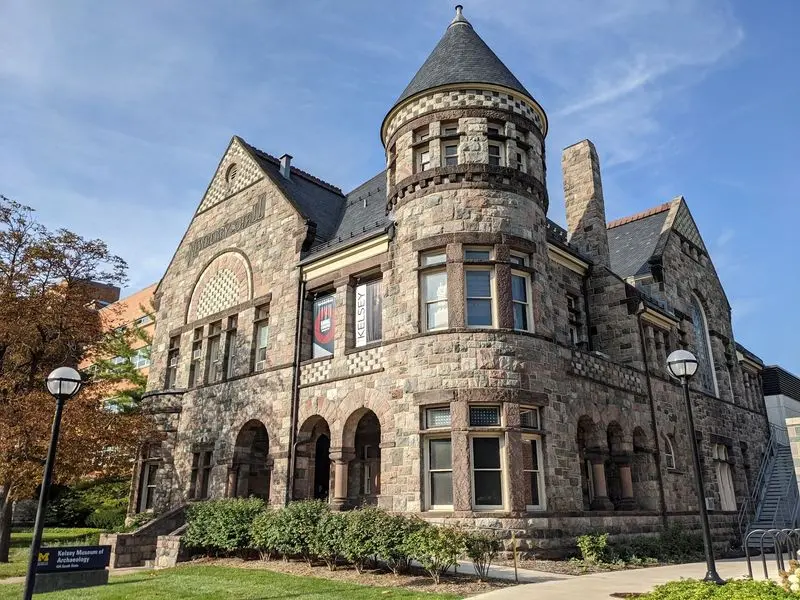
The building has its own story too. Newberry Hall was built in 1888, long before it held ancient treasures.
The university leased the hall in 1921 and bought it in 1937. Later, Newberry Hall became a Michigan State Historic Site in 1971.
National recognition followed a year later. The building joined the National Register of Historic Places in 1972.
In 2009, the William E. Upjohn Exhibit Wing added space for displays, research, and storage.
That’s the wing where the Pompeii murals live today.
Kids might enjoy knowing that one teacher’s project grew this big. It’s proof that a good idea can keep growing for over a century.
Free Admission Makes Spontaneous Trips Easy
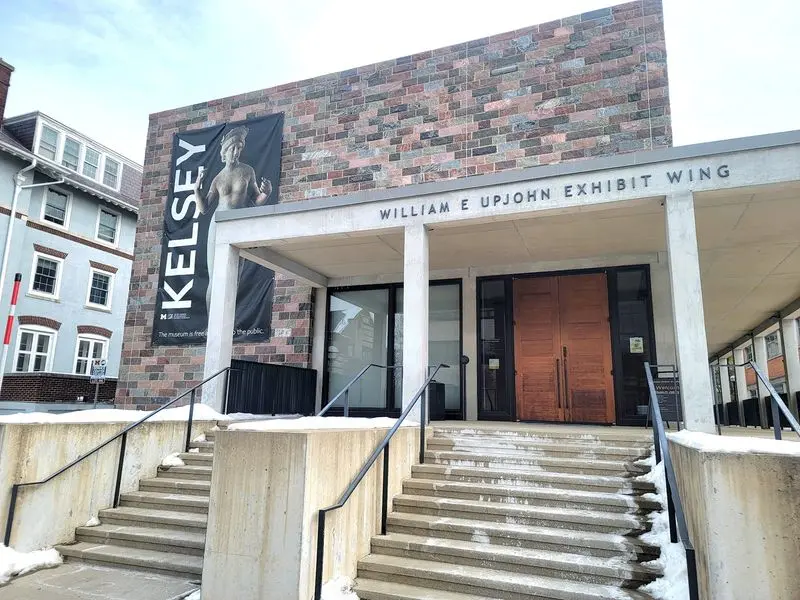
Good news for family budgets: admission costs nothing. That makes the Kelsey Museum of Archaeology an easy yes for a quick afternoon outing.
You’ll find it at 434 S State St, Ann Arbor, MI 48109. The public entrance sits on Maynard Street, so head there instead of the State Street side.
The museum opens Tuesday through Friday from 10 a.m. to 4 p.m. Weekend hours run from 11 a.m. to 4 p.m.
Mondays and University holidays are closed days. Plan around those so nobody ends up staring sadly at a locked door.
On the third Thursday of each month, hours stretch until 7:30 p.m. That evening window works nicely for families with school and work schedules.
Parking takes a little planning. Choose metered street spots or the Maynard Street Parking Garage, about a block north.
Free public tours and events also pop up throughout the year. Some happen in person, while others are virtual.
Since entry is free, short visits make total sense. Come for the murals today, and save the coins for next time.
Turn Your Visit Into A Full Ann Arbor Adventure
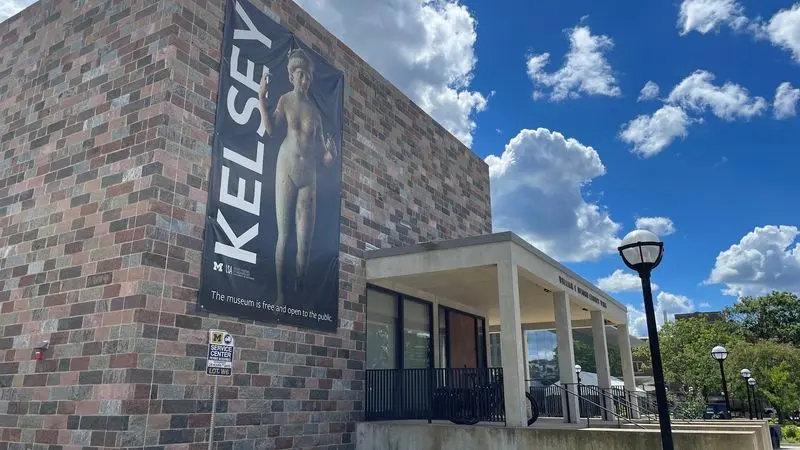
Location is a sneaky bonus here. The museum sits right on the University of Michigan campus in Ann Arbor.
That means your family can walk around a lively college setting after the visit. Kids often love seeing a big campus up close.
Because the galleries are manageable in size, the museum fits easily into a bigger day. You won’t need to dedicate every hour to one building.
Plan your route around the Maynard Street entrance and nearby garage. Parking once and walking keeps the day simple.
Talk about what everyone saw while you stroll. Ask which Roman style of wall painting they would choose for their bedroom.
Those chats help the facts stick long after you leave. A child who explains a fresco to a sibling has truly learned it.
Visitors from across Michigan can treat this as a world history trip without a passport. Ancient Rome, Egypt, and the Middle East all wait in one spot.
Pack patience, comfy shoes, and a few good questions. The Kelsey Museum of Archaeology handles the rest, and it does so beautifully.