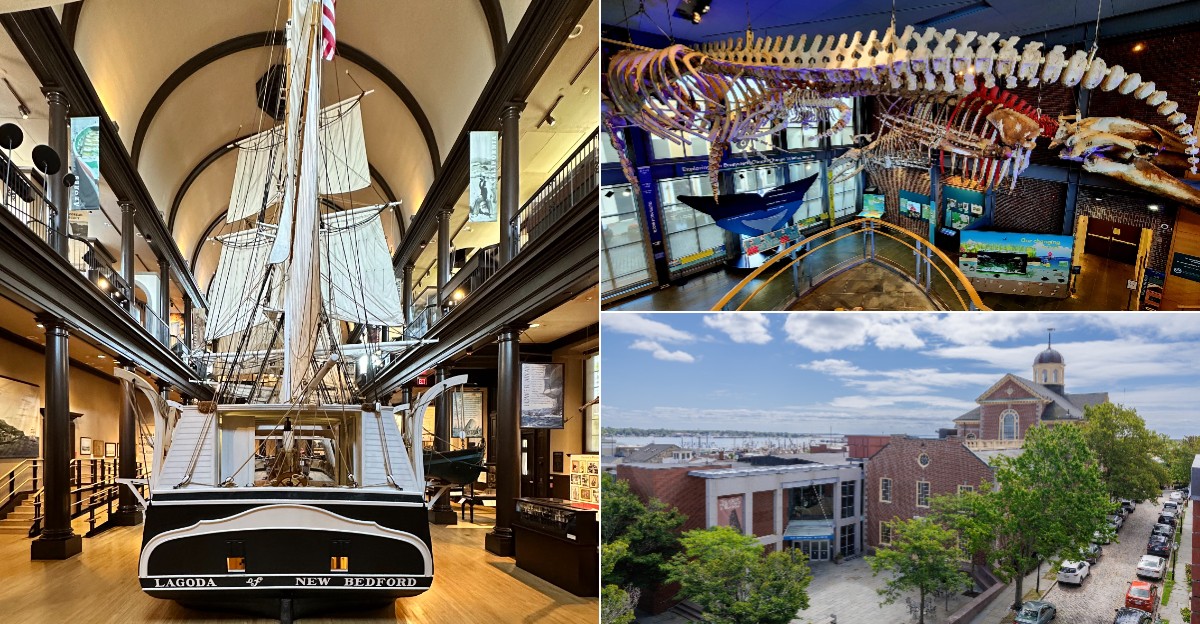
The world’s largest ship model sits indoors, and kids are allowed to climb aboard it. It stretches 89 feet long, has full rigging, and lets you head below deck to the captain’s quarters.
I love that nobody built it behind glass. Kids can steer the wheel and pull on ropes like a real crew.
It was built back in 1916, right inside the museum building.
This spot in Massachusetts doesn’t stop at one big boat, either. Five whale skeletons hang overhead, and there’s a giant inflatable whale that kids can crawl inside.
I can’t imagine a better way to make history feel real for a restless ten-year-old.
So how does a museum fit a whaling ship, a pod of skeletons, and thousands of carvings under one roof? Let’s take a look.
Your Kids Can Actually Steer The World’s Largest Ship Model
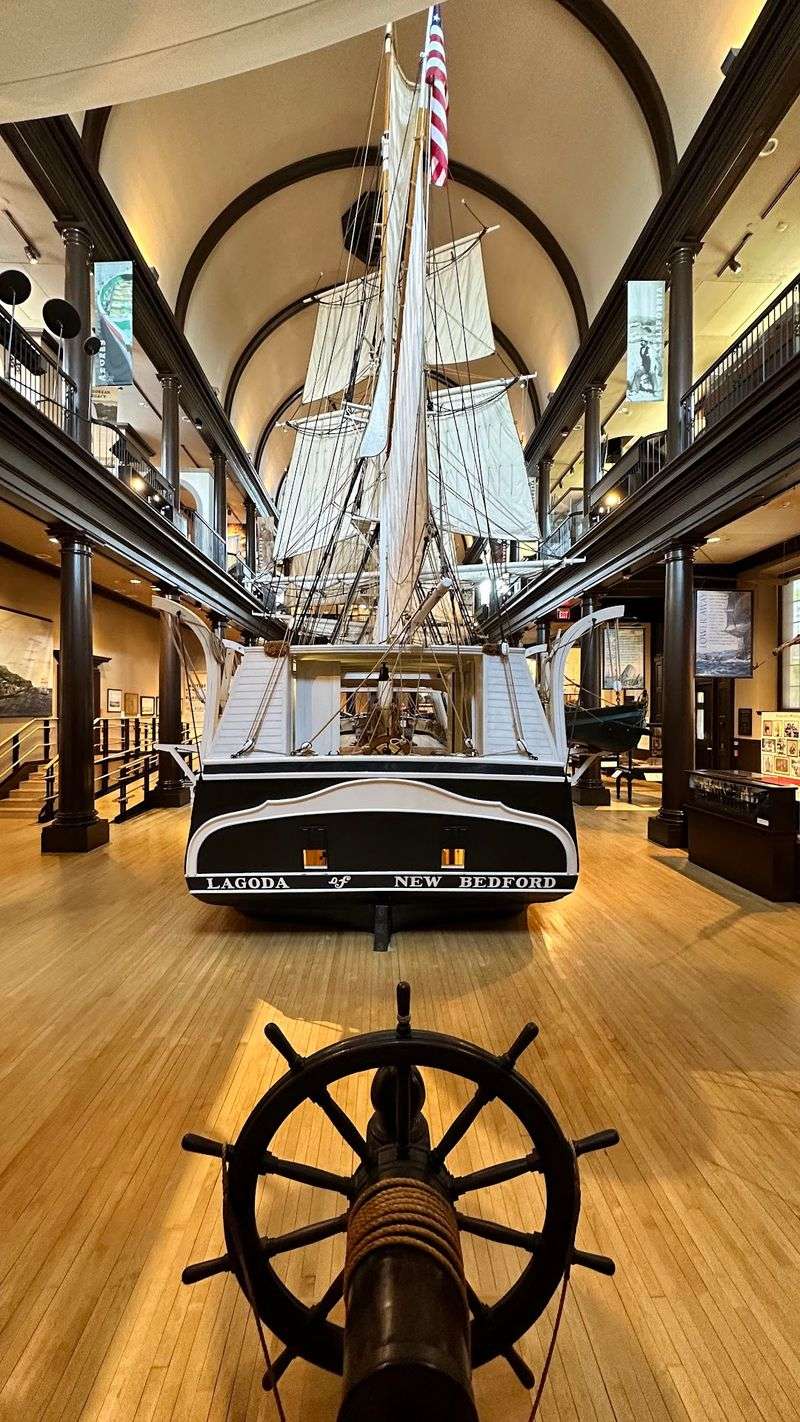
Most ship models live in glass cases with a sign that says hands off. The half-scale Lagoda at the New Bedford Whaling Museum flips that rule upside down.
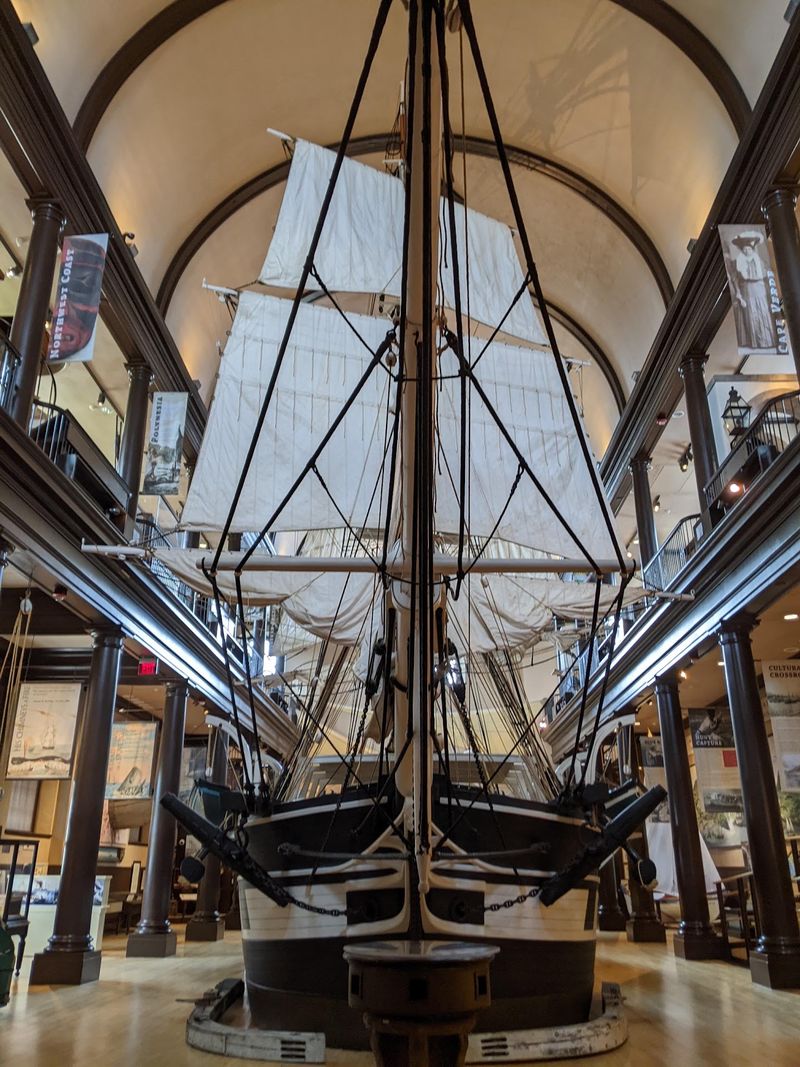
The model measures 89 feet from the end of its flying jib boom to the end of its spanker boom, making it the world’s largest ship model. It was built in 1916 inside the museum’s Bourne Building.
That means the ship has been in the same building for more than a century.
Kids can climb aboard the Lagoda and explore its deck. The ship offers a hands-on way to discover what life aboard a whaling vessel was like.
The Lagoda is fully rigged, with masts, lines, and whaling equipment that help bring its history to life. Whaleboats and other gear illustrate how crews worked at sea.
I like that the ship teaches without a lecture. Kids can explore the deck and imagine how sailors lived and worked during long voyages.
Give your crew some time here before rushing off. Exploring a half-scale whaling bark is a big adventure, and young visitors may take their roles as captains seriously.
Snap a photo while you can.
Head Below Deck And Peek Into The Captain’s Quarters
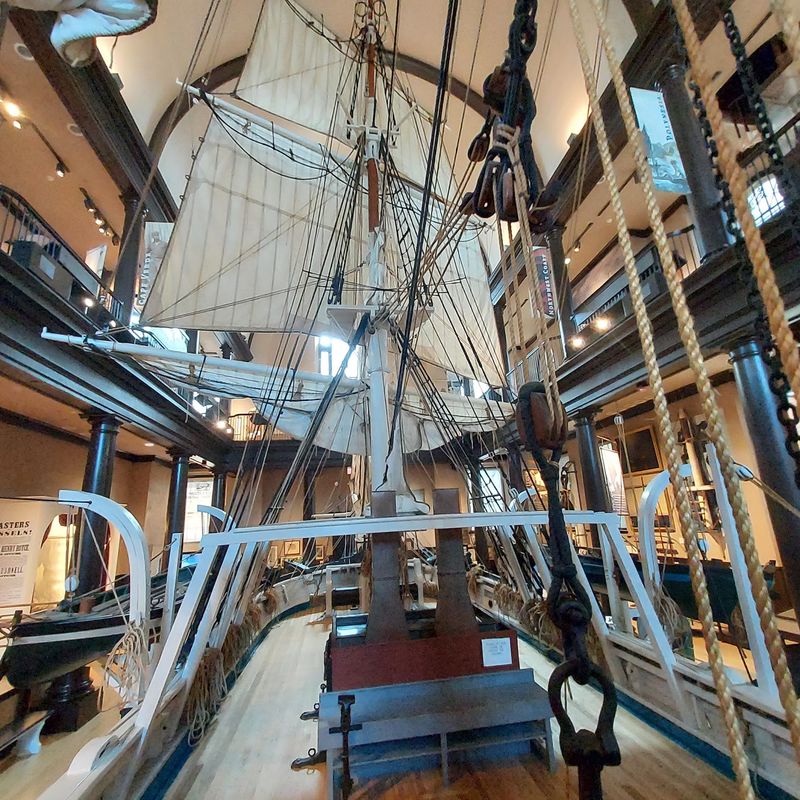
Upstairs gets all the attention, but the Lagoda has secrets down below. Guests can venture below deck and see the captain’s quarters up close.
That small space says a lot about life at sea. Whaling voyages could stretch for years, so the captain’s cabin was home.
Kids usually have opinions about how cramped it looks.
For a deeper look, the museum offers monthly Lagoda Below Deck Tours. These guided tours focus on the parts of the ship many guests rush past.
Check the museum calendar ahead of time so you don’t miss one.
The model has a real story behind it too. The original Lagoda started life as a merchant vessel in 1826.
It was converted into a whaling ship in 1841.
That twist makes a fun trivia question for the car ride home. Ask your kids what a ship carried before it chased whales.
Their guesses might be wildly creative.
Below deck feels different from the open deck above. It’s quieter and closer, which helps kids picture sailors sleeping, eating, and planning.
Bring questions, because the guides know their stuff.
Look Up, Because Five Whale Skeletons Are Hanging Out Overhead
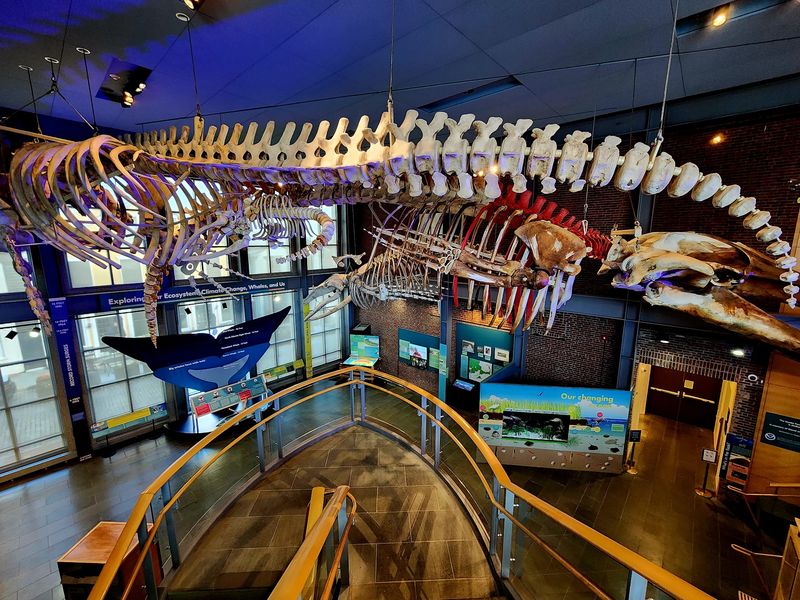
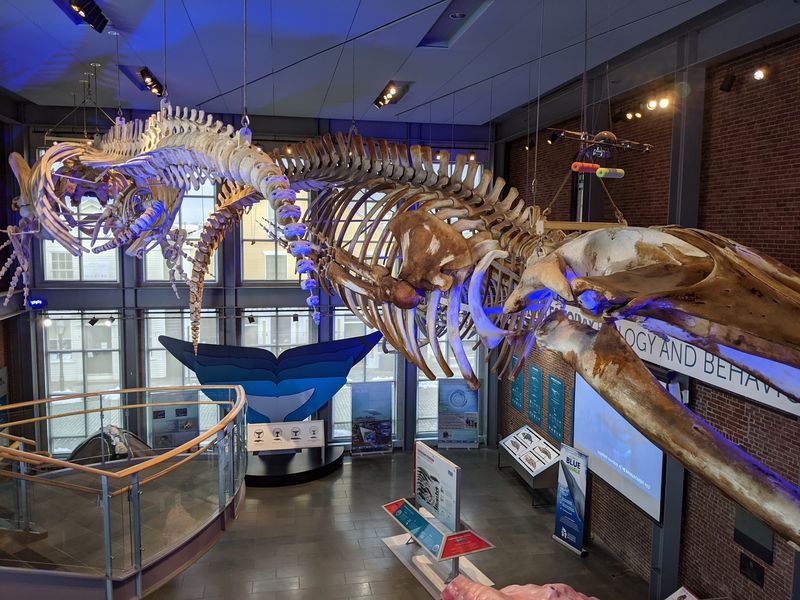
Size is hard to explain until you’re standing beneath it. At the New Bedford Whaling Museum, five whale skeletons are on display, including a mother North Atlantic right whale and her fetus.
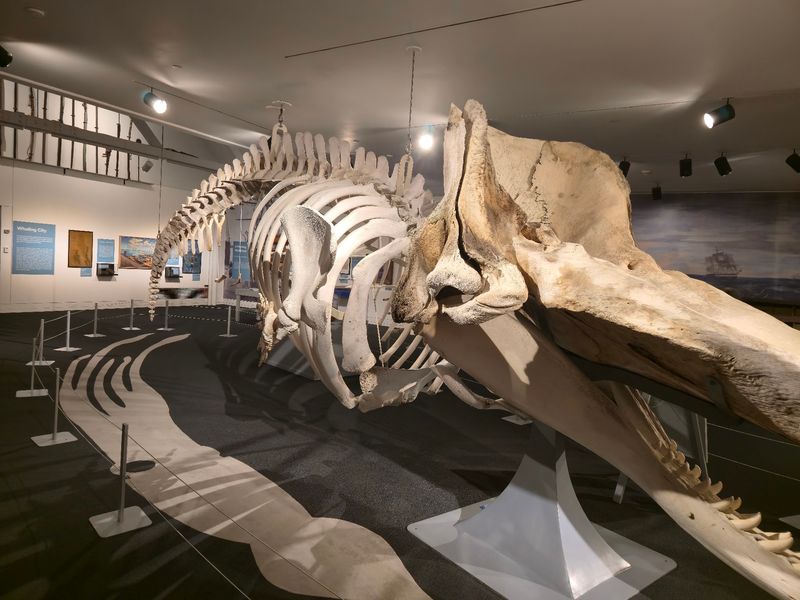
The collection includes a blue whale, a humpback whale, a sperm whale, and a North Atlantic right whale with her unborn calf. Each specimen reveals a different body shape and size.
Kids can compare jaws, ribs, and other bones while exploring the gallery.
Walking beneath them is an unforgettable experience. You get a real sense of how massive these animals are.
Looking up at their enormous skeletons might leave your neck feeling a little stiff.
This gallery does something books can’t quite replicate. A picture of a blue whale is fascinating, but seeing its enormous skeleton in person makes its size much easier to appreciate.
Try a little game with younger kids. Have them guess which skeleton belongs to which whale before reading the signs.
Then let them count the ribs if they have the patience.
Older kids might enjoy sketching the skeletons in a notebook. It slows the visit down in a good way.
This room pairs nicely with the Lagoda, since together they offer a glimpse of the whales and the ships involved in the history of whaling.
Crawl Inside A 43-Foot Whale Without Getting Wet
Jonah had the original idea, but your kids get the comfy version. The museum has a 43-foot inflatable humpback whale that children can climb inside.
It’s big, bouncy, and very hard to resist. For little ones, it turns whale science into something they can touch and explore.
Parents may be tempted too.
Families have more than just the whale to enjoy. The museum includes dedicated play spaces called the Kid’s Corner and the Sailor’s Nook.
These spots give younger visitors a break from reading signs.
There’s also an Interactive Topographic Sand Table. Kids can shape the sand and watch landscapes change.
It’s a smart way to explain how land and water connect.
Plan these stops between bigger galleries. Small kids recharge fast when they get to move around.
A short play break can buy you another hour of calm exploring.
I like that the museum treats play as part of learning. Nobody expects a five-year-old to read every placard.
Letting them crawl inside a whale might spark more curiosity than any label ever could.
Tiny Carvings Steal The Show In The Scrimshaw Galleries
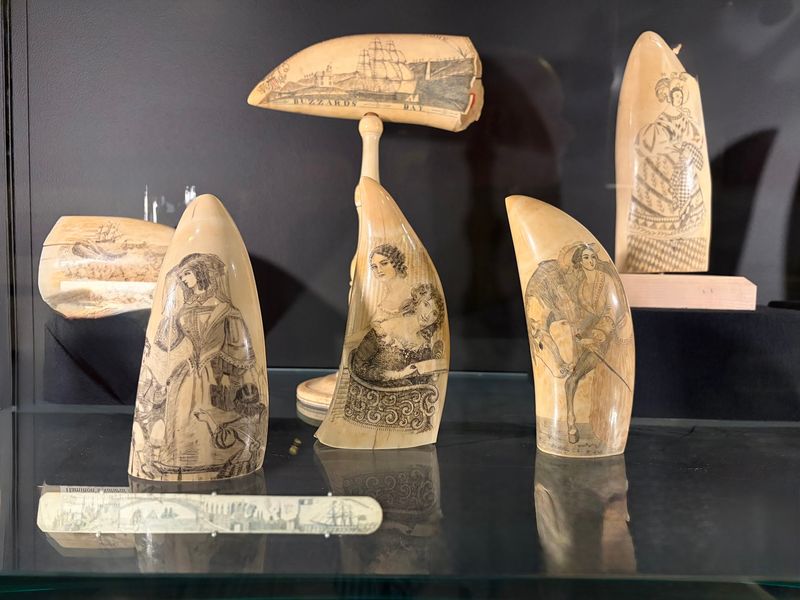
Sailors had long stretches of free time between whale sightings. Many filled those hours carving pictures into whale teeth and bone, an art called scrimshaw.
The New Bedford Whaling Museum holds the world’s largest scrimshaw collection. It includes more than 3,000 pieces.
That’s a lot of patient handiwork.
Some carvings show ships, while others show people and sea scenes. The detail is often tiny and impressive.
Kids may need to press their noses close to the glass.
Here’s a good tip for families. Ask each child to pick a favorite piece and explain why.
It turns a quiet gallery into a mini treasure hunt.
Scrimshaw also opens up good conversations. Sailors made these items by hand, often as gifts for family back home.
That personal touch helps kids connect with people from long ago.
I find it charming that something so small can feel so big. Next to an 89-foot ship, these carvings could seem easy to skip.
Don’t skip them. They show the creative side of life at sea, and that side deserves a moment.
Thousands Of Logbooks Prove Sailors Kept Great Notes
Homework complaints might fade a little after this stop. The museum holds 2,500 whaling ship logbooks, written by crews who tracked their voyages day by day.
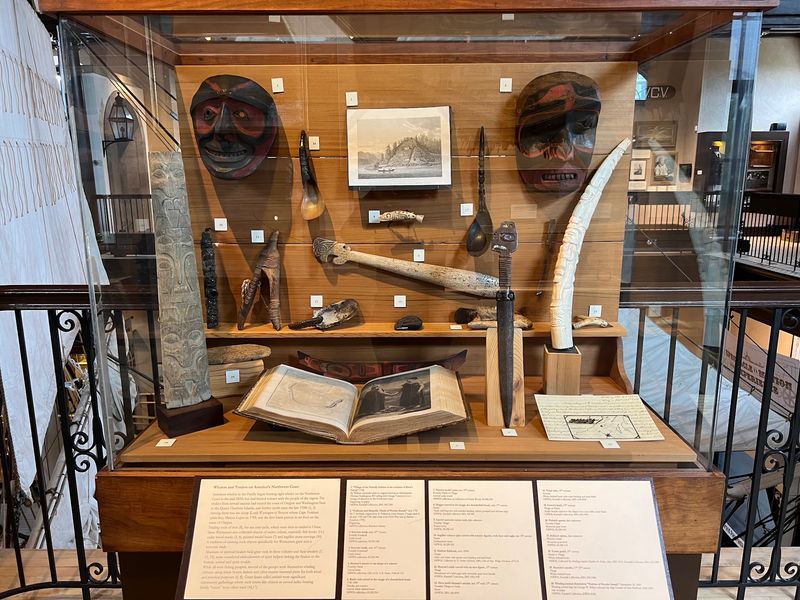
These records sit alongside the largest collection of whaling artifacts anywhere. Add in ship models and maritime art, and the halls feel packed with stories.
The collection grew a lot in 2001. That year, the museum merged with the Kendall Whaling Museum.
The merger doubled the size of its holdings.
Paintings show ships tossed on waves and busy harbors. Ship models range from simple to wildly detailed.
Kids who loved the Lagoda will spot familiar shapes everywhere.
Logbooks make a fun talking point for students. Sailors recorded weather, locations, and daily events.
It’s basically a very salty diary.
I like pointing out that these pages came from real voyages. Real hands wrote them on real ships.
That connection makes history feel personal instead of distant.
Encourage older kids to imagine what they’d write in their own log. A single sentence about their museum day could become a keepsake worth saving.
Climate, Energy, And Community Exhibits Make Kids Think Big
History is only part of the picture here. Several permanent exhibitions connect the past to the world kids live in today.
One highlight is Exploring Our Ecosystem: Climate Change, Whales, and Us. It looks at how whales and people share the same oceans.
Curious kids will have plenty of questions afterward.
Energy and Enterprise explains how whale oil powered homes and businesses. New Bedford was once called the city that lit the world.
That nickname makes more sense once you see this gallery.
Harboring Hope is another permanent exhibition worth adding to your route. Each space brings a different angle to the city’s story.
Special exhibitions rotate through too. Boundless: The Book as Art runs from October 2026 to February 2027.
The State of Water: Our Most Valuable Resource runs from November 2026 to March 2027.
New Ecologies: May Babcock is scheduled from November 2026 to April 2027. Check what’s showing before you go.
I believe these galleries help older kids see why whales still matter. The ship model grabs their attention, and these rooms give them something to think about.
Daily Tours Make Family Visits Easier
Good news for families who like to take their time. The New Bedford Whaling Museum recommends allowing at least 1.5 to 2 hours to explore its galleries.
That gives you time to enjoy the highlights without rushing. Kids can see the Lagoda on one part of the visit and save the scrimshaw galleries for later.
The museum is open daily from 9 AM to 5 PM. It closes on Thanksgiving Day, Christmas Day, and New Year’s Day.
Plan around those dates if you’re traveling for the holidays.
Daily highlights tours depart at 11 AM and 2 PM. These guided tours last about 45 to 60 minutes and are included with admission.
They’re a smart pick if you’re unsure where to start.
Accessibility is covered too. All three floors are accessible to visitors using mobility devices and strollers, with elevators and wheelchair-accessible restrooms.
Note that reaching the upper deck of the Lagoda requires climbing seven steps.
Here’s a practical idea for families. Pick two or three must-see spots and treat everything else as a bonus.
Kids stay happier when the list feels short. Nobody wants a meltdown under a blue whale skeleton, especially the blue whale.
Pack A Lunch And Eat With A Harbor View
Snack emergencies happen on every family outing. Luckily, the museum lets visitors bring their own food to enjoy in the Harbor View Gallery.
That’s a big win for parents. Packed lunches keep costs down and picky eaters happy.
Plus, you skip the hunt for a table outside.
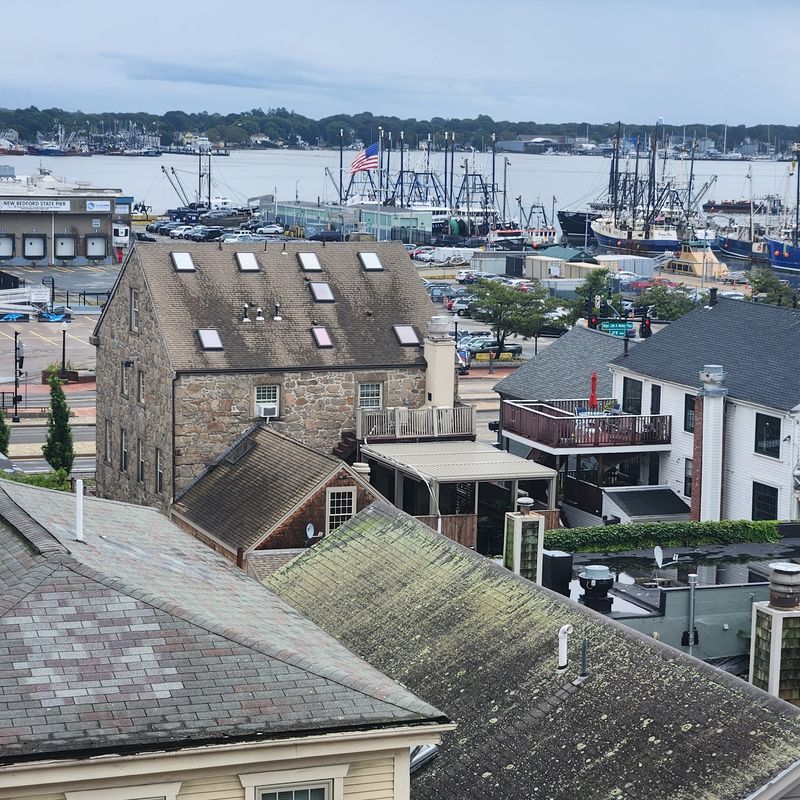
The name gives away the best feature. You can eat while looking toward the harbor that made this city famous.
It’s a nice reset between galleries.
I like how this connects the visit to the real world. After seeing the Lagoda, kids can glance at the water where whaling ships once sailed.
The story suddenly feels much closer.
Pack easy foods that won’t make a mess. Sandwiches, fruit, and crackers work well.
Bring a small bag for trash so cleanup stays quick.
A lunch break is also a good time to quiz the crew. Ask what they liked best so far.
Their answers might help you decide where to head next.
Refueled kids explore better. A full stomach turns grumpy sailors back into eager captains ready for the afternoon.
Johnny Cake Hill Sits Right In The Middle Of History
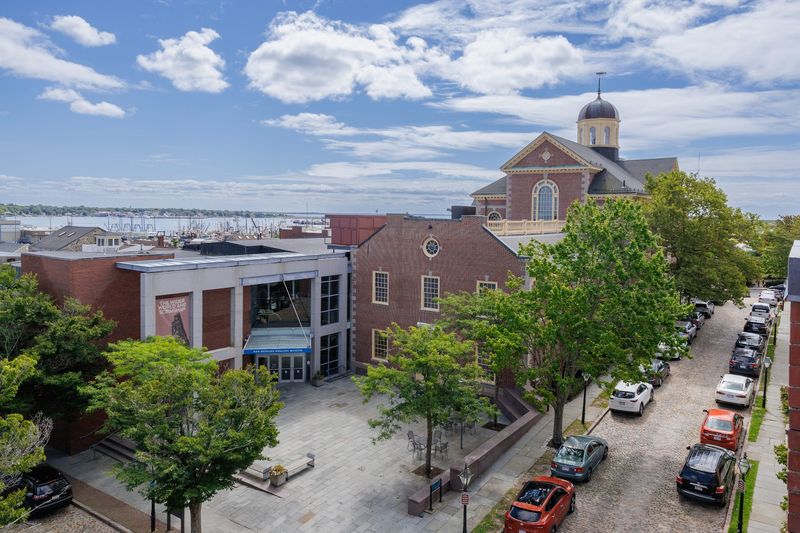
Few museums get a street name this fun. You’ll find the New Bedford Whaling Museum at 18 Johnny Cake Hill, New Bedford, MA 02740.
The museum sits inside the New Bedford Whaling National Historical Park. In the 19th century, this Massachusetts city was known as the whaling capital of the world.
The neighborhood still carries that story.
The museum’s roots run deep too. It was founded in 1903 as part of the Old Dartmouth Historical Society.
That’s a long time to keep the Lagoda company.
Big changes are on the way. A new 20,500-square-foot Welcome and Exhibition Center is under construction.
It’s expected to wrap up in late 2026 or 2027.
The project includes a 6,000-square-foot gallery for national-level exhibits in art, history, and science. That gives families another reason to come back later.
I can’t think of a better day trip in Massachusetts for kids who love boats. Bring comfortable shoes and a curious crew.
Then let them climb aboard that giant ship and steer toward their own adventure.