
Massachusetts has over 1,500 miles of coastline, and while the beaches here are famous for their beauty above the waterline, what lies beneath the surface is a story most visitors never get to see.
From the rocky coves of Cape Ann to the sheltered shores of Cape Cod and the islands, the underwater world along the Massachusetts coast is teeming with life that rewards those willing to look.
Kelp forests sway in the current, harbor seals glide past curious snorkelers, and rocky reefs are home to colorful fish, lobsters, and a surprising variety of marine creatures.
The changing tides, currents, and seasons mean that no two visits to the same location are ever quite the same, making repeat exploration genuinely worthwhile.
These twelve locations represent the most rewarding places to put on a mask and discover the side of the Massachusetts coast that most people walk right past.
1. Race Point Beach – Provincetown, Barnstable County
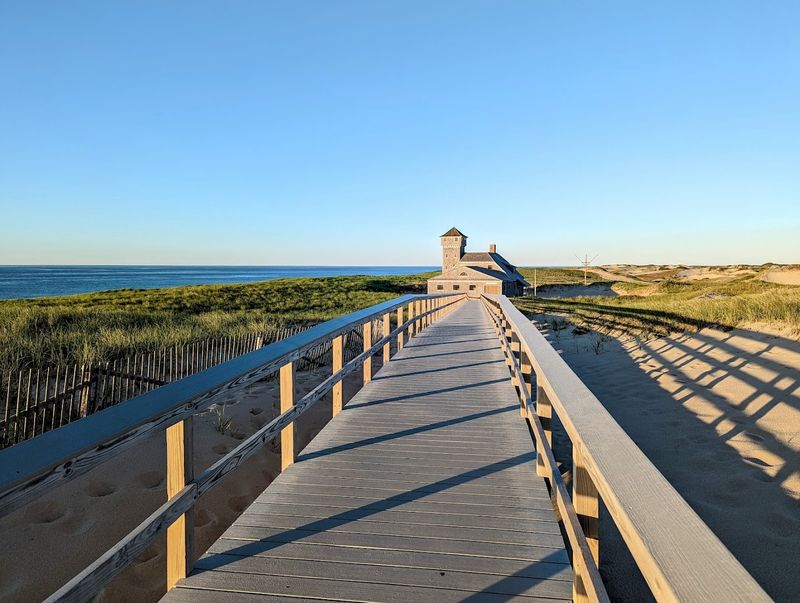
Cold, bright water and powerful Atlantic light give this outer Cape shoreline a wilder personality than most people expect.
When conditions settle, you can drift above sand ripples, isolated rock patches, and occasional schools of baitfish moving like silver confetti.
That contrast between open ocean energy and brief underwater calm is what makes Race Point Beach in Provincetown so memorable for adventurous snorkelers.
You are not coming here for tropical visibility, and that is exactly the point.
The appeal is the chance to see a raw Massachusetts seascape from water level, where changing tides reshape the bottom and seals sometimes appear in the distance.
On clear summer days, the shallows can reveal crabs, shell fragments, and surprising color in the coarse sand and seaweed.
Because currents and surf can build quickly, this spot rewards careful planning more than casual spontaneity.
Early mornings after calmer weather usually offer the best chance for safer entry and better visibility.
Bring fins, thermal protection, and realistic expectations, and you may discover one of the Cape’s most dramatic underwater moods.
Few Massachusetts beaches make you feel the scale of the Atlantic this directly while still offering moments of close-up marine detail.
2. Wingaersheek Beach – Gloucester, Essex County
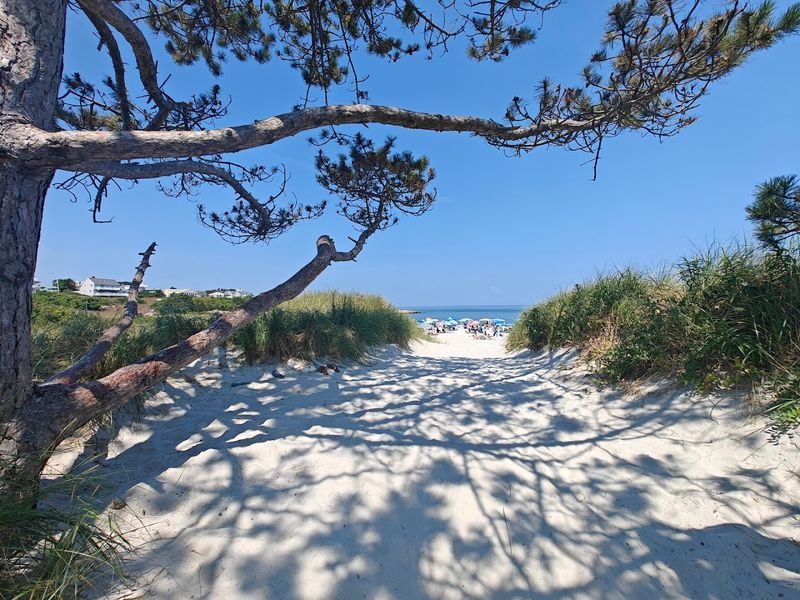
Shallow water, broad tidal flats, and a gentler rhythm make this beach feel especially welcoming when you want an easier snorkel session.
At high clarity, sunlight reaches the sandy bottom and turns ordinary ripples, shells, and sea grass into something quietly beautiful.
That approachable underwater setting is a big reason Wingaersheek Beach in Gloucester stands out along the North Shore.
You can ease in gradually here, which matters if you are still learning how to move comfortably with a mask and fins.
Near the granite outcrops and along the edges of exposed rocks, small fish, crabs, and drifting seaweed create enough activity to keep your attention.
The environment is subtle rather than dramatic, but that subtlety is exactly what makes it rewarding for patient observers.
Tides shape everything at this beach, so timing your visit can change the experience completely.
Too low, and you may spend more time walking than floating, but a rising or higher tide often improves access and reveals more life around the rocks.
Calmer mornings usually help with visibility, especially before wind and crowds stir up the shallows.
The surrounding estuarine feel gives you a softer version of coastal Massachusetts, where details matter more than big spectacle.
3. Lobster Cove – Manchester-by-the-Sea, Essex County
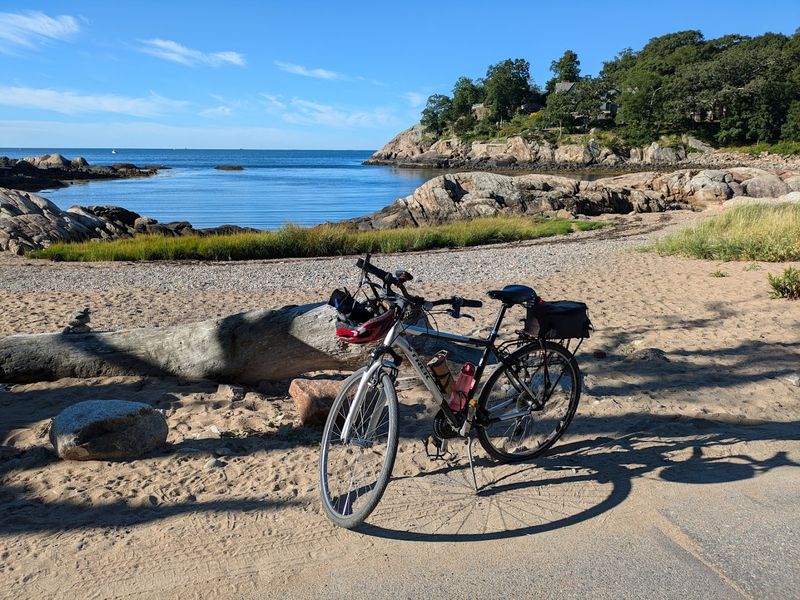
Sheltered coves often hold the kind of underwater calm that turns a simple swim into a genuine coastal discovery.
Here, granite edges, seaweed, and protected water create a setting where you can slow down and actually study what is moving below you.
That is the quiet magic of Lobster Cove in Manchester-by-the-Sea.
You will likely notice the difference immediately compared with more exposed beaches.
Instead of fighting surf, you can focus on rock formations, tiny fish weaving through shadowed crevices, and crabs navigating the bottom with surprising confidence.
The cove’s shape can help with visibility when weather cooperates, making it especially appealing for careful, observational snorkeling.
This is the kind of place where patience pays off more than distance covered.
Move gently, stay near the calmer edges, and you may spot sea stars, mussel clusters, and waving marine plants that turn the stones into miniature habitats.
Because footing can be uneven, water shoes and a conservative entry are smart choices.
It offers a strong reminder that Massachusetts snorkeling is not only about sweeping beaches, but also about protected pockets where life gathers around rock and structure.
4. White Horse Beach – Plymouth, Plymouth County
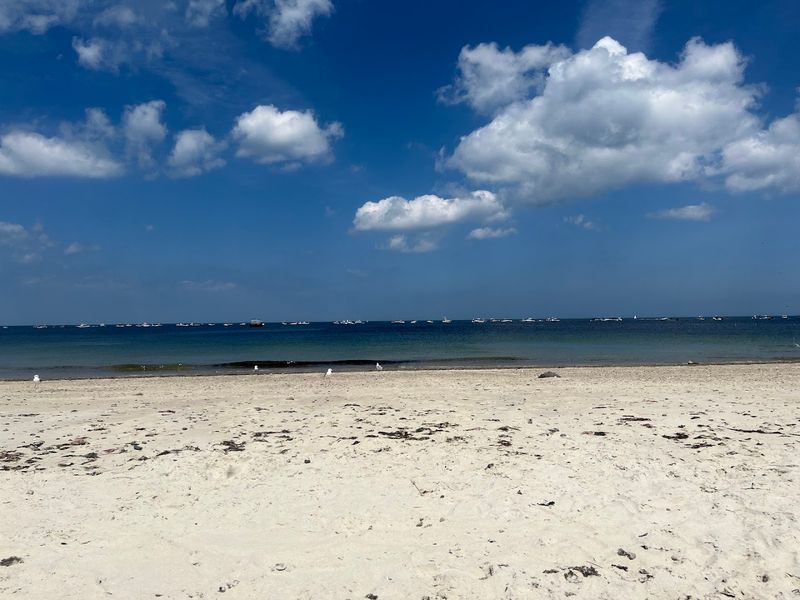
Long stretches of sand do not always scream snorkeling, yet this shoreline has enough variation to reward a careful look.
Near rockier pockets and jettied areas, the underwater scene becomes more interesting, with structure breaking up the otherwise simple bottom.
That is where White Horse Beach in Plymouth starts to reveal a different personality.
You are likely to notice shells, baitfish, seaweed strands, and changing sand patterns first.
These are modest details, but together they create an experience that feels surprisingly immersive when the water settles and light reaches the bottom.
It is a useful reminder that snorkeling in Massachusetts often depends on patience and timing more than dramatic reefs.
Because this beach faces open water, conditions can swing with wind and swell.
Calmer mornings after stable weather offer the best shot at visibility, while rougher days are better reserved for walking the shore instead.
Staying close to your entry point is a smart move, especially if currents or chop begin to build.
I would place White Horse Beach on the list for snorkelers who enjoy discovering potential in places that seem ordinary at first glance.
The payoff comes from seeing a familiar South Shore beach from inches above the bottom, where subtle marine movement changes the whole mood.
5. Nahant Beach – Nahant, Essex County

Just beyond the familiar stretch of sand, the water here can reveal a more textured world than casual beachgoers ever notice.
Rocky sections near the edges break up the otherwise open shoreline and create better habitat for the small marine life snorkelers hope to find.
That mix of convenience and surprising underwater texture makes Nahant Beach in Nahant worth a closer look.
You are close to Boston, yet once your face is in the water, the city feels much farther away.
On calmer days, visibility can be decent enough to spot crabs, baitfish, seaweed-covered stones, and the subtle contours where sand meets rock.
It is not a cove with guaranteed stillness, but it offers a satisfying urban-coast compromise for swimmers who choose conditions carefully.
This is a place where wind direction matters, because exposed beaches can change mood quickly.
If surf is active, snorkeling becomes less appealing, but gentler mornings can produce cleaner water and easier entries near the less disturbed sections.
Thermal gear helps, since even bright summer sunshine does not erase the chill beneath the surface.
The payoff is seeing how a beach known for broad public access also hides pockets of marine detail right along Greater Boston’s edge.
6. Good Harbor Beach – Gloucester, Essex County
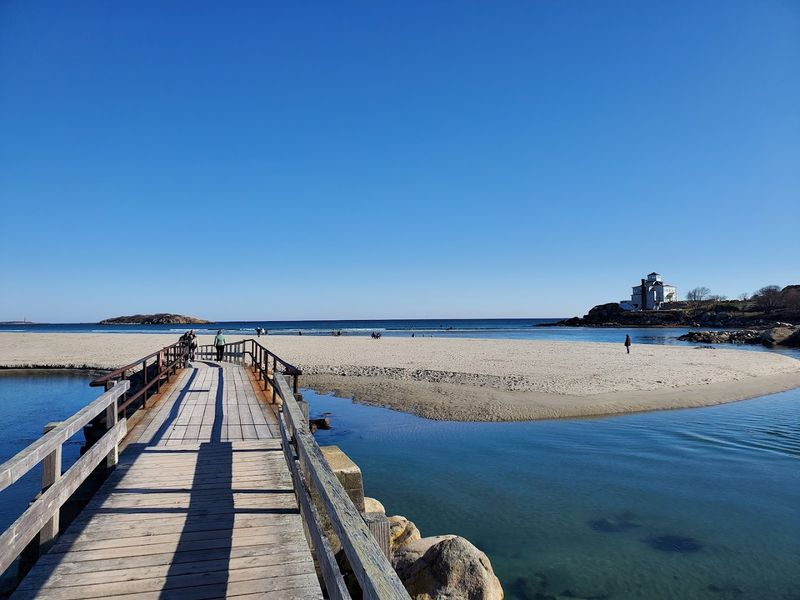
Wide sand and postcard beauty tend to define this beach from shore, but the edges tell a more interesting story underwater.
Where rock interrupts the soft bottom, you can find more life, more texture, and a better reason to keep your mask on longer.
That is why Good Harbor Beach in Gloucester deserves attention from snorkelers, not just sunbathers.
You will want to think beyond the busiest central swimming area.
The calmer margins and rocky sections can reveal crabs, small fish, seaweed, and occasional eelgrass, especially when morning light improves contrast across the bottom.
It is still a popular public beach, so choosing an early window makes a real difference in both visibility and atmosphere.
Tides matter here, particularly if you hope to combine easy access with enough depth to float comfortably.
A moderate to rising tide often makes the experience smoother, while wind can quickly flatten visibility if it pushes chop into the shallows.
Keep expectations grounded, and you will appreciate the beach for its subtle marine scenes rather than dramatic underwater spectacle.
I like Good Harbor because it proves a beloved family beach can still offer a fresh perspective.
Once you slip into the water, the familiar shoreline becomes a quieter ecosystem shaped by rock, tide, and movement.
7. Plum Cove – Gloucester, Essex County
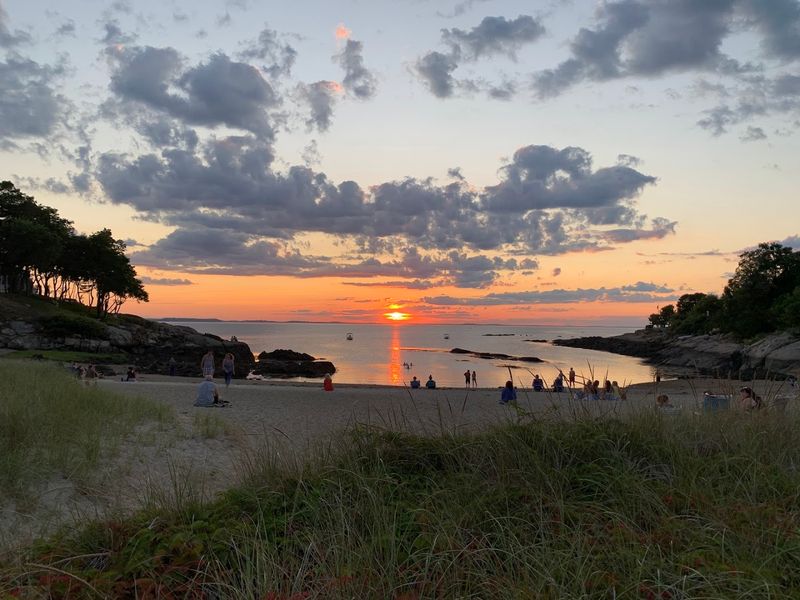
A smaller cove can sometimes reveal more than a famous beach, especially when rocks, ledges, and calmer water come together.
This tucked-away shoreline has a more local, observant feel, the kind of place where you notice bottom changes and marine life in layers.
That understated appeal is what makes Plum Cove in Gloucester such a rewarding snorkel stop.
You are more likely to find interest here in the details than in wide-open swimming.
Along the rocky margins, fish slip between weeds, shells collect in pockets, and shifting light turns the cove floor into a patchwork of greens and browns.
On a clear day, those close-up textures can be more memorable than any long offshore view.
Because the beach is compact, conditions are easier to assess before you commit to entering.
If the water looks stirred up or surge is bouncing off the rocks, it is better saved for another day, but calm mornings can be excellent.
Bring fins for efficient movement and keep your route simple, staying close to accessible exits.
It captures the North Shore’s quieter side, where granite, tide, and marine growth create an underwater scene that feels distinctly New England.
For snorkelers who enjoy structure, intimacy, and a little local character, this Gloucester cove belongs on the itinerary.
8. Nobska Beach – Falmouth, Barnstable County
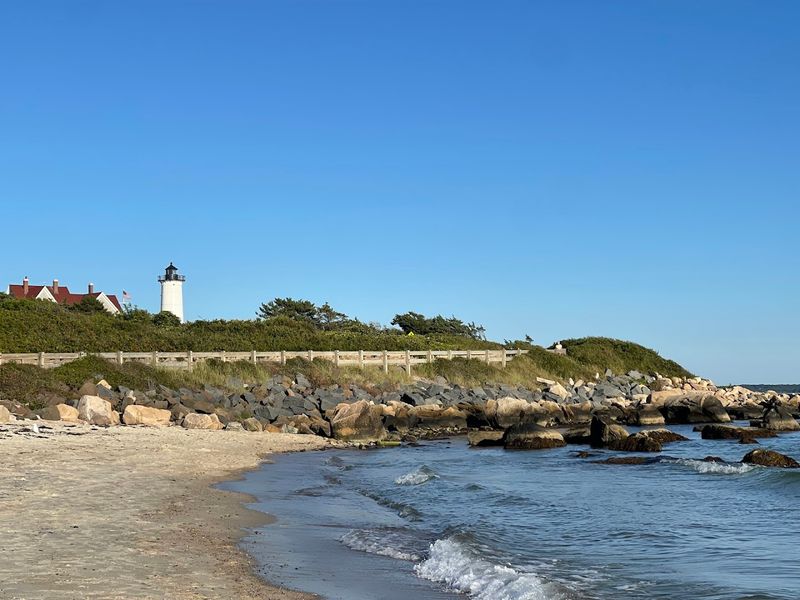
Strong views and moving water give this Cape Cod spot a dramatic feel before you even step in.
Once submerged along the right sections, you can trade lighthouse scenery for rock, weed, and fish activity that feels surprisingly rich for a small beach.
That balance makes Nobska Beach in Falmouth one of the more intriguing snorkeling options in the region.
You are snorkeling in a place influenced by current, boat traffic farther out, and the busy energy of Vineyard Sound.
That means conditions matter more than at a sheltered pond, but on clear, calm days the rocky bottom can reveal crabs, small schooling fish, and marine growth clinging to stone.
The underwater terrain has enough variation to keep a short session genuinely engaging.
Because of currents, this is not a place to be casual about safety.
I would stay close to shore, avoid crowded boating periods, and choose a time when wind is light and the water surface looks manageable.
With those precautions, the beach offers a vivid look at saltwater life framed by one of the Cape’s classic coastal backdrops.
Nobska is unmistakably Massachusetts, where maritime history, strong tidal character, and close-up marine detail all share the same compact shoreline.
9. Singing Beach – Manchester, Essex County
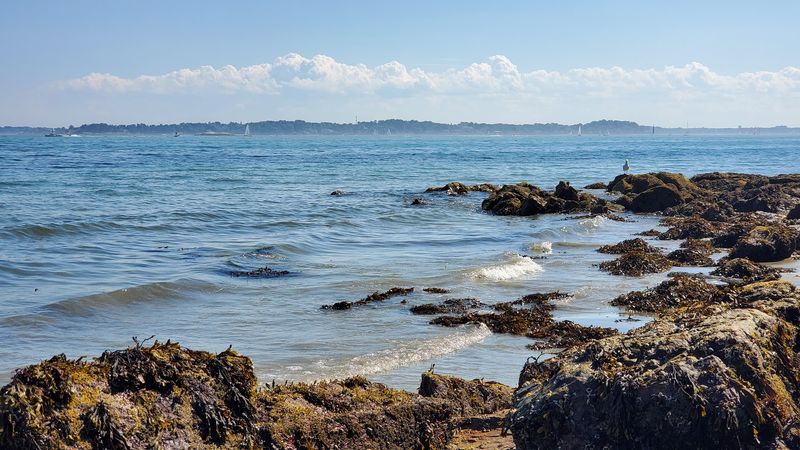
Soft sand and graceful shoreline views make this beach famous from land, but its quieter snorkeling value sits closer to the margins.
Where the beach meets rock, the underwater world gains texture, and that is where a curious swimmer can find the most interest.
This is how Singing Beach in Manchester reveals another layer of its charm.
You should not expect nonstop marine spectacle in the central sandy stretch.
Instead, look toward calmer rocky edges where fish shelter, seaweed sways, and stones create pockets of habitat that are easy to overlook from shore.
On bright mornings, the contrast between pale sand and darker rock can make those small scenes feel especially vivid.
Because the beach is exposed, gentle weather is your friend.
A day with little wind can bring cleaner water and easier entries, while afternoon chop may flatten visibility and reduce the appeal.
Keeping your route short and staying attentive to swimmers around you will make the experience smoother.
I like Singing Beach for travelers who want a classic North Shore setting without giving up the chance to explore underwater.
If your idea of success is finding hidden life at the edge of a beloved beach, this Manchester favorite absolutely deserves a stop.
10. East Chop – Oak Bluffs, Dukes County
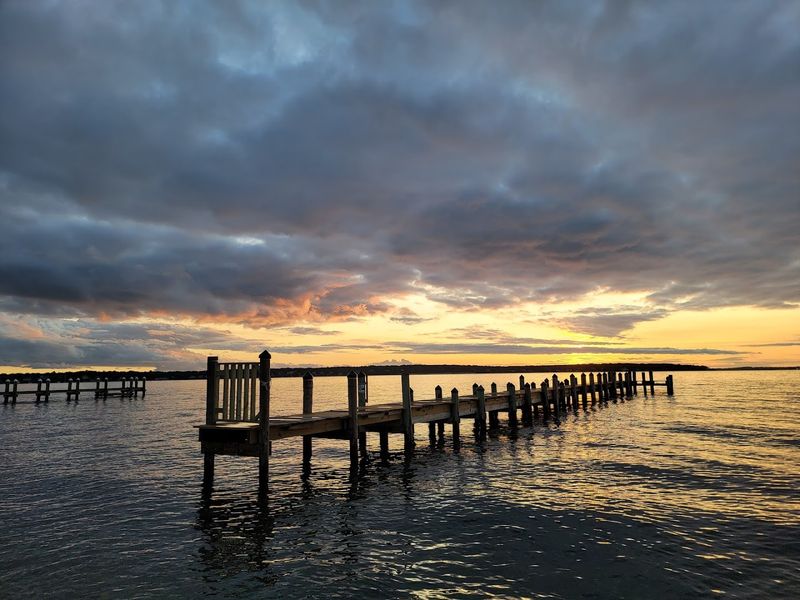
Island water often carries a different mood, and this shoreline brings a mix of exposure, color, and coastal character that feels distinct from the mainland.
When conditions settle, the rocky sections can offer an absorbing snorkel with more structure than many sandy Vineyard beaches.
That is why East Chop in Oak Bluffs on Martha’s Vineyard stands out.
You are coming here for a sense of discovery as much as marine life.
Below the surface, stones, weeds, and pockets of fish create a simple but engaging underwater landscape, while above water the island setting adds a scenic backdrop few mainland spots can match.
It feels intimate and expansive at the same time, which is not easy to find.
This area can be affected by wind and open-water motion, so flexibility is important.
Calmer mornings are usually your best chance for visibility, and shorter exploratory swims are wiser than pushing too far along unfamiliar shoreline.
Water shoes and a careful entry help, especially where footing is uneven near rocks.
I would recommend East Chop to snorkelers who appreciate place as much as pure underwater productivity.
The reward is seeing Martha’s Vineyard from a less photographed angle, with the island’s coastal texture unfolding just beneath the surface.
11. Revere Beach – Revere, Suffolk County

An urban beach is not the first place most people imagine for snorkeling, which is exactly why this one can surprise you.
The broad shoreline gets most of the attention, yet the more promising underwater interest appears near rockier edges where habitat improves.
That hidden potential gives Revere Beach in Revere a place in this conversation.
You are not chasing remote-wilderness vibes here.
Instead, the experience is about discovering marine detail beside one of the country’s oldest public beaches, where small fish, crabs, shells, and weed-covered stones can turn a city outing into something more exploratory.
When the water is calm, that contrast feels refreshingly unexpected.
Because this is a heavily used beach, timing matters even more than usual.
Early mornings offer fewer swimmers, cleaner surface conditions, and a better chance to focus on the edges rather than the busiest central areas.
As always, wind and wave action will decide whether the day is suitable for snorkeling at all.
I appreciate Revere Beach because it challenges the idea that underwater discovery only happens in secluded places.
Here, you can pair public transit accessibility and urban energy with a brief but worthwhile look at coastal life beneath the surface.
12. Long Beach – Rockport, Essex County
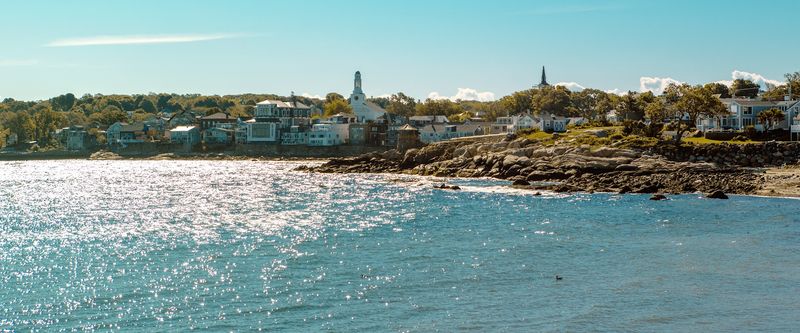
A long sandy beach can still hold snorkeling promise when rocky ends and variable bottom contours break up the monotony.
This North Shore stretch offers exactly that, with enough structure near its margins to reward a curious mask-and-fins session.
That is what makes Long Beach in Rockport a worthwhile final stop on this list.
You will probably get the most value by focusing away from the broadest central sand.
Near stone-lined edges and less disturbed corners, small fish, drifting algae, shells, and subtle bottom changes create a gentle underwater scene that feels more layered than expected.
It is not flashy, but it is deeply representative of Massachusetts coastal snorkeling at its best.
Conditions here can shift with wind, swell, and summer beach traffic, so flexibility matters.
A calm morning usually gives you the cleanest water and the easiest chance to study the shallows before waves start roughening the surface.
Staying near shore and keeping expectations tied to visibility rather than distance will improve the experience.
I like Long Beach because it blends scenic Rockport atmosphere with accessible, low-key exploration.
The reward is not a dramatic reef, but a patient look at how rock, tide, and Atlantic light shape a living shoreline just beneath your fins.