One of America’s most famous rocks split in half in 1774.
It stayed in two pieces for more than a century, until someone finally reunited it in 1880.
That’s the kind of story Massachusetts hides in plain sight, right next to a red fishing shack called one of the most photographed buildings in the country.
There’s even a secret staircase inside an old mansion, added during a renovation back in 1910.
I love that you don’t need a full week off to chase down stories like these.
A long weekend and a full tank can take you to the spot where a revolution began, then to a pond that inspired a famous book.
Short drives, big stories, and a few snack stops sound like my kind of plan for a break.
So which corner of the map is calling your name first?
The House Of The Seven Gables
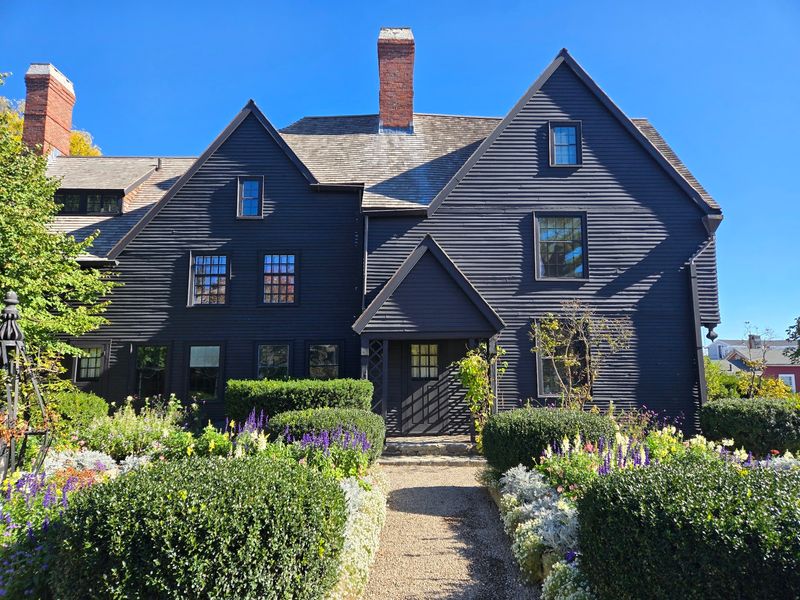
A secret staircase is a pretty great reason to plan a road trip. You’ll find one inside this dark wooden mansion in Salem, added during a 1910 renovation.
The house itself is much older than that staircase. It was built in 1668 for Captain John Turner I, a wealthy merchant and ship owner.
Today it’s known as the oldest surviving 17th-century wooden mansion in New England. Turner’s family kept it for three generations before it changed hands.
Book lovers, this is your moment. Nathaniel Hawthorne often visited his cousin Susanna Ingersoll here, and the home later inspired his 1851 novel of the same name.
The guided Mansion Tour lasts about 45 minutes and moves through nine historic rooms. Your ticket also covers the Nathaniel Hawthorne Birthplace, which you can explore at your own pace.
Got kids along for the ride? Kids’ Cove gives younger visitors their own space, and a 30-minute audio tour walks you around the grounds.
Don’t skip the seaside colonial revival gardens, which sit right near the water. The campus also holds other old homes moved to the site, including the Hooper-Hathaway House from around 1682.
Here’s a detail that makes your visit feel extra good. Admission supports free English and citizenship classes for immigrants through the site’s settlement association.
The museum is open daily from 10 A.M. to 5 P.M. Plan a few hours, then wander Salem’s streets for lunch afterward.
Address: 115 Derby Street, Salem, MA 01970
Bearskin Neck And Motif No. 1
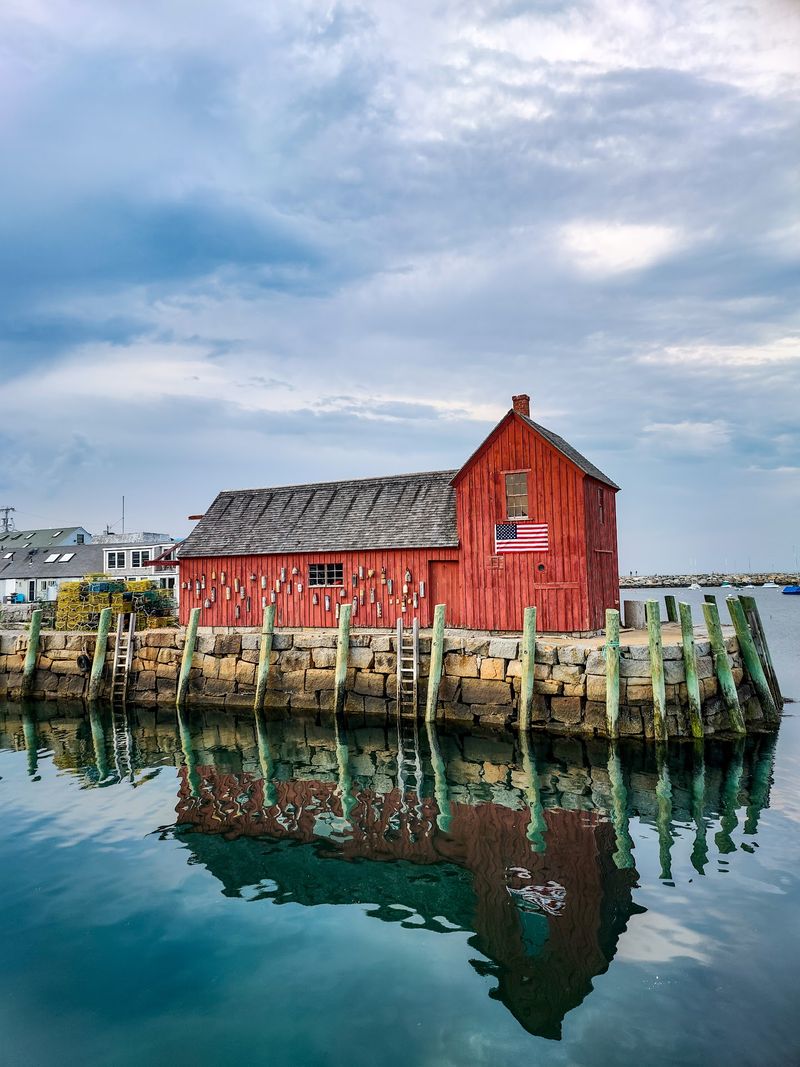
Artists have a favorite red shack, and it sits at the very tip of a tiny peninsula in Rockport. Motif No. 1 is often called one of the most photographed buildings in the country.
Fun twist: the shack you see today is a replica. The original fish house went up in 1884, and its fame never really faded.
Getting there means strolling Bearskin Neck, a narrow strip that pokes into Rockport Harbor. Nobody’s totally sure how it got its name, which makes it more fun.
One legend says early settlers hunted a bear here. Another says a resident named John Babson dried a bearskin on the rocks.
Long before the gift shops, this was a busy working dock. Fishing and granite kept it humming, and a fort stood here during the War of 1812.
Now the Neck is lined with small studios, restaurants, and shops worth poking around. Look for The Pewter Shop, Susie’s Stories Bookshop, and Rockport Candle Company.
Sweet tooth acting up? The Fudgery is right there, so you can grab a treat before heading back to the car.
Feeling a little more adventurous than shopping allows? Ocean kayaking launches from Tuna Wharf, just off Bearskin Neck, so you can see that famous shack from the water.
Bring your camera fully charged, because the harbor views make it hard to stop snapping. It’s an easy day trip, and an even better overnight with a slower morning.
Address: Bearskin Neck, Bradley Wharf, Rockport, MA 01966
Minute Man National Historical Park
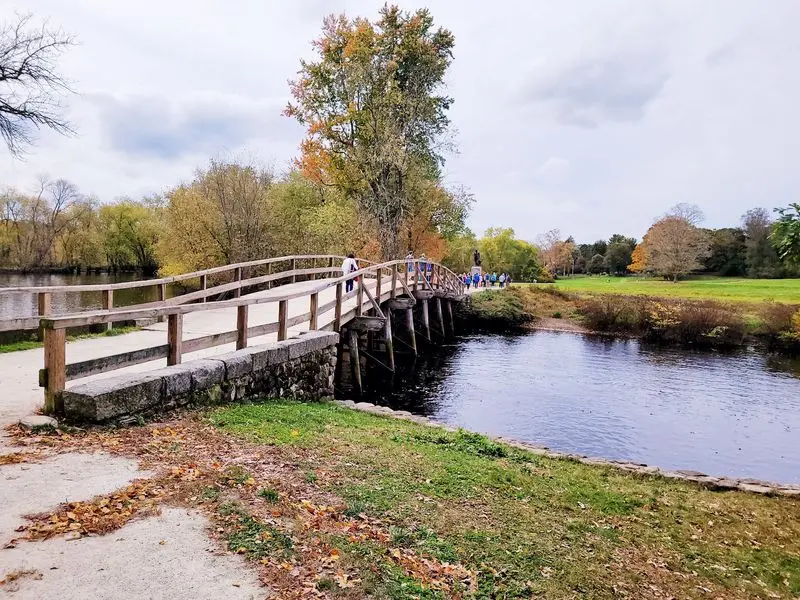
History class got a lot more exciting on April 19, 1775. That’s when the Battles of Lexington and Concord kicked off the American Revolution, and you can walk right through the story.
Better yet, it won’t cost you a dime to get in. The park’s grounds, trails, and parking areas open daily from sunrise to sunset, all year.
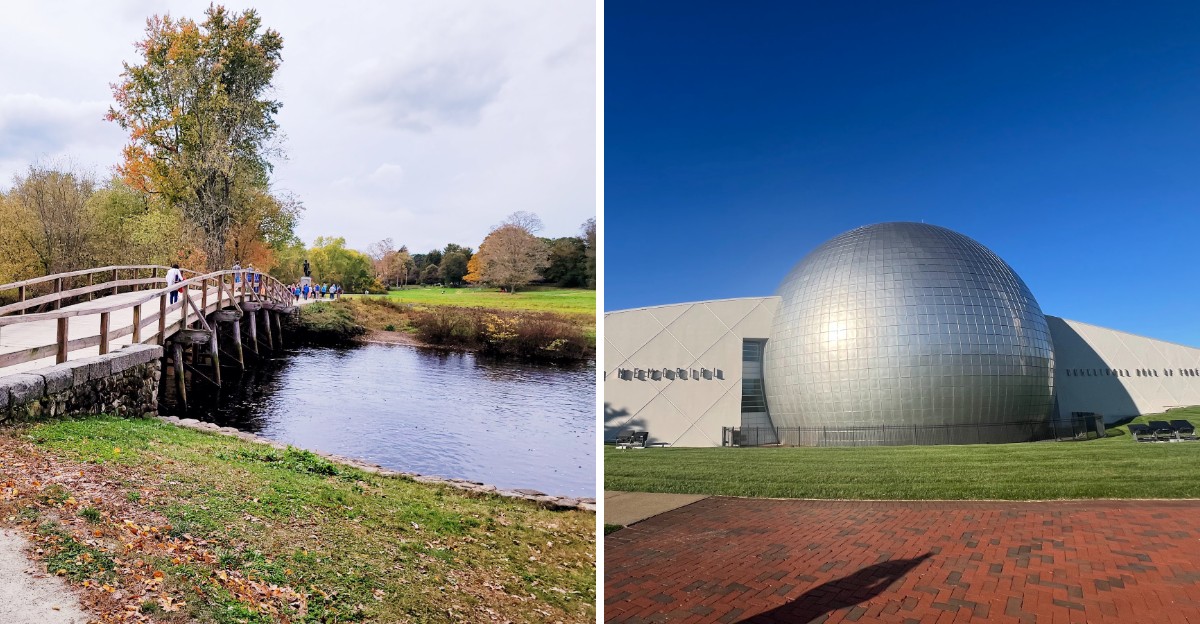
Start at Concord’s North Bridge, where the famous shot heard round the world rang out. Standing on that spot gives you a pretty big chill, even on a sunny day.
Got good walking shoes? The Battle Road Trail stretches about five miles through a restored colonial landscape.
As you walk, you’ll be retracing the route British soldiers took that day. It’s a much calmer stroll now, with fields and stone walls instead of musket fire.
Along the way, stop at Hartwell Tavern, a restored 18th-century building. Costumed park rangers bring the past to life there with living history programs.
Love books as much as battles? The Wayside: Home of Authors is part of the park, too.
That one house sheltered Nathaniel Hawthorne, Louisa May Alcott, and Margaret Sidney at different times. Three writers under one roof is quite a résumé for a home.
Pair this stop with nearby Walden Pond for a full Concord day. You’ll get revolution in the morning and quiet nature in the afternoon.
Address: North Bridge Visitor Center, 174 Liberty Street, Concord, MA 01742
Walden Pond State Reservation
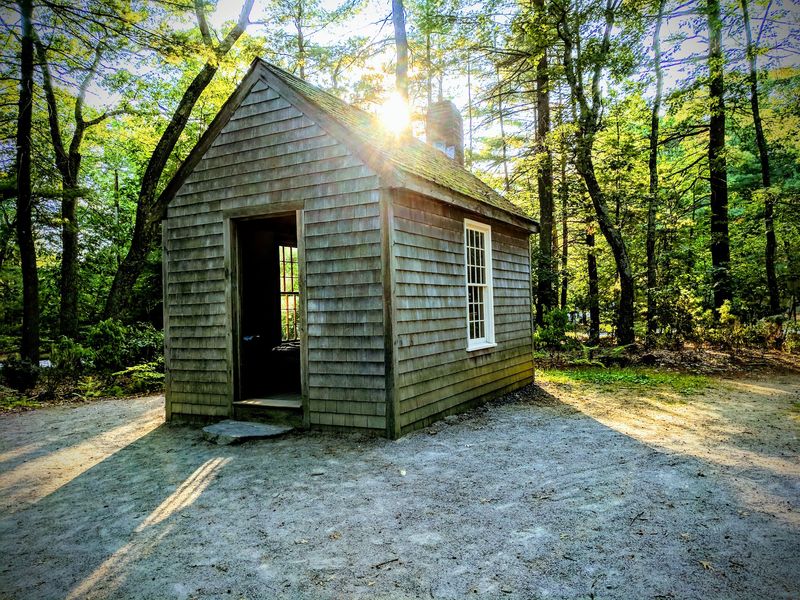
Glaciers dug this swimming hole about 10,000 to 12,000 years ago. As they melted, they left a kettle hole behind, and Walden Pond was born.
Of course, most people know it for one famous resident. Henry David Thoreau lived in a cabin on the shore from July 1845 to September 1847.
His time here led to his 1854 book about simple living in the woods. People still visit just to stand where he once sat and thought big thoughts.
You can step inside a replica of his single-room cabin near the parking area. Spoiler: it’s small, so don’t plan on a group photo indoors.
Want the real spot? Granite posts mark where his original cabin stood, a pleasant walk along the shore.
The reservation covers over 300 acres, so there’s plenty to do besides reading. Swimming, hiking, fishing, birdwatching, and paddling a non-motorized boat are all on the menu.
Pack a picnic and make an afternoon of it. A newer Visitor Center opened in 2016, and the park offers restrooms and electric vehicle charging stations.
Park hours usually run from 7 A.M. to 4:30 P.M., with the Visitor Center open 10 A.M. to 3 P.M. A daily parking fee applies all year, so plan ahead.
Thoreau came here to slow down, and honestly, you can too. Leave the phone in your pocket for an hour and see what happens.
Address: 915 Walden Street, Concord, MA 01742
Plymouth Rock
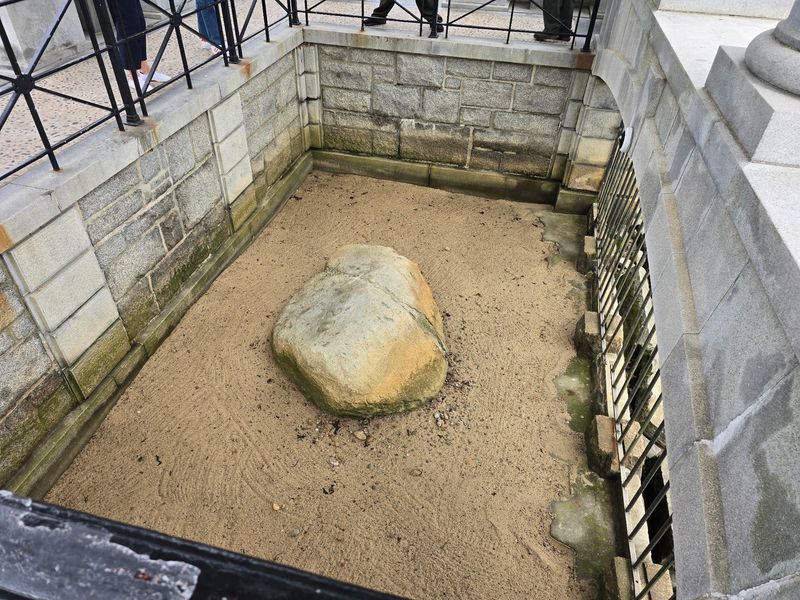
Here’s a rock with a seriously rough past. It cracked in half in 1774 during an attempt to move it, and the pieces weren’t reunited until 1880.
That same year, someone carved the date 1620 into its surface. You’ll spot those numbers clearly when you look down at it today.
Plymouth Rock is known as the traditional landing site of the Mayflower Pilgrims in December 1620. Here’s the surprise, though: the Pilgrims never mentioned it in their own writings.
The first recorded claim came in 1741 from a 94-year-old man named Thomas Faunce. Ever since then, this boulder has carried a lot of fame on its shoulders.
In 1920 and 1921, crews dug it out completely and moved it to its current spot on the shoreline. They also built the granite canopy, or portico, that shelters it now.
You view the rock from an upper platform inside that portico. Viewing is free and open to the public, which makes this an easy stop.
Curious about the backstory? Guides are available at Pilgrim Memorial State Park from April through November.
The rock was added to the National Register of Historic Places in 1970. It’s a quick visit, so pair it with the ship just a short walk away.
Address: Pilgrim Memorial State Park, Water Street and North Street, Plymouth, MA 02360
Mayflower II
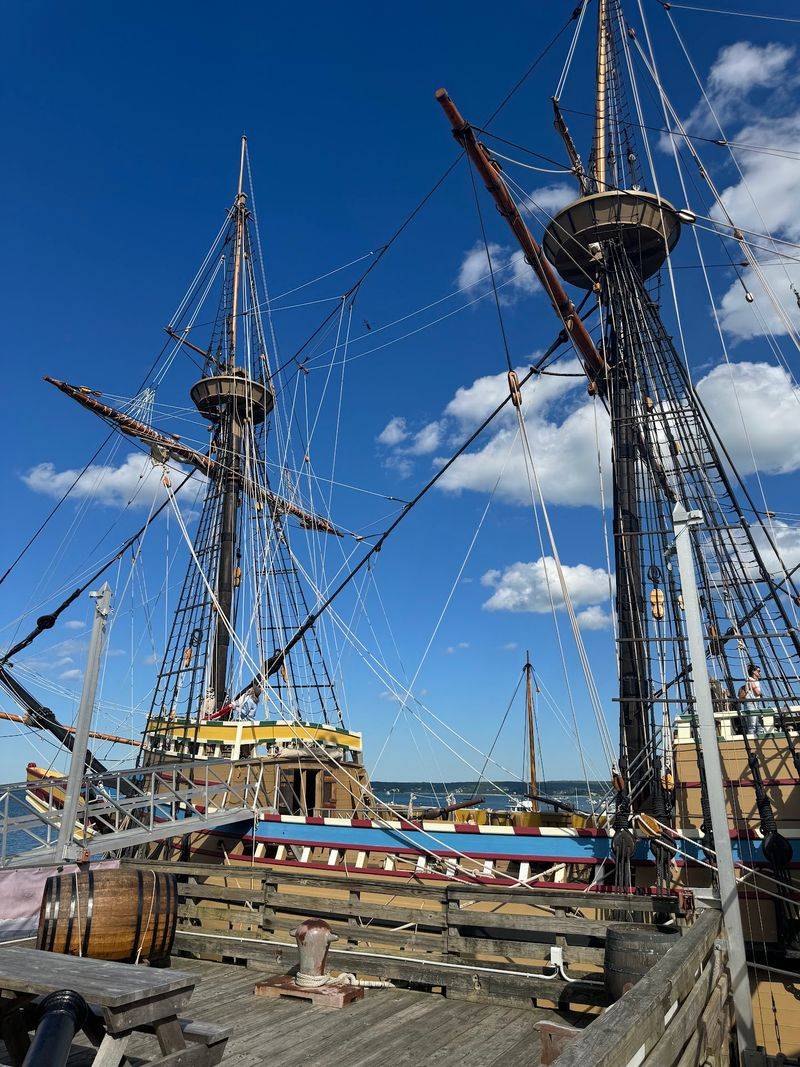
Sailing across the Atlantic in a wooden ship sounds wild today. In 1957, a crew did exactly that aboard Mayflower II, arriving in Plymouth, Massachusetts, on June 13.
The ship had started its voyage in Plymouth, England, to recreate the famous 1620 trip. Talk about committing to a history project.
Builders in Devon, England, put it together between 1955 and 1956. They used traditional shipbuilding methods to match the original as closely as they could.
Naval architect William A. Baker designed this full-scale reproduction.
Once you’re on board, you’ll quickly realize how tight life at sea must have felt.
The ship spent three years getting a major restoration at Mystic Seaport. It came home to Plymouth for good in 2020, just in time for the 400th anniversary of the Pilgrims’ arrival.
That same year, it landed on the National Register of Historic Places. Not bad for a ship that was once brand new in the 1950s.
Plimoth Patuxet Museums owns and operates the ship today. It works as a floating classroom, so kids and grown-ups both pick up something new.
Since it’s so close to Plymouth Rock, you can see both in one morning. Then grab lunch on the waterfront and watch the boats bob around.
Address: State Pier, Water Street, Plymouth, MA 02360
Cape Cod National Seashore
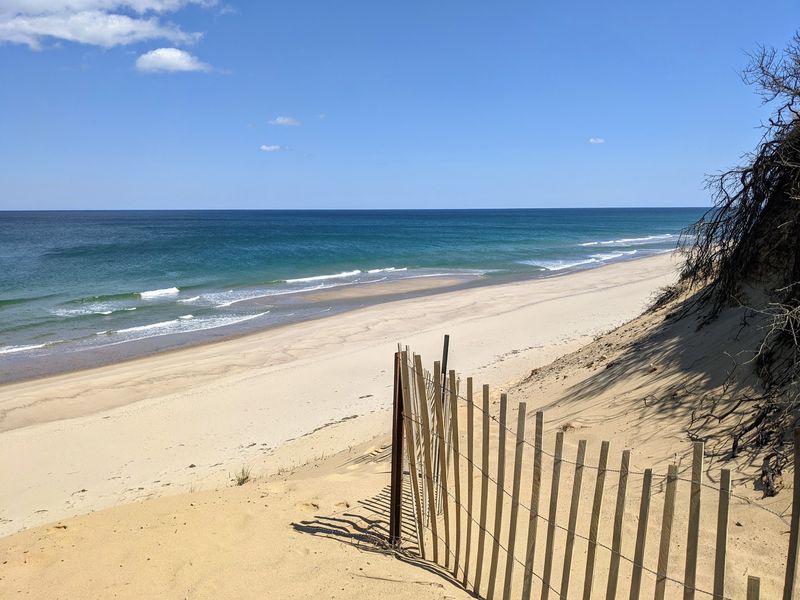
President John F. Kennedy signed off on protecting this coastline in 1961.
Thanks to that, you get 40 miles of sandy beaches, marshes, ponds, and uplands on the outer Cape.
The beaches and trails open daily from 6 A.M. to midnight, all year long. That leaves lots of room for sunrise walks or late beach strolls.
Not all beaches feel the same, so choose your mood. Herring Cove Beach is known for calm water, while Race Point Beach offers a big, open shoreline.
Prefer wheels over flip-flops? More than ten miles of paved multi-use trails welcome walkers, bikers, and skaters.
Hikers get over five miles of trails to explore, too. Keep an eye out for lighthouses and wild cranberry bogs along the way.
Start at the Salt Pond Visitor Center in Eastham, which stays open all year. The seasonal Province Lands Visitor Center in Provincetown also has exhibits, films, and a store.
History fans can check out the Old Harbor Life-Saving Station, which opens seasonally. It’s a neat peek at how people once protected sailors along this coast.
June through September is the busiest stretch, with facilities fully open and plenty of programs. Beach parking fees are cashless, so keep a card handy.
Want to stretch your trip? Several privately operated campgrounds are available in nearby towns, and falling asleep near the ocean sounds hard to beat.
Address: Salt Pond Visitor Center, 50 Nauset Road, Eastham, MA 02642
Old Sturbridge Village
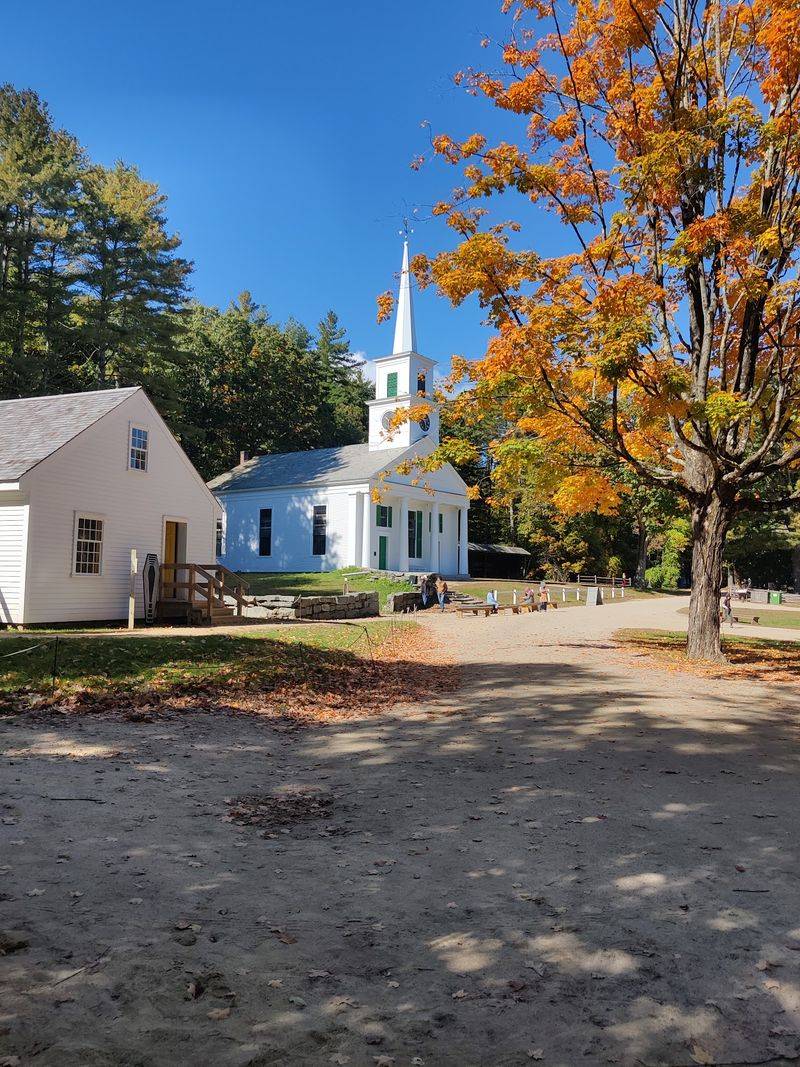
Time travel isn’t real, but this place comes close. Old Sturbridge Village recreates a rural New England town from the 1790s through the 1830s.
It’s the largest outdoor history museum in the Northeast. The village first opened its gates on June 8, 1946.
Spread across more than 200 acres, it holds over 40 historic buildings. Many were moved here from around New England, piece by piece.
You’ll wander past houses, working farms, meetinghouses, a district school, and a country store. Try not to get too attached to the one-room classroom.
Costumed interpreters show off crafts and farm work the old-fashioned way. You can watch potters, tinsmiths, coopers, and blacksmiths in action.
Here’s a cool detail for gear lovers. Three water-powered mills still run on a millpond dug back in 1795.
Want to try your hand at something? The Museum Education Center offers hands-on workshops with working hearths and a woodworking studio.
The Brewer Theater hosts lectures and performances, too. Behind the scenes, the collections include over 50,000 artifacts and 40,000 books and manuscripts.
The museum sits on the traditional land of the Nipmuc peoples. Give yourself most of a day here, because rushing through the 1800s feels wrong.
Address: 1 Old Sturbridge Village Road, Sturbridge, MA 01566
Norman Rockwell Museum
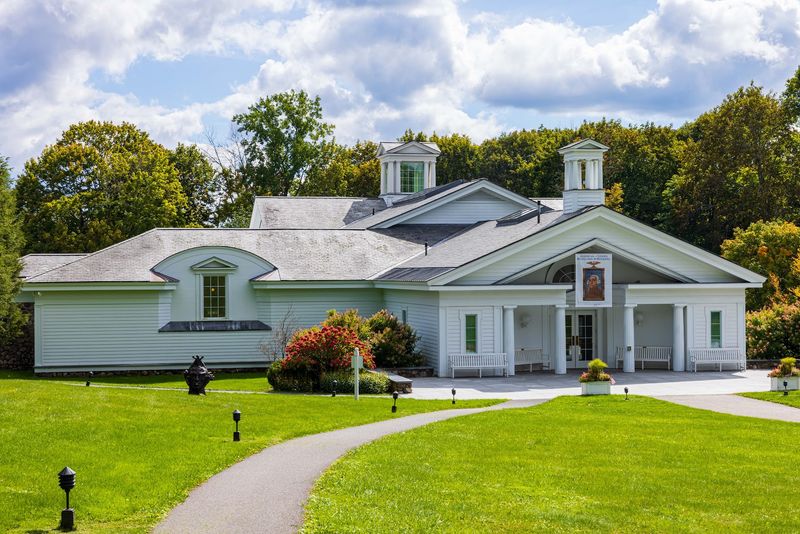
Nearly a thousand original works by one artist live on a single hillside. The Norman Rockwell Museum holds the world’s largest collection of original Rockwell art, including 998 paintings and drawings.
Norman and Molly Rockwell helped found the museum in 1969. Rockwell spent the last 25 years of his life right here in Stockbridge.
The 36-acre campus overlooks the Housatonic River Valley, which makes the drive feel like a bonus. Ten galleries share Rockwell’s work alongside changing exhibitions.
Want to see where the magic happened? His final Stockbridge studio was moved onto the grounds in 1986.
It’s set up to look like an active studio from around October 1960. Peeking inside feels a bit like the artist just stepped out for a coffee.
Research buffs will love the archives, too. They hold over 100,000 photographs, letters, and working materials.
The museum earned the National Humanities Medal in 2008. That’s a pretty big gold star for a museum about illustration.
Plan around the schedule, because it closes on Wednesdays. Otherwise, doors open 10 A.M. to 5 P.M., except on Thanksgiving, Christmas, and New Year’s Day.
Parking is free, and the museum is wheelchair accessible. Fall in the Berkshires makes this road trip extra pretty.
Address: 9 Glendale Road, Route 183, Stockbridge, MA 01262
Historic Deerfield
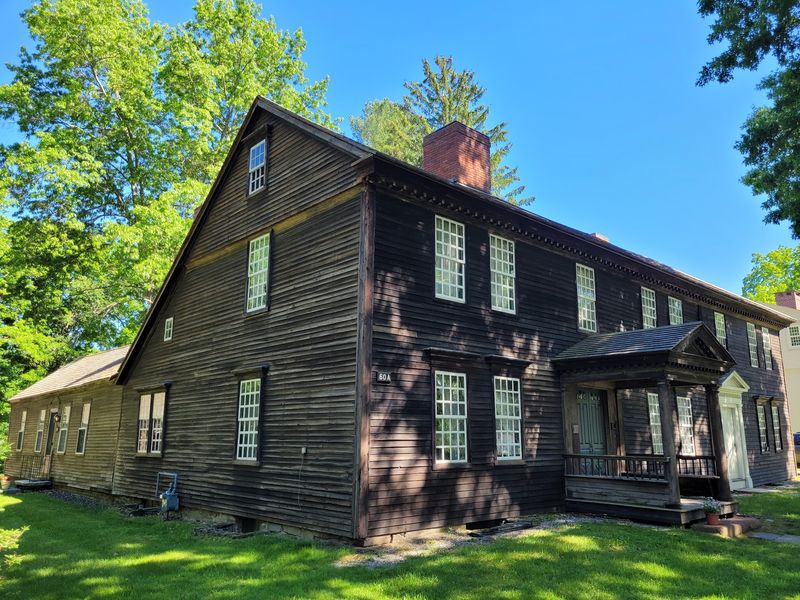
Some towns sprawl, but this one stuck to its 1671 game plan. Historic Deerfield sits along a mile-long street laid out that year, and it still keeps its original scale and town plan.
Working farms and cornfields surround the village along the Deerfield River. It’s a quieter, slower kind of road trip stop.
Henry Flynt and his wife founded the museum in 1952 to protect the area’s heritage. Their work means you can stroll the street and see old homes right where they first stood.
The village includes more than 50 buildings. Twelve historic houses, built between 1730 and 1850, regularly open for guided and self-guided tours.
Most of those houses still sit on their original homesites. That’s rare, and it gives the whole street a real sense of place.
Don’t skip the Flynt Center of Early New England Life. It works as the exhibition building for the museum’s huge collection.
About 28,000 household artifacts live here, dating from 1650 to 1850. Think furniture, metalwares, textiles, needlework, and ceramics.
If you love old quilts or fancy teapots, budget extra time. The details are small, but they tell big stories about everyday life.
The museum opens daily from 9:30 A.M. to 4:30 P.M. Pair it with a drive through western Massachusetts farm country for a relaxed weekend.
Address: 80 Old Main Street, Deerfield, MA 01342
Naismith Memorial Basketball Hall Of Fame
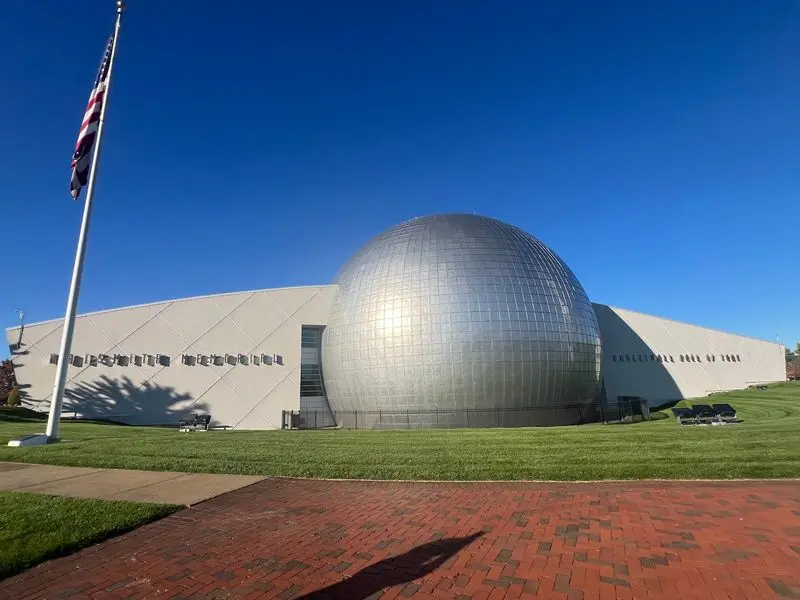
A peach basket and a gym class started a global game in Springfield. James Naismith, a Canadian-American physician, invented basketball in this very city.
So of course the sport’s hall of fame lives here. The organization formed in 1959 and opened its first building on February 17, 1968.
Today it honors more than 450 inductees. You’ll find over 40,000 square feet packed with basketball history.
This isn’t a quiet look-don’t-touch museum, either. Hundreds of interactive exhibits let you test your skills with challenges and shooting contests.
Head to the Jerry Colangelo Court of Dreams to see how your game holds up. Wear comfy shoes, because you’ll probably want a few extra shots.
Live clinics add even more action to your visit. It’s a great stop if your crew has energy to burn after hours in the car.
The Hall of Fame also runs over 70 high school and college competitions each year. Basketball truly stays at the center of this place.
Springfield makes a handy stop on a Massachusetts road trip heading west. You could pair it with the Berkshires or Old Sturbridge Village for a full weekend.
Whether you play pickup games or just cheer from the couch, you’ll leave with fresh respect for the sport. And maybe a slightly better jump shot.
Address: 1000 Hall of Fame Avenue, Springfield, MA 01105