Michigan is a state where Gilded Age fortunes and storybook imagination come together in the most unexpected places.
From quiet riverside towns to the shores of the Great Lakes, grand mansions and whimsical towers rise above the landscape like pages pulled from a fairy tale.
Some were built by lumber barons and auto magnates chasing old-world elegance, while others came from the minds of authors, judges, and visionary dreamers.
Each one carries its own story, shaped by the fortunes, ambitions, and personalities behind its walls.
Wander through stone towers, sprawling estates, and rooms filled with art and history, and you will discover a side of the Great Lakes State rarely seen.
Whether you are drawn to architecture, history, or simply love a great day trip full of surprises, these fourteen castles have something special waiting for you.
1. Henderson Castle, Kalamazoo, Kalamazoo County
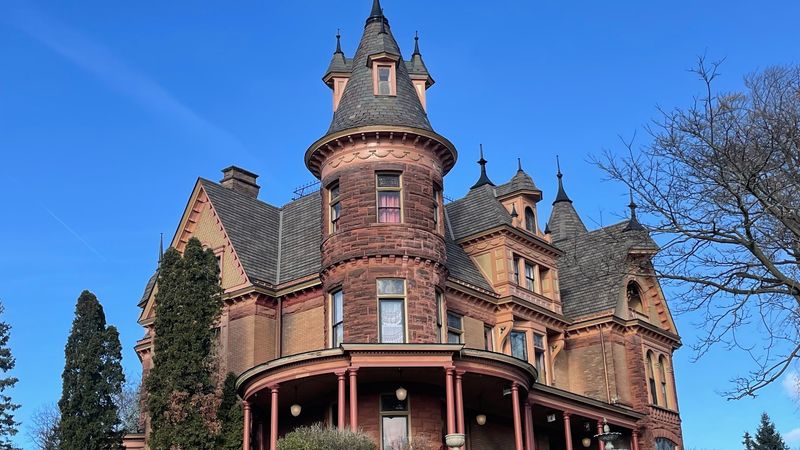
Perched above the city with a dramatic silhouette, this hilltop landmark instantly feels like a European daydream dropped into southwest Michigan.
You notice rugged stone walls, rounded towers, and broad views before you even learn its name.
That theatrical first impression belongs to Henderson Castle in Kalamazoo, a mansion commissioned by businessman Frank Henderson in the late nineteenth century.
Built in 1895 from local fieldstone, the house reflects Richardsonian Romanesque design and the Gilded Age appetite for grandeur.
Inside, visitors often look for ornate woodwork, stained glass, and period details that hint at how ambitious the original project was.
Stories about hidden passages, changing ownership, and reported paranormal activity add another layer that keeps people talking long after the tour ends.
The setting matters just as much as the architecture.
Because the castle sits high above downtown, it gives you a sense of ceremony, as if every arrival should come with music and candlelight.
Today it has operated as an inn, event venue, and destination dining spot, which keeps the property active rather than frozen in time.
If you enjoy places where romance, history, and local legend overlap, this one delivers.
Henderson Castle is less about strict medieval accuracy and more about mood, aspiration, and unforgettable presence.
2. Meadow Brook Hall, Rochester Hills, Oakland County
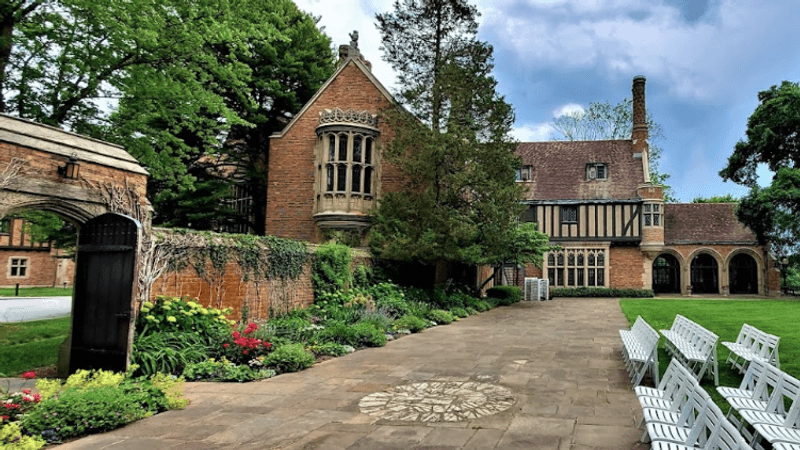
Grandeur arrives here through balance, craftsmanship, and sheer scale rather than defensive towers or fantasy theatrics.
As you approach along the grounds, the estate feels stately, intimate, and almost impossibly refined at the same time.
That experience defines Meadow Brook Hall in Rochester Hills, one of the finest historic house museums in the Midwest.
Completed in 1929 for Matilda Dodge Wilson and Alfred Wilson, the residence was designed in a Tudor Revival style that blends English inspiration with American wealth and practicality.
Its brickwork, leaded windows, carved wood interiors, and carefully planned rooms reveal how seriously the family treated design.
Yet the house also tells a more personal story about philanthropy, hospitality, and the transition from private fortune to public cultural treasure.
The estate’s 110-room scale can sound overwhelming, but the details make it feel human.
You move from formal spaces to cozy corners, noticing textiles, fireplaces, and collections that show how elite living was staged without losing comfort.
Seasonal events and tours help modern visitors connect with the property in a way that feels welcoming rather than distant.
If you want a castle-like Michigan landmark with impeccable preservation and rich context, Meadow Brook Hall stands out.
It offers elegance, history, and a vivid window into the Dodge family’s world.
3. Curwood Castle, Owosso, Shiawassee County
Some places feel magical because they were built for imagination first and prestige second.
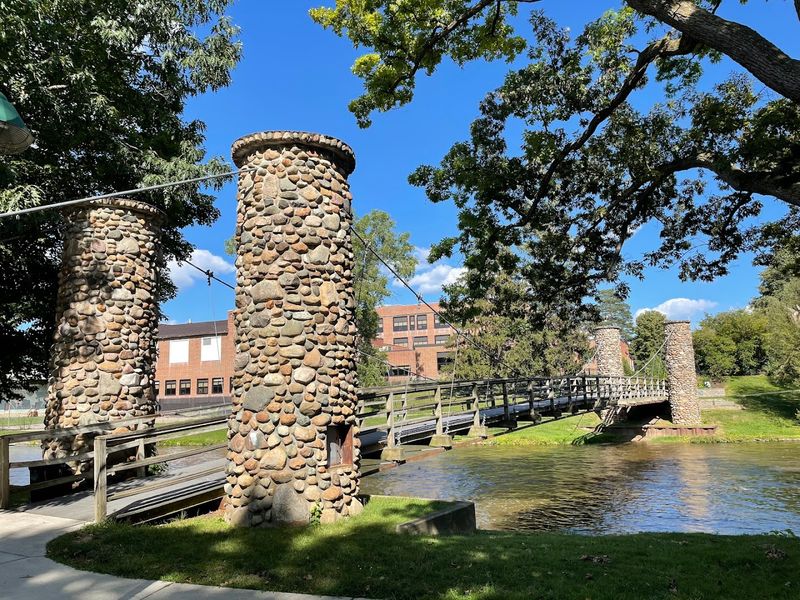
Standing near the river, this compact structure looks like a storybook retreat where a writer might disappear for an afternoon and emerge with a new adventure.
That sense of creative whimsy is exactly what makes Curwood Castle in Owosso so memorable.
Author James Oliver Curwood commissioned the building in 1922 as a writing studio, drawing inspiration from a Norman castle he admired overseas.
The result is modest in scale but rich in personality, with a turret, textured exterior, and a silhouette that seems designed for legends.
Because Curwood was one of America’s best known adventure writers, the building naturally carries an aura of wilderness romance and literary ambition.
Inside, museum exhibits connect the structure to Curwood’s books, conservation interests, and celebrity status during the early twentieth century.
You are not just looking at an eccentric little castle, but at a physical extension of one man’s brand and worldview.
Its river setting reinforces that mood, making the whole site feel reflective and cinematic.
For travelers who like attractions with unusual backstories, this one is especially rewarding.
Curwood Castle proves that a castle does not need massive scale to leave a lasting impression on you.
4. Castle Museum, Saginaw, Saginaw County
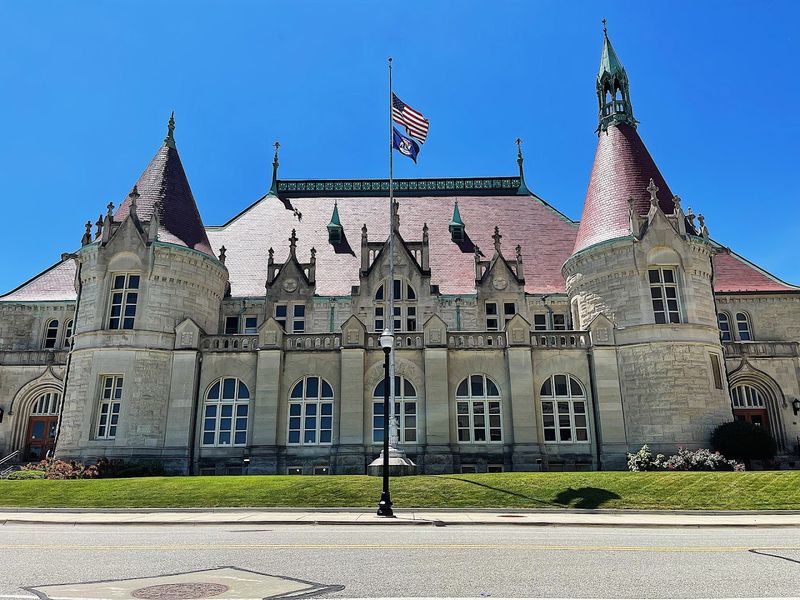
At first glance, this downtown landmark gives off the confidence of a civic palace, with rich masonry and a silhouette that feels imported from another era.
The building catches your eye because it looks both ceremonial and welcoming, like a place designed to make history feel important.
Today that distinctive structure houses the Castle Museum in Saginaw.
Originally built in 1898 as a post office, the building reflects French chateau influences that set it apart from more ordinary government architecture.
Steep rooflines, ornamental details, and a commanding facade helped communicate permanence in a fast-growing industrial city.
Its later transformation into a museum gave the structure a second life, allowing the architecture to keep serving the public instead of fading into obsolescence.
Inside, exhibitions explore Saginaw’s lumber era, manufacturing legacy, and evolving communities, so the setting and the subject matter reinforce each other beautifully.
You move through rooms that feel substantial, and that atmosphere subtly reminds you that public buildings once aimed to inspire civic pride.
The castle nickname is not just marketing, because the exterior genuinely carries fairytale drama.
If you enjoy places where adaptive reuse meets architectural character, this museum is an easy addition to your itinerary.
The Castle Museum offers local history in a building that already tells a story before you step through the door.
5. Castle Farms, Charlevoix, Charlevoix County
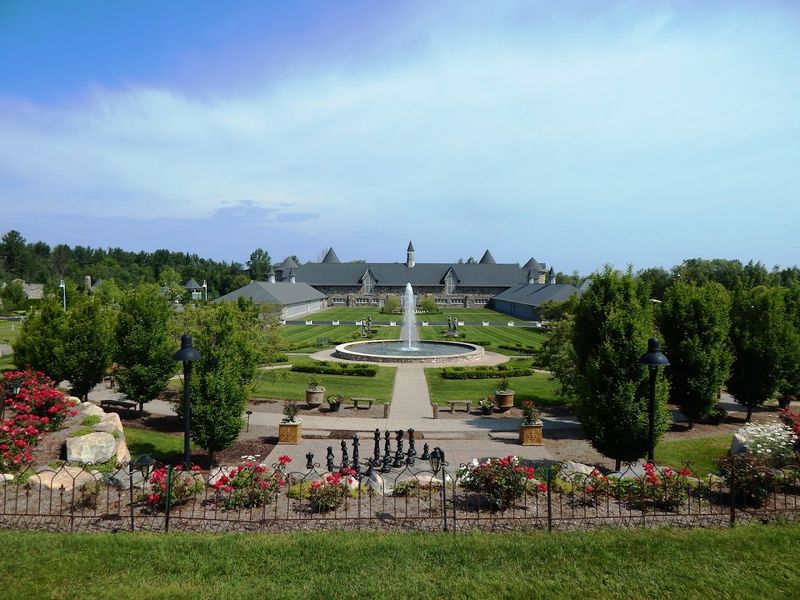
Wide courtyards, thick stone walls, and towers rising above manicured grounds make this destination feel built for celebrations and legends.
Even before you know its complicated past, the place announces itself with the confidence of a grand European-inspired estate.
That unforgettable setting is Castle Farms in Charlevoix, one of northern Michigan’s most distinctive historic properties.
Designed in 1918 by famed architect Albert Kahn for Albert Loeb, the complex took cues from French Normandy farm architecture rather than a military fortress.
It originally functioned as a model dairy farm, which makes its dramatic appearance even more fascinating. Over time, the site shifted through agricultural use, periods of decline, and eventual restoration into a wedding and event venue that now draws visitors for both beauty and curiosity.
What makes Castle Farms especially interesting is that its scale never feels accidental.
Long stone facades, formal gardens, and enclosed spaces create the kind of atmosphere that invites wandering, photography, and a little imagination.
You can sense how ambition, money, and a taste for theatrical design shaped every angle of the property.
If you like architecture that blends practicality with fantasy, this attraction delivers on both fronts.
Castle Farms tells a story about reinvention, proving that even unusual estates can become beloved public landmarks again.
6. Hackley and Hume Historic Site, Muskegon, Muskegon County
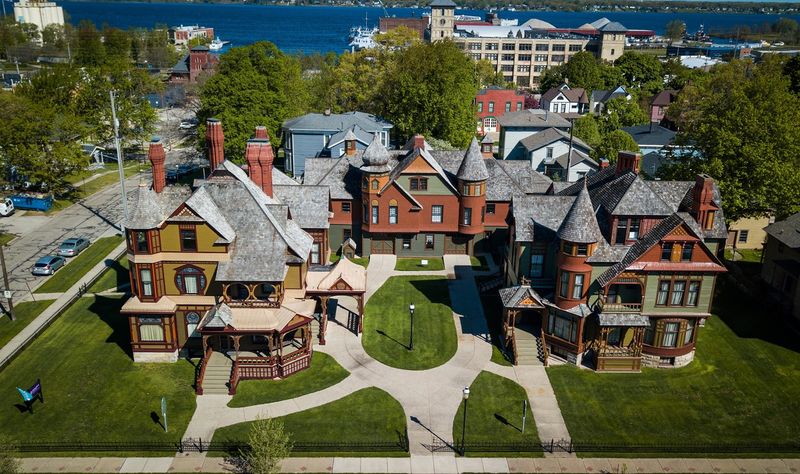
Opulence takes center stage here, where color, texture, and ornament make every surface feel deliberate and expressive.
Standing outside, you immediately sense the wealth generated by Michigan’s lumber boom and the desire to turn that fortune into visible art.
That impression comes alive at the Hackley and Hume Historic Site in Muskegon, a pair of neighboring homes with extraordinary presence.
Built in the late 1880s for lumber barons Charles Hackley and Thomas Hume, the houses showcase exuberant Queen Anne style with turrets, stained glass, carved wood, and lavish interiors.
They are not castles in a strict sense, yet they absolutely deliver the same feeling of drama and status. Because the families were deeply tied to Muskegon’s rise, the homes also function as a lens into industry, philanthropy, and the power networks of the era.
Touring the site lets you compare two related but distinct expressions of affluence, which is part of the fun. Every decorative flourish reminds you that architecture once served as a public declaration of identity, success, and taste.
The restoration work is especially impressive, giving modern visitors a vivid, almost theatrical encounter with Gilded Age domestic life.
If you love maximalist historic design, this stop is hard to beat.
The Hackley and Hume homes prove that castle-worthy fascination can come from craftsmanship, ambition, and beautifully preserved excess.
7. Honolulu House Museum, Marshall, Calhoun County
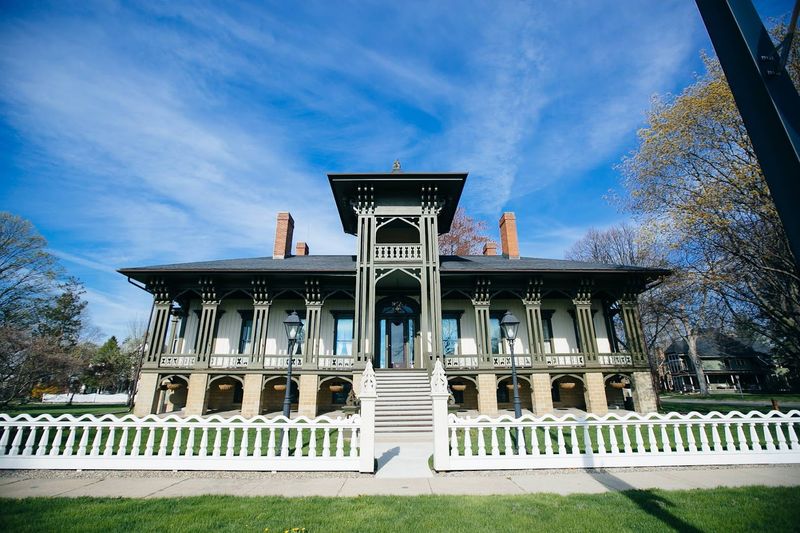
Few historic homes in Michigan surprise you quite like this one, because its design feels worldly, playful, and unlike anything nearby.
Decorative details hint at distant places, while the overall composition still fits comfortably within a nineteenth century Midwestern town.
That unusual blend defines the Honolulu House Museum in Marshall, a standout landmark with a story as distinctive as its appearance.
Built in 1860 for former U.S. consul Abner Pratt, the house reflects Italianate design infused with motifs inspired by his time in Hawaii.
The nickname comes naturally once you see the tropical references and fanciful ornamentation that set it apart from neighboring residences.
Instead of imitating a European castle directly, the house creates its own romantic fantasy through brackets, arches, and a towered profile.
Marshall already has one of Michigan’s richest historic districts, so this house lands in a community that appreciates preservation and architectural storytelling.
Touring it gives you a clearer sense of how travel, diplomacy, and personal memory shaped domestic design during the Victorian era.
You are essentially stepping inside one family’s attempt to turn experience abroad into permanent art at home.
For travelers who enjoy unusual aesthetics and strong backstories, this museum is deeply satisfying.
The Honolulu House proves that castle-like allure can come from imagination, symbolism, and fearless individuality.
8. Cappon House Museum, Holland, Ottawa County
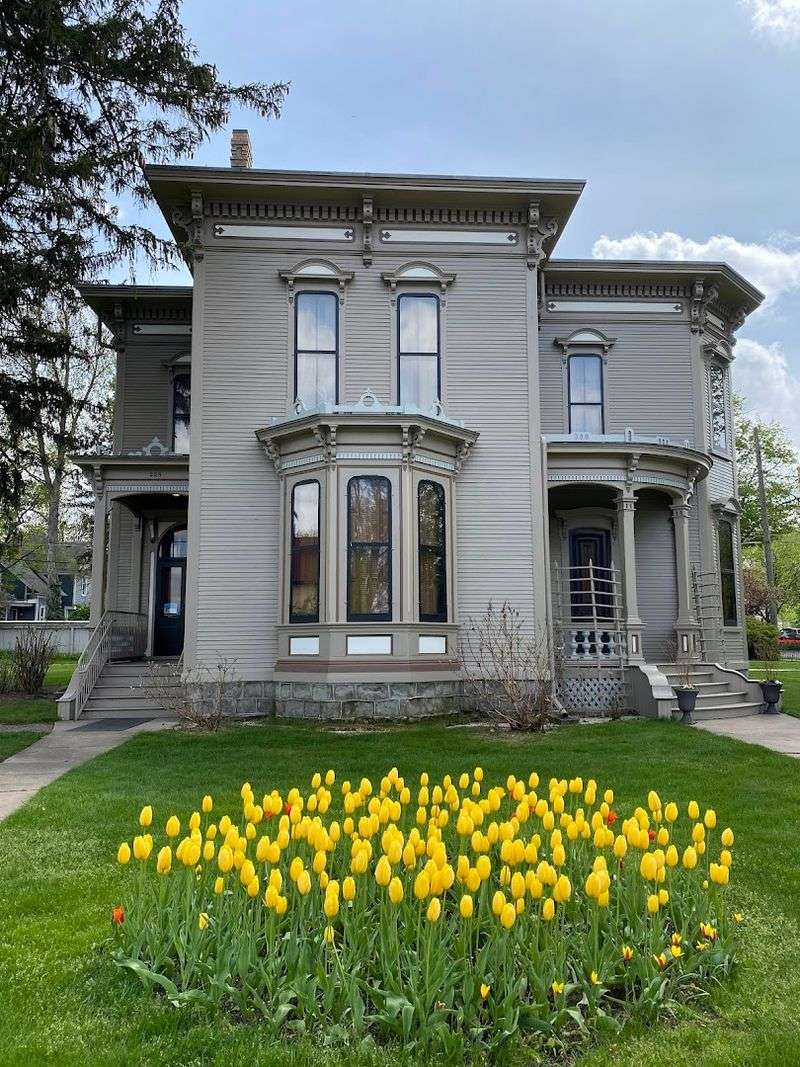
Quiet elegance can be just as captivating as a turreted fantasy, especially when a house still reflects the ambitions of a growing lakeshore city.
Walking the grounds, you get a sense of order, prosperity, and confidence that feels very nineteenth century.
That atmosphere surrounds the Cappon House Museum in Holland, a landmark tied closely to the area’s business and civic development.
Built in 1874 for lumber merchant Isaac Cappon, the residence is an Italianate villa rather than a literal castle, yet its commanding proportions and period detailing give it a stately presence.
Features like tall windows, bracketed eaves, and refined interior finishes reveal the aspirations of a family thriving during Holland’s formative years.
The home’s preservation also helps tell a broader story about immigration, commerce, and the shaping of community identity on Michigan’s west side.
What makes this stop rewarding is the way personal and local history intersect in one readable space.
You can trace changing tastes, domestic technology, and social expectations while still appreciating the house simply as beautiful architecture.
The museum setting keeps the experience grounded and accessible rather than overly formal.
If your idea of a castle attraction includes noble atmosphere and a strong historical narrative, this one deserves a place on the list.
The Cappon House offers dignity, context, and a quietly impressive sense of place.
9. Alger House (Grosse Pointe War Memorial), Grosse Pointe Farms, Wayne County
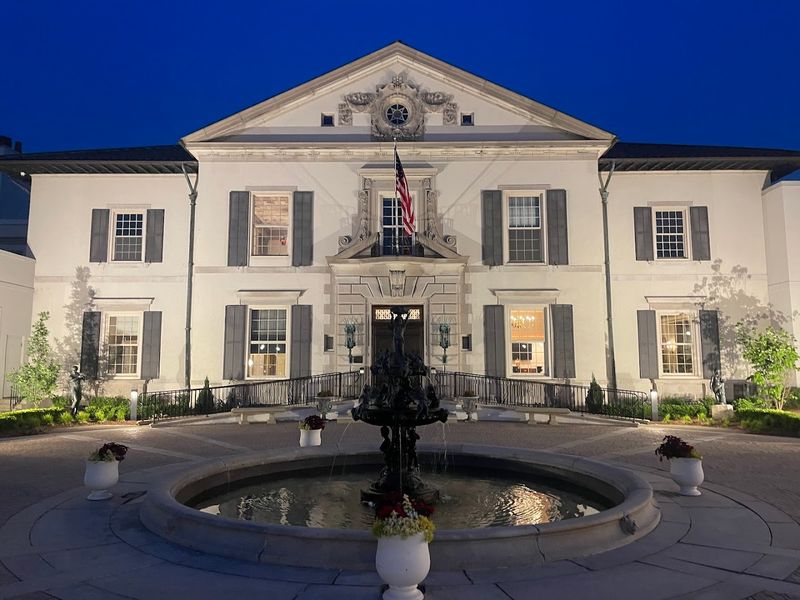
Lakeside elegance gives this estate an almost cinematic presence, especially when the grounds and water combine to frame the mansion like a period film set.
You feel the social history of old wealth here before you know any names, simply by taking in the scale and polish.
That atmosphere belongs to Alger House, now part of the Grosse Pointe War Memorial in Grosse Pointe Farms.
Completed in 1910 for Russell A. Alger Jr. and designed by architect Charles A.
Platt, the house channels English manor influences with disciplined symmetry and refined detailing.
Rather than leaning into overt fantasy, it projects cultivated power through stone, classical balance, and a commanding lakeshore setting.
Its later transition into a memorial and community institution added public meaning to a residence originally built for private privilege.
That shift in purpose is one reason the property resonates so strongly.
You are looking at a mansion that once represented elite domestic life but now hosts cultural events, education, and remembrance.
The architecture still feels exclusive in the best visual sense, yet the site’s mission invites broader community connection.
If you appreciate grand estates that reveal changing definitions of service and prestige, this one is especially compelling.
Alger House combines beauty, history, and civic reuse in a way that feels both graceful and significant.
10. Edsel and Eleanor Ford House, Grosse Pointe Shores, Wayne County
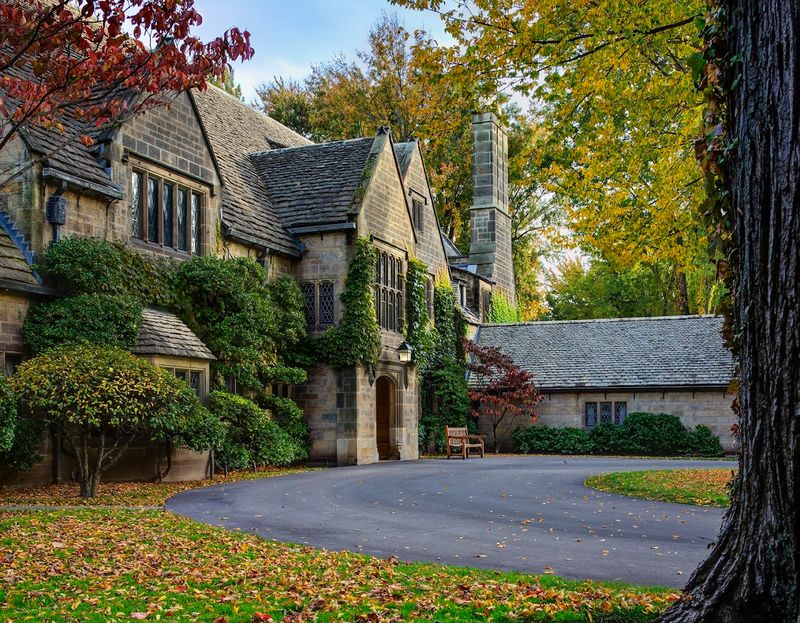
Refinement shows up here in quiet confidence, where every garden edge, stone wall, and interior finish feels intentionally composed.
The estate does not need exaggerated castle theatrics because its craftsmanship and setting do all the work.
That understated grandeur defines the Edsel and Eleanor Ford House in Grosse Pointe Shores, one of Michigan’s premier historic estates.
Completed in 1928 and designed by Albert Kahn, the house drew inspiration from Cotswold cottages and English country manors, then elevated those influences into something deeply personal and exceptionally polished.
The result balances domestic warmth with aristocratic atmosphere, helped by lake views, carefully designed grounds, and interiors shaped by the Fords’ taste.
It also tells a broader story about industry, philanthropy, collecting, and the role of major families in shaping twentieth century cultural life.
Visiting the estate gives you more than a look at wealth.
You see how architecture, landscape design, and decorative arts can work together to create a complete world, one meant for living rather than mere display.
That coherence is what makes the property so memorable, even among many great house museums.
If you are drawn to places where beauty feels effortless but highly considered, put this on your list.
The Ford House offers intimacy, elegance, and an extraordinary sense of preserved character by the water.
11. White River Light Station, Whitehall, Muskegon County
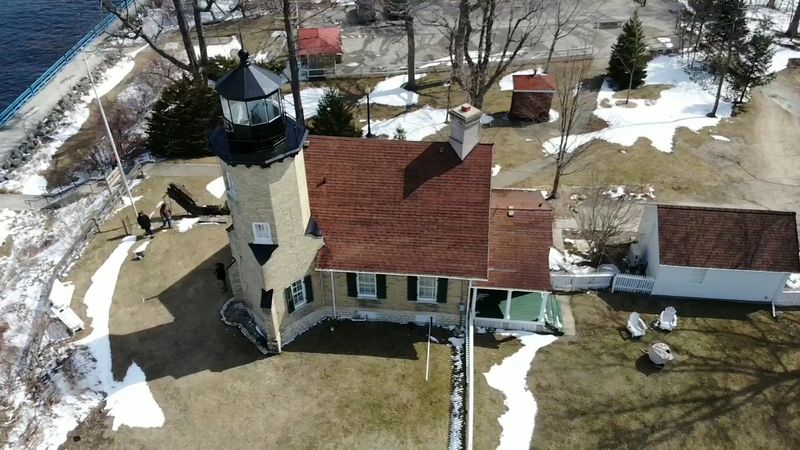
Wind, water, and weathered history create the appeal here long before any decorative detail comes into focus.
Set near the shoreline, the site carries a quiet authority that feels less like fantasy and more like earned resilience.
That is exactly why White River Light Station in Whitehall belongs in a roundup of Michigan castle-like attractions with memorable stories.
Established in 1875, the station combines a lighthouse tower with a keeper’s dwelling, producing a silhouette that can seem almost manor-like against the sky.
Its architecture is practical, but the symmetry, elevated form, and isolated setting give it a romantic quality you immediately notice.
More importantly, the station represents the maritime networks that shaped west Michigan communities through shipping, commerce, and lifesaving work on dangerous waters.
Inside the museum, exhibits help you imagine the routines, risks, and endurance required to keep a light burning through rough seasons.
That human element transforms the structure from scenic photo opportunity into a place of discipline and service.
You come away appreciating not only the building’s visual charm, but also the lives organized around its mission.
If your version of a castle attraction includes atmosphere, symbolism, and strong setting, this stop absolutely works.
White River Light Station offers coastal beauty with a sturdy, deeply Michigan kind of romance.
12. Beaumont Tower, East Lansing, Ingham County
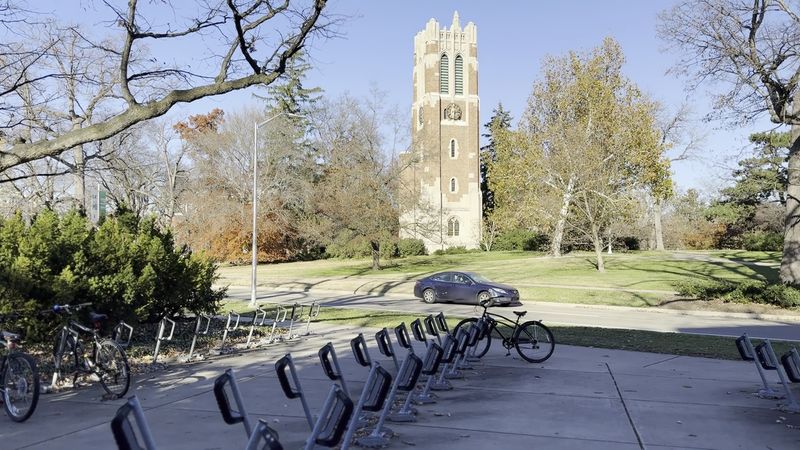
Rising above campus with old-world dignity, this landmark delivers the kind of architectural drama that instantly becomes a symbol.
Students pass it constantly, yet it still retains the power to make you pause and look up.
That enduring presence belongs to Beaumont Tower in East Lansing, one of Michigan State University’s most beloved structures.
Completed in 1928 on the site of an earlier college building, the tower embraces Collegiate Gothic design with vertical emphasis, stone detailing, and a scholarly sense of permanence.
It is not a castle in the residential sense, but it absolutely taps into the same medieval revival vocabulary that makes universities feel storied and ceremonial.
The carillon music adds another emotional layer, turning architecture into something you hear as well as see.
The tower’s significance goes beyond aesthetics.
It stands as a memorial and a marker of institutional identity, connecting generations of students to the university’s past through tradition, place, and ritual.
That combination of symbolism and beauty is why it resonates even with visitors who know little about campus history.
If you enjoy structures that shape the spirit of a community, this one deserves attention.
Beaumont Tower proves that castle-like wonder can live in academic architecture, especially when sound, memory, and stone come together so gracefully.
13. Castle Rock, St. Ignace, Mackinac County
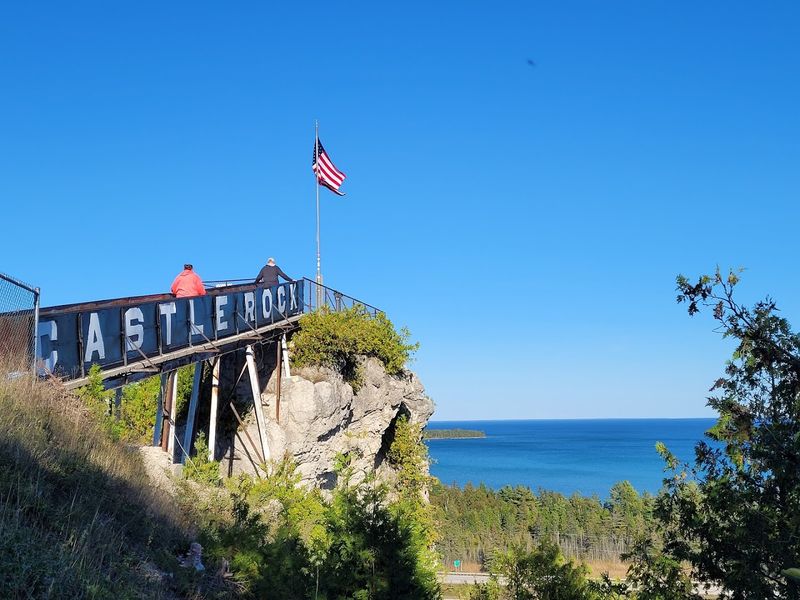
Not every castle attraction in Michigan was built by human hands, and that is part of what makes this stop so fun.
Looming above the surrounding landscape, the formation has a dramatic profile that invites legends, roadside curiosity, and wide-open views.
That natural spectacle is Castle Rock near St. Ignace, one of the Upper Peninsula’s classic tourist landmarks.
Rising roughly 200 feet above Lake Huron, the limestone stack was shaped by ancient geological processes rather than masonry and mortar.
Still, its name captures something real about its commanding posture and strategic feel, as if nature created its own watchtower.
Visitors climb to an observation area for panoramic views of the Straits region, which helps explain why the site has remained popular for generations.
The appeal here mixes scenery with nostalgia.
Roadside attractions can sometimes feel kitschy, but this one has genuine visual payoff along with a strong sense of place in northern travel culture.
You get geology, local tradition, and a little old-school vacation energy in a single stop, which is hard not to enjoy.
If your definition of a castle includes awe, elevation, and a memorable story, this landmark absolutely qualifies.
Castle Rock reminds you that Michigan’s most striking architecture sometimes begins with the landscape itself.
14. The Castle Lofts, Detroit, Wayne County
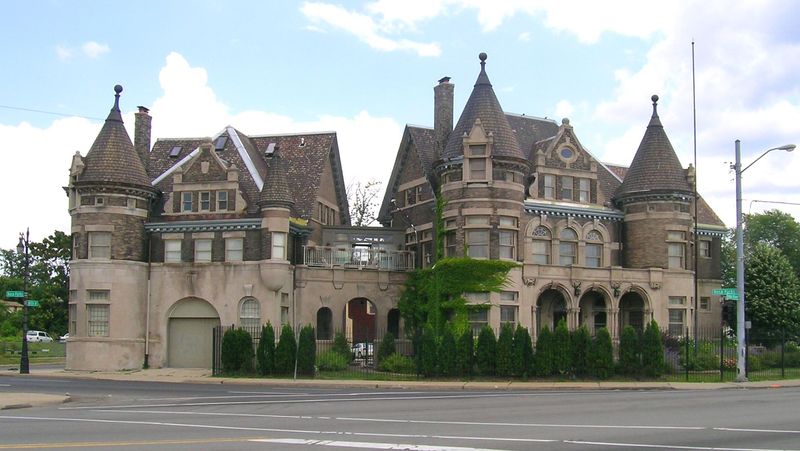
Urban mystery gives this building its charm, especially when evening light catches the facade and makes the old details feel newly theatrical.
In a city full of bold architecture, it still manages to stand apart with a name and presence that spark curiosity.
That distinctive character belongs to The Castle Lofts in Detroit, a residential landmark with a romantic, fortress-like identity.
The building reflects Detroit’s long tradition of expressive apartment and commercial design, where Gothic and medieval revival touches were used to create prestige in the urban landscape.
Though adapted for loft living, the structure still carries the visual cues that earned its nickname, including massing, ornament, and an unmistakably storybook profile.
It represents a different kind of castle attraction, one tied not to aristocratic estates or museums, but to city reinvention and the afterlife of historic buildings.
That context matters in Detroit, where architecture often tells stories of growth, decline, and creative reuse all at once.
You are not simply seeing an old building with a catchy name, but a piece of the city’s layered design culture.
The appeal comes from texture, atmosphere, and the way historic forms continue to shape modern urban experience.
If you like your castle stops with a little grit and a lot of personality, this one fits beautifully.
The Castle Lofts show how Detroit turns architectural drama into something lived in, not just looked at.