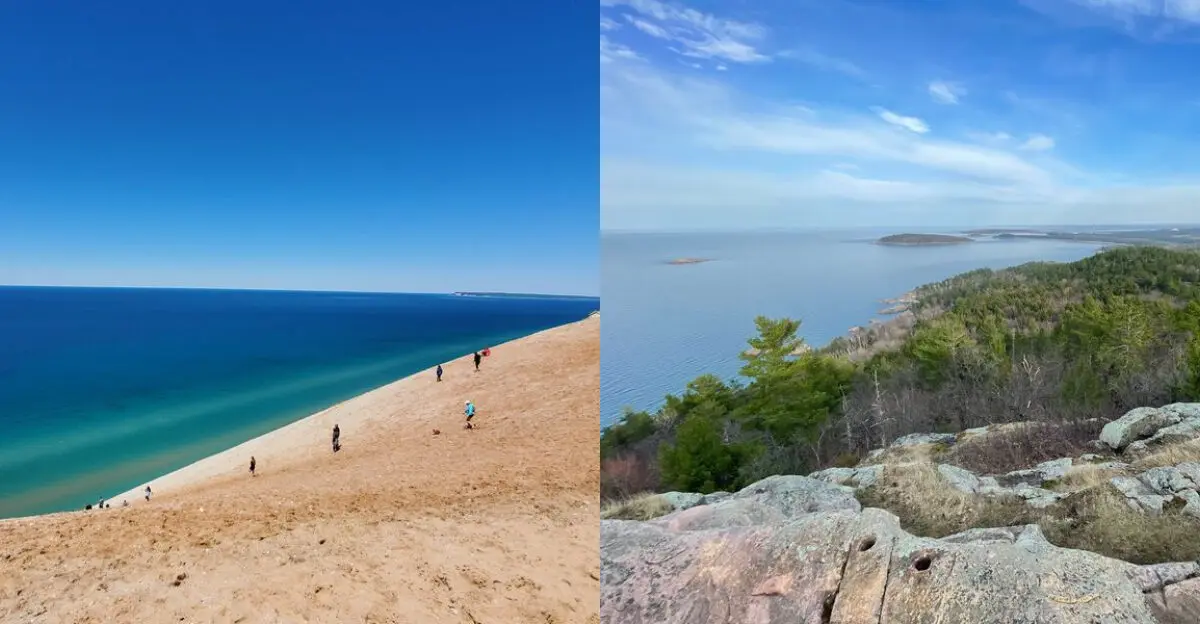
The best Michigan views often arrive just after your legs start asking why you kept climbing. Reach the top, and the reward can be a wide Great Lakes horizon, a rugged bluff, rocky terrain, or miles of forest stretching toward the distance.
These 10 Michigan trails prove that the effort can be part of the experience. Some climbs lead to dramatic overlooks above Lake Superior, while others reveal inland forests, towering dunes, rocky peaks, or long stretches of untouched shoreline.
The scenery gives each hike its own personality, with plenty of places to stop, catch your breath, and take in the landscape.
For hikers who enjoy earning their views, these trails offer the kind of payoff that stays with you long after the descent. Ahead, discover 10 Michigan trails where every climb leads to a panorama worth the effort.
Empire Bluff Trail
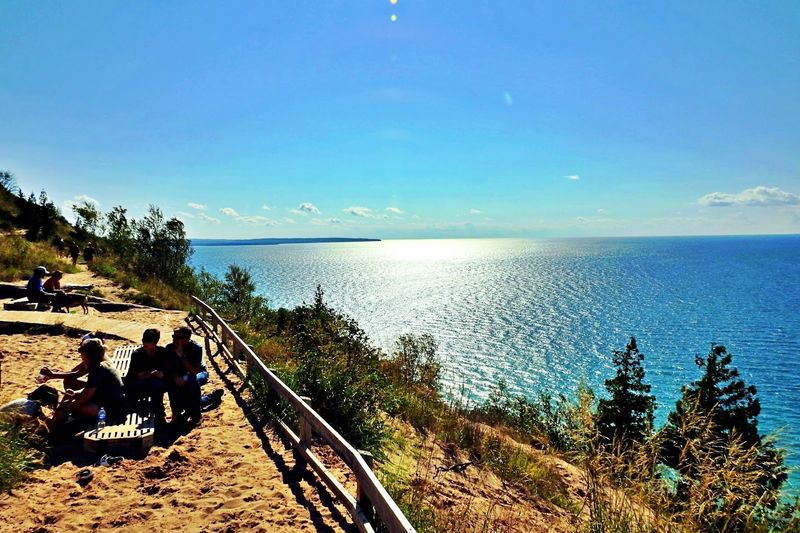
The trail feels calm at first, almost too calm for the kind of view waiting ahead. Birds chatter in the trees, the path stays friendly underfoot, and then the woods begin to thin just enough to raise your hopes.
Near Honor, the Empire Bluff Trail delivers one of those sudden reveals that makes people stop talking mid-step. Lake Michigan appears all at once, bright and enormous, with pale dunes curving along the shore below the bluff.
On a clear day, the water looks almost glassy from above, and the breeze at the overlook can feel wonderfully cool after the climb.
The route is only about 1.5 miles, but the steady rise keeps it interesting without making it feel harsh. Good walking shoes help on sandy patches, and an early start usually means quieter moments at the edge.
Pack water, pause for the forest smells on the way up, and save time to linger at the top. Few short hikes in Michigan offer such a big payoff for such manageable effort.
Pyramid Point Trail
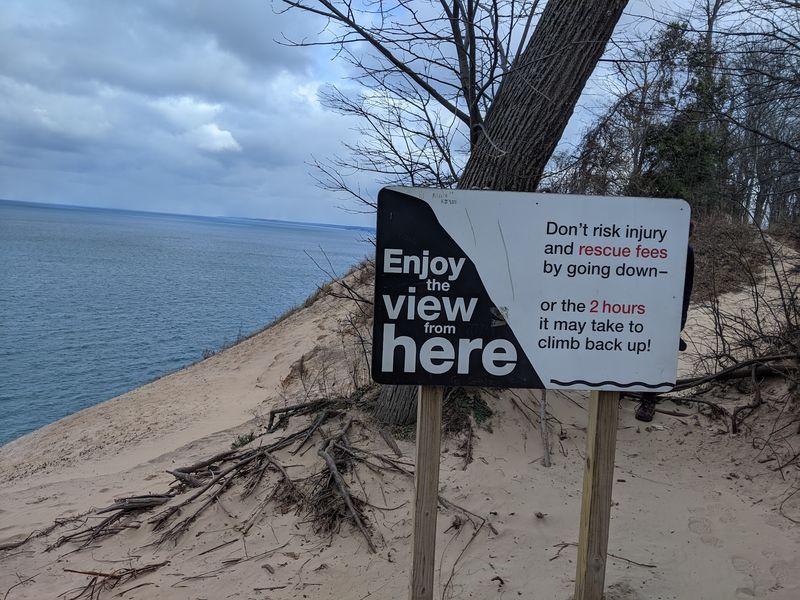
Loose sand has a sneaky way of making a short walk feel much bigger. Your legs notice the hill before your eyes catch the reward, and that contrast is exactly what makes the ending so satisfying.
Farther along near Maple City, Pyramid Point Trail rises through woods and over a steep section that asks for a little patience. Then the landscape opens to a striking sweep of Lake Michigan and the Manitou Islands, sitting far off like quiet shapes on the horizon.
The overlook feels airy and exposed, with wind moving across the bluff and sunlight shifting over the water.
The trail is not long, roughly 1.2 miles out and back, but it earns respect because of the climb. Wear shoes that grip well, especially if the sandy slope feels dry and slippery.
Bring a camera, but do not rush the last few steps. This is the kind of place where the pause matters as much as the view, and where a modest hike somehow feels much grander than it looks on paper.
Dune Climb
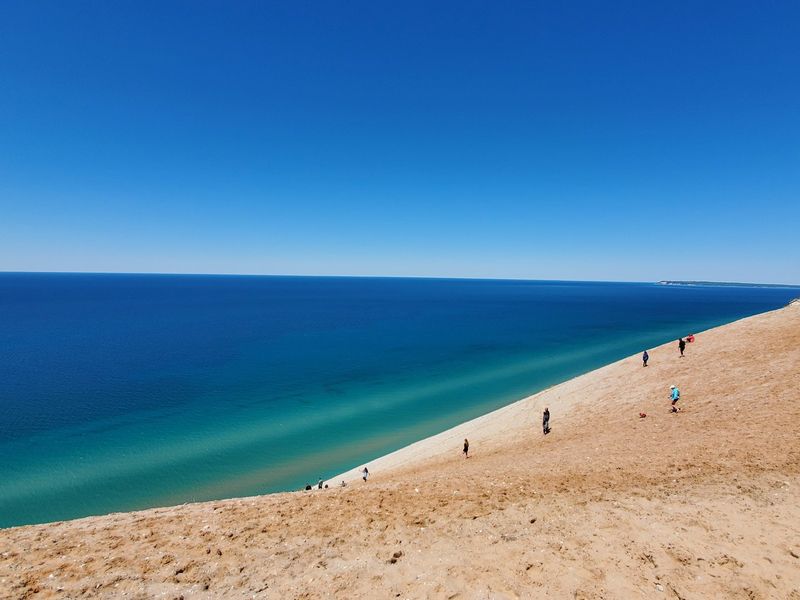
Every step slides back a little, which can make grown adults laugh like kids again. The sand works against you, the sun feels stronger out in the open, and somehow the challenge makes the whole place more fun.
At the famous Dune Climb in Glen Arbor, the uphill push is the main event. Instead of a shady forest path, you get a wide sandy rise that keeps changing shape as feet and wind move across it.
Climb high enough, and the scene spreads into rolling dunes, scrubby patches of green, and glimpses of Lake Michigan shining in the distance.
This outing can be tougher than it first appears, so water, sunscreen, and a hat are smart choices. Bare feet work for some people, while others prefer shoes that keep hot sand away.
The beauty here is not polished or delicate. It feels big, bright, and playful, and the effort of walking uphill through loose sand makes the panorama feel truly earned.
Few Michigan hikes turn simple movement into such a vivid adventure.
Escarpment Trail
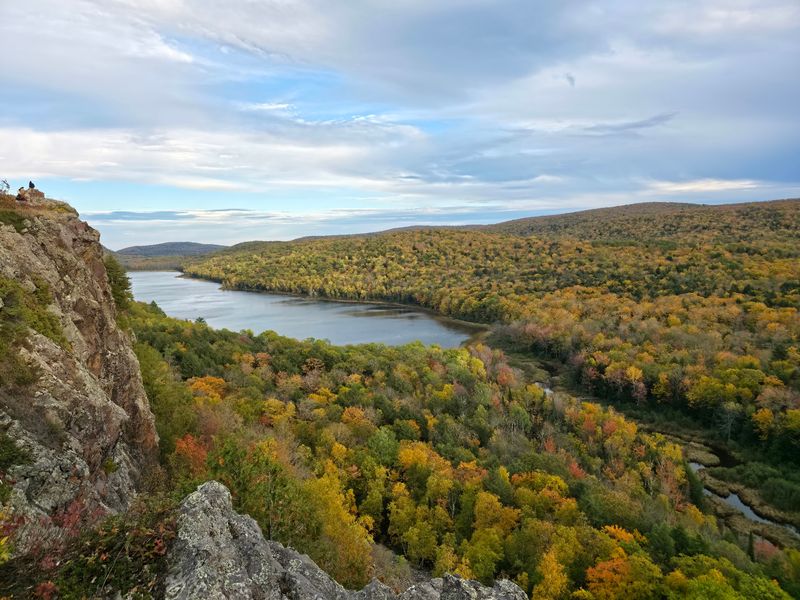
There is a moment on a ridge when the world seems to fall away on one side, and your senses sharpen all at once. Wind feels cooler, voices grow quieter, and every step carries a little extra thrill.
That feeling defines the Escarpment Trail in the Porcupine Mountains near Ontonagon. The route follows high ground above Lake of the Clouds, offering repeated looks at dark forest, steep slopes, and water tucked deep into the basin below.
In autumn, the color is almost unreal, with orange and gold filling the valleys while the cliffs keep the scene wild and rugged.
The hike is longer than some overlook trails, so pacing matters. Sturdy shoes, extra water, and time to stop often will make the experience better, especially when roots or rocky stretches demand attention.
What makes this trail memorable is not one single platform or tower. The panorama arrives in chapters, each one a little different, and the climb feels tied to the land in a deeper way.
It rewards patience, strong legs, and a willingness to slow down.
Hogback Mountain
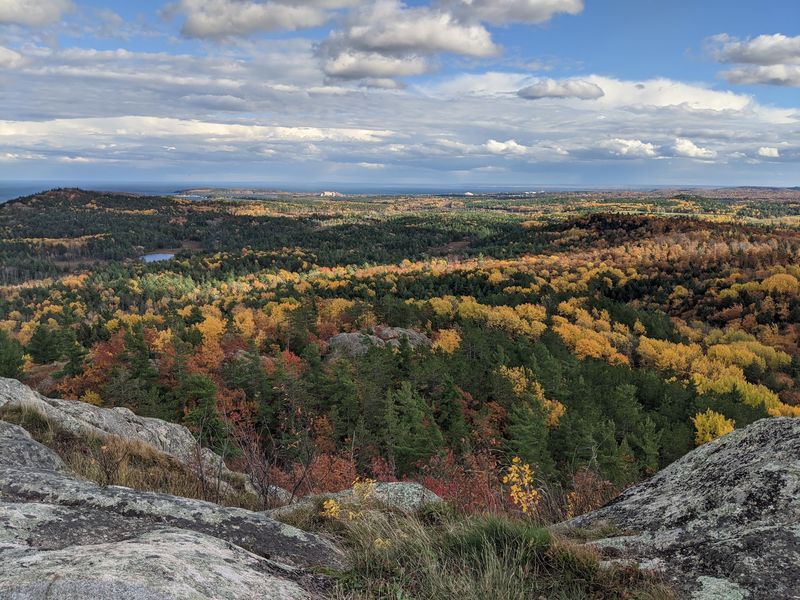
Not every great view in Michigan comes with an easy finish. Sometimes the final stretch asks for hands, careful footing, and a little nerve, which only makes the top feel more memorable.
That is the story of Hogback Mountain near Marquette. The hike builds steadily, then ends with a rocky scramble that can surprise anyone expecting a simple walk in the woods.
Once you reach the summit, the reward is huge: Lake Superior stretching wide, forest rolling in every direction, and the Huron Mountains rising beyond the trees.
This is a trail for people who enjoy a bit of challenge, so take your time and watch your footing near exposed rock. Good traction matters, and dry weather usually makes the final climb more comfortable.
After the hard push, even a snack tastes better at the top. The view feels big enough to quiet a busy mind, and the effort behind it gives the place real character.
Hogback is not gentle, but that is exactly why the panorama stays with you.
Sugarloaf Mountain
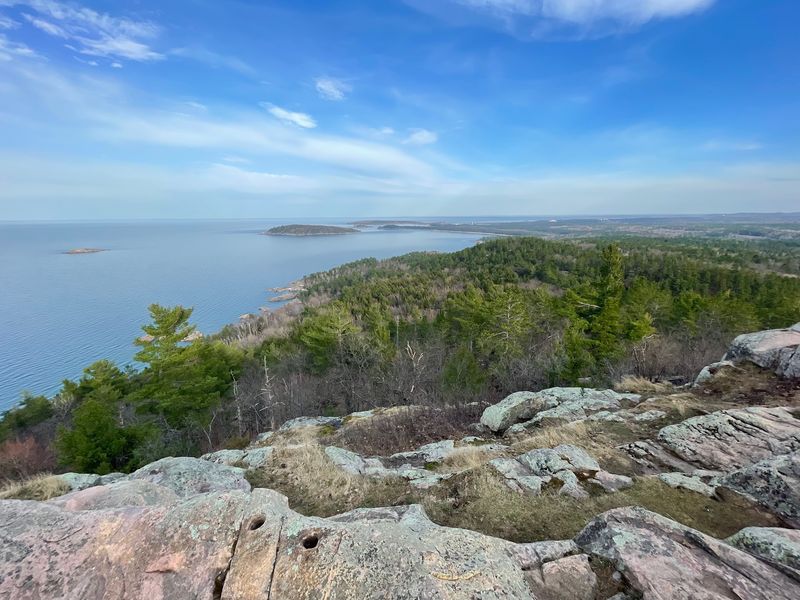
Wooden stairs rising through the trees can feel almost ceremonial, like a built-in drumroll before something grand. With each landing, the air opens a little more, and the promise of a bigger horizon starts to pull you upward.
Outside Marquette, Sugarloaf Mountain is famous for good reason. The climb is steady, and the stairs do much of the hard organizing for you, but your legs still know they have worked by the time you reach the rocky top.
From there, Lake Superior dominates the scene, joined by islands, forest, and the kind of shoreline that makes the Upper Peninsula feel immense.
This is a smart choice for hikers who want a major view without a backcountry day. Go early for softer light and fewer people, and bring a light jacket because the wind at the summit can be brisk.
There is something satisfying about how direct the experience is. You climb, the trees part, and the lake takes over everything.
It feels classic, simple, and completely worth the effort on almost any seasonally open day.
Mount Marquette Loop
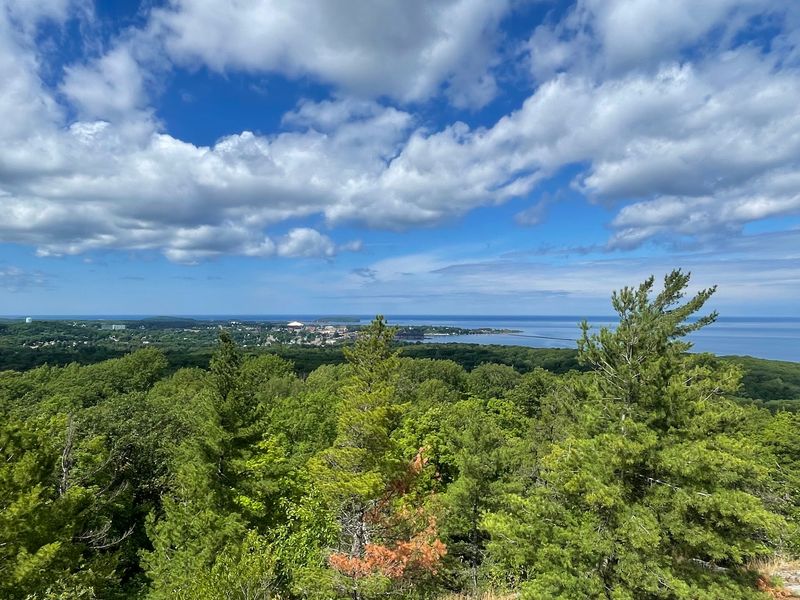
City and wilderness rarely share the stage this well. One minute you are climbing through quiet woods, and the next minute rooftops, shoreline, and open water seem to gather below in a single wide scene.
The Mount Marquette Loop offers that pleasing contrast just above Marquette. The trail gains elevation at a steady pace, then opens to views over town and the blue sweep of Lake Superior.
You can spot roads curling through the hills, ships or whitecaps on the water, and the edge where everyday life meets a much larger landscape.
Because it is a loop, the hike feels more like a journey than a straight march to one point. Bring water, keep an eye out for uneven ground, and allow extra time if you like stopping for photos along the overlooks.
There is a thoughtful mood to this trail. It shows Michigan not only as wild and scenic, but also as lived in, layered, and full of history.
The climb pays off with perspective in every sense, which makes the experience especially rich.
Wetmore Landing
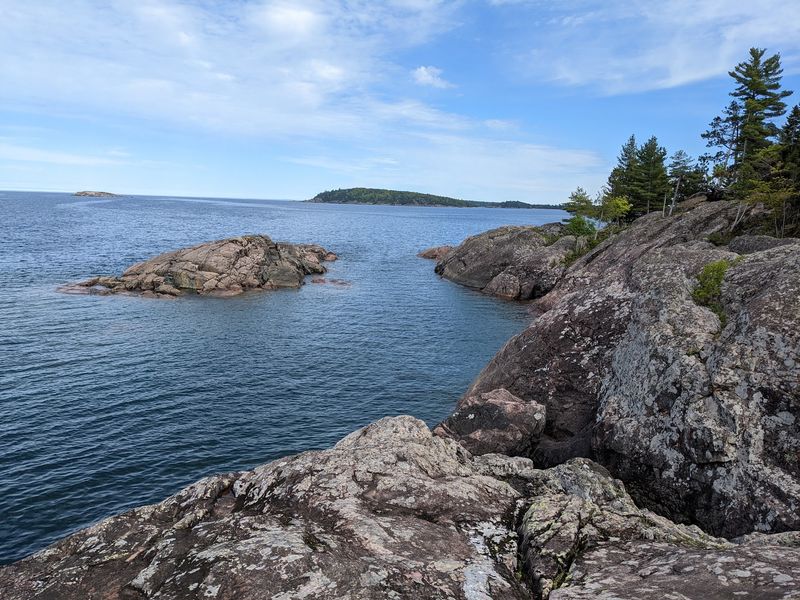
The ground keeps changing here, and that is part of the charm. Soft earth turns to roots, roots give way to rocks, and the trail asks you to stay present while the lake slowly announces itself through sound and light.
North of Marquette, the route around Wetmore Landing rewards that focus with striking clifftop views over Lake Superior. You may hear waves below before you see them, and then the trees break to reveal a broad stretch of water, rough shoreline, and dark stone shaped by years of weather.
On cooler days, the air can smell clean and sharp, almost like fresh rain.
This hike feels wilder than some short overlook walks, so sturdy shoes are a smart idea. Watch for steep steps and uneven spots, especially if the trail is damp or covered with fallen leaves.
A picnic back near the landing makes a nice finish, but the best part is the transition from enclosed forest to open sky. That release, after a more rugged climb, gives the panorama a satisfying emotional punch.
Summit Peak
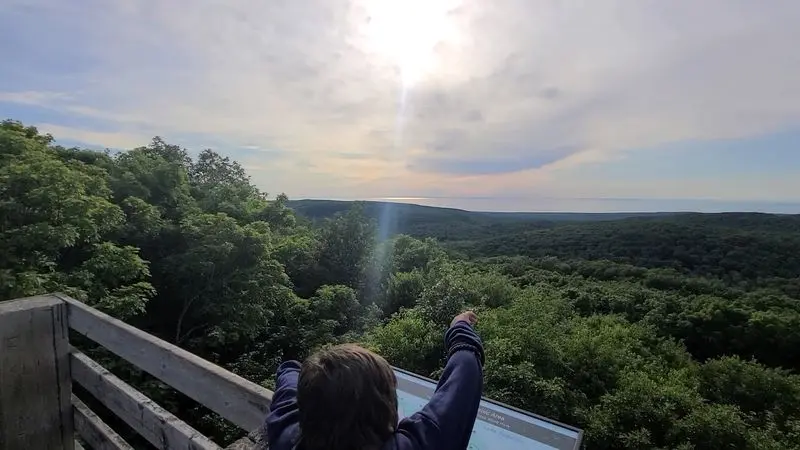
Summit Peak is a short hike with a surprisingly big payoff in Michigan’s Porcupine Mountains. The trail climbs about 300 feet over roughly half a mile to reach the summit, where a viewing deck and observation tower rise above the surrounding forest.
The real reward comes at the top. From the tower, hikers get a broad, 180-degree panorama across the wooded Porcupine Mountains, with Lake Superior visible in the distance on clear days.
The elevated viewpoint makes the landscape feel much larger than the relatively short hike suggests, and the surrounding wilderness gives the experience a peaceful, away-from-it-all quality.
There are stairs and a steady uphill section, but the distance is manageable for many hikers. Once you reach the tower, take your time—the views are the kind that make the climb feel completely worthwhile.
Stairway To The Dunes
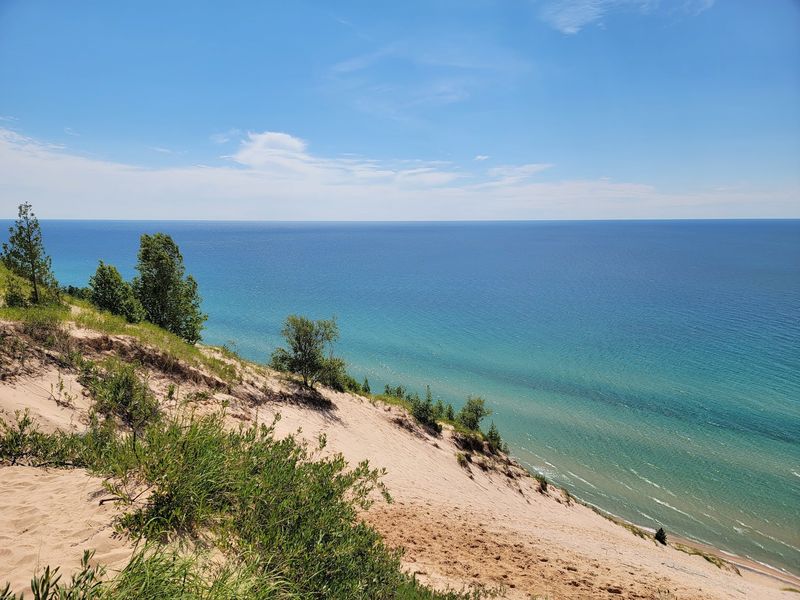
Sand can humble even strong legs, and that is part of the fun of this climb above Lake Michigan. Every step sinks a little beneath your feet, but the reward grows with every bit of elevation as the horizon opens wider.
At Arcadia Dunes: The C.S. Mott Nature Preserve, the Stairway to the Dunes leads hikers toward a beautiful overlook above the surrounding landscape.
At the top, the view feels like a well-earned reward. Lake Michigan stretches beyond the beach, while rolling hills and forest create a layered backdrop below.
Michigan’s west coast is known for its vast freshwater dune system, making this landscape especially distinctive.
Sunset can make the scenery even more memorable, so bring a camera and allow extra time at the overlook. Stay on marked paths, since dune vegetation is fragile and easily damaged.