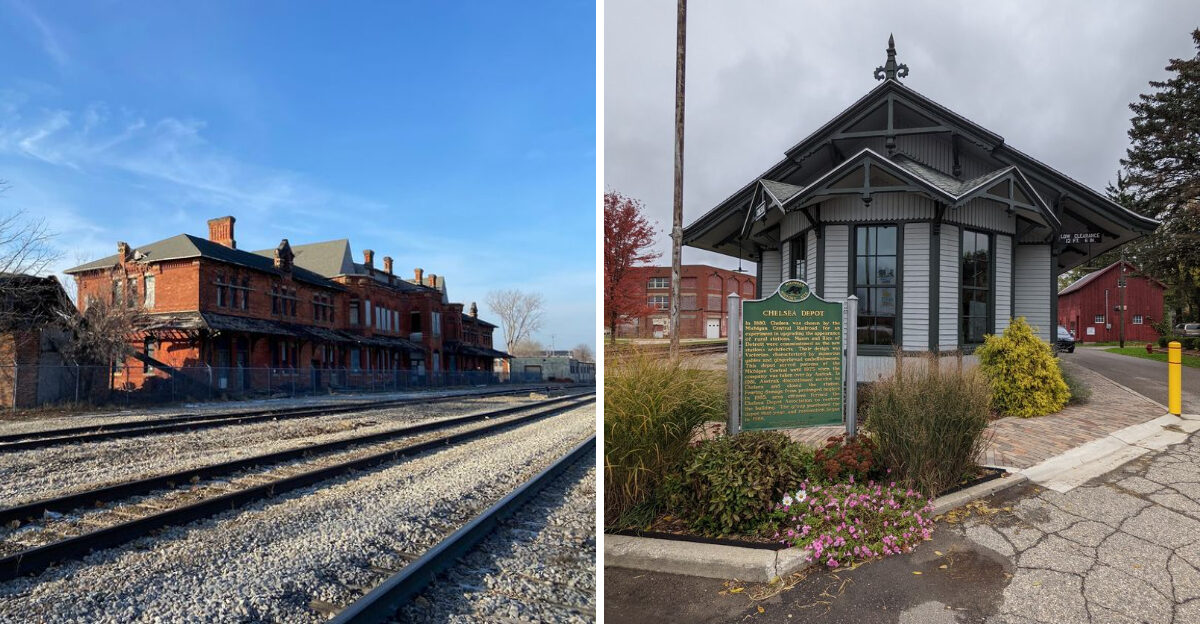
Michigan’s old train depots aren’t just buildings—they’re time machines with tracks nearby.
Scattered across the state, these historic stations preserve the days when trains brought travelers, workers, mail, and new opportunities into growing communities.
Some are grand brick masterpieces with towering roofs and elaborate details. Others are humble wooden depots that capture the character of small-town Michigan.
Each one has a story worth stopping for, whether it involves booming industries, famous passengers, or decades of railroad service.
Grab your road-trip playlist and leave a little room for detours.
These eleven Michigan train depots offer gorgeous architecture, fascinating history, and plenty of reasons to slow down and admire what remains from the golden age of rail travel.
Niles Amtrak Station – Niles
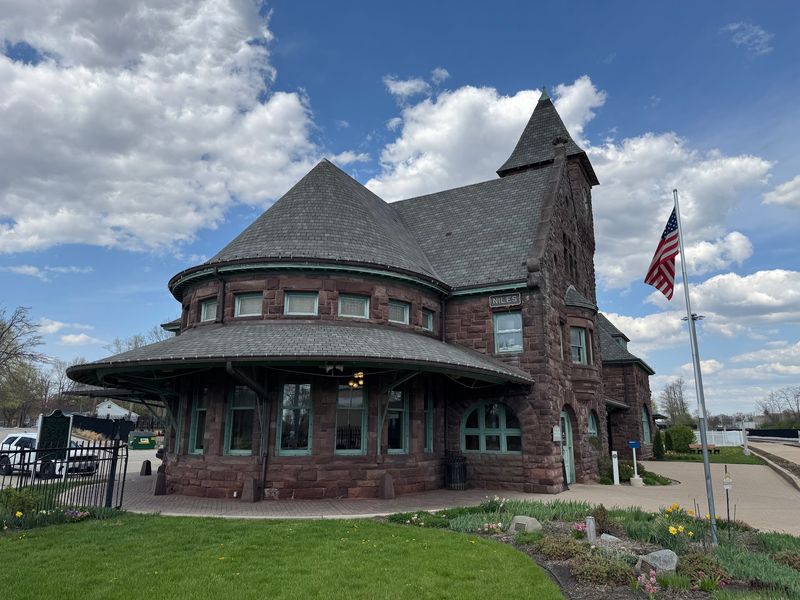
Massive stone blocks and rich red brickwork define this spectacular 1890s showpiece, making it one of Michigan’s most visually striking railroad buildings. Detroit architects Spier and Rohns crafted a Richardsonian Romanesque masterpiece for the Michigan Central Railroad that still turns heads today.
The heavy masonry construction and rounded arches create an imposing presence that perfectly captures the confidence of railroad companies during their golden era. Every architectural detail, from the weathered stone foundation to the decorative brickwork patterns, speaks to an age when train stations were built to impress.
What makes this depot extra special is that it’s not just a museum piece gathering dust. Active Amtrak service means real passengers still walk through its doors, just like travelers did over a century ago.
That living connection to railroad history adds authenticity you simply can’t replicate.
The building proves that functional beauty and historical preservation can coexist perfectly. Standing before this architectural treasure, you’ll understand why Michigan Central spared no expense on this particular station.
Durand Union Station – Durand
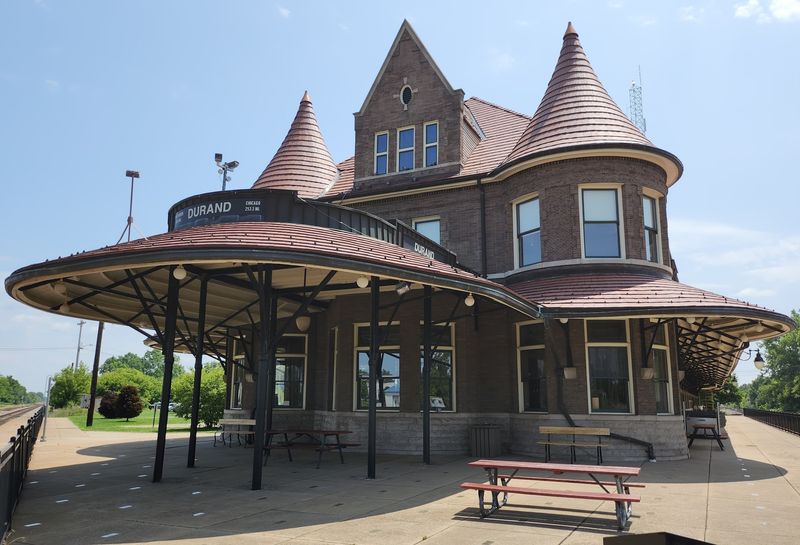
Locals affectionately call it the Queen of the Rails, and one look at this enormous 1903 structure explains why. Durand’s position as a crucial railroad crossroads demanded a station to match its importance, and the original builders delivered spectacularly.
Fire nearly ended the story in 1905 when flames tore through the newly opened depot. Instead of giving up, the community rebuilt with determination, preserving the distinctive Romanesque and Chateau-inspired elements that give the building its royal nickname.
That phoenix-like recovery speaks volumes about how much this depot meant to the town.
Today’s visitors get double value from a trip here. The Michigan Railroad History Museum fills the interior with fascinating exhibits and memorabilia that transport you back to the steam era.
Meanwhile, active Amtrak service keeps the platform bustling with modern travelers.
The blend of museum and working station creates an atmosphere you won’t find anywhere else. History isn’t locked behind glass here; it’s part of everyday life, just as it should be in a true railroad town.
Standish Historic Depot – Standish
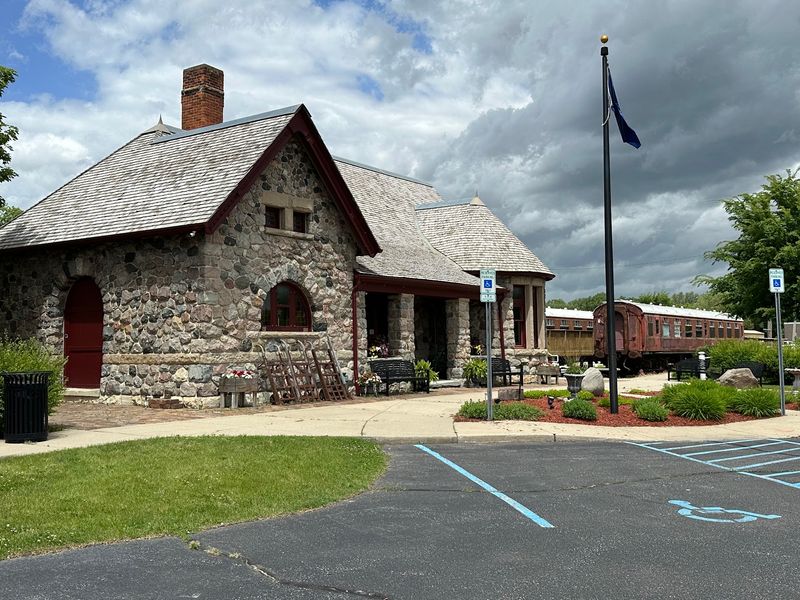
Something heartwarming happened during this depot’s construction in 1889. Local farmers pitched in to haul the fieldstones used in its walls, turning the building project into a genuine community effort.
Those rough-cut stones still tell that story of neighbors helping neighbors.
The Michigan Central Railroad chose Richardsonian Romanesque styling even for this small-town station, proving that impressive architecture wasn’t reserved only for big cities. The chunky stonework and solid proportions give the modest building a surprising amount of visual weight and character.
After serving passengers for decades, the depot could have easily fallen into ruin like so many others. Instead, thoughtful restoration transformed it into a welcome center and museum packed with railroad artifacts and local history displays.
Visitors can explore both the building’s architectural details and the stories of the people who passed through its doors.
The original stones hauled by those long-ago farmers remain the star attraction. Running your hand across that weathered fieldstone connects you directly to the community spirit that built this place, making history feel refreshingly tangible and real.
Thomas Edison Depot Museum – Port Huron
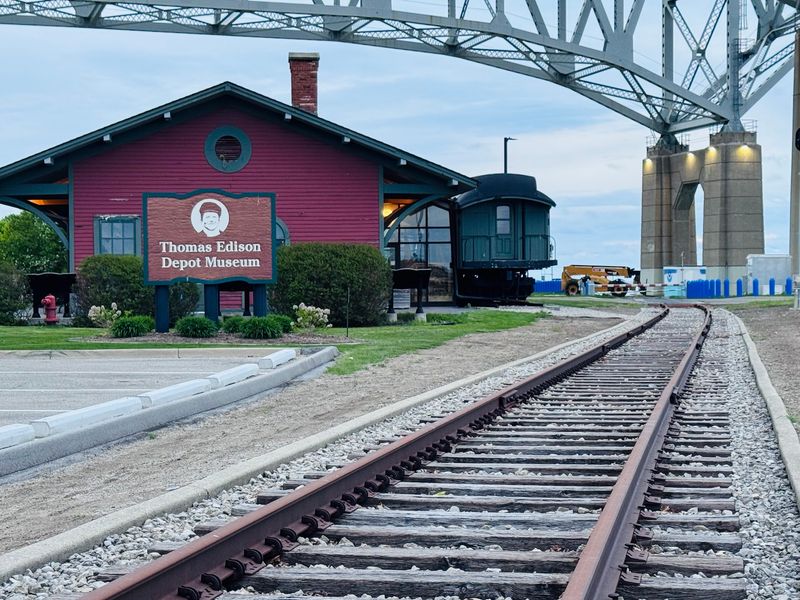
Imagine a teenage Thomas Edison working as a news butcher in this very building, hawking newspapers and candy to train passengers. That’s exactly what happened between 1859 and 1863, adding a layer of celebrity history to an already significant structure.
The Italian Villa styling makes it stand out architecturally, too.
Built in 1858 as the Grand Trunk Western Railroad’s Gratiot Railway Station, this depot ranks among Michigan’s oldest surviving railroad buildings. The graceful proportions and decorative elements typical of Italian Villa architecture were uncommon choices for railroad structures, making this example particularly noteworthy.
Restoration work brought the building back from deterioration and transformed it into the Thomas Edison Depot Museum. Now visitors can explore both railroad history and Edison’s early life in Port Huron.
Display cases hold artifacts from both subjects, creating a richer experience than either topic alone could provide.
The Edison connection draws people who might normally skip a railroad museum, while architecture and train enthusiasts appreciate the rare Italian Villa styling. Everyone leaves having learned something unexpected about this remarkable building and the famous inventor who once worked here.
Pere Marquette Railroad Depot – Bay City
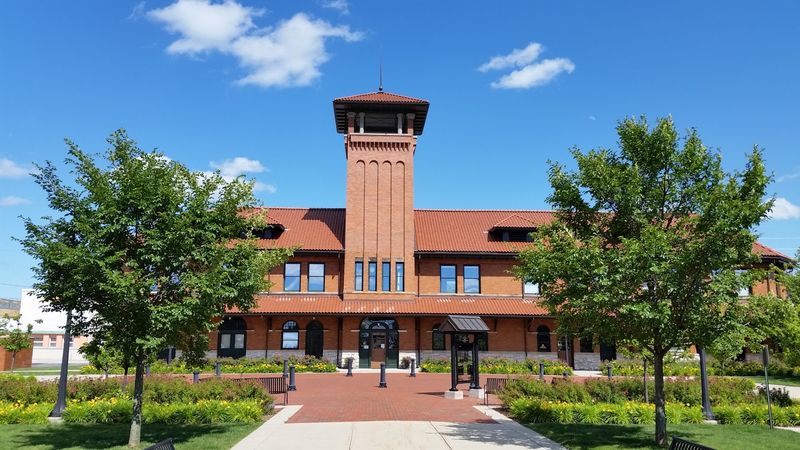
Red brick walls accented with crisp limestone trim create a handsome contrast that catches the eye immediately. Built in 1904, this Pere Marquette Railroad depot showcases the refined passenger architecture that railroads favored during the early twentieth century.
Rounded arches and an impressive interior waiting room added elegance to the travel experience.
Time took its toll as decades of neglect and unfortunate alterations gradually erased important architectural features. The tower disappeared, the porte cochere came down, and the building’s original character seemed lost forever.
Many people probably walked past without realizing what treasures lay hidden beneath layers of modifications.
Then came a major restoration effort that changed everything. Workers carefully brought back the missing tower and reconstructed the porte cochere, transforming the depot from a shadow of itself into something approaching its original glory.
The renewed building now stands proud again, looking much as it did when passengers first arrived in their Sunday best.
Seeing Bay City’s depot today, you’d never guess how close it came to permanent disfigurement. The successful restoration proves that even seriously altered historic buildings can recover their dignity and beauty.
Michigan Central Railroad Chelsea Depot – Chelsea
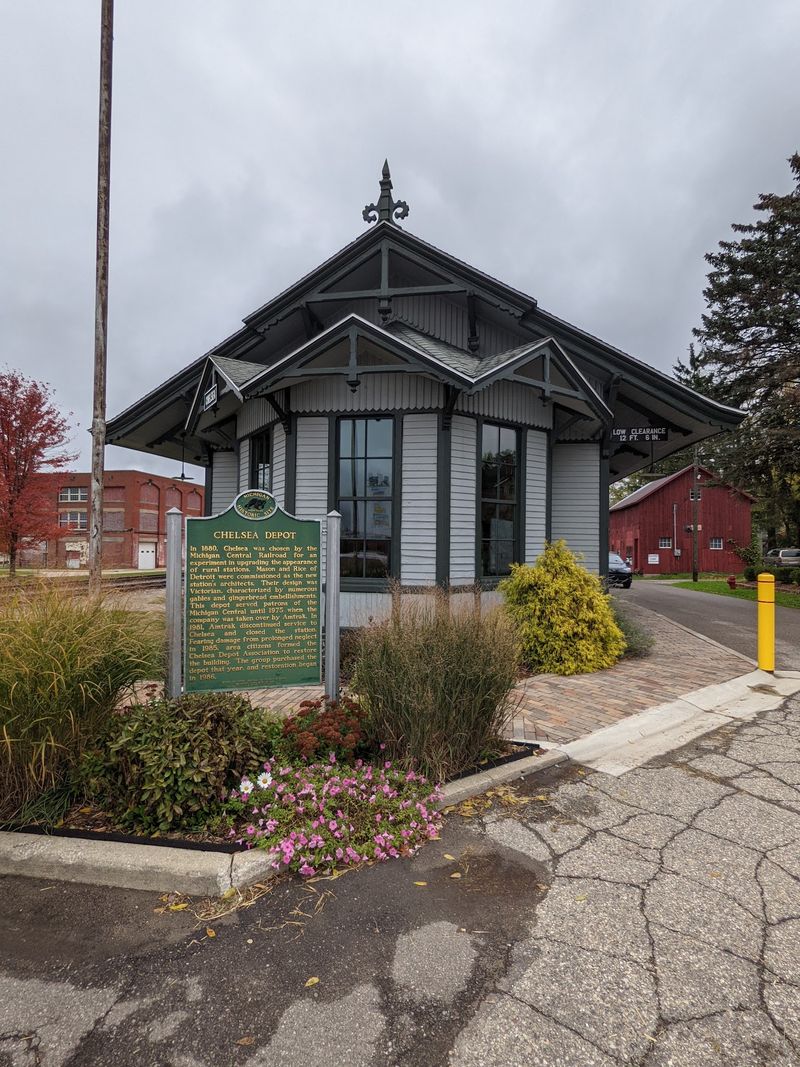
Architecture enthusiasts, pay attention to this one. Chelsea’s 1880 depot represents the only known Michigan railroad station designed by the prestigious Detroit firm Mason and Rice.
That distinction alone makes it worth seeking out, even if you care more about building design than railroad memorabilia.
The Stick Style Victorian architecture sets it apart from the stone Romanesque depots that dominated the era. Decorative woodwork, exposed structural elements, and varied textures create visual interest across every surface.
Mason and Rice clearly understood that a smaller depot still deserved thoughtful, sophisticated design.
National Register of Historic Places designation recognizes the building’s architectural importance, cementing its status as a significant cultural resource. The listing also helps ensure that future changes respect the original design intent.
Preservation efforts keep the distinctive Victorian details intact for new generations to appreciate.
If you typically find railroad museums a bit dry, this depot offers an alternative appeal. The architectural craftsmanship takes center stage here, making it perfect for people who’d rather study trim details and proportions than admire old lanterns and timetables.
Sometimes the building itself is the most interesting artifact.
Pere Marquette Railway Belding Depot – Belding
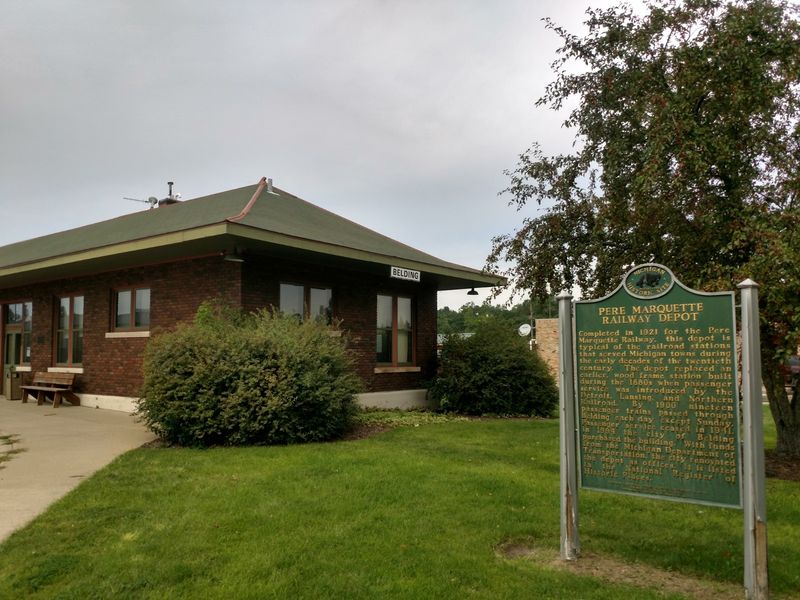
Restraint defines this 1920 depot’s architectural approach. After decades of ornate Victorian and Romanesque showpieces, railroad companies began favoring simpler, more practical designs.
Belding’s station perfectly captures that shift toward understated functionality.
The long, low brick form stretches horizontally rather than reaching skyward like earlier depots. A hipped roof with broad eaves provides weather protection without unnecessary decoration.
Simple railroad-standard layouts replaced the elaborate floor plans of grander stations, reflecting changing priorities in depot construction.
This building replaced an earlier station that served the community during Belding’s boom years as a silk-mill town. The original depot witnessed the height of local prosperity, but by 1920, different economic realities called for a more modest replacement.
The new station served its purpose efficiently without the architectural flourishes of its predecessor.
National Register listing confirms the depot’s historical and architectural significance despite its unassuming appearance. The city’s preservation efforts keep this modest building standing as a reminder that not every important railroad structure needed towers, arches, or decorative stonework.
Sometimes quiet dignity tells the story better than grand gestures ever could.
Saline Depot Museum – Saline
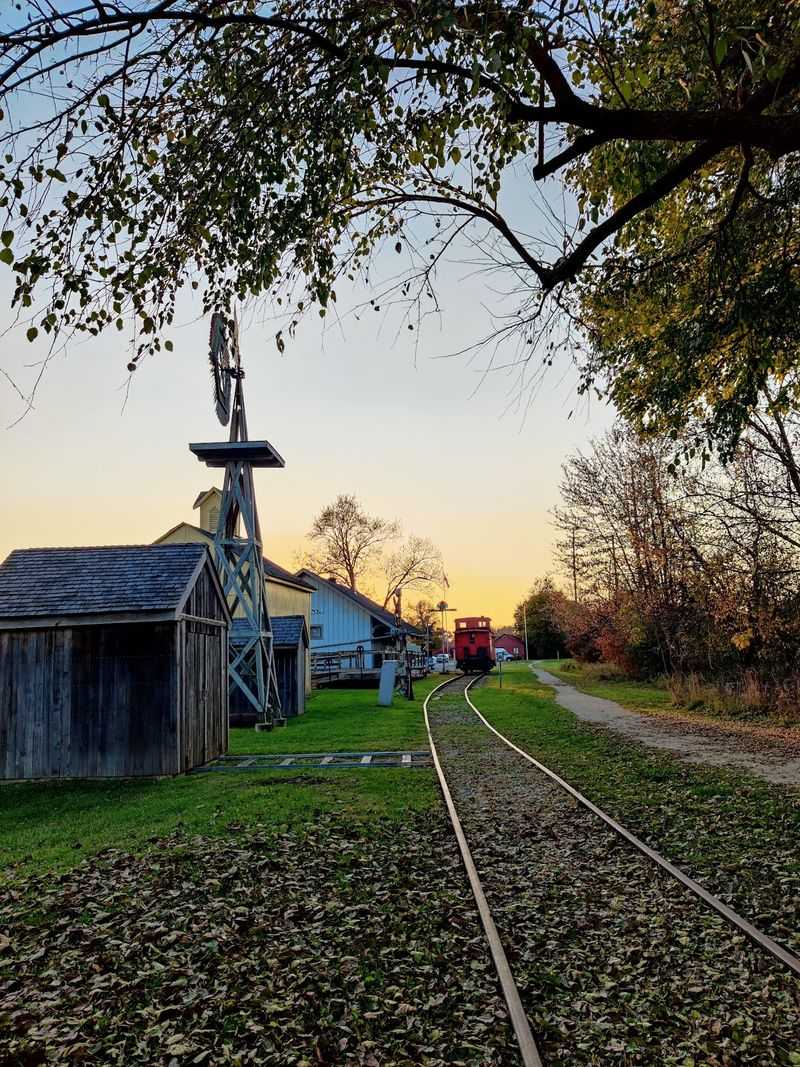
Forget monumental stone stations for a moment. This modest 1870 timber-frame depot offers something different and equally valuable: an authentic look at how railroads connected small agricultural communities with the wider world.
The Late Victorian styling is charming without being showy.
Original combinations of spaces tell the functional story clearly. Passenger waiting areas shared the building with a telegraph office that sent messages clicking across miles of wire.
Freight space handled the crops and goods that made farming communities economically viable in the railroad era.
The depot still sits on its original site, which adds enormous authenticity to the experience. Many historic railroad buildings get moved to new locations, losing that crucial connection to place.
Here, you’re standing exactly where nineteenth-century farmers waited with produce bound for distant markets.
Operating now as the Saline History and Depot Museum, the building preserves both its architecture and its stories. Exhibits explain how rail service transformed agricultural economies and daily life.
The modest scale actually helps visitors understand typical depot operations better than touring a grand urban station ever could.
Marlette Train Depot – Marlette
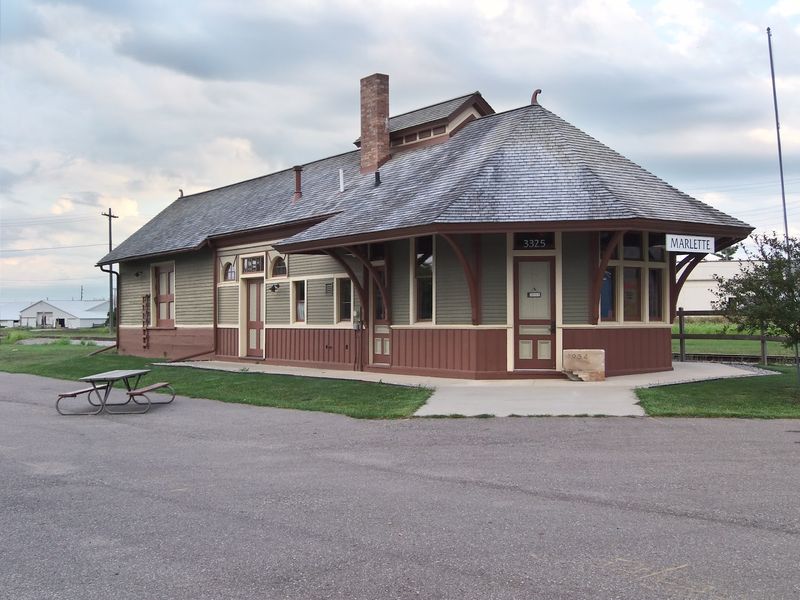
This depot’s story nearly ended in demolition. Serious disrepair left the building teetering on the edge of permanent loss, just another railroad casualty claimed by decades of neglect.
Many people probably assumed it was beyond saving.
The Marlette Historical Society refused to accept that fate. Determined volunteers and supporters mounted a rescue effort, tackling restoration work that brought the depot back from the brink.
Their grassroots preservation campaign succeeded where official channels might have failed, proving that passionate locals can accomplish remarkable things.
Marlette’s railroad connections stretch back to the late 1800s when rail service fueled commercial growth and connected the town with regional markets. The depot witnessed that boom period firsthand, watching goods and passengers flow through its doors during prosperous decades.
Later decline threatened to erase all physical evidence of that railroad heritage.
Today’s museum setting showcases both the restored architecture and artifacts that tell the area’s railroad story. Visitors see the building and the history it represents, understanding how close both came to disappearing forever.
That near-loss narrative makes the current preservation feel even more meaningful and worth celebrating.
Flint & Pere Marquette Railroad East Saginaw Depot (Potter Street Station) – Saginaw
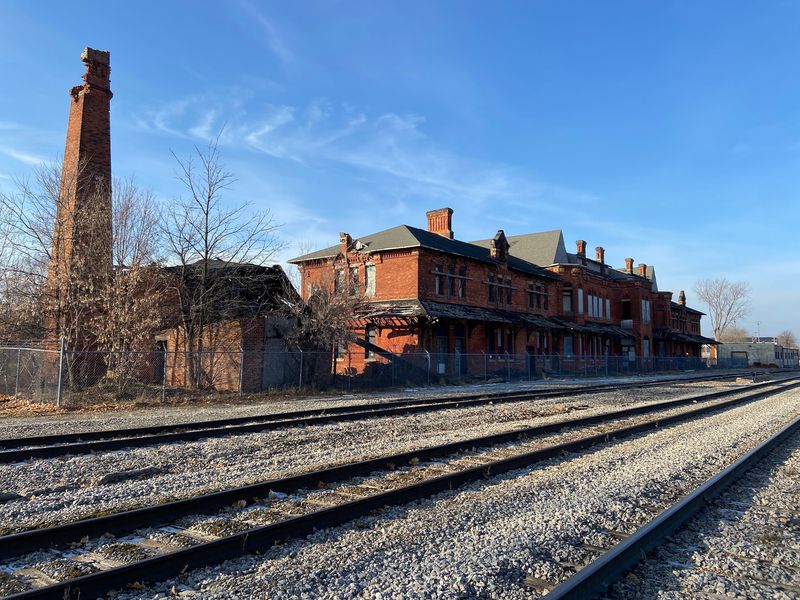
Noted railroad architect Bradford L. Gilbert designed this 1881 Italianate depot, bringing professional sophistication to Saginaw’s booming lumber and industrial district.
Gilbert’s national reputation meant this wasn’t just another cookie-cutter station design slapped together from standard plans. His architectural signature elevated the building above ordinary railroad structures.
The Italianate styling stands out among Michigan’s surviving depots, offering graceful contrast to the heavier Romanesque examples built during the same general period. Decorative brackets, refined proportions, and carefully detailed elements show Gilbert’s skill at adapting fashionable architectural styles to railroad purposes.
Saginaw’s importance as a major lumber center during the railroad era meant the station witnessed tremendous traffic and economic activity. Vast quantities of timber passed through on their way to building sites across the growing nation.
The depot became a critical node in the industrial network that fueled Michigan’s nineteenth-century prosperity.
National Register designation recognizes both the building’s architectural merit and its role in transportation history. That dual significance makes it especially noteworthy: important design by a famous architect serving a crucial economic function.
Few depots can claim such a complete historical story.
Clio Depot — Clio
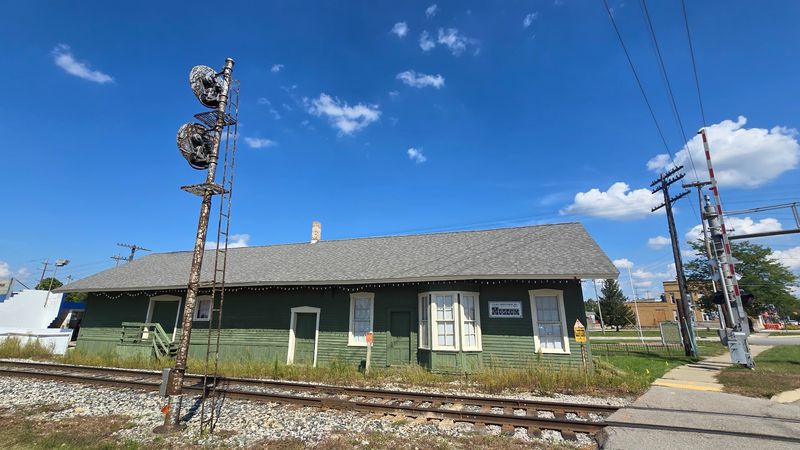
Clio Depot is the kind of historic railroad stop that makes a small-town detour feel completely worthwhile. Built in 1873, the depot dates to the era when railroads were reshaping communities across Michigan.
Its modest wood-frame design, gabled roof, and classic Victorian details reflect the practical architecture used for smaller railroad stations of the period.
The depot served as an important transportation point for Clio for generations, connecting local residents, farmers, and businesses with larger communities along the railroad. Passenger service eventually ended in 1960, leaving the building without its original purpose.
Its story could have ended there, but the depot found a second life. After being used for other purposes, including a laundromat, the historic structure was rescued and restored by local preservationists.
Today, the Clio Depot and Museum helps keep the town’s railroad story alive through exhibits and artifacts.
For travelers interested in Michigan history, this isn’t a flashy attraction. That’s part of its charm.
The preserved depot offers a quiet glimpse into the days when trains were at the heart of everyday life.