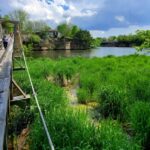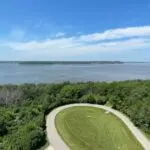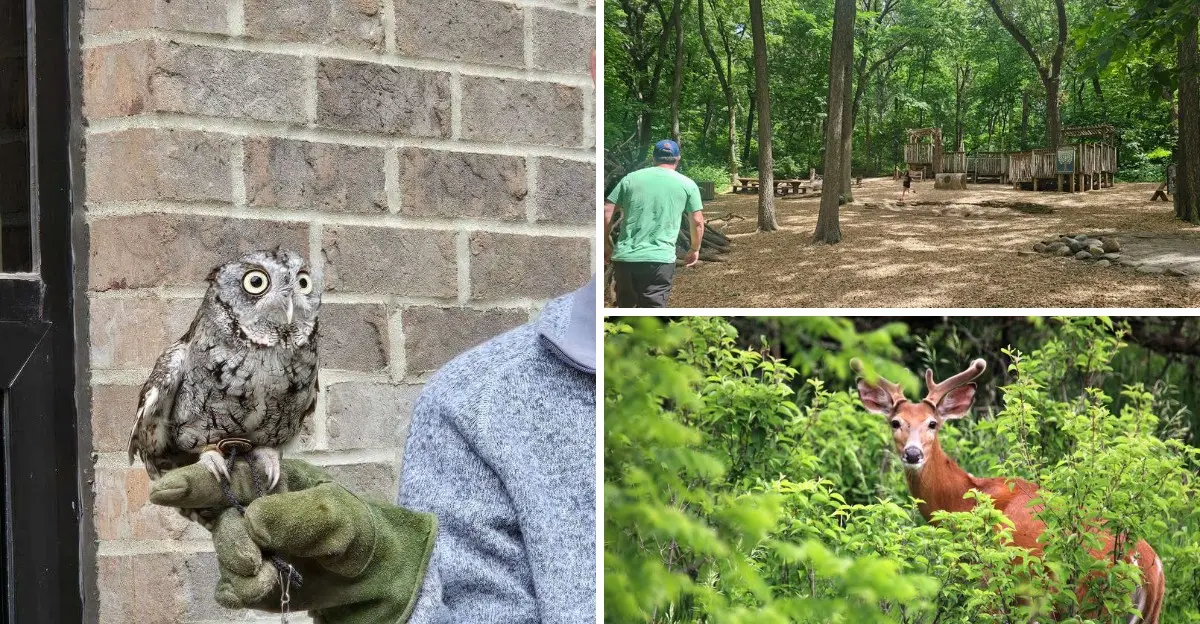
You could drive past this Sioux City sanctuary a hundred times without guessing what waits behind the fence.
Dorothy Pecaut Nature Center looks quiet from Sioux River Road, but step inside and the story changes fast.
Injured owls, rescued birds of prey, native reptiles, and other wildlife turn this Stone State Park stop into a surprising encounter with Iowa’s wild side.
Outside, trails disappear into the Loess Hills, winding through prairie and woodland where wild creatures still move through the trees and tall grasses.
Inside, educational exhibits bring visitors closer to animals that many people rarely see up close.
It’s the kind of place that can turn an ordinary afternoon into a little adventure.
If you’ve ever wondered what’s hiding beyond that unassuming entrance, Dorothy Pecaut has plenty of answers waiting.
The Hidden Wildlife World Inside Stone State Park
Most visitors to Stone State Park stick to the main trails and overlooks, but there’s a 14,000-square-foot secret tucked into the northern Loess Hills. Dorothy Pecaut Nature Center transforms what could be a simple drive-by into an immersive wildlife experience.
The building itself houses natural-history exhibits that bring Iowa’s ecosystems to life.
Step inside and you’ll discover live animals, not just photos or preserved specimens. Gardens surround the facility, while viewing areas let you watch wildlife behavior up close.
Multiple trail systems branch out from the center, connecting you to the broader park landscape.
The facility serves as both an educational hub and a wildlife rehabilitation site. Animals that can’t survive in the wild find permanent homes here, becoming ambassadors for their species.
Whether you’re interested in Iowa’s prairie heritage or simply want to see native creatures, this center delivers far more than its roadside presence suggests.
Many families plan quick stops and end up spending hours exploring the exhibits, trails, and wildlife encounters that make this hidden sanctuary worth the visit.
Meet The Resident Animal Ambassadors
Every animal living at Dorothy Pecaut has a story. These aren’t zoo specimens kept for entertainment but rescued creatures that serve an important educational purpose.
Each one survived an injury or situation that left them unable to thrive in the wild, so they’ve become full-time teachers instead.
Regular “Meet An Animal” sessions give visitors hands-on learning experiences. Programs vary based on which animals are available and comfortable that day.
Children get to see species they might encounter in Iowa’s woods and prairies, learning important facts about behavior, diet, and habitat needs.
These encounters go beyond simple observation. Staff members share each animal’s background while explaining conservation challenges facing wild populations.
Adults often find themselves just as captivated as kids when meeting these ambassadors face-to-face.
The program emphasizes respect and understanding rather than fear. Many visitors leave with a newfound appreciation for creatures they previously misunderstood.
From snakes to owls, each animal ambassador helps bridge the gap between humans and Iowa’s native wildlife, creating connections that last long after the visit ends.
Look For The Birds Living At The Raptor House
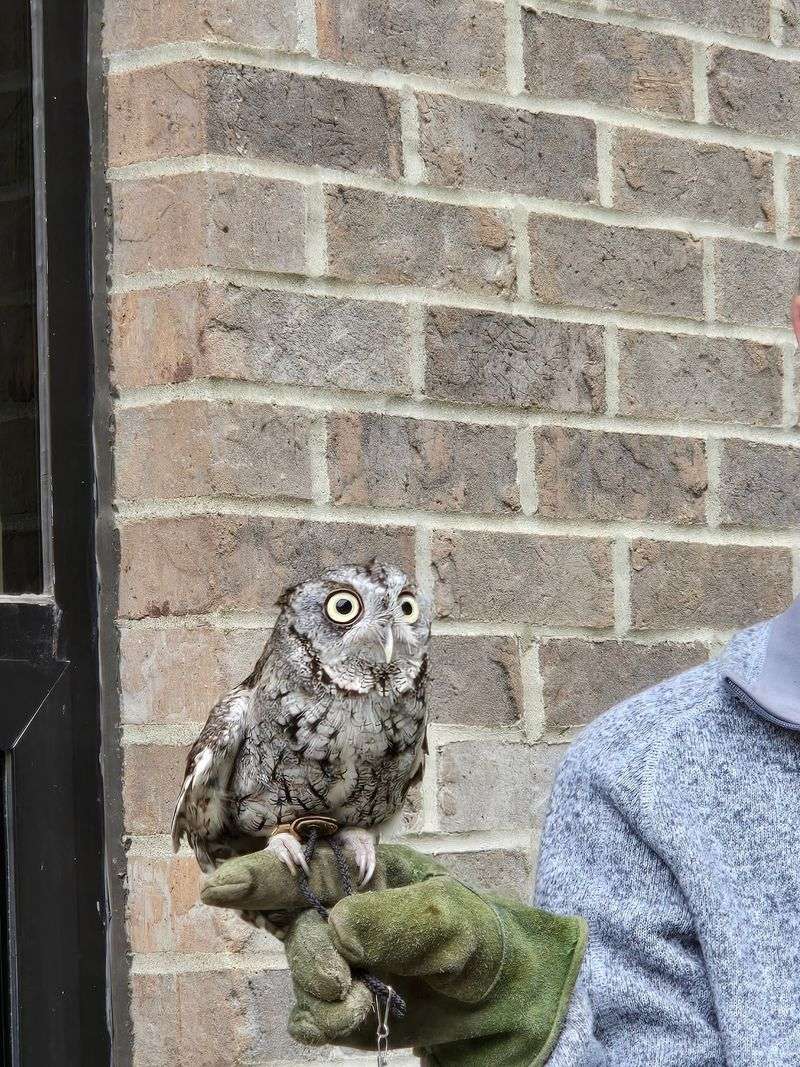
Harlan watches visitors with the intense, unblinking stare only a barred owl can manage. This permanent resident can’t hunt on his own anymore, but he’s become one of the center’s most recognizable teachers.
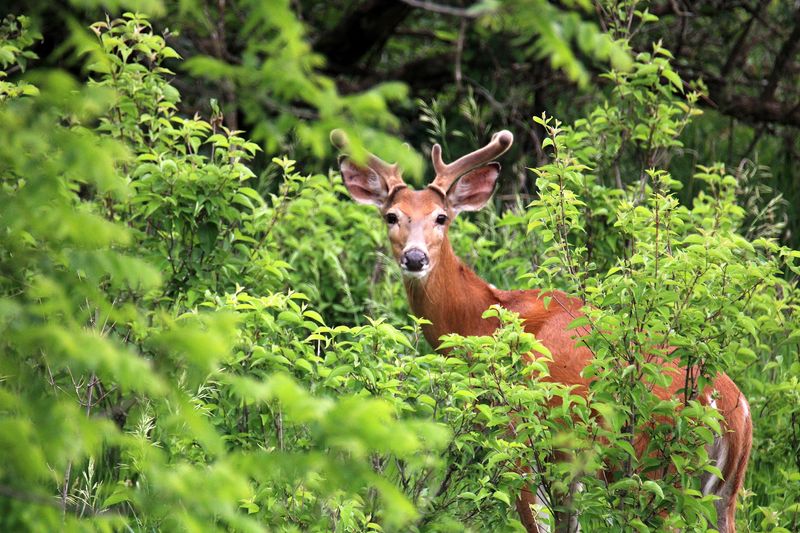
Lucia, an eastern screech owl, shares the Raptor House with Harlan and other birds that faced injuries too severe for release.
The Raptor House stands out as one of Dorothy Pecaut’s most distinctive features. Birds of prey that suffered wing damage, collisions, or other injuries find lifelong care here.
Each bird participates in educational programming when they’re comfortable doing so.
Visitors learn why these magnificent hunters matter to Iowa’s ecosystem. Raptors control rodent populations, indicate environmental health, and represent the wild character of the Loess Hills region.
Seeing them up close reveals details you’d never notice in the wild.
Flight demonstrations aren’t part of the experience since these birds have limited flying ability. Instead, programs focus on the owls’ adaptations, hunting strategies, and the reasons they ended up in permanent care.
Many people visit specifically to meet Harlan and Lucia, returning multiple times to check on their feathered friends.
The Reptiles And Fish Are Part Of The Experience
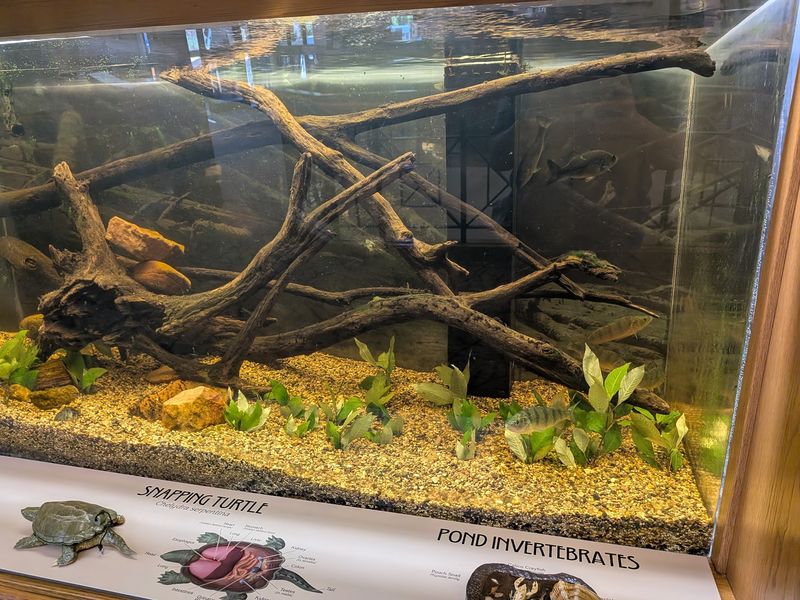
Live exhibits throughout the Nature Center showcase creatures often overlooked in Iowa’s wild spaces. Native reptiles occupy carefully designed habitats that replicate their natural environments.
Fish tanks display species from local waterways, giving visitors a window into underwater ecosystems.
These aren’t random animals collected for display purposes. Each species represents an important part of Iowa’s prairie, wetland, or woodland communities.
The exhibits explain how these different habitats shape the Loess Hills region and support diverse wildlife.
Turtles, snakes, and fish might not have the immediate appeal of fuzzy mammals, but their ecological roles matter just as much. Many kids discover a fascination with reptiles after watching a snake move or observing a turtle’s feeding behavior.
The displays encourage close observation while maintaining safe boundaries.
Rather than relying on photographs or taxidermy, Dorothy Pecaut uses living animals to teach about adaptation and survival. You can watch fish navigate their tank or see how a turtle’s shell provides protection.
These hands-on learning opportunities help visitors understand Iowa’s biodiversity beyond the obvious deer and birds that dominate most wildlife discussions.
The Wildlife Outside The Fence Is Just As Interesting
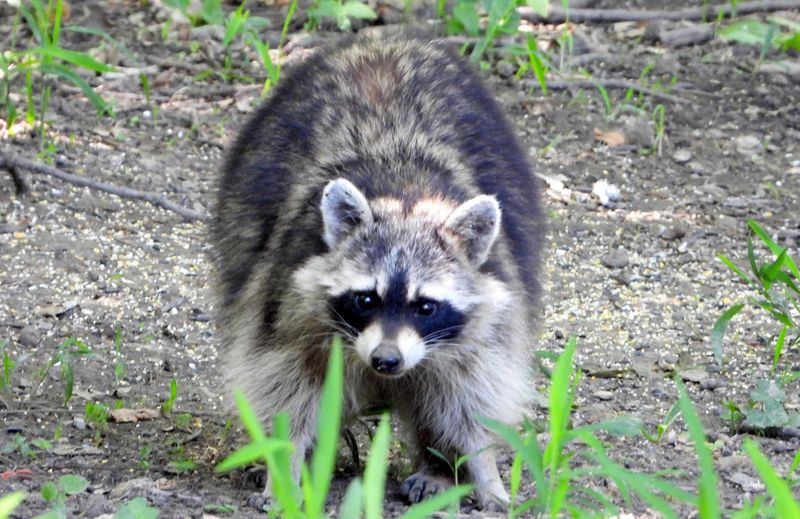
The resident animals tell only half the story. Step onto any trail leading from the Nature Center and wild Iowa reveals itself.
Prairie grasses sway in the wind while bur oak woodlands provide shade and shelter for countless species. Binoculars come in handy on these paths.
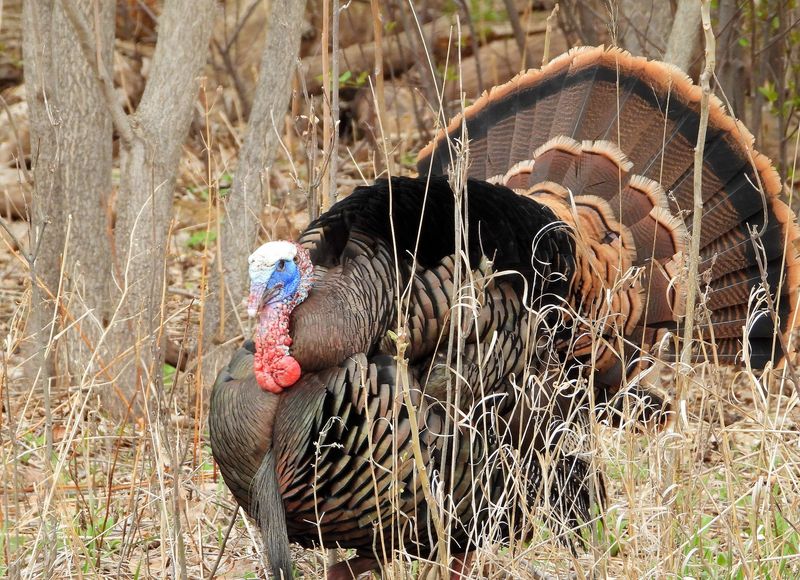
Wild turkeys strut through clearings, surprisingly comfortable with quiet human observers. White-breasted nuthatches work their way down tree trunks headfirst, a behavior that always draws attention.
Black-capped chickadees announce themselves with their distinctive calls. Several woodpecker species hammer away at dead wood, searching for insects or excavating nest cavities.
Patient visitors might spot deer, foxes, or smaller mammals during early morning or evening hours. Butterflies swarm the wildflower gardens in summer.
Hawks circle overhead, scanning for prey in the open grasslands.
The beauty of this setup is that you’re observing wildlife in their actual habitat rather than enclosures. The trails wind through genuine Loess Hills terrain, so every bird or animal sighting represents the real Iowa ecosystem.
Many visitors find the wild encounters just as memorable as meeting the resident ambassadors.
Wander Through A Real Piece Of The Loess Hills
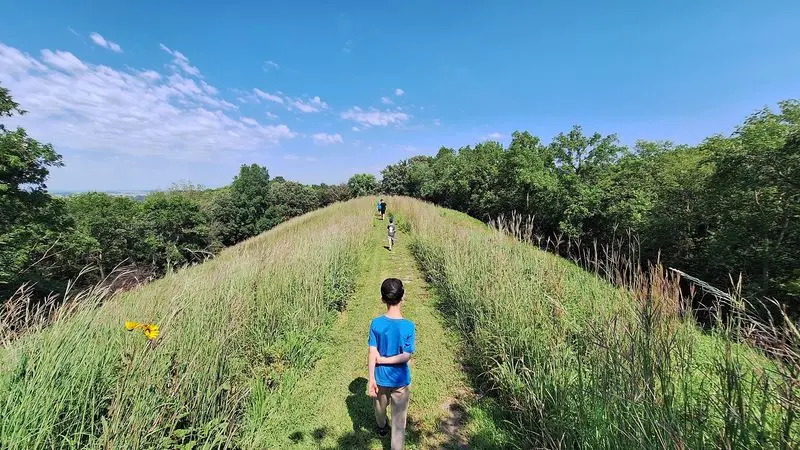
The landscape itself deserves attention. Dorothy Pecaut sits within one of North America’s most unusual geological features.
The Loess Hills formed from windblown silt deposits during the last Ice Age, creating steep ridges and distinctive prairie communities found in only two places worldwide (Iowa and China).
Walk these trails and you’re experiencing terrain shaped over thousands of years. Prairie grasses adapted to the dry, steep slopes dominate sunny areas.
Mature bur oak woodlands occupy protected valleys where moisture accumulates. The ridgelines offer views that help explain why early settlers found this region so challenging yet captivating.
The Nature Center’s roughly 10 acres connect to Stone State Park’s broader trail system. This arrangement lets visitors experience both managed nature-center grounds and wilder park landscapes without driving to different locations.
Understanding the Loess Hills context makes every plant and animal sighting more meaningful. Species here have adapted to specific conditions created by this unique geography.
The steep slopes, drought-prone ridges, and cool valleys create microhabitats supporting surprising biodiversity. Hiking here isn’t just exercise but a chance to walk through geological and ecological history.
Follow The Trails Beyond The Nature Center
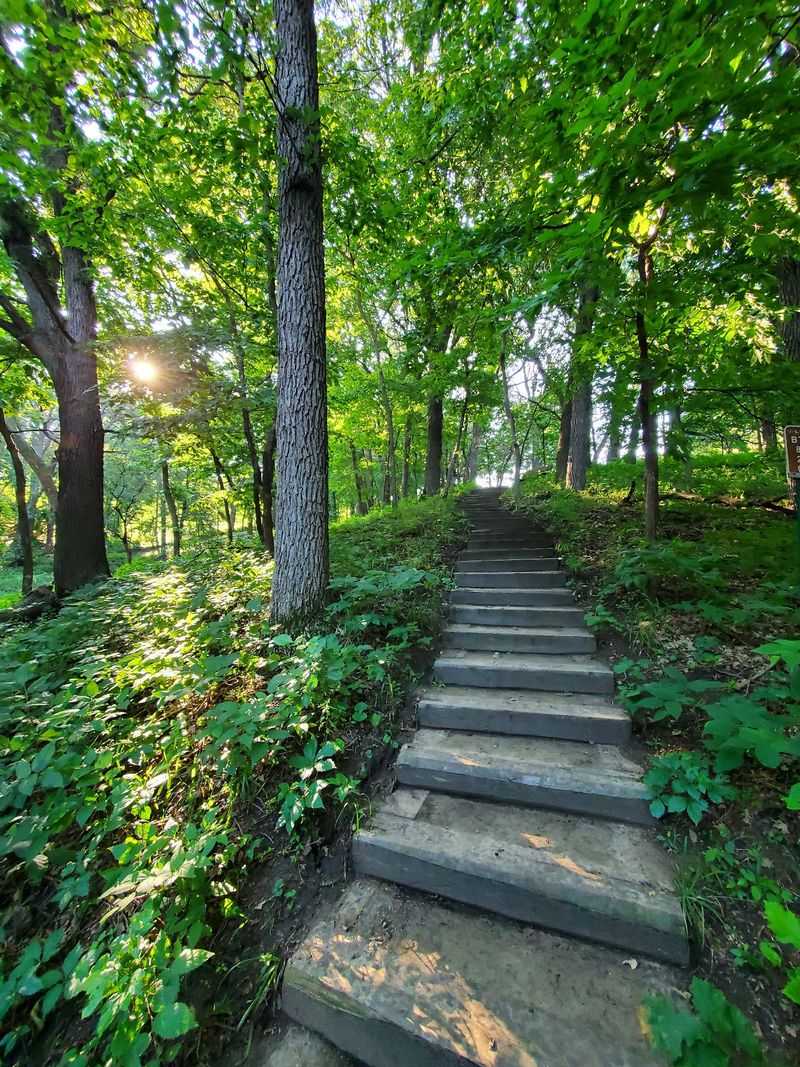
Whitetail Ridge, Loess Loop, Bluestem, Fox Run, Badger Run, Hidden Valley – the trail names hint at what you might encounter. Dorothy Pecaut’s trail system offers routes for every fitness level and time constraint.
Some paths loop back within 20 minutes while others can combine into longer hiking adventures.
Each trail provides different perspectives on the Loess Hills ecosystem. Bluestem winds through prairie where native grasses reach shoulder height in late summer.
Fox Run descends into wooded areas where the temperature drops noticeably. Hidden Valley reveals why certain animals choose specific habitats.
Trail maps are available at the Nature Center, and staff can recommend routes based on your interests. Want to see the best wildflowers?
They’ll point you in the right direction. Hoping for bird sightings?
Specific trails offer better opportunities.
The trail system transforms a Nature Center visit into a full outdoor experience. Many people come for the exhibits and realize the hiking opportunities are equally compelling.
Well-maintained paths make the terrain accessible while keeping you immersed in genuine wilderness. Pack water and wear sturdy shoes because these trails might convince you to explore longer than planned.
Let Kids Get Closer To Nature At The Nature Playscape
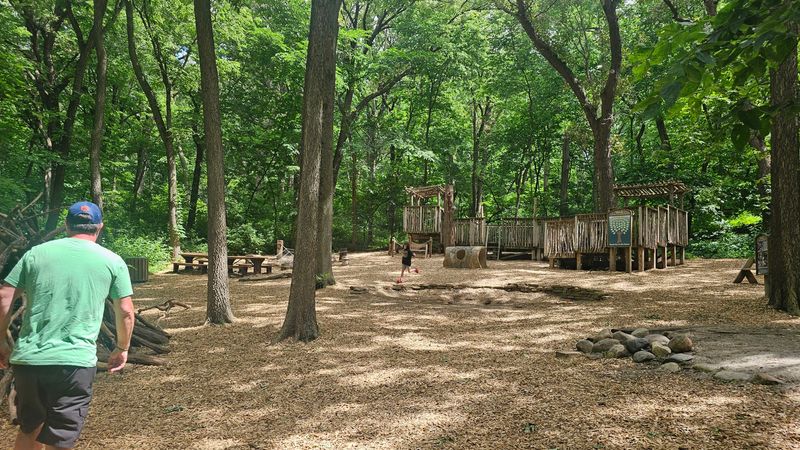
Active children need more than indoor exhibits to stay engaged. The Nature Playscape solves this challenge by combining outdoor play with environmental education.
Kids can climb, explore, and burn energy while still learning about the natural world surrounding them.
Unlike typical playgrounds with plastic equipment, this playscape uses natural materials and features that blend with the landscape. Children interact with the environment rather than simply playing on manufactured structures.
The design encourages imaginative play inspired by nature themes.
An outdoor amphitheater hosts special programs and events throughout the warmer months. Butterfly and wildflower gardens provide living classrooms where kids can observe pollinators at work.
Accessible trail sections ensure families with strollers or wheelchairs can enjoy the grounds.
Parents appreciate having multiple activity options for different age groups. Toddlers explore the playscape while older siblings hike nearby trails.
Everyone can reconvene at the gardens or amphitheater for shared experiences.
This setup extends visit duration naturally. Families don’t feel rushed through exhibits because kids have outdoor space to decompress.
The combination of indoor learning and outdoor play makes Dorothy Pecaut genuinely family-friendly rather than just kid-tolerant.
Come For The Wildlife, Stay For The Surprising History
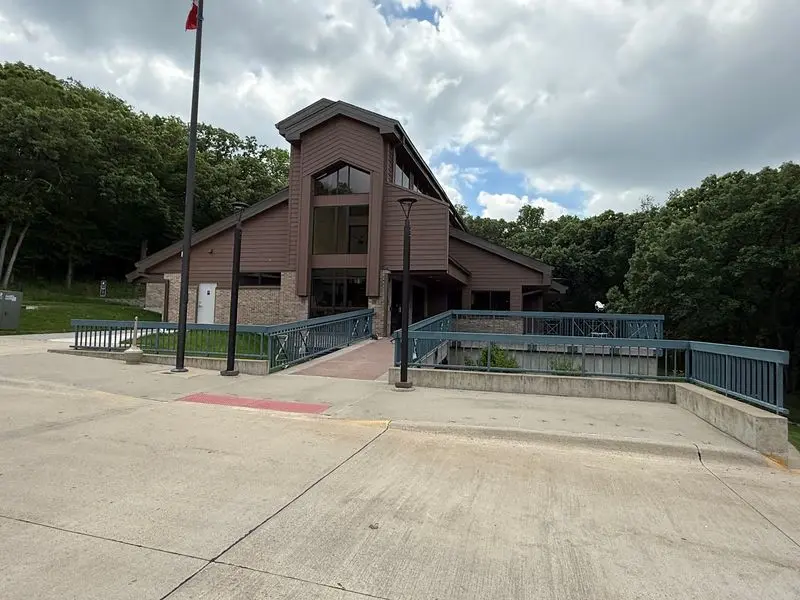
Stone State Park’s past includes chapters most visitors never learn. A zoo once operated in this area, bringing exotic animals to Sioux City long before modern conservation ethics changed how we think about captive wildlife.
That unusual legacy connects to today’s Nature Center in fascinating ways.
The Civilian Conservation Corps left its mark here during the Depression era. Young men built structures and trails that still serve park visitors today.
Earlier still, Lewis and Clark passed through this region during their famous expedition, noting the dramatic landscape and abundant wildlife.
Sioux City’s early development intertwined with this land. Local families like the Pecauts recognized the area’s value for education and conservation, eventually supporting the Nature Center’s creation.
Dorothy Pecaut herself championed environmental education, lending her name to the facility.
These historical layers add depth to every visit. You’re not just seeing animals and trails but walking through landscape shaped by geological forces, indigenous peoples, European explorers, Depression-era workers, and conservation advocates.
The Nature Center represents the latest chapter in a long story of humans interacting with this unique environment.
Plan Your Visit
Finding Dorothy Pecaut Nature Center requires heading to 4500 Sioux River Road in Sioux City. The good news?
Admission costs nothing. No entry fees, no hidden charges, just free access to exhibits and trails.
Current hours run Tuesday through Saturday from 9 a.m. to 4 p.m. Sunday hours shift seasonally, opening from noon to 4 p.m. between May 1 and October 31.
Mondays are closed, along with major holidays including New Year’s Day, Thanksgiving, Christmas Eve, and Christmas Day.
Planning to hike after the building closes? Use the lower parking lot because the main gate locks at 4 p.m.
Getting stuck inside the park after hours creates unnecessary hassle. Questions about programs or animal availability?
Call 712-258-0838 before visiting.
Pack water bottles, especially if you plan on hiking. Binoculars enhance wildlife watching on the trails.
Comfortable walking shoes matter more than you’d think given the terrain. Check the weather because Iowa’s conditions can shift quickly.
The combination of free admission and varied activities makes Dorothy Pecaut perfect for budget-conscious families seeking quality outdoor experiences. Many visitors return multiple times throughout the year to see seasonal changes.