A statue called The Hiker stands in this park, and most people stroll past him without a second look. He honors Georgia volunteers who served in the Spanish-American War.
That statue is just one clue. The ground nearby once hosted military drills, and the famous white fountain has been splashing since 1858.
I like how this place looks so calm under its mossy live oaks. Families picnic, kids play, and joggers loop the paths like nothing heavy ever happened here.
Yet the story underneath is much deeper.
I believe the best parks make you think a little, not just relax. This one does both.
Ghost tours love it, history buffs study it, and the Saturday crowd shops for fresh produce on its southern lawn. So what really happened on these 30 green acres?
The Fountain Everyone Photographs Has A Longer Story Than Its Selfies
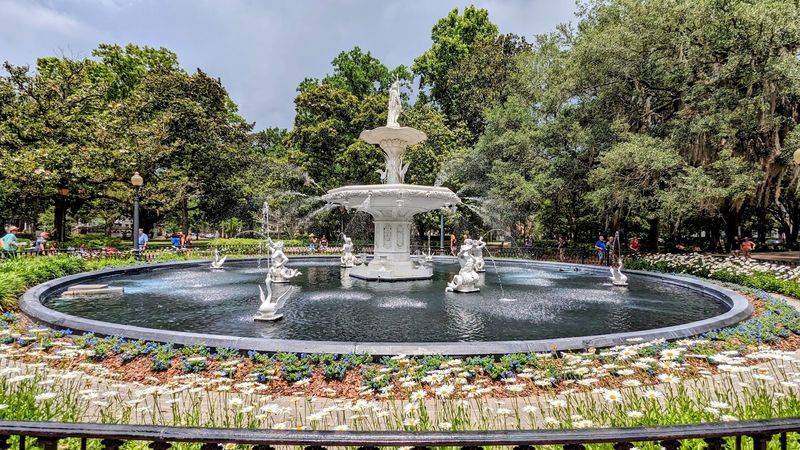
Since 1858, a cast-iron fountain has anchored the north end of Forsyth Park. It was modeled after grand fountains in France, so Savannah basically ordered a little Paris by catalog.
The fountain is easily the most photographed spot in the park. Wedding couples, graduates, and tourists all crowd the same railing for the same perfect shot.
Can you blame them?
Each March, the water turns green for St. Patrick’s Day. That tradition makes the fountain feel playful, even though it has stood through more than 160 years of Savannah history.
Think about what it has seen. The fountain was already splashing when the Civil War began.
It watched troops drill on nearby grounds and later saw decades when the park welcomed only some residents.
The fountain also needed some care recently. A major restoration was completed in 2025.
Snap your photo, of course. Then take a slow lap around the basin and study the sculpted details.
A landmark this old deserves more than a quick pose and a fast exit toward lunch.
Meet The Statue Most Strollers Never Notice
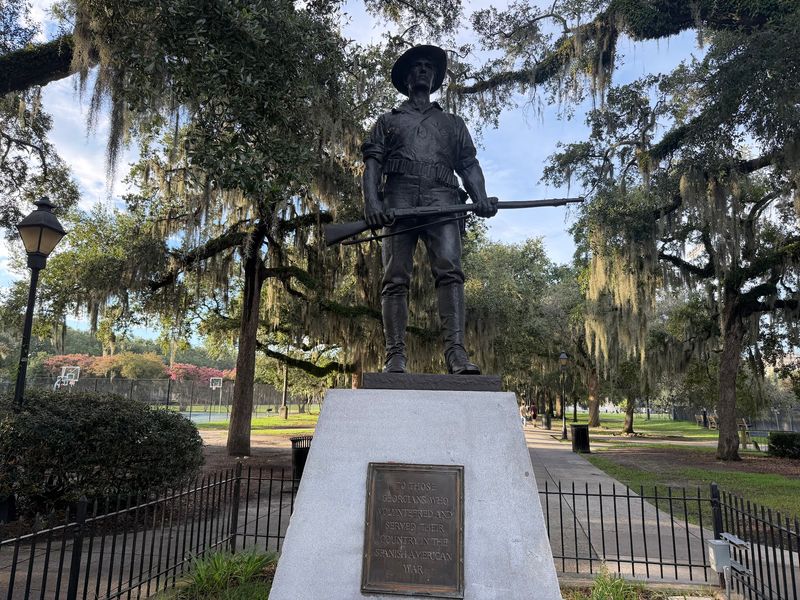
Funny thing about the most fitting monument in this park. It’s called The Hiker, and hikers walk right past it every day without blinking.
The statue honors Georgia’s volunteers in the Spanish-American War. That conflict lasted only a few months in 1898, so it often gets lost between bigger chapters in history books.
Forsyth Park holds several memorials beyond The Hiker. You’ll also find the Marine Monument and a Confederate Monument erected in 1875.
Together, they turn a simple walk into an outdoor history lesson.
The Confederate Monument is the largest and draws the most debate. It was built to honor Civil War soldiers, and it sits in a park that later enforced segregation.
Seeing it in person can spark real conversations.
Here’s my advice for families. Pick one monument and read every word on its plaque together.
Kids remember stories better when they can touch the stone and look up at the figure.
You don’t need a guide or a ticket. Entry to the park is free, and the monuments are open to anyone curious enough to stop.
That curiosity is the whole point.
Who Really Built Savannah’s Beautiful Public Spaces?
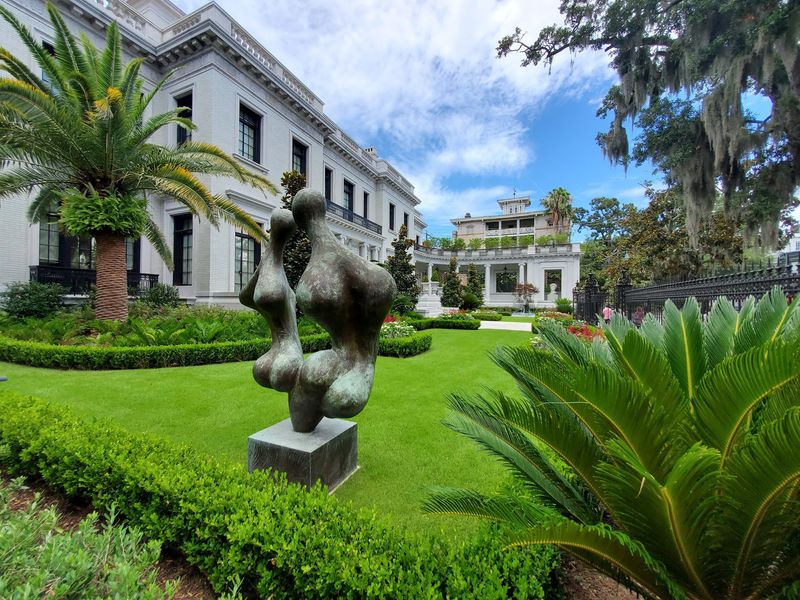
Beautiful parks rarely build themselves. In Savannah, much of the labor behind public spaces came from enslaved people.
Between 1830 and 1864, the City of Savannah purchased enslaved men for public works projects. That work shaped streets, squares, and green spaces across the city, including the area that became Forsyth Park.
The park started as a 10-acre plot in the 1840s. William Brown Hodgson pushed the idea forward, and the land became a public park in 1851.
It was named for John Forsyth, a former Georgia governor and U.S. Secretary of State.
That’s the part most visitors never hear. The pretty paths feel timeless, but real people with no choice helped make them possible.
Knowing this doesn’t ruin a visit. If anything, it adds weight to every shady step.
I believe honest history makes a place more meaningful, not less.
Want to learn more? Savannah has museums and tours that explore this chapter carefully.
Pairing one of them with a park walk gives you the full picture. The oaks look the same afterward, but you’ll see them differently.
Soldiers Once Marched Where Frisbees Fly Today
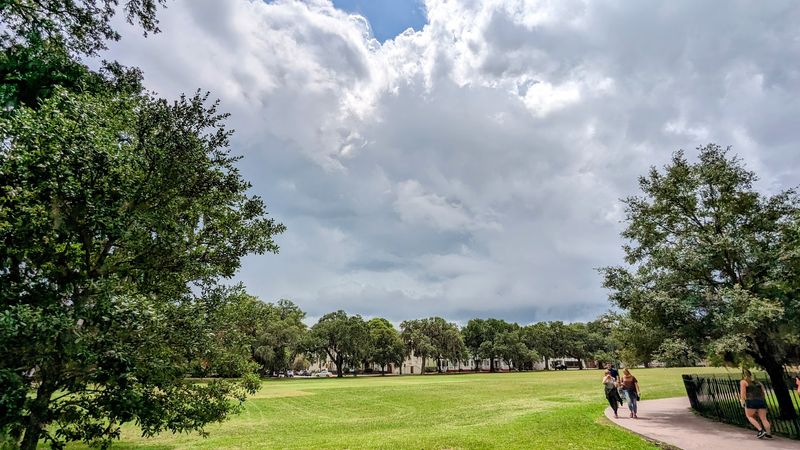
That wide southern lawn where kids toss Frisbees had a much stiffer job long ago. It was added to the park in 1867 as a military parade ground.
During the Civil War, Confederate troops used the park’s open grounds for drills and musters. After the war, Union soldiers occupied many public areas around Savannah.
Picture rows of boots stomping across the grass you’re about to picnic on. Okay, I’m not allowed to say picture, but you get the idea.
The contrast is wild.
Today, the southern end feels relaxed and sporty. Basketball and tennis courts sit nearby, and the open fields welcome soccer games, dog romps, and lazy afternoons.
I like how the space changed from marching orders to free play. It shows how a city can reshape the meaning of a place over time.
Bring a blanket and stake out some shade under the oaks. If you’ve got restless kids, let them run the old parade ground.
They’ll burn energy on the same ground soldiers once crossed, and that makes for a great story at dinner.
The Park That Wasn’t Open To Everyone
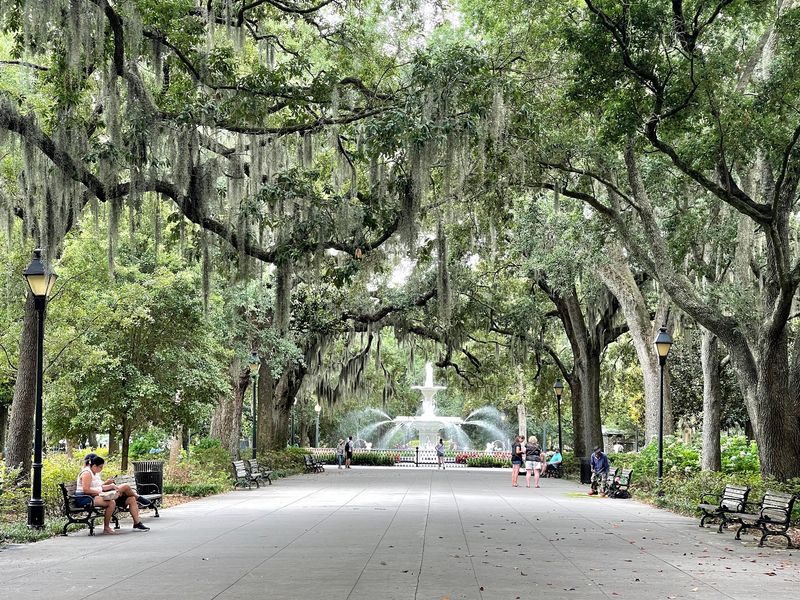
For generations, a simple walk through Forsyth Park was off-limits to many Savannahians. Under Jim Crow, Black residents were barred by custom from the city’s larger parks.
Those big parks were set aside for white residents. Black families were pushed toward smaller neighborhood parks that had far fewer features and much less care.
That system lasted until the Civil Rights Act of 1964 changed the law. Think about that timeline.
Plenty of people alive today remember when this park wasn’t theirs to enjoy.
This chapter rarely appears on postcards. The fountain photos and moss-covered paths tell a peaceful story, but the full one is more complicated.
Now, the park feels like a shared front yard for the whole city. Families of every background fill the playgrounds, courts, and lawns.
That shift is worth noticing.
Next time you settle onto a bench, take a moment with this history. It’s not meant to spoil your afternoon.
It’s meant to remind you that open, free public spaces were hard-won, and they matter more than we usually admit.
After Dark, The Ghost Stories Come Out To Play
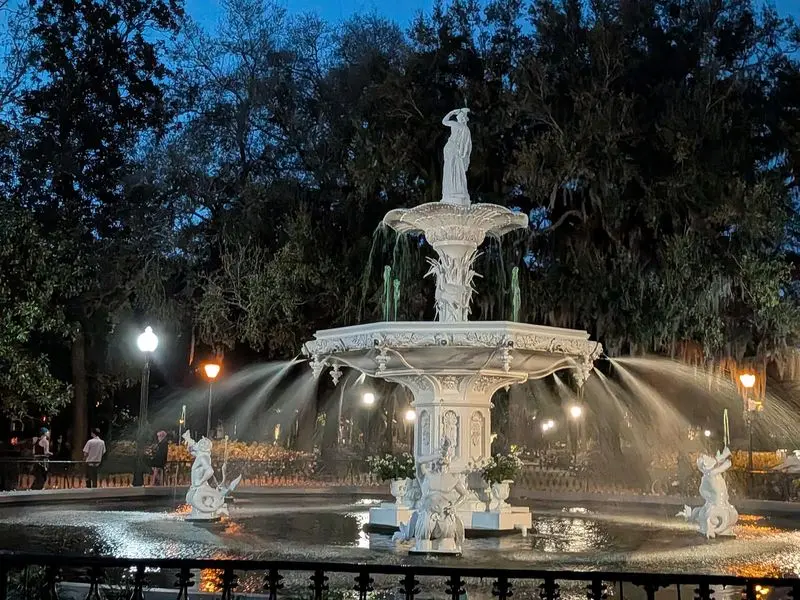
Shadowy figures, footsteps on empty paths, and sudden cold spots. Those are the kinds of tales ghost tour guides share about Forsyth Park after the sun goes down.
Savannah has a reputation as one of America’s most haunted cities. Much of that comes from colonial burial grounds, deadly yellow fever outbreaks, and Civil War history.
Severe epidemics swept the city in the 1700s and 1800s. Thousands of people were lost, and the city sits on land layered with old burial sites.
Forsyth Park gets folded into many of these spooky stories. Some tales point to Civil War soldiers.
Whether you believe any of it is totally up to you.
Honestly, the setting does half the work. Spanish moss swaying under lamplight looks spooky even on a calm night.
Want to test your nerves? Book an evening ghost tour that passes through the area.
Stick to lit paths, bring a friend, and keep your phone charged. Worst case, you hear some great stories.
Best case, you get goosebumps and an excuse to grab a late snack nearby.
Your Nose Gets Its Own Tour In This Garden
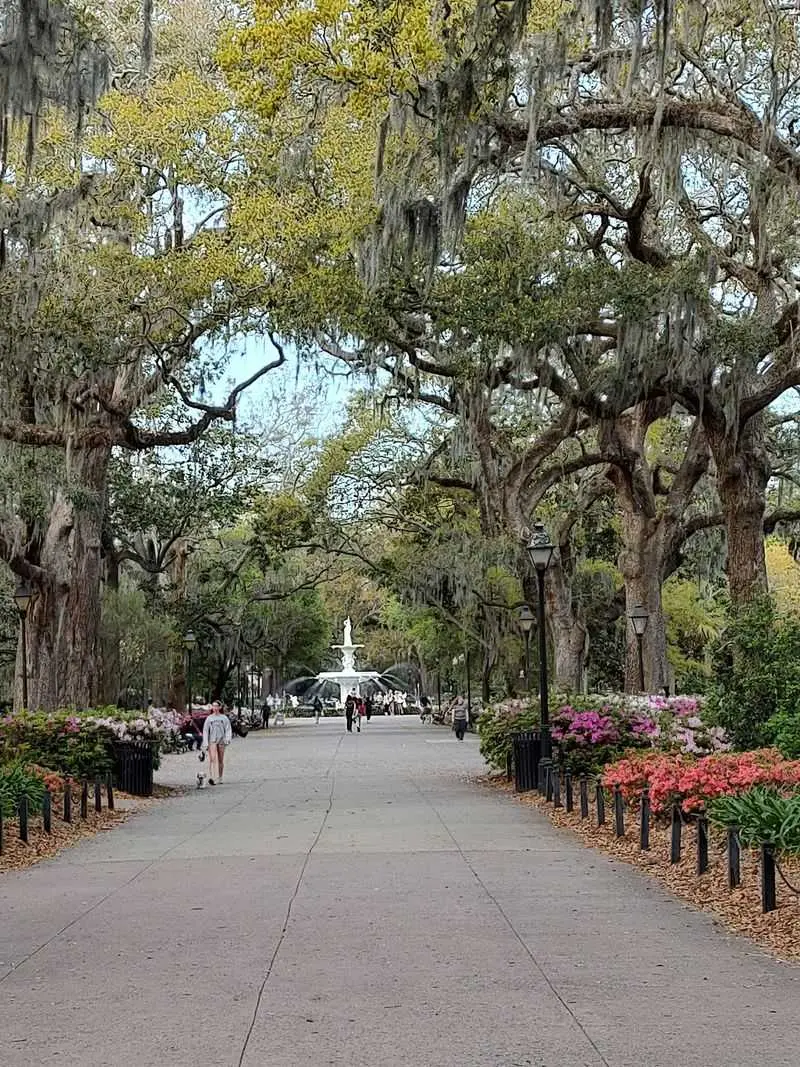
Not every corner of this park is about heavy history. On the west side sits the Fragrant Garden, a sweet little escape that’s easy to miss.
The garden was originally designed for people who are visually impaired. The idea was simple and smart.
Let scent and texture lead the experience instead of sight alone.
Everyone is welcome now, and it makes a lovely change of pace. After reading monument plaques and hearing ghost stories, a few quiet minutes with blooming plants feel great.
Families can turn it into a mini game. Ask kids to close their eyes and guess which plant smells the strongest.
It’s free entertainment and a sneaky science lesson.
The garden also shows a thoughtful side of Forsyth Park. Someone planned this space so more people could enjoy nature in their own way.
That kind of care deserves attention.
Visit in spring for the best chance at bright, busy blooms. Bring water, move slowly, and let your other senses take the lead.
It’s one of the calmest spots in all of Savannah.
Saturdays Here Smell Like Fresh Produce And Good Plans
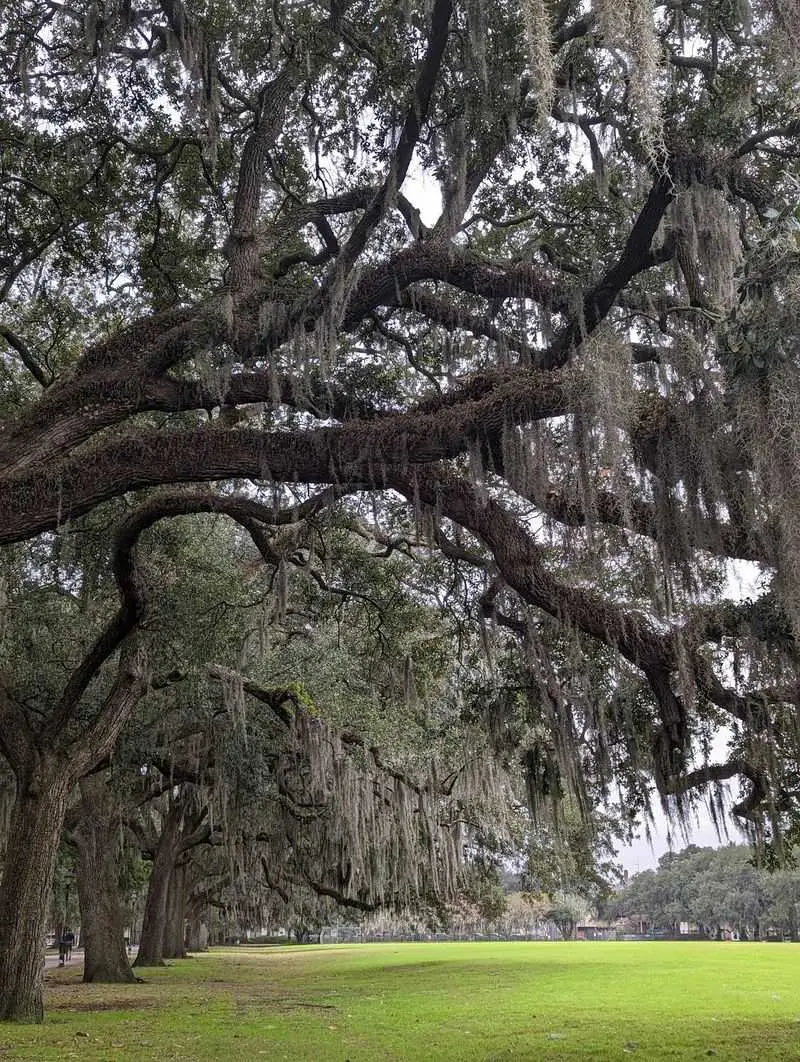
Saturday mornings bring a totally different mood to the south end of the park. The Forsyth Farmers’ Market sets up nearly every week from 9 a.m. to 1 p.m.
Vendors sell locally produced food and plants. It’s a great way to taste a bit of coastal Georgia without leaving the city.
Plus, shopping outdoors under old oaks beats any grocery aisle.
Go early if you want the best picks. Bring reusable bags and maybe a cooler if you’re driving.
Fresh goods and Southern heat aren’t always best friends.
Here’s a fun twist. The market sits near the old military parade ground.
Where soldiers once lined up, shoppers now line up for local treats and potted herbs.
Hungry for more? Spots like The Sentient Bean and Brighter Day Natural Foods sit right by the park.
The Collins Quarter at Forsyth is nearby too. Grab a bite, then wander back toward the fountain.
Make it a full morning. Shop, snack, stroll, and finish with shade on the grass.
Savannah weekends don’t get much easier than that.
Plan Your Visit So The Park Works For You
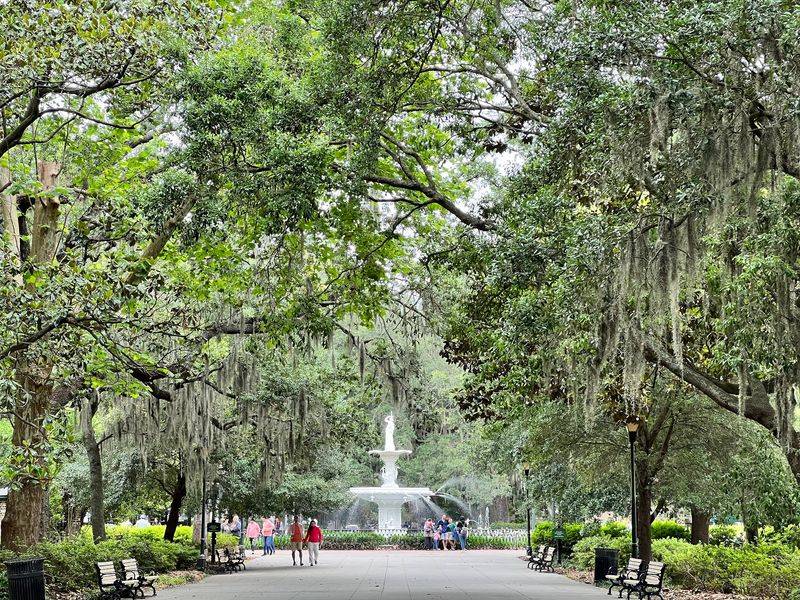
Good news for your wallet. Forsyth Park costs nothing to enter, with no gates and no tickets.
You’ll find it at Drayton St and W Gaston St, Savannah, GA 31401. The park stretches 30 acres, bordered by Gaston Street, Drayton Street, Park Avenue, and Whitaker Street.
Families have plenty to do. There are two playgrounds for different age groups.
On the east side, an event space turns into a splash pad on warm days.
Sports fans get basketball and tennis courts near the south end. Open fields handle soccer, Frisbee, and plain old running around.
Timing matters too. The park hosts the Sidewalk Arts Festival in April and the Savannah Jazz Festival in September.
Picnic in the Park and Shakespeare in the Park add even more reasons to return.
Parking near this Georgia favorite can get tight, so walking from nearby historic streets is smart. Wear comfy shoes and bring sunscreen.
Most of all, slow down. Read a plaque.
Notice The Hiker. Forsyth Park rewards anyone who looks past the pretty fountain and listens to everything it has carried.