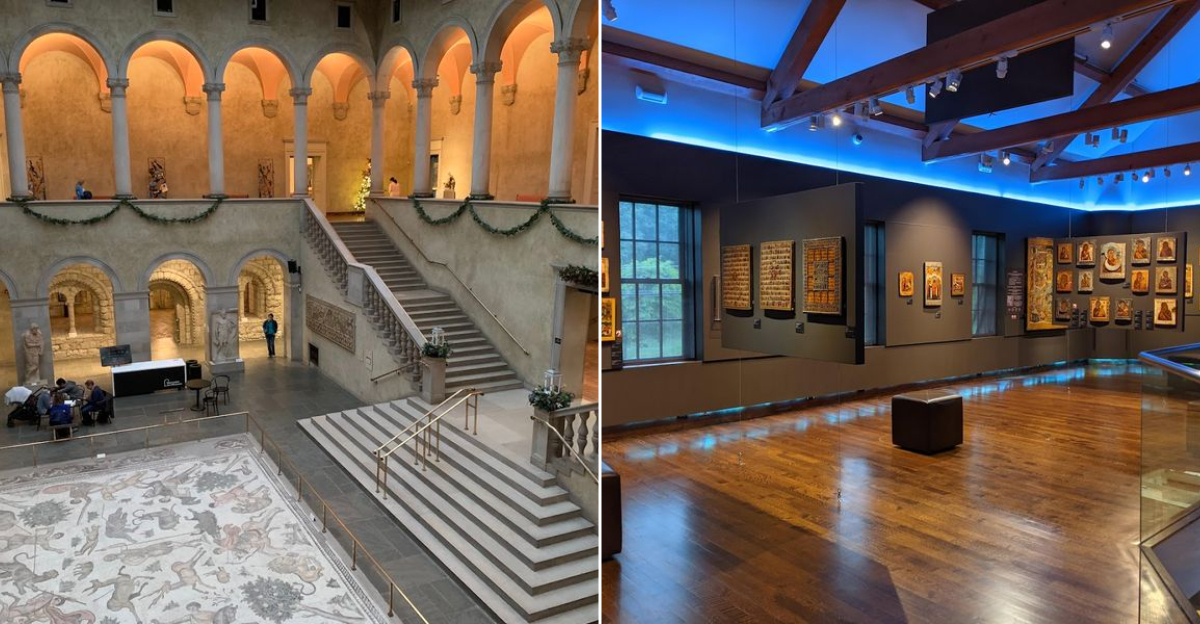
Early summer in Massachusetts feels open and unhurried—salt air drifting in from the coast, warm sidewalks in historic towns, and green spaces threading between cities and campuses. It’s a season that makes stepping indoors feel less like a pause and more like a shift into another kind of landscape.
Across the state, museums don’t always behave like traditional galleries. Some unfold inside old factories where light falls across vast open floors, others spill into sculpture parks where art and nature share the same quiet air, and a few recreate entire worlds where history feels close enough to touch.
These are places that ask you to slow down, look again, and move through them rather than simply observe. The line between visitor and experience begins to blur almost immediately.
Here’s a closer look at Massachusetts museums that challenge what a gallery can feel like from the moment you walk in.
Isabella Stewart Gardner Museum
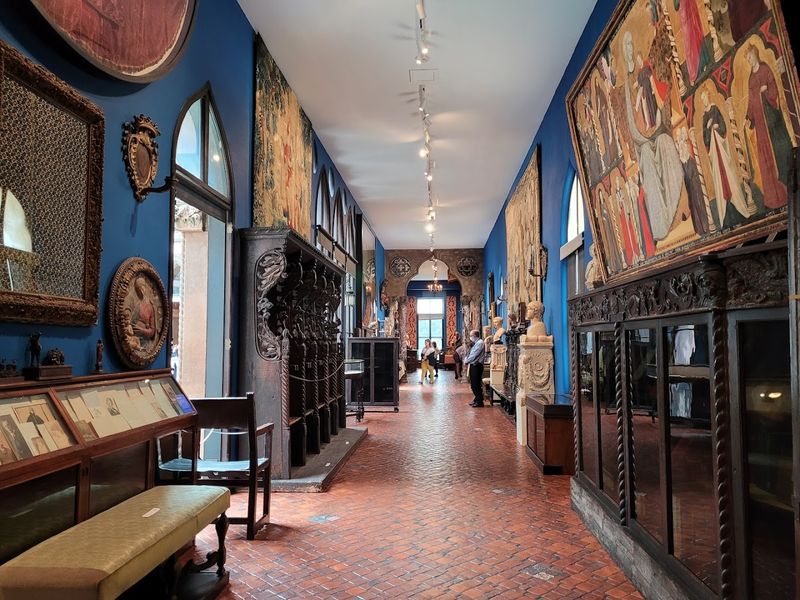
The first surprise is not a painting but a feeling – like you have crossed a threshold into someone else’s perfectly staged obsession. Light spills into a courtyard full of greenery, balconies frame the air, and every room seems arranged for mood before scholarship.
That is exactly why the Isabella Stewart Gardner Museum in Boston feels unlike a standard museum visit.
Built as a Venetian-inspired palace at 25 Evans Way, it reflects founder Isabella Stewart Gardner’s intensely personal vision. She installed European, Asian, and American works beside furniture, textiles, and architectural fragments, creating rooms that behave more like living compositions than neutral galleries.
Her will famously requires the collection’s arrangement to remain essentially unchanged, which gives the museum a rare sense of permanence and mystery.
You are not guided by chronological labels so much as by atmosphere, memory, and surprise. Empty frames left after the notorious 1990 art theft deepen that emotional charge, reminding you that absence can shape a museum experience as powerfully as presence.
Even repeat visits feel intimate because the building itself participates in the storytelling.
Come here expecting a polished march through masterpieces, and you may feel wonderfully disoriented. Visit the official site at gardnermuseum.org, then give yourself time to wander slowly.
This is a place where the collector’s imagination still sets the terms.
MASS MoCA
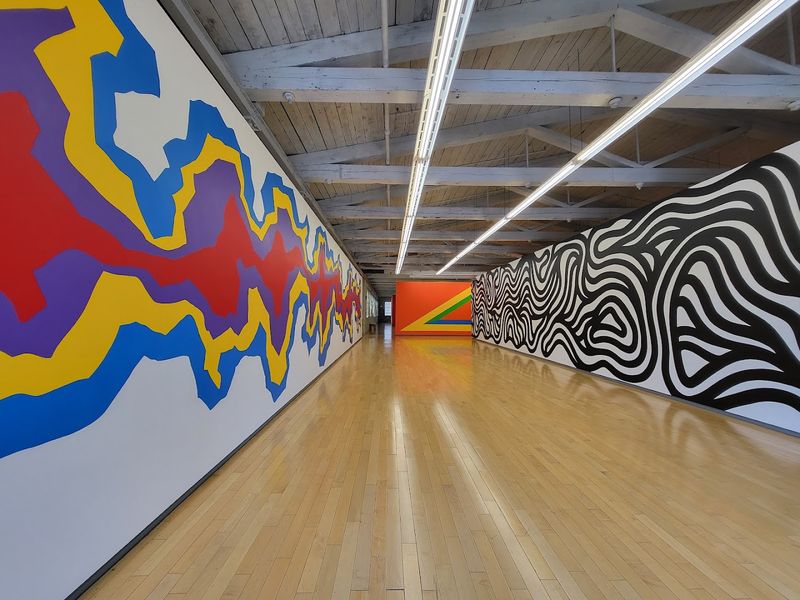
It starts with scale – brick buildings stretching out like a small industrial city, long corridors, tall windows, and rooms big enough to swallow ordinary exhibitions whole. Instead of shrinking art to fit conventional galleries, the setting lets artists think expansively and sometimes overwhelmingly.
That is the thrill of MASS MoCA in North Adams.
Located at 1040 MASS MoCA Way inside a transformed 19th-century factory complex, the museum is one of the country’s boldest examples of adaptive reuse. Contemporary art here often arrives as immersive installation, monumental sculpture, sound environment, or multimedia experiment that depends on the architecture around it.
The buildings are not just containers for culture – they actively shape the work you encounter.
You might step into a room humming with light and projection, then cross into a quieter space where beams, brick, and floorboards remain part of the visual experience. Because the campus is so large, the day feels exploratory rather than tightly programmed.
That freedom changes your pace and makes discovery feel personal.
If many museums encourage careful observation from a respectful distance, this one invites wandering, curiosity, and physical engagement. Check current exhibitions at massmoca.org before you go, because the lineup changes often.
MASS MoCA proves that a museum can feel as raw, ambitious, and alive as the art it presents.
Peabody Essex Museum
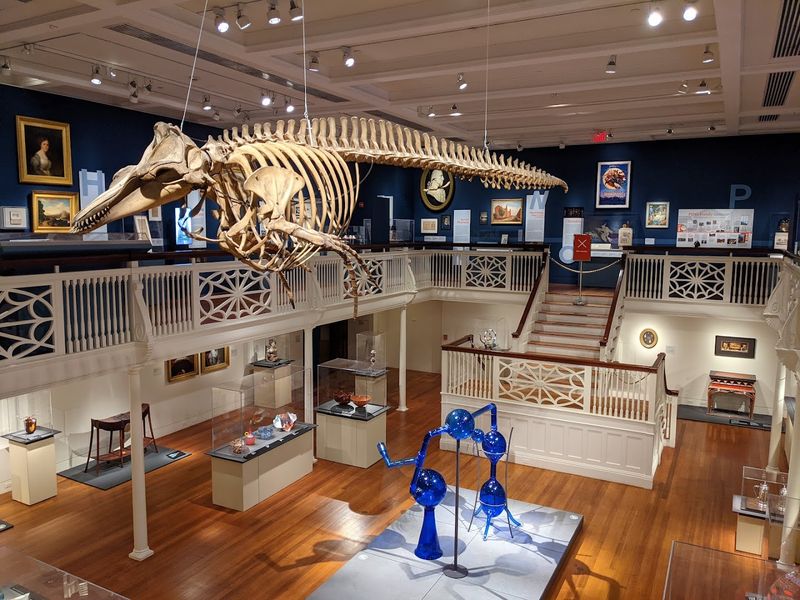
Some places make you feel like you are traveling without ever leaving the building. A maritime object leads to contemporary design, a historic room opens into global storytelling, and suddenly the idea of a single museum category starts to fall apart.
That layered experience defines the Peabody Essex Museum in Salem.
At 161 Essex Street, this institution grew from collecting traditions tied to New England’s seafaring world, but today it ranges far beyond maritime history. Art, architecture, science, design, and cultural interpretation meet here in a way that feels unusually fluid.
Its most talked-about feature is Yin Yu Tang, a roughly 200-year-old Chinese house that was carefully disassembled, transported, and reconstructed, giving visitors an immersive architectural encounter rather than a simple display.
What makes the museum memorable is how naturally those worlds connect. You can move from Asian export art to photography, then into a house that lets you think about family life, migration, craftsmanship, and preservation all at once.
The experience asks you to consider context, not just objects.
This is especially rewarding if you like museums that refuse to stay in one lane. Plan ahead at pem.org and allow more time than you think you need, because the museum is larger and richer than many first-time visitors expect.
Salem has many attractions, but this one genuinely redefines the gallery format.
deCordova Sculpture Park and Museum
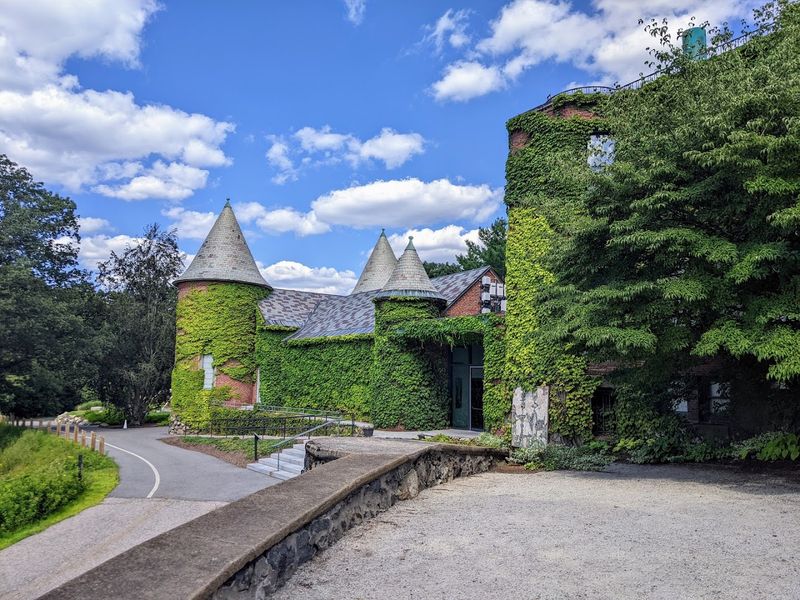
Fresh air, open sky, and the crunch of a path underfoot are not sensations most people associate with galleries. Here, though, the landscape does not sit politely outside the museum experience – it becomes part of the exhibition itself.
That is the unmistakable appeal of deCordova Sculpture Park and Museum in Lincoln.
Located at 51 Sandy Pond Road, deCordova combines an indoor museum with a sculpture park spread across more than thirty acres. Monumental contemporary works appear on hillsides, near trees, beside water, and along walking routes that shift with the seasons.
Rather than isolating art from its surroundings, the institution encourages you to see weather, scale, distance, and terrain as active elements in the viewing experience.
A sculpture you notice from far away will feel different once you approach it, circle it, and watch how it changes against clouds or foliage. Even the pauses between works matter because they reset your attention.
That rhythm makes the visit feel less like moving through rooms and more like entering a conversation between artists and the land.
If traditional galleries sometimes compress your body into quiet, careful behavior, this place invites movement and contemplation at the same time. Check seasonal hours and exhibitions through The Trustees website before visiting. deCordova proves that one of Massachusetts’ most compelling museum experiences begins outdoors.
MassArt Art Museum
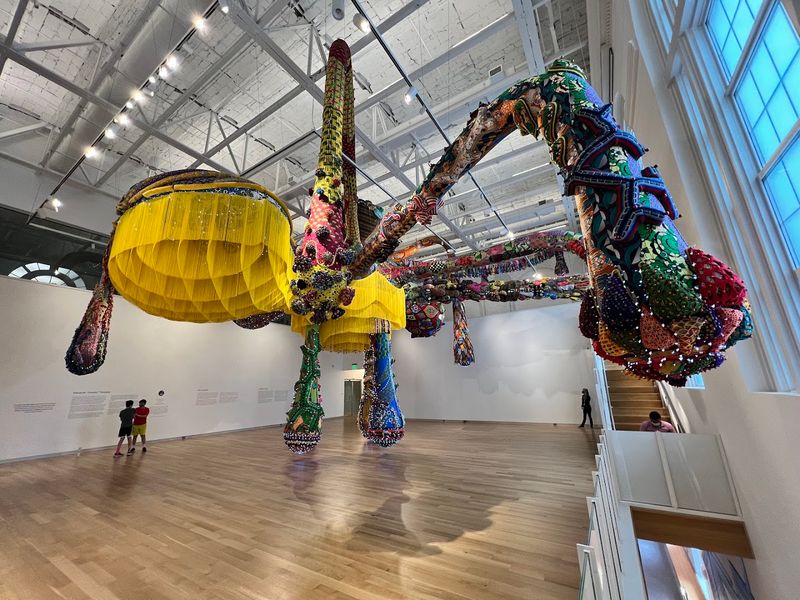
Not every museum wants you to stand back quietly and admire from a distance. Some want conversation, social reflection, and a little productive discomfort, the kind that makes you stay with an idea longer than expected.
That energy runs through the MassArt Art Museum, often called MAAM, in Boston.
Situated at 621 Huntington Avenue on the campus of Massachusetts College of Art and Design, this is Boston’s only free contemporary art museum. Its exhibitions frequently center artists whose work engages public life, identity, history, activism, and participation.
Because the museum is closely tied to an art school environment, the atmosphere feels inquisitive and open rather than ceremonially exclusive.
You are likely to encounter installations that ask something from you emotionally or intellectually instead of simply offering visual pleasure. The design of the space supports that exchange by encouraging visitors to move, pause, discuss, and reconsider.
Even when the work is experimental, the experience feels accessible because the museum treats dialogue as part of the exhibition.
That makes MAAM especially appealing if you want contemporary art without the barrier of high ticket prices or intimidating presentation. Visit maam.massart.edu to see current programming before heading over.
It challenges the gallery model by making engagement, not distance, the core of the visit.
The Clark Art Institute
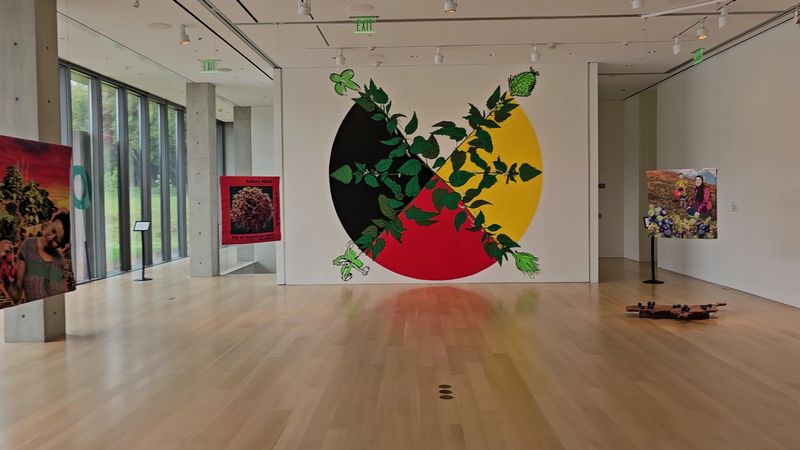
There is a particular pleasure in stepping out of a gallery and finding yourself facing water, trees, and mountain light instead of a parking lot. That transition changes how art lingers in your mind, giving the visit room to breathe.
Few places handle that balance better than The Clark Art Institute in Williamstown.
At 225 South Street in the Berkshires, The Clark pairs a distinguished collection with a striking natural setting. European and American paintings, works on paper, and decorative arts share the destination with walking trails, outdoor installations, and architecturally notable buildings.
The result is not simply a museum with nice grounds, but a campus where landscape and art viewing continually inform one another.
You might spend time with Impressionist paintings inside, then carry that attention outdoors as reflections shift across the water and hills frame the horizon. That movement changes your pace and often your mood.
Instead of treating art appreciation as an isolated indoor activity, The Clark lets aesthetic experience unfold across multiple environments.
It is especially rewarding if you enjoy institutions that feel expansive without becoming overwhelming. Visit clarkart.edu for exhibitions and seasonal information, then plan time to walk as well as browse.
The Clark challenges gallery expectations by proving that world-class art and contemplative outdoor space can belong to the same seamless experience.
The Icon Museum and Study Center
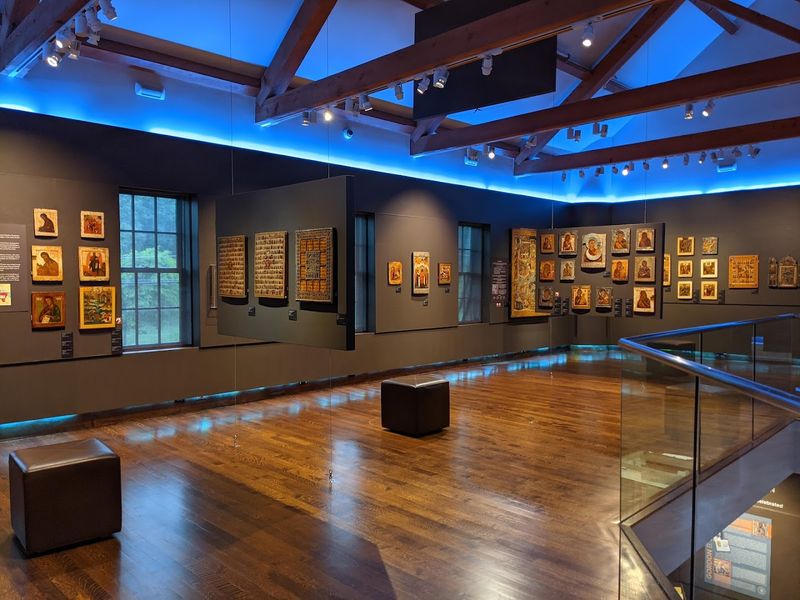
Silence can feel different when it carries history, devotion, and the weight of handmade images meant for spiritual life. Instead of presenting sacred objects as detached trophies, this museum works hard to preserve their cultural and religious resonance.
That approach makes The Icon Museum and Study Center in Clinton stand apart.
Found at 203 Union Street, the museum occupies a creatively repurposed complex that includes a former mill, courthouse, and jail. It houses the largest collection of Eastern Christian icons in the United States, spanning regions and centuries.
The architecture alone signals that this is not a standard white-box gallery, and the interpretation deepens that difference by situating icons within liturgy, history, and community.
You are encouraged to look beyond surface beauty and gold leaf toward questions of belief, migration, craftsmanship, and political change. Displays and educational resources help explain why icons matter as living traditions, not merely historical artifacts.
That framing makes the visit feel immersive and humane, even if you arrive knowing little about Eastern Christianity.
For travelers who like museums with a strong sense of mission, this one is especially memorable. Check iconmuseum.org for hours and programming before making the trip.
It challenges gallery expectations by treating context and reverence as essential parts of seeing, not optional background information added afterward.
Harvard Art Museums
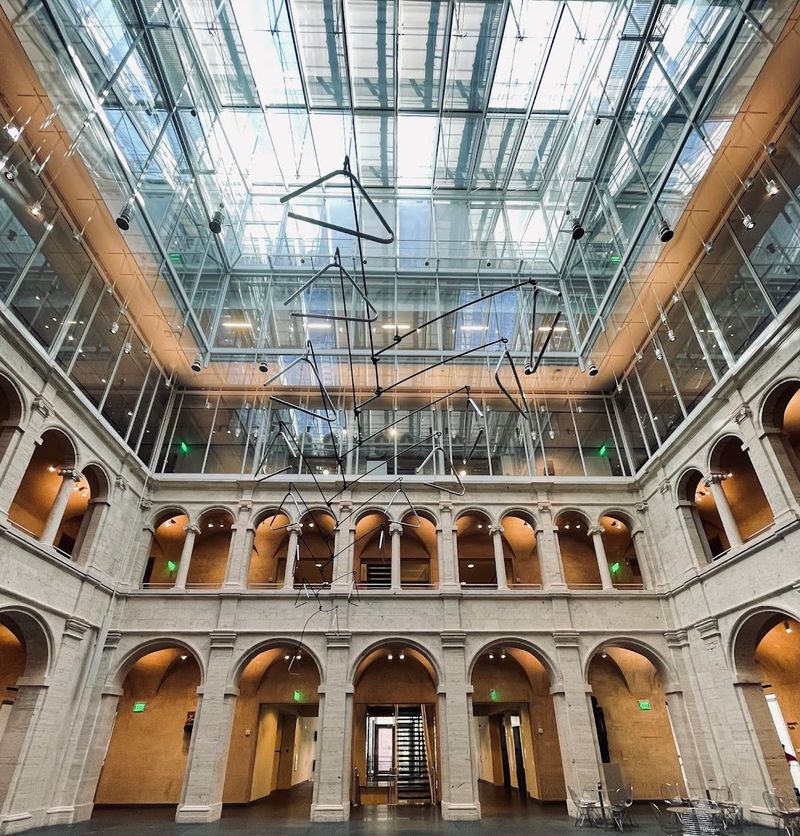
Most museums hide their inner workings so well that conservation, research, and storage feel almost mythical. Here, the mechanics of museum life are part of the public experience, and that transparency changes the way you look at every object.
The Harvard Art Museums in Cambridge make scholarship visible in unusually compelling ways.
Located at 32 Quincy Street, the institution brings together the Fogg, Busch-Reisinger, and Arthur M. Sackler museums within a dramatic building centered around a glass-roofed courtyard.
Its collections are broad, but what truly challenges expectations is the access it gives to study centers, conservation activity, and the intellectual labor behind exhibitions. Instead of pretending art simply appears on walls fully interpreted, the museum reveals the processes that shape knowledge.
You begin noticing labels, mounting choices, and material details differently when you understand how much investigation supports them. The setting feels both elegant and academic, which suits a university museum that wants curiosity to stay active.
Even casual visitors often leave with a sharper sense of how museums construct meaning.
If you enjoy seeing not just art but the thinking around art, this stop is deeply rewarding. Visit harvardartmuseums.org for current exhibitions and gallery information before you go.
The Harvard Art Museums redefine what a gallery can feel like by opening the backstage door without sacrificing beauty.
Plimoth Patuxet Museums
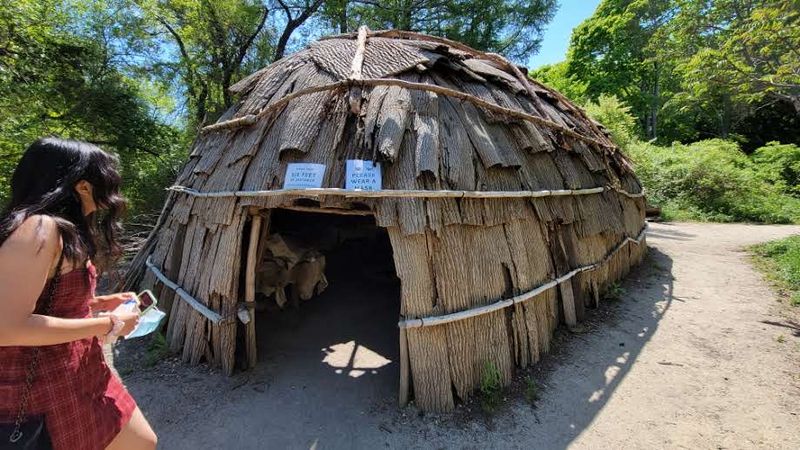
Glass cases disappear, and suddenly history starts answering back. Smoke, voices, tools, buildings, and conversation replace the usual distance between visitor and artifact.
That shift is central to the experience at Plimoth Patuxet Museums in Plymouth, where interpretation happens through immersion rather than static display.
Based at 137 Warren Avenue, this living history museum is known for reconstructed 17th-century settings and costumed interpretation connected to colonial New England. Equally important, it includes spaces that interpret the life and continuing presence of the Indigenous Patuxet and broader Wampanoag communities.
By combining environments, dialogue, and demonstration, the museum asks you to engage history as something debated and lived, not merely archived.
You do not simply read about foodways, shelter, labor, belief, or survival. You ask questions, watch skills performed, and move through spaces designed to make the stakes of the past more tangible.
That can be more powerful than a conventional gallery because it turns learning into encounter.
It also means the museum can challenge assumptions more directly, especially around familiar national origin stories. Check plimoth.org for current programs and seasonal details before visiting.
If you want proof that a museum can function more like a conversation across time than a room full of labels, this is a standout Massachusetts example.
Worcester Art Museum
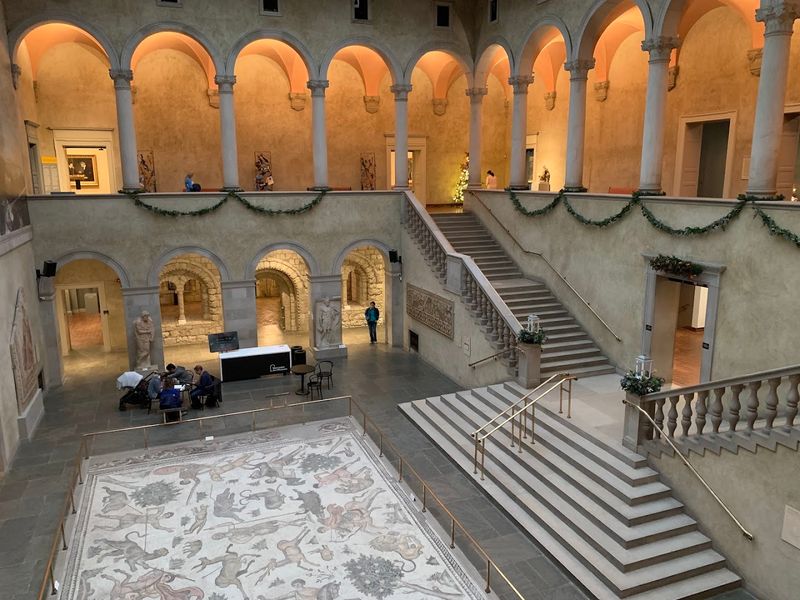
At first, it feels like stepping into a place where craftsmanship has been given theatrical weight instead of quiet placement. Steel, ornament, painting, and design sit side by side, and the effect is more immersive than many visitors expect.
That layered experience is one reason the Worcester Art Museum continues to surprise people.
Located at 55 Salisbury Street, the museum is known for its broad collection, but the famous Arms and Armor galleries often leave the strongest impression. More than a thousand historic objects turn those rooms into something closer to an environment than a typical display.
Rather than isolating art from utility, warfare, ceremony, and technology, the museum lets those categories overlap in vivid ways.
You start noticing how a helmet can be sculpture, how a sword can reveal social status, and how decoration can coexist with fearsome function. Beyond armor, the museum’s holdings span centuries and cultures, reinforcing the sense that art history is full of unexpected connections.
The visit feels exploratory because no single department completely defines the place.
That flexibility is exactly what makes it challenge gallery expectations. Before heading out, check worcesterart.org for current exhibitions, programs, and hours.
The Worcester Art Museum shows that an institution can be both encyclopedic and highly atmospheric when it allows objects to speak across categories instead of staying neatly separated.