
Nevada doesn’t whisper — it roars in red rock, alpine blue, and blazing desert gold.
This is a state where fire-colored sandstone twists into wild shapes at Valley of Fire State Park, where ancient bristlecone pines cling to the heights of Great Basin National Park, and where the glassy waters of Lake Tahoe shimmer like something almost unreal. Every mile feels bigger, bolder, and just a little untamed.
Forget the neon for a minute. Step beyond the city glow and you’ll find towering cliffs at Red Rock Canyon National Conservation Area, silent volcanic craters, and skies so dark they seem endless.
This is bucket-list territory.
Fifteen places carved by time, wind, water, and a stubborn streak of wilderness — each one daring you to stand still, look around, and feel very, very small in the best possible way.
Valley of Fire State Park
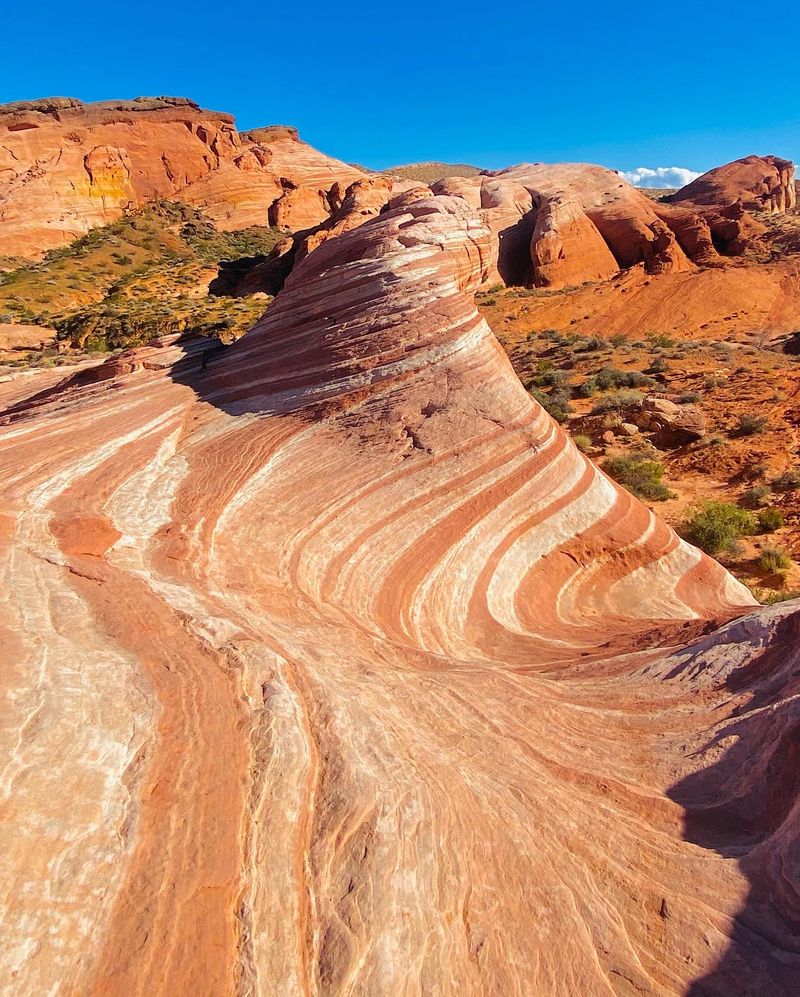
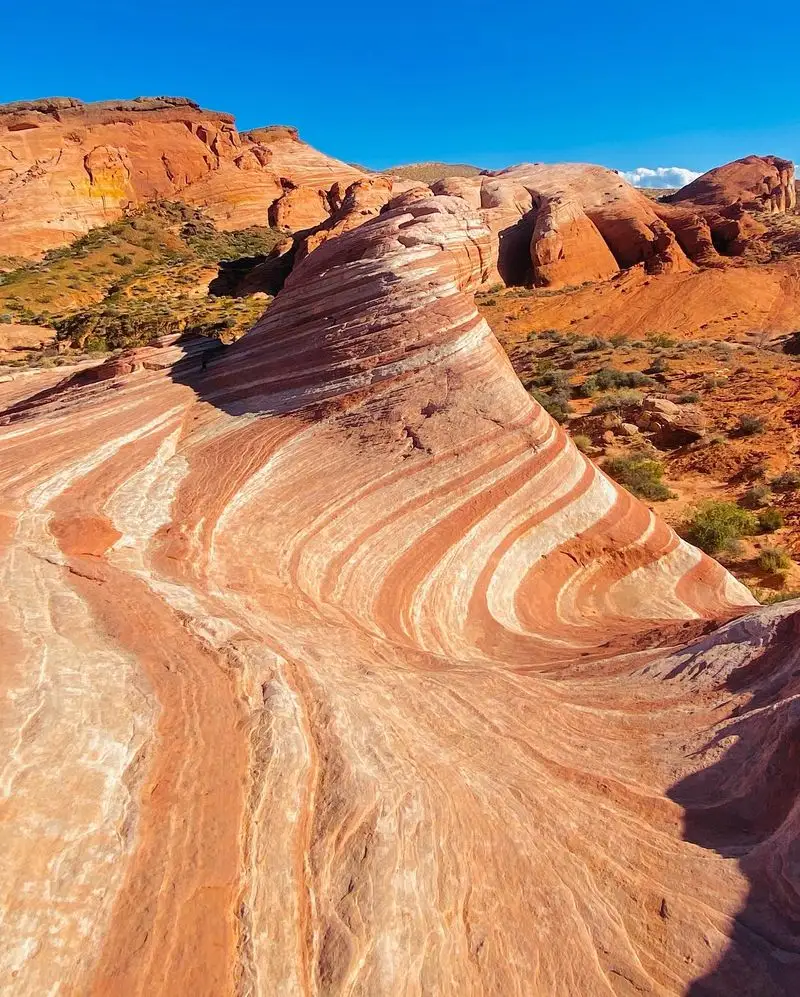
Valley of Fire glows like embers at sunrise, when Aztec sandstone ignites with reds, pinks, and oranges. Follow the Fire Wave trail to see candy-striped bands that ripple like surf, then wander to petroglyph panels that whisper stories from thousands of years ago.
The paved scenic drive links pullouts where bighorn sheep sometimes appear on cliffy perches.
You will want water, grippy shoes, and room on your camera roll. Short trails lead to slot-like passages, beehive formations, and arches etched by time and wind.
Even in heat, mornings and late afternoons gift cooler air and long shadows that carve depth into every wall.
For a deeper feel, pause at Atlatl Rock to study rock art and imagine hunters scanning this same horizon. The wind funnels through passages, carrying a dry, mineral scent.
Campsites here feel remote yet accessible, perfect for stargazing without leaving paved access far behind.
Come prepared for desert conditions, pack out every crumb, and tread lightly on fragile cryptobiotic soil. Stay on signed routes to protect formations.
If you time it for golden hour, the park lives up to its blazing name, and your memory will too.
Red Rock Canyon National Conservation Area
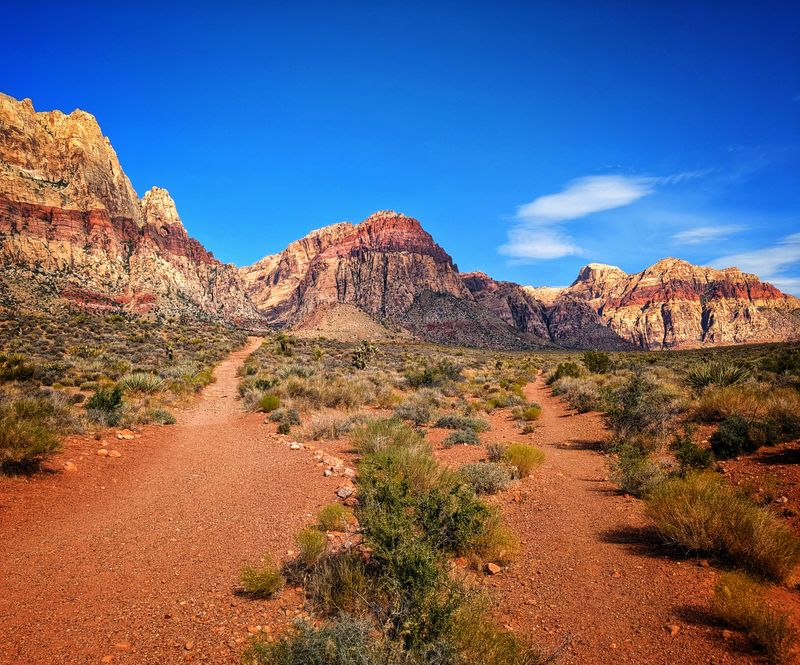
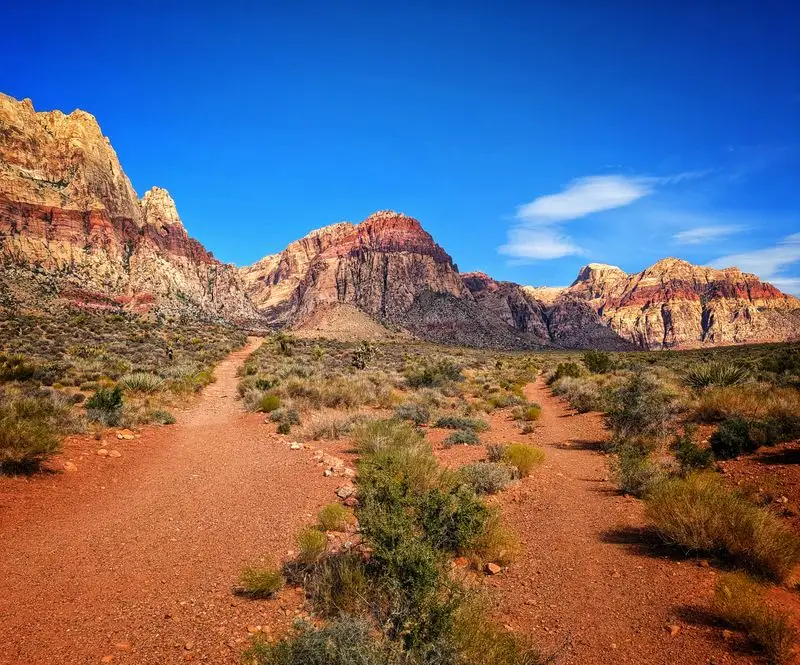
Just west of Las Vegas, Red Rock Canyon rises like a fortress of color. The 13-mile Scenic Drive strings together overlooks of the Calico Hills, where iron-rich reds meet pale Jurassic layers.
You can watch climbers speckle towering walls while you trace trails through juniper, yucca, and fragrant creosote.
Calico Tanks is the crowd-pleaser, with sandstone steps, tight passages, and a surprise view back toward the Strip. Turtlehead Peak challenges legs and lungs but pays off with a grand panorama of the Mojave.
Seasonal waterfalls gurgle in Ice Box Canyon, a shady refuge when temperatures soar.
Arrive early for timed-entry windows on busy days, and carry more water than seems reasonable. Desert tortoises sometimes appear near roadside pullouts, so drive slowly and keep distance.
The geology here reads like a time capsule, from ancient dunes to fault-sculpted cliffs.
After your hike, linger as sunset paints the escarpment in layers of copper and rose. Silence settles quickly once you leave the road, and stars reclaim the sky.
Red Rock Canyon reminds you how wild Nevada gets just beyond city lights, and how easily you can step into it.
Great Basin National Park
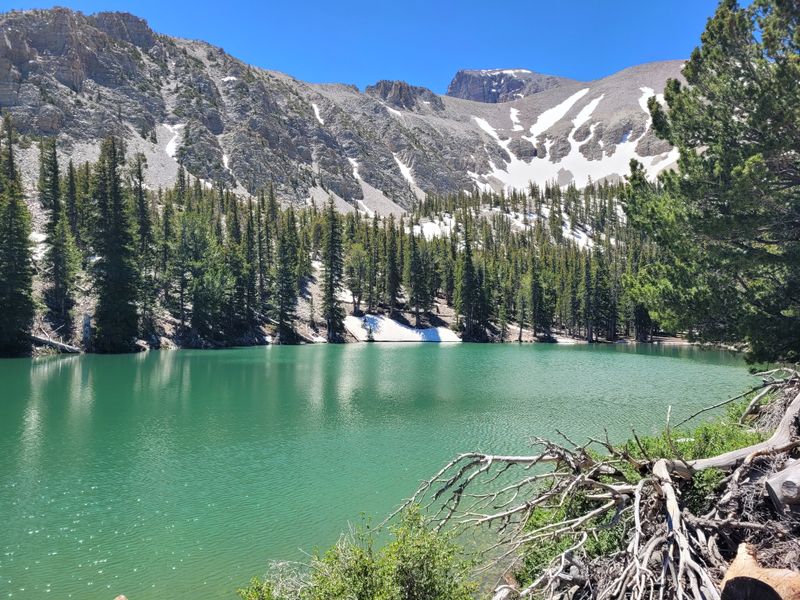
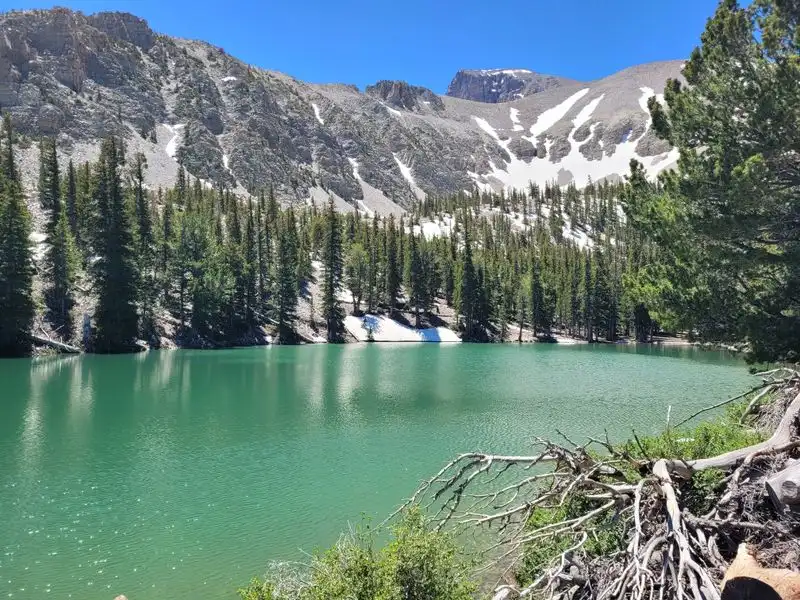
Great Basin National Park is Nevada’s quiet masterpiece, anchored by 13,063-foot Wheeler Peak. Up high, ancient bristlecone pines twist in slow-motion sculptures, and glacial tarns reflect cliffs like polished glass.
Underground, Lehman Caves reveals draperies, shields, and soda straws formed drop by patient drop.
The park is a certified dark sky sanctuary, so plan a late-night session to watch the Milky Way spill across the basin. During the day, take the Alpine Lakes Loop and spot marmots sunning on rocks.
In fall, aspen groves shimmer gold and rustle like rain.
Weather shifts quickly with elevation, so pack layers and plenty of water. Cave tours require tickets, best booked in advance, and closed-toe shoes are a must.
Trails are well signed, but altitude adds bite, so pace yourself and savor the thin, crisp air.
Stand beneath a 3,000-year-old bristlecone and feel time dilate. Then gaze from the summit ridge over wave after wave of basin-and-range country dissolving into blue.
Great Basin rewards patience with solitude, stars, and silence you will replay long after you leave.
Lunar Crater National Natural Landmark
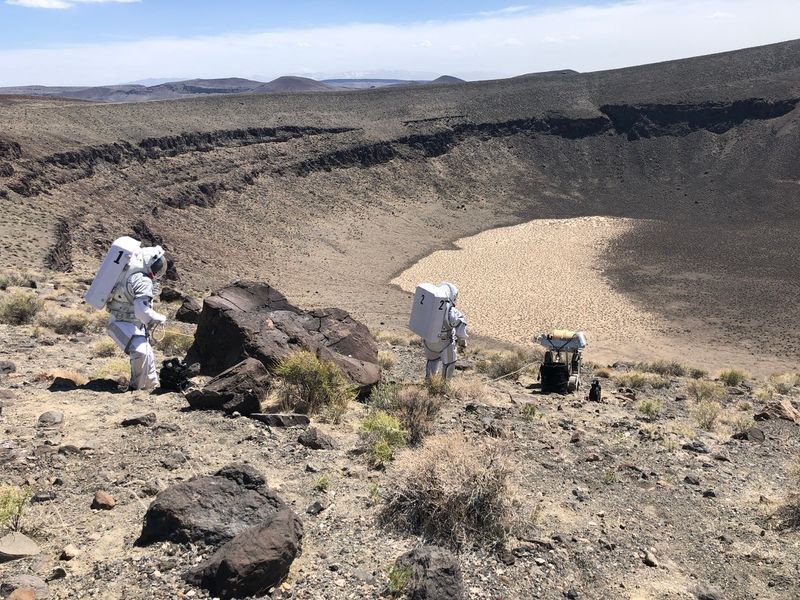
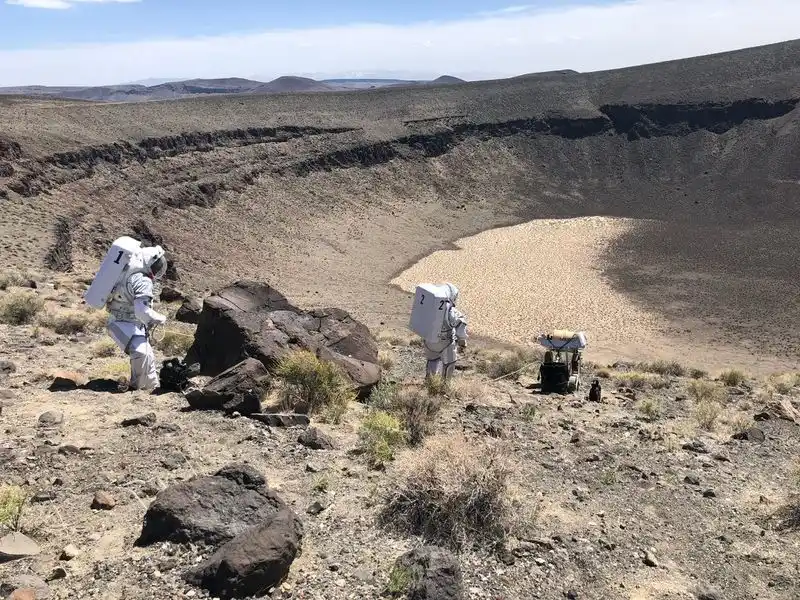
Lunar Crater feels aptly named, a yawning volcanic maar that swallows sound and scale. The rim road lets you peer into a near-perfect bowl surrounded by ash and basalt.
Nearby cinder cones punctuate the plain like punctuation marks left by ancient eruptions.
This is big-sky solitude where pronghorn sometimes ghost along the horizon. Bring a high-clearance mindset even if the road is passable, and always carry extra water and a full-size spare.
Cell service is patchy, which only heightens the feeling of stepping onto another planet.
Geology lovers can trace lava flows, analyze spatter deposits, and imagine the explosive steam that carved the crater. The light changes everything here, throwing long shadows at sunrise and revealing subtle color bands along the rim.
Photographers will want wide lenses and a sturdy tripod for gusty days.
Take time to sit quietly and listen to the wind sweep the bowl. The starkness becomes beautiful when you slow down, reading textures and tracks like a book.
You may leave dust-streaked and grinning, with moon-landing photos captured right on Earth.
Cathedral Gorge State Park
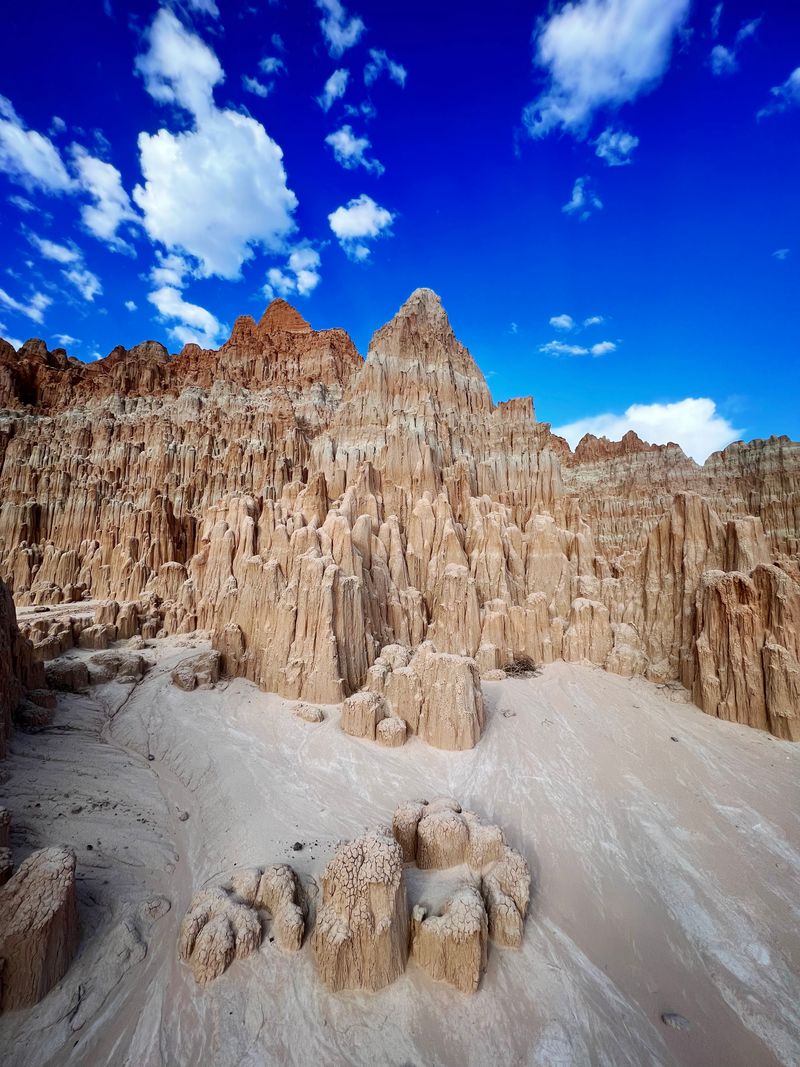
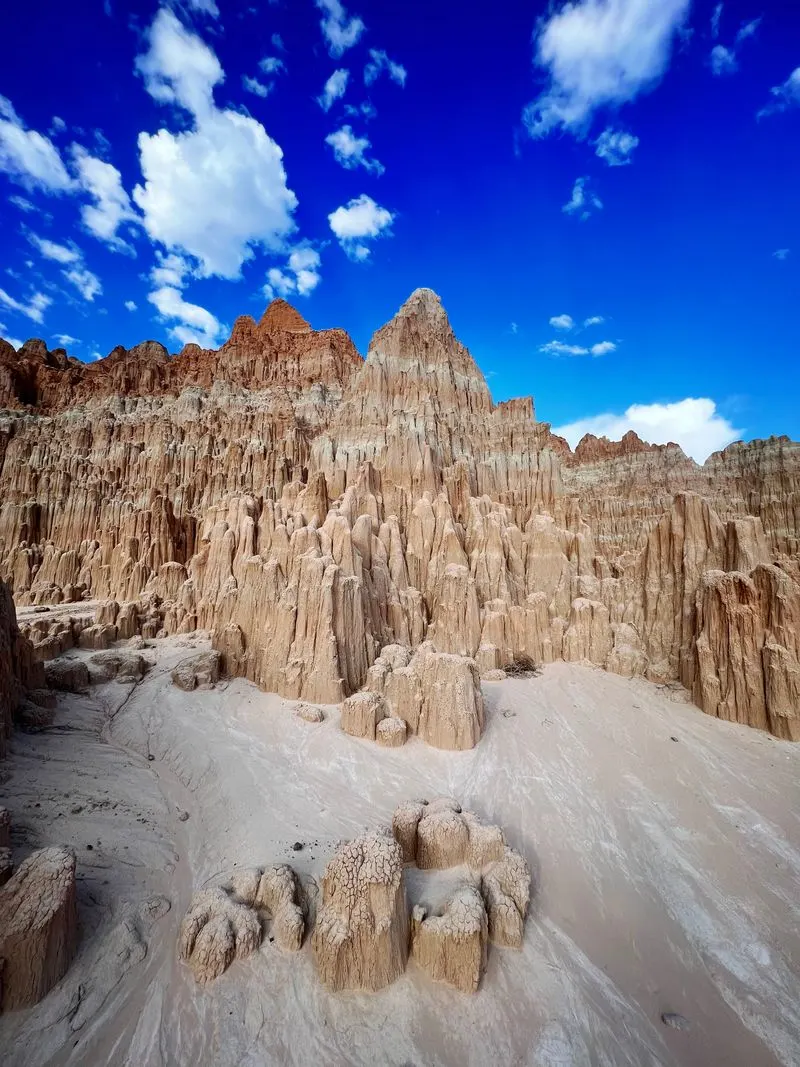
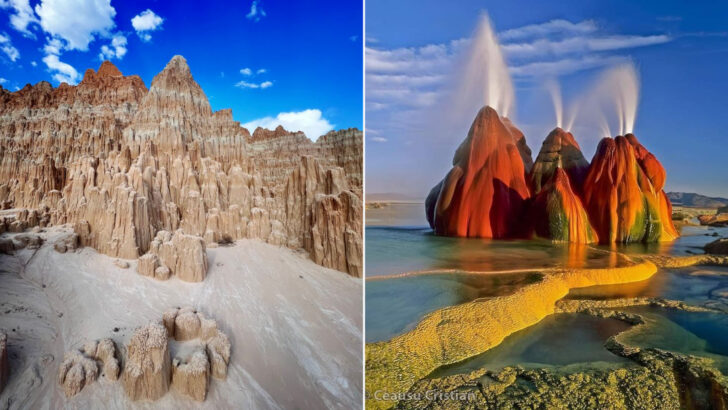
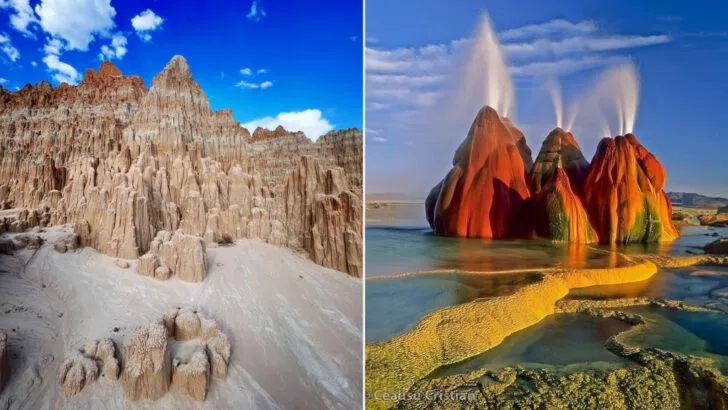
Cathedral Gorge rises in delicate spires, like melted castles frozen mid-drip. Narrow passageways invite you to squeeze between cool clay walls, tracing textures sculpted by rare desert downpours.
Sunlight filters in shafts that turn tan walls to peach and rose.
Simple trails connect the main slots, viewpoints, and picnic areas, but the best exploring feels playful and freeform. Watch your footing on crumbly steps, and bring a headlamp for poking into short caves and deeper recesses.
After rain, the ground can get sticky, so give it time to dry.
Campgrounds sit close to the formations, making sunrise and blue hour effortless. If you love photography, this park is a dream for leading lines, soft reflected light, and abstract close-ups.
Kids, and the kid in you, will love hide-and-seek through winding corridors.
Take it slow and listen for swallows that nest in high pockets. The gorge humbles with its fragility, so stay on durable surfaces and resist climbing delicate fins.
You will leave with clay-dusted knees and a grin you cannot shake.
Ice Age Fossils State Park
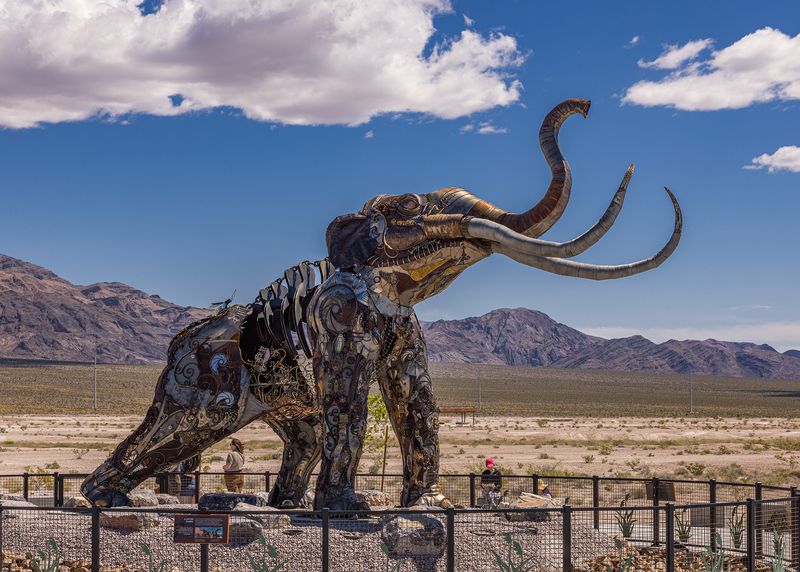
Ice Age Fossils State Park connects modern desert to a wilder past. Interpretive trails thread through Mojave scrub where mammoths, camels, and giant sloths once wandered during the Pleistocene.
Today, you stroll among creosote and saltbush, reading exhibits that bring bones and timelines to life.
The landscape feels open and welcoming, with views stretching toward distant city towers. Stop at signage to learn about the Tule Springs fossil beds and the science that continues here.
It is an easy-to-like park for families, casual walkers, and anyone curious about deep time.
Bring sun protection and water, and keep pets leashed to protect delicate soils. The trails are mostly flat, making them accessible for a mellow outing in cooler months.
Spring wildflowers surprise with bursts of color when rain cooperates.
What you carry out is more than a selfie, it is a new sense of place. You will picture shaggy mammoths lumbering across these flats and appreciate how climate shaped this valley.
A short visit fits neatly between other stops but lingers in memory.
Pyramid Lake
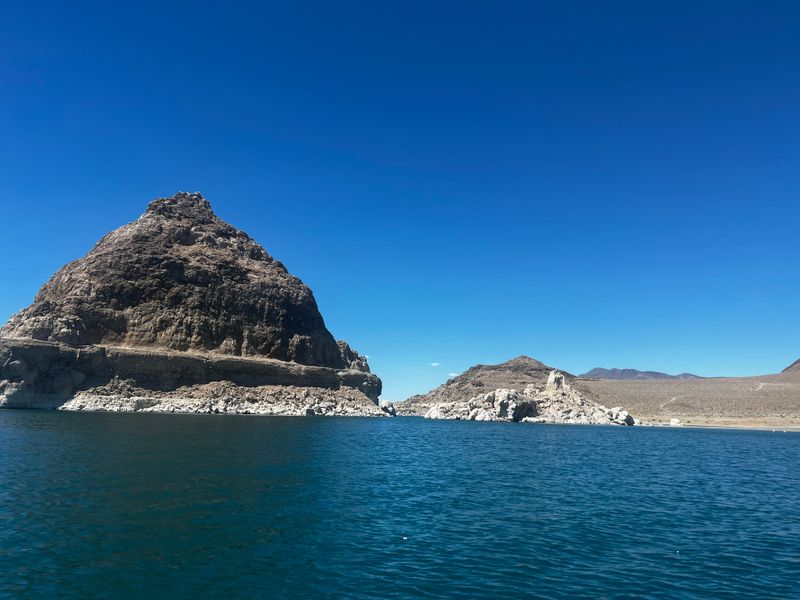
Pyramid Lake gleams cobalt within a stark basin, guarded by tufa towers and the namesake stone pyramid. The lake sits on Paiute Tribal lands, so permits are required for fishing, camping, and day use.
Respect posted guidance and treat this sacred landscape with care.
In winter, cutthroat trout draw anglers from far and wide, casting ladders into wind-chopped swells. Photographers chase shifting light that paints tufa in silver, ochre, and storm-sky blue.
Anaho Island, a protected bird sanctuary, rises offshore like a sentinel.
Bring layers for sudden gusts and a thermos to warm fingers on cold mornings. Beaches vary from pebble to sand, and access points feel remote despite being driveable.
The silence is real here, broken by waves slapping shore and distant gull calls.
Stay for sunset when the lake drinks the day and returns it as color. If you arrive with openness and humility, Pyramid gives more than views.
It offers perspective, scale, and a refreshed respect for desert water.
Lake Mead National Recreation Area
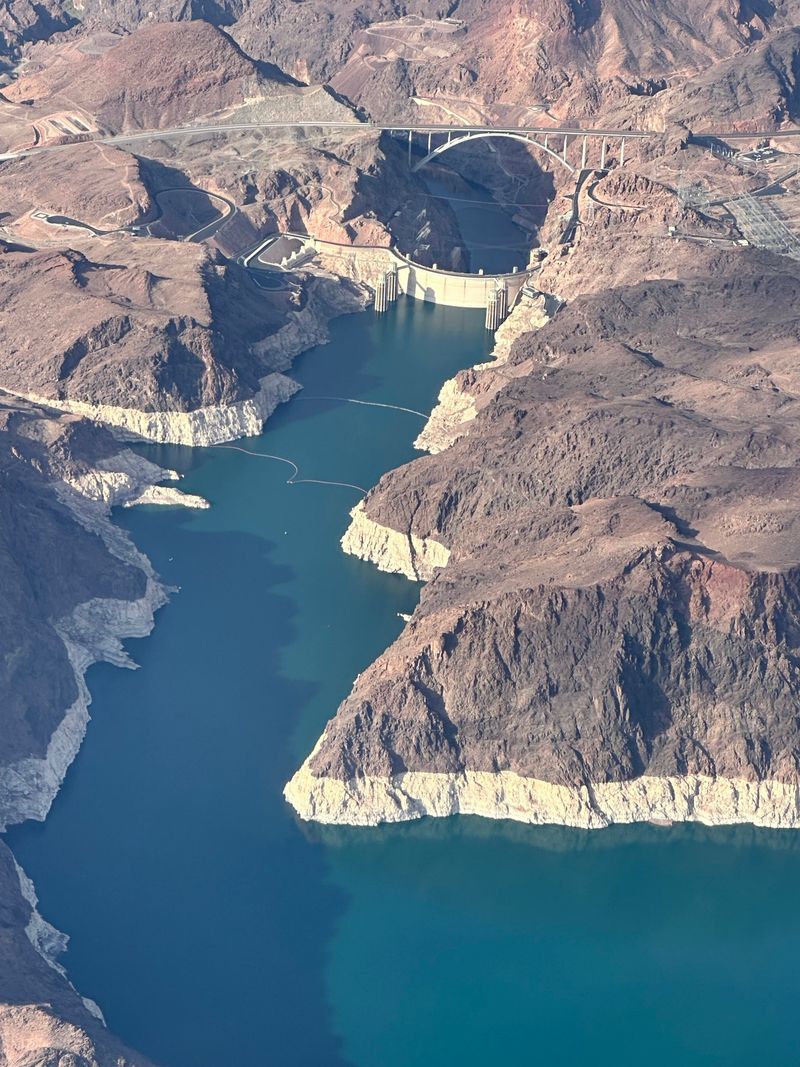
Lake Mead sprawls like a maze of inlets flanked by striped desert mountains. Whether you launch a kayak, hop a boat tour, or hike ridge trails, the water-land contrast always stuns.
Coves hide quiet beaches where you can float in warm months and watch swallows zip past.
Low water reveals bathtub rings and ghost harbors, sobering reminders of drought and change. Still, life thrums along shorelines, and sunrise paints cliffs in apricot and mauve.
You can pair a visit with Hoover Dam to understand the river that shaped the West.
Pack sun gear, extra water, and a wind-ready hat. Popular launches fill early, and afternoon gusts can kick up choppy crossings, so start early.
Desert bighorn sometimes appear on ridges, tiny against enormous backdrops.
Choose a cove, listen to gentle slap of waves, and let wide horizons unknot your shoulders. Respect closures and fragile habitats regrowing along receded shores.
Lake Mead is both playground and lesson, and it rewards mindful exploration.
Fly Geyser
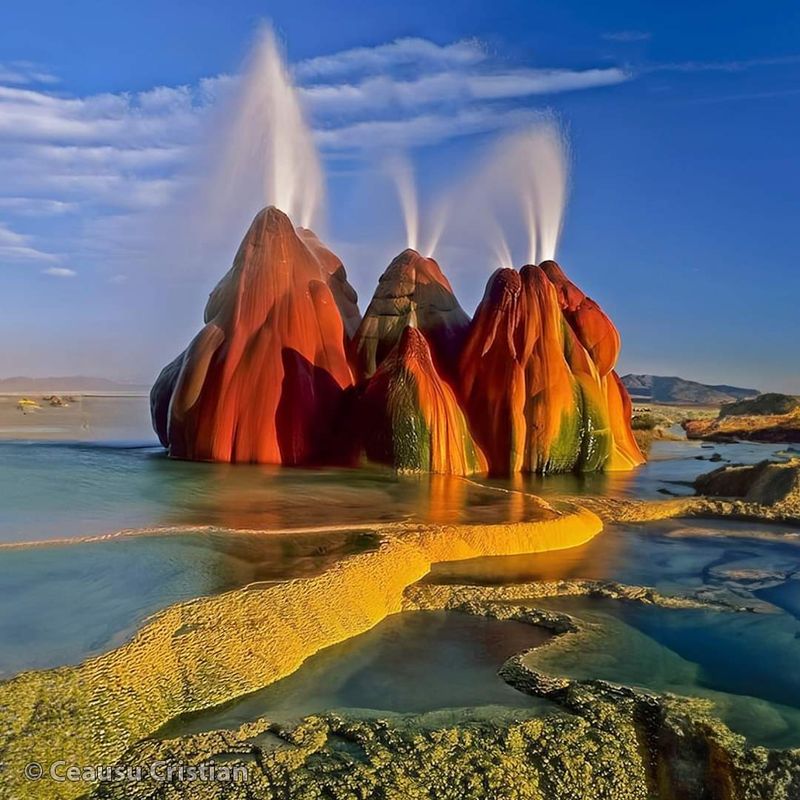
Fly Geyser looks surreal, a technicolor cone steaming in the Black Rock Desert. Mineral-laden water builds terraces in greens, reds, and oranges as thermophiles paint the surface.
Access is only via guided nature walks arranged through the local conservation group.
The geyser’s constant spurt creates rivulets that sparkle in sunrise light. You can photograph from designated spots while learning how a well drilling mishap sparked this wonder.
The surrounding playa stretches wide and pale, emphasizing how improbable the geyser appears.
Book your tour well ahead and wear shoes for damp, possibly muddy paths. Bring a long lens to isolate textures and a polarizer to tame glare.
Respect boundaries, as the formations are delicate and the water is scalding hot.
Stand quietly and watch steam drift like veils in the breeze. Colors shift with clouds, and every angle reveals new patterns.
You will leave with photos that friends swear are from another planet, and a deeper respect for geothermal quirks.
Little Finland
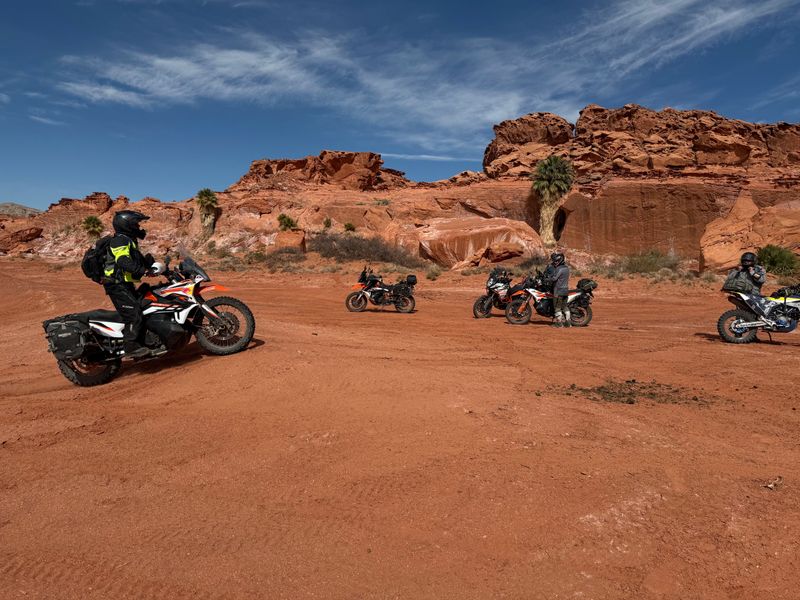
Little Finland is a labyrinth of wafer-thin fins, honeycombs, and delicate arches. The sandstone glows neon-red at sunset, every ripple and lacework edge casting razor shadows.
It is a place to slow down, crouch, and examine textures carved by wind and time.
High-clearance roads and sand driving may be required, so check conditions and go prepared. Pack ample water, spare tires, and a reliable GPS or offline maps.
Once there, exploring feels like wandering an outdoor art gallery with endless fragile sculptures.
Move gently, stepping on durable rock and avoiding paper-thin ledges. Photographers will love telephoto studies of patterns and wide shots of glowing fins.
Even a light breeze sends whispers through crevices, sounding like distant surf.
Stay for blue hour when colors deepen and the desert cools. You will head back dusty and happy, marveling how such fine detail survives harsh sun and sand.
Little Finland proves small scales can hold immense wonder.
Winnemucca Lake (Petroglyph Site)
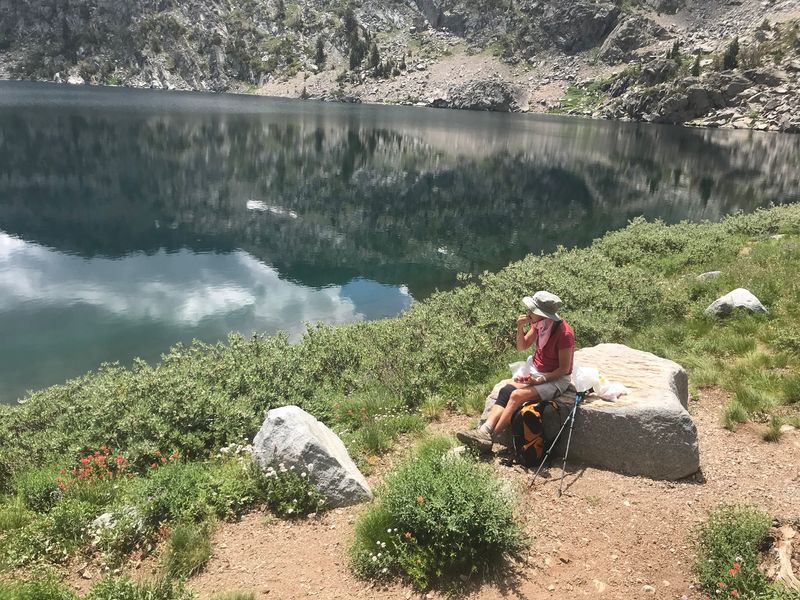
Winnemucca Lake’s dry basin hides a remarkable gift on its tufa boulders: some of North America’s oldest known petroglyphs. Geometric grooves, rings, and deeply pecked lines trace messages from deep time.
The setting feels austere, which only sharpens focus on the art.
Access and protections can change, so research current guidance and respect restrictions. View from appropriate distances, never touch rock art, and step carefully around fragile surfaces.
Bring a zoom lens to study details without getting too close.
The desert amplifies silence here, and a warm breeze makes the only sound. Light rakes across carvings near sunrise and sunset, pulling shadows from each groove.
You will feel the weight of millennia pressing gently yet firmly on the present.
Read about cultural context before your visit so the symbols carry meaning, not just novelty. Consider this a classroom with sky for a roof and stone for a blackboard.
You will leave humbled, with more questions than answers, and that is good.
Grapevine Canyon
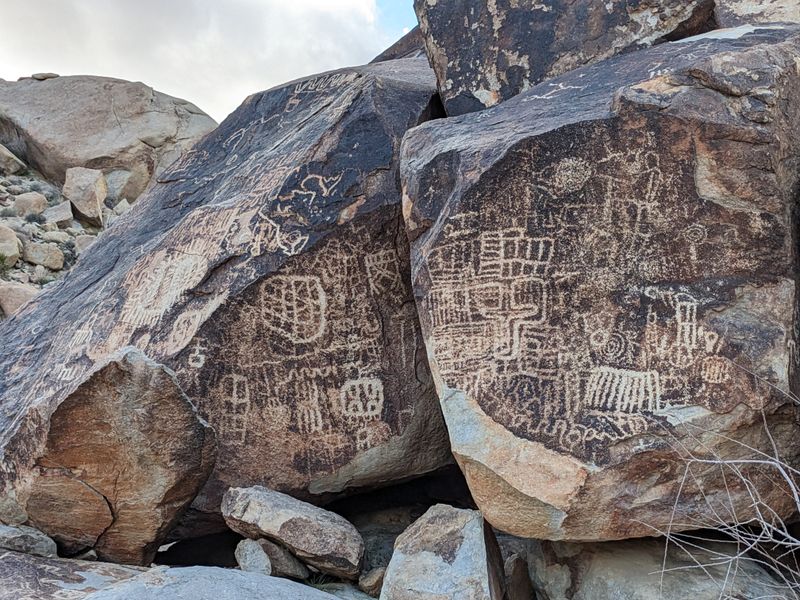
Grapevine Canyon is a desert surprise, a spring-fed oasis tucked among varnished granite walls. Petroglyphs cover panels along the approach, layered with spirals, animals, and mysterious human forms.
The canyon feels intimate compared to open desert beyond.
Follow the sandy wash to shaded pockets where water sometimes trickles over boulders. Cottonwoods and reeds flutter, and dragonflies stitch the air on warm days.
It is an easy-to-moderate walk, perfect for lingering with a camera and curiosity.
Bring respectful habits: do not touch rock art, tread lightly, and pack out every crumb. Early visits beat heat and offer raking light for photographs.
Watch for bighorn tracks and lizards performing tiny push-ups on sunlit stones.
Settle into a patch of shade and listen to water blend with wind. The canyon turns into a natural gallery and meditation space at once.
You will leave centered, carrying a quiet sense of discovery.
Ruby Mountains
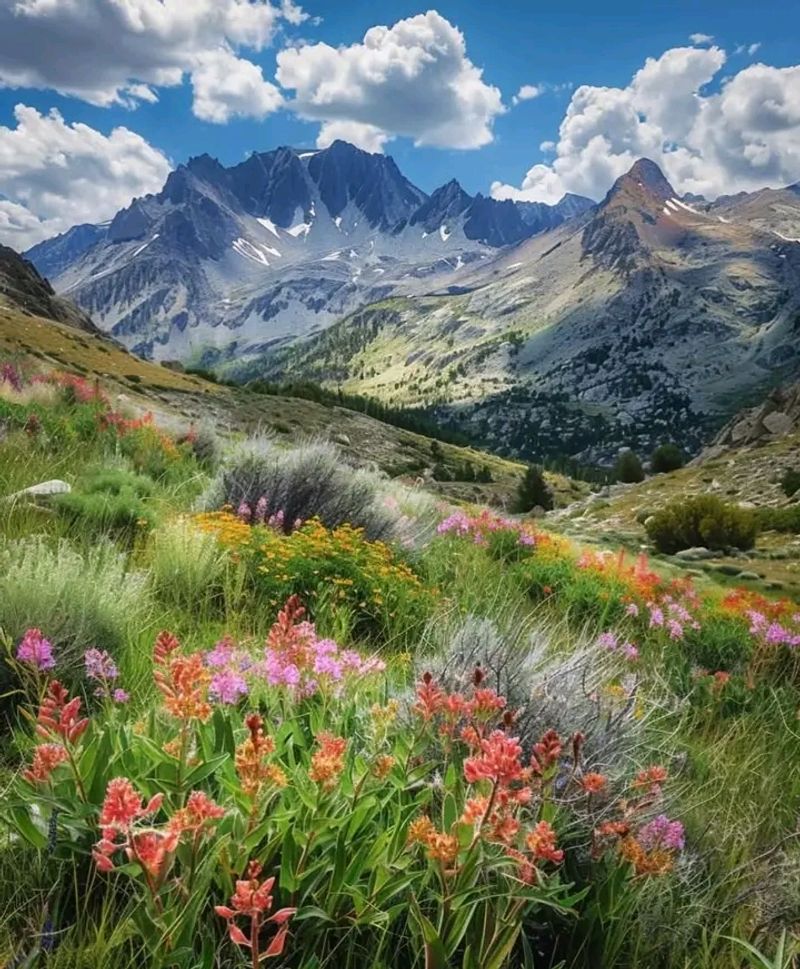
The Ruby Mountains run wild and high, a serrated skyline that locals proudly call Nevada’s Alps. Glacial cirques cradle lakes like emeralds, and meadows overflow with paintbrush and lupine.
Mountain goats pick improbable lines across cliffs while hawks carve the blue.
Backpackers love the Ruby Crest Trail, stitching basins together with big views. Day hikers can sample Lamoille-adjacent routes or venture to Angel Lake for quick alpine.
In autumn, aspens surge to gold, and elk bugles roll across dawn stillness.
Weather flips quickly, so carry layers, map, and generous snacks. Expect thin air above 9,000 feet and drink often to stay sharp.
Mosquitoes might test patience near meltwater, but breezes and elevation help.
Sit quietly beside a tarn and watch ripples stitch sunlight into diamonds. The Rubies deliver solitude without austerity, a landscape rich and generous.
You will leave with legs humming and plans to come back stronger.
Sand Harbor
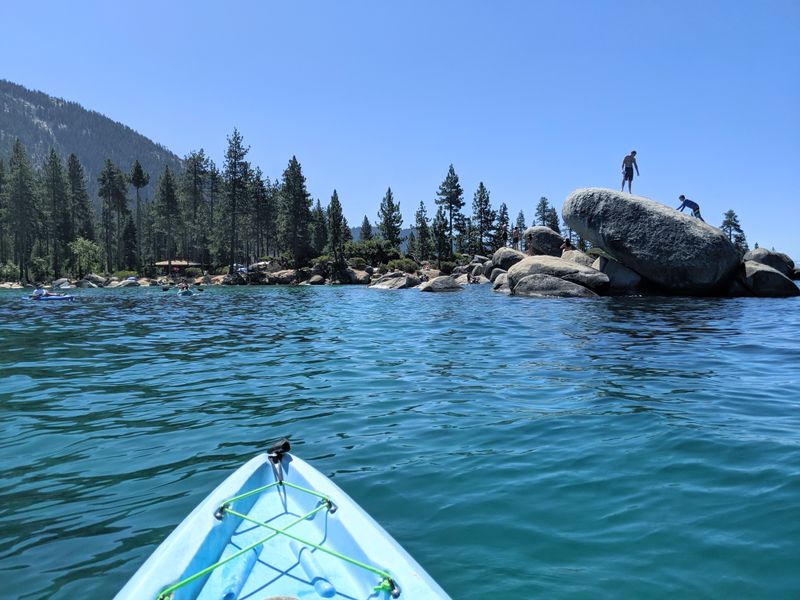
Sand Harbor is Tahoe’s showstopper on the Nevada side, all turquoise shallows and sculpted granite. The water invites paddlers to weave between house-sized boulders that glow under sun.
Pines frame clean sand, and the air smells crisp even in midsummer.
Arrive early because parking fills fast on clear days. Rent kayaks or SUPs right on site and glide across windows of glass.
If you stay ashore, boulder hop for angles that look made for postcards.
Bring reef-safe sunscreen, water shoes, and patience for chilly dips. Afternoon winds can raise chop, so plan paddles for calmer mornings.
In winter, crowds thin, and the cove turns contemplative, perfect for quiet photography walks.
Stick around for golden hour as granite warms to honey and the lake deepens to cobalt. Picnic tables make it easy to linger and watch the light show.
You will leave salty, sun-kissed, and fully convinced by Tahoe’s magic.
Ash Meadows National Wildlife Refuge
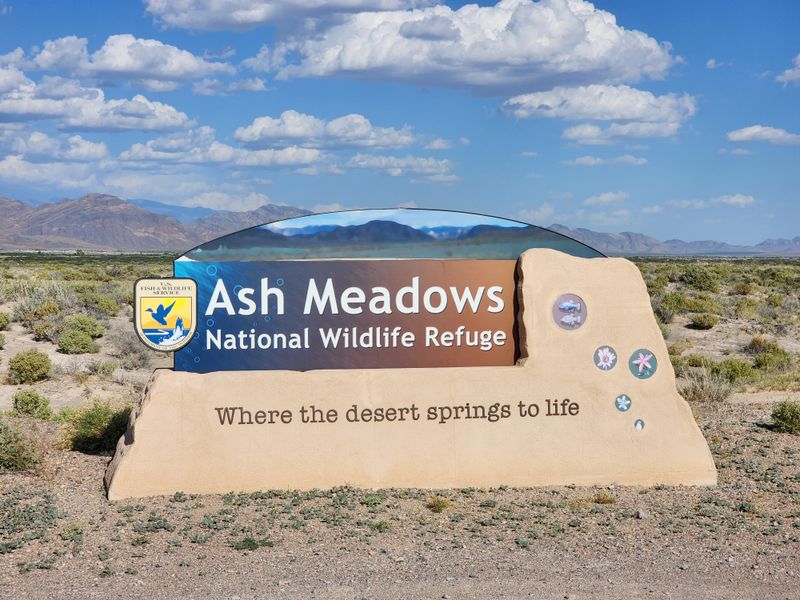
Where the Mojave turns to mirage, Ash Meadows flashes Caribbean blues that feel impossible. Boardwalks carry you over springs so clear you can count grains of sand.
Peek into the shallows to spot elusive pupfish flickering like living jewels, survivors of ancient lakes and shifting climates. The air is warm, the silence complete.
Stick to Point of Rocks and Devils Hole overlook for stories of geology and perseverance. Interpretive signs keep the science approachable, so you grasp why these waters matter globally.
Mornings bring soft light and fewer crowds. Afternoons shimmer with heat mirage and cottonwood shade.
You will want a wide brim hat, patience, and a camera tuned for subtle color. Trails are gentle, but the sun demands respect.
Stay on walkways to protect fragile soils and tiny habitats. Respect closures around Devils Hole, a sanctuary beyond measure.
Spring and fall feel perfect, with migrating birds threading the sky. Winter offers solitude and crystalline visibility.
Even in summer, an early start rewards you with glassy reflections and birdsong. Ash Meadows is not loud beauty.
It is quiet, vital, and unforgettable.