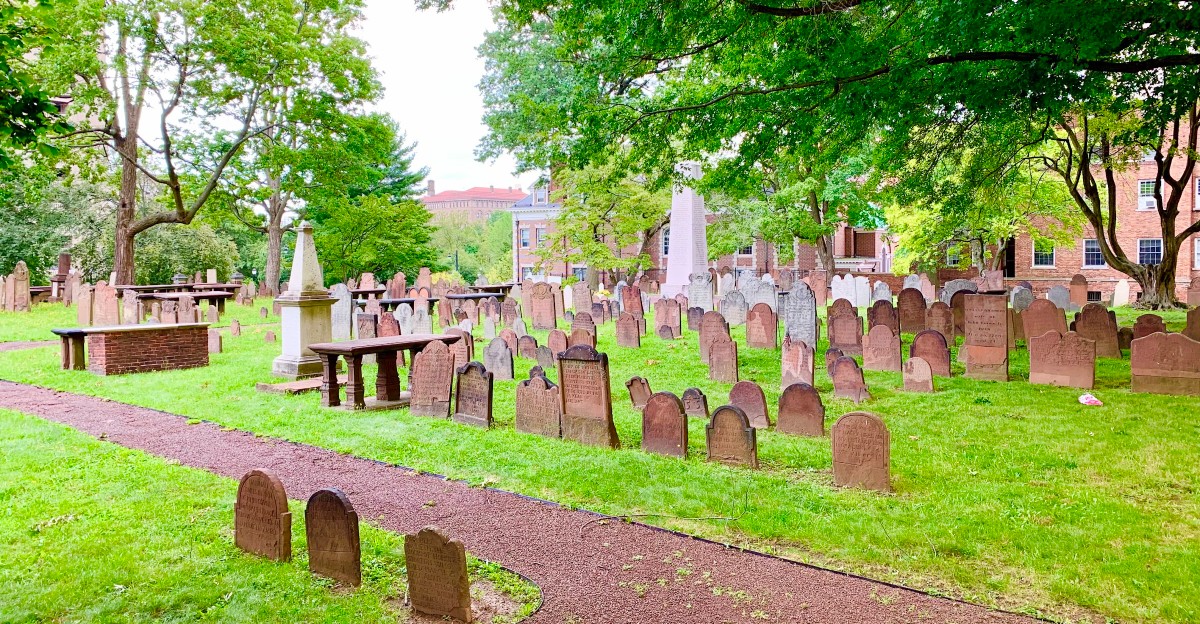
Downtown Hartford hides a small patch of land that is older than almost everything around it. Office towers and a parking garage crowd its edges, yet the stones inside go back to the 1600s.
Founders, colonial governors, ministers, and soldiers of the American Revolution all share this quiet corner of the city. Most people rush past on the sidewalk without a second glance.
That is a shame, because the carvings, names, and stories here explain how Connecticut got its start. The site is free to explore, open every day, and small enough to see in under an hour.
Keep reading to learn who rests here, what the old carvings mean, when to go, and a few smart tips that will make your visit safer and far more rewarding.
Where Hartford Began
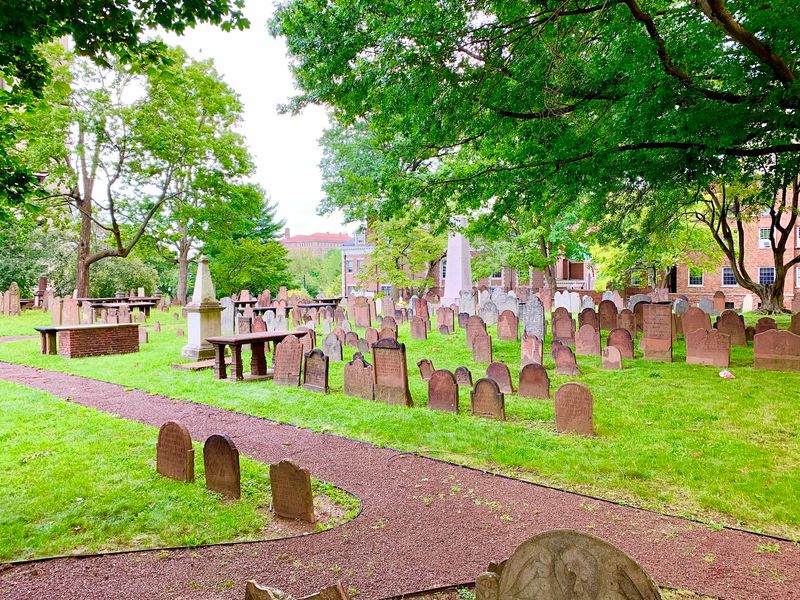
Long before skyscrapers, Hartford was a tiny Puritan settlement on the Connecticut River. Its first residents needed a place to lay their families to rest, and they chose this spot.
Today the site is known as the Ancient Burial Ground, and it sits at 60 Gold St, Hartford, CT 06103, in the heart of the state capital. It is the oldest historic site in the city that still exists in its original form.
The ground was used starting in the 1640s, only a few years after settlers arrived in 1636. Burials continued here for about two centuries.
That makes the cemetery a direct link to the people who started Connecticut. Many of the names on the stones also appear on local streets, schools, and town records.
Gates are open daily from 8:30 am to 5 pm. Admission is free, so it works well as a short stop on a downtown walk.
Plan for about thirty minutes to an hour. Small as it is, this plot packs in more history than most city blocks combined.
Founders Under Your Feet
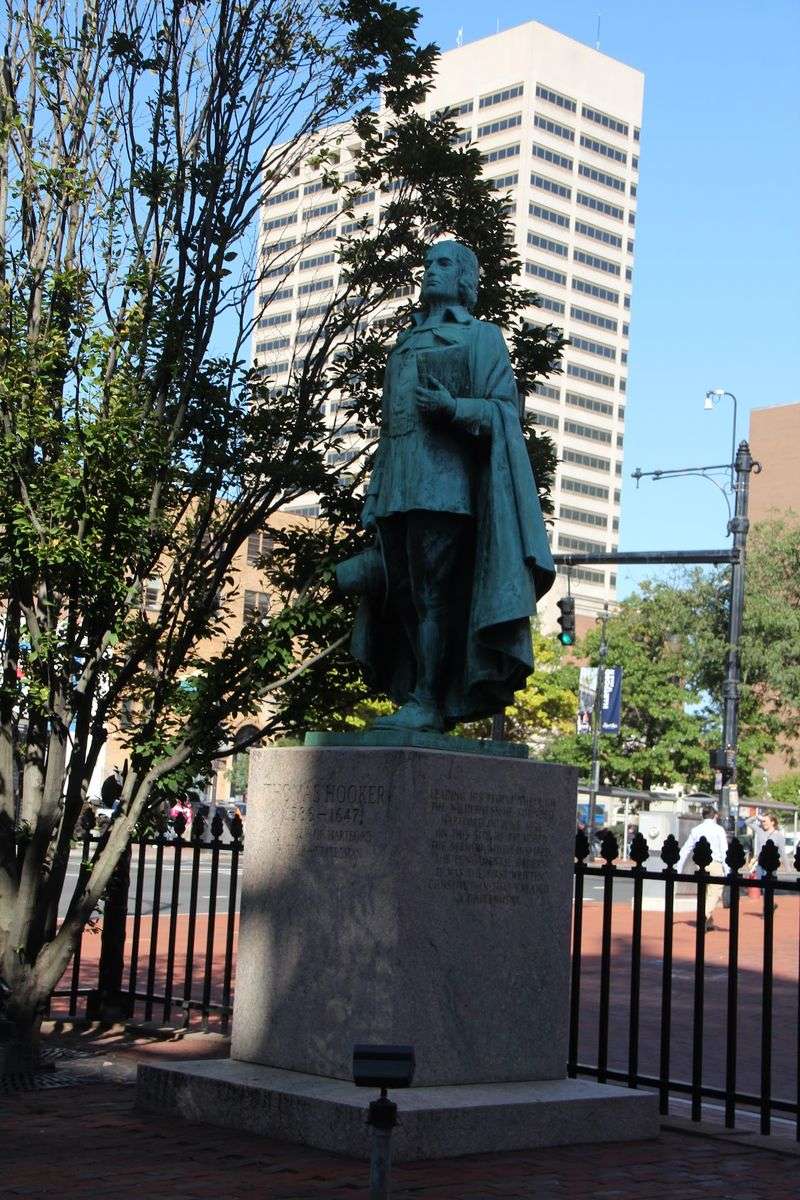
Thomas Hooker led a group of settlers through the wilderness to found Hartford in 1636. He is believed to be buried here, though the exact location of his grave is not known.
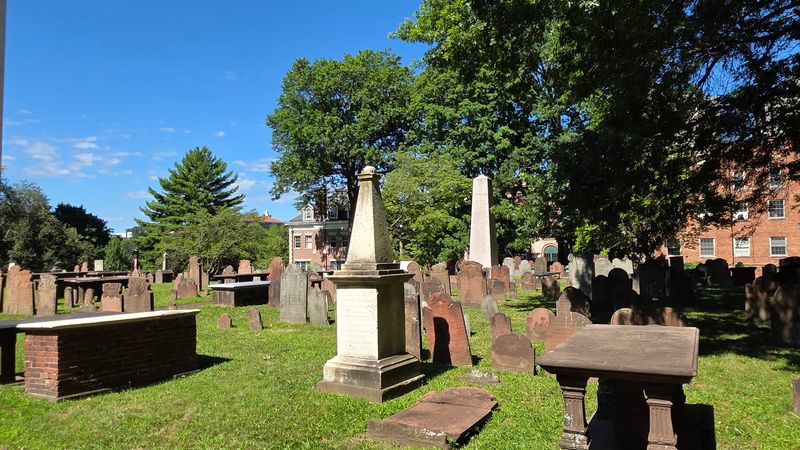
A large monument in the grounds honors the founders of Hartford. It lists the names of the original settlers who helped build the town from scratch.
Reading that list is a fun exercise. Names like Wyllys, Talcott, Stone, and Haynes pop up again and again across Connecticut history.
Samuel Stone, the minister who served alongside Hooker, is also connected to this ground. Together they shaped the early church that guided town life.
Many families come here hunting for their roots. Some trace their family trees back a dozen generations and find a direct ancestor carved in stone.
Bring any family names you know before you arrive. A quick check of online records can tell you whether your relatives were part of this early crowd, and that turns a simple walk into a personal history lesson.
Governors in the Grass
Colonial Connecticut did not have a president or a king nearby, so local governors called the shots. Several of them ended up right here.
The Wyllys family is one of the big names linked to this ground. George Wyllys served as an early governor of the Connecticut Colony, and his family played a major role in Hartford for generations.
The Wyllys name also lives on through a local chapter of the Daughters of the American Revolution. That group is named for Ruth Wyllys, keeping the family story alive.
Other leaders tied to the colony’s government also rest in these grounds. Their stones show how a small town grew into a capital city.
Spotting a governor’s marker is a bit like a scavenger hunt. Some stones are tall and formal, while others look surprisingly plain for such important people.
Take time to read the titles carved under the names. Words like Esquire or Honorable were signs of rank, and they hint at who held power back then.
Patriots of the Revolution
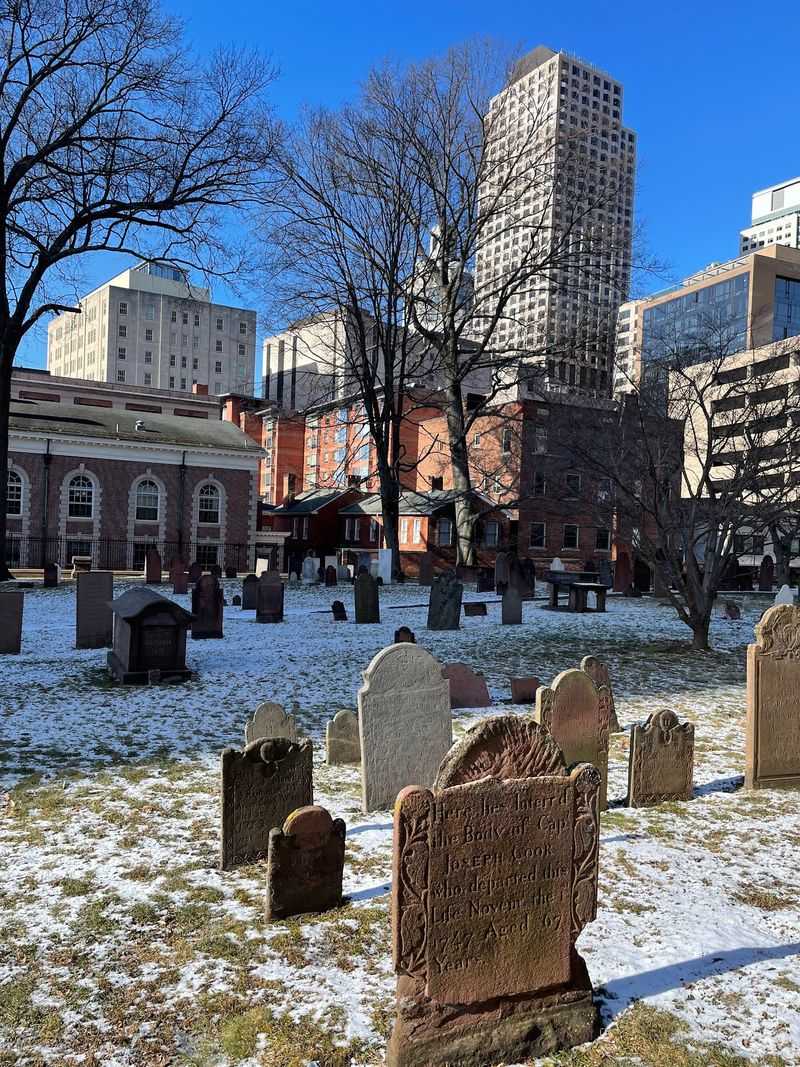
When the colonies broke away from Britain, Hartford sent its share of men to the fight. Many of those patriots came home and were later buried in this very ground.
Revolutionary War veterans are among the people honored here. Their stones sit next to those of their parents and grandparents, who knew only colonial rule.
That mix tells a powerful story in one small space. Families went from loyal British subjects to proud citizens of a new nation in a single lifetime.
Look for markers that list military ranks such as Captain, Lieutenant, or Colonel. Those titles often point to service during the war years.
Hartford was an important supply center during the Revolution. Connecticut earned the nickname Provisions State for feeding and supplying the Continental Army.
Visiting near Memorial Day or the Fourth of July adds extra meaning. It is a chance to remember the people who helped launch the country, and their stories are still quietly waiting to be read.
Stones Older Than the Nation
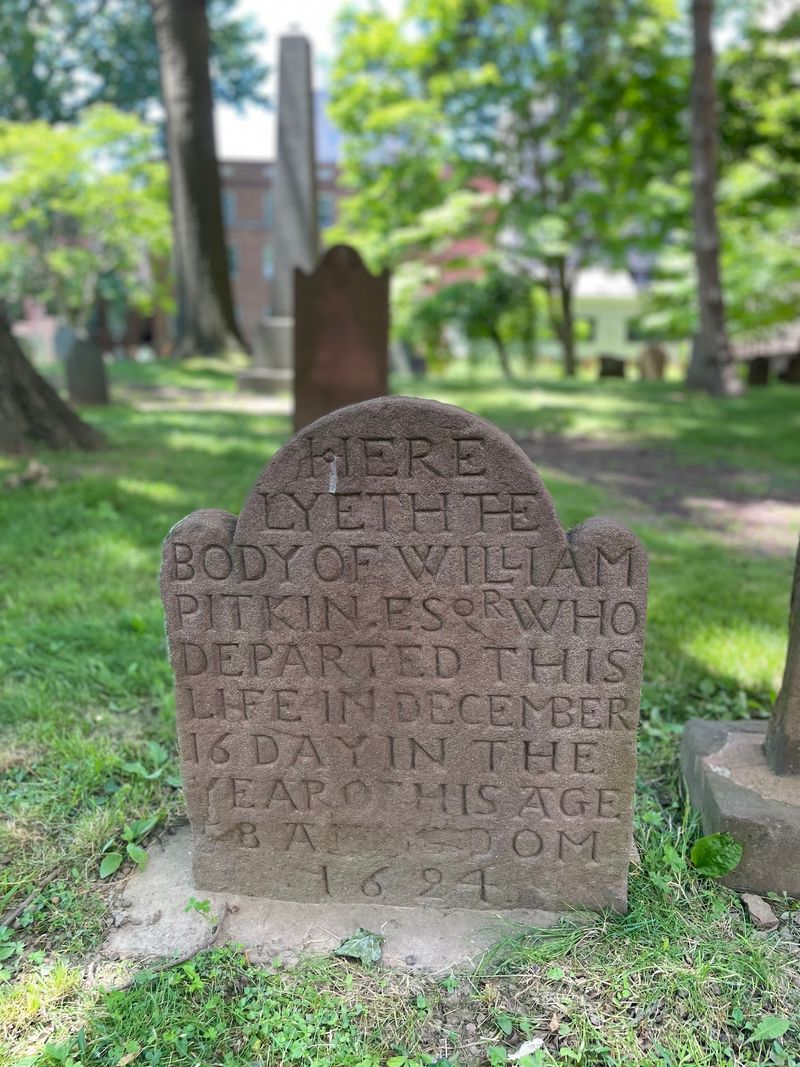
Here is a fact that surprises a lot of people. The oldest readable stones in this cemetery date back to 1648.
That is more than 125 years before the Declaration of Independence. It also makes this one of the best collections of 17th century graves in New England.
Many early markers were made of wood, so they did not last. The ones that remain were carved in stone, which helped them survive for centuries.
Some stones lean, and a few have cracked or broken over time. Even so, a large number are still in solid shape and easy to read.
Spotting the very oldest dates takes patience. Short, low stones near the ground are often the earliest ones, so look down as well as around.
Bring a small notebook and write down the oldest year you find. Kids especially enjoy turning it into a friendly contest, and the winner gets bragging rights about finding a piece of America older than the country itself.
Art Carved in Stone
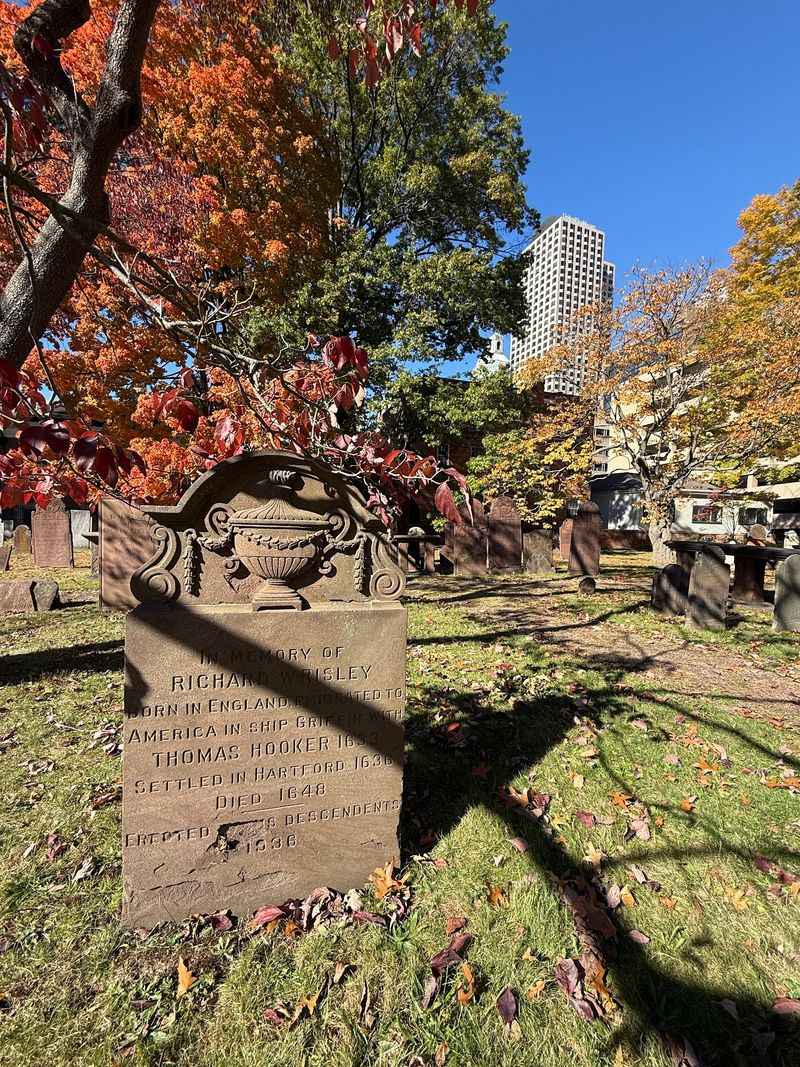
Colonial gravestones were the art galleries of their day. Skilled carvers spent hours shaping symbols and borders by hand.
Here you can spot winged skulls, cherub faces, swirling vines, and other old designs. Each one carried a message about faith and life after this world.
Over time, the symbols changed. Early stones used stern images, while later ones moved toward softer faces and willow trees.
Well-known carvers worked on these stones. Names like Josiah Manning and Gershom Bartlett, who worked in eastern Connecticut, appear alongside carvers from western parts of the state.
The materials vary too. You will find brownstone, schist, marble, and slate, and each one wears differently over the years.
Brownstone came from nearby quarries along the Connecticut River, which made it a popular local choice.
Bring a phone camera and snap close-ups of different designs. Comparing them later at home is a great way to see how styles shifted from one generation to the next.
Words from Another Century
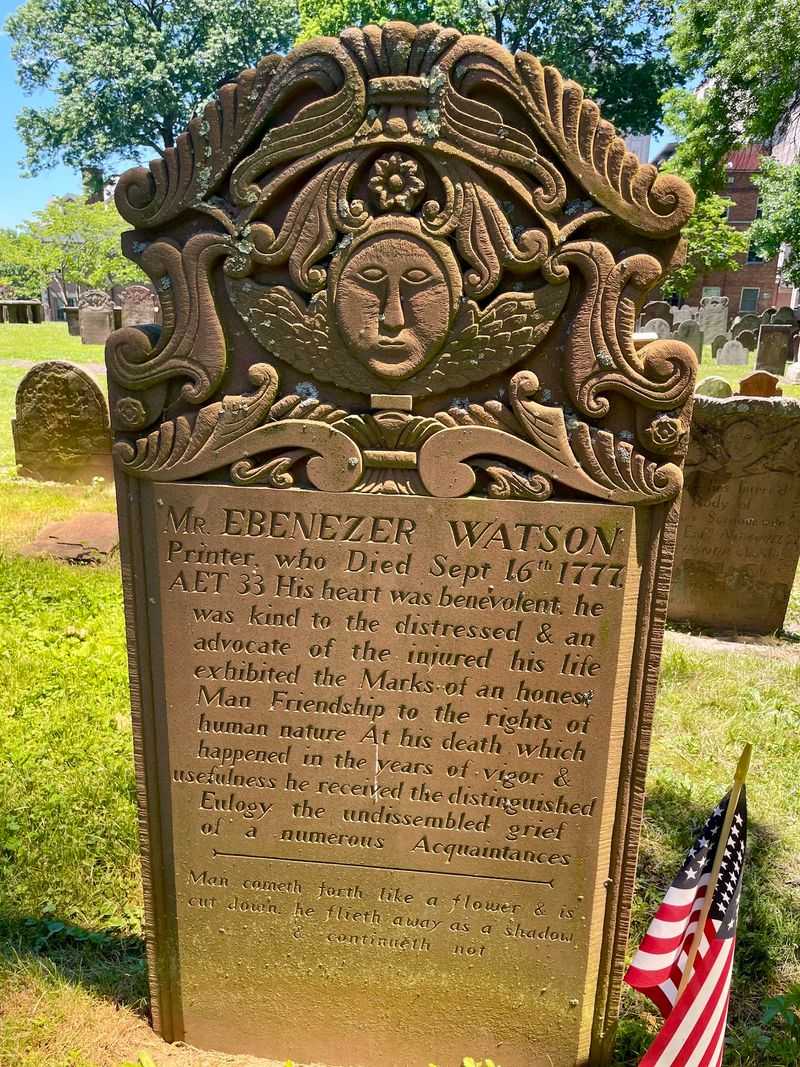
Reading old epitaphs can feel like cracking a secret code. Spelling was not standard in colonial times, so words often look a little odd.
You might see the letter that looks like an f used in place of an s. Many stones also use shortened words and Latin phrases.
Short verses appear on several markers. They often share lessons about faith, family, and how quickly time passes.
Dates can be tricky as well. Before 1752, the British calendar started the new year in March, so some stones show two years written together, like 1701/2.
That little detail confuses a lot of newcomers. Once you know the trick, though, the double dates make perfect sense.
Go slowly and read out loud if it helps. The language is a peek into how people spoke and thought hundreds of years ago.
Try copying a favorite line into your notes. Old words have a way of sticking with you long after the trip ends.
Forgotten Neighbors Remembered
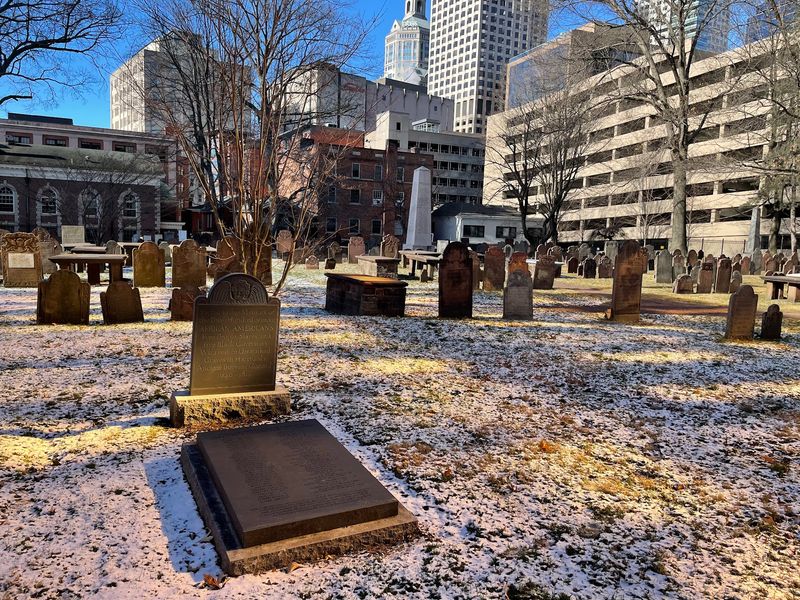
Not everyone buried in colonial Hartford got a carved stone. Many people, including enslaved Africans and Native Americans, were laid to rest without markers.
The Ancient Burying Ground Association has worked to bring those stories to light. A memorial honors the people of African descent who lived in early Hartford.
Research has uncovered names that were nearly lost. Some of these people were part of Hartford’s Black community, which even elected its own leaders called Black Governors in the 1700s and 1800s.
Learning about them gives a fuller picture of the town. History is not only about governors and ministers.
This part of the site often surprises people the most. It shows that the cemetery is still teaching new lessons today.
Spend a few quiet minutes at the memorial during your walk. Reading the names helps keep these neighbors in the city’s memory, where they belong.
The association’s website shares more research for anyone who wants to learn further.
Old Stones, Tall Towers
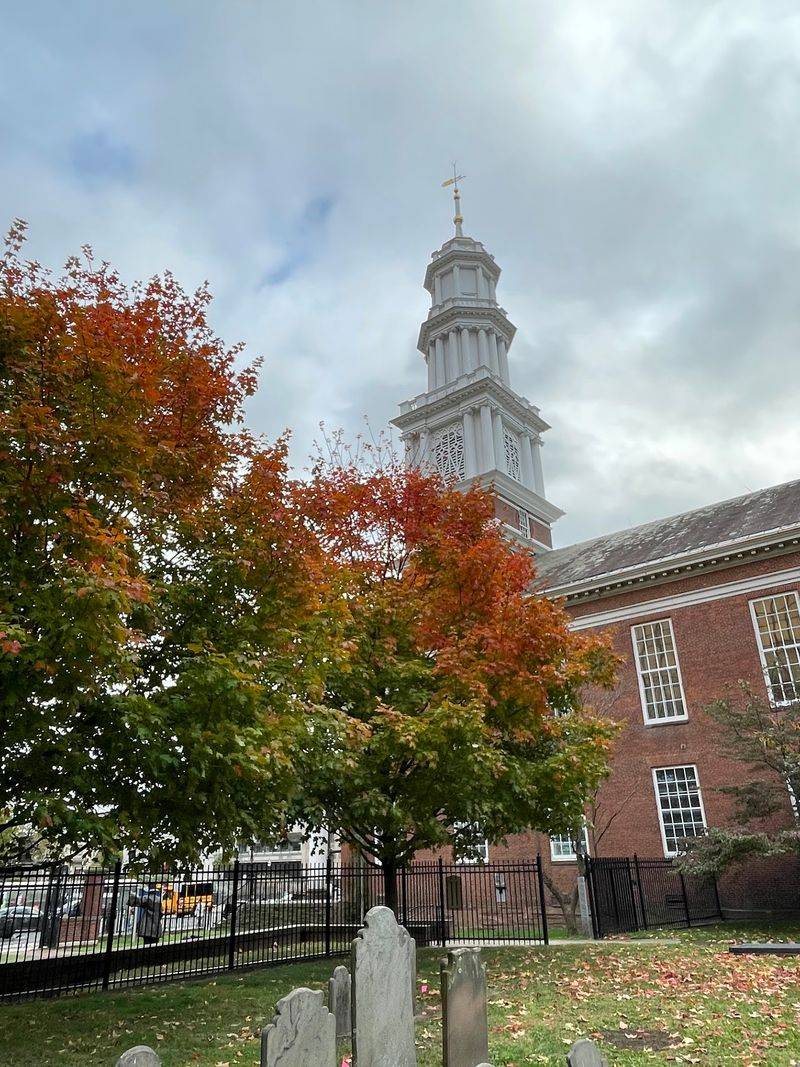
Few places show old and new side by side quite like this one. Tall office buildings rise right above centuries-old graves.
The historic Center Church stands next door. Its congregation traces its roots to the first church founded by Hooker and Stone.
Many people find the contrast between towers and tombstones to be the best part. It makes for great photos and a strong reminder of how much the city has changed.
The grounds are compact, so you can cover everything without much walking. That makes it easy to fit into a lunch break or a quick sightseeing loop.
A nearby parking garage can add some city noise. Plan your visit for a calmer time of day if quiet matters to you.
Pair your stop with other downtown sights within a short walk, like the Old State House. A combined route lets you trace Hartford’s story from colonial church yard to busy modern capital in one easy afternoon.
Tours Worth Joining
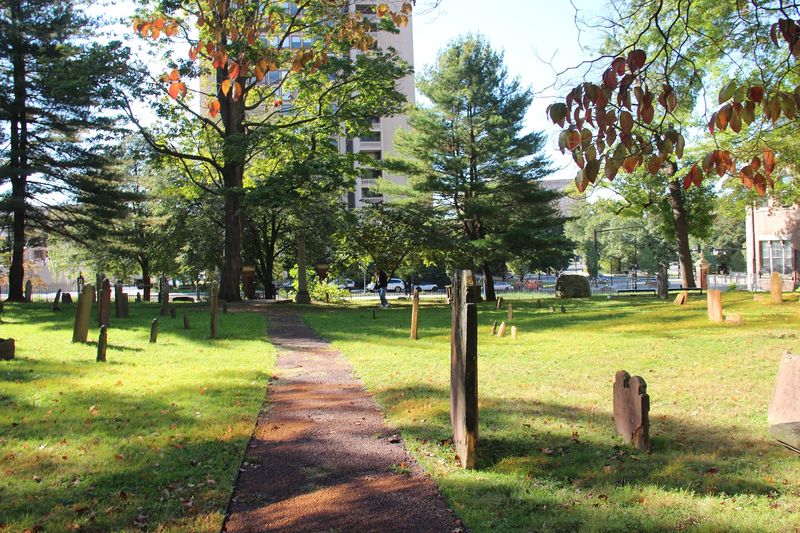
Wandering alone is nice, but a guided tour changes everything. Local experts know which stones hold the juiciest stories.
The Ancient Burying Ground Association runs tours and events through the year. Guides share details about carvers, families, and town history that you would likely miss on your own.
Richard Ross III, a historian connected to the site, wrote a book about the burying ground. It is a helpful read before or after a visit.
Finding a specific grave can be hard because some stones are worn. A guide or a printed resource makes the search much easier.
Check the official website, ancientburyingground.com, for tour dates and updates. Event schedules can change from season to season.
Fall is a popular time to go, with mild weather and colorful trees around the grounds.
Sign up early when tours are announced. A good guide turns a quiet stroll into a lively history class that sticks with you for years.
Smart Tips Before You Go
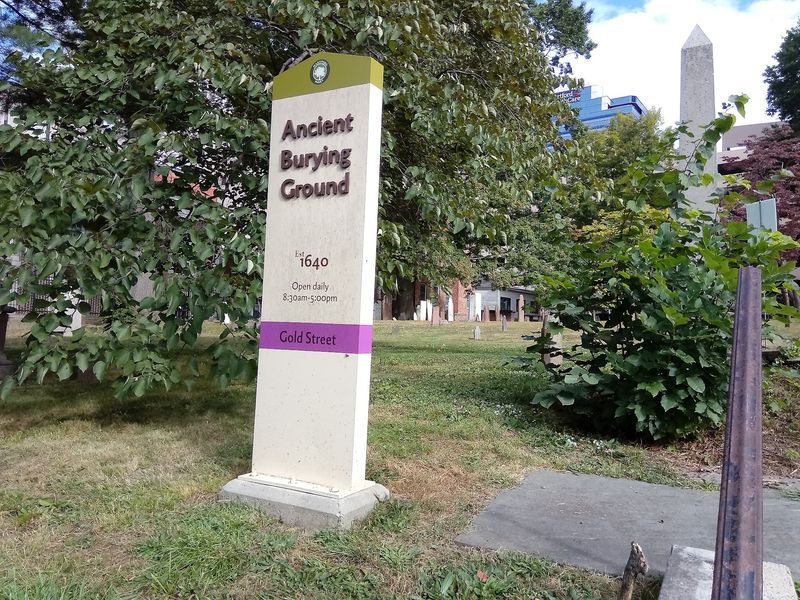
A little planning goes a long way at this downtown site. Posted hours run from 8:30 am to 5 pm every day.
Gates are sometimes locked even during listed hours. Checking the website or calling ahead can save a wasted trip, and the stones are still partly visible through the fence if you arrive to a closed gate.
Like many urban spots, the area has had some safety concerns. Visit in daylight, bring a friend, and stay aware of your surroundings.
Respect matters here more than anywhere. Avoid leaning on or touching fragile stones, since many are hundreds of years old.
Gravestone rubbings can damage old surfaces, so photos are a better choice. Wear comfortable shoes because the ground can be uneven.
Bring a list of names you hope to find. A printed map or notes from the association’s website will speed things up.
Leave everything as you found it. That simple habit helps this treasure last for the next few centuries.