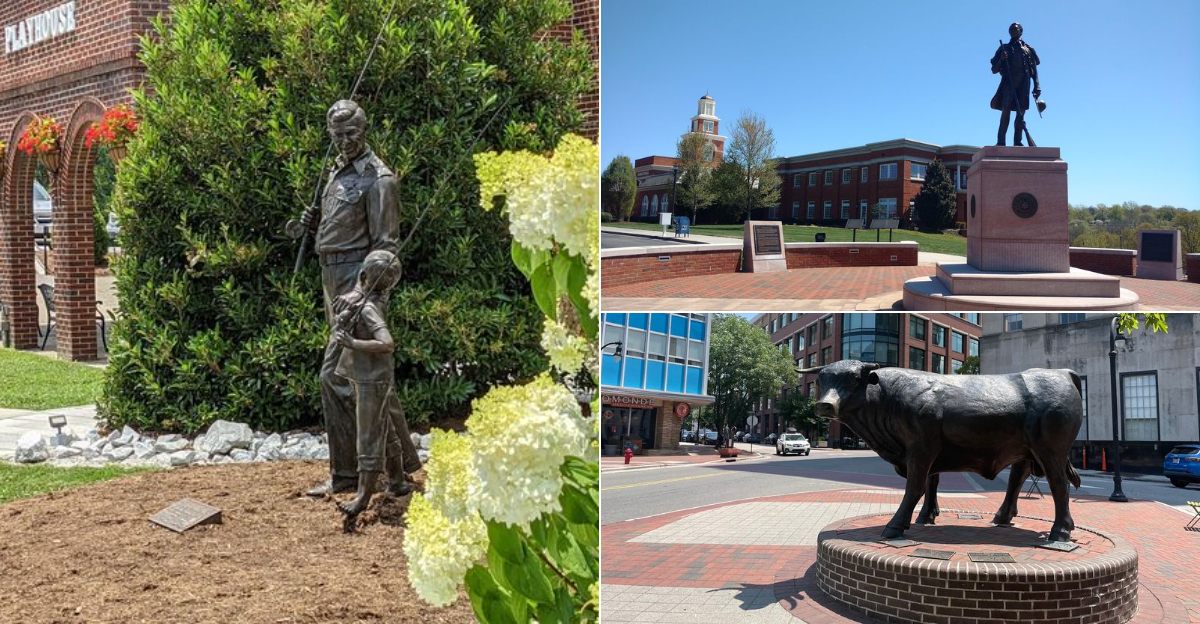
North Carolina does not just preserve history. It puts it on a pedestal, casts it in bronze, and plants it where you can stumble into a story on an ordinary afternoon.
From windswept memorials near the Outer Banks to campus tributes, downtown icons, and statues with enough personality to steal your camera roll, these landmarks turn public art into a statewide treasure hunt.
Some honor world-changing achievement, some invite reflection, and some are delightfully photo-ready, which is a noble public service in its own right.
If you are ready to zigzag from Kill Devil Hills to Boone with stops in Raleigh, Durham, Charlotte, Asheville, Mount Airy, and other towns, this lineup will give you thirteen memorable reasons to hit the road, look up, and notice what North Carolina chooses to remember in stone, steel, and bronze.
1. The Wright Brothers Monument
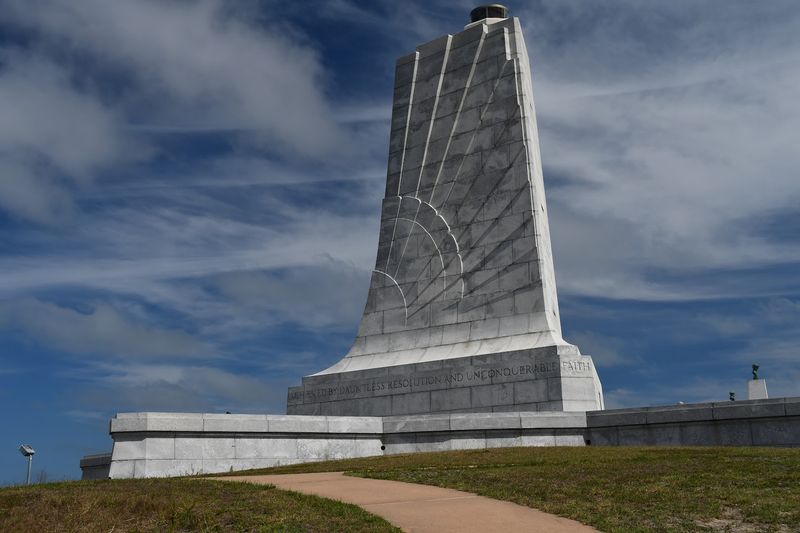
The wind feels like part of the exhibit here.
Perched atop Big Kill Devil Hill in Kill Devil Hills, the Wright Brothers Monument honors Wilbur and Orville Wright, whose 1903 flights changed travel forever.
The tall granite shaft rises with clean Art Deco lines, and it looks especially commanding against the broad Outer Banks sky.
The climb up the hill is short but memorable, and the reward is bigger than a quick photo.
You get sweeping views of the First Flight area, the Atlantic, and the reconstructed camp buildings below, which help ground this giant leap in a surprisingly human story.
Standing here, you can almost imagine the sand, nerves, and stubborn trial and error behind the breakthrough.
I love that this monument feels both heroic and oddly practical, much like the brothers themselves.
It is not overloaded with decorative fuss, which suits an achievement built on patience, math, and wing design instead of showmanship.
If you visit early or near sunset, the light is beautiful, the breeze behaves like a tour guide, and the whole place feels airborne.
2. The Statue of Billy Graham
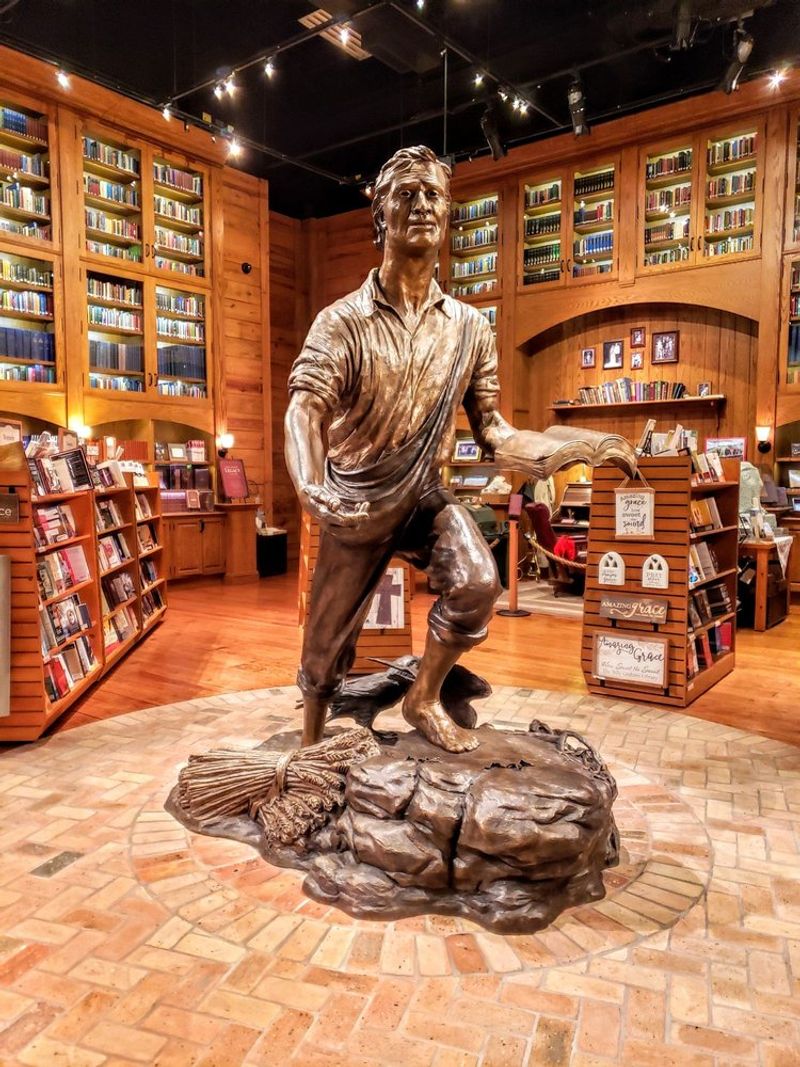
Quiet confidence gives this statue its power.
At the Billy Graham Library in Charlotte, the statue of Billy Graham reflects the global reach of one of North Carolina’s best-known religious figures while keeping the mood intimate and grounded.
Its presence connects local roots to a national legacy, especially for visitors interested in faith, history, and public remembrance.
Graham was born in the Charlotte area, and that regional connection matters here.
Rather than feeling distant or ceremonial, the sculpture works best when seen as part of the larger library experience, where exhibits trace his life, ministry, and influence across decades of American culture.
The setting adds a sense of calm that fits the subject better than any oversized flourish could.
This is a stop that invites a slower pace.
You do not need to share every belief represented to appreciate how thoughtfully the statue anchors a major chapter of Charlotte’s identity and modern evangelical history.
If you are already exploring the library grounds, give yourself a few unhurried minutes here, because the sculpture is less about spectacle and more about presence, memory, and place.
3. The Sir Walter Raleigh Statue
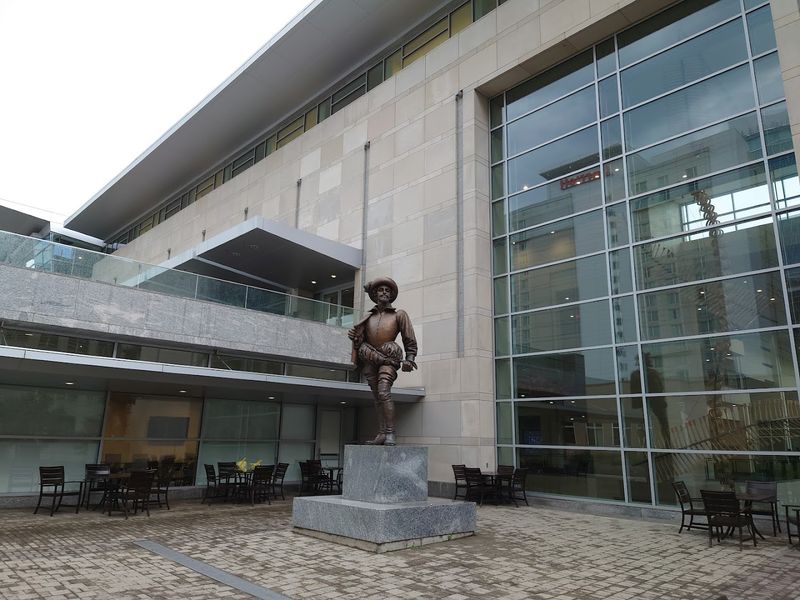
Few cities wear their origin story as literally as Raleigh does.
On the North Carolina State Capitol grounds, the Sir Walter Raleigh statue nods to the English explorer for whom the city is named, giving downtown a touch of historical theater without requiring a powdered wig.
It stands in a setting where lawns, paths, and civic architecture do a lot of the scene-setting work.
The statue fits naturally into a visit to the Capitol, one of the state’s most important historic buildings.
Even if Raleigh himself never set foot in the city that borrowed his name, the monument captures the way North Carolina ties colonial memory to place, symbolism, and public space.
That tension between myth, naming, and documented history makes this stop more interesting than a quick glance might suggest.
Walk the grounds, read nearby markers, and let the Capitol backdrop sharpen the sense that you are standing inside layers of state identity rather than beside a single bronze figure.
It is polished, central, and easy to find, which makes it a dependable downtown detour for history fans, architecture lovers, and curious wanderers alike.
4. The “Bull” Sculpture at American Tobacco Campus
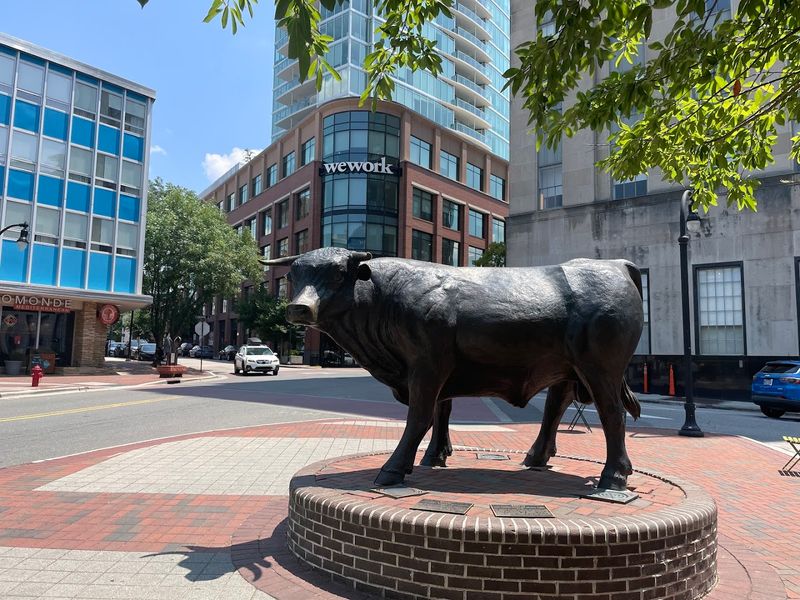
At the heart of Durham’s revitalized industrial core, the Bull Sculpture at the American Tobacco Campus in Durham stands as one of North Carolina’s most recognizable modern landmarks.
Located in the American Tobacco Historic District, the bronze figure captures both power and permanence, echoing the city’s evolution from tobacco manufacturing giant to a hub of technology, food, and culture.
The bull itself is rendered with striking realism—muscular, grounded, and alert—symbolizing strength, determination, and the economic force that once defined the region.
Yet its meaning has grown beyond industry.
Today, it stands amid restaurants, performance venues, and open courtyards where locals and visitors gather, turning the sculpture into a living part of everyday life rather than a distant monument.
The contrast between the historic brick warehouses and the bold, contemporary energy of the surrounding district gives the artwork added depth.
People often pause here for photos, but the sculpture rewards closer attention, especially in how it anchors the identity of a space built on reinvention.
In a state filled with memorials and historic tributes, the Bull remains a powerful reminder that progress and heritage can coexist in a single, striking form.
5. Washington Duke Statue
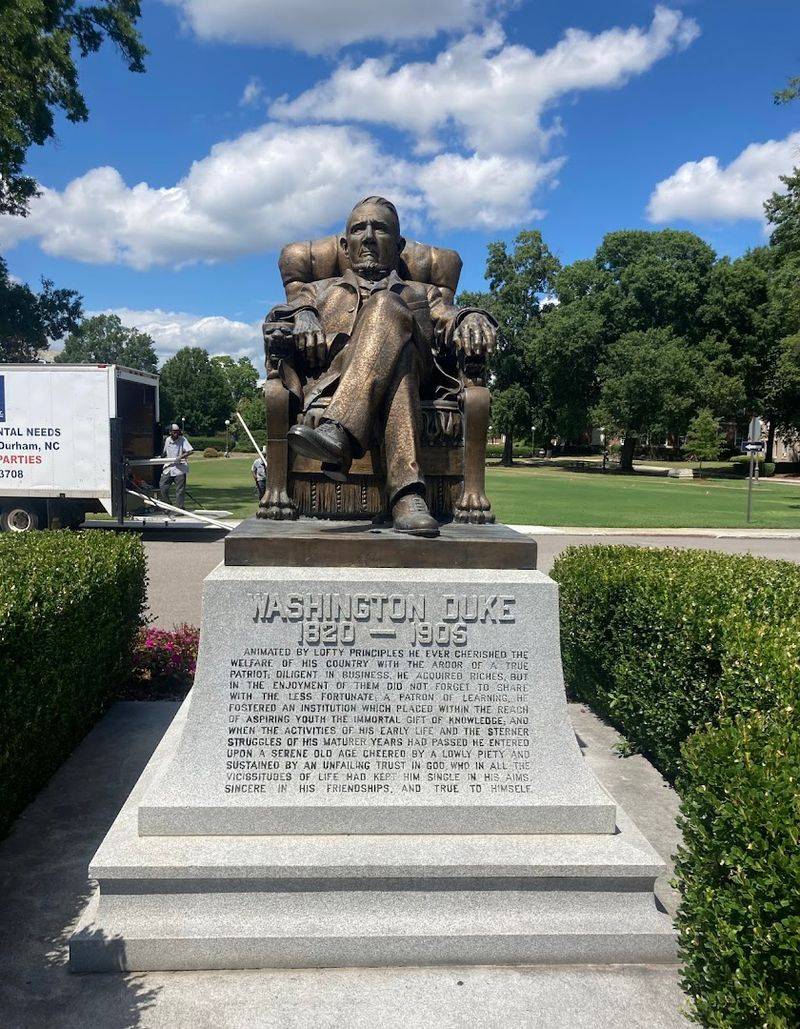
In the academic heart of Durham, the Washington Duke Statue in Durham offers a quiet but powerful reminder of the city’s industrial and educational roots.
Located on the grounds of Duke University, the sculpture honors Washington Duke, the tobacco industrialist whose legacy helped shape both the university and the wider region.
Cast in bronze and presented in a formal, seated composition, the statue reflects a sense of stability and forward-thinking vision rather than grandeur or spectacle.
It feels intentionally grounded, as if inviting visitors to pause and consider the origins of one of the South’s most influential academic institutions.
Surrounded by Gothic architecture, tree-lined walkways, and the hum of student life, the monument blends seamlessly into its environment while still holding its own as a focal point.
Unlike more dramatic civic memorials, this statue communicates through restraint, emphasizing legacy, philanthropy, and transformation over time.
Visitors often encounter it while exploring campus rather than seeking it out directly, which adds to its reflective character.
Among bold public art and historic monuments, the Washington Duke Statue stands out for its understated dignity and its direct link between personal legacy and institutional growth.
6. The Vietnam Veterans Memorial
Some monuments speak softly and still hit hardest.
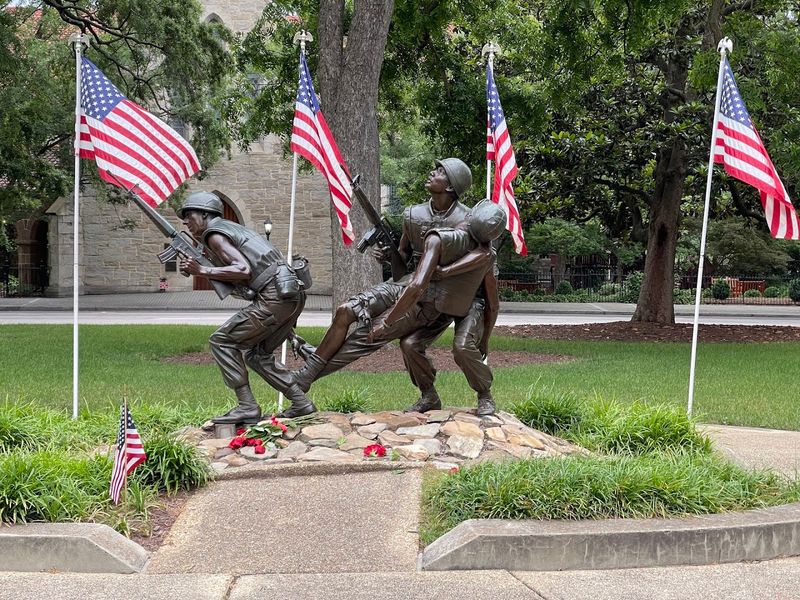
On the grounds of the North Carolina Museum of History in Raleigh, the Vietnam Veterans Memorial honors those who served and those who never came home, creating a space that feels personal even in the middle of the capital city.
Its design encourages quiet, not rush.
Because it sits near one of the state’s key history institutions, the memorial naturally becomes part of a broader conversation about service, sacrifice, and memory.
Visitors often arrive expecting a quick stop and end up lingering, reading names, reflecting on the war’s lasting costs, and noticing how carefully the site balances dignity with accessibility.
That emotional clarity is part of what makes it stand out.
I appreciate how this memorial avoids spectacle.
It does not need flashy symbolism when the names, setting, and purpose already carry so much weight for families, veterans, and anyone trying to understand the human dimension of conflict.
Pair it with time inside the museum if you can, because the combination offers one of Raleigh’s strongest public history experiences and a reminder that remembrance works best when it is both visible and sincerely felt.
7. The USS Battleship North Carolina Memorial Statue
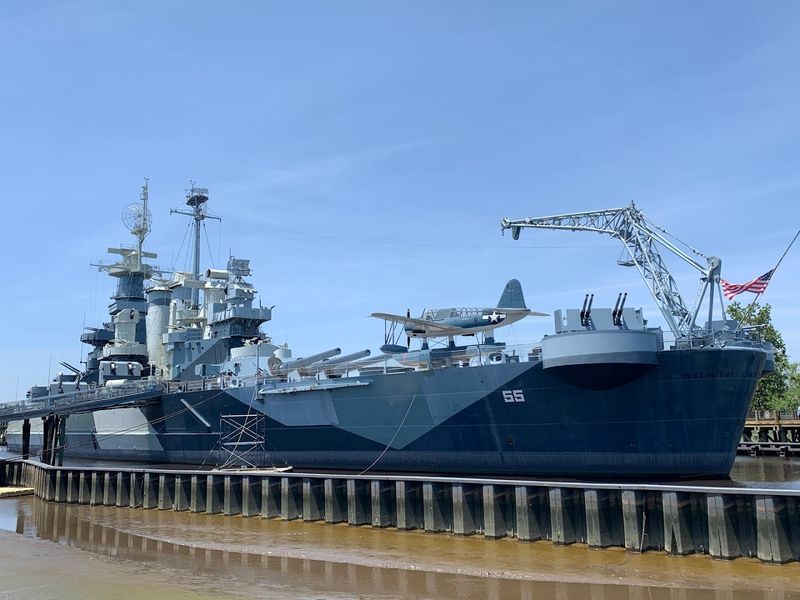
Steel, river light, and wartime memory make a striking trio here.
At the Battleship North Carolina site in Wilmington, the USS Battleship North Carolina Memorial Statue adds a human note to one of the state’s most impressive military landmarks.
With the massive ship nearby, the sculpture helps translate machinery and battle records into individual courage and service.
The setting across the Cape Fear River from downtown Wilmington is a big part of the appeal.
You get the visual drama of the battleship itself, plus exhibits that explain the vessel’s World War II history, making the memorial feel connected instead of isolated.
That combination gives visitors several ways into the story, whether they care most about naval history, engineering, or remembrance.
This site stands out because it delivers scale without losing feeling.
The statue invites a closer, more personal moment before or after exploring the decks, ladders, and tight quarters of the ship, and that shift in perspective lands well.
If you only know Wilmington for beaches and riverfront strolls, add this stop to your list, because it offers one of the state’s most vivid encounters with military history, resilience, and coastal atmosphere.
8. The Andy Griffith Statue
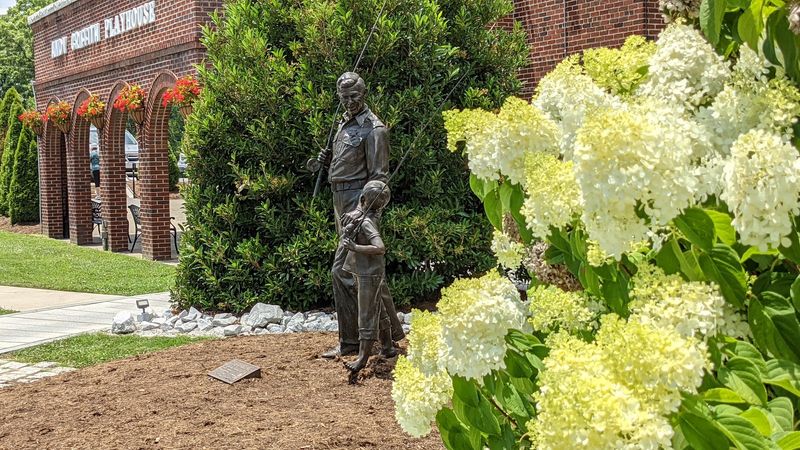
Nostalgia practically whistles its own theme song in front of this statue.
In downtown Mount Airy, the Andy Griffith Statue celebrates the hometown star whose warmth and wit shaped one of America’s most beloved television legacies.
Set near Main Street, it fits naturally into a town that happily leans into its connection to Mayberry style charm.
Even visitors who did not grow up with The Andy Griffith Show usually recognize the appeal once they arrive.
The sculpture captures more than celebrity.
It reflects Mount Airy’s pride in a native son who made small-town kindness, neighborly humor, and front-porch pacing feel timeless rather than old-fashioned.
Nearby attractions, shops, and themed tours make the whole area feel like a playful companion piece.
I like this monument because it knows exactly what job it has.
It is here to make you smile, take a photo, and maybe start humming before you realize it, which is honestly excellent public service for a bronze statue.
If you are road-tripping through the foothills, this is an easy and memorable stop.
It proves that not every standout monument has to be solemn when joy, recognition, and hometown affection can do the heavy lifting.
9. Blackbeard the Pirate Statue
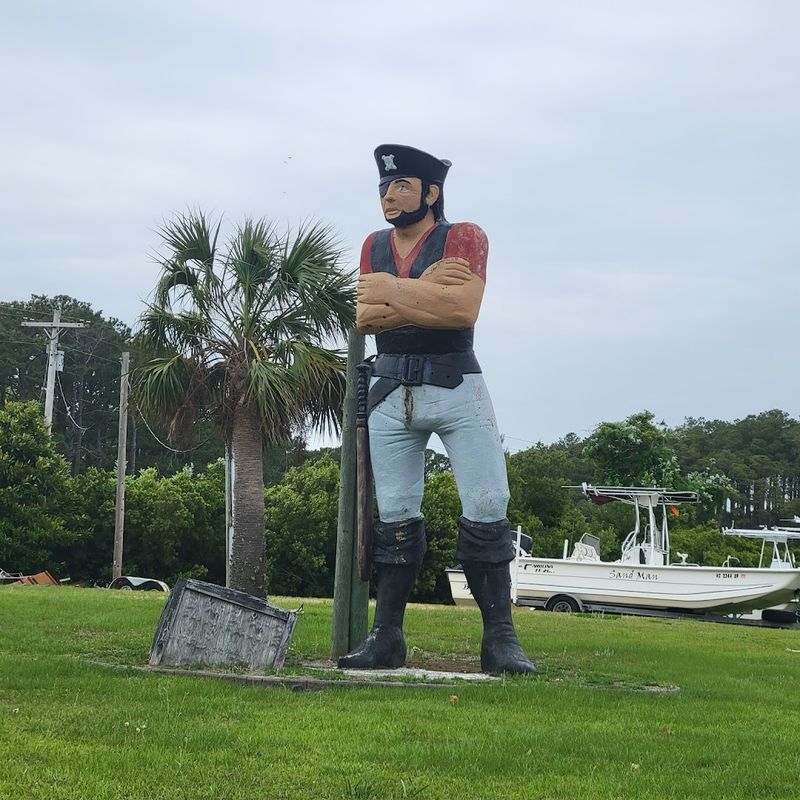
In the coastal town of Beaufort, the Blackbeard the Pirate statue brings one of North Carolina’s most legendary figures vividly to life.
Set near the waterfront, where salt air and harbor views still echo the region’s maritime past, the sculpture honors Edward Teach, better known as Blackbeard, whose name is inseparable from the age of piracy along the Atlantic coast.
The statue presents him in a commanding stance, often depicted with dramatic posture and period detail that reflects both menace and myth.
It captures not just a historical figure, but the storytelling aura that has grown around him for centuries.
Visitors encounter the monument while walking through Beaufort’s historic district, where colonial architecture and dockside scenery help frame the experience.
The setting enhances the statue’s impact, making it feel as though it belongs naturally to the coastal landscape rather than being placed upon it.
While Blackbeard’s real history remains a blend of fact and legend, the sculpture leans into that ambiguity, celebrating the folklore that continues to shape North Carolina’s identity.
This statue stands out for its adventurous spirit, connecting art, history, and maritime imagination in one unforgettable coastal landmark.
10. The Civil Rights Greensboro Four Monument
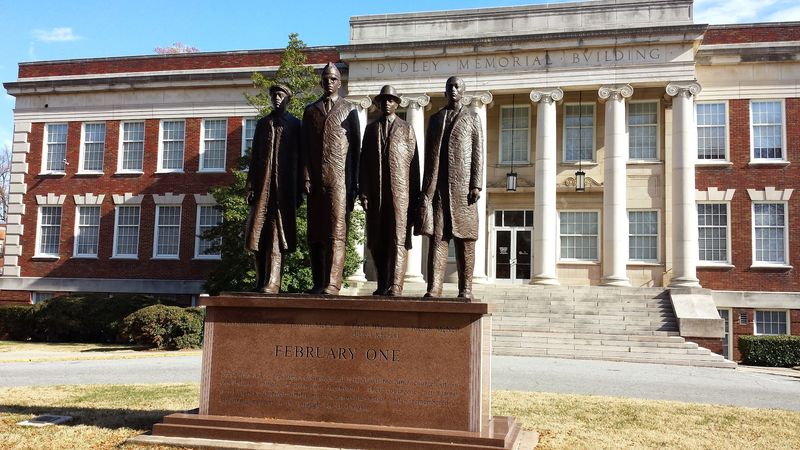
Courage sometimes looks like four students taking a seat.
Near the North Carolina A&T State University area in Greensboro, the Civil Rights Greensboro Four Monument honors Ezell Blair Jr., David Richmond, Franklin McCain, and Joseph McNeil, whose 1960 Woolworth sit-in became a defining moment in the civil rights movement.
The monument turns a history lesson into a human encounter.
Its location matters enormously.
Greensboro is not just the backdrop for this story but the place where ordinary action sparked extraordinary national change, and visiting the monument makes that truth feel immediate.
The sculpture works best when paired with a stop at the International Civil Rights Center and Museum downtown, where the broader context comes into even sharper focus.
I find this monument unforgettable because it honors bravery without exaggeration.
The Greensboro Four were young, disciplined, and determined, and the sculpture captures the power of people refusing to accept injustice in everyday spaces.
When building a meaningful North Carolina itinerary, put this high on the list, because it offers one of the state’s clearest reminders that public places can become turning points and that local action can echo far beyond city limits.
11. The Christ Statue – Raleigh, NC
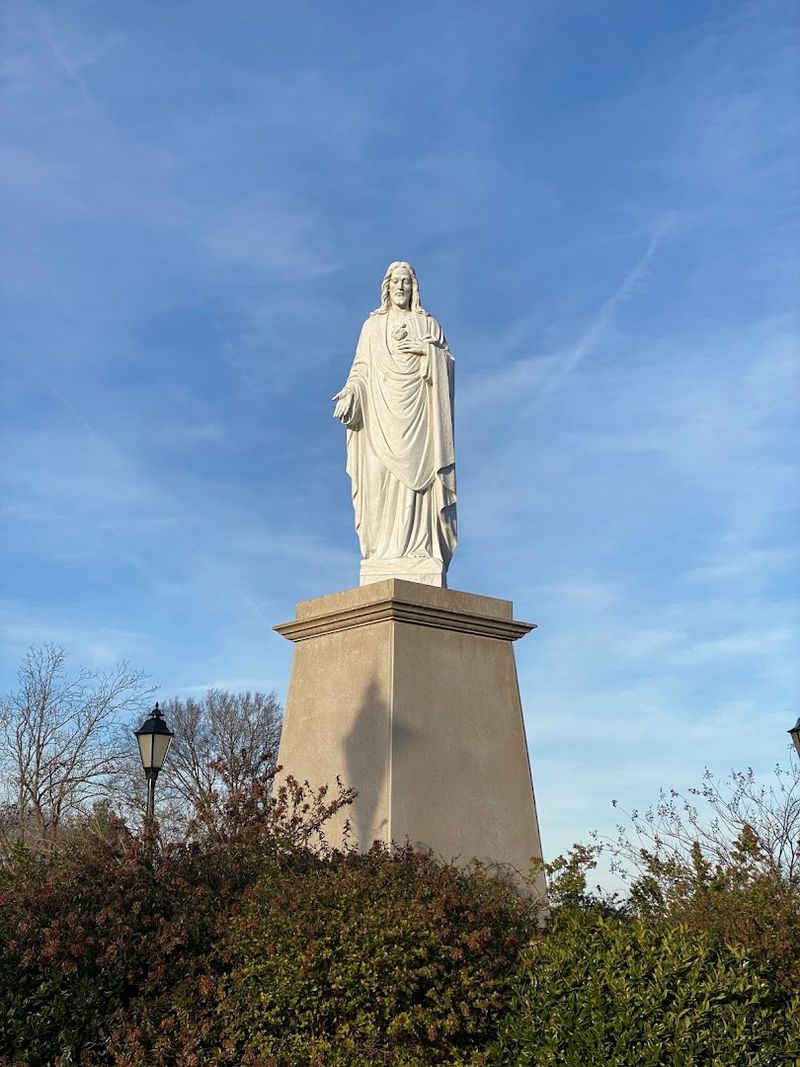
Serenity arrives quickly when a cathedral grounds are done this well.
At Holy Name of Jesus Cathedral in Raleigh, the Christ Statue adds a strong devotional focal point to one of the city’s most notable religious sites.
The sculpture feels welcoming rather than remote, which suits a place built for gathering, reflection, and prayer.
The cathedral itself is worth seeing, with architecture and landscaping that make the entire property feel carefully composed.
Within that setting, the statue becomes more than an ornament.
It helps shape the atmosphere, giving visitors a clear place to pause whether they come for worship, art, architecture, or a few quiet minutes away from traffic and schedules.
I appreciate how accessible this monument feels.
You do not need an elaborate plan to enjoy it, only enough time to slow down and notice how sculpture, sacred space, and open air can work together.
For travelers exploring Raleigh’s better-known museums and government landmarks, this stop offers a different kind of standout experience, one centered on peace, visual harmony, and the reminder that some of the state’s most memorable monuments invite contemplation instead of applause.
12. The Sam Houston Monument
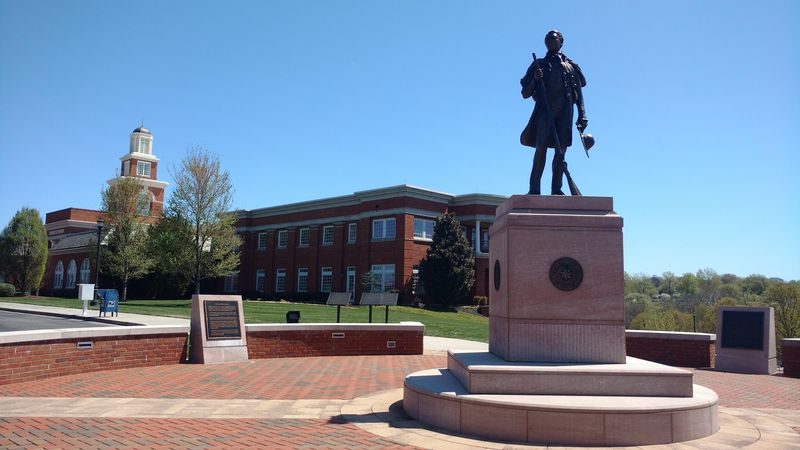
Not every North Carolina monument honors someone people expect to find there.
In the Waynesville and Haywood County area, the Sam Houston Monument recognizes the statesman and military leader who was born in Virginia but spent formative childhood years in western North Carolina.
That local connection gives the monument a surprising and memorable twist.
Houston is most closely associated with Tennessee and Texas, so seeing him commemorated in the mountains can feel like uncovering a footnote that secretly deserves top billing.
The statue highlights how regional identity is often messier and more interesting than the simplest version taught in school.
Waynesville’s scenic setting only improves the experience, adding Appalachian character to the historical discovery.
I like this monument because it rewards curiosity.
It is the kind of stop that makes you say, wait, Sam Houston here, and then spend the next few minutes happily filling in the gaps, which is my favorite public-art outcome.
If you are exploring western North Carolina beyond waterfalls and overlooks, this is a smart detour.
It broadens the story of the region and reminds you that influential lives often begin in places far quieter than where history eventually places them.
13. North Carolina Music Hall of Fame
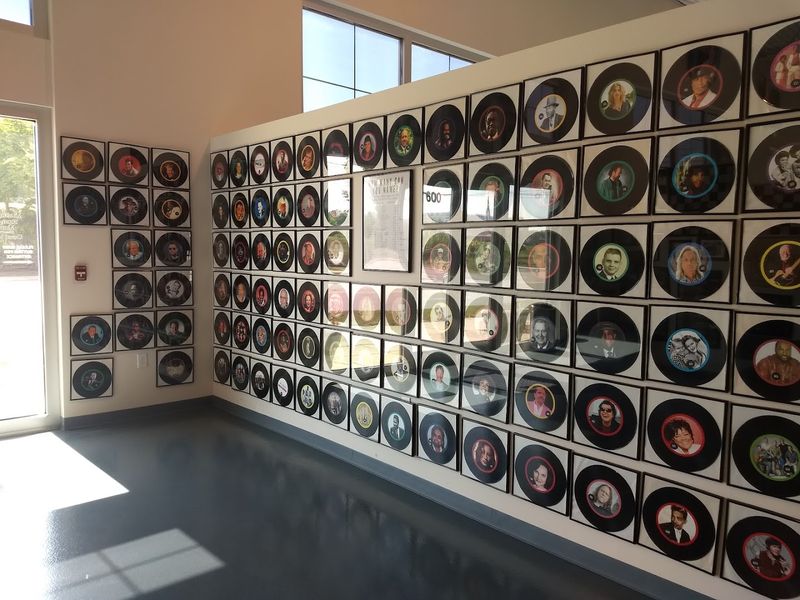
In the revitalized downtown core of Kannapolis, the North Carolina Music Hall of Fame stands as a tribute to the artists who helped shape the state’s rich and varied musical legacy.
Sitting in the heart of the city’s walkable streets and public gathering spaces, the monument celebrates performers whose influence spans country, gospel, blues, rock, and beyond.
The hall itself carries a sense of rhythm and movement, reflecting music not as a static achievement but as a living cultural force that continues to evolve.
Visitors often encounter it while exploring downtown events, local shops, or seasonal festivals, making it part of an active civic environment rather than an isolated landmark.
Its presence reinforces Kannapolis’s growing identity as a place that values both heritage and reinvention, connecting the past achievements of North Carolina musicians with the creativity of new generations.
The design emphasizes recognition and pride without overwhelming ornamentation, allowing the stories behind the honorees to remain at the center.
North Carolina Music Hall of Fame serves as a reminder that sound and storytelling are as much a part of the state’s history as its landscapes and architecture, continuing to resonate in public life today.