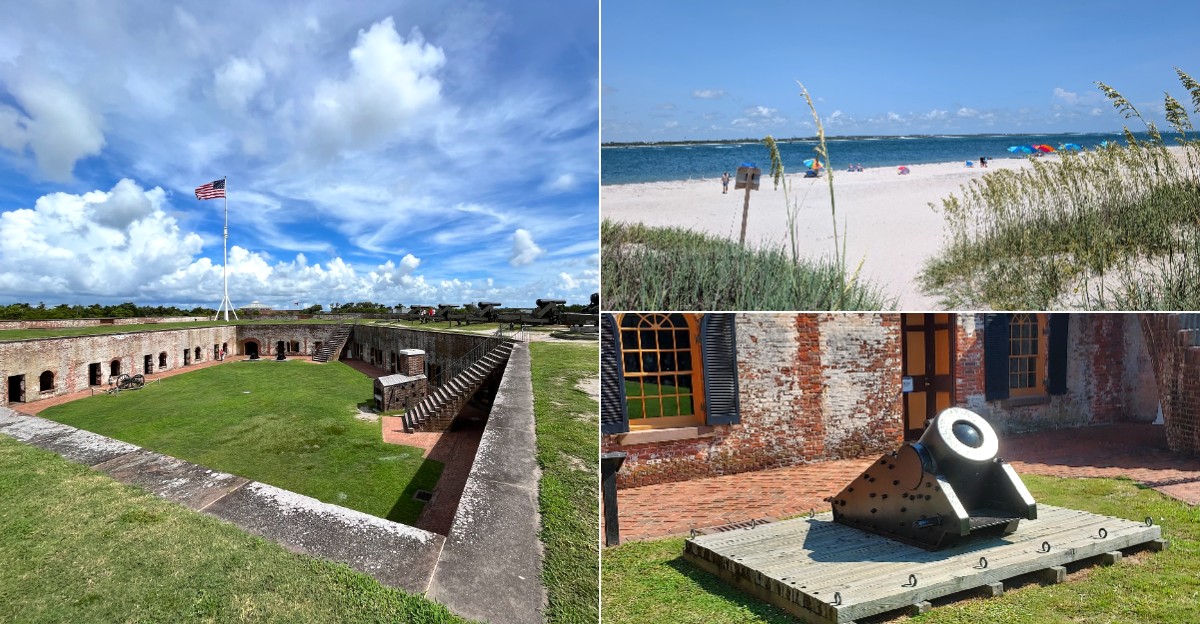
Tucked along a narrow strip of coastline where the sound meets the open Atlantic, this pint-sized park packs in more history and scenery than its size suggests.
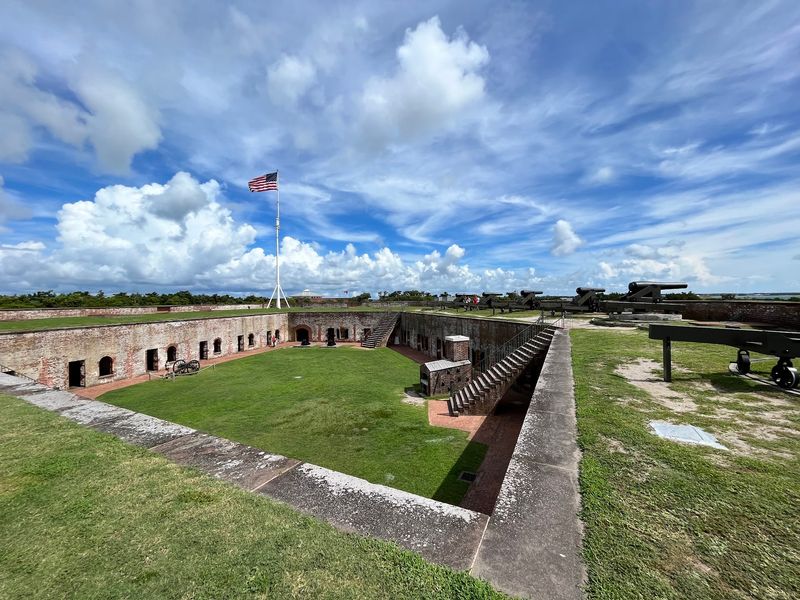
A brick Civil War-era fort rises from the dunes, its walls open for visitors to wander through casemates and climb up for sweeping ocean views.
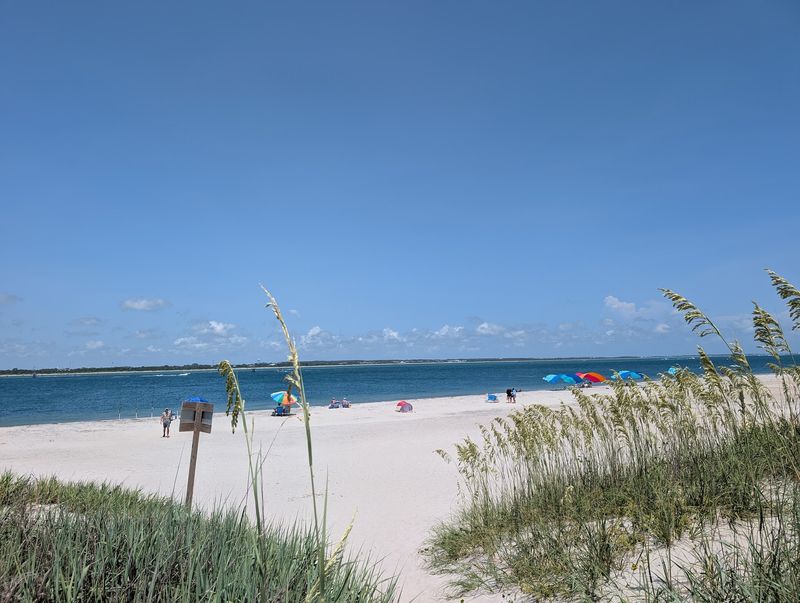
Just beyond the fort, a wide sandy beach invites swimming, surf fishing, and long walks along the shore.
Nature trails wind through maritime forest and salt marsh, offering a quieter side of the coast away from the crowds.
A small visitor center rounds out the experience with exhibits on the area’s military and natural history.
Fort Macon State Park in Atlantic Beach proves that North Carolina’s smallest state park can still deliver a big day out.
A Small Park With a Big Coastal Story
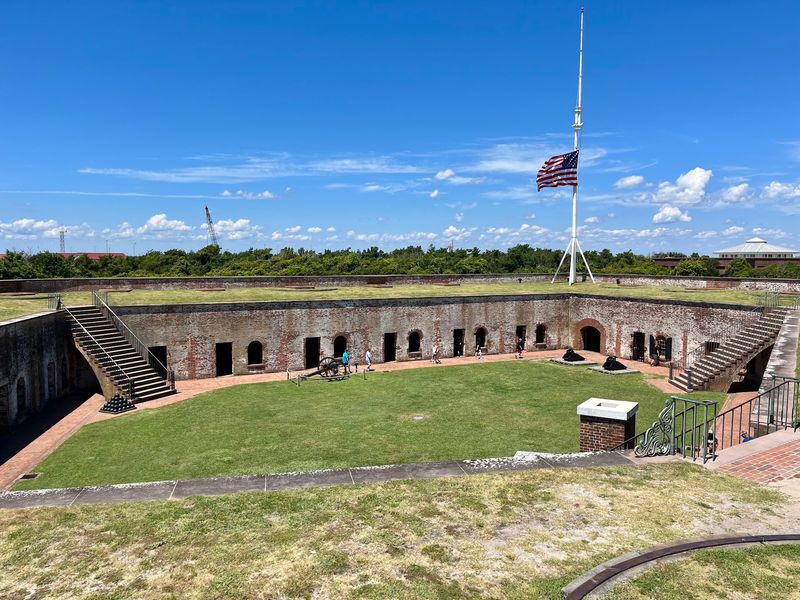
Salt air, open sky, and old brick walls make the first few minutes feel bigger than the map suggests. Fort Macon State Park, at 2303 E Fort Macon Rd, Atlantic Beach, NC 28512, may be known as North Carolina’s smallest state park, but it never feels short on things to do. The park sits near Beaufort Inlet, where ships, soldiers, storms, and beachgoers have all shaped its story.
Visitors come for the restored fort, then often stay longer for the ocean views, quiet paths, and clean beach access. Because the main sights are close together, families can explore without spending the whole day driving between stops. That makes it a smart choice for a relaxed weekend trip, especially if you want history and fresh air in one place.
Plan to arrive near opening time if you like cooler weather and smaller crowds. Wear comfortable shoes, bring water, and give yourself at least two hours for the fort and visitor center. If the weather is nice, save extra time for the shoreline, because the waves are just steps away.
The Restored Fort Feels Like a Walk Through Time
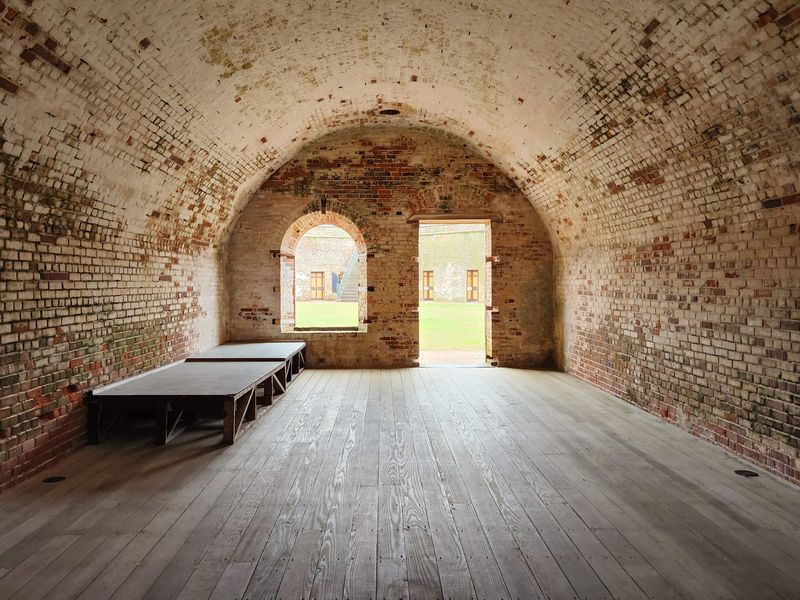
Old stone steps, cool rooms, and echoing hallways make history feel close enough to touch. The restored fort is the main reason many people visit, and it is easy to understand why once you step inside. Instead of only reading dates on signs, you can move through rooms that show how soldiers lived, worked, slept, cooked, and kept watch.
Several casemates hold exhibits with uniforms, tools, weapons, and simple displays that explain different periods of the fort’s use. Kids often enjoy peeking into each room, while adults tend to slow down for the architecture and war stories. Look carefully at the steps and walls, because some marks connect to real cannon fire and past battles.
You can tour on your own, but a guided program adds helpful details if one is offered during your visit. Start at the visitor center first, watch the overview film, then walk the fort with better background in mind. The experience is free, educational, and much more memorable than a quick roadside stop.
Cannon Firings Make the Past Feel Loud and Real
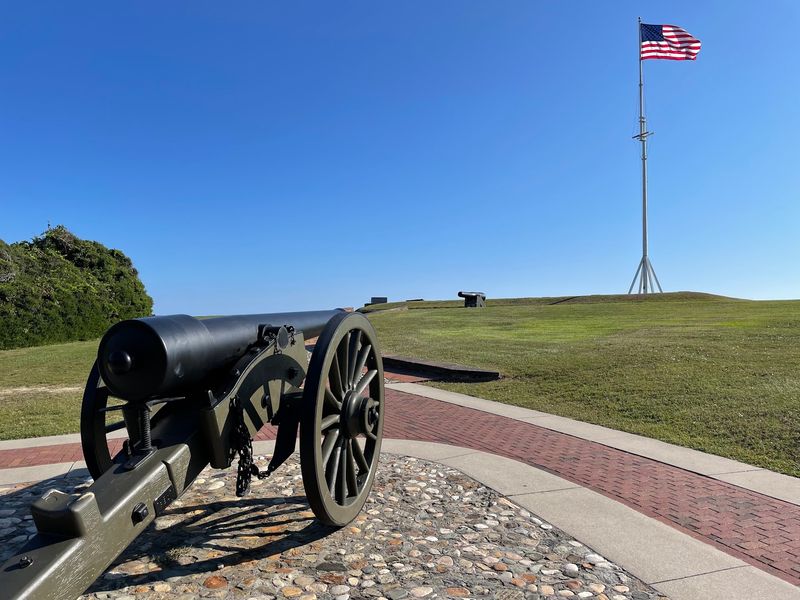
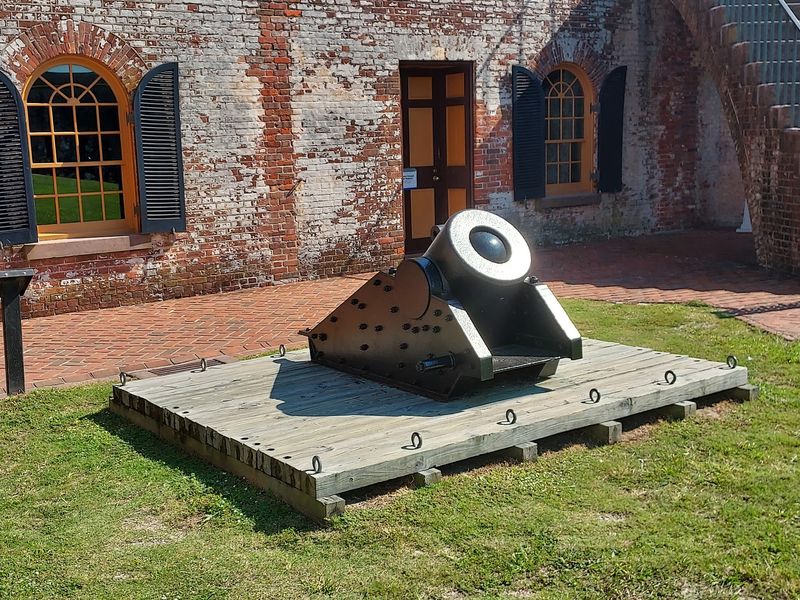
A quiet afternoon can suddenly turn into a moment everyone remembers when the cannon crew gets ready. Cannon firing programs are one of the park’s most talked-about experiences, and they bring the fort’s military history to life in a bold way. The ceremony is usually short, but the sound, smoke, and explanation make a strong impression on visitors of all ages.
Check the park calendar before you go, because these events do not happen every hour or every day. Arriving early helps you find a good viewing spot and gives children time to settle before the boom. If anyone in your group is sensitive to loud noises, bring ear protection, since even outdoor cannon blasts can feel powerful.
Rangers and staff often explain what the cannon meant for coastal defense and how crews handled it safely. That short lesson can make the fort seem less like an old building and more like a working place from another time. Bring a camera, but also take a minute to simply watch the smoke drift over the grounds.
The Beach Is Right There After the History Lesson

Few history trips end with sandy feet, but this one can. After walking through brick rooms and reading about coastal defense, visitors can head to the ocean side and enjoy a completely different mood. The park has about 1.5 miles of beach, giving people room to swim, stroll, sit, or simply listen to the surf.
Beach access is one reason the park works so well for mixed groups. Someone may care most about Civil War history, while someone else just wants sunshine and waves. Here, both people can be happy without splitting the day into separate trips.
Pack towels, sunscreen, and a change of shoes if you plan to stay awhile after visiting the fort. Lifeguard availability and water conditions can change by season, so pay attention to posted signs before swimming. Restrooms and parking make the beach visit easier than many remote shore spots.
For a simple plan, tour the fort in the morning, eat lunch nearby, then return for beach time. The mix of learning and relaxing is what makes the park feel like a full weekend escape.
Easy Trails Add Quiet Time Between the Waves
Not every great trail needs steep hills or long mileage to be satisfying. The park’s walking routes offer a calm break from the busier fort and beach areas, especially if you enjoy noticing small details. You may pass coastal plants, sandy paths, birds, and stretches where the air smells like pine, salt, and sun-warmed dunes.
The popular loop-style hiking options give visitors a chance to stretch their legs without planning a major backcountry trip. Some guests mention the Coues Trail as a good way to add steps and enjoy quieter parts of the park. Shade can vary, so a hat and water bottle are smart even when the walk looks short.
Trails are also useful when the beach is windy or when your group needs a slower activity after touring the fort. Take your time reading signs, watching for wildlife, and looking toward the inlet when views open up. Comfortable shoes matter because sand and roots can make the ground uneven in places.
If you start early, the paths feel peaceful and less crowded. That quiet space is part of the park’s underrated charm.
The Visitor Center Helps Everything Make Sense

A good visitor center can turn a nice stop into a much better visit. Here, the exhibits, film, maps, and staff help explain why the fort mattered and how the coast shaped its role. Before walking outside, spend a little time inside so the rooms, cannons, and walls have more meaning.
The museum area is especially helpful for families because it breaks history into pieces that are easier to understand. Displays cover military life, construction, weapons, uniforms, and the fort’s place in North Carolina’s coastal defenses. Many visitors also enjoy the short movie because it gives a clear overview without taking too much time.
Staff and volunteers are often praised for being friendly and knowledgeable. Ask questions if you are curious about a room, tour time, event, or cannon program. A quick conversation can lead to details you might miss on your own.
The gift shop and donation options are worth noticing too. Since admission is free, buying a small item or donating helps support care for the site. For a first visit, make the center your starting point, not an afterthought.
Free Admission Makes the Weekend Feel Easier
A day out feels even better when the main attraction does not drain your wallet. One of the best things about the park is that admission is free, which makes it easy for families, students, retirees, and road trippers to say yes. You can walk the fort, enjoy the grounds, visit exhibits, and reach the beach without buying tickets.
Free does not mean low quality here. The fort is well cared for, the exhibits are thoughtful, and the grounds are clean enough that many visitors comment on it. That combination makes the park feel like a rare deal on the coast, where many activities can add up fast.
Bring money anyway for snacks elsewhere, gift shop finds, or a donation if you want to support future programs. Challenge coins and small souvenirs can be fun reminders of the day. Parking is generally convenient, but busy weekends can still fill popular areas.
To get the most value, plan a half day or full day instead of rushing through. With history, trails, and beach time included, the free visit can feel surprisingly full.
Smart Tips Turn a Quick Stop Into a Full Day
A little planning can make this compact park feel smooth, easy, and full of small wins. Start by checking hours and special programs before leaving home, since tours, talks, and cannon events can shape your schedule. The park commonly opens at 8 AM, and arriving early gives you cooler air, softer light, and fewer people in exhibit rooms.
Wear walking shoes for the fort and trails, then keep sandals or beach shoes in the car for the sand. Bring sunscreen, water, a hat, and a light snack, especially during warm months. If you want beach time, pack towels and clothes that can handle salt and sand.
Families with mobility needs should look for the boardwalks and convenient parking areas near beach access. Reviews mention that some visitors have been able to get wheelchairs close to the surf, though conditions can change. Dogs are not allowed inside the fort, so pet owners should plan carefully.
Give yourself permission to move slowly. Read the signs, watch the water, talk with staff, and leave room for one unexpected favorite moment.