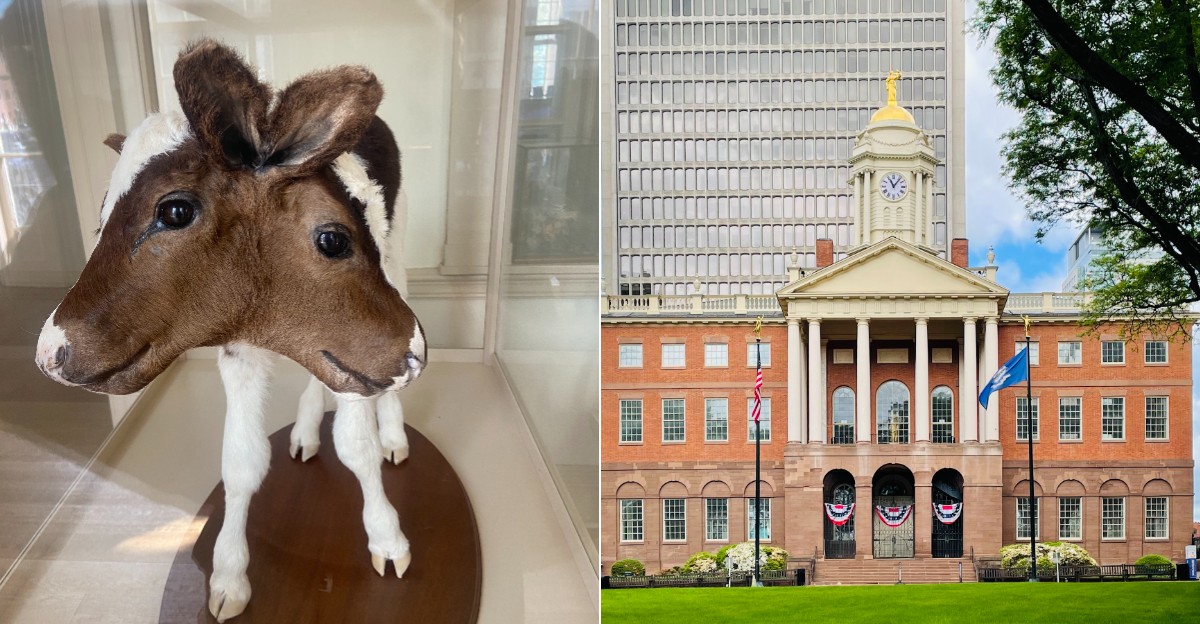
A two-headed calf is not what most people expect to encounter inside a historic government building. Yet that is exactly the kind of unexpected curiosity that makes Connecticut’s Old State House in Hartford so intriguing.
At 800 Main St, the museum combines unusual displays with rooms tied to Connecticut’s political history, creating a place where strange artifacts and serious stories share the same halls.
You can move from a glass case holding an oddity to a room where lawmakers once debated questions that shaped the state, then pause over objects that reveal how earlier generations viewed the world around them. The contrast gives the museum an unusual character, blending curiosity, history, and the human stories behind both.
For travelers who enjoy museums that reward a closer look, Connecticut’s Old State House has plenty of corners worth exploring. Here are some of the unexpected sights and stories waiting inside.
A Cabinet That Refuses to Be Ordinary
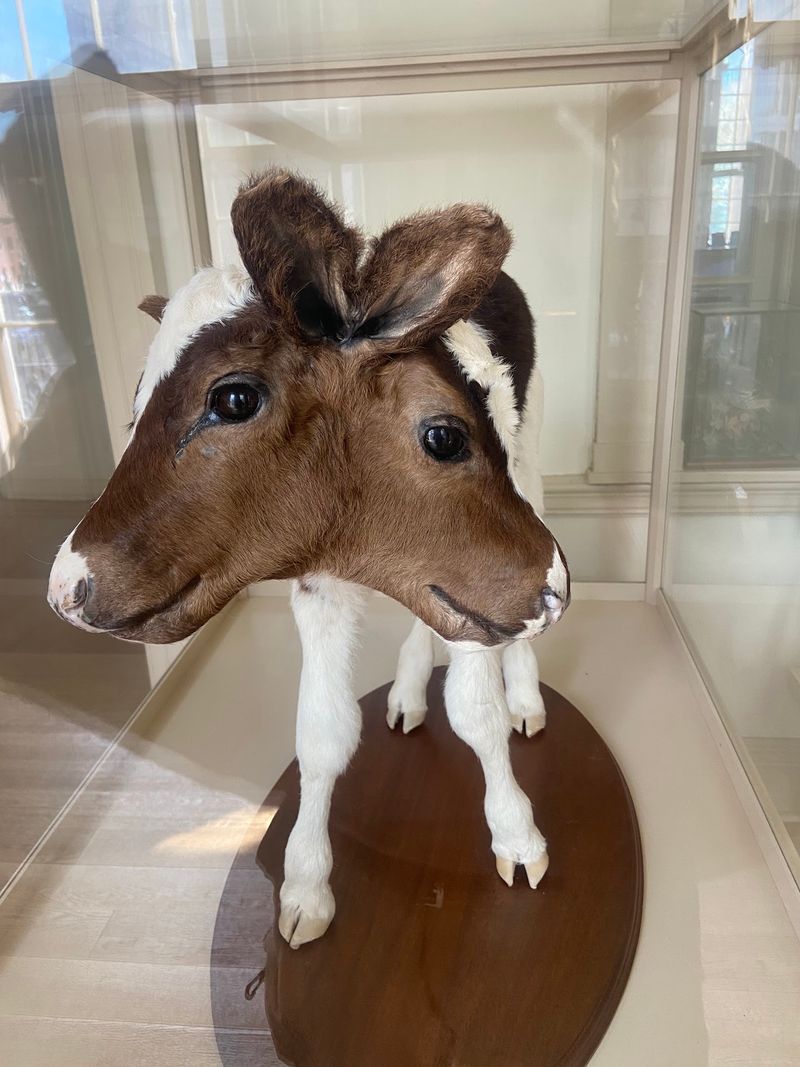
A room full of preserved creatures is not what most people expect above a historic courtroom. On the third floor of Connecticut’s Old State House, the recreated Joseph Steward Museum of Natural and Other Curiosities turns that surprise into the heart of a visit.
Look for the two-headed calf and pig, then notice how many smaller objects compete for your attention.
Reverend Joseph Steward opened his collection here in 1797, when public museums were still uncommon in America. The present display recreates the spirit of his museum rather than pretending every object has sat untouched since his day.
That difference matters: it lets you enjoy the strange scene while learning how people once shared knowledge.
Try choosing one specimen and imagining what questions an early visitor might have asked about it. Was it frightening, beautiful, or simply hard to explain?
Children may head straight for the unusual animals, while adults often linger over the idea that science and entertainment once occupied the same cabinet.
Give this floor time instead of treating it as a quick photo stop. Its surprises make the formal rooms downstairs feel like part of a much wider story.
A Dark Story Beneath the Grand Building
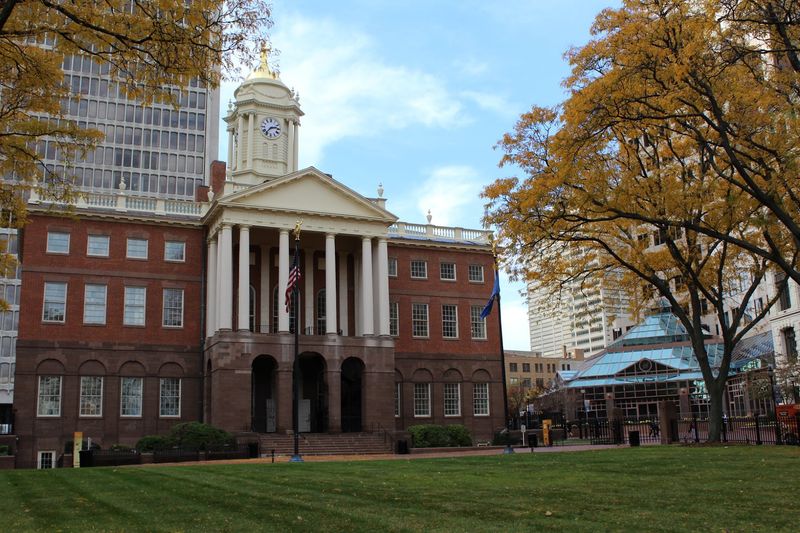
Some history is unsettling even when there is nothing dramatic to see. The grounds around Connecticut’s Old State House are linked to Hartford’s early witchcraft persecutions, a reminder that fear could have deadly results long before this building opened.
Pause outside before entering and consider how different the square would have felt in colonial times.
Connecticut’s witch trials began decades before the better-known trials in Salem. People accused of witchcraft faced courts, neighbors, and harsh punishments.
The Old State House was built much later, so its walls did not witness those earliest events. Keeping that timeline clear makes the story more meaningful, not less.
This is a place to ask careful questions rather than hunt for a spooky thrill. Who was believed, who was doubted, and what happened when a community let suspicion stand in for evidence?
Those questions still matter whenever rumors spread faster than facts.
Ask a guide how the site’s earlier history connects with the later court and government rooms. The contrast between colonial fear and the building’s public ideals gives an outdoor pause unexpected weight before the rest of your visit.
Lady Justice Comes Down to Earth
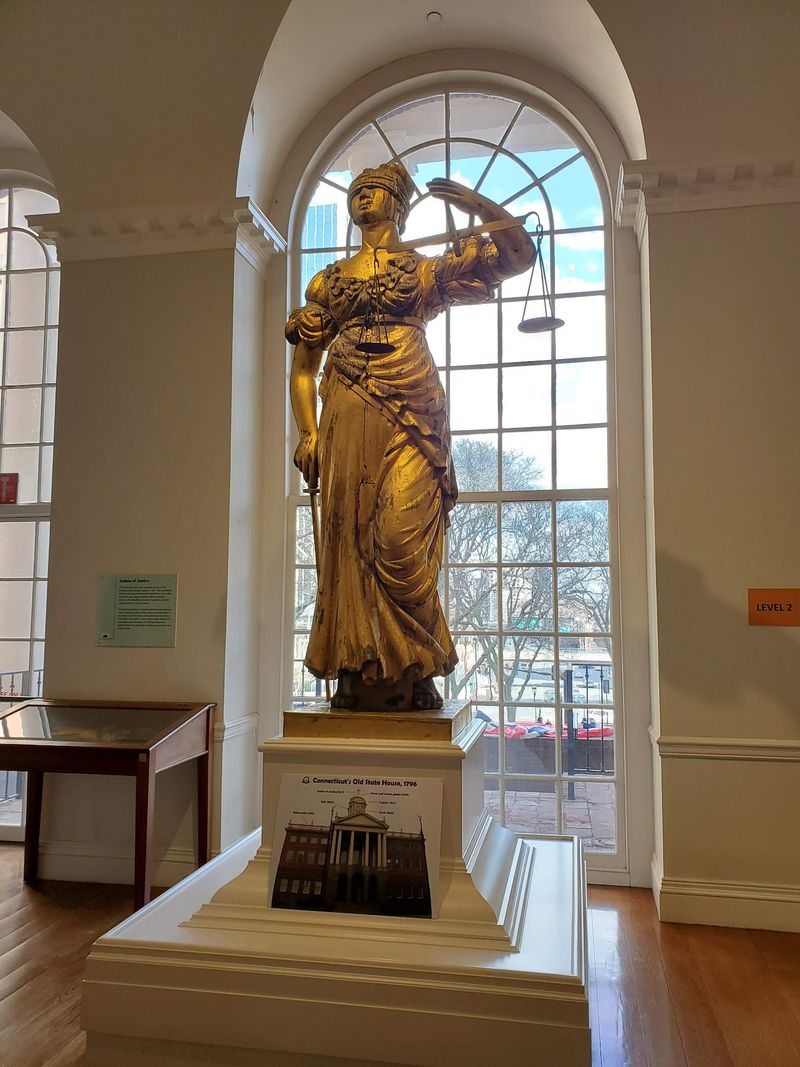
A figure made to tower over a city now meets visitors nearly face to face. Inside Connecticut’s Old State House, the original wooden Lady Justice statue offers a closer view than anyone on Main Street could have had when she stood on the cupola.
Look at her carved form and imagine years of Hartford weather passing around her.
For about 149 years, the statue watched over the building from above. Preservation brought the original indoors, while a replica took her place outside.
The move helps protect an old work of art without removing the familiar outline from the roof. It also changes the way you experience a symbol usually seen from far below.
Ask younger visitors what they think Lady Justice represents before explaining the idea of fair treatment under the law. Then look for the same idea elsewhere in the building, especially in its former court spaces.
A statue becomes more memorable when it starts a conversation instead of serving only as decoration.
Before leaving, glance up at the cupola from outside. Seeing both versions connects the delicate object indoors with the public symbol that still greets the city.
The Halls That Spark Ghost Stories
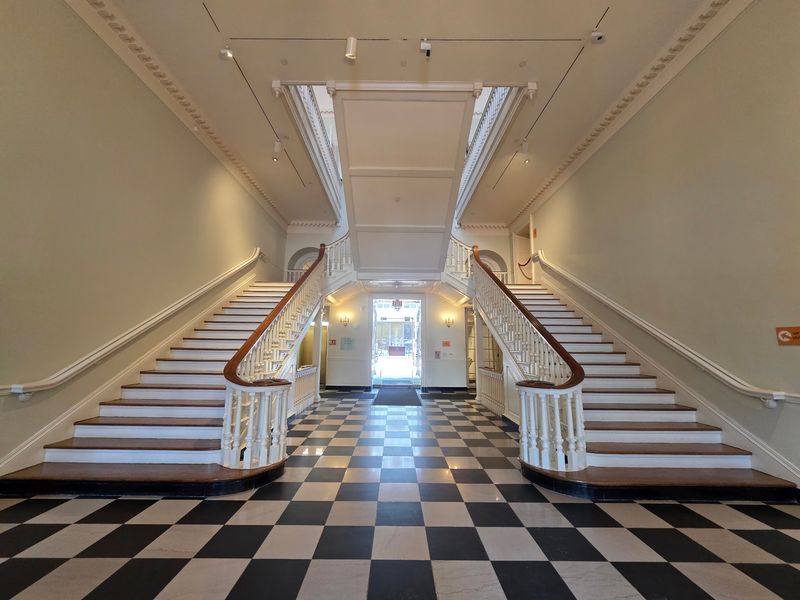
An empty hallway can feel especially quiet when you know how many people once hurried through it. At Connecticut’s Old State House, ghost stories have grown around the old rooms and corridors, adding a playful shiver to a visit already rich with history.
Listen for creaking floors, but let your imagination do its work without mistaking every sound for proof.
The building appeared on the television show Ghost Hunters in 2009, after reports of unusual experiences drew attention. Investigators discussed strange sounds, though claims of a haunting remain just that: claims.
Old buildings make noises for ordinary reasons, and the stories are most enjoyable when you leave room for doubt.
Walk through a chamber while thinking about the people who worked, argued, waited, and worried here. Their lives offer more to wonder about than any possible ghost.
If you are visiting with children, ask them to invent a friendly story about a mysterious noise, then look around for a real-world explanation.
The haunted reputation adds atmosphere, not a guarantee of thrills. It may simply make you slow down and notice a doorway or staircase you otherwise would have passed.
A Courtroom and the Amistad Fight
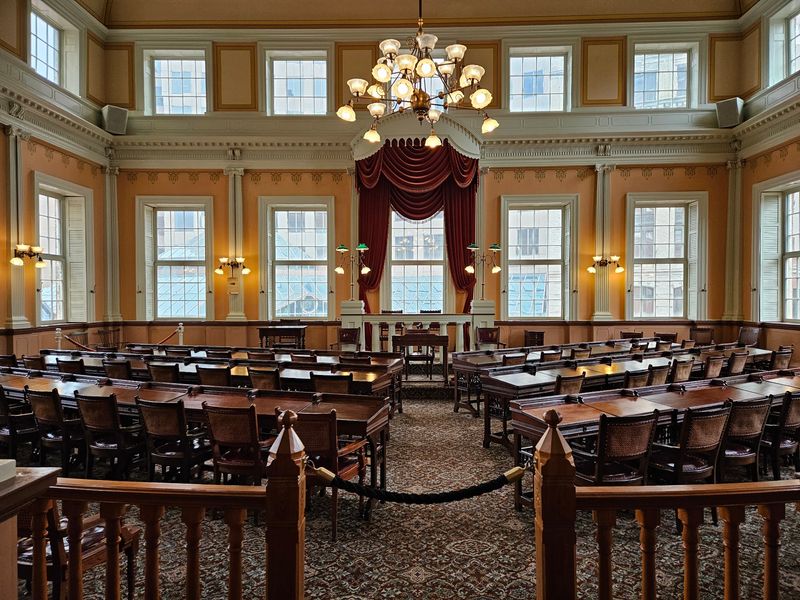
The strangest thing about an old courtroom may be how close its hardest choices can still feel. At Connecticut’s Old State House, the Amistad story brings visitors into a fierce nineteenth-century fight over freedom.
Stand in the restored court space and picture a crowded room following arguments about people whose lives were at stake.
In 1839, Africans held aboard the Spanish ship La Amistad took control of the vessel after being kidnapped and enslaved. Once the ship reached American waters, legal proceedings involving their fate began in Connecticut.
Their case continued beyond this building and eventually reached the United States Supreme Court, where their freedom was upheld.
Read the exhibit text slowly, especially if you are visiting with a student. Try tracing how one event at sea became an international legal battle.
It helps to remember that the people at the center of the story were individuals, not just names in a court record. Their courage deserves more attention than the drama of the room.
Spend a few quiet minutes here before moving on. The courtroom shows how a historic building can hold both the limits of its era and a lasting demand for justice.
A Governor’s Office with Younger Ideas
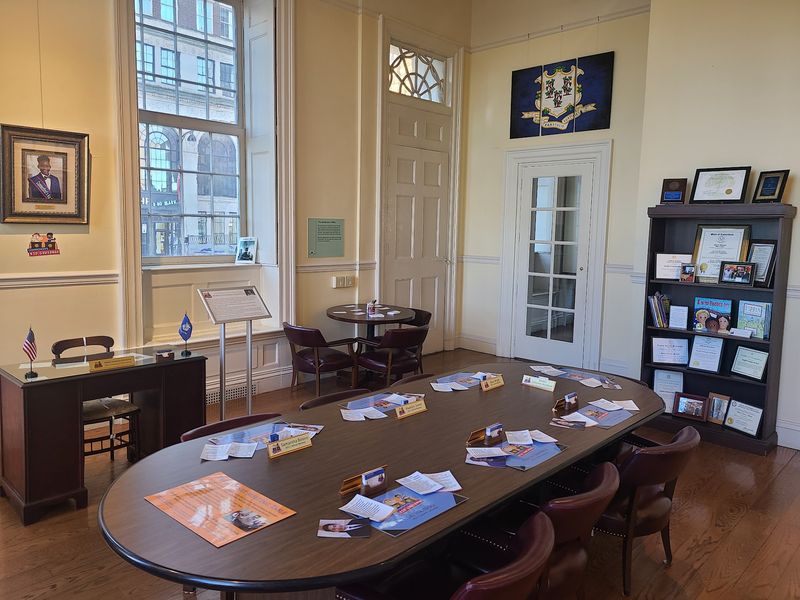
Power looks a little different when the person behind the desk is in fifth grade. The former governor’s office at Connecticut’s Old State House now serves as a space for Connecticut’s Kid Governor program.
After rooms filled with old portraits and serious court stories, its focus on young voices feels like a welcome change of pace.
The program gives fifth graders a way to learn about elections, public speaking, and community issues. A statewide Kid Governor is elected, and students work on ideas meant to help others.
Seeing those efforts linked to a historic office sends a clear message: civic life is something children can practice, not merely memorize.
Invite a young visitor to imagine one problem they would tackle if they held the job. Would they help classmates feel welcome, protect a local park, or make school days easier?
The question turns a museum stop into a small exercise in leadership without requiring a textbook or a speech.
Ask staff about current displays, since programs and room details can change. Even a brief look shows that this old building is still being used to teach what public service can be.
Hartford History on Two Wheels
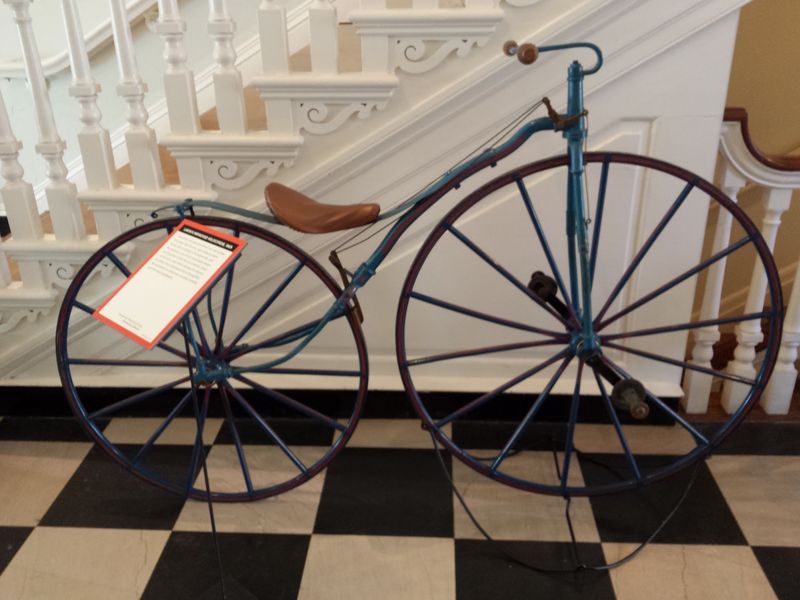
A bicycle beside government history has a way of making a museum feel more like a city. Among the Hartford stories associated with Connecticut’s Old State House is a bicycle linked to Mark Twain, who lived in the city for years.
It is a wonderfully everyday object to connect with a writer whose name can seem larger than life.
Local-history displays may also include objects tied to Hartford’s work and neighborhoods, such as an old fire engine or a model of the building. Exhibits can change, so ask staff what is currently on view if you hope to see a particular piece.
The fun lies in noticing how different objects tell different parts of the same city’s story.
Picture someone learning to balance on a bicycle, then compare that ordinary struggle with the formal decisions made in the rooms upstairs. A city’s past includes both.
If you are traveling with a reader, ask which object might inspire a funny scene or a short story. Twain would surely appreciate a good observation.
Leave a little time for these smaller exhibits. They make the Old State House feel connected to the Hartford streets waiting just outside its doors.
An Old Building with Faraway Echoes
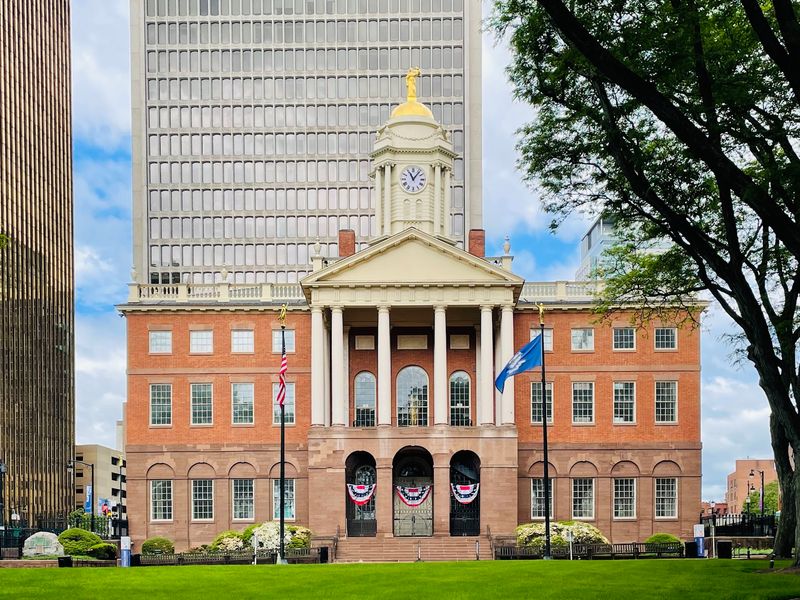
The first surprise may be waiting before you reach the front door. Connecticut’s Old State House has the poised look of a formal civic building, yet its details reward the same curiosity as any display case inside.
From across Main Street, take in the cupola and the balanced Federal-style front before moving closer to the stone and brick.
The building opened in 1796 and is widely credited to Charles Bulfinch, an important early American architect. Its lower level uses brownstone from Connecticut, while brick rises above it.
The design also recalls European public buildings, a reminder that early American builders drew ideas from far beyond their own streets.
Try a simple looking game with a companion: each of you choose one detail to point out without naming it first. Perhaps it is the pattern of the brick, the shape of a window, or the statue high above.
Looking closely makes the building easier to remember than a quick picture from the sidewalk.
Circle back outside after touring the rooms. Knowing what happened within makes the grand exterior feel less distant, while its careful design helps explain why people worked to preserve it.