Ohio still hides places that feel like they slipped out of time.
One minute you’re driving past empty fields and quiet farmhouses… the next, a red covered bridge appears over a slow-moving creek like it was placed there on purpose just to stop you in your tracks.
Old mills sit nearby with worn wood, stone foundations, and water tumbling past wheels that no longer turn. These spots don’t ask for attention, yet they pull you in anyway, like they’ve been waiting for someone curious enough to slow down.
Take the backroads and the ordinary fades fast, replaced by small surprises that feel almost unreal in their calm beauty.
Smolen-Gulf Covered Bridge – Ashtabula County
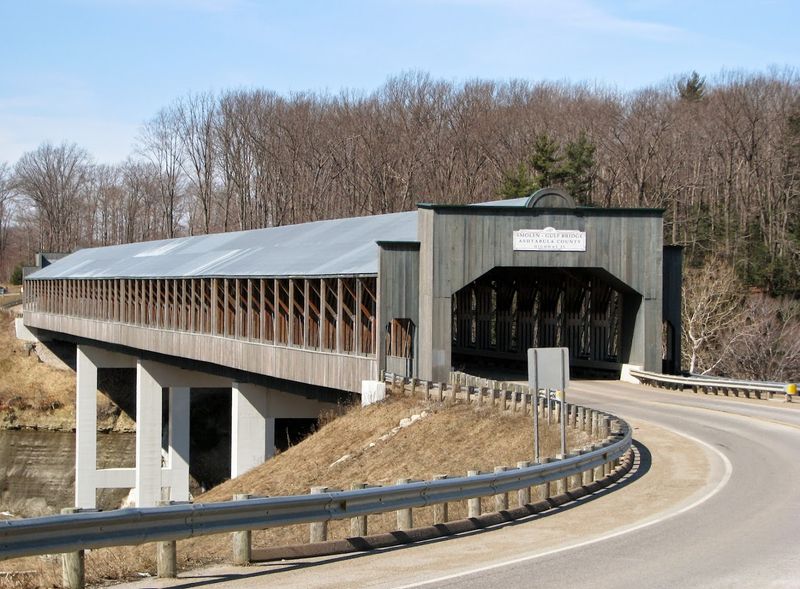
Standing as Ohio’s longest covered bridge, this remarkable structure spans 613 feet across a stunning gorge that drops dramatically below. The engineering marvel combines traditional wooden construction with modern safety features, creating a crossing that feels both historic and secure.
Photographers arrive at sunrise to catch golden light streaming through the latticed sides. The surrounding Ashtabula County backroads weave through peaceful farmland where red barns dot green pastures and seasonal wildflowers line the roadside.
Plan extra time to explore nearby covered bridges scattered throughout the region. About fifteen historic crossings exist within a short drive, each offering unique character and rural charm.
Local maps guide visitors along scenic routes that connect these wooden treasures.
Autumn transforms the landscape into a patchwork of orange, red, and gold foliage. Spring brings fresh greenery and blooming trees that frame the bridge perfectly.
Whatever season you choose, the winding approach roads make the journey just as memorable as the destination itself.
Mill Creek Park and Lanterman’s Mill – Youngstown
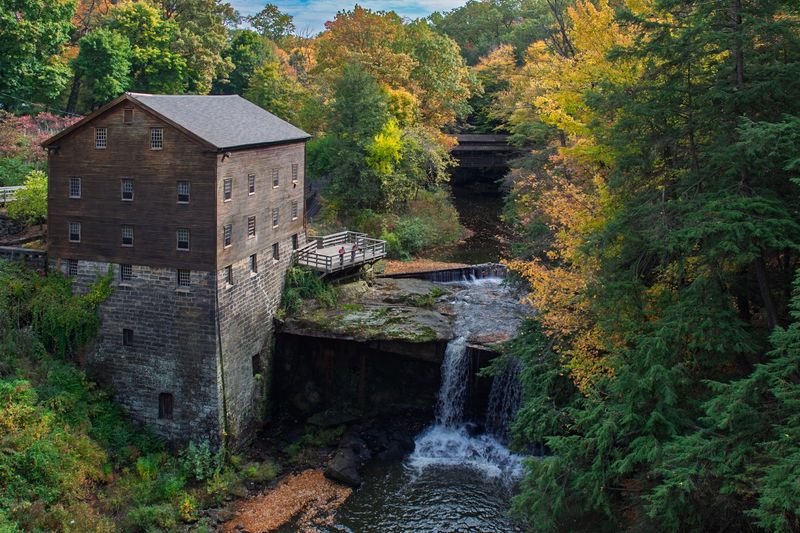
Tucked inside Youngstown’s sprawling urban park lies an unexpected rural escape. Lanterman’s Mill stands proudly beside roaring waterfalls that crash over limestone ledges, their white foam contrasting beautifully against dark stone walls.
The vintage gristmill operates with water-powered machinery that grinds grain just like settlers did centuries ago.
Walking trails wind along the creek, passing through forests that feel miles away from city life. A charming covered bridge spans the water nearby, adding another layer of nostalgic beauty.
Park roads curve through wooded ravines where deer often appear at dusk.
Families spread picnic blankets on grassy areas beside the mill. Inside, volunteers demonstrate traditional milling techniques and sell fresh-ground cornmeal.
The whole scene feels transported from another era.
October weekends draw crowds who come for spectacular fall colors reflected in the creek. Even summer visits stay surprisingly cool thanks to thick tree canopy and constant mist from the falls.
Don’t rush through—this place deserves slow appreciation.
Roscoe Village and the Old Mill – Coshocton
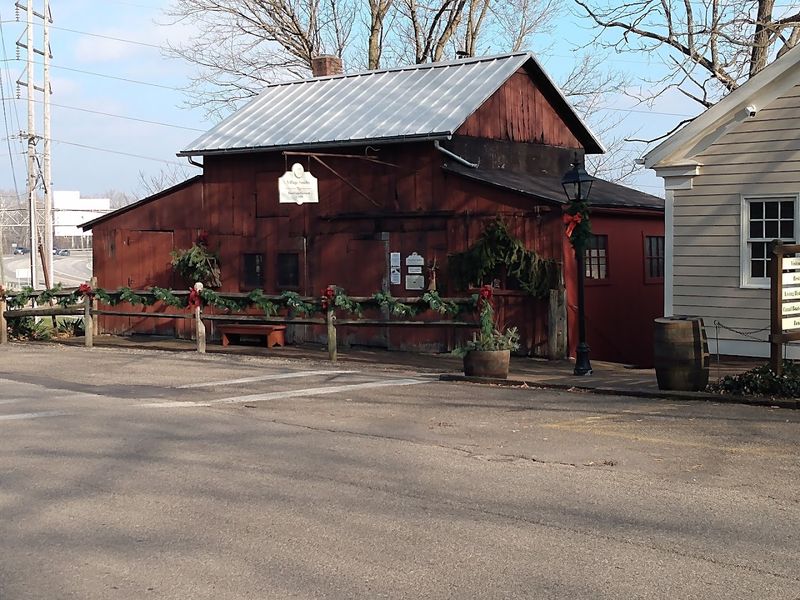
Step back into the 1830s when this restored canal town bustled with merchants, boat captains, and travelers moving goods along Ohio’s waterways. Brick-paved streets lead past authentic storefronts where costumed interpreters demonstrate blacksmithing, weaving, and other traditional crafts.
The reconstructed mill beside the river shows how grain processing powered local economy. Water churns beneath the building while massive wooden gears turn inside.
Visitors watch flour production using methods unchanged for generations. Horse-drawn canal boat rides add authentic transportation experiences.
Beyond town limits, Coshocton County backroads reveal gentle hills covered in farmland and forest. Small roadside cemeteries, century-old barns, and hand-painted signs advertising fresh eggs create a landscape frozen in simpler times.
Pull over frequently for photos.
Local shops sell handmade pottery, quilts, and fudge. Seasonal festivals celebrate harvest time, Christmas traditions, and canal heritage.
Plan at least half a day to truly explore everything. The combination of living history and scenic countryside makes this destination genuinely special rather than touristy.
Harpersfield Covered Bridge – Geneva
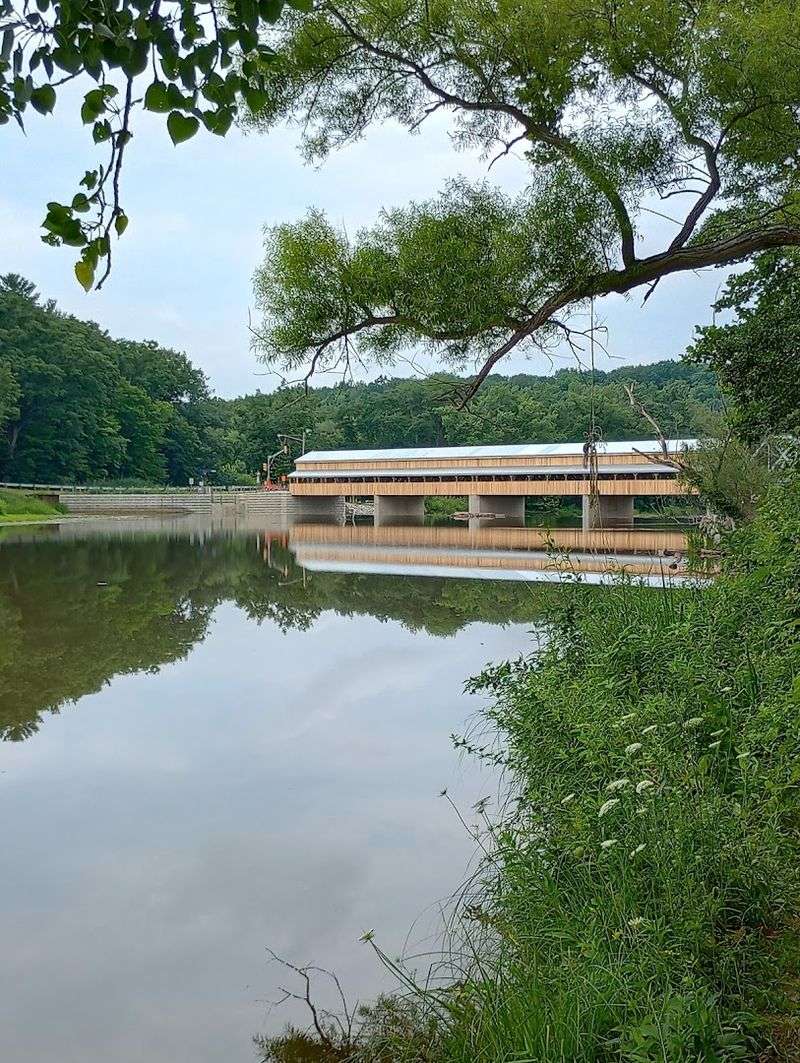
Where the Grand River flows beneath aged timbers, Ohio’s second-longest covered bridge creates a postcard-perfect scene. Built in 1868, this Ashtabula County landmark combines traditional covered span with a separate pedestrian walkway that lets visitors safely walk across while traffic passes through the enclosed section.
Riverside parkland invites leisurely stops. Bring fishing poles to try your luck from the banks, or simply sit on benches watching water ripple over smooth stones.
Informational signs explain the bridge’s construction and the vital role such crossings played in rural transportation.
The surrounding area belongs to Ohio’s emerging wine country. Backroads wind past vineyards where you can stop for tastings, then continue through rolling countryside dotted with farm markets selling seasonal produce.
Small-town Geneva offers antique shops and cafes worth exploring.
Sunset casts warm light across the weathered red paint. Spring floods sometimes raise water levels dramatically, creating powerful currents visible from the bridge deck.
Each season offers different perspectives, making repeat visits rewarding for photography enthusiasts and history buffs alike.
Clifton Mill – Clifton
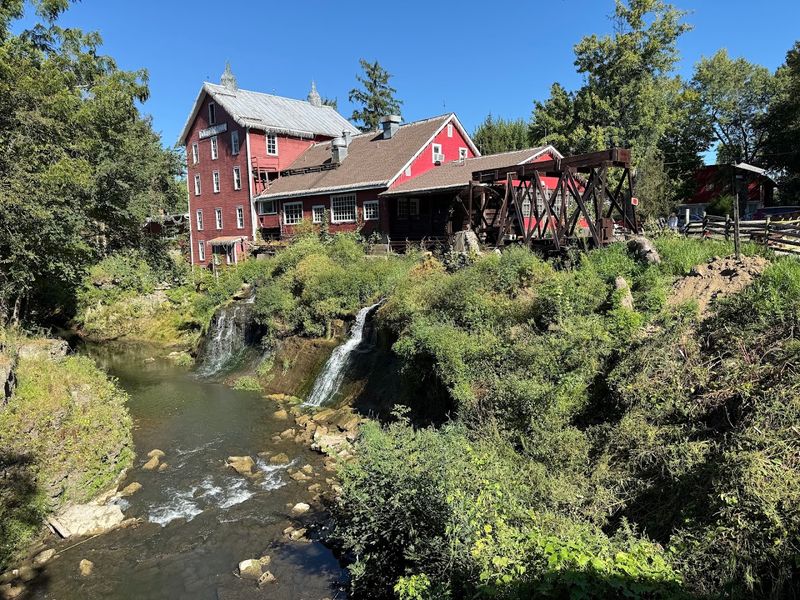
Cameras click constantly at this breathtaking mill perched beside a limestone gorge where water thunders down multiple levels. The photogenic scene combines industrial heritage with natural beauty—massive wooden wheels turn slowly while white water crashes over ancient stone foundations.
Wooden walkways let visitors cross above the rushing stream, feeling spray on their faces. Below, the gorge carved by Little Miami River creates dramatic vertical walls.
Inside the working mill, antique equipment still grinds grain for sale in the gift shop.
Greene County’s pastoral roads leading here pass horse farms, covered bridges, and John Bryan State Park. Spring wildflowers carpet the gorge rim while autumn leaves create fiery displays reflected in the pools.
Christmas transforms the mill into an illuminated wonderland with millions of twinkling lights.
The on-site restaurant serves pancakes made from mill-ground flour. Outside tables overlook the gorge during warm months.
Nearby Yellow Springs offers quirky shops and hiking trails. Budget several hours to fully experience this Greene County gem where natural and human history blend seamlessly together.
Germantown Covered Bridge – Germantown
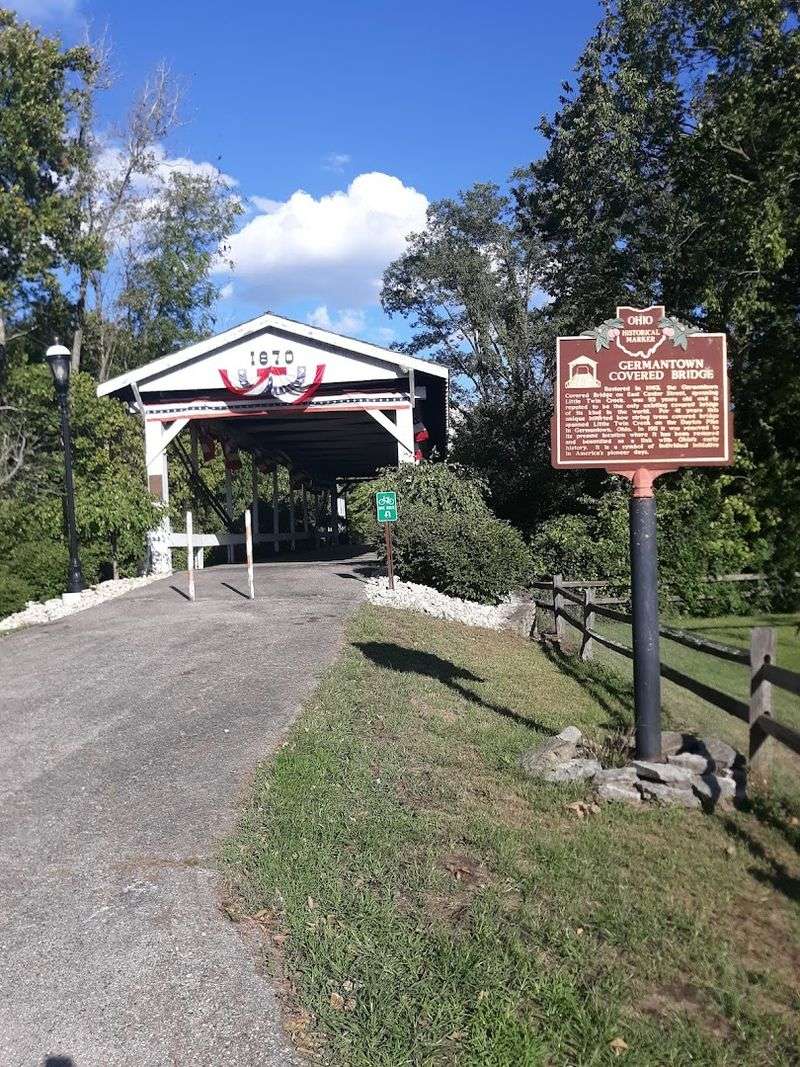
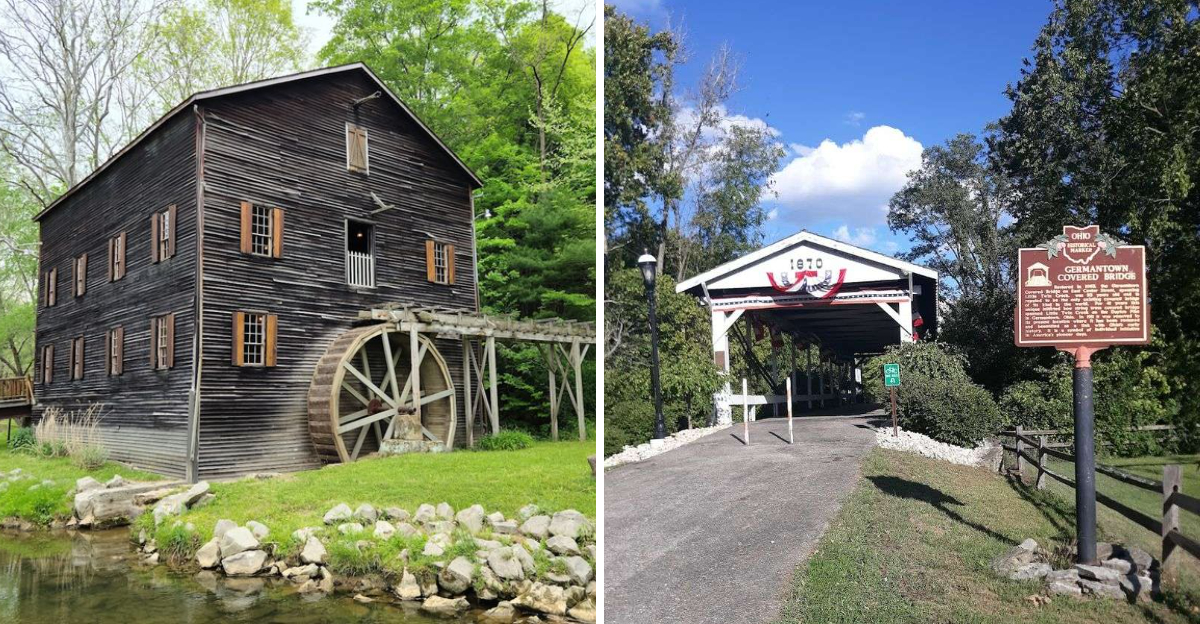
Painted classic barn-red, this charming bridge spans Twin Creek in a setting that epitomizes rural Ohio tranquility. Built in 1865, the wooden structure served generations of farmers hauling crops to market.
Today it carries occasional traffic while welcoming photographers and history seekers.
Surrounding farmland stretches flat toward distant tree lines. Cows graze in nearby pastures while corn grows tall in summer fields.
The landscape feels unchanging, like time moves slower here than elsewhere. Quiet country roads intersect at right angles, following property lines established centuries ago.
Germantown’s small downtown features antique stores packed with treasures from attics and estate sales. Browse vintage glassware, old farm tools, and furniture needing restoration.
Roadside markets sell seasonal produce—strawberries in June, tomatoes in August, pumpkins come October.
Pack a lunch and eat beside the creek. Listen to water flowing over rocks and wind rustling through bridge timbers.
Weekdays see little traffic, offering peaceful solitude. The area rewards those seeking authentic rural experiences without crowds or commercialization, just simple country beauty preserved through careful stewardship.
Warther Museum and Mill Area – Dover
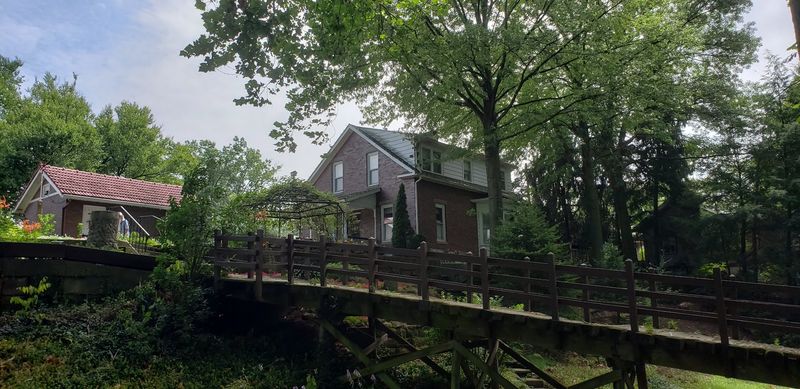
Dover’s backroads hide surprising pockets of Tuscarawas County heritage. The Warther Museum showcases intricate hand-carved steam locomotives created by local craftsman Ernest Warther, whose detailed miniatures demonstrate obsessive artistry.
Nearby historic mills and canal remnants reveal how waterpower drove local industry.
Railroad heritage runs deep here. Multiple rail lines once converged, making Dover an important junction.
Today, some routes carry freight while others transform into recreational trails. Historic depots and old iron bridges mark where steam engines once dominated the landscape.
Drive through surrounding hills where the Tuscarawas River cuts through forested valleys. Small communities along these roads retain working-class character—modest homes, neighborhood bars, and churches that anchor social life.
Hand-painted signs advertise firewood, lawn care, and Saturday garage sales.
Autumn colors look spectacular when hardwood forests ignite in orange and gold. Country roads twist through terrain that feels almost Appalachian.
Stop at roadside stands for fresh apple cider. Local residents wave from porches, embodying small-town friendliness.
This region offers authentic glimpses into Ohio’s industrial and agricultural roots without pretense or polish.
Hueston Woods Covered Bridge – Preble County
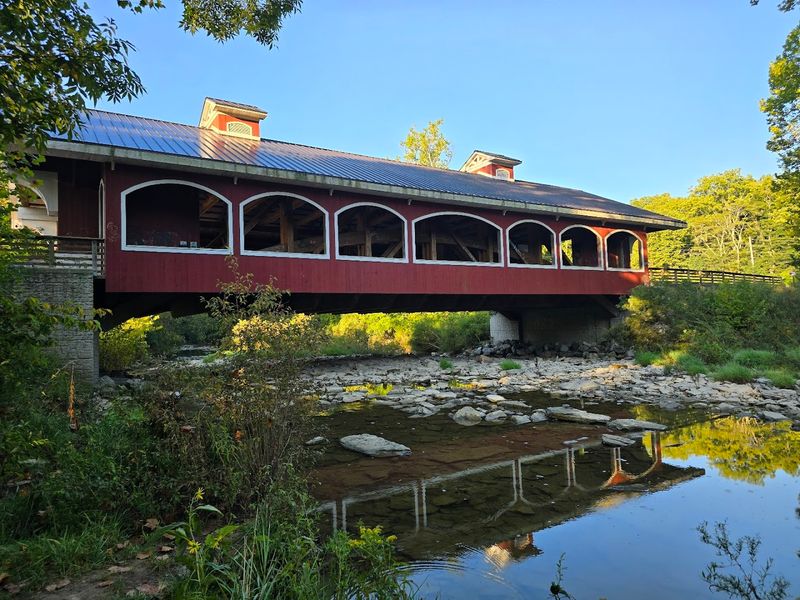
Hidden within a peaceful state park, this covered bridge sits surrounded by nature rather than farmland. Tall trees shade the approach road while songbirds call from branches overhead.
The modest span crosses a quiet creek where minnows dart between rocks and turtles sun themselves on logs.
Hueston Woods State Park offers more than just the bridge. Miles of hiking trails wind through mature forests where wildflowers bloom in spring and mushrooms push through leaf litter in fall.
Acton Lake provides opportunities for fishing, boating, and swimming from a sandy beach.
Nearby picnic areas feature shelters, grills, and playgrounds. Families spread blankets under oak trees while kids explore creek banks searching for crawdads.
The campground offers sites for tents and RVs, letting visitors extend their stay.
Outside the park, Preble County backroads pass horse farms where thoroughbreds graze in white-fenced pastures. Small crossroads communities feature century-old churches and general stores.
The landscape feels genuinely rural—open fields, red barns, and roads that rarely see traffic jams. Western Ohio’s quieter side reveals itself beautifully here.
Mohican Valley and Wolf Creek Grist Mill – Loudonville
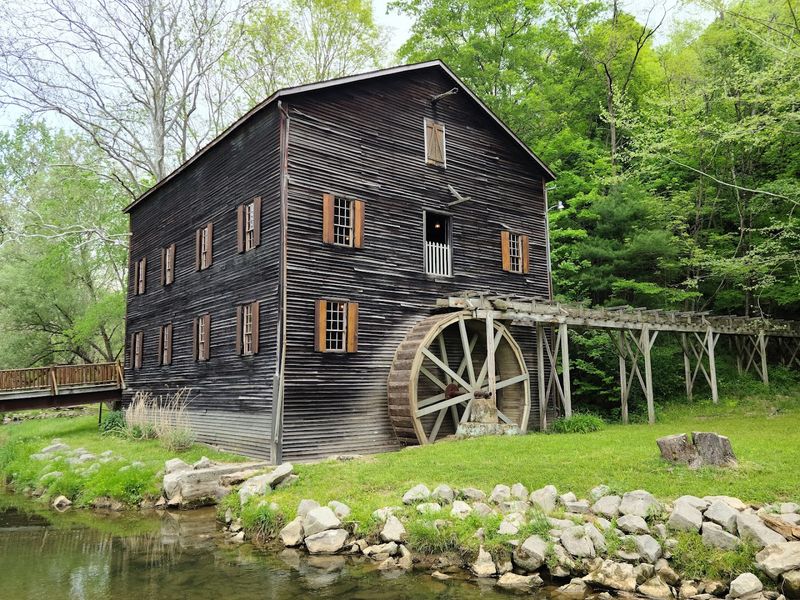
Winding roads through the Mohican region feel transported from Appalachia. Forested ridges rise above clear streams where kayakers navigate gentle rapids.
Wolf Creek Grist Mill represents regional heritage, its weathered boards and turning wheel creating scenes artists love to paint. The surrounding landscape combines natural beauty with pioneer history.
Scenic byways follow river valleys where overlooks provide stunning views. Hemlock trees shade cool gorges while hawks circle overhead.
Pull-offs invite short hikes to waterfalls and rock formations. Loudonville serves as base for exploring, offering canoe rentals, cabin accommodations, and down-home restaurants.
Multiple covered bridges punctuate drives through the area. Each crossing adds charm while serving as markers along exploring routes.
Hand-carved signs point toward hiking trails, campgrounds, and scenic vistas. Cell service fades, encouraging true disconnection.
Autumn draws leaf-peepers who cruise these roads slowly, cameras ready. Summer offers swimming holes where locals gather.
Winter transforms forests into silent wonderlands. The Mohican area succeeds at making visitors feel far from civilization despite being reasonably accessible.
Plan full days to truly absorb the peaceful, timeless atmosphere.
Bigelow Covered Bridge – Union County
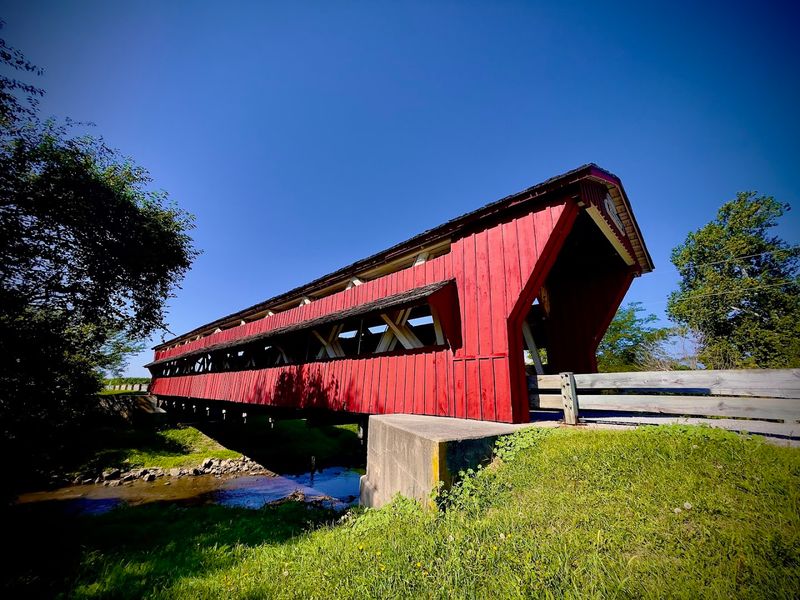
Far from tourist crowds, this authentic covered bridge crosses Little Darby Creek in one of Ohio’s most ecologically important watersheds. The Little Darby National Scenic River supports rare fish and mussel species, making the surrounding landscape both beautiful and scientifically valuable.
Union County farmland stretches flat and fertile in all directions.
Reaching the bridge requires navigating unmarked country roads where GPS sometimes struggles. That isolation preserves its authentic character.
Corn and soybeans grow right to the roadside. Old farmhouses sit far back from the road, surrounded by mature shade trees planted by great-grandparents.
The bridge itself shows honest age—weathered wood, worn floorboards, and faded paint. No gift shops or tourist facilities exist, just the structure itself and the creek flowing beneath.
Bring your own lunch if you plan to linger.
Nearby Darby Plains offer bird-watching opportunities in restored prairie remnants. Spring brings migrating waterfowl while summer hosts nesting grassland species.
The area exemplifies Ohio’s agricultural heritage while protecting natural treasures. Visitors seeking authentic, unspoiled covered bridge experiences find exactly that here.