
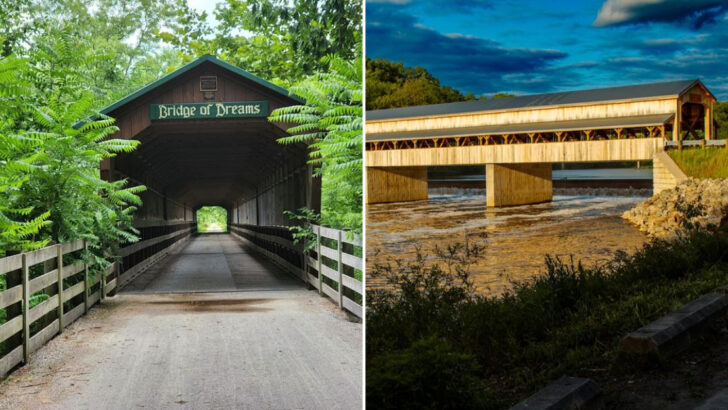
If you have a soft spot for winding back roads, quiet creeks, and scenes that feel lifted from a landscape painting, Ohio delivers in a big way. The state is home to an impressive collection of covered bridges, many preserved from the 1800s and surrounded by farmland, forests, and river valleys.
This outline gathers some of the most beautiful and historically notable examples, from record holders to hidden rural gems. Keep reading and you will have a ready-made route to some of the most photogenic places in Ohio.
Smolen-Gulf Covered Bridge
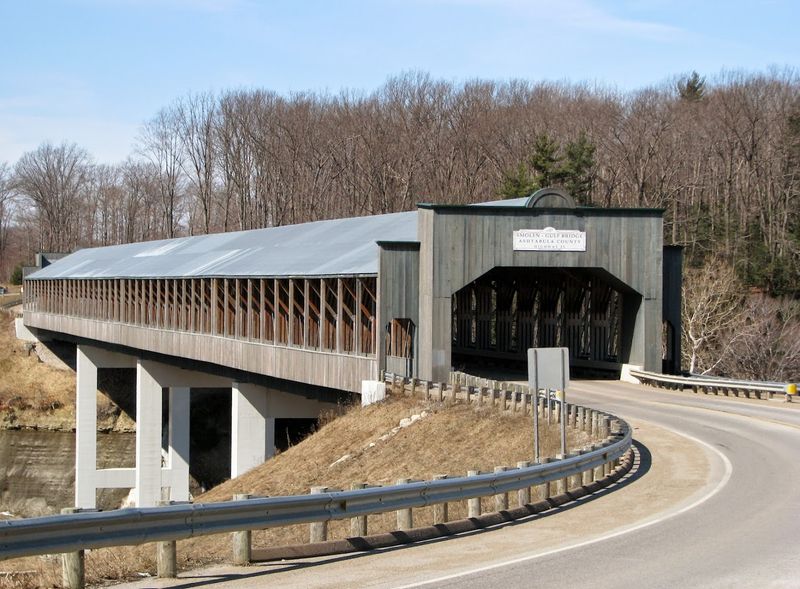
Smolen-Gulf Covered Bridge in Ashtabula is the kind of landmark that makes you stop talking and just stare. Stretching 613 feet, it is recognized as the longest covered bridge in the United States, yet it still feels graceful against the deep green gorge below.
When you approach from the overlook, the scale is impressive, but the setting keeps it from feeling oversized.
The bridge crosses the Ashtabula River gorge, where wooded slopes and changing leaves create one of the most dramatic covered bridge scenes in Ohio. I think it looks especially painterly in early fall, when the red structure contrasts with gold and rust-colored trees.
Even on gray days, the bridge has a cinematic presence.
Built in 2008, it is newer than many bridges on this list, but it honors traditional covered bridge design beautifully. You get historic charm without sacrificing the thrill of crossing something monumental.
If you want one Ohio bridge that feels both grand and romantic, this is the one to start with.
Harpersfield Covered Bridge
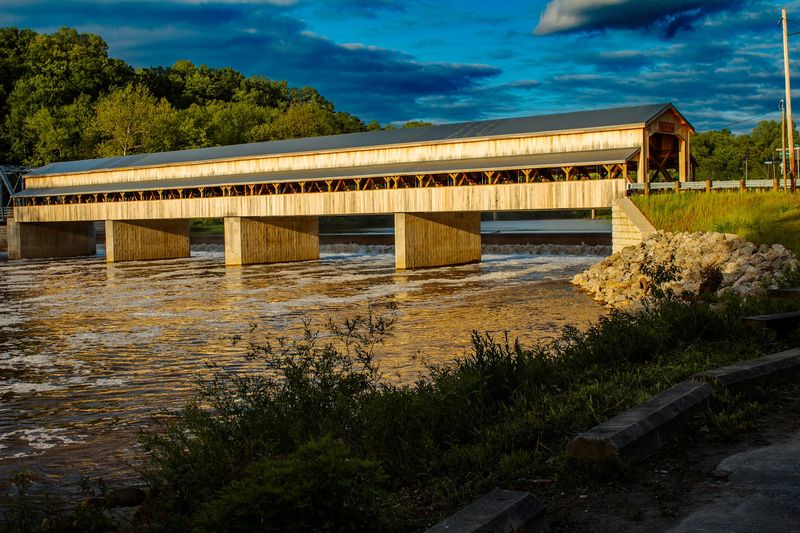
Harpersfield Covered Bridge near Geneva combines history, river scenery, and just enough rustic texture to feel timeless. Built in 1868, it is one of the oldest covered bridges in Ohio, and its age gives it a character you can feel the moment you step near the entrance.
The weathered wood, long profile, and quiet setting make it especially memorable.
It spans the Grand River, and that water backdrop gives the whole site a calm, reflective beauty. I love how the bridge sits low within the landscape rather than dominating it, letting the riverbanks and trees do part of the visual storytelling.
In photographs, it often looks softer and older than it really is.
There is also a nearby steel bridge, creating an interesting contrast between past and present. That pairing makes Harpersfield feel like a living lesson in how transportation evolved across generations.
If you want a bridge that balances historical importance with classic Ohio scenery, this one earns a top spot easily.
Windsor Mills Covered Bridge
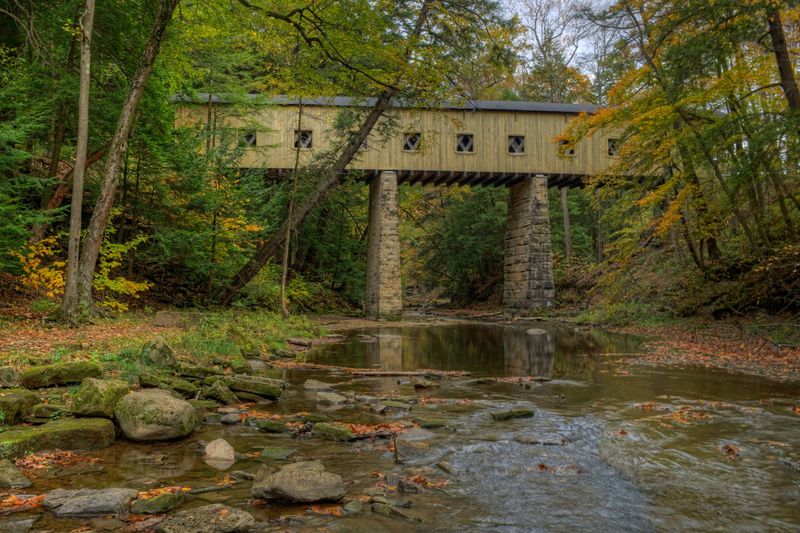
Windsor Mills Covered Bridge has a quiet confidence that makes it one of Ohio’s most beautiful crossings. Known as the longest single-span covered bridge in the state, it manages to feel both substantial and delicate, especially when framed by trees and reflected in the water below.
The proportions are striking without losing that warm, old-fashioned charm you want from a covered bridge.
Its setting in Ashtabula County gives it a classic northeastern Ohio look, with rolling greenery and a peaceful river corridor. I like how the bridge feels tucked into the landscape rather than staged for tourists, which gives every visit a more authentic mood.
In the right light, the red exterior seems to glow against the surrounding woods.
The engineering matters here, but so does the atmosphere. You are not just looking at a record-holding structure, you are stepping into a scene that feels preserved from another era.
If your ideal bridge stop blends craftsmanship, calm scenery, and strong visual impact, Windsor Mills absolutely belongs on your list.
Everett Covered Bridge
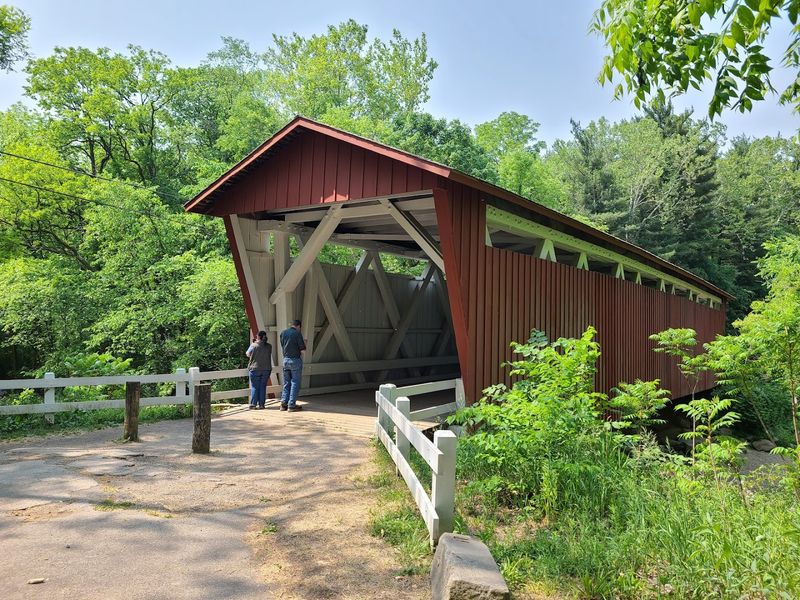
Everett Covered Bridge feels special before you even arrive because it sits inside Cuyahoga Valley National Park. That alone gives it a rare status as the only remaining covered bridge in a national park, but the setting is what really seals the experience.
Forest, creek, and trail scenery make the bridge feel woven into a larger landscape story.
The current bridge is a careful reconstruction of the historic 1877 span, rebuilt after severe damage and reopened to preserve the site’s heritage. I appreciate that it does not feel artificial or overdone, but instead blends naturally with the valley’s wooded beauty.
The red exterior stands out just enough against the greens and browns of the park.
Because so many people explore this area by hiking or scenic driving, Everett has a welcoming, accessible charm. It works equally well as a quick stop or as part of a longer day outdoors.
If you want a covered bridge visit paired with some of Ohio’s best natural scenery, Everett is an easy and rewarding choice.
Hueston Woods Covered Bridge
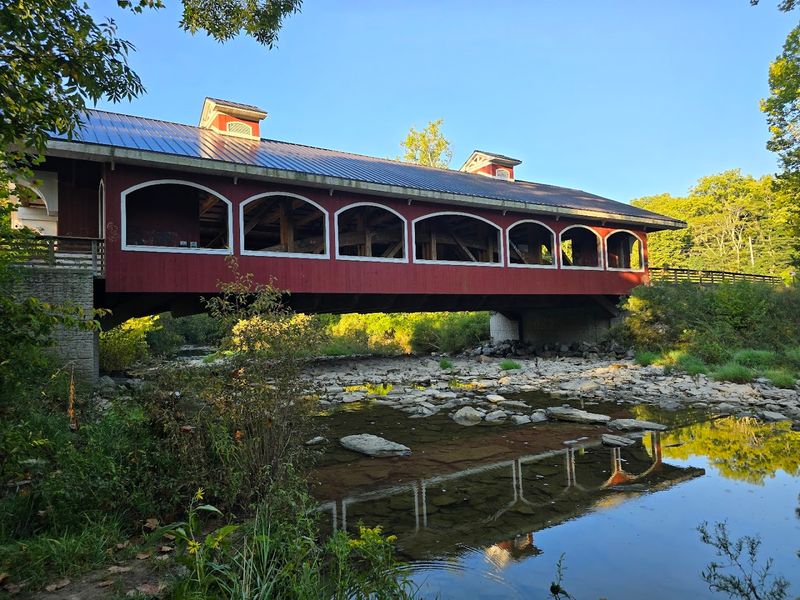
Hueston Woods Covered Bridge brings together state park scenery and oversized charm in a way that feels instantly impressive. Located near College Corner, this bridge is known as Ohio’s largest covered bridge within a state park, and its broad scale gives it a commanding presence without losing its rustic appeal.
It looks especially beautiful when the surrounding woods are full and green.
The bridge was built in the modern era, yet it captures the romance people love about traditional covered spans. I think that makes it especially inviting for casual travelers, since you get the visual pleasure of an old-fashioned bridge in a well-maintained recreational setting.
Nearby park roads, trails, and water views add even more to the visit.
This is a great stop if you want scenery that feels polished but not crowded. The bridge photographs wonderfully from several angles, especially when framed by trees.
For anyone planning a weekend drive or park getaway, Hueston Woods offers an easy mix of history-inspired architecture and relaxing outdoor beauty.
Engle Mill Covered Bridge
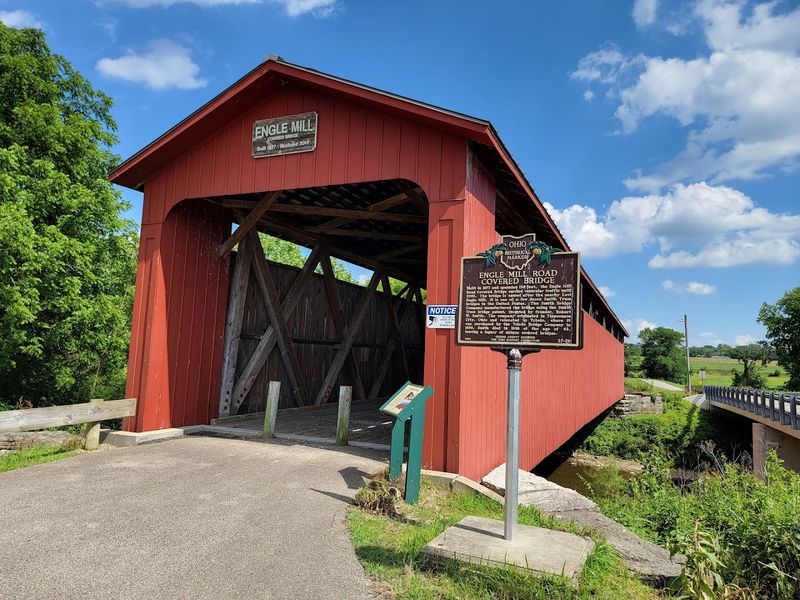
Engle Mill Covered Bridge near Cedarville is one of those classic red bridges that seems made for postcards. Built in 1877, it spans a quiet creek in Greene County and carries the straightforward beauty that makes historic covered bridges so appealing.
The setting is modest, but that simplicity is exactly what gives it its charm.
What stands out most is how naturally the bridge fits its surroundings. I love the way the red siding pops against the trees and grass, while the creek below adds movement and softness to the scene.
It feels like a place where you would want to slow down, roll down the window, and stay a little longer than planned.
Its long preservation story also adds meaning to the visit, reminding you that these bridges survive because communities choose to care for them. That sense of stewardship makes the experience feel more personal.
If you are drawn to quiet rural landmarks with strong visual character, Engle Mill Covered Bridge is a lovely and worthwhile stop.
Rock Mill Covered Bridge
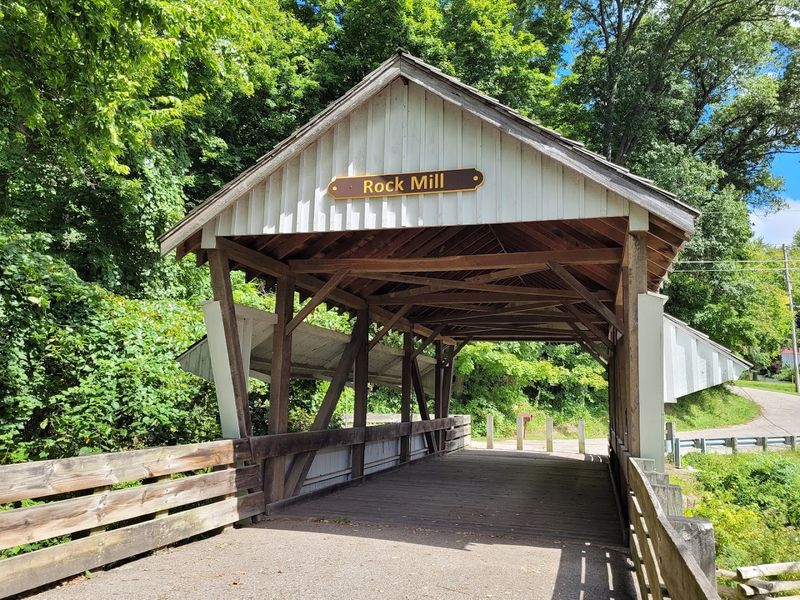
Rock Mill Covered Bridge may have the most dramatic backdrop of any bridge on this list. Set within Fairfield County’s Rock Mill Park, it stands near the ruins of a historic gristmill and a picturesque waterfall, creating a layered scene that looks almost too perfect to be real.
If you love places that combine architecture, history, and natural texture, this one delivers all three.
The bridge itself is a reconstruction inspired by the original 1800s crossing, and it fits beautifully into the park’s historic atmosphere. I think the surrounding stonework, rushing water, and wooded ravine give it a richer visual story than most covered bridges can offer on their own.
Every angle feels cinematic.
This is also one of the better spots for visitors who enjoy walking a little to find the best view. You are rewarded with scenes that feel both romantic and slightly wild.
For pure painting-like appeal, Rock Mill Covered Bridge is hard to beat and deserves a prominent place on any Ohio bridge itinerary.
Bridge of Dreams
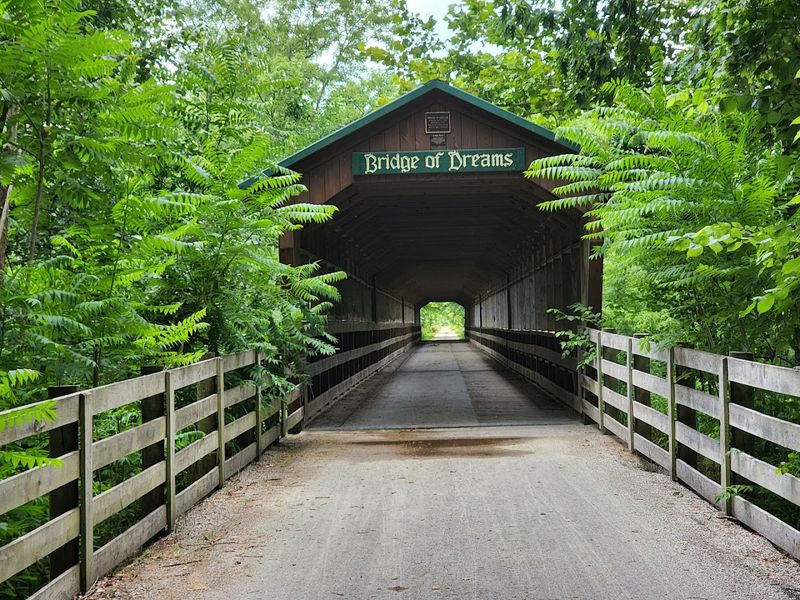
Bridge of Dreams lives up to its name with a setting and scale that feel almost storybook-like. Located along the Mohican Valley Trail near Brinkhaven, it is one of the longest covered pedestrian bridges in the United States, stretching gracefully above the Mohican River corridor.
Because it is meant for walkers and cyclists, the experience feels slower and more immersive than a typical drive-through bridge.
The bridge was created from a repurposed railroad bridge, which adds an inventive layer to its history. I love how that industrial past has been transformed into something romantic, scenic, and welcoming for outdoor recreation.
The surrounding valley, trees, and trail views make the crossing feel peaceful in every season.
Without car traffic, you have time to notice the wood interior, the filtered light, and the sounds of the river landscape around you. That makes it especially memorable for leisurely visits.
If you want a covered bridge that feels expansive, dreamy, and perfect for a scenic stroll, this one absolutely belongs on your route.
Blackwood Covered Bridge
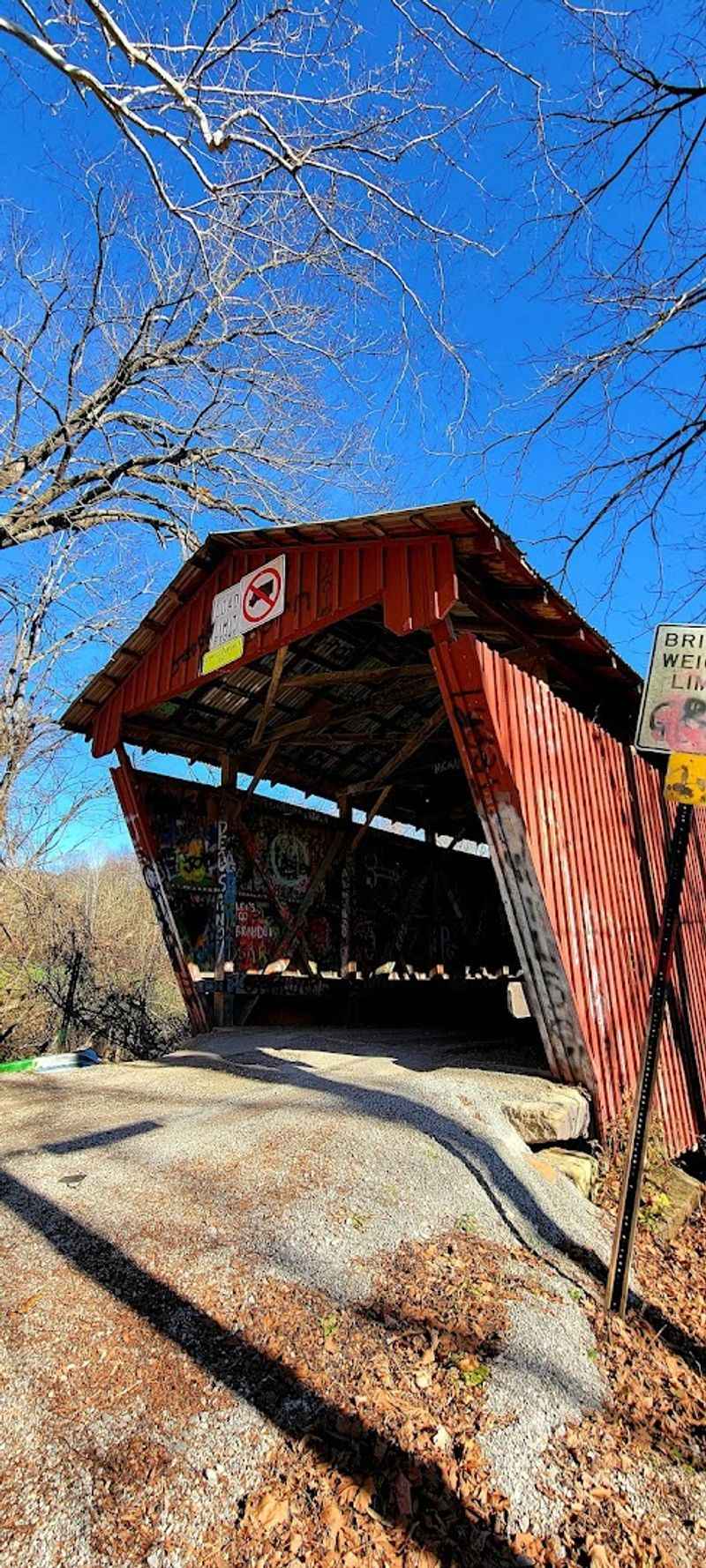
Blackwood Covered Bridge in Athens County has a distinctive look that sets it apart from many other Ohio spans. Elevated above the creek and surrounded by the rolling character of southeastern Ohio, it carries a slightly wilder, hill-country atmosphere than bridges in flatter parts of the state.
That extra elevation gives the view more depth and drama.
The bridge’s rustic red exterior works beautifully against the woods and uneven terrain around it. I find that this landscape gives Blackwood a moodier, more secluded character, especially when the trees are dense and the light comes through in patches.
It feels less polished and more atmospheric, which makes it wonderfully photogenic.
This is the kind of bridge that invites you to notice the relationship between structure and setting. The creek below, the surrounding slopes, and the sense of quiet isolation all contribute to its charm.
If you want a covered bridge with scenic Appalachian Ohio energy and a slightly off-the-beaten-path feel, Blackwood is an excellent pick.
Eldean Covered Bridge
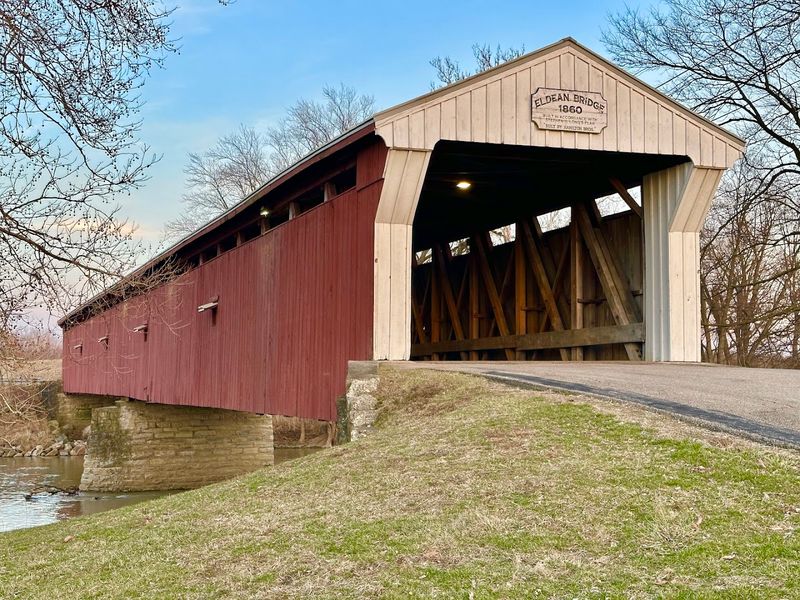
Eldean Covered Bridge near Troy combines working history with serious visual appeal. It is one of the longest historic covered bridges in Ohio still in use, and that continued functionality gives the structure a sense of purpose that many preserved landmarks no longer carry.
You are not just looking at history here, you are watching it remain part of daily life.
Crossing over the Great Miami River, the bridge has a broad, graceful presence within the landscape. I think its length and proportions make it especially impressive from a distance, where the red wooden span seems to stretch confidently across the water.
The surrounding open space only enhances that effect.
Because it remains active, Eldean feels alive in a way some museum-like sites do not. The traffic, the river, and the continuity of use help connect the nineteenth century to the present in a very tangible way.
If you want one bridge that captures both endurance and beauty, Eldean Covered Bridge deserves a firm place on your Ohio list.
Roberts Covered Bridge
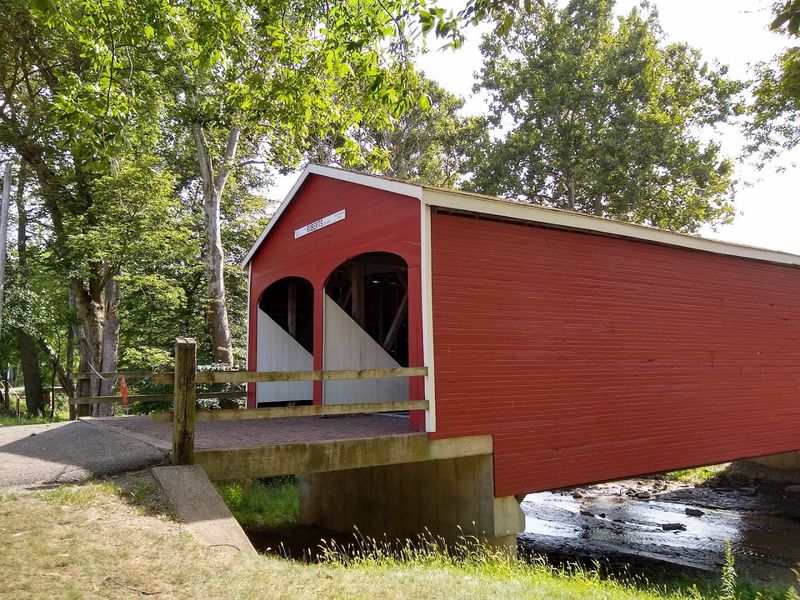
Roberts Covered Bridge near Eaton is the kind of place that instantly earns your respect. Built in 1829, it is widely recognized as Ohio’s oldest covered bridge, and that early date gives every board and beam a deeper sense of significance.
Even before you know the history, the bridge feels venerable in the best possible way.
Its Preble County setting keeps the experience rooted in quiet countryside rather than heavy tourism. I think that simplicity helps the age of the bridge stand out more clearly, because nothing distracts from the craftsmanship or the feeling of continuity.
The structure looks modest, but the history it carries is anything but small.
There is something powerful about standing near a bridge that has outlasted generations, weather, and changing transportation needs. The site invites a slower kind of appreciation that goes beyond taking a quick photo.
If you want to end your Ohio covered bridge journey with a true historic elder, Roberts Covered Bridge is the perfect final stop.