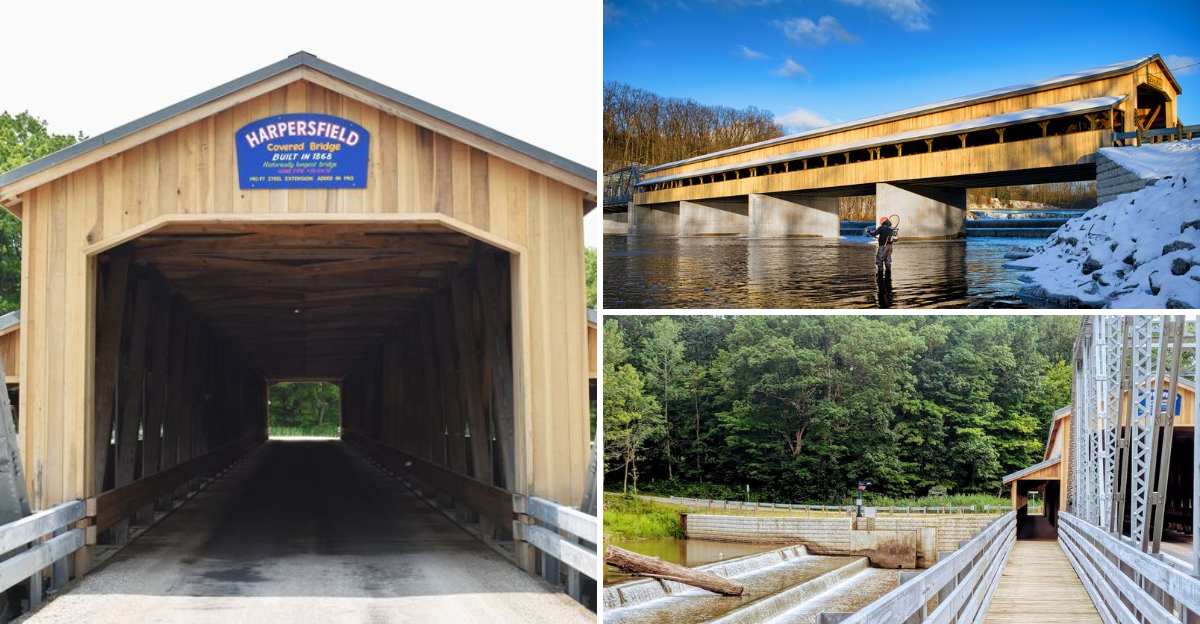
Spring in northeastern Ohio brings soft green edges to the riverbanks and a gentle warmth to quiet park paths. At Harpersfield Covered Bridge Metropark, the air feels especially calm as the Grand River moves steadily beneath a long wooden span that has stood since 1868.
Stepping onto the bridge, you hear the subtle creak of timber underfoot and catch glimpses of light filtering through the red siding. Water flows below in a steady rhythm, and the surrounding trees frame the scene with a kind of everyday beauty that invites you to slow down.
It is a place where history feels close enough to touch, yet still comfortably woven into a modern park setting. Families linger along the shoreline, walkers pause mid-crossing, and the sense of old Ohio lingers in every detail.
The Majestic Timber Crossing
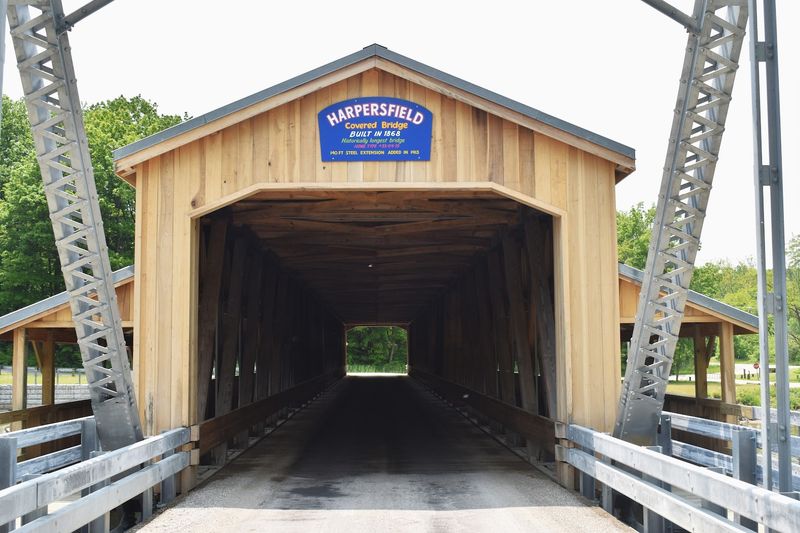
Red timber walls rise above the Grand River, creating a tunnel through time that has welcomed travelers for over 150 years. The structure reaches an impressive 228 feet, earning recognition as Ohio’s second-longest covered bridge.
When you stand at either entrance, the view through the darkened passage reveals another era entirely.
Original construction began in 1868 using traditional wooden beam techniques. Builders added steel reinforcement around 1913 to strengthen the span without losing its historical character.
Recent renovations completed in 2024 restored the bridge to pristine condition while adding modern safety features that blend seamlessly with the vintage design.
Vehicles still cross this one-lane marvel, though pedestrians now enjoy dedicated covered walkways on both sides. The experience of walking through feels magical as wooden planks creak underfoot and river breezes whistle through the openings.
Light filters through gaps in the weathered boards, casting dancing shadows that change throughout the day.
This engineering wonder represents more than transportation history. It stands as a testament to craftsmanship and community dedication to preserving architectural heritage for future generations.
Angler’s Paradise Along the Riverbank
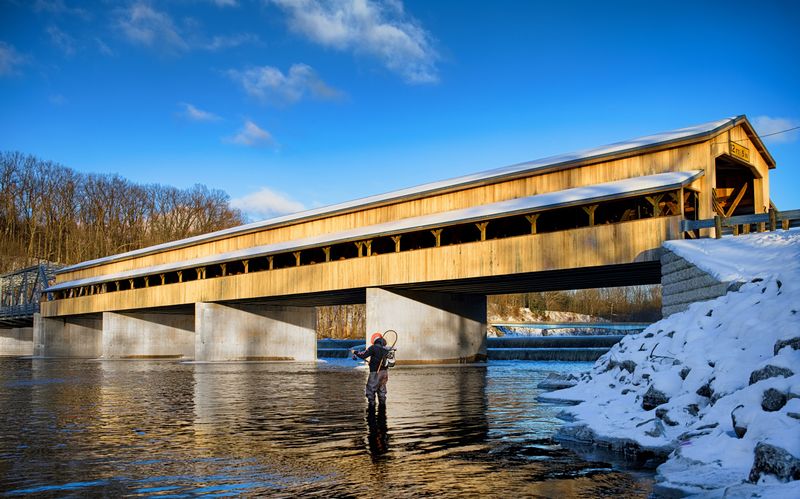
Morning mist rises from the Grand River as fishing lines dance across the current, creating ripples that disturb the glassy surface. Anglers find numerous access points along the banks where the water moves at just the right pace.
The area beneath the historic bridge creates natural pools where fish gather, making it a favorite spot for both experienced fishermen and youngsters learning to cast.
Catfish, bass, and walleye populate these waters throughout different seasons. Spring runoff brings excellent conditions, while summer evenings offer peaceful opportunities to relax with a rod.
Local families return regularly, creating memories generation after generation as children catch their first fish in the same spots their grandparents once fished.
No fishing license fees apply to this public area, though Ohio state regulations require proper permits. The riverside terrain provides easy access without demanding difficult hikes.
Several flat areas accommodate wheelchairs or those who prefer comfortable seating while waiting for bites.
Shaded sections under overhanging trees offer relief during hot afternoons. The sounds of flowing water and rustling leaves create a soundtrack that makes hours pass quickly, even when fish aren’t biting as actively as hoped.
Shaded Dining Spots with River Views
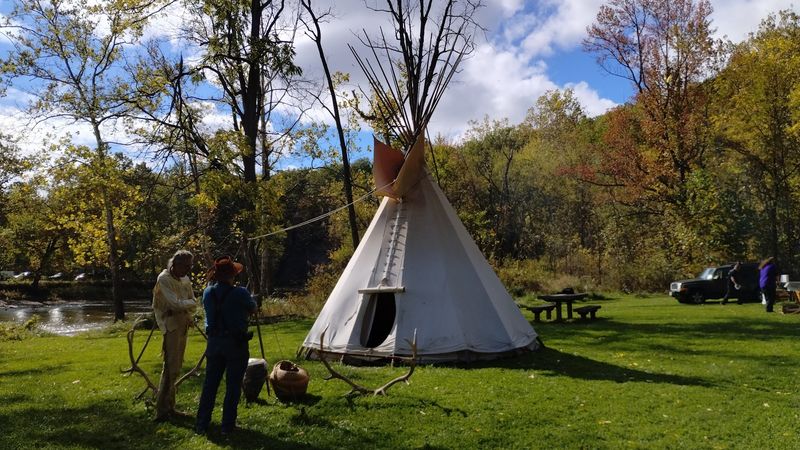
Scattered throughout the grounds, sturdy wooden tables invite families to unpack basket lunches while enjoying nature’s entertainment. Each picnic area offers slightly different perspectives of either the bridge, river, or surrounding woodlands.
Large trees provide natural canopies that keep spaces comfortable even during summer’s peak heat.
The largest concentration of tables sits near the main parking area, convenient for carrying coolers and supplies. Additional spots closer to the water offer more secluded experiences for those seeking quiet conversations.
All locations remain free to use without reservations or time limits, encouraging visitors to linger as long as they wish.
Grills aren’t provided, so most guests bring prepared meals or sandwiches. The peaceful atmosphere makes simple food taste extraordinary when accompanied by views of historic architecture and flowing water.
Children can play nearby while adults relax, and everyone stays within easy visual range.
Clean facilities and trash receptacles help maintain the area’s pristine condition. Sunset picnics become particularly magical as golden light illuminates the bridge’s weathered timbers.
Many locals consider this their go-to spot for celebrating special occasions or simply escaping everyday routines with minimal planning required.
Covered Walkways for Safe Exploration
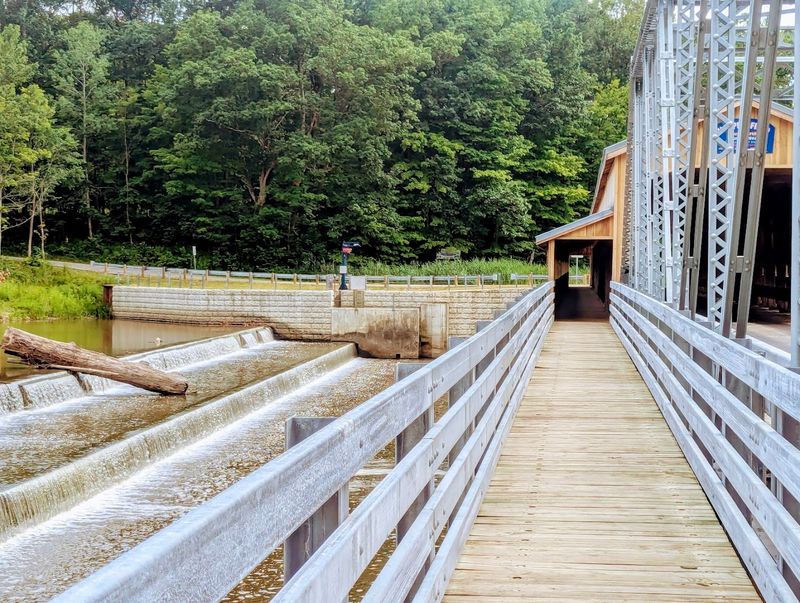
Walking alongside moving traffic once posed challenges for visitors wanting to experience the bridge up close. Thoughtful renovations solved this problem by installing protected pedestrian passages on both sides of the roadway.
These covered corridors allow everyone to cross safely while enjoying the full length of this architectural treasure.
Wooden railings guide walkers from entrance to exit, and the overhead covering shields visitors from weather. Natural gaps in the wall boards provide ventilation and glimpses of the river below.
The acoustics inside amplify sounds uniquely, from conversations echoing softly to vehicles rumbling across the central lane.
Photographers appreciate these walkways for capturing perspectives impossible to achieve from the roadway. Children love the adventure of traversing the entire span while staying completely safe from traffic.
The paths accommodate strollers and wheelchairs, making the experience accessible to visitors with various mobility needs.
During different seasons, the enclosed walkways offer distinct experiences. Summer brings cooling breezes through the openings, while autumn frames views of colorful foliage.
Winter transforms the passage into a shelter from wind and snow, and spring showcases blooming riverside vegetation through the weathered board gaps.
County Gift Shop and Information Center
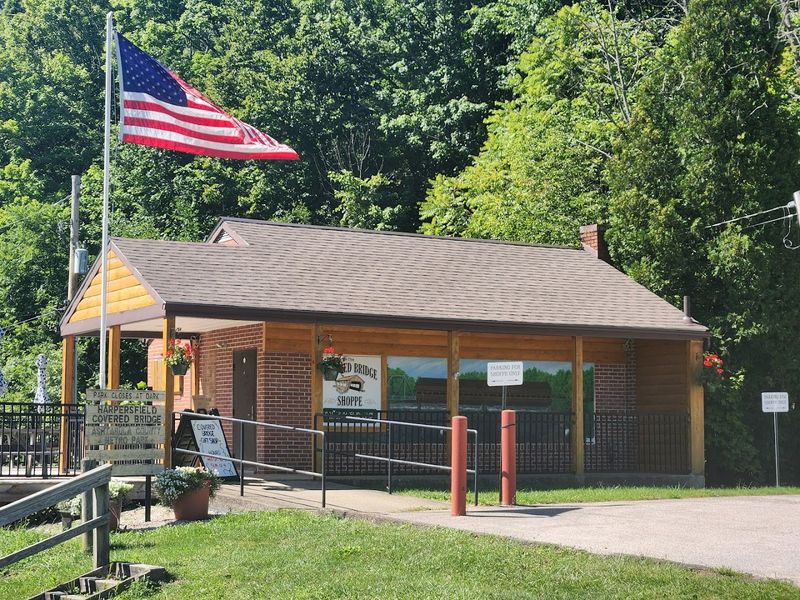
A charming building near the parking area houses treasures beyond typical tourist trinkets. The county operates this welcoming space staffed by knowledgeable attendants who share fascinating stories about the bridge’s construction and the area’s history.
Reasonable prices make purchasing mementos painless, whether choosing postcards, local crafts, or bridge-themed items.
Beyond shopping, visitors gain access to restroom facilities housed in the same structure. While some reviews mention these bathrooms need updating, they provide necessary convenience for families spending several hours exploring.
The gift shop keeper often displays historical photographs showing the bridge’s transformation through various renovation projects over decades.
Opening hours vary seasonally, so calling ahead prevents disappointment. When open, the shop becomes an educational resource where curious visitors learn about Ashtabula County’s network of 19 covered bridges.
Maps showing all bridge locations help adventure-seekers plan complete tours of the region’s historical landmarks.
The attendant’s enthusiasm for local history proves contagious. Many guests arrive planning quick visits but leave inspired to explore more thoroughly.
This small building serves as more than just a shop; it functions as the park’s unofficial welcome center and community connection point.
Recent Restoration Brings New Life
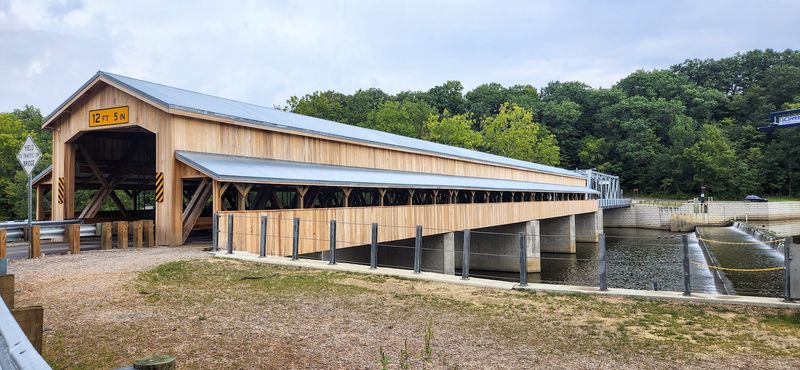
Watching craftsmen restore a 150-year-old structure requires patience, but the results justify every inconvenient detour. Between 2022 and 2024, this beloved landmark underwent comprehensive rehabilitation addressing structural concerns while maintaining historical authenticity.
Engineers balanced modern safety standards with preservation requirements, ensuring the bridge serves communities for generations ahead.
Workers carefully documented original construction methods before beginning renovations. They replaced deteriorating timbers with matching wood, reinforced foundations, and updated the steel supports added decades ago.
The dam system received simultaneous attention, improving water flow management around the bridge’s base.
Reopening in August 2024 sparked celebration among locals who grew up crossing this bridge. The renovation added pedestrian walkways on both sides, dramatically improving visitor safety and accessibility.
Fresh paint and structural reinforcements make the bridge look simultaneously brand new and authentically historical.
Photographs documenting the restoration process hang in the gift shop, revealing the massive undertaking’s scope. Visitors gain appreciation for preservation challenges when viewing images of exposed beams and foundation work.
The project cost millions but delivered invaluable returns by securing this irreplaceable landmark’s future while enhancing visitor experiences through thoughtful modern additions.
Instagram-Worthy Scenic Photography
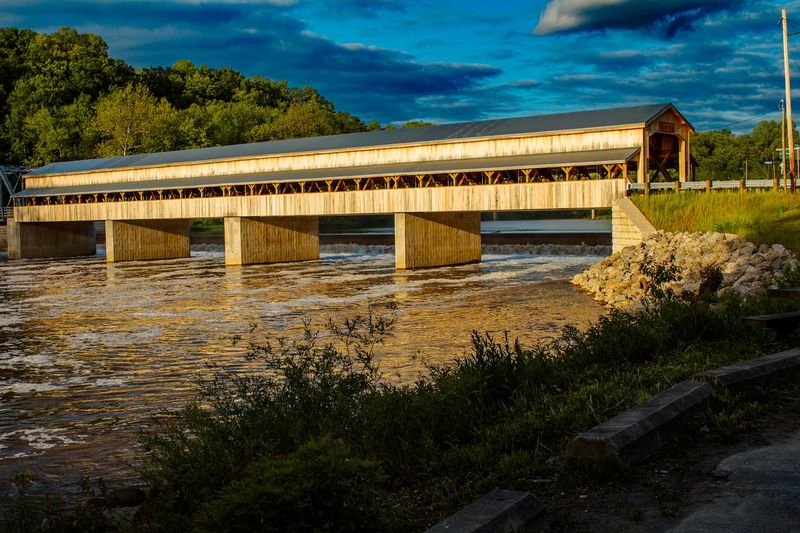
Professional photographers and smartphone users alike find endless compositions around every corner of this picturesque setting. The bridge’s weathered timbers contrast beautifully against blue skies or dramatic storm clouds.
River reflections double the visual impact, especially during calm morning hours when the water mirrors the structure perfectly.
Seasonal changes transform available shots dramatically. Spring brings wildflowers and fresh green growth framing rustic wood.
Summer offers lush canopies and families creating candid moments. Autumn explodes with fiery foliage that photographers dream about, while winter snow creates stark, beautiful contrasts against dark timbers.
Multiple vantage points exist for capturing different perspectives. Shooting from the riverbank below emphasizes the bridge’s impressive length and engineering.
Standing inside the covered walkways provides tunnel-like frames for creative compositions. Elevated positions from the approaching roads showcase how the structure fits within the broader landscape.
Social media feeds consistently feature this location, tagged with various seasonal hashtags. Engagement photo sessions happen regularly, with the historic bridge providing romantic backdrops.
The combination of authentic history, natural beauty, and easy accessibility makes this an amateur and professional photographer’s paradise that never disappoints regardless of equipment or experience level.
The Rehabilitated Dam Structure
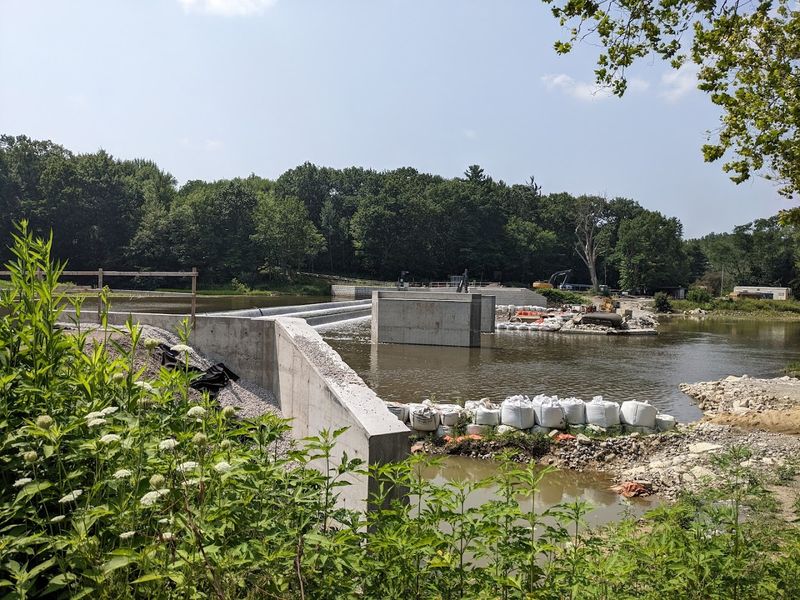
Below the bridge, water cascades over a recently renovated dam that controls river flow and creates the pools attracting fish and wildlife. This engineering feature works quietly behind the scenes, maintaining consistent water levels that protect the bridge’s foundation while creating habitat for aquatic species.
The renovation project addressed safety concerns and improved environmental conditions simultaneously.
Standing near the dam reveals the Grand River’s power and beauty in ways not visible from other park areas. The sound of rushing water provides constant white noise that many visitors find meditative.
During high water periods, the flow becomes dramatic and impressive, while calmer seasons allow clearer views of underwater features.
The dam rehabilitation coordinated with the bridge restoration, ensuring both structures now support each other for decades ahead. Engineers updated outdated designs with modern materials that require less maintenance while functioning more efficiently.
Environmental considerations guided decisions, protecting fish populations and water quality throughout construction.
Few visitors understand how crucial this dam remains to the entire site’s health. Without proper flow management, the bridge foundation could erode or the river could become too shallow for recreation.
This behind-the-scenes infrastructure deserves recognition alongside the more photogenic covered bridge it helps protect.
Playground and Family Recreation Area
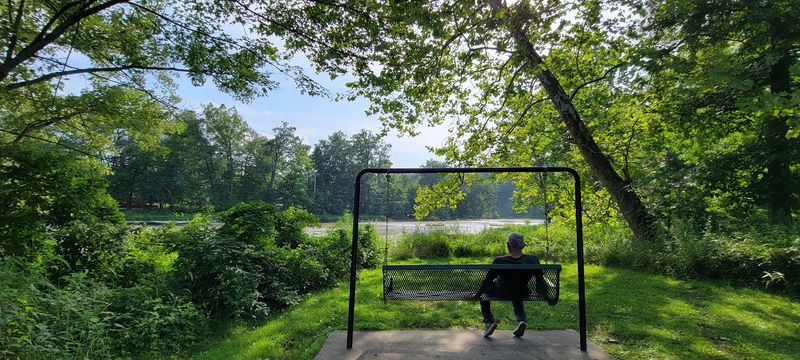
Young visitors burn energy on playground equipment positioned where parents can supervise easily while enjoying river views. Swings, climbing structures, and slides provide entertainment for various age groups.
The placement allows children to play safely away from roads and water while remaining visible from picnic areas and parking lots.
Families appreciate having multiple activity options concentrated in one location. While some members fish, others can picnic, and children can play without everyone needing identical interests.
This versatility makes the park suitable for extended visits where different family members rotate through preferred activities.
Playground equipment meets modern safety standards installed during recent park improvements. Mulch or rubber surfaces cushion inevitable tumbles, and regular maintenance keeps everything functional.
Shaded sections near the play area offer spots where caregivers can rest while maintaining supervision.
Birthday parties and family reunions frequently choose this location specifically because it accommodates diverse age ranges successfully. Grandparents enjoy peaceful scenery, parents appreciate free entertainment for kids, and children love running around in natural settings.
The combination of historical interest, natural beauty, and practical amenities creates win-win situations for everyone involved in planning group outings.
Gateway to Covered Bridge Country
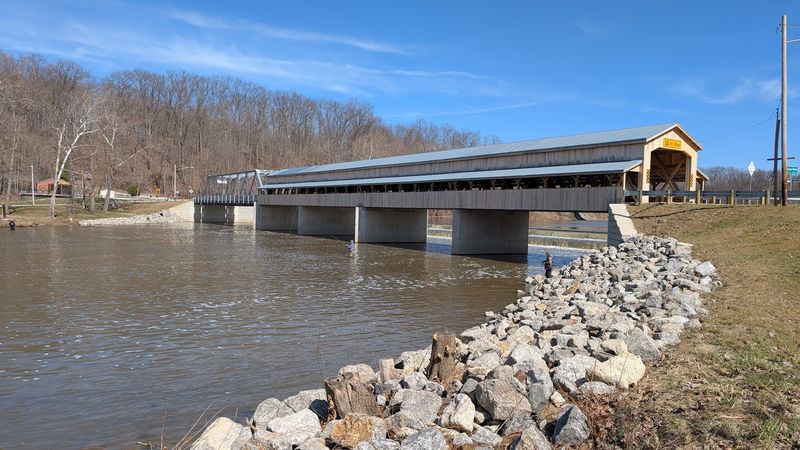
This impressive structure serves as just one stop on Ashtabula County’s remarkable covered bridge trail featuring 19 historic spans. Many enthusiasts begin their tours here before venturing to discover the region’s complete collection.
Each bridge tells unique stories while showcasing different architectural styles and periods of construction throughout the 1800s and early 1900s.
The gift shop provides maps highlighting all bridge locations and suggested driving routes. Planning a complete tour requires most of a day, though shorter loops visit clusters of nearby bridges.
Photography enthusiasts particularly enjoy autumn tours when foliage enhances already picturesque scenes.
Some bridges remain active roadways like this one, while others serve only pedestrian traffic or stand as preserved monuments. The variety keeps tours interesting rather than repetitive.
Each location offers different amenities, from simple roadside parking to developed parks with facilities.
Local tourism benefits tremendously from this concentration of preserved bridges, possibly the largest collection in Ohio. Visitors come from neighboring states specifically to complete the trail, supporting restaurants, hotels, and shops throughout the county.
Starting at this well-maintained, accessible location provides excellent introduction to covered bridge appreciation before exploring more remote or primitive sites along the route.