
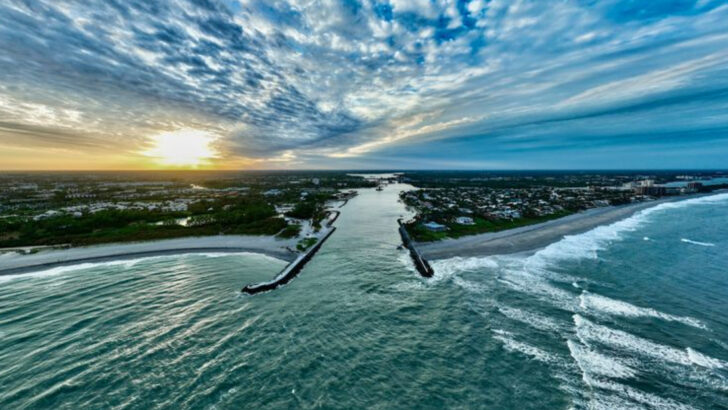
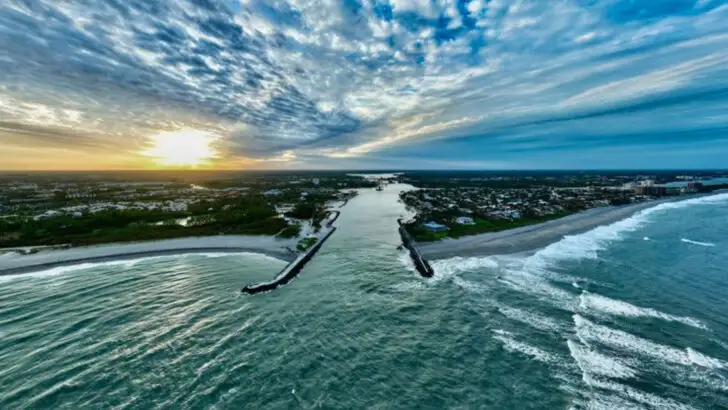
Tucked along the edge of Jupiter, Florida, DuBois Park is one of those rare places that feels like a secret even locals want to keep to themselves.
Where the Loxahatchee River flows into the Atlantic Ocean, this small but stunning waterfront park offers crystal-clear waters, shaded picnic spots, and a rich history that most visitors never even know exists.
While tourists flock to crowded beaches nearby, DuBois Park quietly delivers one of the most complete outdoor experiences in all of South Florida.
If you have ever wanted a beach day that feels personal, unhurried, and genuinely beautiful, this is the place to find it.
A Waterfront Setting Where River Meets Ocean
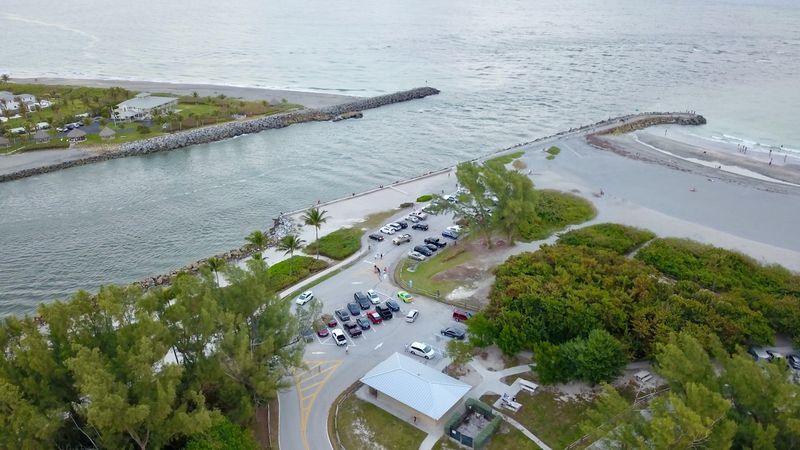
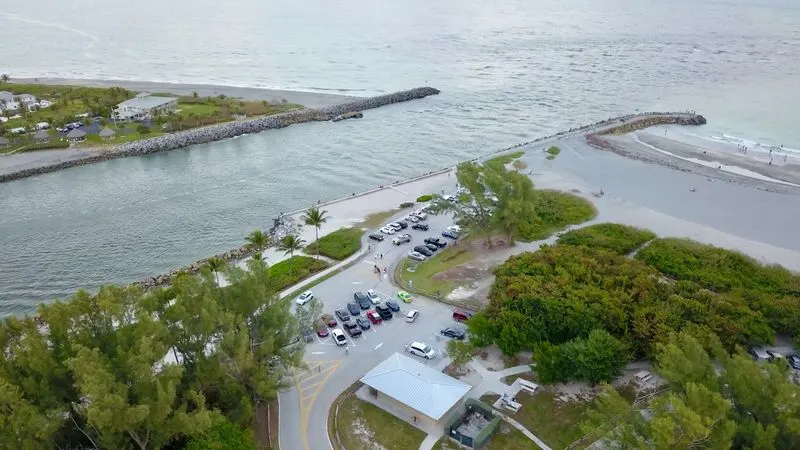
Standing at the water’s edge in DuBois Park feels like catching Florida at its most honest. Here, the Loxahatchee River, Jupiter Inlet, and the Atlantic Ocean all come together in one breathtaking convergence that most people drive right past without realizing what they are missing.
The result is a uniquely layered waterfront environment. On one side, you get the calm, glassy surface of a protected lagoon.
On the other, the open coastal energy of the inlet stretches out toward the horizon. It is the kind of setting that makes even seasoned Florida travelers stop and stare.
Because of this natural meeting point, the water conditions here shift throughout the day in fascinating ways. Tidal movement brings in fresh ocean water while the river adds its own gentle current.
Birdwatchers, paddlers, photographers, and swimmers all find something worth celebrating in this one compact stretch of shoreline. Few parks in South Florida can honestly claim a backdrop this dynamic and this beautiful all at once.
A Sheltered Lagoon Perfect for Swimming
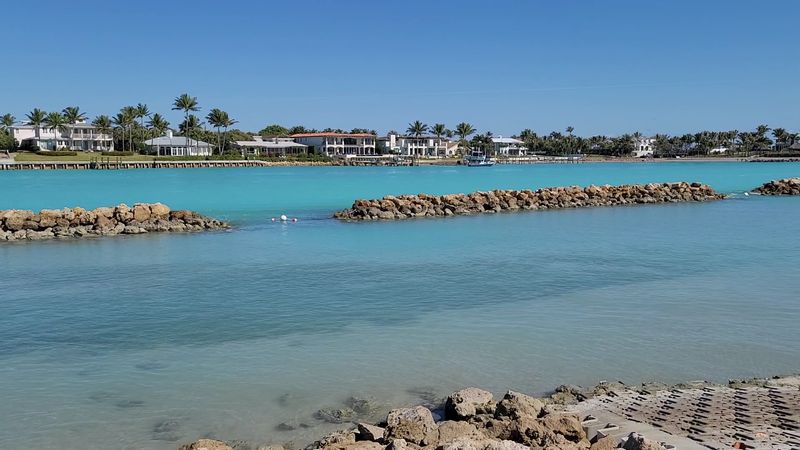
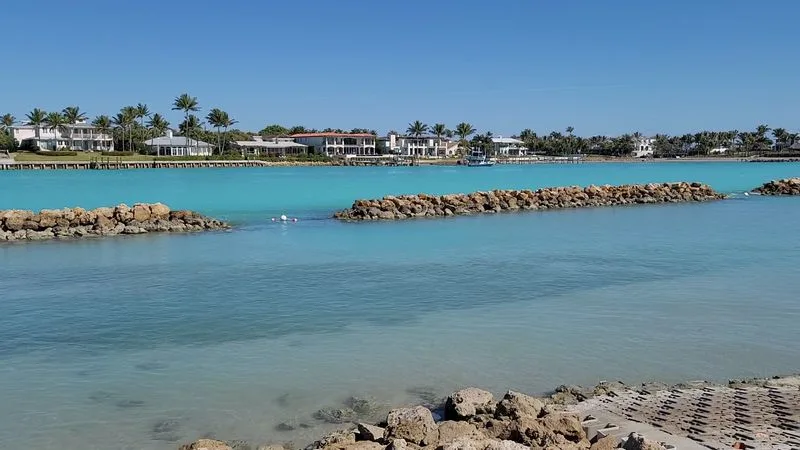
Not every beach invites you to simply float and relax without worrying about waves or currents. That is exactly what makes DuBois Park’s lagoon swimming area so wonderfully different from typical Florida beaches.
Rock jetties wrap around the swimming zone, creating a natural barrier that keeps the water calm, shallow, and beginner-friendly year round.
Parents with young children especially love this setup. Kids can wade in confidently while adults float nearby without fighting surf or strong tidal pulls.
The water stays clear enough that you can often see the sandy bottom even in the deeper sections, which adds a reassuring sense of safety for nervous swimmers.
First-time ocean swimmers often describe the lagoon as feeling more like a giant natural pool than an open beach. That comparison is not far off.
The protected conditions make it a wonderful spot for older adults and anyone recovering from injuries who still wants to enjoy the water. Weekday mornings are particularly peaceful here, with the lagoon nearly to yourself and the sunlight turning the shallow water a gorgeous shade of pale green and blue.
Surprisingly Rich History Beneath the Sand
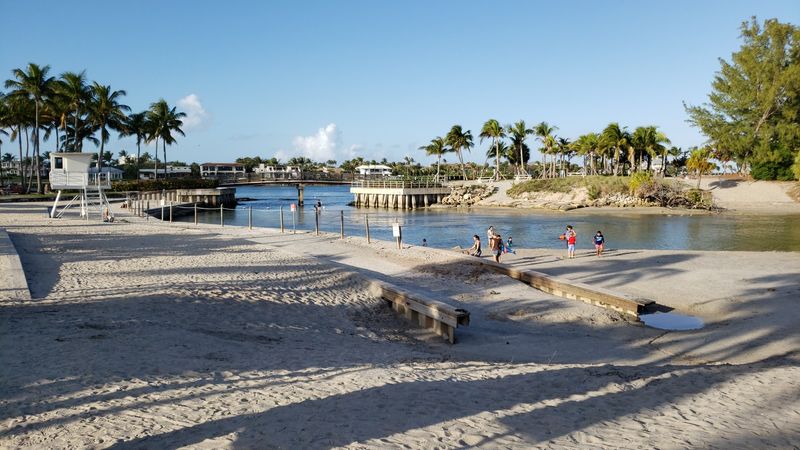
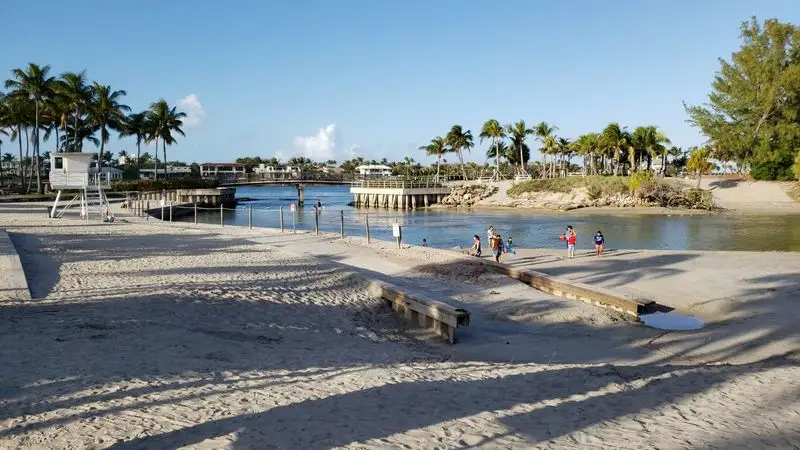
Long before sunbathers spread their towels here, this land held a thriving Native American community. The park sits atop a shell midden, which is essentially an ancient refuse mound made of discarded shells, bones, and tools left behind by the Jeaga people who lived along these waters thousands of years ago.
Walking across the mound today, most visitors have no idea they are standing on one of the oldest occupied sites in South Florida.
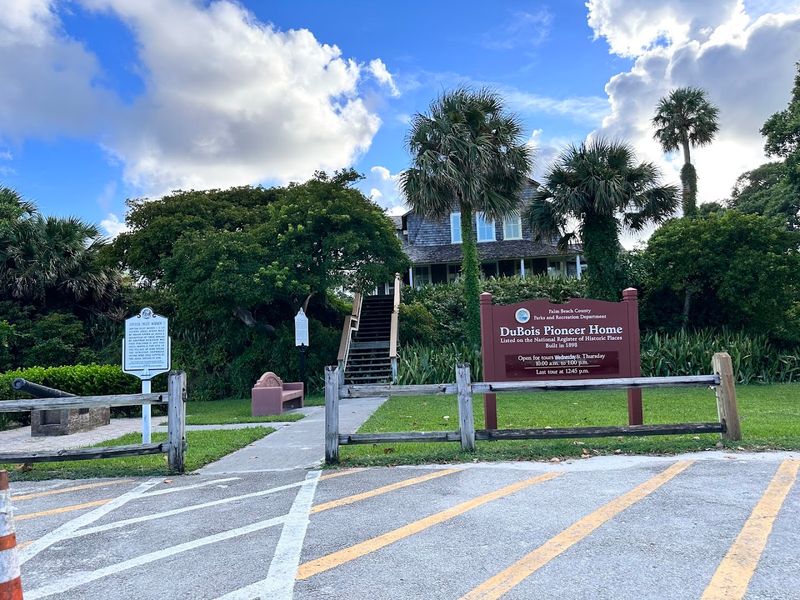
Adding to that layered past is the DuBois Pioneer Home, a small wooden house built around 1898 by Harry DuBois and his wife Susan. The couple settled here during Florida’s early pioneering era, relying on fishing, farming, and trade to survive in this remote coastal location.
Both the shell mound and the pioneer home are listed on the National Register of Historic Places, giving the park a cultural weight that most beach parks simply cannot match.
The home is occasionally open for tours, offering a rare window into old Florida life. Even when it is closed, the exterior and surrounding landscape tell a compelling story.
History here is not tucked away in a museum. It is literally under your feet and right in front of your eyes.
Incredible Views of the Iconic Jupiter Lighthouse
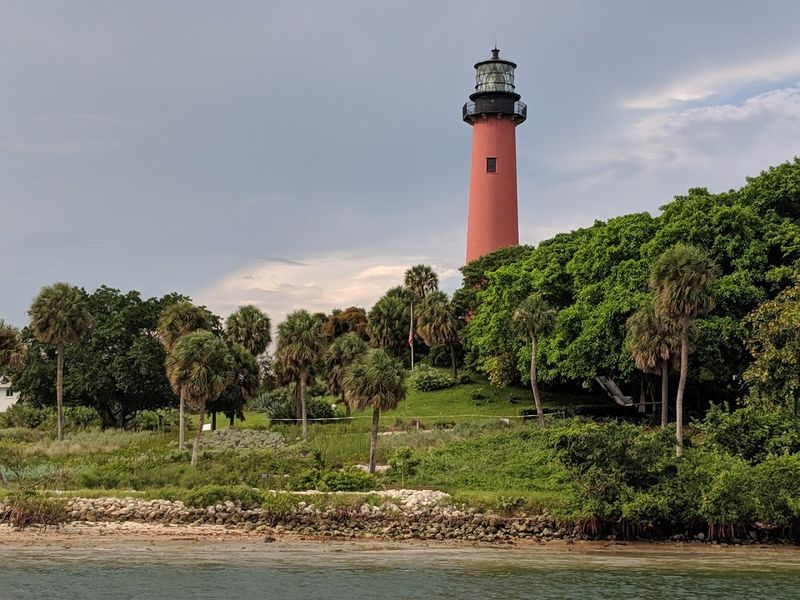
Some views earn the word iconic, and the sight of the Jupiter Inlet Lighthouse from across the water at DuBois Park is absolutely one of them. The lighthouse, painted a deep brick red and standing over 100 feet tall, has guided ships safely since 1860.
Seeing it rise above the treeline from the park’s shoreline is the kind of image that ends up as someone’s phone wallpaper or framed print on a living room wall.
What makes this viewpoint special is the natural framing. Palm trees, mangroves, and the glittering inlet water all work together to put the lighthouse in a setting that feels almost too picturesque to be real.
Photographers, both amateur and professional, regularly visit DuBois Park specifically for this angle rather than hiking up to the lighthouse itself.
Sunrise and late afternoon light transform the view completely. Early morning casts the lighthouse in warm golden tones while the water reflects pink and orange sky.
Late afternoon gives it a dramatic, silhouetted quality that is equally striking. Whether you are a photography enthusiast or simply someone who appreciates a stunning view, this particular spot in the park delivers something genuinely memorable every single visit.
One of the Best Easy Snorkeling Spots in the Area
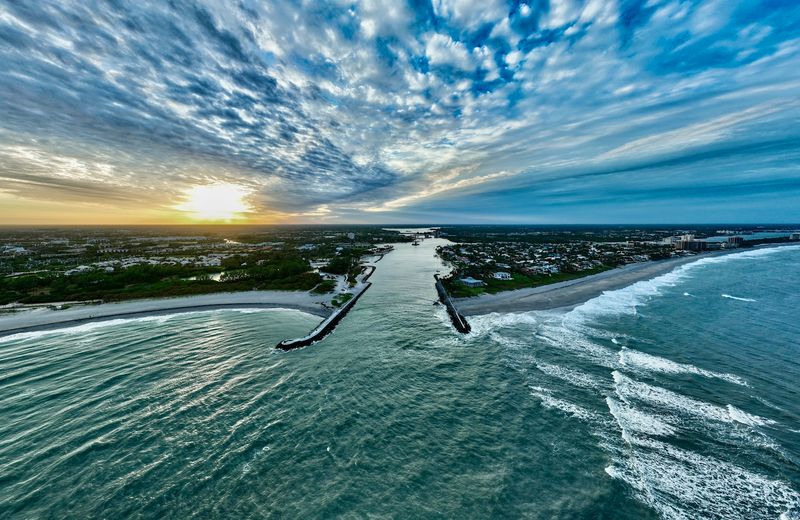
Snorkeling does not have to mean booking a boat charter or venturing far offshore. At DuBois Park, some of the most accessible marine life viewing in all of Palm Beach County happens just a few feet from the shoreline.
The tidal waters near the jetty stay remarkably clear, and the rocky structure beneath the surface acts as a mini-reef, attracting an impressive variety of small fish, crabs, sea urchins, and the occasional juvenile sea turtle.
Beginners find this spot forgiving and fun. The water is shallow enough to stand up in if needed, and the calm conditions mean you can focus entirely on what is happening below the surface rather than fighting waves or currents.
Snorkel gear is inexpensive and easy to pack, making this a low-effort, high-reward activity for families and solo explorers alike.
Experienced snorkelers sometimes feel a little spoiled by how much marine activity shows up in such a compact area. Sheepshead, snook, and blue crabs are common sightings near the jetty rocks.
Manatees occasionally glide through the deeper sections of the inlet nearby. Arriving early in the morning when the water is at its clearest gives you the best visibility and the best chance of spotting something truly special beneath the surface.
A Favorite Hangout for Fishing and Boating
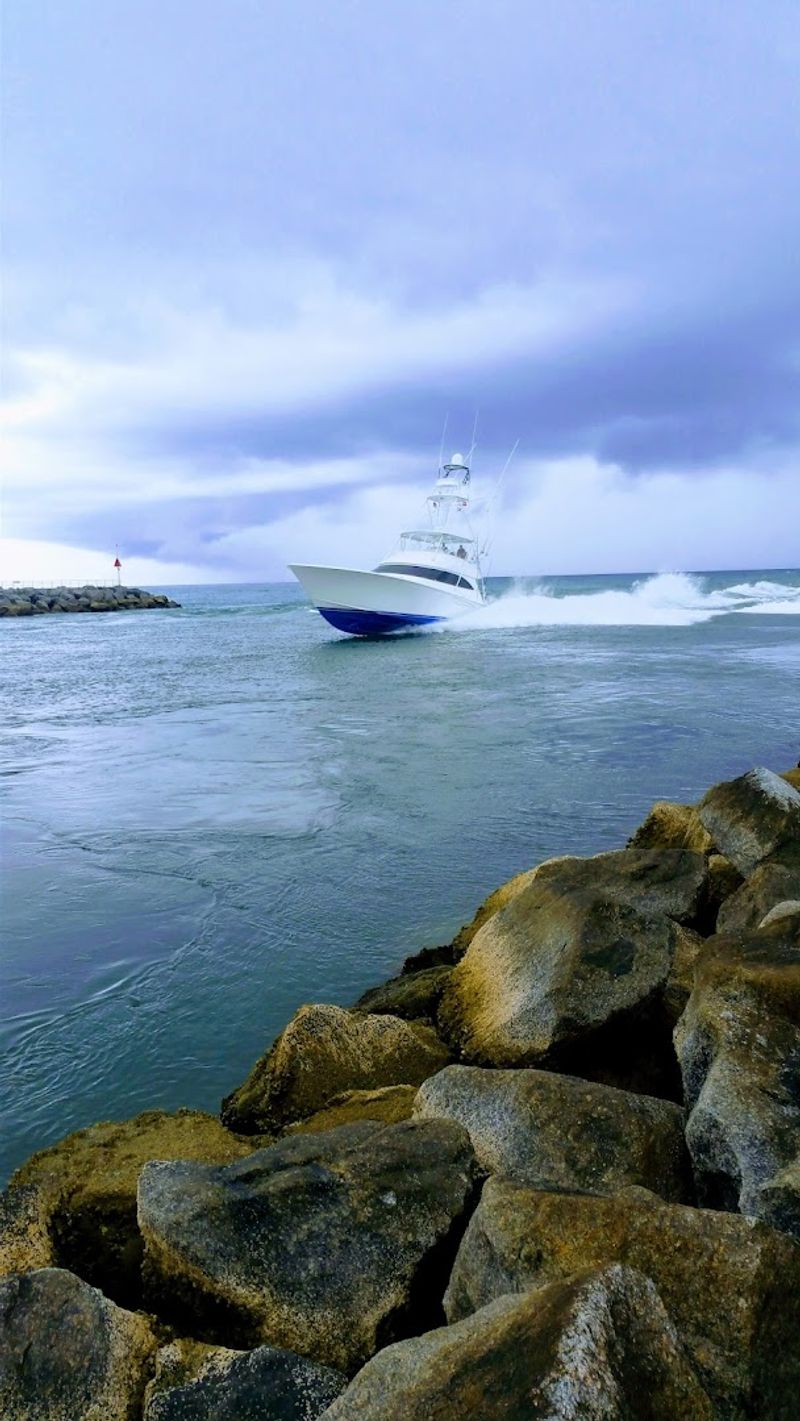
Ask any local angler in Jupiter where they head for a casual fishing session, and DuBois Park will almost always come up. The jetty stretches right into the inlet, putting fishermen directly over some of the most productive water in the area.
Snook, tarpon, redfish, and flounder all move through the inlet regularly, especially during tidal changes when baitfish concentrate near the rocks.
Beyond the jetty, the park’s boat ramp and day docks make it a practical launching point for anyone wanting to explore surrounding waterways. The Loxahatchee River, Jupiter Inlet, and the Intracoastal Waterway are all within easy reach, offering hours of boating adventure from a single convenient access point.
Kayakers and paddleboarders also launch here frequently, enjoying the calm lagoon before venturing into the broader waterway network.
Even non-fishers tend to enjoy hanging around the jetty area. Watching pelicans dive for fish, spotting dolphins cruising through the inlet, or simply observing the steady parade of boats heading in and out of the waterway makes for surprisingly entertaining people-watching.
The energy around the dock and jetty has a relaxed, salty-air atmosphere that feels authentically Floridian in the best possible way.
Picnic Spots With Tropical Scenery
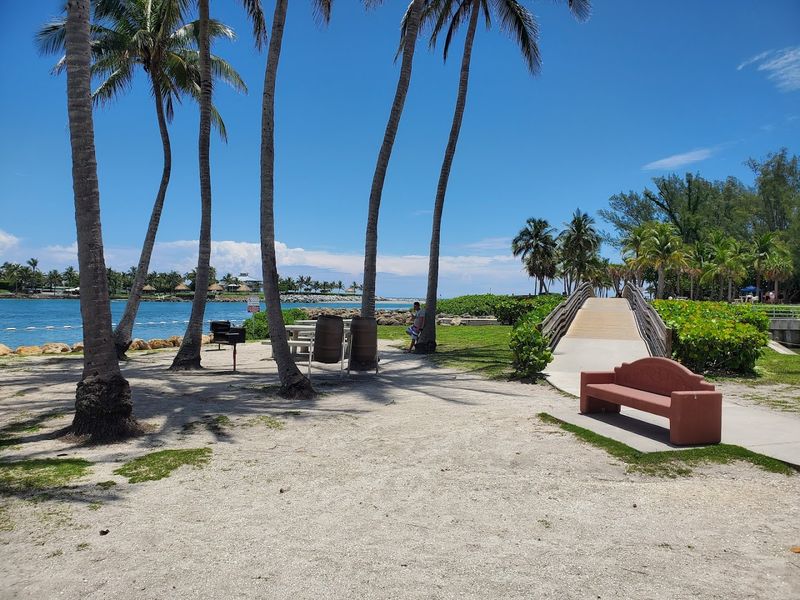
Picnicking at DuBois Park is less about eating lunch and more about the full sensory experience that surrounds every bite. Shaded tables sit beneath swaying palms and tropical trees, positioned so that the water is always within view.
A gentle breeze off the inlet keeps things comfortable even on warmer days, and the sound of the water creates a natural soundtrack that no restaurant can replicate.
Pavilions and covered grills are available throughout the park, making it easy to organize everything from a casual family lunch to a birthday gathering or group celebration. The infrastructure is well-maintained without feeling overly commercial or crowded with vendors.
It is the kind of outdoor dining setup that encourages people to linger, play, and genuinely enjoy each other’s company without rushing off.
Families with kids benefit especially from the park’s layout. Picnic areas sit close to the swimming lagoon, playgrounds, and open grassy spaces, so children can move freely between activities while adults relax nearby.
Bringing a cooler, some good food, and a few lawn chairs turns an afternoon at DuBois Park into something that feels like a mini-vacation. Reserving a pavilion in advance is recommended for weekends and holidays when the park draws larger crowds.
Wildlife and Coastal Nature All Around
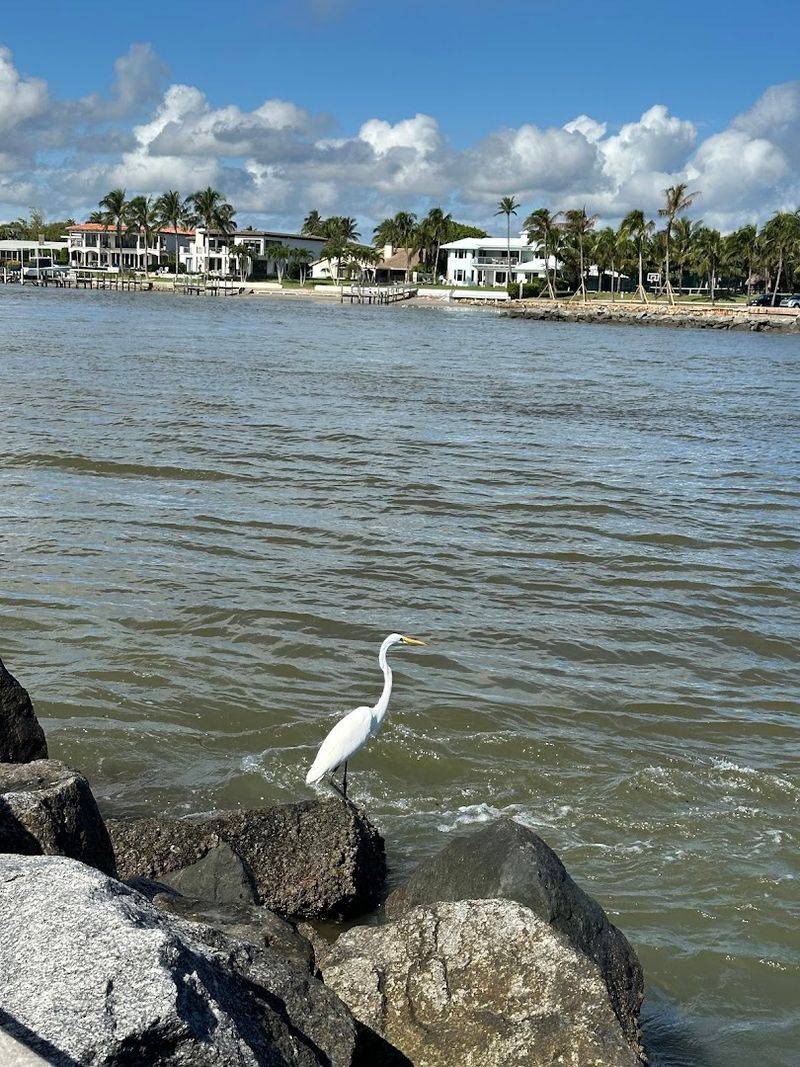
Wildlife watching at DuBois Park has a way of sneaking up on you. You come for the beach, and then suddenly a manatee surfaces ten feet from where you are standing, or a roseate spoonbill lands in the shallows close enough to photograph without a zoom lens.
The park’s mangrove shorelines and tidal flats create the kind of layered coastal habitat that Florida’s native species absolutely depend on.
Birders find this spot particularly rewarding. Great blue herons, snowy egrets, ospreys, and brown pelicans are practically permanent residents along the water’s edge.
During migration seasons, the variety expands dramatically, attracting shorebirds and wading species that use the park’s protected wetlands as a rest stop on longer journeys. Bringing a pair of binoculars here is never a wasted decision.
Marine life extends well beyond what snorkelers spot near the jetty. Bottlenose dolphins regularly cruise through the inlet channel in small pods, often visible from shore without any special effort.
Sea turtles nest along nearby beaches and are sometimes spotted in the water during warmer months. The ecological richness of this compact park punches far above its size, making every visit feel like a genuine encounter with Florida’s wild coastal heart.
A Rare Blend of Recreation and Heritage
Most parks do one thing well. DuBois Park somehow manages to do everything well, and that is what makes it genuinely unusual among Florida’s public green spaces.
Swimming, snorkeling, fishing, boating, kayaking, picnicking, playground time, wildlife watching, and historical exploration all coexist in a park that covers just a few acres along the Jupiter waterfront. The density of experiences packed into this small footprint is remarkable.
The historic dimension adds a layer that purely recreational parks simply cannot offer. Knowing that you are swimming in waters once used by the Jeaga people, or picnicking near a house where a pioneer family built their life over a century ago, gives the park a sense of depth that lingers after you leave.
Heritage and leisure rarely share space this comfortably.
Visitors who appreciate both active recreation and cultural context tend to become the park’s most loyal fans. Teachers sometimes bring students here to connect Florida history lessons to a real, tangible place.
Couples find it romantic without any manufactured atmosphere. Older adults enjoy the walking paths and calm water, while younger visitors gravitate toward the swimming area and playground.
It is one of those rare destinations where everyone in a mixed-age group genuinely leaves happy.
Why It Still Feels Like a Hidden Gem
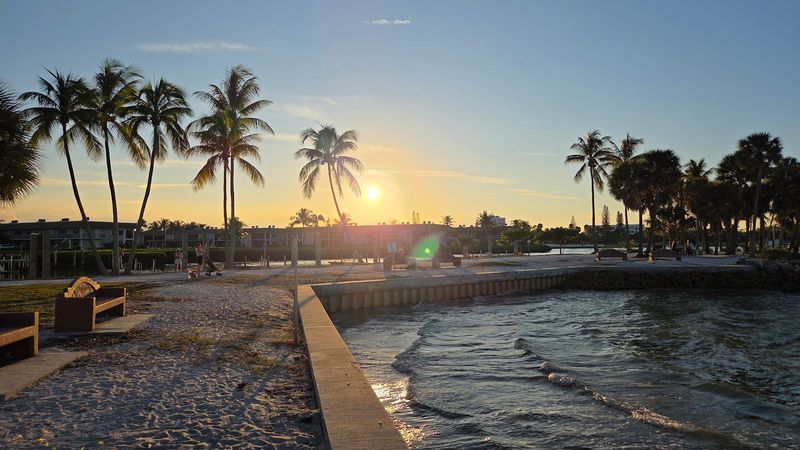
There is something almost puzzling about how DuBois Park manages to stay under the radar. It has stunning water views, a calm swimming lagoon, snorkeling, boating, historic landmarks, wildlife, shaded picnic areas, and a lighthouse backdrop that would make any travel magazine cover jealous.
And yet, on a Tuesday morning, you might have the entire lagoon to yourself while traffic crawls toward the crowded beaches just a few miles south.
Part of the answer is that DuBois Park does not market itself aggressively. It is a Palm Beach County park without a massive tourism campaign behind it, so it relies almost entirely on word of mouth and the loyalty of Jupiter locals who quietly treasure it.
That low-key reputation is actually one of its greatest strengths, keeping the atmosphere relaxed and the crowds manageable even during peak Florida travel season.
Visiting on a weekday or arriving early on weekends gives you the full hidden-gem experience. The park feels unhurried, the water is calm, and the natural beauty has room to breathe without being overwhelmed by foot traffic.
For travelers who have grown tired of fighting for beach towel space at famous Florida spots, DuBois Park offers a genuinely refreshing alternative that feels like a personal discovery every single time.