
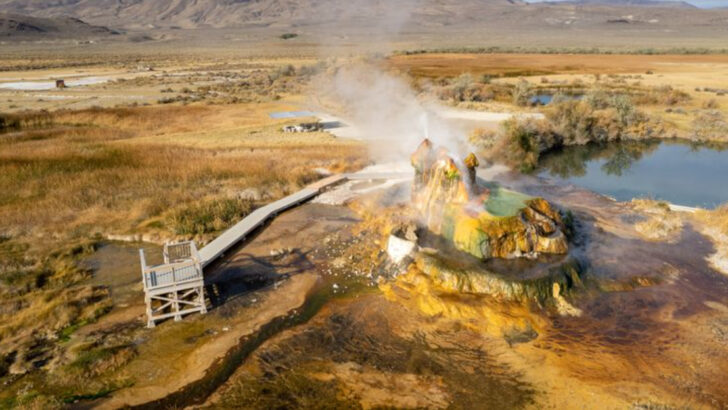
Step into another world… right in the Nevada desert.
Fly Ranch Geyser bursts from the earth like a neon sculpture, a bizarre and beautiful accident of human drilling and nature’s restless hand. Streams of steaming, mineral-rich water climb into ever-growing mounds, painting the desert in fiery reds, deep greens, and ghostly whites.
This isn’t your typical “geyser in the woods.” It’s alive, alien, and mesmerizing — a swirling, shifting spectacle that makes you question reality. Tiny thermophilic organisms add shimmering streaks of color, turning mineral deposits into a rainbowed, otherworldly canvas.
Tucked in the remote reaches of the Black Rock Desert, Fly Ranch Geyser rewards those willing to wander with a rare encounter: a geothermal masterpiece that looks like it belongs on another planet, yet pulses with the raw energy of Nevada beneath your feet.
A Strange Spectacle in the Desert
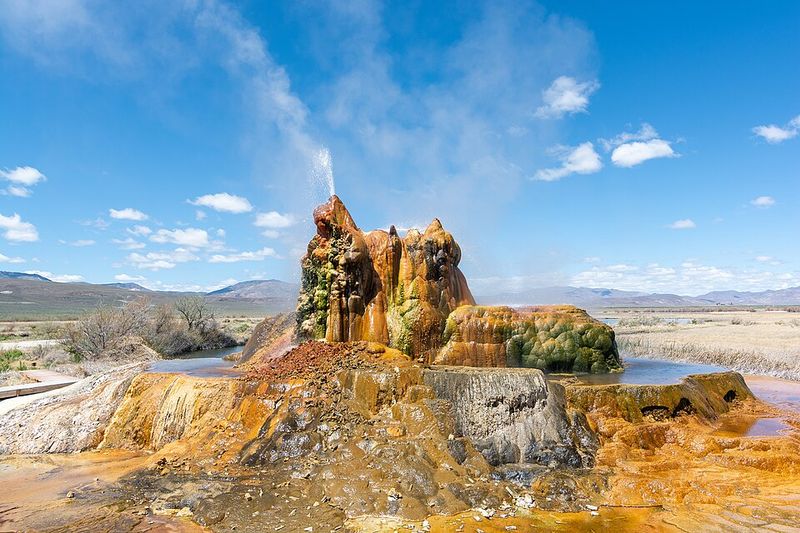
Out on the Black Rock Desert, where horizons crease like folded paper, a surreal fountain of color hisses and sparkles. Fly Ranch Geyser rises from flat sage and alkali dust, a cluster of knobby cones streaked neon green, russet red, and gold.
Steam curls off warm terraces while dragonflies skim thin turquoise pools.
From a distance, it looks like a mirage, a painted reef marooned in sun baked silence. Up close, the geyser murmurs with life, water whispering over mineral lips and trickling into lacey runnels.
The air smells faintly mineral, and the ground near the pools feels spongy with moist mats.
You stand there, half expecting the desert to blink, and yet the colors only deepen. The forms shift subtly as water keeps building them grain by grain.
In a land famous for emptiness, this small, bright engine never stops, making art from heat, rock, and time.
Not Quite Natural — The Accidental Origin
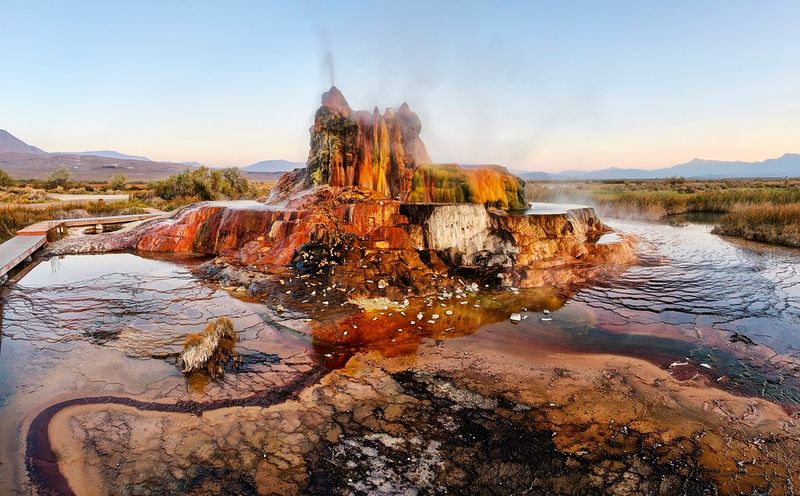
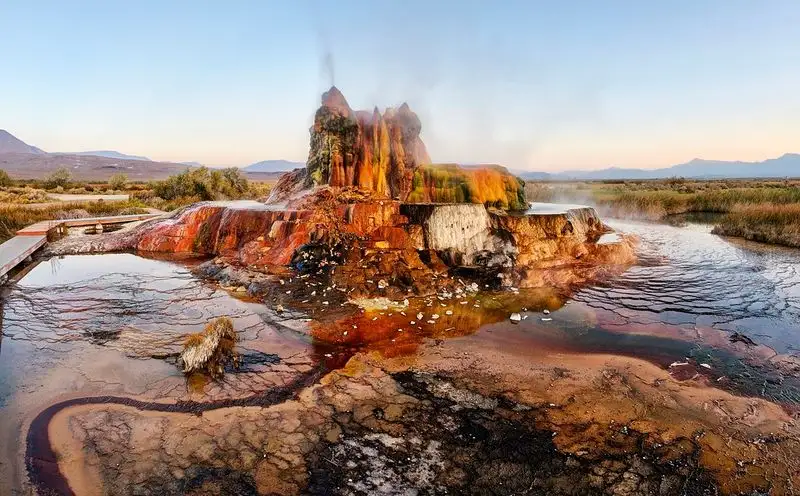
Fly Geyser did not start as a wonder. Decades ago, drilling for geothermal water pierced a hot aquifer, and the well refused to behave.
Scalding, mineral rich water escaped, and over years the leak stacked rock upon rock until cones emerged.
This was not the Old Faithful pattern of pressure and punctual eruptions. It was more like a faucet no one could fully close, carving and building at once.
The human mistake became a catalyst for a rapid, living sculpture, growing faster than most natural terraces.
When you look at the geyser’s strange towers, you are seeing geology sped up by a decision made with wrenches and pipe. Nature took that opened vein and ran with it, layering colors and curves.
It is a reminder that accidents can bloom into beauty when earth and water find their rhythm.
Geological Formation and Mineral Growth
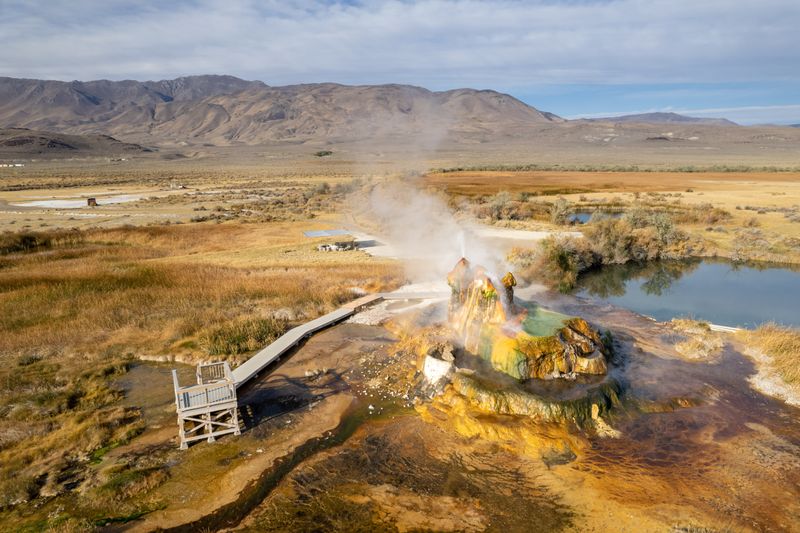
Every droplet from Fly Ranch Geyser is a mason. The water is loaded with calcium carbonate and silica, which precipitate as the liquid cools and degasses.
Over time, these minerals knit into terraces, lips, and mounded cones that look delicate but hold firm.
Imagine a constant drizzle laying bricks so fine you barely notice. The edges bead with new material, creating scalloped rims and tiny dams that redirect flow.
Pools overflow and draft fresh runnels, so the sculpture keeps redrawing itself at the margins.
What would take ages at cooler springs happens quickly here because the water is hot and rich. You can trace ripples fossilized mid wave, see bubbles caught in creamy crusts, and follow lines where seasons shifted flow.
The geology is not frozen, though. It whispers forward, mineral by mineral, a visible diary of heat and chemistry.
Vibrant Colors: Thermophiles at Work
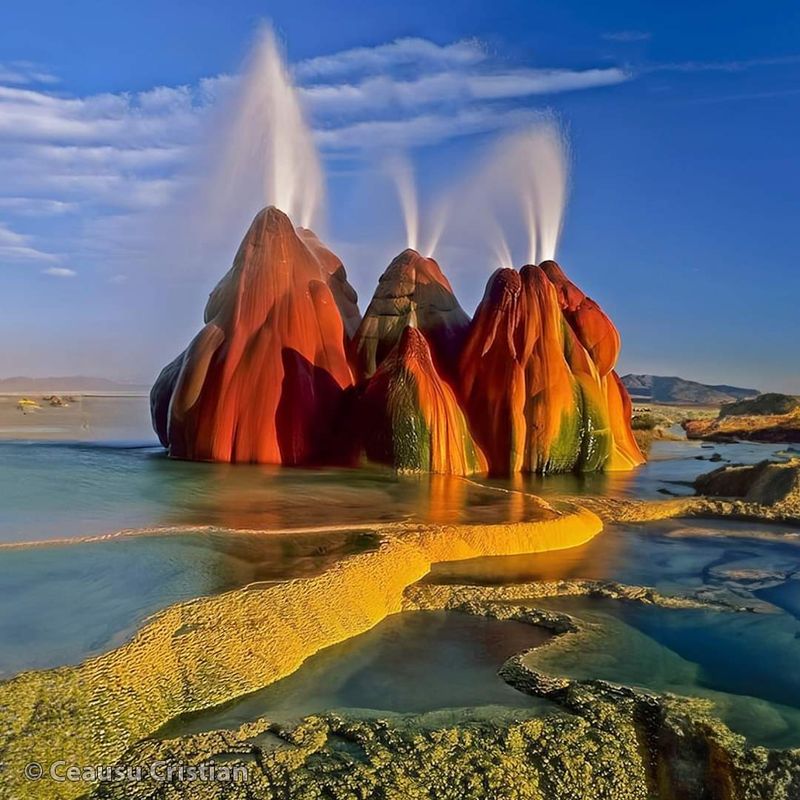
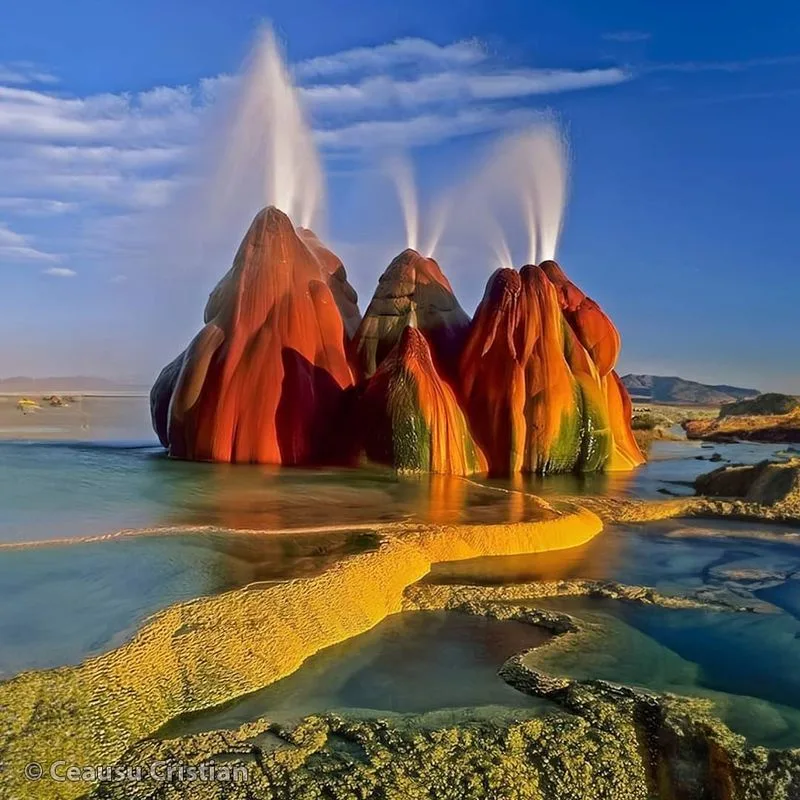
The colors at Fly Geyser are not painted on. They are alive.
Thermophilic algae and bacteria thrive in warm, mineral water, laying down carpets of green, saffron, and amber that shift with temperature and light.
Where water emerges hottest, hues may lean toward creamy whites and rusts. A few degrees cooler, emerald and chartreuse bands flare along the trickles.
Step again into cooler channels and orange weaves with brown, mapping heat like a living thermometer.
Stand to one side and watch sunlight rake the mats. Tiny bubbles lift, filaments sway, and the color feels saturated as wet moss.
You are seeing biology collaborating with geology, pigments written by microbes that love what would scald most other life. The geyser is an ecosystem as much as a sculpture.
Private Ownership and Conservation
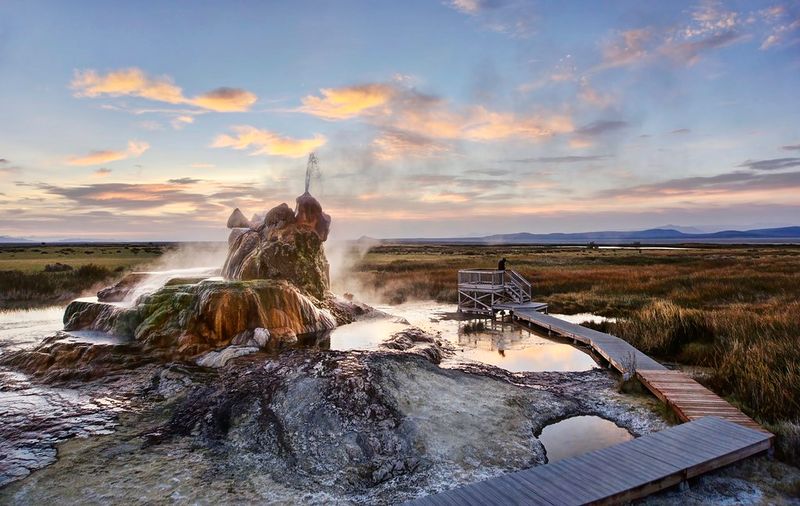
This bright geyser sits on private land. In 2016, the Burning Man Project purchased Fly Ranch to steward its fragile features.
That shift placed emphasis on restoration, habitat protection, and thoughtful access, not turnstiles or crowds.
Conservation here feels practical. Boardwalks and marked paths keep feet off delicate crusts.
Volunteer stewards monitor wildlife and water flow, while partners track impacts so decisions favor long term health over novelty.
When you visit, you are a guest invited to tread lightly. The rules are simple and kind: stay with the group, respect the quiet, and take only photos and memories.
It is encouraging to see an iconic sight managed with care, where beauty is not just displayed but actively defended for seasons still ahead.
Limited Public Access Through Guided Tours
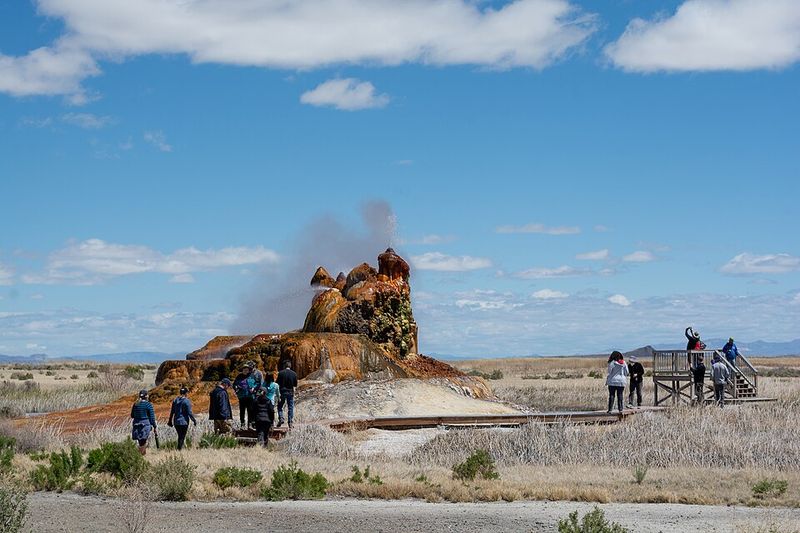
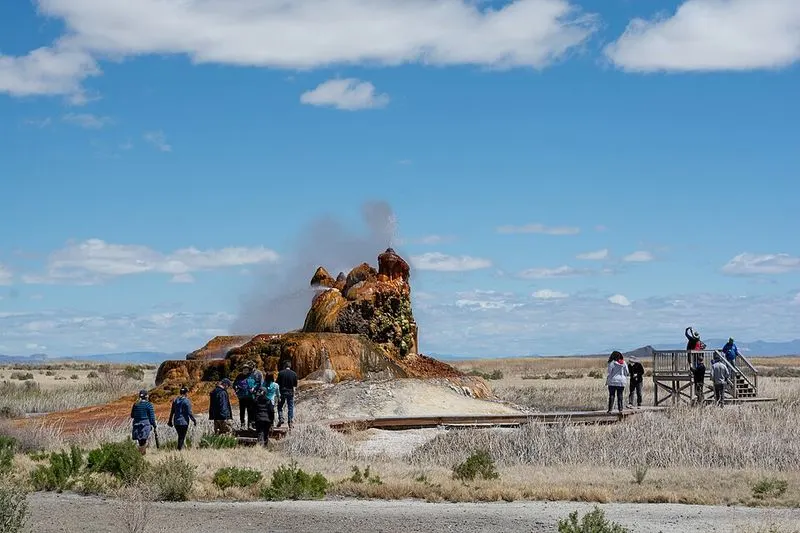
Fly Ranch is not a drop in destination. Access is through seasonal guided walks, typically run with partners like Friends of Black Rock High Rock.
Small groups move slowly, learning about geology, wildlife, and history while keeping fragile ground intact.
A guide sets the pace and answers questions, and you get time to breathe in the place rather than rush. Expect quiet stretches, soft steam, and bursts of color around bends.
The format turns a quick photo stop into a layered experience.
Tickets sell out, and weather matters, so planning ahead is wise. You will bring water, sun protection, and curiosity, then leave with an appreciation for careful stewardship.
The geyser will feel closer because access is earned through patience, not fences crossed or rules ignored.
Environmental and Geothermal Context
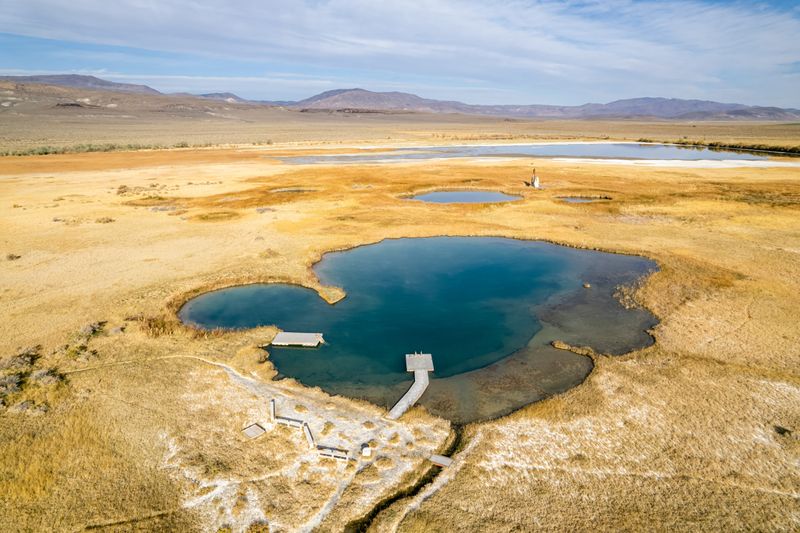
The geyser’s story makes more sense in its neighborhood. Northwestern Nevada hosts broad geothermal potential, and the Hualapai Geothermal Flats cradle warm waters under a thin desert skin.
Faults, fractures, and deep heat push fluids upward where the crust loosens.
Across the region, you will find hot springs that smell of minerals, some wild and some developed. Fly Ranch stands out because its flow is constant and sculptural, sprinting through mineral building faster than typical pools.
It is a local accent in a statewide sentence of heat and water.
Comparing sites brings contrast. Some springs are blue bowls, others are muddy seeps, and a few send up brief breaths of steam.
Here, color and architecture collide, making a landmark that teaches how geology can sing different notes only miles apart.
Photographic and Aesthetic Appeal
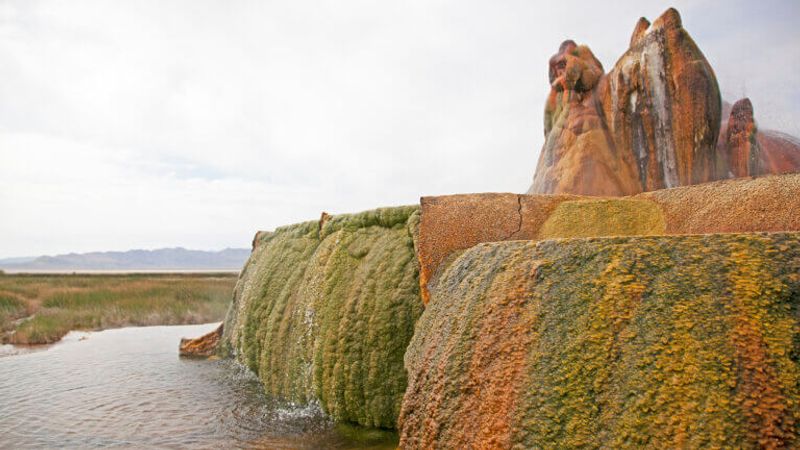
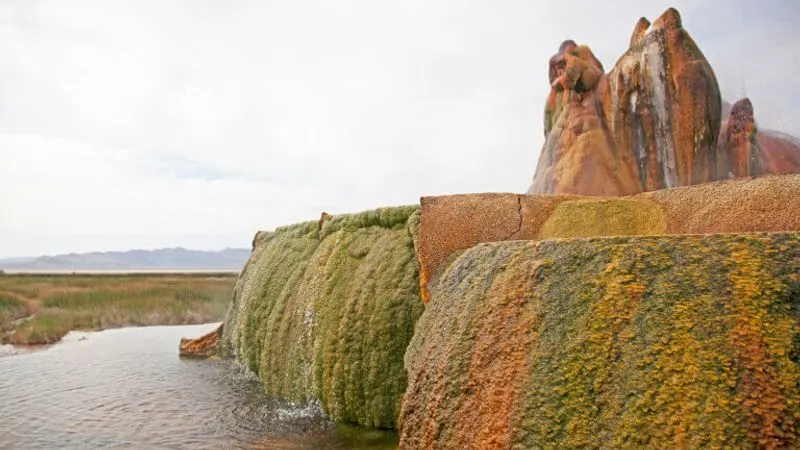
Photographers chase light, and Fly Geyser bends it beautifully. At golden hour, steam becomes a glowing veil and colors deepen into jewel tones.
Reflections glitter in thin pools, giving you a chance to double the drama in frame.
A tripod helps with longer exposures to turn trickles silky. Move a few steps and the composition transforms, cones stacking or separating against the sky.
The lines are sculptural, almost like coral or melted candle wax, ready for close studies and wide stories.
You do not need fancy gear, just patience and care. Watch where you place feet, work with the group, and let clouds do their dance.
The place rewards quiet observation, and your images will carry the hush and heat that make this geyser feel truly singular.
Visitor Experience and Practical Tips
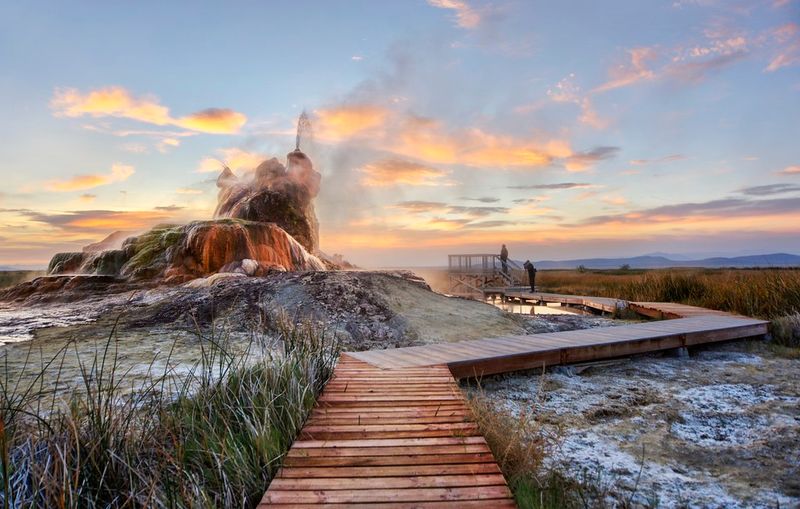
Plan for spring through fall when temperatures are kinder and light lasts. Tours run on select dates, so book early and confirm details a day ahead.
Expect a slow paced walk on uneven ground, pauses for interpretation, and quiet moments near the steaming cones.
Pack water, sun protection, and sturdy shoes. A light layer helps with breezes, and a small towel is handy if mist finds you.
Keep gear minimal and secure, because you will need hands free for balance and photos.
Most of all, bring respect. Stay with your guide, do not touch the water, and give the living mats room.
You will leave with photos, yes, but also the calming memory of a warm breath rising from the desert, working patiently as time and color continue their careful craft.