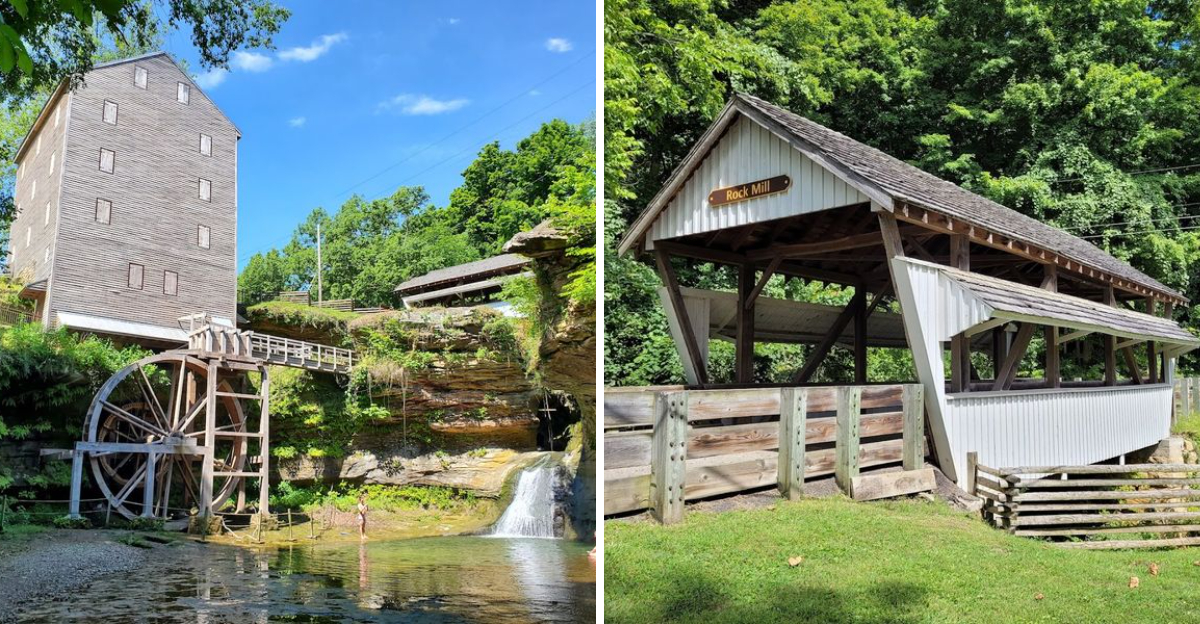
This is what Ohio’s hidden postcard looks like in real life.
Rock Mill doesn’t whisper history—it announces it, loud and proud over a rugged sandstone gorge outside Lancaster.
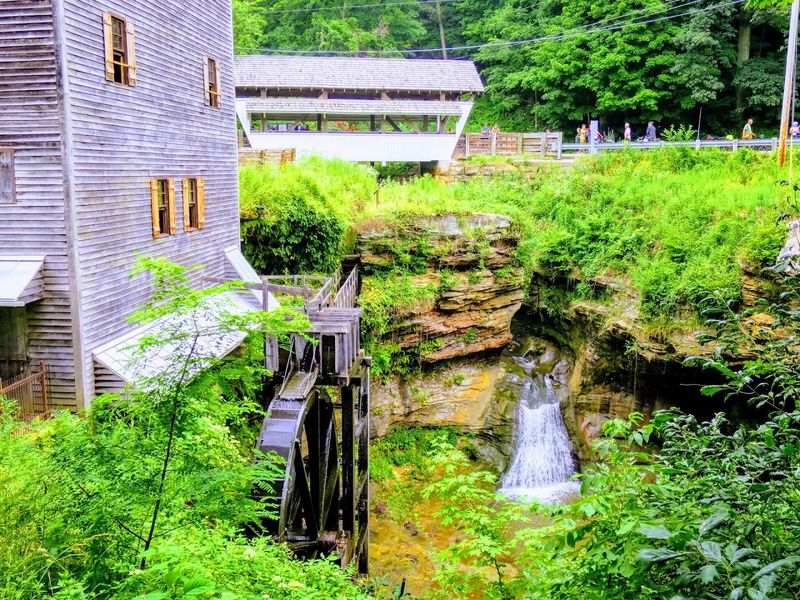
A weathered covered bridge stretches across the drop like it’s still guarding secrets from another century. Just steps away, the old grist mill clings to the cliffside, wheels once grinding grain as water thundered below.
Sunlight cuts through the trees, spilling over stone, wood, and rushing water in a scene that feels almost unreal.
It’s the kind of place where photographers go quiet, and visitors forget the time.
A Hidden Gem in Fairfield County, Ohio
Fairfield County holds countless surprises, but Rock Mill stands out as something truly exceptional. Located just a short drive from Lancaster’s downtown, this historic site feels worlds away from modern life.
The combination of natural beauty and preserved history creates an atmosphere that transports visitors back to simpler times.
What makes this location especially remarkable is how nature and human craftsmanship work together. The Hocking River carved a deep gorge through layers of sandstone over thousands of years.
Early settlers recognized this spot’s potential and built structures that have endured for generations.
Today, Rock Mill serves as more than just a pretty picture. It’s a living reminder of Ohio’s pioneering spirit and the ingenuity required to harness natural resources.
Families come here to explore, students arrive to learn, and photographers return season after season. The site manages to feel both intimate and grand, tucked away yet impressive enough to leave lasting memories for everyone who visits.
The Iconic Covered Bridge Built in 1901
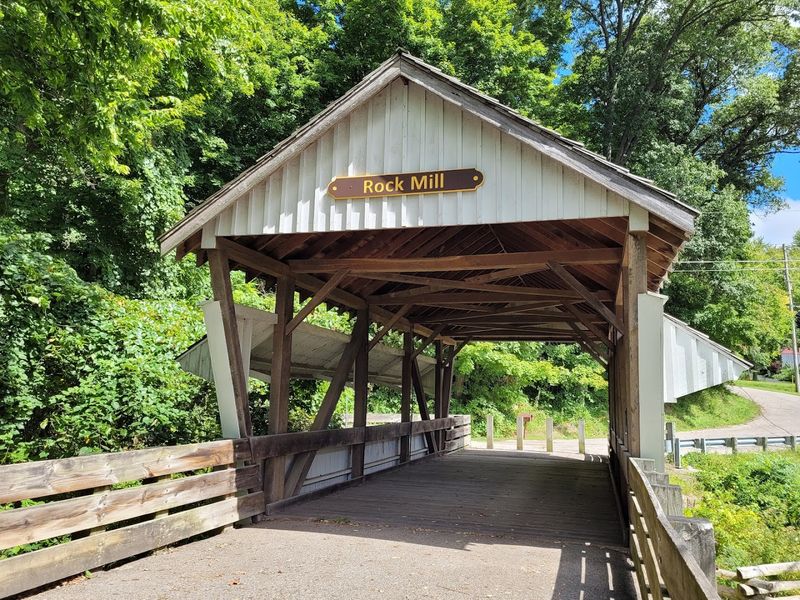
Built at the turn of the twentieth century, this covered bridge represents exceptional craftsmanship from an era when such structures were common across rural America. The year 1901 marked an important moment for local transportation.
Engineers chose the Queenpost truss design, a proven method for creating strong, durable spans without excessive materials or complex construction techniques.
Unlike many covered bridges that have disappeared or fallen into disrepair, this one survived thanks to community dedication. The wooden structure replaced even earlier crossings at this strategic location.
Local families relied on it daily for decades, making it central to community life and commerce.
Restoration efforts in recent years have preserved the bridge’s authentic character while ensuring safety. Original construction methods were honored during repairs, maintaining historical accuracy.
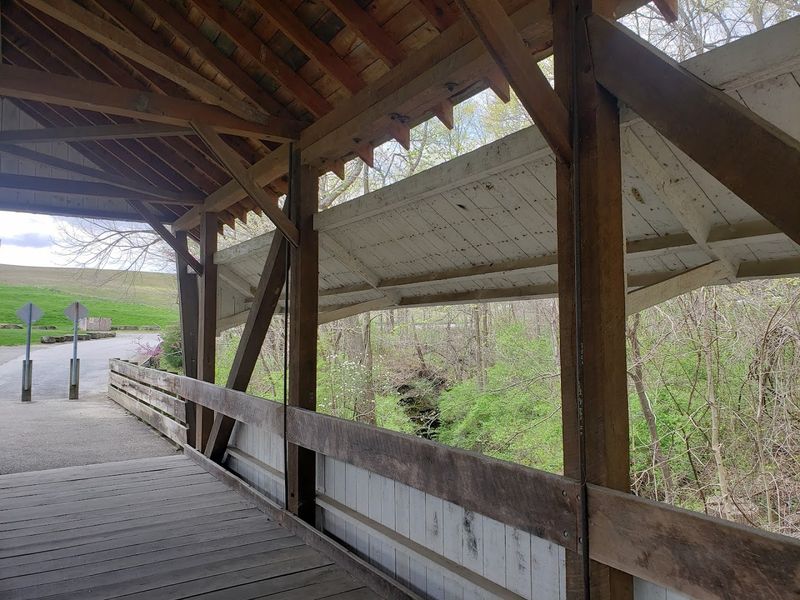
Walking through today, you’ll notice hand-hewn beams and traditional joinery that showcase nineteenth-century engineering skills. The weathered wood and time-worn details add character that new construction simply cannot replicate, making every photograph feel timeless.
A Bridge Suspended Above a Deep Gorge
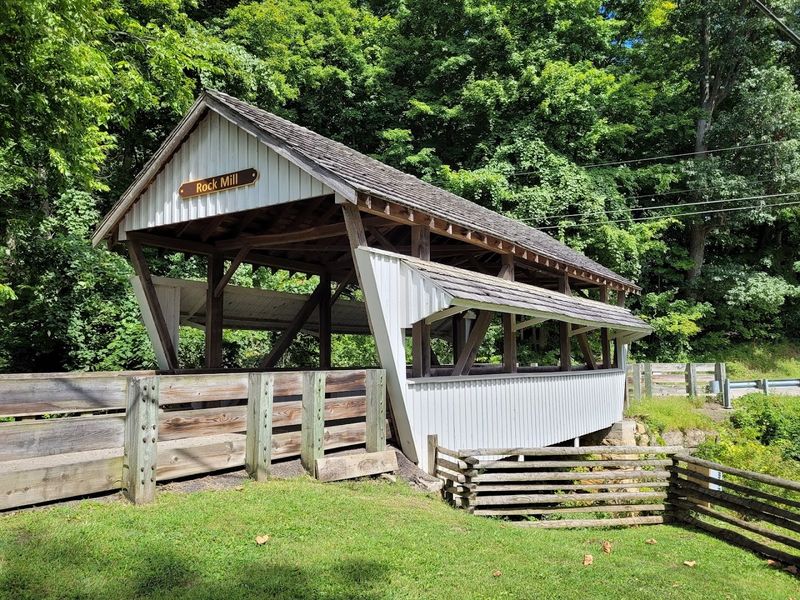
Most covered bridges cross gentle streams or shallow creek beds, but Rock Mill’s placement is dramatically different. This 37-foot span stretches directly over a steep, rocky gorge where the Hocking River rushes below.
Standing on the bridge feels thrilling because you’re genuinely suspended above something impressive rather than just crossing flat ground.
The gorge itself formed over countless centuries as water carved through layers of sedimentary rock. Sandstone cliffs rise on both sides, creating walls that dwarf visitors and emphasize the bridge’s engineering achievement.
From inside the covered structure, small gaps between boards offer glimpses of the churning water far below.
Photographers particularly love this vertical drama. The depth creates stunning compositions whether shooting from above, below, or at bridge level.
During different seasons and times of day, shadows play across the gorge walls while light filters through the bridge’s openings. This three-dimensional landscape offers endless creative possibilities that flat countryside settings simply cannot match.
One of Ohio’s Most Photogenic Spots
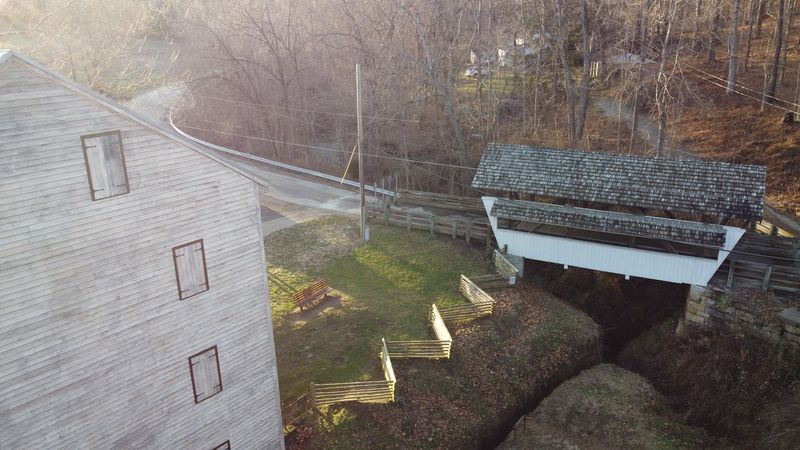
Photography enthusiasts from across the Midwest consider Rock Mill essential for their portfolios. The combination of wooden bridge trusses, ancient stone walls, flowing water, and forested cliffs creates layered compositions that professional and amateur photographers alike pursue relentlessly.
Every season brings different lighting conditions and natural decorations that transform the already beautiful scene.
What elevates this location above other scenic spots is variety. You can shoot wide landscapes capturing the entire gorge, tight details of weathered wood and stone, or creative angles showing water movement through long exposures.
The vertical elements of cliffs and mill walls contrast beautifully with horizontal bridge lines.
Social media has amplified Rock Mill’s reputation significantly in recent years. Instagram and photography forums regularly feature images from this location, inspiring more visitors to make the trip.
Sunrise and sunset provide particularly magical light, though midday shadows also create dramatic effects. Whether you’re wielding professional equipment or just a smartphone, you’ll capture images worth sharing.
The Historic Rock Mill Grist Mill (1824)
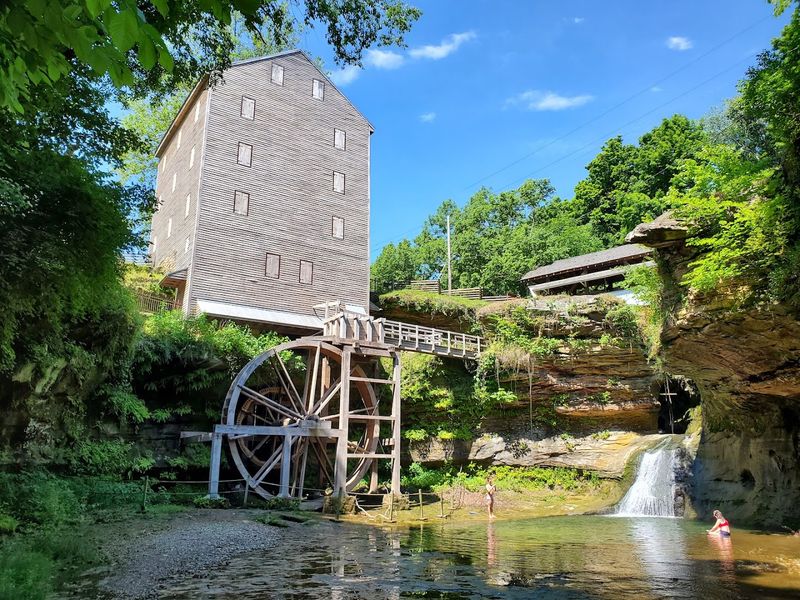
Seventy-seven years before the covered bridge appeared, pioneers constructed this substantial stone mill in 1824. The timing coincided with Ohio’s settlement boom when farming communities desperately needed places to process harvested grain.
Using locally quarried sandstone, builders created a structure designed to last generations while serving essential community functions.
The mill’s three-story design allowed gravity to assist the grinding process. Farmers brought wheat, corn, and other grains to be transformed into flour and meal using massive millstones powered by the rushing river.
These operations continued for many decades, making the mill a social hub where neighbors exchanged news and conducted business.
Careful restoration has returned the building to working condition, preserving techniques and tools from nearly two centuries ago. Interior displays showcase the original millstones, grain chutes, and wooden mechanisms that once operated daily.
Visitors can actually see how pioneers transformed raw grain into usable flour, connecting modern life to historical realities in tangible ways.
A Rare Mill-and-Bridge Pairing
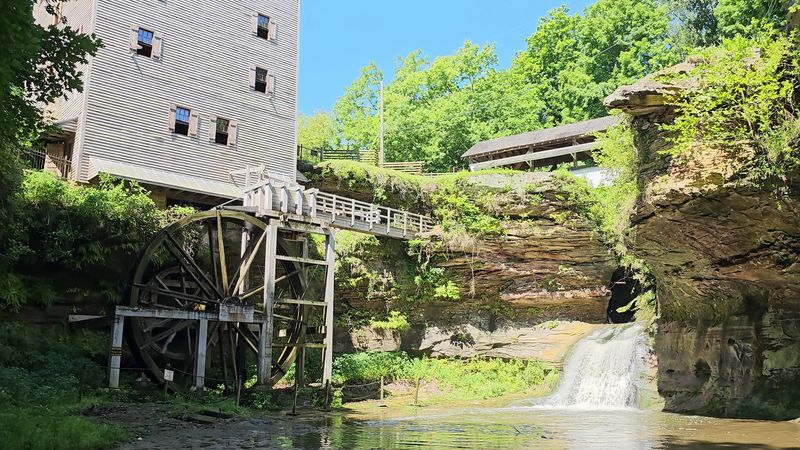
Across the entire United States, only a handful of locations preserve both a covered bridge and historic mill in such close proximity. Most sites lost one structure or the other to fire, flood, neglect, or development.
Rock Mill’s survival of both buildings makes it extraordinarily valuable for understanding nineteenth-century rural life and industry.
The pairing wasn’t accidental but rather reflected practical planning. Mills required reliable water power from rivers or streams.
Those same waterways needed crossings so farmers could deliver grain from surrounding areas. Having both structures at one location created an efficient hub for agricultural commerce and community gathering.
Modern visitors benefit from seeing how these two functions worked together. The bridge brought people and products to the mill, while the mill’s success justified maintaining good transportation infrastructure.
Walking between them today, you can almost imagine wagons rumbling across the bridge, farmers waiting their turn at the mill, and the constant activity that once defined this now-peaceful spot.
Restored Water Power and Milling Demonstrations
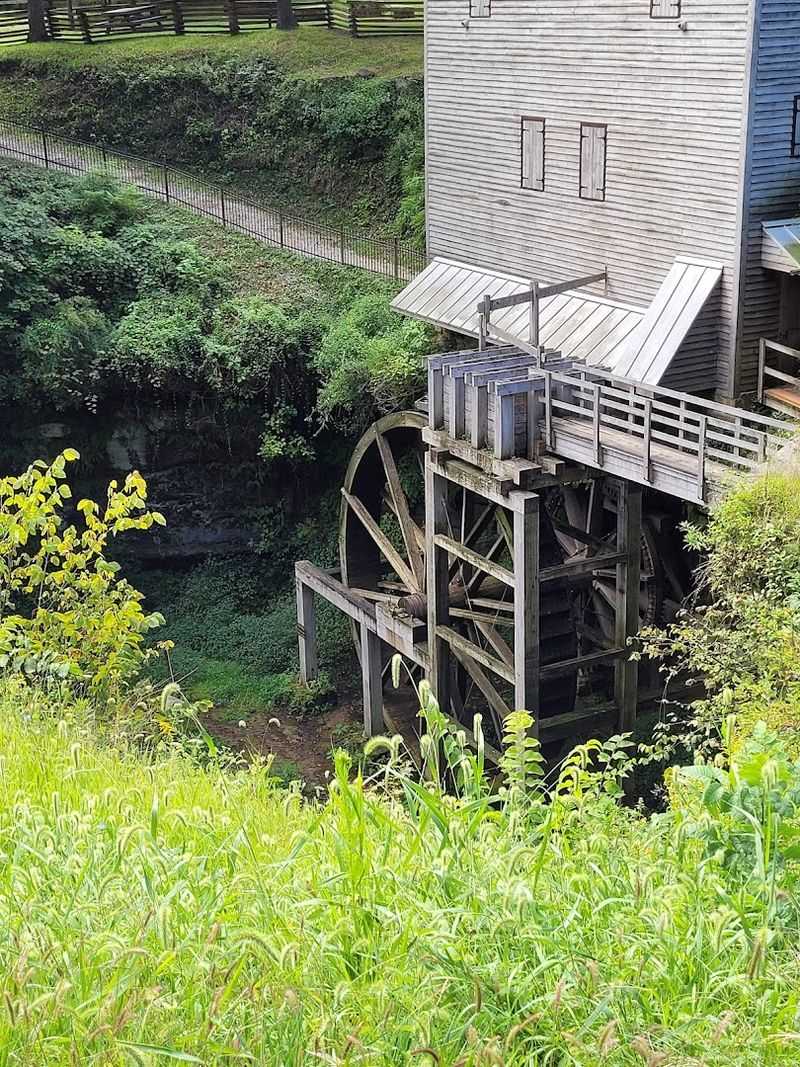
After extensive restoration work, the mill’s waterwheel turns once again, bringing history to life through actual movement and sound. Engineers studied historical records and remaining evidence to rebuild the wheel as authentically as possible.
Watching water cascade over the wooden paddles and hearing the creaking mechanisms provides sensory connections to the past that static displays cannot match.
Seasonal demonstrations show visitors exactly how grain became flour in pioneer times. Guides explain each step of the process while operating restored equipment.
Massive millstones grind against each other with impressive force, producing the distinctive rumbling sound that once filled this gorge daily. The smell of freshly ground grain adds another authentic element to the experience.
These living history presentations especially captivate younger visitors who struggle to imagine life before electricity and modern conveniences. Seeing actual mechanical work powered only by flowing water makes abstract history concepts suddenly concrete and understandable.
School groups frequently visit for educational programs that combine science, engineering, and social studies in memorable ways.
Scenic Walking Paths and Gorge Overlooks
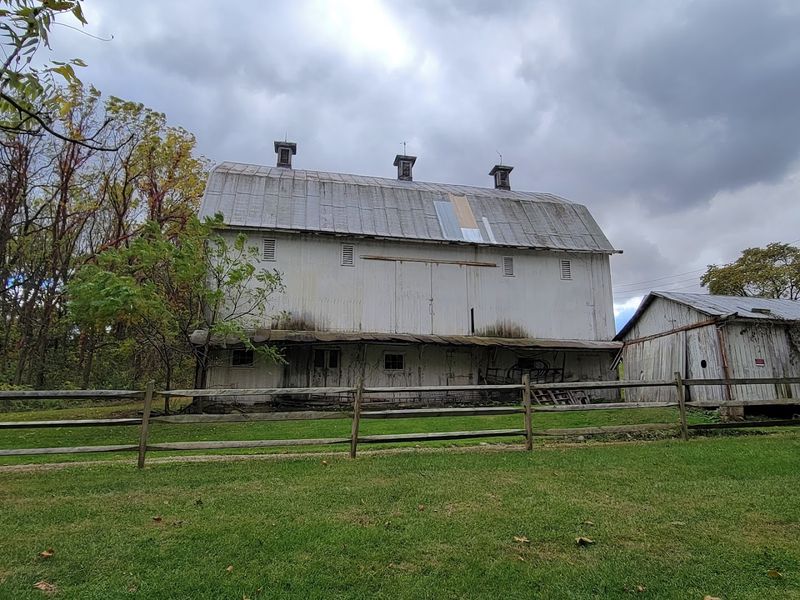
Well-maintained trails allow visitors to experience the site from multiple perspectives rather than just one static viewpoint. Short paths wind around the mill area, descend toward the river, and climb to overlooks above the gorge.
Each vantage point reveals different aspects of the landscape and structures, rewarding those who take time to explore thoroughly.
From above, you can truly appreciate the gorge’s depth and the bridge’s impressive engineering. Below, the power of the river becomes obvious as water rushes over rocks and around bends.
Standing at bridge level offers the classic framed view that attracts photographers, while positions beside the mill showcase the building’s substantial stonework.
The trails themselves wind through beautiful natural areas filled with native plants and mature trees. Interpretive signs provide information about both natural and human history along the routes.
Families find the paths accessible without being overly strenuous, making this an ideal destination for mixed-age groups. Benches at key locations invite visitors to pause, rest, and simply absorb the peaceful atmosphere.
Seasonal Beauty Throughout the Year
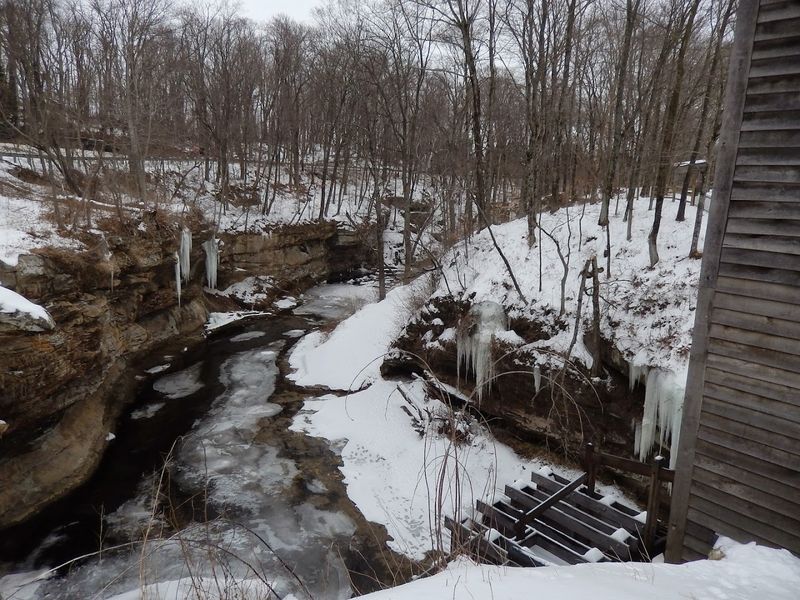
Spring transforms the gorge into a celebration of renewal with wildflowers carpeting the forest floor and fresh green leaves emerging on every branch. Dogwoods and redbuds add splashes of white and pink against the gray stone and weathered wood.
The river runs high with snowmelt, creating dramatic water features and increased sound that energizes the entire area.
Summer brings lush growth that frames the historic structures in deep greens. The thick canopy provides welcome shade during hot days, making exploration comfortable even in July.
Ferns flourish in moist areas near the river, while the full foliage creates intimate, enclosed feelings along the trails.
Autumn is arguably the most spectacular season here. Maples, oaks, and other hardwoods produce brilliant reds, oranges, and yellows that contrast beautifully with the covered bridge’s weathered brown and the mill’s gray stone.
Peak foliage typically occurs in mid-October, attracting crowds of leaf-peepers and photographers. Winter offers stark, dramatic beauty with snow highlighting the structures’ lines and ice formations decorating the gorge walls.
Visitor Info
Planning your visit is straightforward thanks to clear directions and accommodating hours. Rock Mill Covered Bridge is located at 1429 Rockmill Rd NW, Lancaster, OH 43130, easily accessible from major highways serving central Ohio.
GPS coordinates work reliably for navigation, though following directional signs from Lancaster’s downtown also leads you there without confusion.
The park welcomes visitors daily from sunrise to sunset year-round, allowing flexibility for different schedules and lighting preferences. Admission is free, making this an budget-friendly family outing or photography expedition.
Walking and photography access to the bridge area comes without restrictions, though staying on designated paths helps preserve the historic site and natural environment.
Seasonal amenities enhance comfort during visits. Restrooms and picnic areas operate when weather permits, typically from spring through fall.
Weekends often feature guided mill demonstrations when staff and volunteers are available to operate equipment and answer questions. Arriving early on weekend mornings helps avoid crowds if you prefer quiet contemplation or unobstructed photographs of these remarkable structures.