
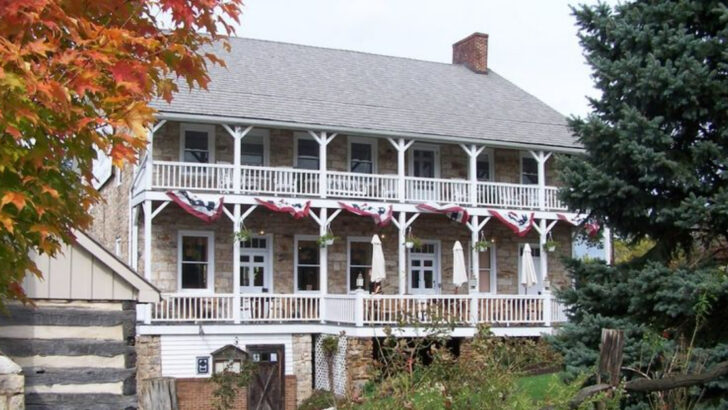
Tucked along a quiet stretch of Lincoln Highway in Bedford, Pennsylvania, sits a stone tavern that has been feeding travelers since 1762. Jean Bonnet Tavern is not a museum or a themed restaurant — it is a real, working inn and dining room that has outlasted wars, rebellions, and centuries of change.
Sitting down for breakfast here means pulling up a chair in one of the oldest continuously operating taverns in the entire state. If you have ever wanted to eat scrambled eggs somewhere genuinely historic, this is the place.
Morning Coffee in a Room That Remembers the 1760s
Before you even look at the menu, the room does something to you. The smell of fresh coffee and hot food mixes with something older — wood smoke, maybe, or just the particular stillness of thick stone walls that have absorbed more than two centuries of mornings.
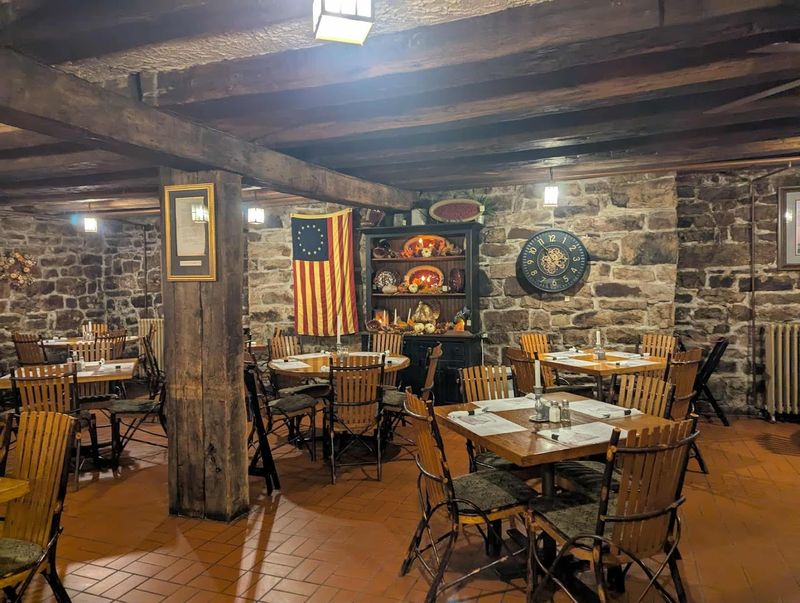
At Jean Bonnet Tavern, breakfast is served in the same low-ceilinged dining room where 18th-century travelers once warmed themselves after crossing the Allegheny Mountains.
The chestnut beams overhead are original. The fieldstone walls are original.
Even the pace feels different here — slower, quieter, more deliberate than the drive-through world outside.
This tavern has been in near-continuous operation since roughly 1762, making it one of the oldest functioning taverns in Pennsylvania. Picking up a ceramic mug in a room that old is a surprisingly grounding experience.
You are not just having breakfast — you are briefly part of a very long, unbroken line of people who did exactly the same thing.
Who Was Jean Bonnet, and Why Does a Tavern Carry His Name?
Most taverns in colonial Pennsylvania were run by German or Scots-Irish settlers — the two groups who dominated the region’s frontier communities. Jean Bonnet was neither.
He was a French fur trader, which made him a genuinely unusual figure in Bedford County during the 1700s.
Bonnet established himself as an innkeeper along what would become one of the most important roads in early America, and his name stuck to the building long after he was gone. Ownership has changed hands many times across two and a half centuries, but nobody ever renamed the place.
That kind of staying power says something.
Frontier taverns in colonial Pennsylvania were not just places to eat and sleep. They were post offices, courtrooms, meeting halls, and news centers all at once.
Bonnet’s establishment served that same community function from the start, which is part of why the building and the name both survived when so many others did not.
What a 260-Year-Old Stone Tavern Actually Looks Like Up Close
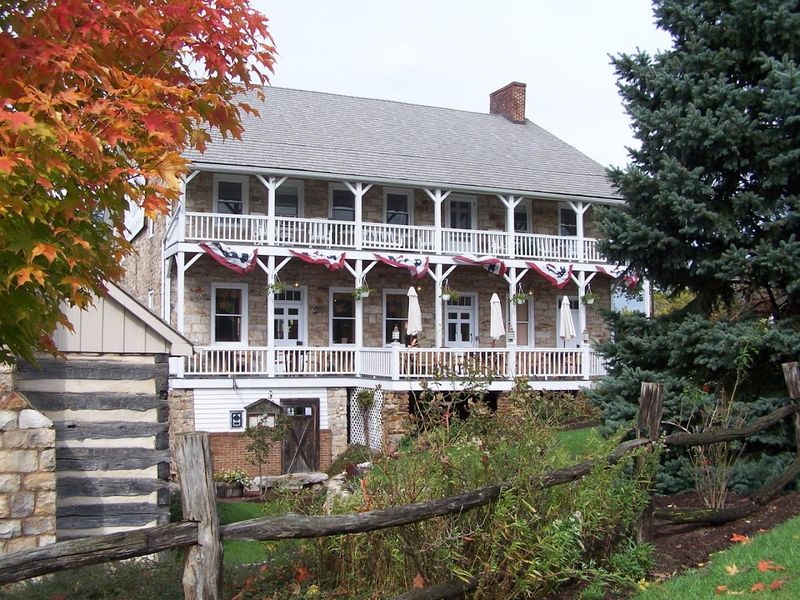
Walking up to Jean Bonnet Tavern for the first time, the building’s age is immediately obvious — and that is a compliment. The fieldstone walls are not decorative.
They were built up to two feet thick in places specifically to hold heat through brutal Allegheny Mountain winters, when the difference between a warm tavern and a cold one was a matter of survival for travelers.
The steep roof line and heavy timber framing inside were equally practical choices. Colonial builders used what was available — local stone, hand-cut timber — and they built things to last because rebuilding was expensive and difficult.
What has been preserved here is remarkable. The original structural bones of the building remain intact.
Some updates have been made over the years to keep the place functional as a modern inn and restaurant, but the core of what you see and feel inside is genuinely 18th century. It is not a reconstruction.
It is simply the original building, still standing.
The Meal That Draws People In: What’s on the Plate
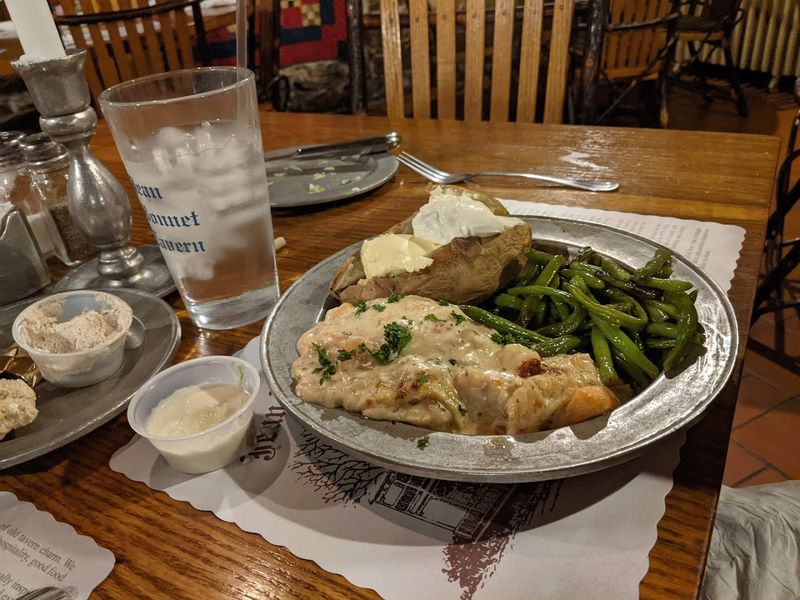
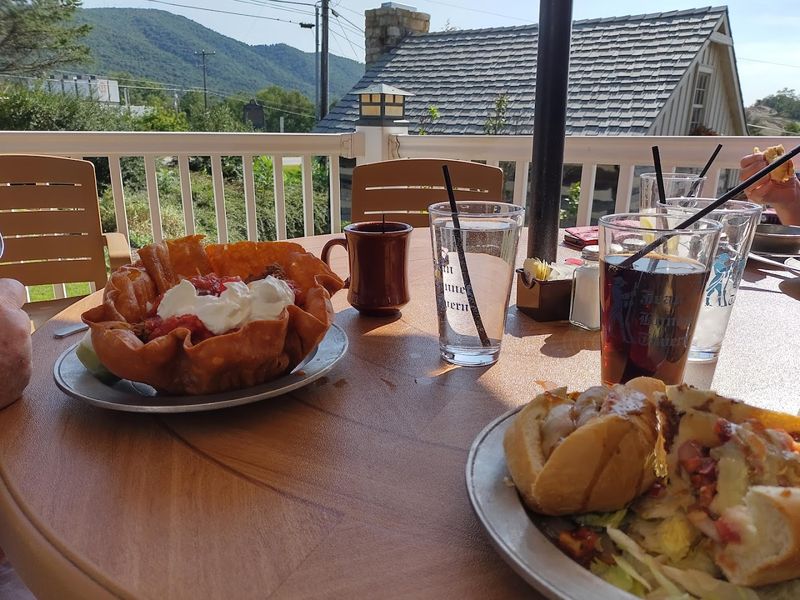
Breakfast at Jean Bonnet Tavern is classic American fare done with care — eggs cooked to order, thick-cut bacon, flavorful sausage, fluffy pancakes, and French toast that earns its reputation. The home fries come out crispy on the outside and tender inside, seasoned and golden in a way that makes you wonder why home fries anywhere else fall short.
The coffee is hot, fresh, and strong. Toast arrives with real butter.
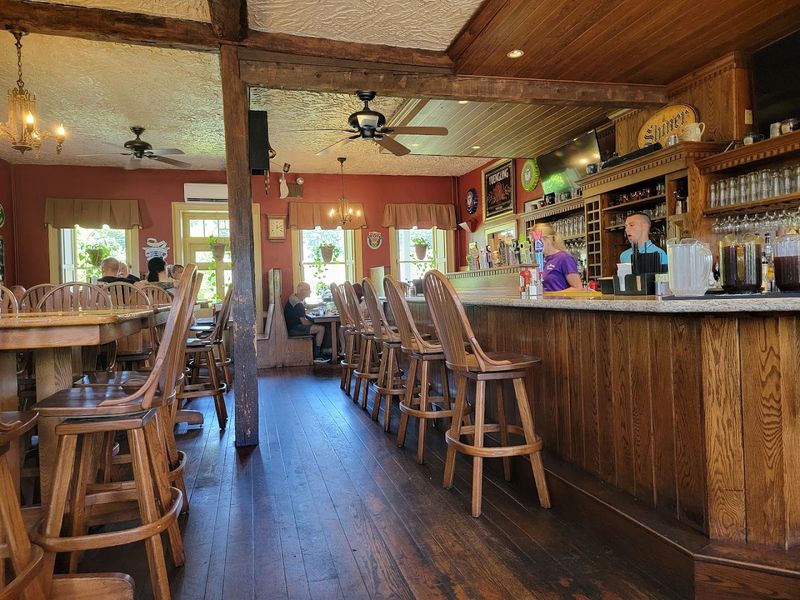
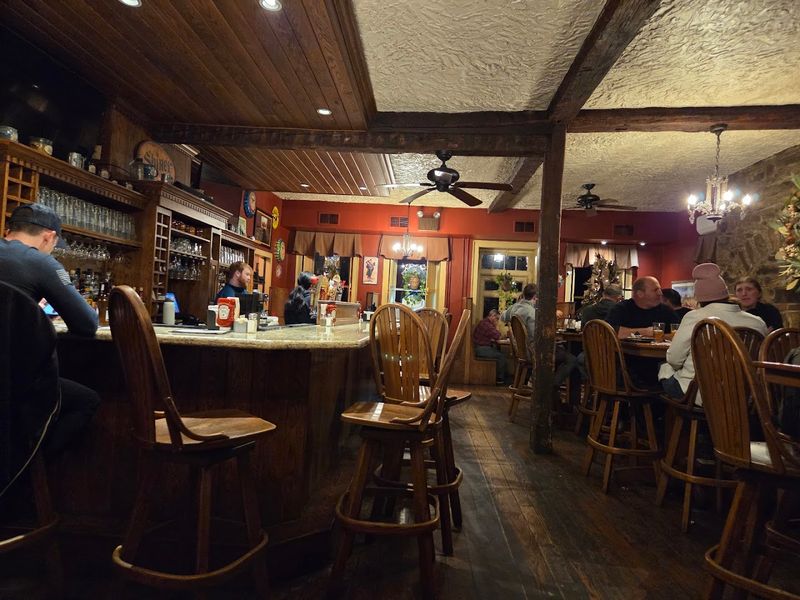
Guests eat in hickory slat-back chairs at tables covered with hand-made coverlets, surrounded by stone walls and chestnut beams. The kitchen sounds — the sizzle, the clatter — carry through the low-ceilinged room in a way that feels lived-in rather than theatrical.
What makes this meal different from breakfast at a chain restaurant is not just the food. A modern country inn can serve good pancakes.
What it cannot replicate is the specific, accumulated weight of a room where people have been eating breakfast for over 260 years. That is not something you can build from scratch.
The Forbes Road
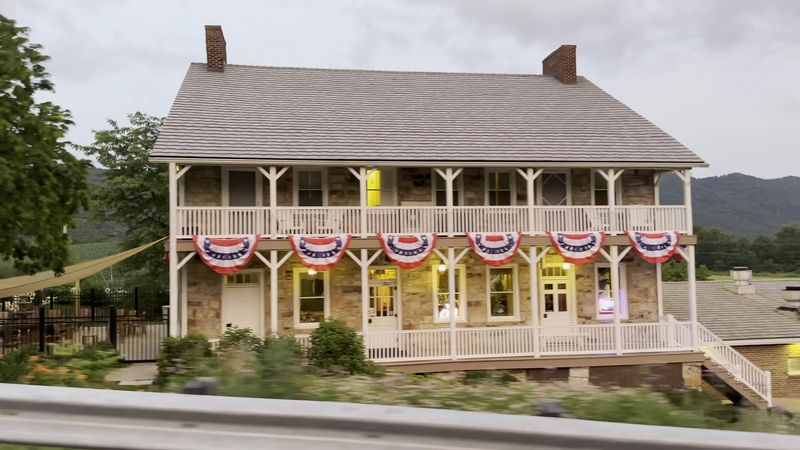
Jean Bonnet Tavern did not end up in a random location. It sits along the route of Forbes Road, a military road cut through the Pennsylvania wilderness in 1758 during the French and Indian War.
General John Forbes ordered it built to move British troops westward toward Fort Duquesne, and the road became one of the first routes to cross the Allegheny Mountains.
Once the war ended, Forbes Road became a civilian artery. Settlers, traders, soldiers, and merchants all moved along it, and a tavern positioned at this spot would have seen constant, heavy traffic for generations.
Business was not hard to come by when you were sitting on the only road west.
Today, US Route 30 Lincoln Highway follows nearly the same path as the original Forbes Road. When you drive out to Jean Bonnet Tavern, you are tracing a route that has connected eastern and western Pennsylvania for more than 265 years.
That context makes the drive feel slightly different.
A Gathering Place During One of America’s First Political Crises
Bedford County sat at the center of the Whiskey Rebellion of 1794 one of the new American government’s first serious tests of federal authority. Western Pennsylvania farmers, furious over a federal tax on distilled spirits, organized resistance that alarmed President Washington enough to call out the militia.
Taverns like Jean Bonnet’s were where that kind of organizing happened. News arrived at taverns.
Grievances got aired over drinks. Decisions got made around fires.
A building like this one, already well-established and heavily trafficked, would have been a natural gathering point as tensions built across the region.
Knowing that history changes how you look at the fireplace in the corner. It is easy to picture men in rough linen shirts leaning over a table arguing about taxes and government overreach — the same arguments, in different language, that Americans are still having.
The tavern absorbed all of that and kept going. That is its own kind of statement.
You Can Actually Sleep Here: The Inn Rooms Above the Tavern
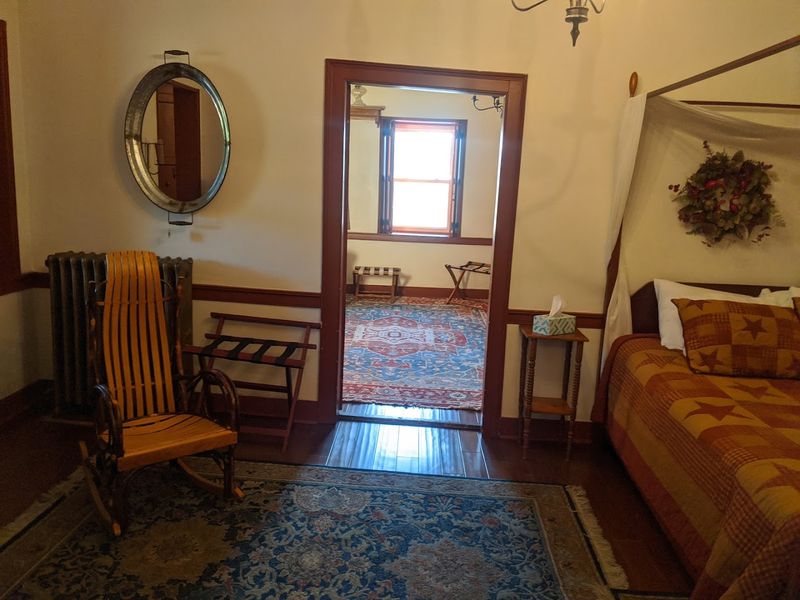
Four guest rooms and suites are available at Jean Bonnet Tavern, each with a private bath and decorated with cozy quilts that fit the building’s character without feeling like a costume. One room has a gas fireplace, which is a genuinely good feature in a stone building during a Pennsylvania winter.
Modern amenities are present — complimentary WiFi, air conditioning, free breakfast included with your stay. What is not present is the polished anonymity of a hotel chain.
The hallways are narrow. The floors creak.
The stone walls settle and shift in ways that remind you the building has been doing this for a very long time.
Some guests find that atmospheric. A recent reviewer mentioned hoping to spot a ghost and being mildly disappointed when nothing happened.
Whether or not you believe in that sort of thing, sleeping above a colonial tavern that has been continuously occupied since 1762 is an experience that a Hampton Inn simply cannot offer. Expectations adjusted, it is genuinely charming.
The Town That Frames the Visit: Bedford’s Own Place in History
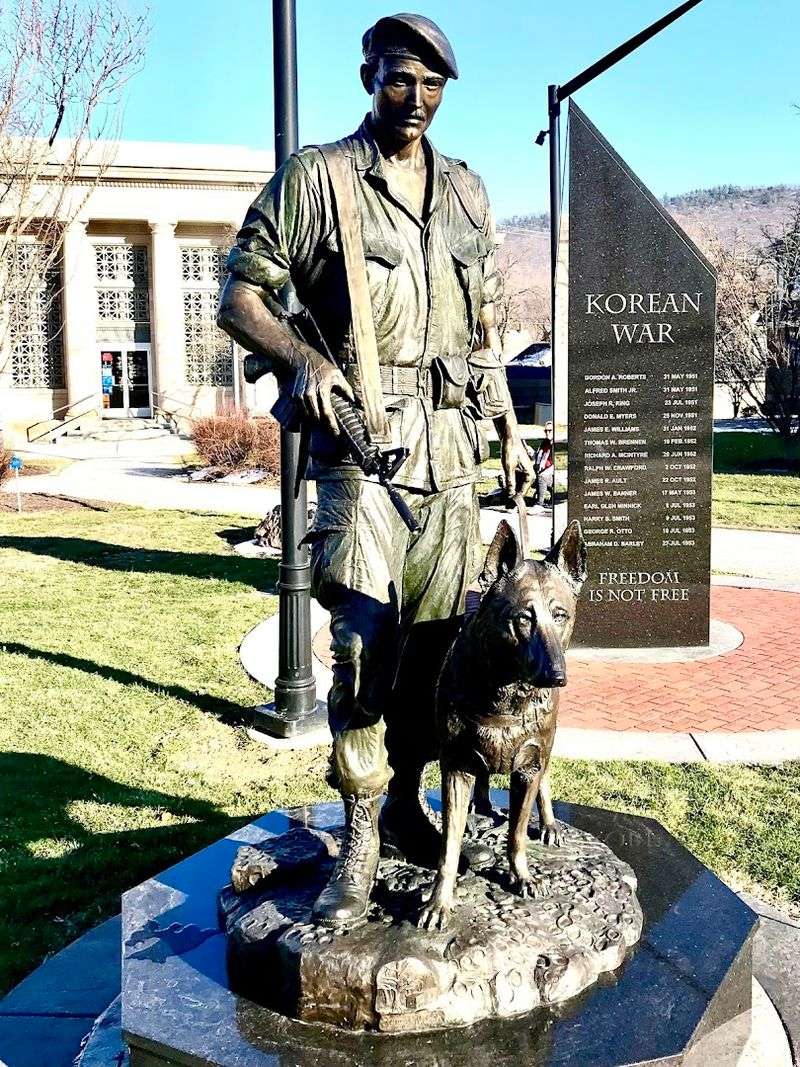
Bedford is a small town with a documented historical identity that goes well beyond the tavern on its outskirts. It began as a frontier fort — Fort Bedford — established during the French and Indian War.
It sat along early westward migration routes and grew into a significant stop for travelers moving through the Pennsylvania mountains.
George Washington passed through Bedford in 1794 while personally leading federal troops to suppress the Whiskey Rebellion. That makes Bedford one of the very few places in America where a sitting president commanded forces in the field — a fact that the town’s historical markers do not let you forget.
Spending time in Bedford before or after breakfast at the tavern adds context that makes the whole visit feel more complete. The town is small enough to walk, historic enough to hold your attention, and quiet enough that you can actually think about what you are looking at.
That combination is rarer than it sounds.
What Else Is Worth Your Time in Bedford County
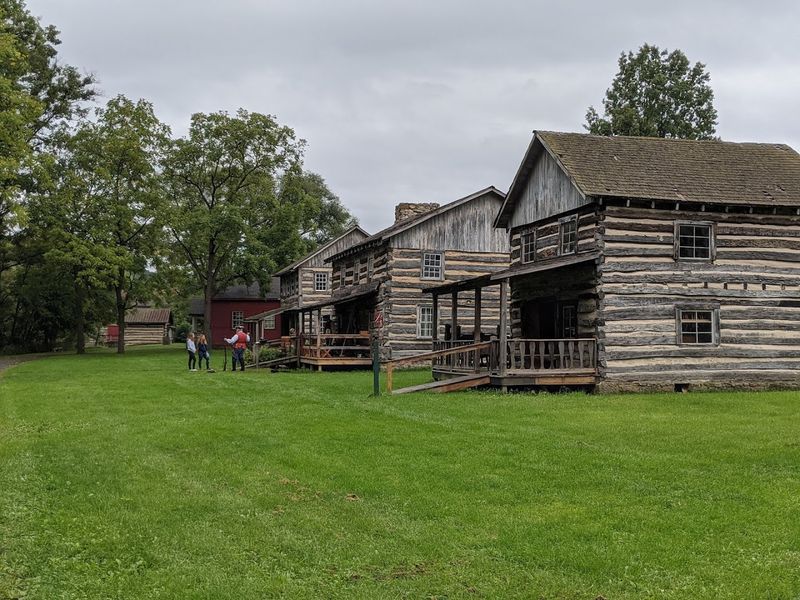
Bedford County holds more than one reason to make the drive. Old Bedford Village is a living history museum just a few miles from the tavern, with costumed interpreters and reconstructed 18th-century buildings that give the region’s history a tangible, walkable form.
It pairs naturally with a morning at Jean Bonnet Tavern.
The county is also home to 14 covered bridges still standing — one of the higher counts of any county in Pennsylvania. A self-guided covered bridge tour can fill an afternoon and takes you through some genuinely beautiful rural stretches of the state.
Raystown Lake, about 30 minutes from Bedford, offers boating, hiking, and camping in a setting that feels surprisingly remote given how close it is to the turnpike. Coral Caverns, just seven minutes from the tavern, adds a geological detour that kids tend to enjoy more than they expect to.
There is enough here to justify a full weekend rather than a quick stop.
Before You Drive Out: Hours, Distance, and What to Expect
Jean Bonnet Tavern sits at 6048 Lincoln Highway in Bedford, PA 15522, right off US Route 30 — the modern successor to the old Forbes Road. The Pennsylvania Turnpike’s Bedford interchange is close by, which makes this an unusually convenient historic stop for anyone driving between Pittsburgh and Philadelphia.
Pittsburgh is roughly 90 minutes west; Philadelphia is about three hours east.
The tavern’s phone number is 814-623-2250, and the website is jeanbonnettavern.com. Calling ahead or checking the site before visiting is a smart move, since hours can vary seasonally and the dining room fills up faster than you might expect on weekends and during local events like the Fall Foliage Festival.
Breakfast is included for inn guests. Day visitors can come for any meal.
Parking is free and the lot is spacious. One practical note from multiple reviewers: the building has stairs from the parking area, so factor that in if mobility is a consideration for anyone in your group.
Why Breakfast Tastes Different When the Walls Are 260 Years Old
There is a version of this that tips into sentimentality, and it is worth avoiding. Jean Bonnet Tavern is not magical.
The eggs are eggs. The coffee is coffee.
Nobody is going to float out of the parking lot transformed by the experience of eating breakfast in an old building.
But something real does happen when you sit in a room that has been doing the same thing — feeding tired travelers — across every chapter of American history from the frontier era to the present. The building is not a replica.
It is not a reconstruction. It is the original structure, still doing exactly what it was built to do, which is a genuinely uncommon thing.
That continuity gives ordinary moments a different quality. The pause between bites feels longer.
The room feels more considered. Breakfast at Jean Bonnet Tavern is a reminder that some places accumulate meaning simply by persisting — and that occasionally, showing up is the whole point.