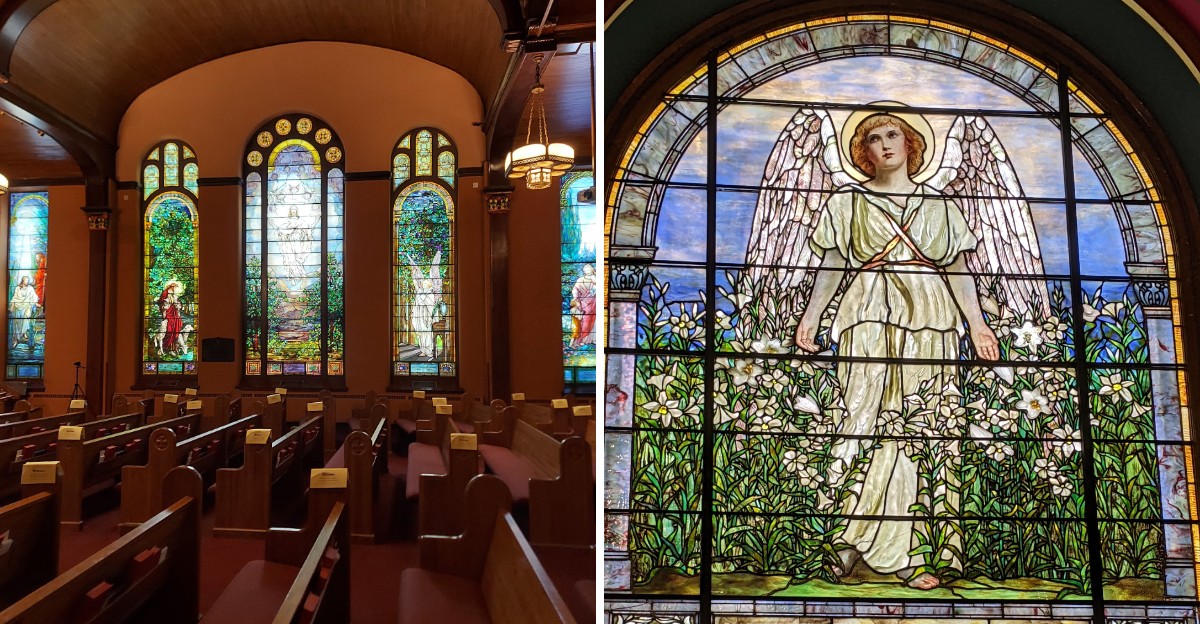
More than 100 Tiffany windows turn an Iowa church into a glowing work of art.
On Main Street in Dubuque, St. Luke’s United Methodist Church holds one of the largest collections of Tiffany windows in the country.
Sunlight pours through richly colored glass, bringing angels, biblical scenes, flowers, and other details to life across the historic sanctuary.
The church dates to the 1890s, but its windows steal the show.
Some were created by Tiffany Studios during the same era when the company was changing what stained glass could look like, giving visitors a rare chance to see so many pieces together in one place.
Step inside and look closely, because every window has its own story.
From a Good Shepherd shown at the 1893 Chicago World’s Fair to dramatic memorial windows, St. Luke’s offers a dazzling surprise in the heart of Dubuque.
Step Inside A Richardsonian Romanesque Landmark
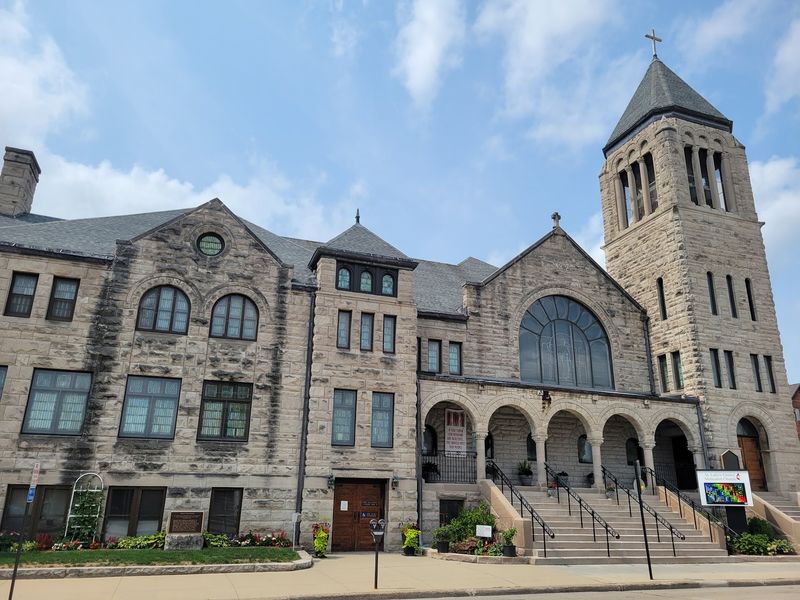
Picture a castle-like building made of heavy, pale stone, with a tall tower watching over the street. That is your first view of St. Luke’s.
Built in 1896 and 1897, the church was designed by architect George W. Kramer, who planned many churches across the country.
The style is called Richardsonian Romanesque. It is named after Henry Hobson Richardson, an architect famous for bold buildings with round arches, thick walls, and rough stone.
St. Luke’s shows off all of these features using Bedford limestone, a strong stone quarried in Indiana.
Before you hurry inside, take a minute at the entrance loggia. A loggia is a covered porch with open arches, and this one gives the church a grand, welcoming front.
Notice how the arches frame the doorway like a picture.
Here is a helpful tip for photographers. Stand across the street to fit the whole tower in your shot.
Morning light often makes the limestone look warm and golden, which brings out the texture of the stone.
Discover The Tiffany Collection That Puts St. Luke’s On The Map
More than 100 Tiffany windows. Let that number sink in for a second.
Most people feel lucky to see just one piece of Tiffany glass in a museum, yet St. Luke’s has a whole sanctuary full of them.
The church is recognized as having the fifth-largest Tiffany window collection in the United States. That puts a small Iowa city in the same conversation as major museums and famous East Coast churches.
It is a surprising point of pride for Dubuque.
Louis Comfort Tiffany was one of America’s most celebrated glass artists. His studios in New York created lamps, jewelry, and windows that are still admired around the world today.
Real Tiffany windows are rare and valuable, so seeing so many together is a special treat.
When you walk in, try not to rush. Sit in a pew and let your eyes move slowly from window to window.
You will notice that each one has its own colors, mood, and story. It feels a bit like walking through a gallery made of light.
See The Good Shepherd Window
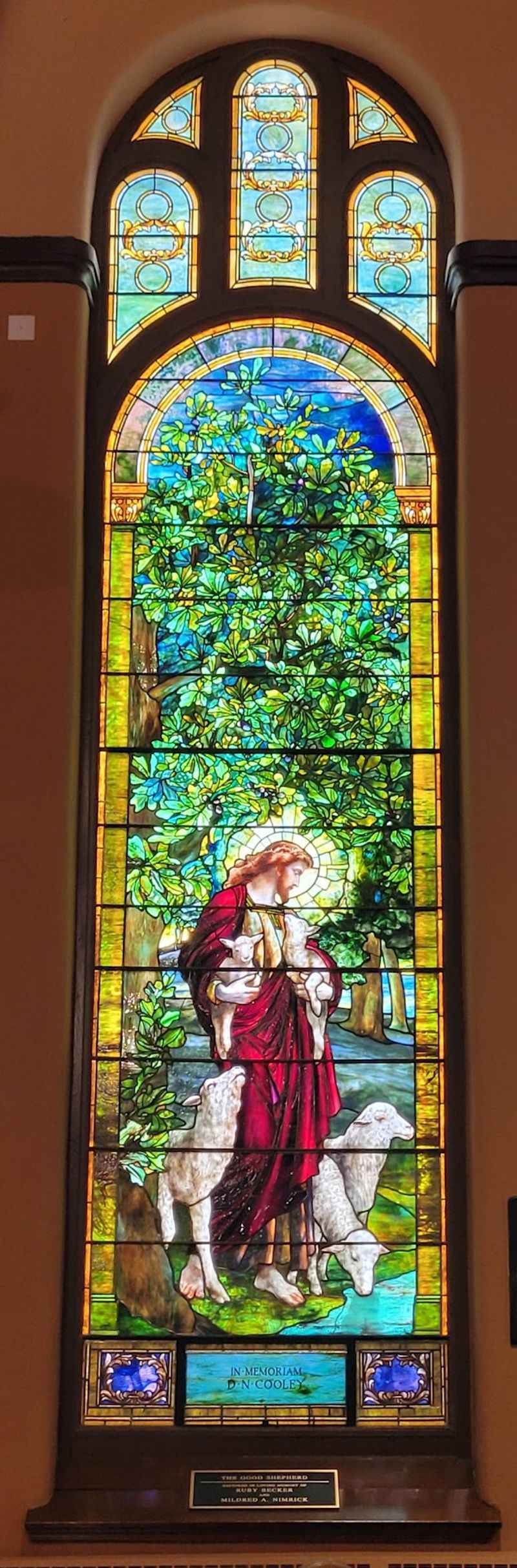
Long before it arrived in Dubuque, this window had already been seen by crowds of people in Chicago. Tiffany proudly displayed The Good Shepherd at the 1893 World’s Columbian Exposition, a giant world’s fair that drew millions of visitors.
That fair introduced amazing inventions and artwork to the public. Showing a window there was like having your art featured in a huge international showcase.
After the fair ended, the window found its permanent home at St. Luke’s.
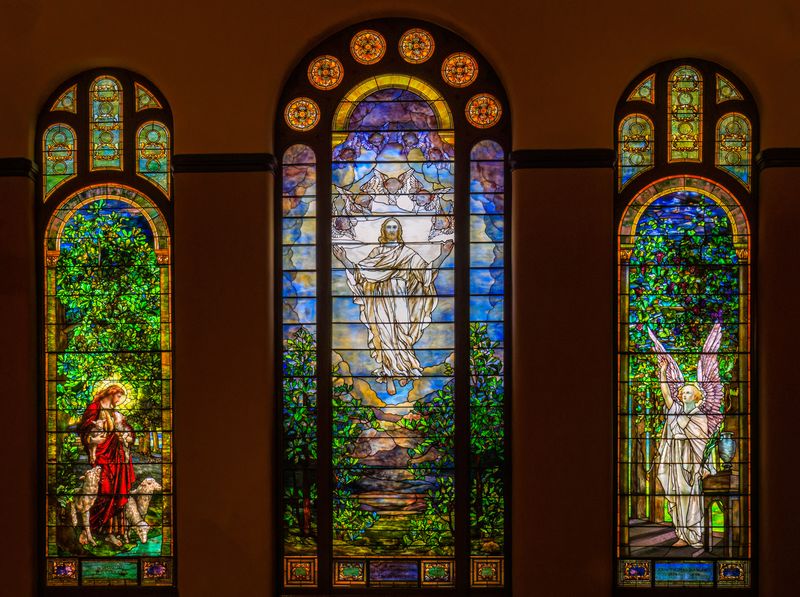
The Good Shepherd is one of the church’s original five major Tiffany windows. It shows a familiar Bible image of Jesus caring for his sheep, a symbol of kindness and protection.
The scene feels calm and peaceful, with soft landscape colors.
Did you know? Many objects from the 1893 fair were lost or destroyed over time.
Having a piece that survived and still glows today makes this window a true historical treasure. When you stand in front of it, you are looking at something that once dazzled fairgoers more than 130 years ago.
Look Closely At The Angel Among The Lilies
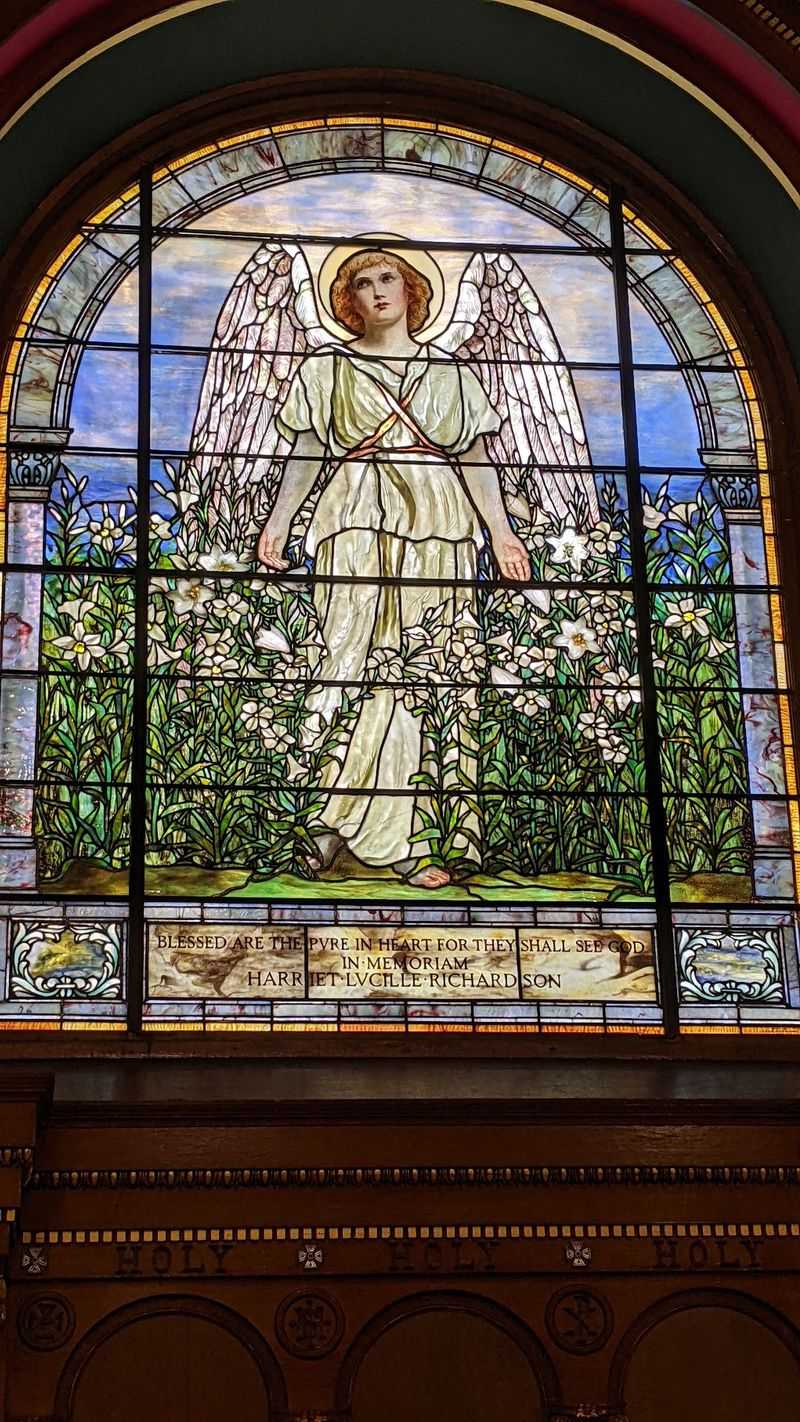
Some stories stay with you, and this one is a favorite among visitors. The Angel Among the Lilies was made as a memorial for Harriet Lucille Richardson, a young girl remembered by her loving family.
According to the church’s story, when the window was finished, her family was amazed. They saw a striking resemblance between the angel’s face and their daughter.
What makes it so surprising is that they reportedly never sent Tiffany any photographs or descriptions of her.
Was it a coincidence, or something more? Nobody can say for sure, and that mystery is part of the charm.
Either way, the window has become a touching reminder of how art can carry deep feelings and memories.
When you visit, step close and study the angel’s face. Then look at the lilies around her, which often stand for purity and new life.
Many people find this window quietly moving. Take your time here, because it is one of those pieces that rewards a slow, thoughtful look.
Admire The Angel Of Victory And Ascension
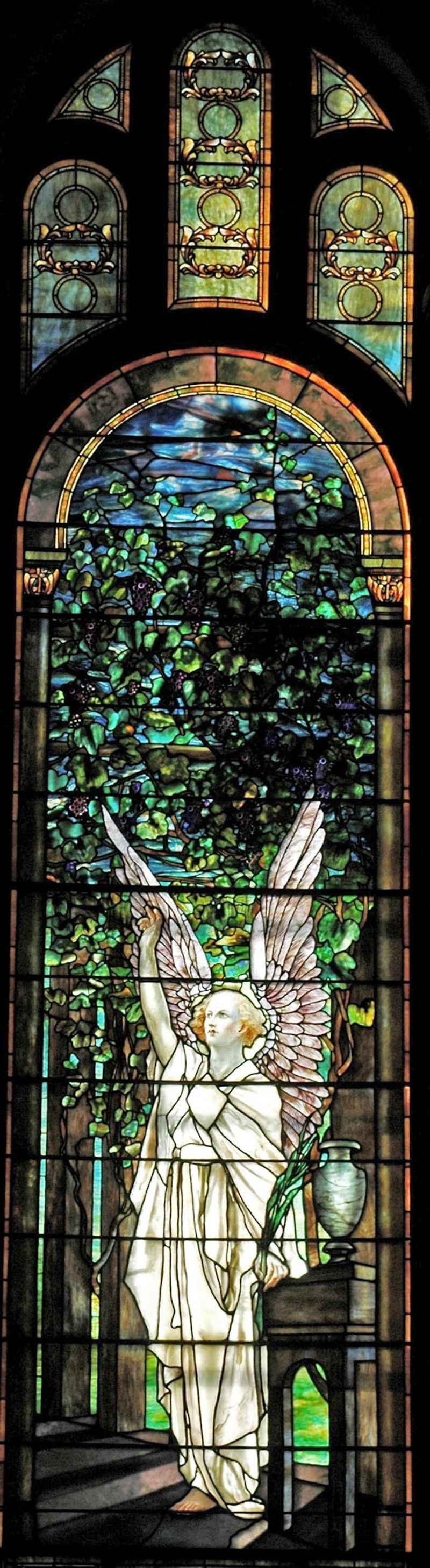
Two windows, two very different moods. Angel of Victory and Ascension are both part of the original 1897 memorial windows, installed when the church first opened its doors.
Angel of Victory feels bold and hopeful. A winged figure stands strong, a symbol of triumph and courage.
The colors seem to shine with energy, as if celebrating something wonderful.
Ascension tells a different part of the Bible story, showing Christ rising into the heavens. This scene often feels lighter and more heavenly, with glowing skies and soft movement upward.
Your eyes naturally travel to the top of the window.
Together, these pieces show what Tiffany did so well. He mixed storytelling with rich color, texture, and layers of glass, so each window feels alive rather than flat.
Look for folds in the robes and feathers in the wings. Those details are made from the glass itself, not just painted on.
Comparing the two side by side is a great way to train your eye and notice how artists create feeling with color.
Spot The Later Tiffany Windows From 1916 And 1931
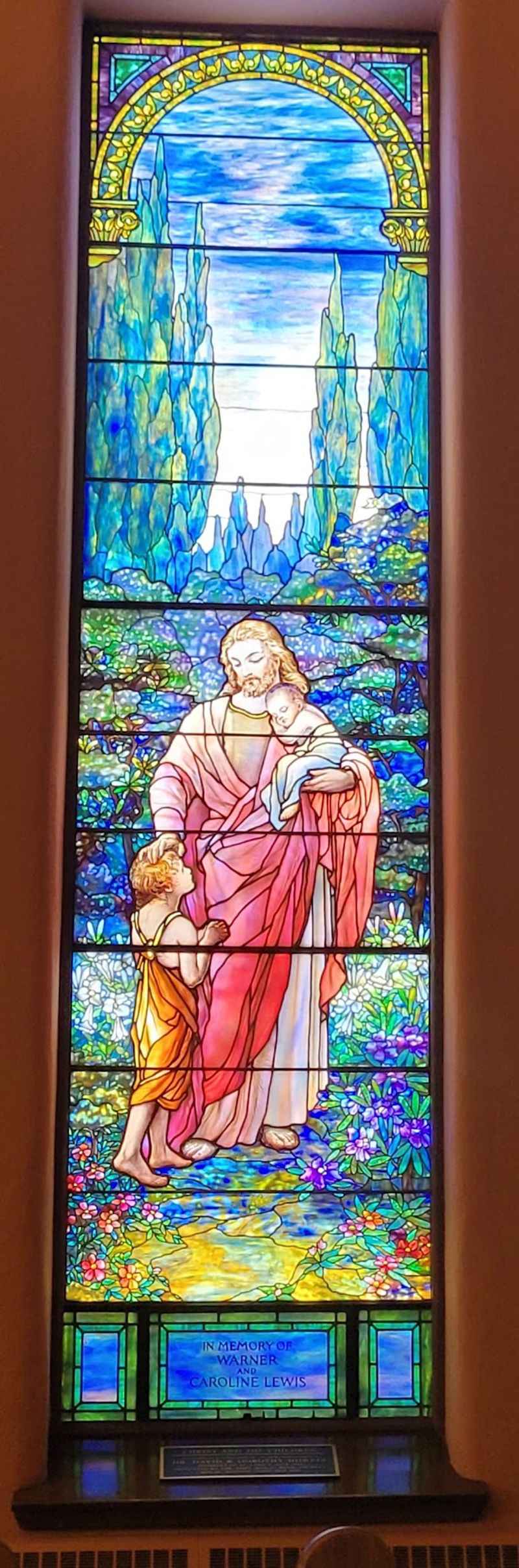
The story did not end in 1897. Like a family photo album that keeps growing, the church’s window collection expanded over the years as new memorial windows were added.
In 1916, several more Tiffany windows joined the sanctuary. Another followed in 1931, decades after the church was built.
These later pieces include Baptism of Christ, Christ and the Children, The Parable of the Good Samaritan, and David Set Singers Before the Lord.
Each one tells a familiar story. The Good Samaritan, for example, is about helping a stranger in need.
Christ and the Children shows warmth and welcome toward young people. David Set Singers Before the Lord celebrates music and worship, a nice link to a church filled with song.
Here is a neat way to explore. Try to guess which windows are older and which are newer before reading any signs.
Styles and color choices shifted a bit over time. Spotting those small changes is like being an art detective, and it helps you see how the collection developed across more than thirty years.
See What Makes Tiffany Glass Different
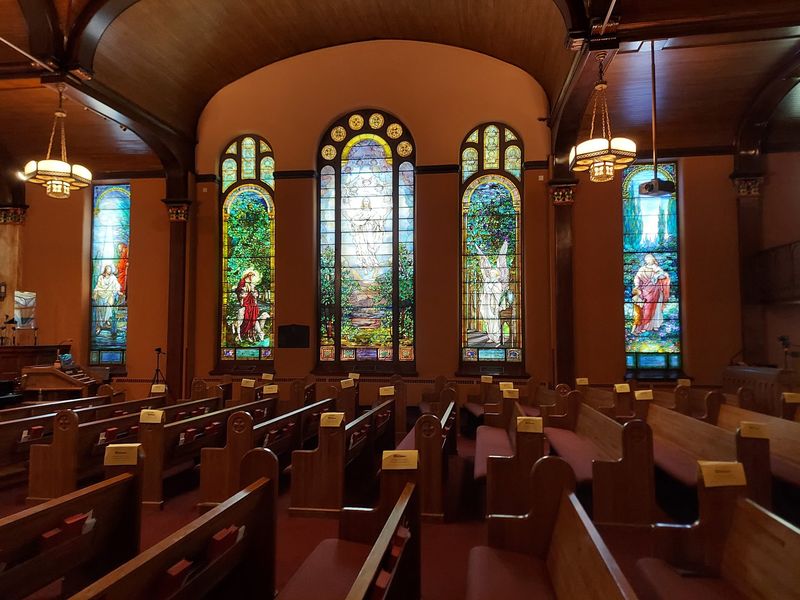
Ordinary stained glass often relies on paint to add faces, shadows, and details. Louis Comfort Tiffany wanted something richer, so he experimented with the glass itself.
His famous invention was called Favrile glass. Colors were mixed right into the molten glass, creating swirls, streaks, and shimmering effects.
Some pieces look milky, while others ripple, fold, or sparkle. He also stacked layers of glass to build deeper shades.
The result? Windows that look almost like paintings.
Skies seem to fade from light to dark, and fabric looks like it could really move. Tiffany used differences in texture, thickness, and density to control how light passes through.
Try this when you visit. Pick one small section of a window and stare at it for a full minute.
You might notice bubbles, wavy lines, or spots where the color shifts. Then step back and see how those tiny details blend into a full scene.
Fun fact: the word Favrile comes from an old word meaning handmade, which shows how proud Tiffany was of his craft.
Look Beyond The Windows To The Historic Interior
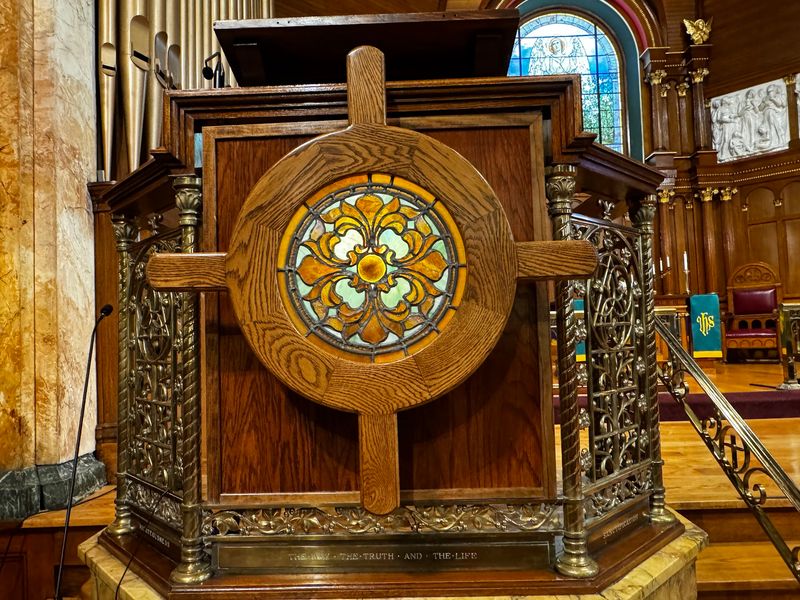
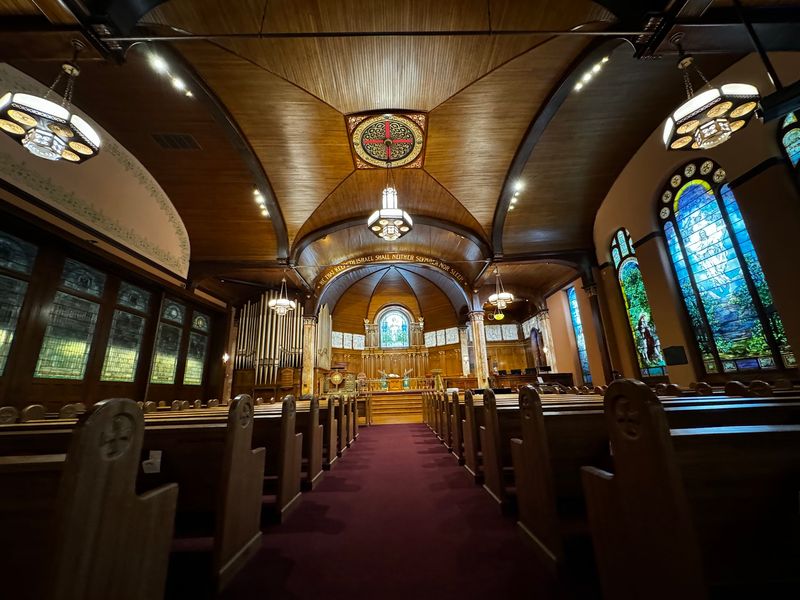
It is easy to spend your whole visit staring at the glass, but the rest of the room deserves attention too. St. Luke’s has kept many historic features that make the space feel like a trip back in time.
The church retains interior elements connected to Tiffany, adding to the artistic feel of the sanctuary. Look around at the lighting, decorative details, and woodwork.
They all work together to create a warm, unified space.
Then there is the music. The church’s original late-19th-century organ adds another layer of history.
Pipe organs from that era were built by hand, with hundreds of pipes producing sounds that can fill an entire building. Hearing one in person is something many people never forget.
If you can, ask whether the organ will be played during a service, concert, or tour. Combining the sound of a historic organ with sunlight glowing through Tiffany windows is a truly memorable experience.
Even in silence, though, the organ’s pipes and craftsmanship are worth admiring.
Plan Your Visit To St. Luke’s
Ready to see it for yourself? You will find St. Luke’s United Methodist Church at 1199 Main Street, Dubuque, Iowa 52001, right in the heart of downtown.
The church welcomes visitors, but remember that it is still an active place of worship. Open-viewing times and guided tours can change, so the smartest move is to call or check the church’s website before you go.
Ask about tour availability, especially if you are bringing a group.
Planning ahead also helps with other details. Ask about accessibility if anyone in your group uses a wheelchair or has trouble with stairs, since the balcony area may be harder to reach.
Street parking and nearby lots are common downtown, but checking ahead saves time.
Keep in mind that weddings, funerals, and Sunday services may limit visiting hours. Be respectful, speak quietly, and ask before taking photos.
For the best views, aim for a bright, sunny day, when the windows truly come alive with color.