This river looks like someone poured melted sapphire through the Oregon wilderness.
The McKenzie River cuts through the Cascades with water so blue and so clear it barely seems possible. Fed by icy springs and filtered through ancient lava rock, it glows with a color that stops people in their tracks and makes cameras work overtime.
But this isn’t just a pretty stretch of water.
The McKenzie twists through dense forests, vanishes beneath lava fields, bursts back to life in the electric-blue Tamolitch Pool, and crashes over roaring waterfalls that shake the ground beneath your feet. Around every bend, it feels wilder, deeper, and more unbelievable than the last.
For nearly 90 miles, this river has carved out one of Oregon’s most jaw-dropping natural wonders—a place where fire shaped water, and the result still feels like pure magic.
Clear Lake’s Crystal Origins
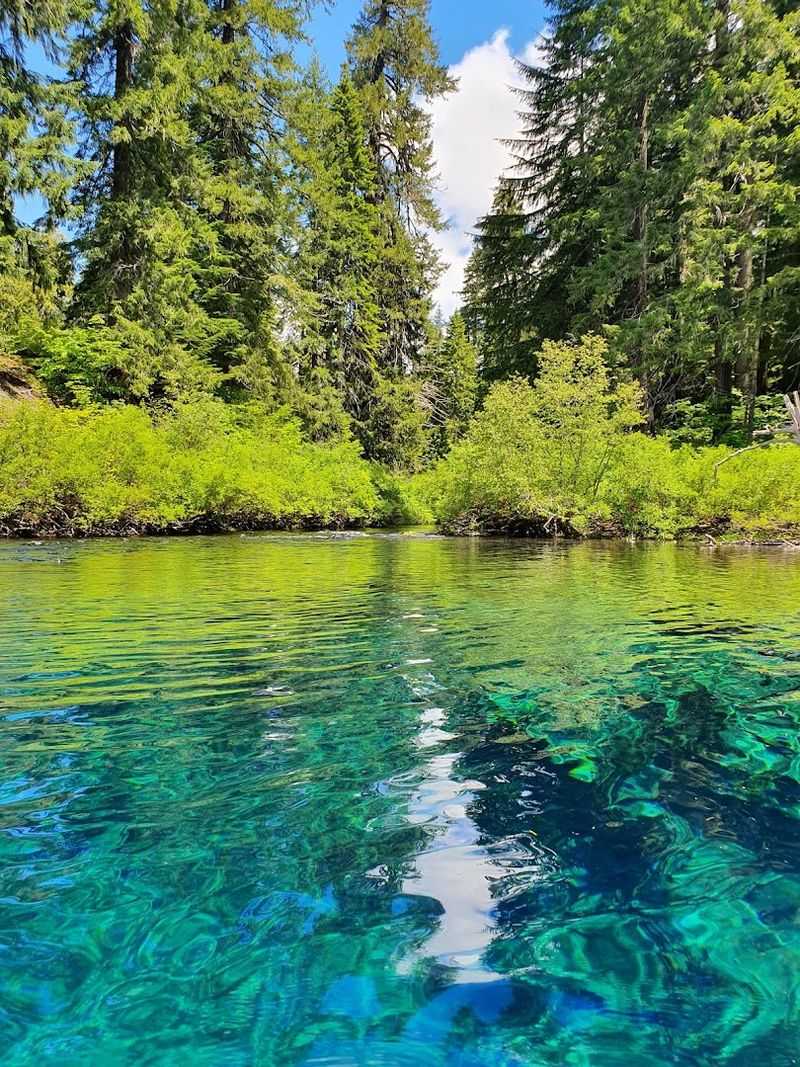
Imagine a lake so clear that submerged trees from centuries ago still stand perfectly preserved beneath the surface. Clear Lake sits at 3,000 feet elevation, nestled in ancient lava fields that act like nature’s ultimate water filter.
The lake formed when volcanic flows dammed a natural spring system, creating a pool that feeds the entire McKenzie River.
Every drop that enters this river begins its journey here, already incredibly pure. Cold springs bubble up from deep underground, bringing water that’s been naturally filtered through miles of porous volcanic rock.
The temperature stays a chilly 34 to 38 degrees year-round, which helps prevent algae growth and keeps everything crystal clear.
When you peer into Clear Lake, you’re seeing water quality that’s become increasingly rare in our modern world. Scientists study this lake because it represents what unpolluted freshwater systems looked like before human development.
The river’s famous blue color starts right here, where geology and hydrology create the perfect conditions for transparency and brilliance that will last for 90 miles downstream.
Volcanic Filtration Creates Sapphire Hues
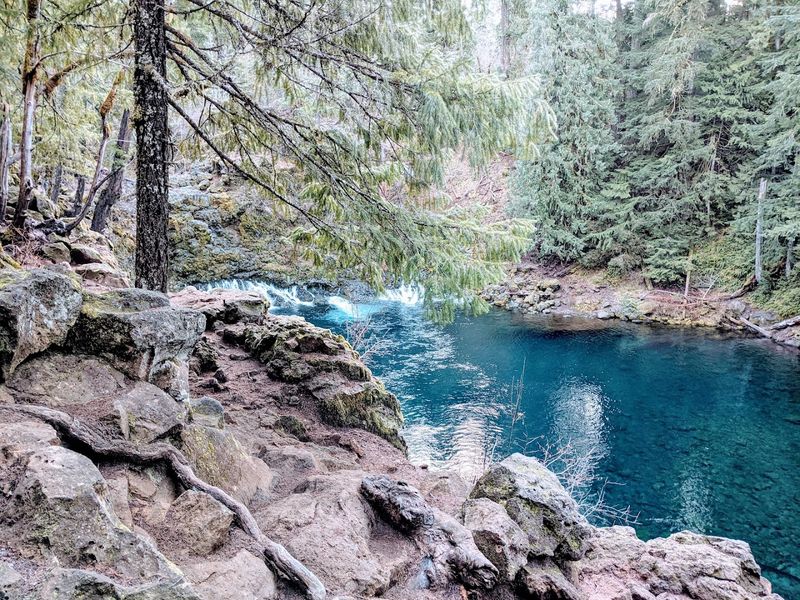
Most rivers carry sediment that makes them brown, green, or murky. The McKenzie took a different path entirely.
Thanks to the porous basalt rock that forms its riverbed, the water gets naturally filtered as it flows, removing tiny particles that would normally cloud the view.
Light behaves differently in extremely clear water. When sunlight hits the McKenzie, longer wavelengths like red and yellow get absorbed while blue wavelengths bounce back to your eyes.
This is the same reason the ocean looks blue, but the McKenzie’s purity makes the effect even more intense and vivid.
Scientists measure water clarity using turbidity levels, and the McKenzie scores remarkably low. Rivers with high turbidity look muddy because suspended particles scatter light in all directions.
Here, those particles simply don’t exist in meaningful quantities. The volcanic filtration removes organic matter continuously, maintaining that electric blue color that makes photographers and nature lovers travel from around the world just to witness it firsthand.
Tamolitch Blue Pool’s Vanishing Act
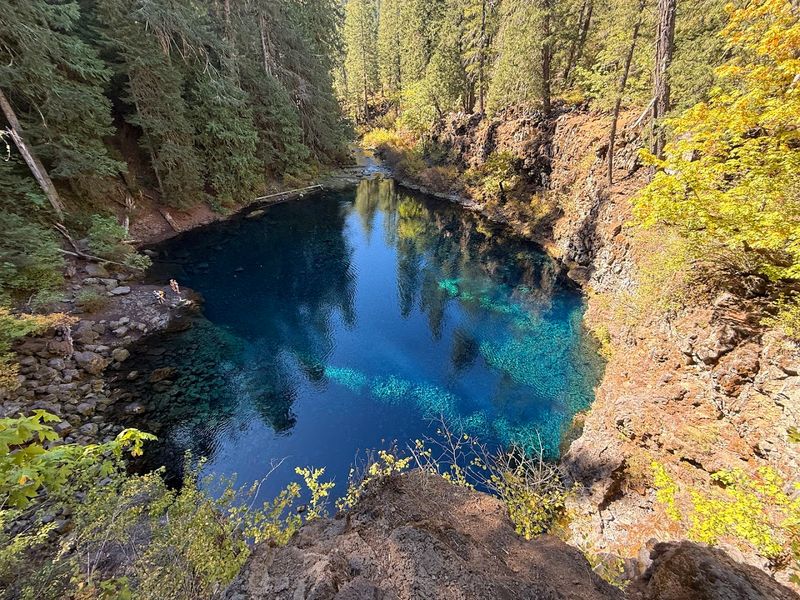
The river just… disappears. For nearly three miles, the McKenzie flows completely underground through a massive lava tube system, leaving a dry riverbed that confuses first-time visitors.
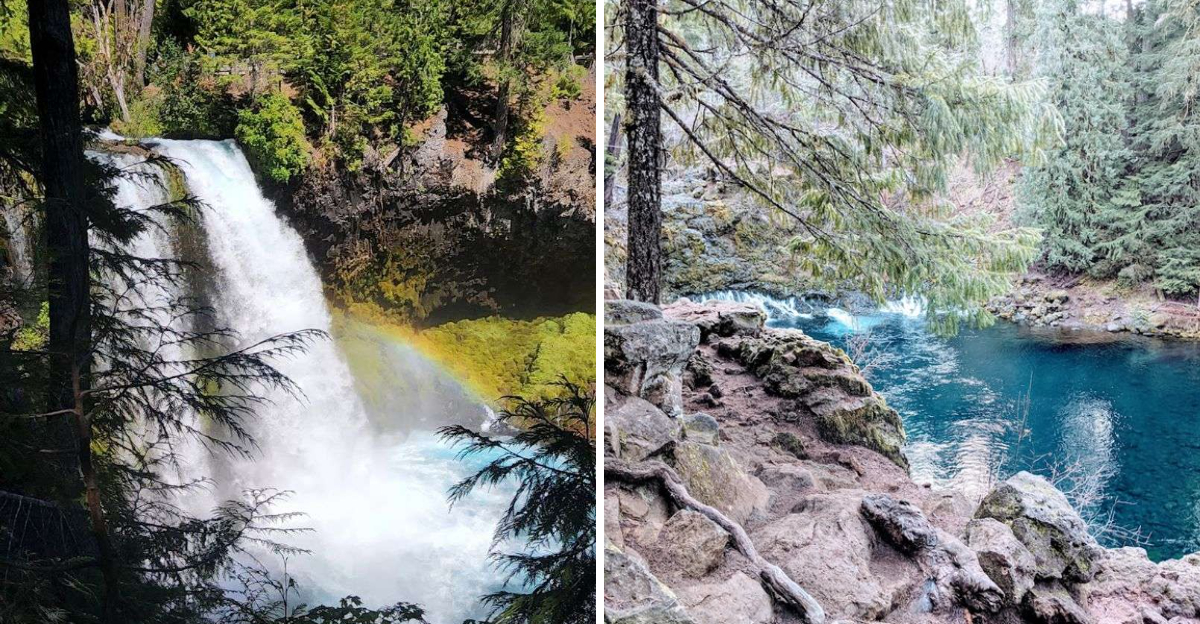
Then, without warning, it bursts back to the surface in a pool so blue it hardly seems real.
Tamolitch means “bucket” in the Chinook language, and one look at this deep basin explains why. The water emerges from underground springs at a constant 37 degrees, creating an otherworldly turquoise glow.
On sunny days, the color becomes so intense that photographs almost look digitally enhanced, yet they capture exactly what your eyes see.
This natural phenomenon happened because lava flows buried the original riverbed centuries ago. Water always finds a way, though, so the river carved new paths through underground channels instead of stopping completely.
Hikers travel two miles each way just to stand at the pool’s edge and witness this geological marvel. Swimming isn’t allowed to protect the delicate ecosystem, but simply viewing this spot ranks among Oregon’s most unforgettable experiences.
Ancient Lava Flows Rewrote the Landscape
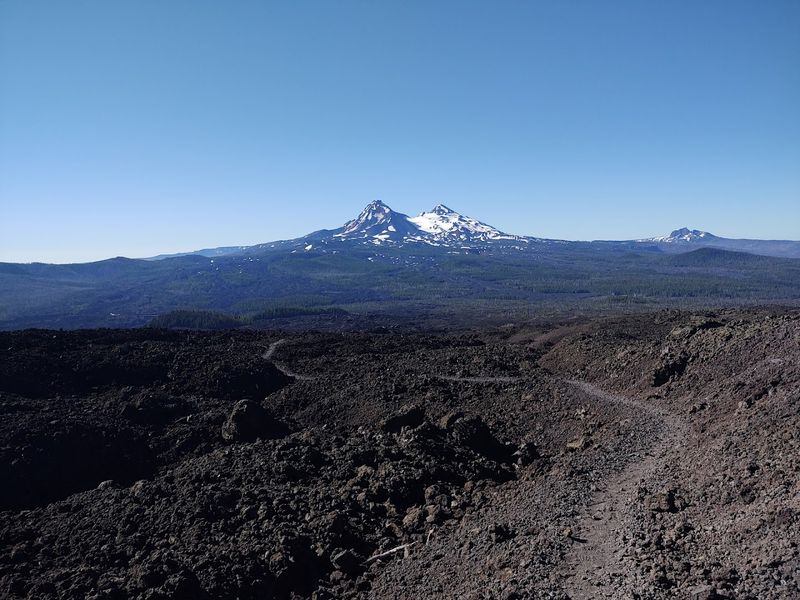
About 1,600 years ago, Belknap Crater erupted and changed everything. Molten lava poured down the mountainside, burying the original McKenzie River channel under layers of basalt rock.
Instead of destroying the river, this catastrophic event actually created the unique features we treasure today.
These lava flows formed natural dams that created Clear Lake upstream. They built the underground channels that make Tamolitch Blue Pool possible.
The hardened basalt created perfect conditions for waterfalls like Sahalie and Koosah, where the river now crashes through narrow rocky corridors it never encountered before.
Walking along the McKenzie today means stepping on relatively young volcanic rock. In geological terms, 1,600 years is practically yesterday.
The black basalt contrasts beautifully against the electric blue water, creating dramatic scenery that photographers adore. Native Americans witnessed these eruptions and passed down oral histories about mountains that glowed red and rivers that changed course overnight.
Their descendants still recognize how profoundly volcanic activity shaped this landscape into the natural wonder that draws visitors from across the globe.
Sahalie and Koosah Falls Thunder Downstream
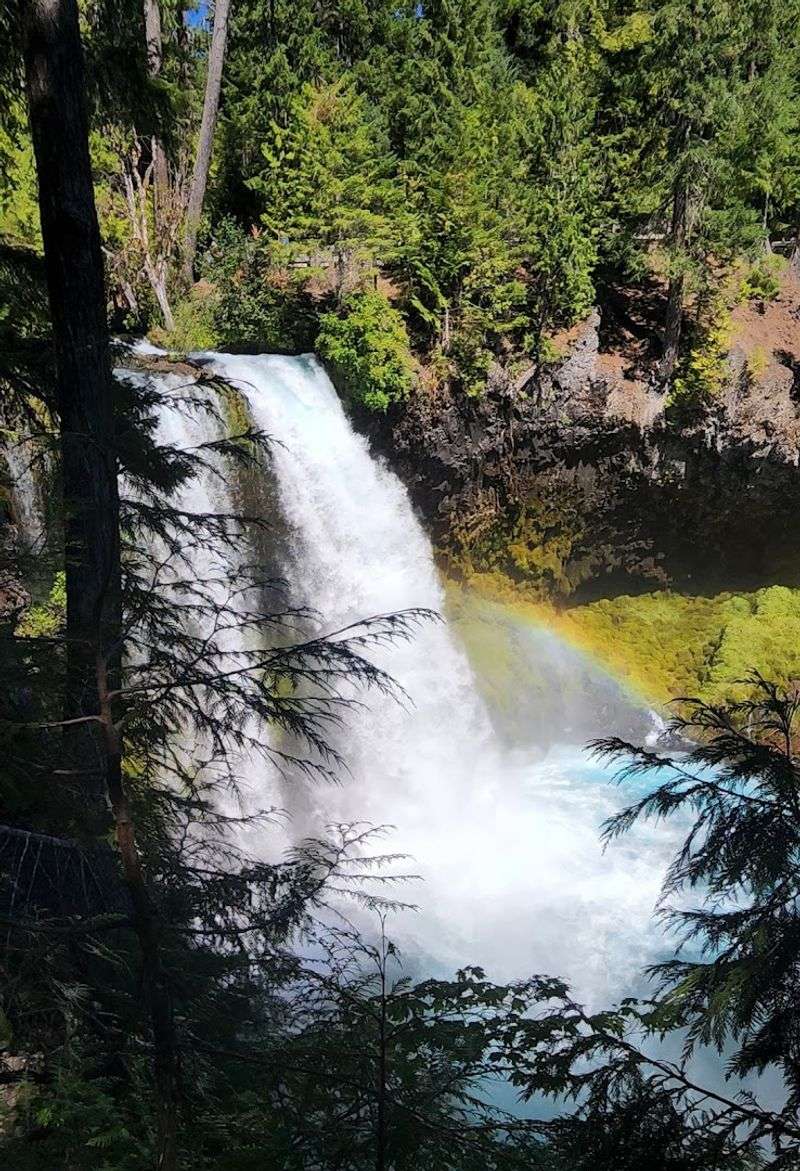
You hear Sahalie Falls before you see it. The thundering crash of water plunging 100 feet over a sheer basalt cliff creates a roar that echoes through the surrounding old-growth forest.
Stand on the viewing platform, and you’ll feel mist on your face even on the sunniest days.
Just half a mile downstream, Koosah Falls drops another 70 feet with equal drama. Both waterfalls formed when ancient lava created natural cliffs that the river couldn’t gradually erode.
Instead, the McKenzie just throws itself over the edge with spectacular force, carving deep pools at the base of each falls.
These aren’t delicate ribbon waterfalls—they’re powerful displays of nature’s raw energy. During spring runoff, the volume increases dramatically, and the spray creates rainbows that dance in the sunlight.
Native names add meaning to the experience: Sahalie means “heaven” and Koosah means “sky” in Chinook, reflecting how these waterfalls inspired awe long before tourists arrived. Short paved trails connect both falls, making them accessible to nearly everyone who wants to witness the McKenzie at its most powerful.
Federal Protection Preserves Natural Beauty
In 1988, the federal government recognized something special about the McKenzie. Parts of the river received Wild and Scenic River designation, joining an elite group of American waterways deemed worthy of permanent protection.
This wasn’t just about beauty—it acknowledged the river’s exceptional water quality, geology, fish habitat, and recreation value.
Wild and Scenic status prevents damming, ensures careful management of surrounding lands, and limits development that could harm water quality. For the McKenzie, this protection arrived at a crucial time when pressure for development was increasing throughout Oregon’s Cascade region.
The designation covers specific stretches where the river remains most pristine and unchanged.
What does this mean for visitors? You’re seeing the McKenzie much as it existed centuries ago, without concrete channelization or industrial impacts marring its natural character.
The protection extends to the surrounding ecosystem too, preserving old-growth forests and wildlife corridors. Future generations will experience the same electric blue water and volcanic landscapes because people recognized the McKenzie’s value before development could diminish what makes it extraordinary among American rivers.
Native Fish Thrive in Cold, Clean Water
Beneath that famously blue surface swims a treasure: wild native fish populations that have become rare elsewhere. Rainbow trout, cutthroat trout, bull trout, and spring Chinook salmon all call the McKenzie home.
These species need cold, oxygen-rich water with specific conditions that the river provides naturally.
Spring Chinook make an especially remarkable journey. These salmon swim upstream from the Pacific Ocean, traveling hundreds of miles to spawn in the McKenzie’s gravel beds.
They navigate waterfalls, fight strong currents, and somehow find their way back to the exact streams where they hatched years earlier. Bull trout, a threatened species elsewhere, still maintain healthy populations here because the water stays cold year-round.
Water temperature matters tremendously to fish survival. The McKenzie rarely exceeds 55 degrees even in summer, thanks to those cold underground springs feeding the system.
This creates perfect conditions for native species while discouraging invasive warm-water fish that have taken over other rivers. Anglers travel from distant states hoping to catch a wild McKenzie rainbow or see spring Chinook jumping the waterfalls during their incredible migration upstream.
26 Miles of Trail Through Paradise
The McKenzie River National Recreation Trail stretches 26 miles through some of Oregon’s most stunning terrain. This isn’t just any hiking path—it’s consistently ranked among the Pacific Northwest’s premier trails for both hikers and mountain bikers.
Every bend reveals something new: waterfalls, lava fields, ancient forests, or stunning river overlooks.
Built in the 1960s, the trail follows the river closely enough to hear its constant rush but stays elevated enough to provide breathtaking views. You’ll cross footbridges over side creeks, wind through 500-year-old Douglas firs, and walk across relatively young lava flows where the rocky ground tells stories of volcanic violence.
The trail passes Sahalie Falls, Koosah Falls, Tamolitch Blue Pool, and Clear Lake—hitting every major highlight in one epic journey.
Most people don’t tackle all 26 miles at once. Instead, they choose shorter sections based on what interests them most.
Mountain bikers love the flowing singletrack that swoops through the forest. Families prefer the paved sections near the waterfalls.
Serious hikers sometimes complete the entire trail over two or three days, camping at designated spots along the way and experiencing how the river changes character from source to valley floor.
Birthplace of the Legendary Drift Boat
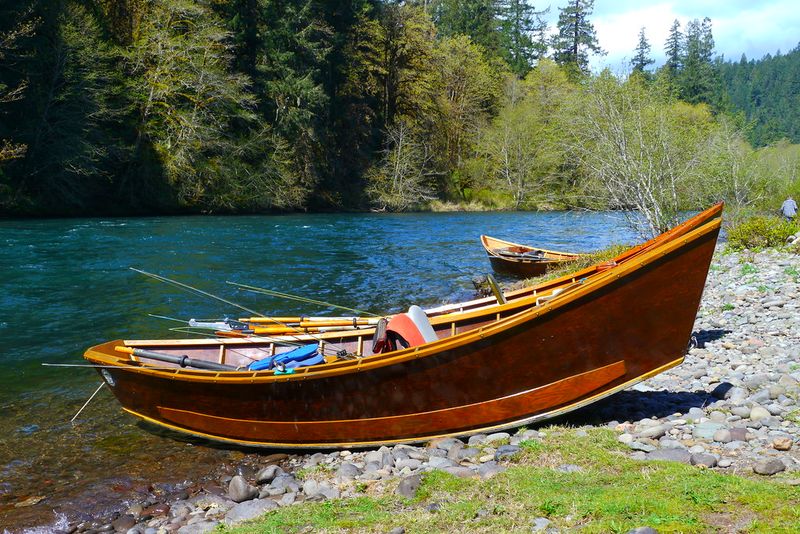
During the 1940s, local boat builder Woodie Hindman faced a challenge: how to design a small boat that could safely navigate the McKenzie’s swift, rocky waters while allowing anglers to fish effectively. His solution changed river fishing across the American West and created an iconic Oregon legacy.
The McKenzie drift boat features a flat bottom, flared sides, and upswept ends—a design that looks simple but performs brilliantly. The flat bottom provides stability in shallow rapids while the high sides keep waves out.
Those distinctive upswept ends prevent the boat from diving underwater when running fast chutes. Wooden construction kept weight manageable for launching and retrieving from riverside access points.
What started as a local fishing boat became famous throughout the West. Today, drift boats based on Hindman’s original McKenzie design float rivers from Alaska to New Mexico.
Modern versions use fiberglass or aluminum, but the basic shape remains unchanged because it works so perfectly. Anglers still consider a day floating the McKenzie in a classic drift boat the ultimate Oregon fishing experience, connecting them to decades of river tradition while pursuing native trout in that impossibly blue water.
Where Science and Beauty Flow Together
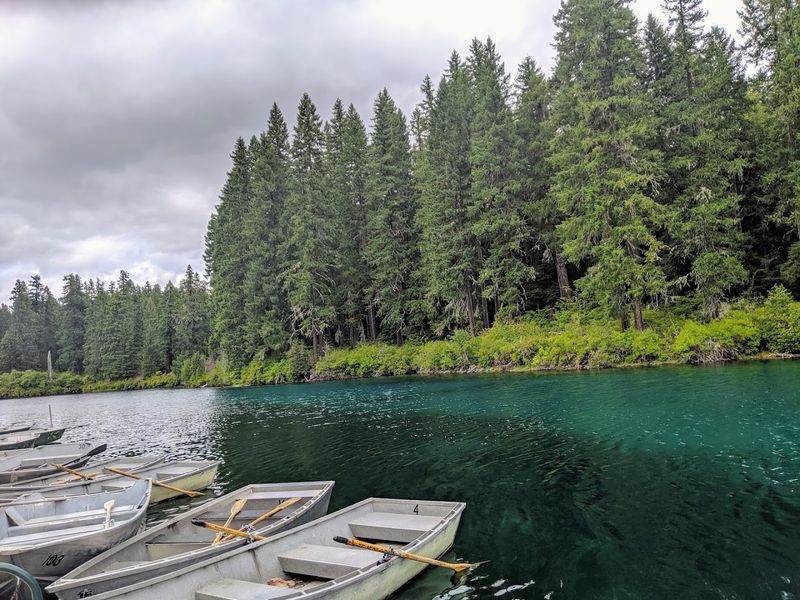
Some places on Earth make you stop and simply stare. The McKenzie River combines so many extraordinary elements—volcanic geology, spring-fed clarity, dramatic waterfalls, thriving wildlife, and that impossible blue color—into one 90-mile masterpiece.
It’s not just pretty; it’s a functioning ecosystem that demonstrates how healthy rivers should look and behave.
Scientists study the McKenzie to understand pristine water systems. Photographers chase perfect light on its electric blue pools.
Families make memories hiking to waterfalls and spotting salmon fighting upstream. Anglers pursue wild trout in water so clear they can watch fish inspect their flies before striking.
Every visitor leaves with stories about how the river exceeded their expectations.
Few rivers anywhere match the McKenzie’s combination of accessibility and pristine beauty. You don’t need wilderness skills or expensive equipment to experience its wonders—just drive Highway 126 and stop at countless pullouts and trails.
Yet despite easy access, the river retains wild character thanks to thoughtful protection and the natural advantage of volcanic geology. The McKenzie proves that with proper stewardship, spectacular natural places can remain spectacular even when people come to visit and celebrate them.