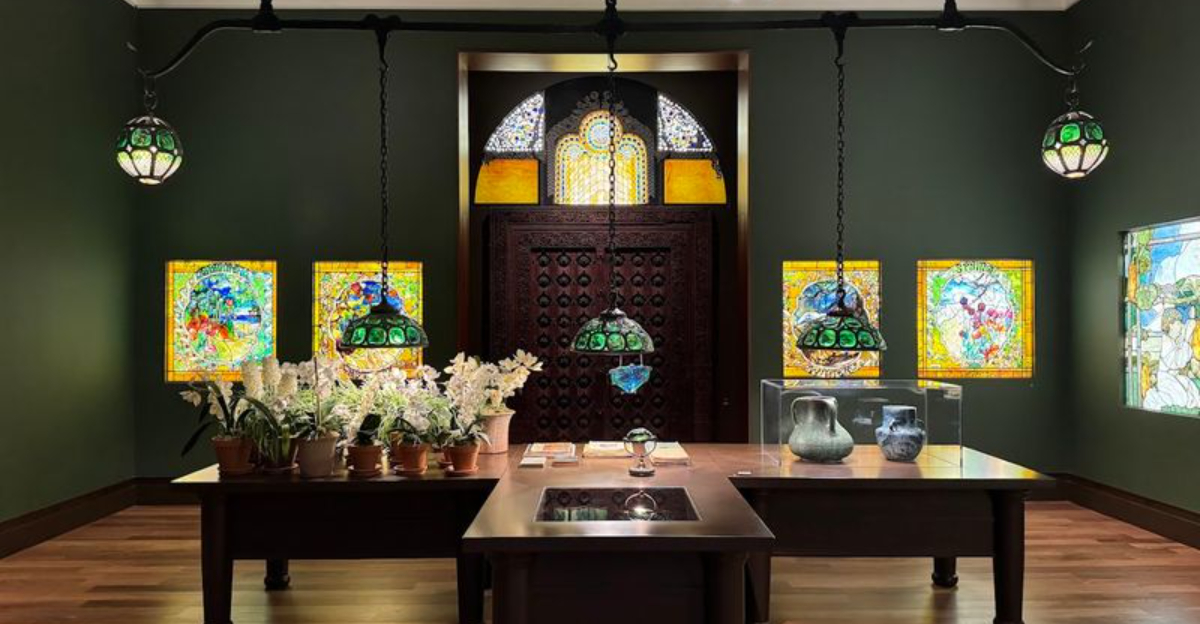
Tucked along North Park Avenue in Winter Park, The Charles Hosmer Morse Museum of American Art holds a Tiffany collection that feels far bigger than its quiet storefront suggests. You come expecting pretty glass, then find chapel interiors, glowing windows, lamps, jewelry, pottery, paintings, and the story of an artist whose work still stops people mid-step.
With a 4.8-star reputation and an easy-to-enjoy layout, it is one of Central Florida’s most rewarding museum stops. If you want beauty, history, and a calm break from theme-park energy, this museum deserves a place on your day plan.
The Tiffany Chapel From The 1893 World’s Columbian Exposition

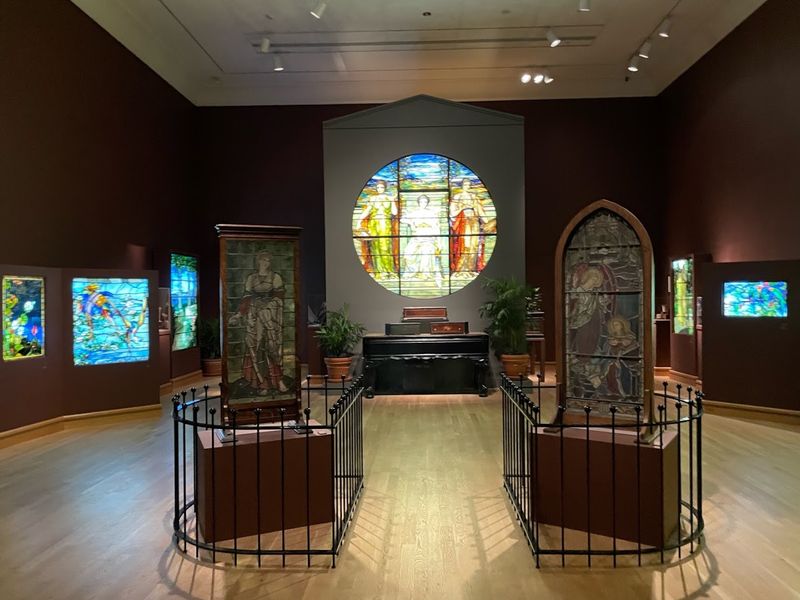
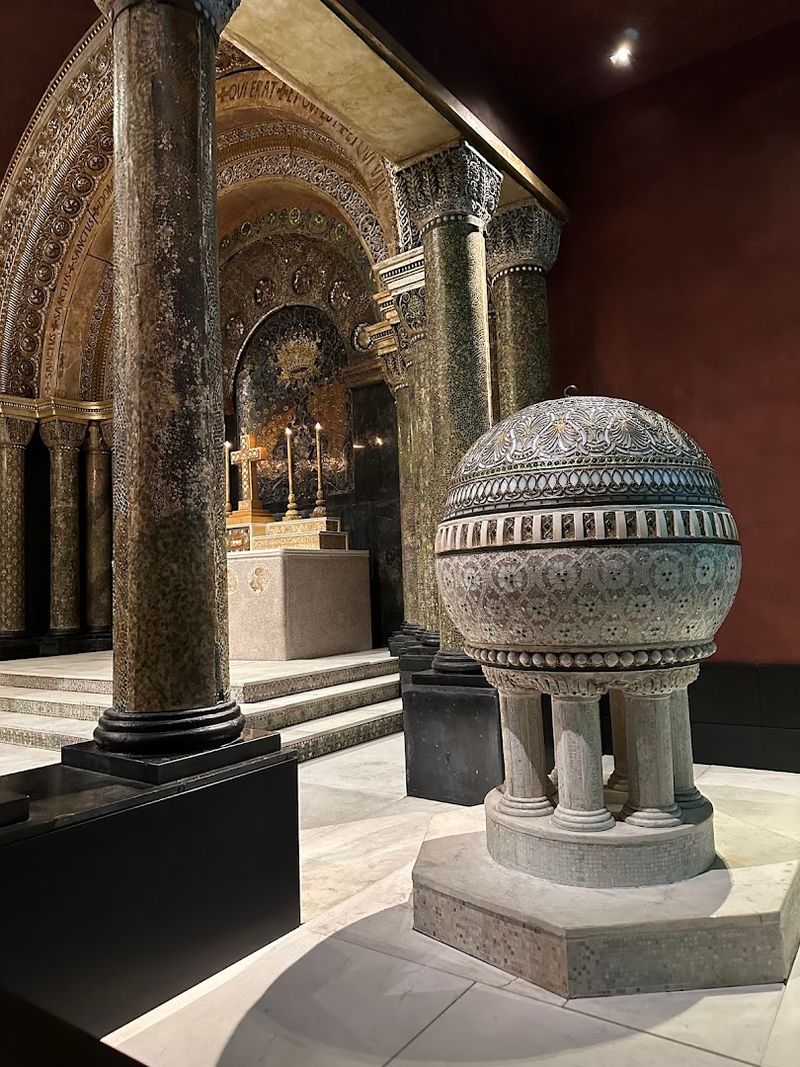
Step into the chapel gallery and the museum suddenly feels hushed in the best possible way. The restored interior from Tiffany’s 1893 World’s Columbian Exposition installation surrounds you with glowing glass, mosaics, carved details, and a sense of theatrical devotion.
You do not need to be religious to understand why visitors describe sitting here as almost spiritual.
What makes this room so memorable is the story behind its survival. Parts of the chapel were damaged, scattered, or nearly lost before Hugh and Jeannette McKean helped rescue and reconstruct the installation using historic photographs and careful research.
That context turns the space from a beautiful display into a remarkable act of preservation.
Give yourself time to sit rather than simply photograph it and move along. Notice how the light catches the glass, how the textures layer together, and how Tiffany blended architecture, worship, craft, and spectacle into one immersive environment.
If you only have an hour at The Charles Hosmer Morse Museum of American Art, make this your slowest stop.
The World-Class Tiffany Glass Galleries
Color seems to breathe inside the Tiffany glass galleries, especially when you stand close enough to see the subtle shifts in tone. The museum houses what it describes as the world’s most comprehensive collection of works by Louis Comfort Tiffany, and that claim starts to make sense quickly.
Windows, panels, and decorative pieces reveal how glass could become painting, architecture, and atmosphere all at once.
Many visitors arrive thinking stained glass is one category, then learn about leaded glass and the technical choices that made Tiffany’s work so distinctive. The galleries help you notice rippled surfaces, layered opalescent glass, unexpected color blends, and nature-inspired compositions that look different from every angle.
It is the kind of collection that rewards slowing down instead of trying to check off every case.
A smart way to experience these rooms is to pick one window and study it for several minutes. Look for depth, movement, and small irregularities that prove the work was made by hand.
After that, the rest of the museum feels more vivid because your eye knows what to watch for.
Tiffany Lamps, Jewelry, Pottery, And Decorative Arts
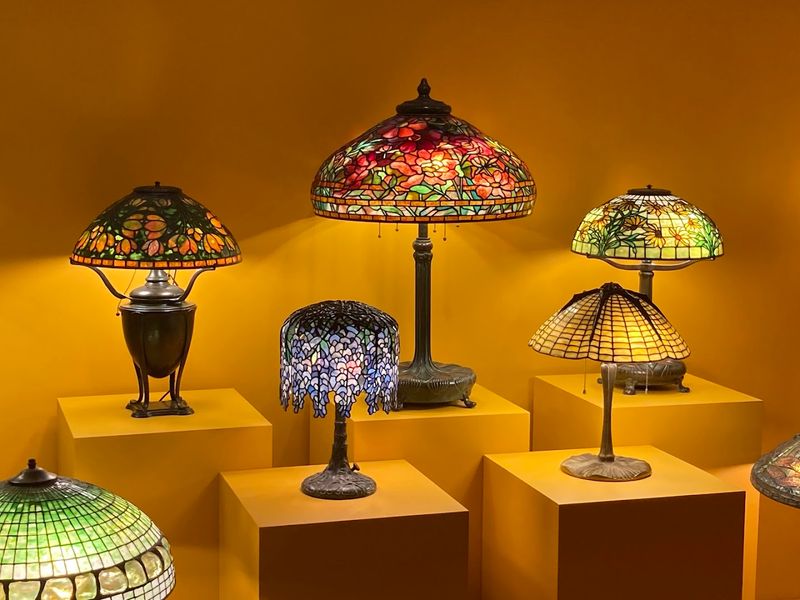
Beyond the famous windows, the smaller objects may surprise you most because they feel personal and livable. Lamps glow with floral shades, jewelry sparkles with refined detail, pottery shows experimental surfaces, and decorative pieces reveal Tiffany’s interest in surrounding daily life with beauty.
These galleries make it easy to imagine art not as something separate, but as something placed on a table, worn, touched, and enjoyed.
The museum’s displays give you helpful variety without making the experience feel crowded. You can compare materials, shapes, and motifs across different media, noticing how nature appears again and again in vines, blossoms, dragonflies, and shifting colors.
That repetition helps you understand Tiffany’s design language more clearly than a single masterpiece could.
If you enjoy craftsmanship, linger near the objects that show process and inspiration. Reviews often mention that the museum includes not only finished pieces, but also items connected to how Tiffany’s work was created and collected.
That extra layer makes the visit feel less like window-shopping through luxury and more like meeting the mind behind a complete artistic world.
A Calm, Walkable Museum Experience In Winter Park
Located at 445 North Park Avenue, the museum fits beautifully into the walkable rhythm of Winter Park. You can arrive by car, but some visitors recommend the nearby train option because parking in the area can be busy, especially when downtown is active.
Once inside, the atmosphere changes quickly from street energy to quiet galleries, polished presentation, and a pace that never feels overwhelming.
The layout is one of the reasons people speak so warmly about the experience. You can self-guide comfortably, watch the introductory videos, read labels, and pause whenever a piece catches you.
Staff are often described as attentive and willing to discuss the works, which is helpful when you want more context without joining a formal lecture.
Plan on at least one hour, though two hours is a better target if you like reading and lingering. The museum is open Tuesday through Saturday from 9:30 AM to 4 PM, Sunday from 1 PM to 4 PM, closed Monday, and open until 8 PM on Friday.
Those Friday evening hours can make the visit feel especially relaxed.
Affordable Admission, Videos, And Helpful Context
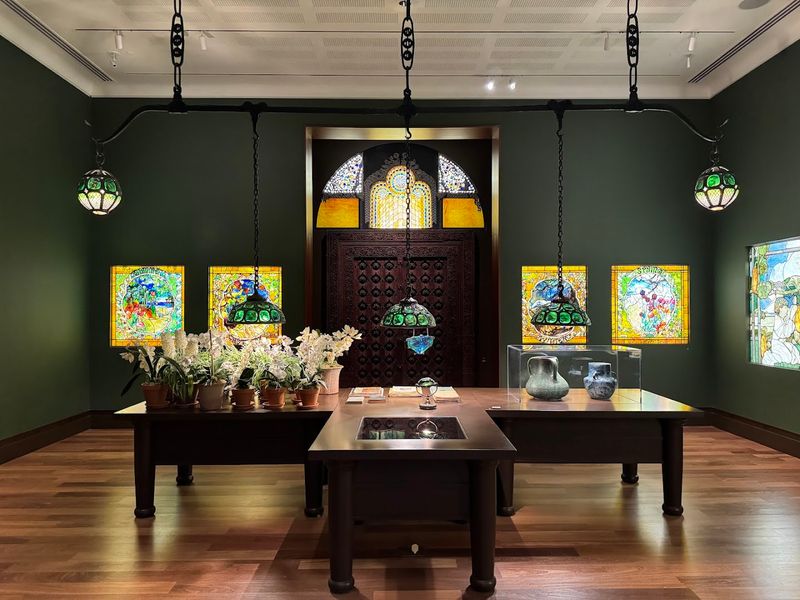
One of the nicest surprises is how accessible the museum feels for the quality of the collection. Reviews regularly mention reasonable admission, including senior and student pricing, and groups have described guided visits as an excellent value.
For a museum holding such an important Tiffany collection, the price point makes it easy to recommend even to someone casually interested in art.
Before heading deep into the galleries, take advantage of the videos near the entrance if they are available during your visit. Visitors often say the films help explain Louis Comfort Tiffany’s background, the collection’s significance, and the difference between materials and techniques you will see later.
That short investment makes the glass, chapel, and Laurelton Hall displays much easier to appreciate.
Audio and printed interpretation add another layer without forcing you into a rigid route. You can move at your own speed, which is ideal if you are visiting with family, friends, or someone who prefers short museum stops.
By the time you leave, you have not just seen beautiful objects, you understand why they mattered then and why they still feel fresh now.
The Daffodil Terrace And Garden-Inspired Details
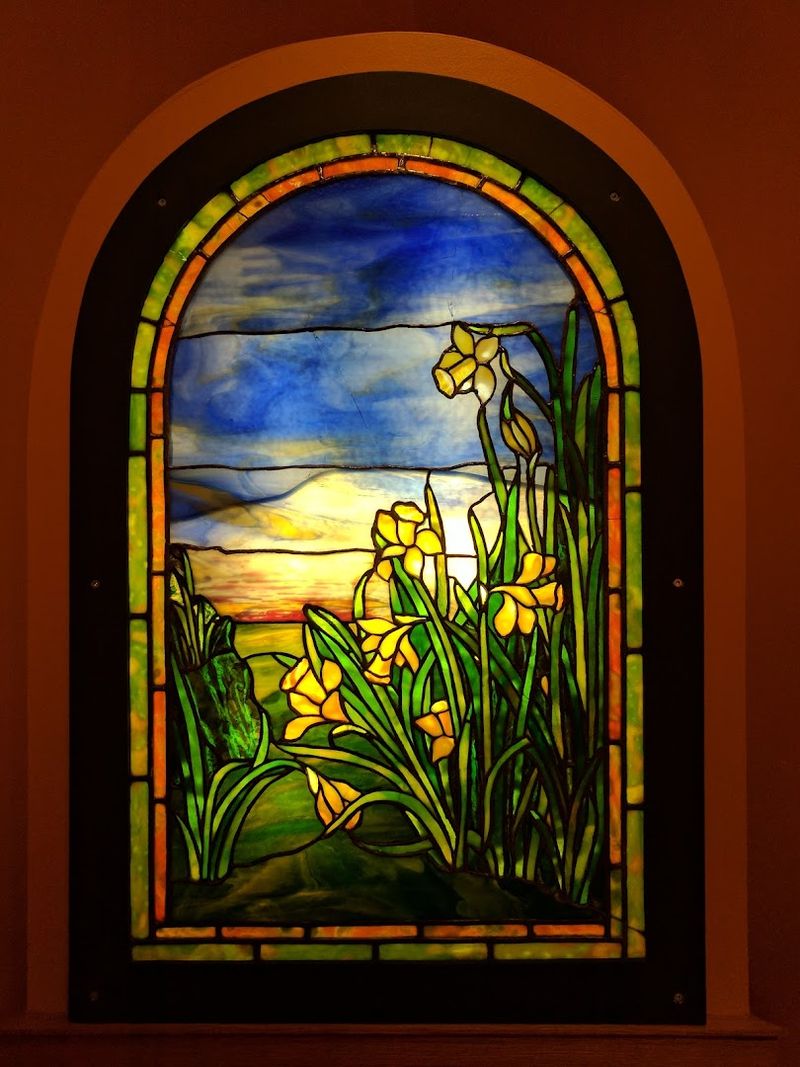
The Daffodil Terrace feels like one of those museum moments you accidentally linger in longer than planned. Its columns, glass flowers, and soft garden feeling bring Tiffany’s love of nature into a space that feels both architectural and dreamy.
You can almost imagine sunlight moving across it during a quiet afternoon at Laurelton Hall.
What makes this section so memorable is how decorative details become atmosphere. The daffodils are not just pretty accents, because they help turn the room into a kind of indoor garden.
Give yourself time here, because the craftsmanship rewards close looking from every angle.
The Stained-Glass Windows That Change As You Look
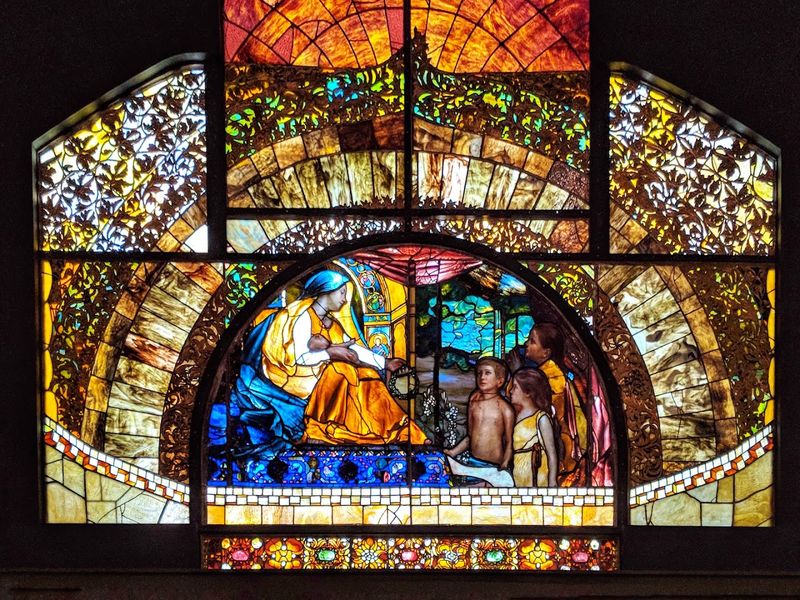
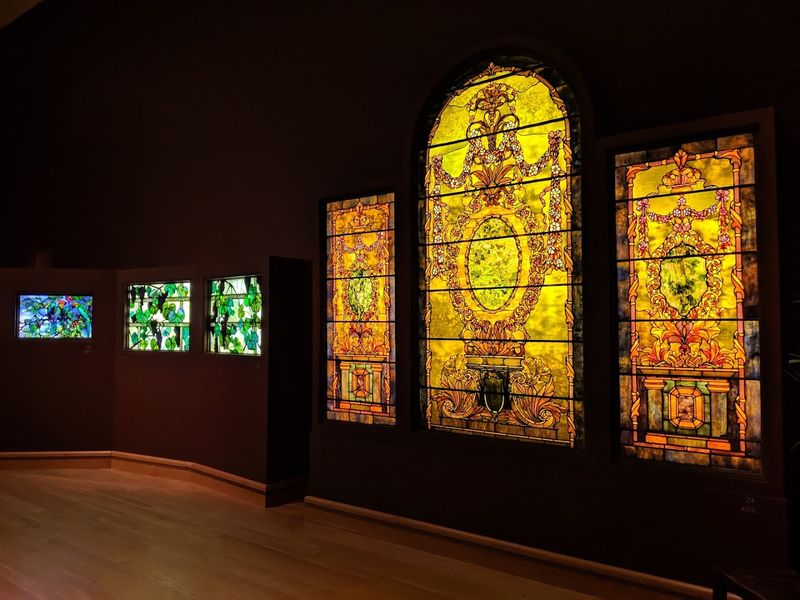
The stained-glass windows are easy to admire quickly, but they become more interesting when you slow down. Tiffany’s glass shifts with color, texture, depth, and tiny variations that make flat surfaces feel alive.
You may notice flowers, landscapes, religious scenes, or abstract patterns glowing differently as you move.
This is where the museum’s quiet pacing really helps. Without feeling rushed, you can stand close enough to see ripples, mottling, and layered glass doing the work paint might usually do.
It is a beautiful reminder that Tiffany was not just designing windows, but building light itself.
The Small Details That Make The Collection Feel Personal
Beyond the showstoppers, the smaller pieces make the museum feel especially personal. Sketches, fragments, studies, and intimate decorative objects help you see how Tiffany’s ideas moved from inspiration to finished work.
These quieter displays are easy to pass too quickly, but they add warmth to the larger story.
I like that they make the collection feel less distant and more human. You start noticing the decisions behind a color, curve, pattern, or material choice.
By the time you leave, the grand rooms feel even richer because you have seen the careful thinking tucked inside the details.