Valley Forge National Historical Park in King of Prussia, Pennsylvania, offers something truly unique: a chance to explore where George Washington and his army endured a brutal winter while enjoying beautiful natural scenery at the same time.
This special park preserves the grounds where American history was made during the Revolutionary War, with over 3,500 acres of meadows, forests, and historic sites to discover.
Whether you’re interested in learning about colonial soldiers or just want to hike through peaceful trails, Valley Forge brings together the past and present in an unforgettable way.
It’s a place where history lessons come alive among the trees, monuments, and open fields of southeastern Pennsylvania.
A Revolutionary War Landscape Preserved in Time
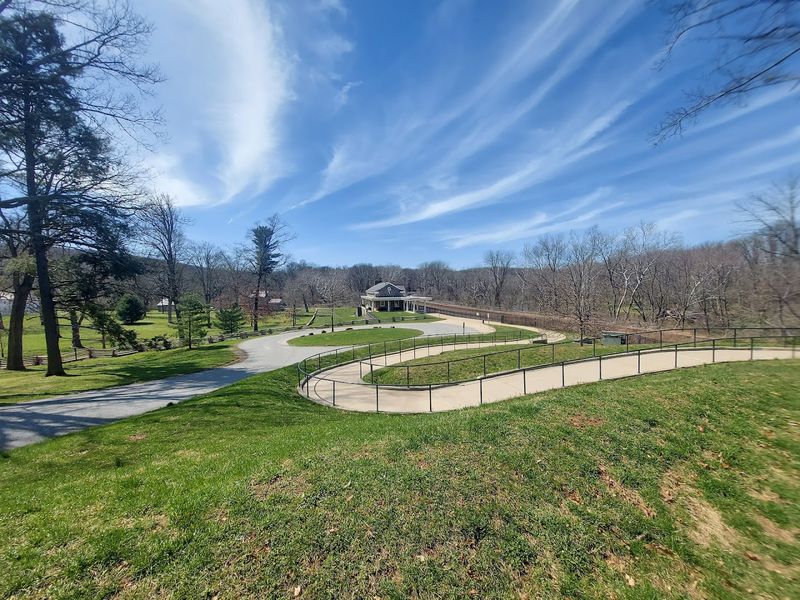
Standing on the same ground where Continental soldiers once struggled changes how you see American history. Valley Forge National Historical Park protects the exact location where General George Washington led his army through the winter of 1777-1778, one of the darkest periods of the Revolutionary War.
The landscape hasn’t been swallowed by shopping malls or highways—instead, rolling meadows, thick forests, and historic sites remain much as they looked centuries ago.
Walking these grounds connects you to real people who faced impossible odds. About 12,000 soldiers camped here during that brutal winter, enduring freezing temperatures, disease, and hunger.
Today’s visitors can explore over 3,500 acres that blend military history with stunning natural beauty, creating an outdoor classroom unlike any other.
The park’s careful preservation means you’re not just reading about history—you’re experiencing it. Reconstructed military buildings, original earthworks, and informative markers help paint a picture of camp life.
Whether you arrive in spring when wildflowers bloom or fall when leaves turn golden, the scenery reminds us that nature and history share this sacred space together.
Washington’s Headquarters
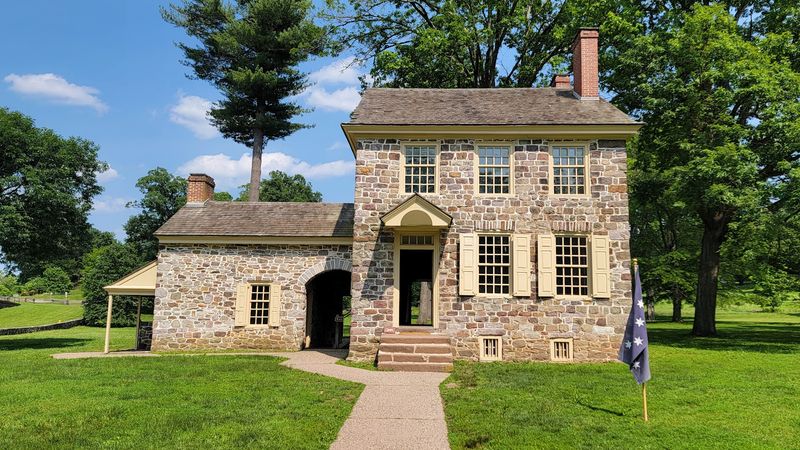
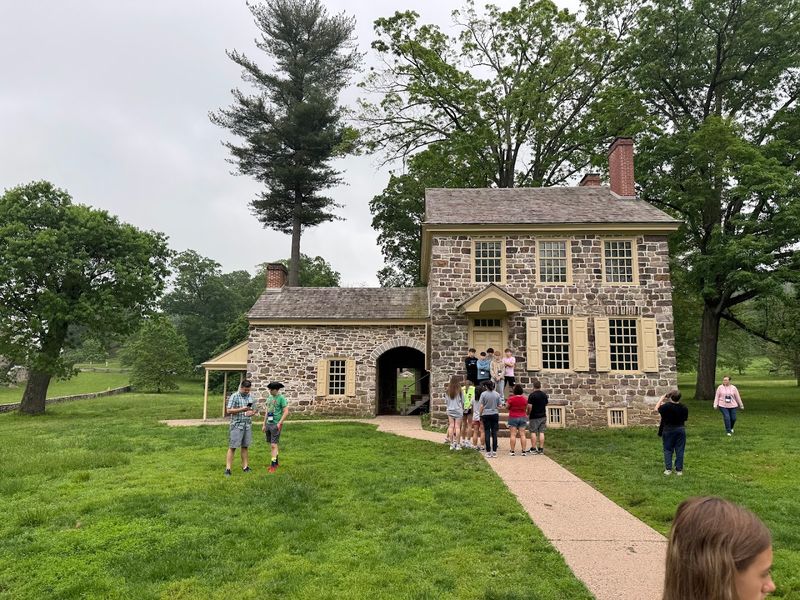
George Washington spent the coldest months of 1777-1778 making life-or-death decisions inside a modest stone house that still stands today. This wasn’t a grand mansion or fancy estate—just a sturdy building owned by Isaac Potts where America’s future hung in the balance.
Every morning, Washington walked out that door to inspect his suffering troops, and every evening he returned to plan strategies that would ultimately win independence.
Tours of the headquarters reveal surprisingly intimate details about Washington’s daily routine. You’ll see the rooms where he met with officers like Lafayette and von Steuben, wrote letters to Congress begging for supplies, and dealt with the constant threat of his army falling apart.
The rooms are furnished with period pieces that help visitors imagine the weight of responsibility Washington carried.
Rangers share fascinating stories about how this building functioned as both home and command center. Martha Washington even joined her husband here, bringing comfort during the darkest days.
Standing in these rooms, you realize that major turning points in American history happened in very ordinary spaces, making the experience incredibly powerful and personal.
Reconstructed Soldiers’ Huts
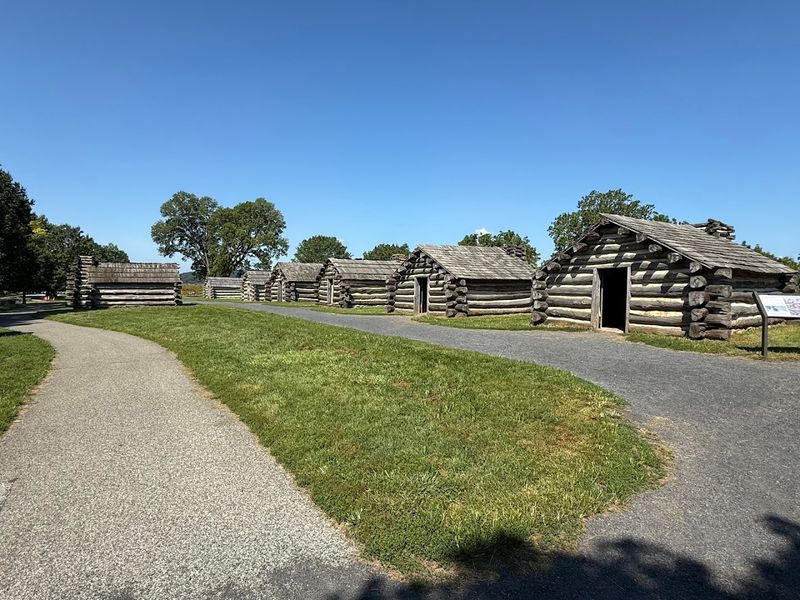
Imagine sharing a cramped log cabin with eleven other men during a Pennsylvania winter with barely enough food to survive. The reconstructed soldiers’ huts at Valley Forge show exactly what Continental Army troops endured.
These simple wooden structures measure just 14 by 16 feet, yet somehow a dozen soldiers ate, slept, and tried staying warm inside them throughout the brutal winter months.
Walking through these reconstructions gives you instant respect for Revolutionary War soldiers. Each hut features a stone fireplace that provided the only heat source, wooden bunks stacked along the walls, and minimal space for personal belongings.
Soldiers built over 2,000 of these huts following Washington’s specific instructions, creating an entire wooden city across the valley.
The huts weren’t just shelters—they represented survival itself. Soldiers cut down thousands of trees, hauled logs through snow, and constructed these buildings with basic tools while battling illness and hunger.
Many men didn’t even have proper shoes or blankets. Looking at these cramped quarters helps younger visitors understand that freedom came at an enormous personal cost, making American independence feel less like a dusty textbook chapter and more like a hard-won miracle.
The National Memorial Arch
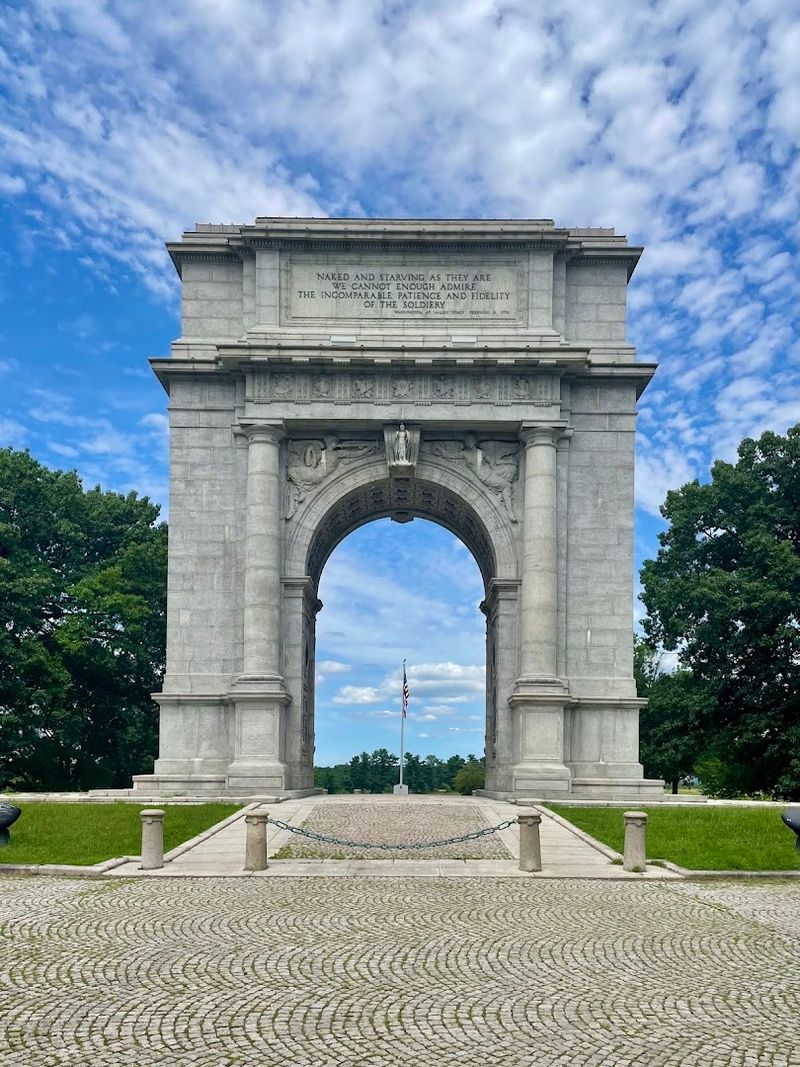
Few monuments command attention quite like the massive granite arch that rises above Valley Forge’s landscape. Built between 1910 and 1917, this 60-foot memorial wasn’t constructed immediately after the Revolutionary War—it took over a century for Americans to fully recognize the significance of what happened here.
The arch stands as a powerful tribute to the soldiers who refused to give up, even when victory seemed impossible.
The monument’s inscription reads “Naked and starving as they are, we cannot enough admire the incomparable patience and fidelity of the soldiery.” These words, written by Washington himself, capture the extraordinary sacrifice made by ordinary men. Walking beneath the arch feels ceremonial, like passing through a gateway that connects modern visitors to those legendary winter months.
Photographers love this spot because the arch creates dramatic focal points against changing skies and seasons. During spring, wildflowers carpet the surrounding meadows, while fall brings spectacular foliage that frames the pale stone beautifully.
Families often picnic nearby, and many visitors make this their first or last stop, understanding that this grand structure symbolizes something larger than stone—it represents American perseverance and the human spirit’s ability to endure incredible hardship.
Scenic Trails Through Forests and Meadows
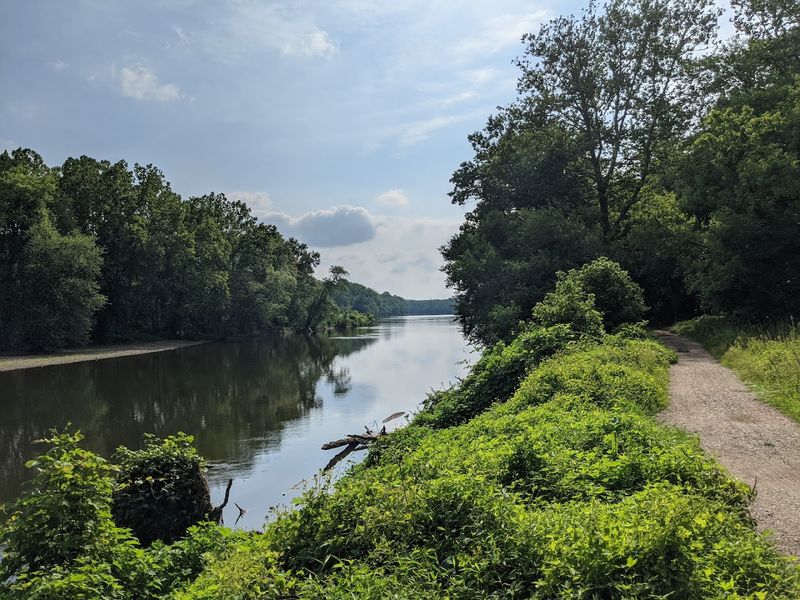
History lessons get much more interesting when they happen outdoors. Valley Forge offers over 26 miles of trails that let visitors explore the park at their own pace, whether on foot, bike, or horseback.
These paths wind through quiet woodlands, cross open meadows, and pass historic sites, creating perfect opportunities to combine exercise with education.
Some trails follow routes Continental soldiers once marched, while others showcase the park’s natural beauty away from crowds. The Joseph Plumb Martin Trail honors a teenage soldier who kept a detailed diary of camp life, and hikers can read his observations at markers along the way.
Other paths lead to secluded spots where deer graze peacefully, completely unaware of the area’s historical importance.
Different seasons transform these trails into completely new experiences. Spring brings blooming dogwoods and wildflowers that carpet forest floors.
Summer offers shaded relief from heat beneath thick tree canopies. Fall explodes with reds, oranges, and yellows that rival any New England foliage display.
Even winter hiking has its appeal, especially after fresh snowfall blankets the landscape in quiet white. Bringing water, wearing comfortable shoes, and grabbing a trail map at the visitor center ensures everyone can safely enjoy this beautiful blend of nature and history.
Artillery Park and Military Encampment Areas
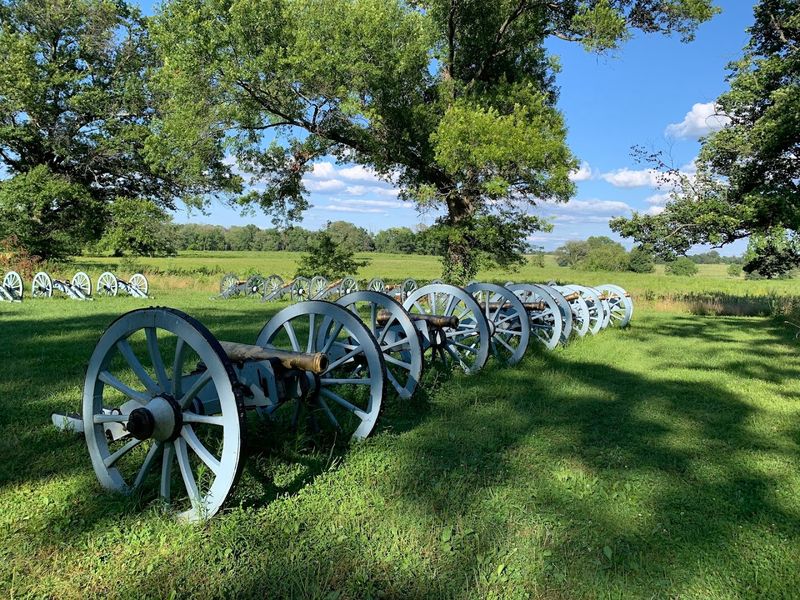
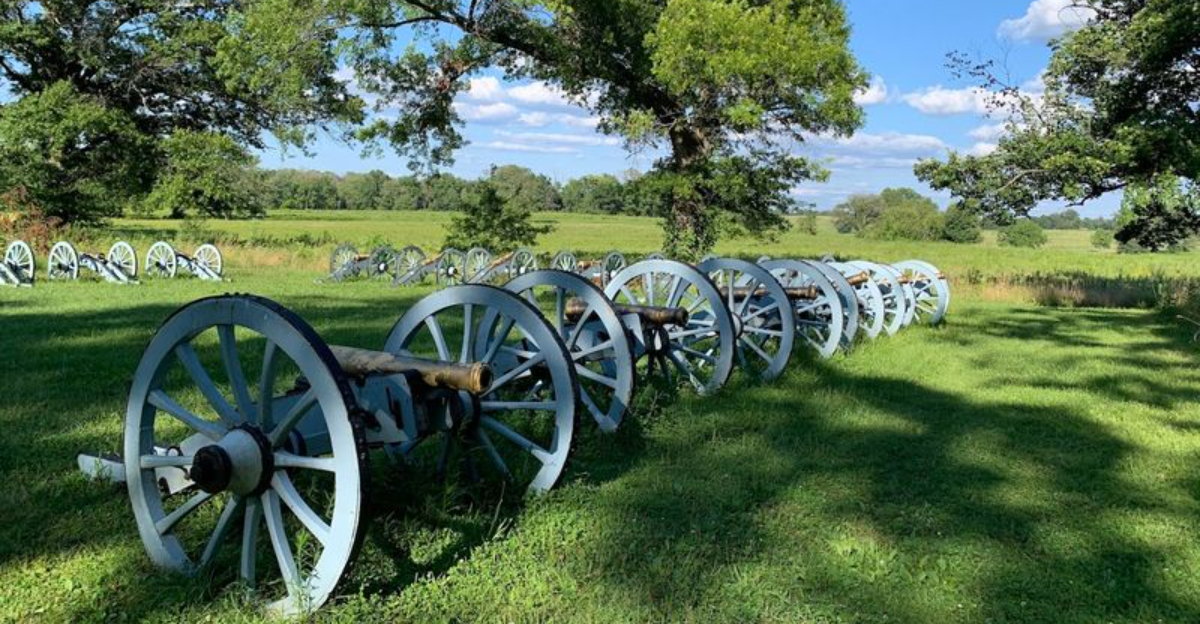
Artillery Park demonstrates how the Continental Army organized its defenses during the encampment period. Rows of cannons point across open parade grounds, positioned exactly where Washington’s artillery units practiced and prepared for future battles.
These weren’t decorative pieces—they represented real military power that eventually helped defeat British forces at crucial moments.
The wide-open spaces here help visitors visualize military drills and formations that took place daily. Baron von Steuben, a Prussian military officer, used these very grounds to train undisciplined colonial troops into a professional fighting force.
His drilling techniques transformed farmers and shopkeepers into soldiers who could stand toe-to-toe with Europe’s best armies. Walking across these fields, you can almost hear commands being shouted and imagine thousands of men moving in coordinated formations.
Interpretive signs explain how artillery worked during the Revolutionary War and why these weapons mattered so much. Kids especially enjoy seeing the cannons up close and learning how crews operated them under battle conditions.
The surrounding views stretch across rolling countryside, giving a tactical perspective on why Washington chose this location. Weather permitting, these open areas also make excellent spots for family photos, with historic cannons adding dramatic backgrounds that capture Valley Forge’s military heritage perfectly.
Wildlife and Seasonal Natural Beauty
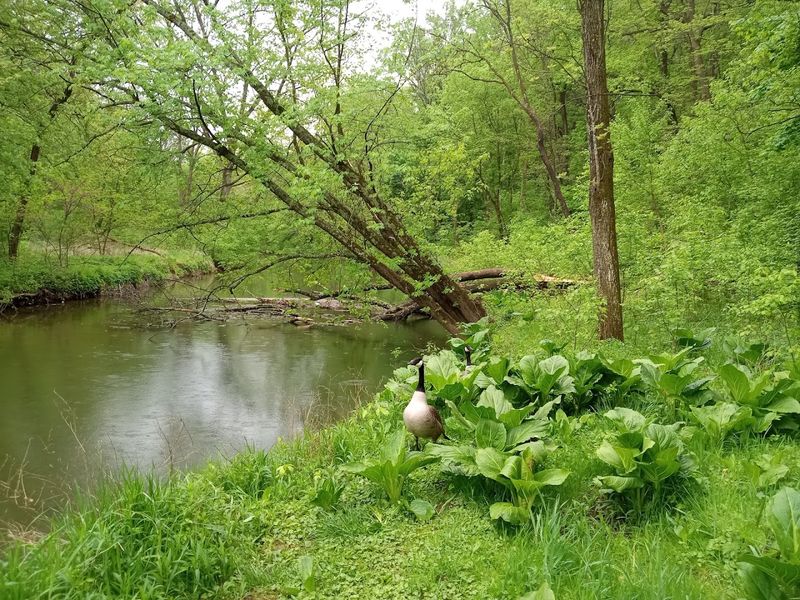
Valley Forge isn’t just about history—it’s become an important refuge for wildlife in southeastern Pennsylvania’s increasingly developed landscape. White-tailed deer commonly graze near trails and historic sites, often so accustomed to visitors that they barely look up from eating.
Foxes, groundhogs, and countless bird species also call the park home, thriving in protected forests and meadows that might otherwise have become parking lots.
Birdwatchers bring binoculars to spot hawks circling overhead, woodpeckers hammering at tree bark, and songbirds flitting between branches. Spring migration brings spectacular variety, while summer offers chances to see young animals learning survival skills from their parents.
The park’s diverse habitats—from wetlands to forests to open fields—support an impressive range of creatures that add life to historical landscapes.
Each season paints the park in completely different colors. March through May transforms bare branches into green canopies decorated with flowering dogwoods and redbuds.
Summer’s lush growth provides cool shade for hot afternoon walks. September through November delivers some of Pennsylvania’s most stunning fall foliage, with maples and oaks competing in brilliant displays.
Winter strips everything to basics, revealing the landscape’s bones and making historic structures stand out dramatically against snow-covered ground and gray skies.
Historic Monuments and State Memorials
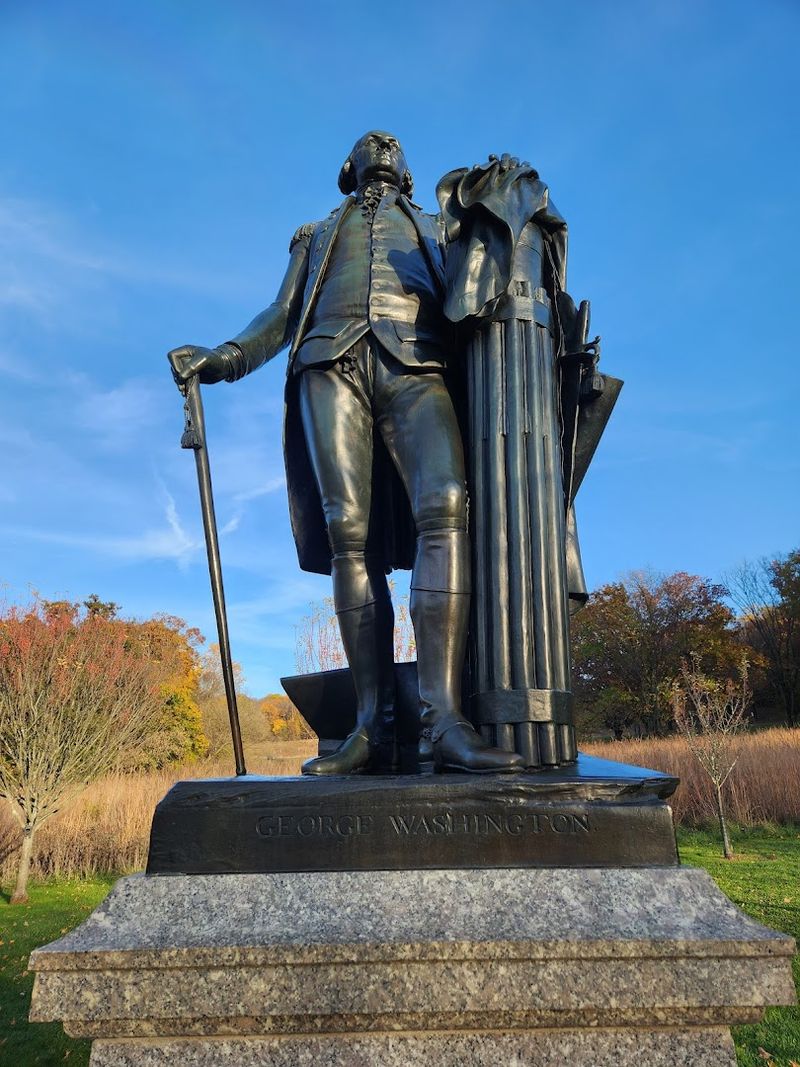
Scattered throughout Valley Forge, dozens of monuments tell individual stories of courage and sacrifice. Each state that contributed troops to the Continental Army erected memorials honoring their soldiers, creating an outdoor gallery of American history.
These statues, plaques, and markers range from simple stone markers to elaborate bronze sculptures depicting soldiers in dramatic poses.
Pennsylvania’s memorial stands particularly impressive, but smaller tributes to soldiers from Connecticut, Massachusetts, and other colonies carry equal emotional weight. Some monuments honor specific regiments or famous officers, while others commemorate ordinary soldiers whose names history forgot.
Reading inscriptions reveals fascinating details about individual contributions—volunteers who walked hundreds of miles to join Washington, teenage drummer boys who never returned home, surgeons who fought disease as fiercely as any battle.
Many families make games of monument hunting, using park maps to locate different memorials while learning state history. The variety of architectural styles reflects different eras when monuments were built, from Victorian-era designs to more modern installations.
Photographers find endless opportunities here, especially during golden hour when sunlight illuminates bronze figures against colorful skies. These monuments serve important purposes beyond decoration—they ensure that generations of visitors remember the real people who secured American independence through extraordinary personal sacrifice during that legendary winter.
Family-Friendly Activities and Educational Programs
Valley Forge excels at making history engaging for younger visitors who might normally find museums boring. Rangers lead special programs designed specifically for families, including hands-on demonstrations of colonial skills like fire-starting, musket handling, and 18th-century cooking techniques.
Kids love trying activities that Revolutionary War soldiers actually did, transforming abstract history into memorable personal experiences.
Living history events happen regularly throughout warmer months, with costumed interpreters portraying soldiers, officers, and camp followers. These aren’t stuffy lectures—they’re interactive conversations where children can ask questions, handle reproduction equipment, and understand daily camp life from people who’ve studied every detail.
Many schools coordinate field trips here because the educational value goes far beyond textbooks.
Biking has become incredibly popular at Valley Forge, with families pedaling along the six-mile park road that connects major historic sites. The relatively flat terrain makes cycling accessible for most ages and skill levels.
Scavenger hunts, junior ranger programs, and special seasonal events like Revolutionary War reenactments keep visits exciting for repeat visitors. The park’s combination of outdoor recreation and hands-on learning means kids often don’t realize they’re absorbing important historical lessons—they’re just having too much fun exploring, discovering, and experiencing this unique place where nature and American history exist together perfectly.
Visitor Information
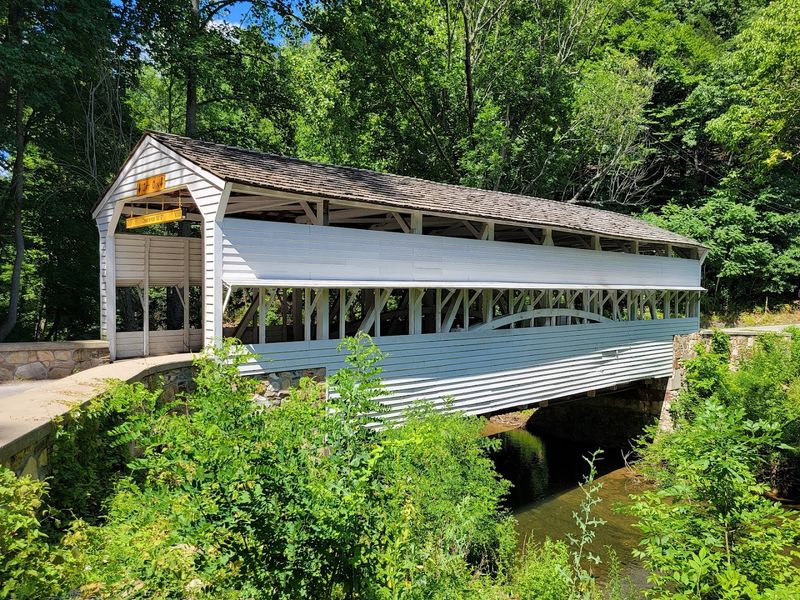
Planning your visit starts at 1400 N Outer Line Drive, King of Prussia, Pennsylvania 19406, where the visitor center provides everything needed for a great experience. Located just 30 minutes from Philadelphia, the park offers easy access from major highways, making it perfect for day trips or longer explorations.
Best of all, there’s no entrance fee—Valley Forge welcomes everyone regardless of budget.
The visitor center serves as mission control for your adventure, offering detailed maps, museum exhibits, a gift shop with history books and souvenirs, and knowledgeable rangers who answer questions and suggest routes based on your interests and time available. Clean restrooms, water fountains, and a theater showing orientation films make this an essential first stop before heading into the park.
Valley Forge stays open year-round, though hours vary by season. Spring (April through June) and fall (September through November) attract the biggest crowds thanks to comfortable temperatures and spectacular scenery.
Summer brings heat but also the most educational programs and special events. Winter offers peaceful solitude with fewer visitors, though some facilities close and weather can be unpredictable.
Arriving early on weekends helps avoid parking challenges during peak seasons. Whether spending two hours or an entire day, Valley Forge delivers an unforgettable combination of American history and natural beauty.