A real street from one boy’s childhood became the setting of his very first children’s book. That boy grew up to write about a cat in a striped hat.
Now his hometown has built an entire museum around his imagination.
The museum holds his childhood stuffed dog, named Theophrastus. It also has his real drawing table and art supplies, arranged the way he used them.
This beloved toy sits near the tools that made millions of kids want to read.
Downstairs, kids can make crafts and flip through his books in several languages. Upstairs, grown-ups can read funny letters he mailed to family.
Now, that’s a rainy-day plan in Massachusetts that is hard to beat.
Your Kids Will Meet Horton Before You Even Find The Map
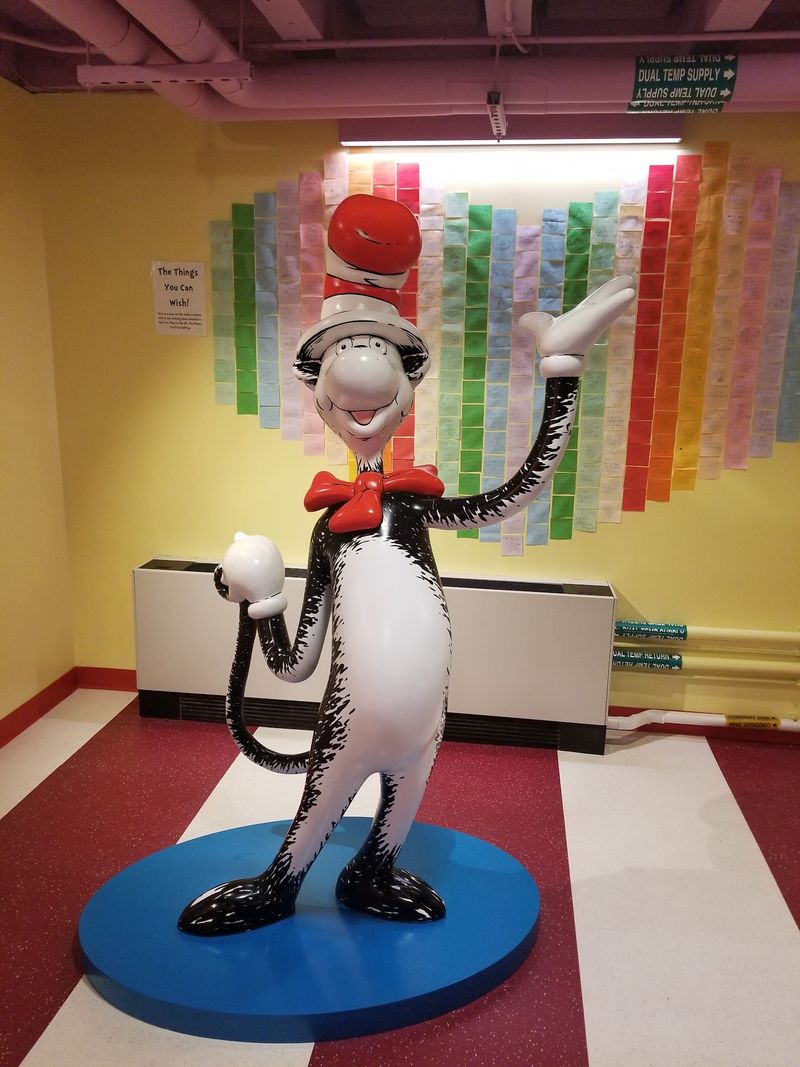
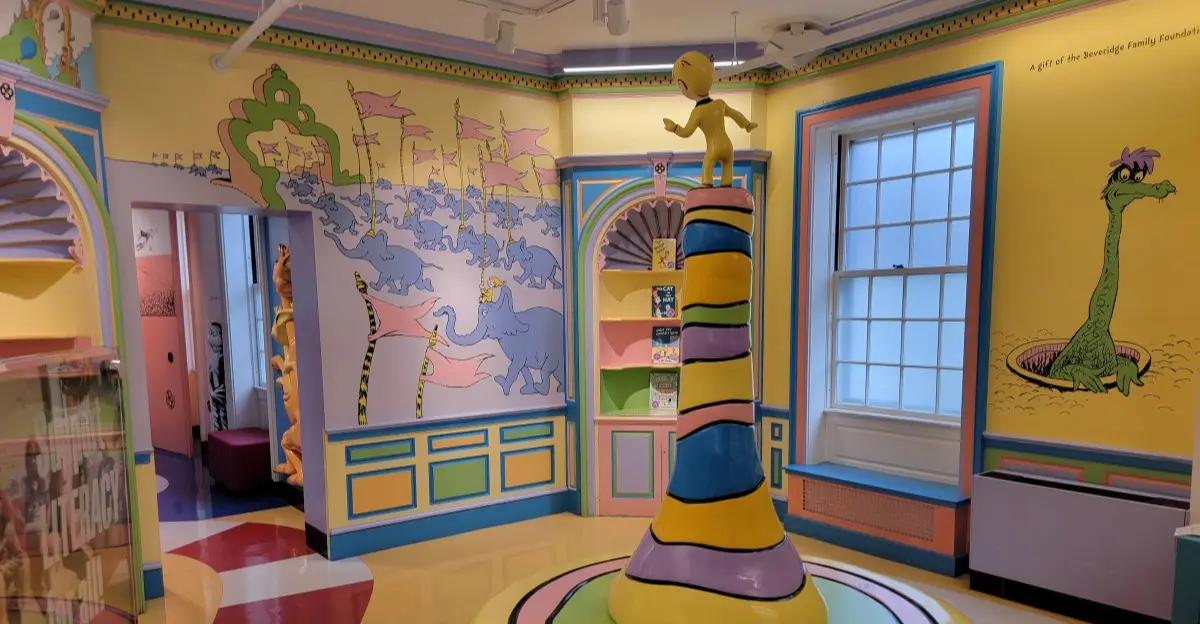
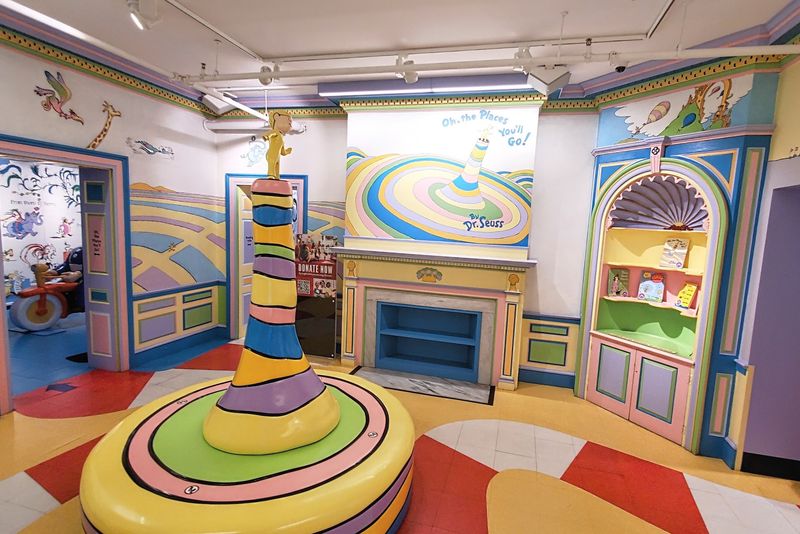
Life-size characters greet families on the first floor of The Amazing World of Dr. Seuss Museum. Horton the Elephant, the Cat in the Hat, and Thing 1 and Thing 2 all appear in full size.
The whole level works like a Seussian version of Springfield. Exhibits borrow from real local spots, including Mulberry Street, the setting of his first children’s book.
That book was called And to Think That I Saw It on Mulberry Street. Your kids can stand inside the same kind of daydream that sparked it.
Big sculptures mean great photos, so keep your phone handy. Signs do ask children not to climb on the statues, which is worth a quick reminder before they bolt.
Every exhibit here is bilingual, written in English and Spanish. That small detail makes the space feel welcoming for many more families.
The goal goes beyond fun, though fun clearly wins the first round. Wordplay, rhymes, and story building show up everywhere, nudging kids toward reading without a single lecture.
Plan to start here while energy runs high. Little legs will want to sprint from one bright corner to the next, and honestly, so might yours.
Rhyming Games Turn Reading Into A Sneaky Sport
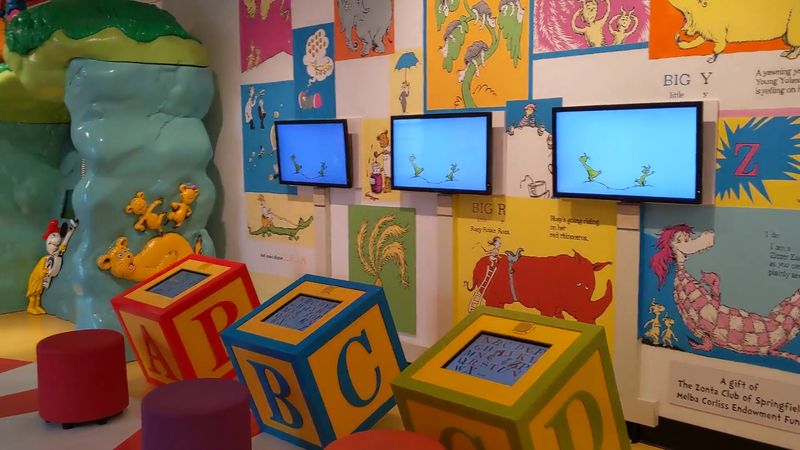
Kids rarely beg to practice rhyming words. Somehow, the exhibits on the first floor make them do exactly that.
Three named spaces anchor the fun: Who-ville, Cats, Hats and Balancing Acts, and Tons of Fun with Seuss. Each one leans into the playful language that made Dr. Seuss famous.
The activities are hands-on, so curious fingers stay busy. Children can mix sounds, build silly phrases, and test their own rhymes out loud.
Parents of early readers will appreciate this sneaky strategy. A game feels like play, yet it quietly builds the skills kids need for books.
Who-ville is a natural favorite for fans of the Grinch story. Even kids who only know the movie version will recognize that cheerful town feeling.
Older siblings may pretend they’re too cool at first. Give them a few minutes, and they’ll likely be inventing ridiculous rhymes alongside the little ones.
A good tip is to let kids lead the order. Following their curiosity keeps meltdowns low and smiles high, which is a winning trade on any family outing in Massachusetts.
Head Upstairs To See Where The Magic Actually Happened
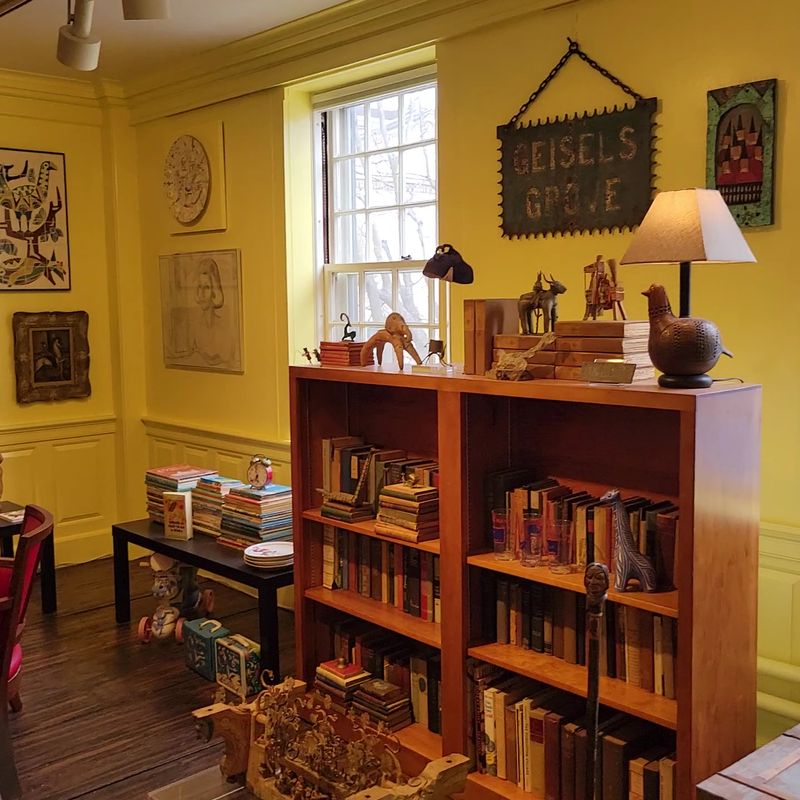
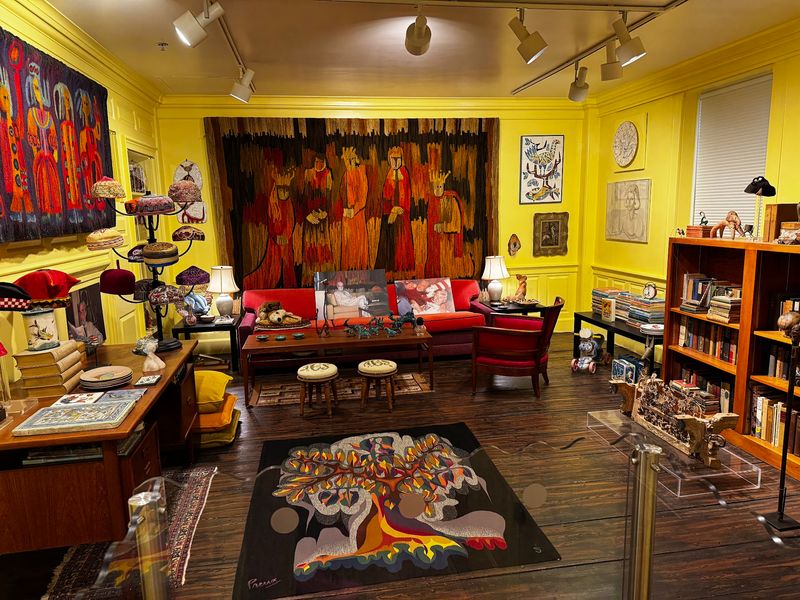
Grown-ups, this floor belongs to you. The second level of the museum recreates the studio and living room of Theodor Seuss Geisel.
His original furniture fills the space. His actual art supplies are there too, giving you a peek at the tools behind those wild, wobbly drawings.
Family members helped shape this area. His two stepdaughters and his great-nephew curated the displays, which gives the rooms a personal touch.
Never-before-seen artwork hangs alongside family photographs and letters. It feels less like a shrine and more like a visit to a creative relative’s home.
Kids who loved the first floor might move faster here. Try pointing out small items and asking which book they think came from that desk.
Geisel was born in Springfield in 1904. Walking through his recreated workspace connects the famous name to a real person who once grew up nearby.
Give yourself time on this level if you can. The details reward slow looking, and you’ll probably leave knowing far more about the man behind the hat than you expected.
A Stuffed Dog Named Theophrastus Might Steal Your Heart
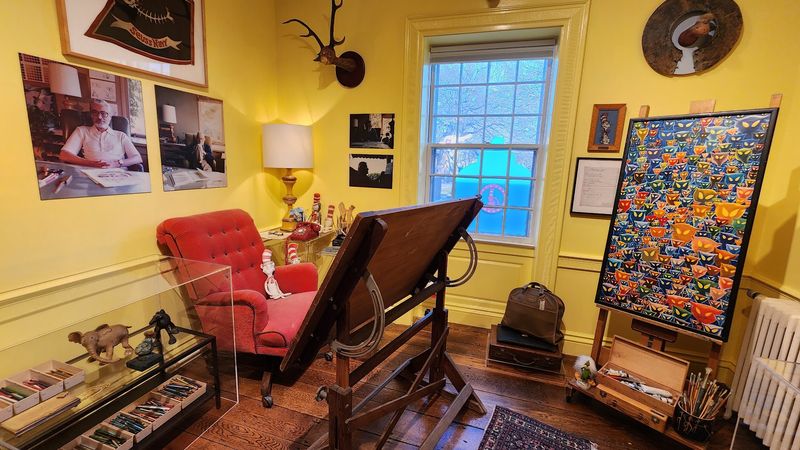
Every great storyteller starts somewhere, and sometimes that somewhere has floppy ears. Geisel’s childhood stuffed dog, Theophrastus, sits among the personal treasures on the second floor.
Seeing a famous author’s favorite toy feels oddly touching. It reminds kids that the person behind their bedtime books was once a kid too.
Nearby, an exhibit called Ted2Ted shares a sweet family connection. It shows notes, illustrations, and keepsakes passed between Geisel and his grand-nephew.
The letters show off his sense of humor in a fresh way. Little doodles and playful writing appear in messages meant for one lucky family member.
Reading these notes with your kids could spark an idea. Why not write a silly illustrated letter to a cousin or grandparent after your visit?
Photography rules may differ in certain rooms upstairs. Watch for posted signs so you respect the displays.
These small objects bring the biggest emotional punch in the building. Big sculptures make kids squeal, but a worn stuffed dog might be what you remember on the drive home.
The Cat’s Corner Is Where Little Makers Take Over
Bow ties made by small hands are a fine souvenir. The lower level houses The Cat’s Corner, a playful maker space built around stories and art.
A rotating daily craft keeps things fresh. One day it might be bow ties, so the activity could change between visits.
Hands-on projects give restless kids a break from looking and listening. Sometimes the best museum moment involves glue sticks and a little creative chaos.
Shelves here hold Dr. Seuss books in several languages. Families who speak something other than English at home can share a favorite story in their own words.
Plan this stop for the middle or end of your visit. It works well as a calm reset after the excitement of the giant characters upstairs.
Parents can grab a seat while kids create. You might even sneak a page or two of a classic story yourself.
Don’t rush the crafting time if you can help it. Kids who make something tend to remember the trip longer, and the fridge back home gets a brand-new masterpiece.
Bronze Characters Wait Outside For Your Best Family Photo
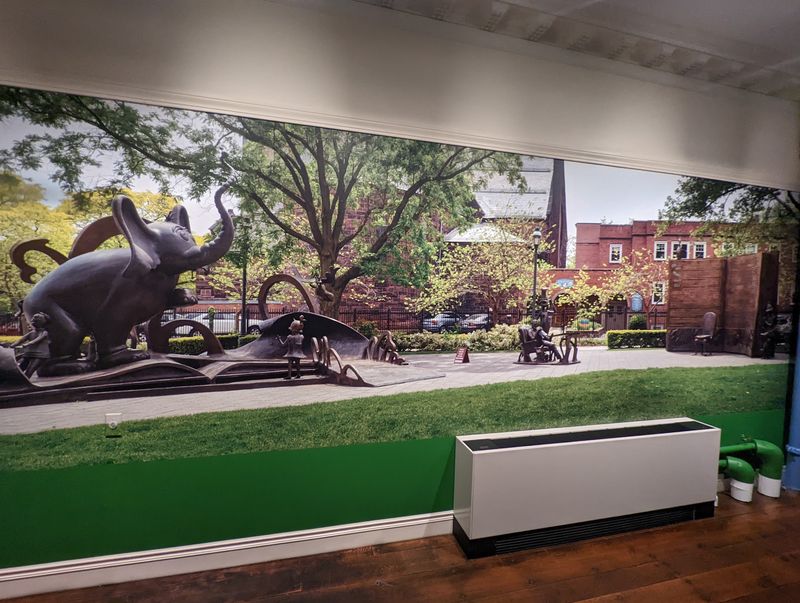
Sunshine and bronze make a fun pair right outside the museum doors. The Dr. Seuss National Memorial Sculpture Garden sits on the Quadrangle nearby.
The garden opened in 2002, years before the museum arrived. It features bronze sculptures of Dr. Seuss himself, plus favorites like the Cat in the Hat, Horton, the Lorax, and Yertle the Turtle.
Geisel’s stepdaughter, Lark Grey Dimond-Cates, designed these sculptures. That family link adds extra meaning to every statue you pass.
Your ticket covers entry here too. So there’s no reason to skip it, unless the weather turns truly grumpy.
Bring a camera and some patience for posing. Kids can spot characters, name the books, and argue about who gets to stand next to the Cat.
Food trucks sometimes visit the garden. Picnic areas also sit on the Quadrangle Green if you pack your own lunch.
Save this stop for a pleasant afternoon when you can linger. A stroll through bronze storybook friends makes a cheerful bookend to an indoor adventure in Massachusetts.
One Ticket Opens Way More Doors Than You Expect
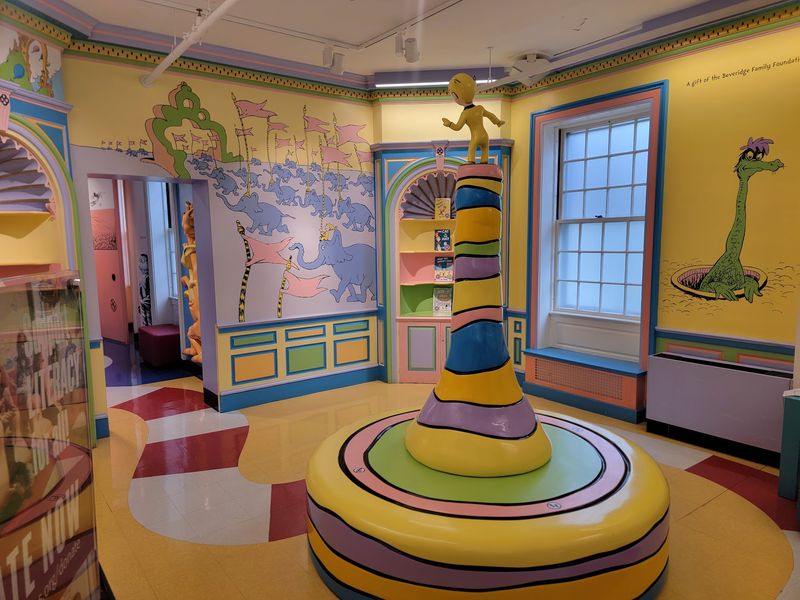
Here’s a pleasant surprise for budget-minded families. A single admission ticket covers all five museums on the Springfield Museums campus, plus the sculpture garden.
That means your Seuss day can easily grow into a full adventure. Kids who finish rhyming games can head to the science museum next door.
Children under 3 get in free. Springfield residents with valid ID also enter at no cost, and EBT cardholders receive a reduced rate.
Buying tickets ahead of time is a smart move. It saves you from standing around while excited kids bounce in place.
Hours run Tuesday through Saturday from 10 a.m. to 5 p.m. Sundays open at 11 a.m., and Mondays are usually closed, though some summer weeks may differ.
Major holidays also bring closures, including Thanksgiving and Christmas Day. Check the schedule before you load up the car.
With five museums in one ticket, pacing matters. Start with the Dr. Seuss building while attention spans are fresh, then wander wherever curiosity points next.
Snacks, Strollers, And Souvenirs Are All Covered
Hungry explorers won’t have to go far. The Blake House Cafe sits right next to The Amazing World of Dr. Seuss Museum.
Prefer to bring your own lunch? Picnic areas are available near the Blake House and on the Quadrangle Green.
Strollers are welcome inside the museum. Elevators make every floor accessible, which helps families with little ones or anyone with mobility needs.
Restrooms are available on most floors. That small detail matters a lot when traveling with a potty-training preschooler.
Souvenir hunters should head to the Hanmer Museum Store. You’ll find it inside the Welcome Center of the Science Museum, stocked with gifts and keepsakes.
A Seuss book bought on the trip makes a great bedtime follow-up. Reading it that night lets kids relive their favorite rooms all over again.
Planning these breaks ahead keeps everyone happier. A fed, rested kid explores longer, and a grown-up with a good snack has more patience for one more photo with Horton.
Springfield Shaped Seuss, And This Building Proves It
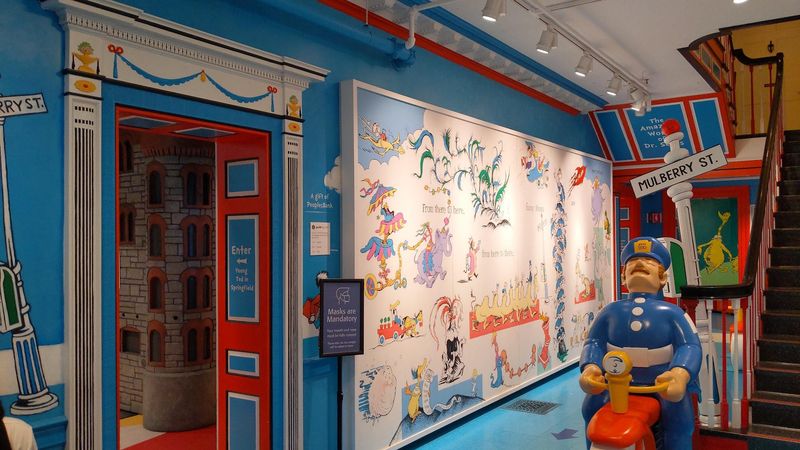
Long before the museum opened, this building told different stories. The William Pynchon Memorial Building once housed the Connecticut Valley Historical Museum until 2009.
In June 2017, The Amazing World of Dr. Seuss Museum opened inside it. Development moved forward with approval from Audrey Geisel and Dr. Seuss Enterprises.
You’ll find it at 21 Edwards St, Springfield, MA 01103. Free parking sits in lots on Edwards Street and State Street.
The setting fits the subject perfectly. Geisel grew up in this city, and local places shaped the worlds he later drew.
Mulberry Street inspired his first children’s book. Other spots, like the Howard Street Armory and the Barney Mausoleum, also fed his imagination.
Knowing this makes the visit richer for older kids. They can see how ordinary hometown places became the seeds of wildly creative stories.
Maybe that’s the best lesson to carry home. Your own street could inspire something amazing too, so keep a notebook handy on the ride back through Massachusetts.