Pennsylvania has a way of hiding grandeur in plain sight, tucked between rolling hills and quiet small towns.
From Bucks County to the Allegheny foothills, the state shelters an unexpected collection of castles, mansions, and historic estates.
Some were built by industrialists chasing European elegance, while others rose from the dreams of eccentric collectors and visionaries.
Wander through candlelit halls, sprawling gardens, and towers that seem pulled from a storybook, and you will start to see the state in a whole new light.
Whether you are a history lover, an architecture enthusiast, or simply someone who enjoys a good day trip, these twelve castles promise something memorable.
So pick a direction, plan a route, and get ready to discover twelve of Pennsylvania’s most captivating castles.
1. Mercer Museum, Doylestown, Bucks County
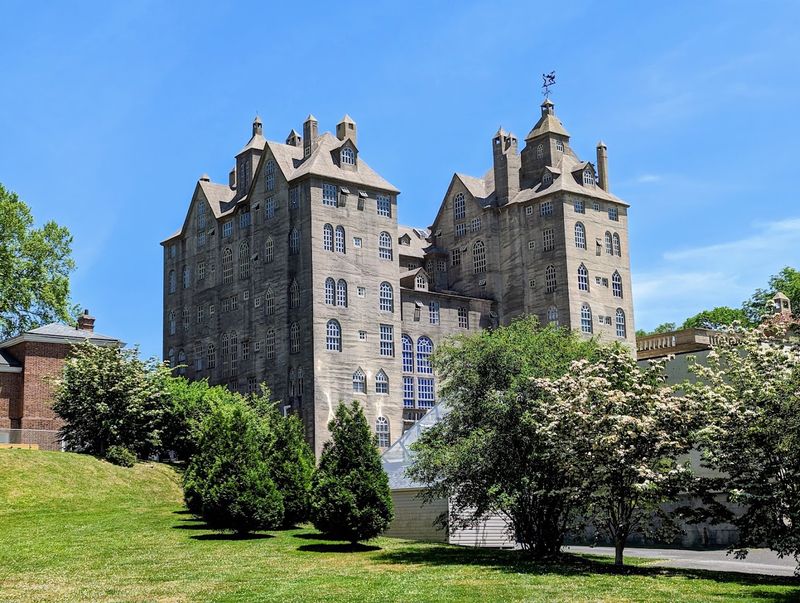
Heavy concrete walls, narrow vertical openings, and a fortress-like silhouette give this place the presence of a medieval stronghold rising above town.
Yet the real surprise is waiting inside, where everyday tools and machines are displayed with almost theatrical drama.
That memorable setting belongs to the Mercer Museum in Doylestown, another Henry Chapman Mercer creation and one of Pennsylvania’s most distinctive castle-like landmarks.
Completed in 1916, the six story building was made of poured reinforced concrete, a bold choice that still feels modern and monumental.
Mercer designed it to preserve the material culture of early American life, especially objects linked to trades, agriculture, transportation, and domestic work.
Rather than arranging everything in ordinary cases, he suspended many large items in open central spaces, creating a museum experience unlike almost any other.
As you move upward through galleries, the building itself becomes part of the exhibit.
Arched openings, stair towers, and strong vertical lines reinforce the sense that you are exploring a purpose-built keep for history.
The collection is enormous, but it never feels random once you understand Mercer’s mission to document a world transformed by industrialization.
Views from the upper levels and changing light through the windows add another layer to the visit.
If you love unusual museums, inventive design, and places with real personality, Mercer Museum is easy to recommend.
2. Glencairn Museum, Bryn Athyn, Montgomery County
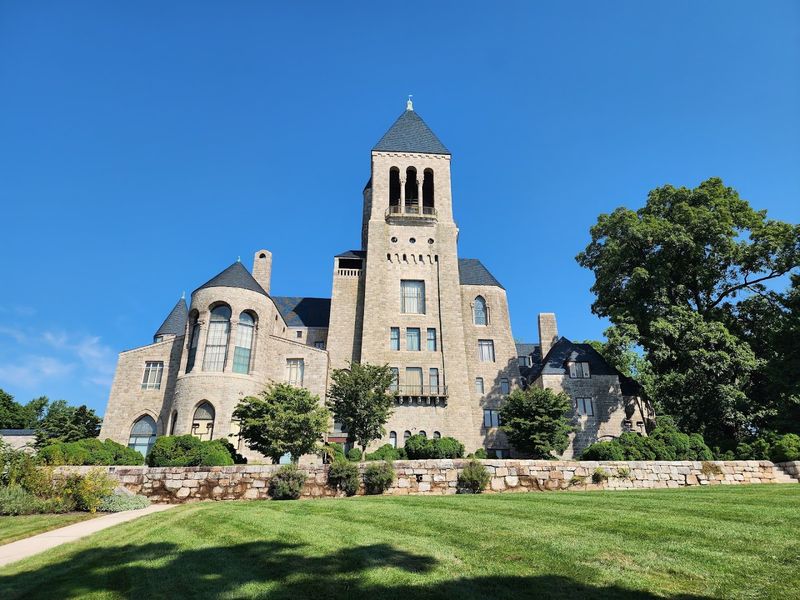
Stone towers, carved ornament, and a hilltop setting create the kind of first impression that makes you slow down before you even reach the entrance.
From a distance, the structure feels both romantic and solemn, like a European castle carefully translated into Pennsylvania landscape.
That dramatic landmark is Glencairn Museum in Bryn Athyn, built as the home of industrialist Raymond Pitcairn and completed in 1939.
The design draws from Romanesque and Gothic traditions, using textured stone, arches, leaded glass, and richly crafted interiors to create unusual depth.
Although it functioned as a residence, the house was also shaped by spiritual ideas connected to the Swedenborgian community established in Bryn Athyn.
Today, the building houses a museum of religious art, giving visitors the rare chance to experience architecture, collection, and worldview in one place.
Inside, you notice mosaics, sculpture, woodwork, and stained glass that make the rooms feel ceremonial without losing warmth.
The craftsmanship is exceptional, and the scale remains human enough that you can imagine daily life unfolding within those impressive walls.
Guided tours often highlight both the family story and the broader planning of the Bryn Athyn Historic District.
Outside, the elevated setting rewards you with broad views and a strong sense of how intentionally the estate was positioned.
Glencairn is less about fantasy and more about conviction, artistry, and permanence.
3. Grey Towers National Historic Site, Milford, Pike County
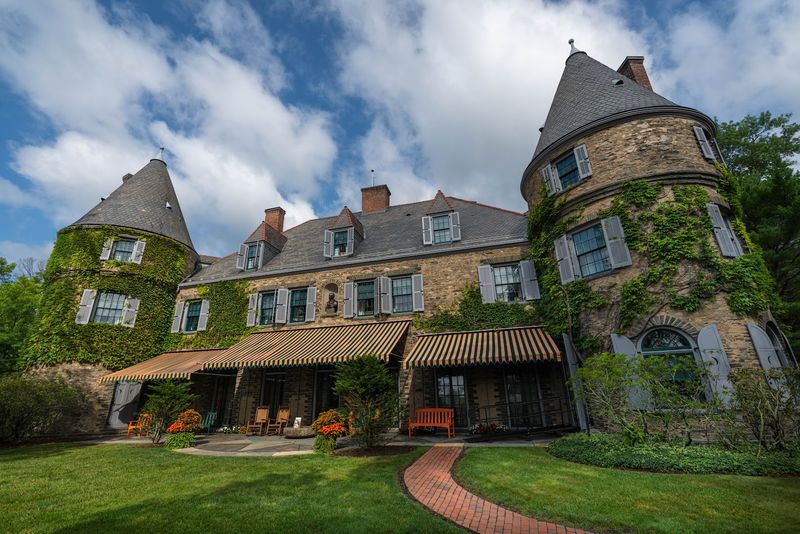
Forested hills, cool mountain air, and a refined stone mansion overlooking landscaped grounds make this destination feel serene before it feels grand.
There is a quiet confidence to the architecture, the kind that suggests power expressed through taste rather than spectacle.
That balance defines Grey Towers National Historic Site in Milford, the longtime family home of Gifford Pinchot, twice governor of Pennsylvania and the first chief of the U.S. Forest Service.
Completed in 1886 for Pinchot’s father, James, the house was designed in a French chateau style that suits the surrounding Pocono scenery beautifully.
Steep roofs, elegant massing, and carefully planned terraces create a residence that feels noble without becoming cold.
The estate later became a place where conservation ideas were discussed, giving it unusual national significance beyond architecture alone.
The famous Finger Bowl, outdoor dining area, formal gardens, and woodland views show how the property was meant to be both cultivated and connected to nature.
Inside, period rooms and interpretation help you understand the Pinchot family’s public influence and private habits.
Grey Towers does not mimic a medieval fortress, but its castle-like elegance and elevated setting absolutely justify the comparison.
For anyone interested in political history, conservation, and architecture with a strong sense of place, this Milford landmark is especially rewarding.
4. Stokesay Castle, Reading, Berks County
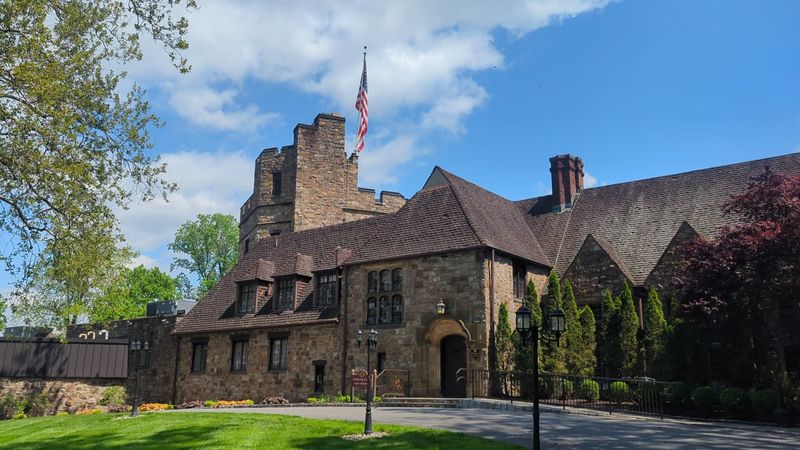
Curving drives, mature trees, and a gray stone mansion with turrets and steep rooflines make the approach feel almost cinematic.
The building carries a romantic medieval mood, but it is firmly rooted in Pennsylvania’s industrial age prosperity.
That intriguing contrast comes into focus at Stokesay Castle in Reading, commissioned by iron magnate Charles D. Wetherill and completed in 1931.
The design was inspired by Stokesay Castle in Shropshire, England, though this version interprets the model through modern construction and early twentieth century luxury.
Its rough stone walls, dramatic entrance, and asymmetrical massing create the impression of age even though the residence is comparatively recent.
Inside and out, the craftsmanship reflects the period’s appetite for historic revival styles presented on a grand, entertaining scale.
You can appreciate how carefully the site was planned to frame views and build anticipation as the structure appears through the landscape.
It is one of those places where architectural storytelling matters as much as pure historical depth.
Stokesay Castle may not be ancient, yet it succeeds wonderfully at delivering atmosphere.
If you enjoy stonework, revival design, and the idea of a Pennsylvania castle shaped by ambition and romance, this is a memorable stop.
Its appeal lies in that blend of fantasy, craftsmanship, and local history made visible in every angle.
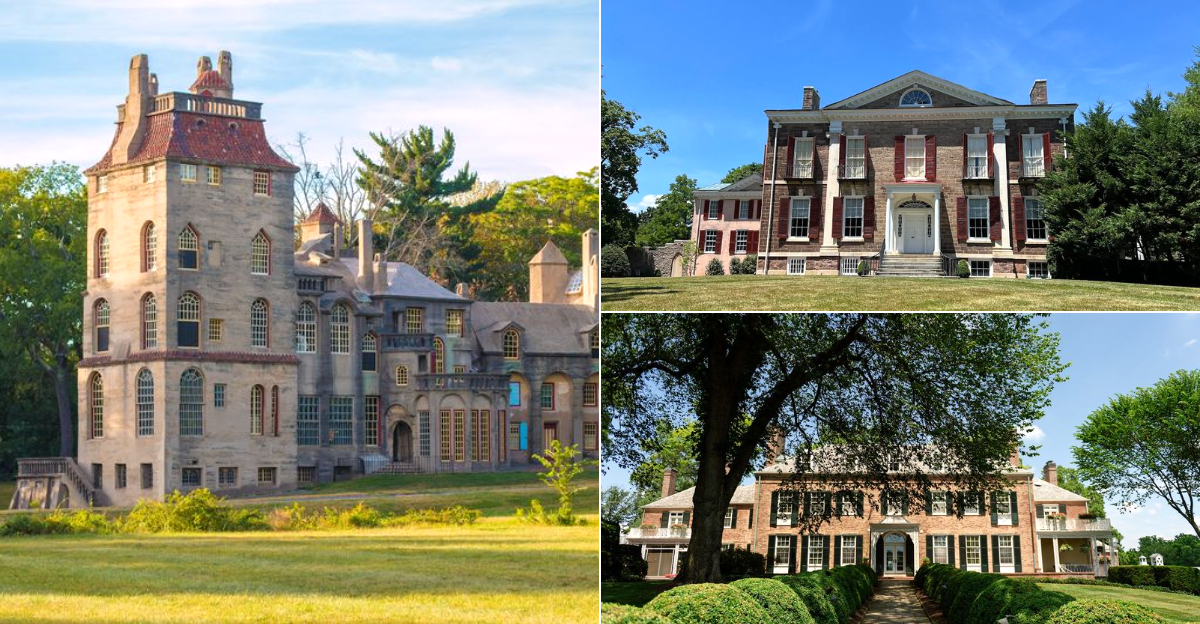
5. Fonthill Castle, Doylestown, Bucks County
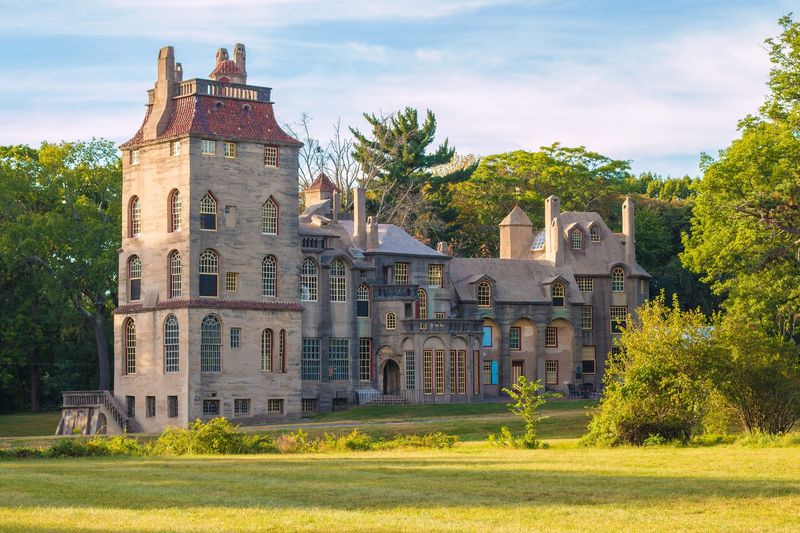
Misty gardens, textured concrete walls, and towers that seem borrowed from a dream make this stop feel instantly different from the usual historic house tour.
You arrive expecting a mansion, but the mood is closer to an eccentric personal kingdom shaped by imagination and craft.
That impression fits Fonthill Castle in Doylestown, created by archaeologist, tilemaker, and collector Henry Chapman Mercer in the early twentieth century.
Built between 1908 and 1912, the castle was poured in reinforced concrete and designed as both home and experiment.
Mercer rejected strict symmetry, so rooms, corridors, staircases, and terraces unfold in a wonderfully irregular sequence.
Inside, handmade tiles, alcoves, and inscriptions reveal his fascination with history, storytelling, and the disappearing crafts of preindustrial life.
Rather than copying one European model, the architecture blends Medieval, Gothic, and Arts and Crafts influences into something uniquely Pennsylvanian.
Guided tours help you notice small details, from built in furniture to windows positioned for light, comfort, and views across the surrounding hillside.
Fonthill is not the biggest castle on this list, but it may be the most original and intimate.
You leave with the sense that you have stepped directly into one inventive mind, preserved in concrete, color, and wonderfully eccentric form.
6. Nemacolin Castle, Brownsville, Fayette County
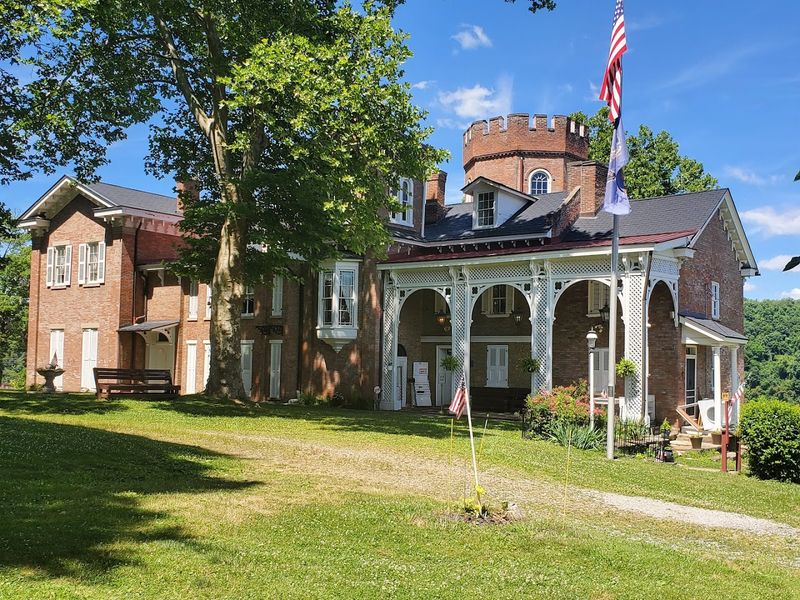
Above the Monongahela River, an irregular old house with towers, porches, and layered additions creates the kind of silhouette that invites questions immediately.
It does not look polished into one perfect style, and that is exactly why it feels so alive.
This fascinating landmark is Nemacolin Castle in Brownsville, a structure whose origins reach back to the late eighteenth century and whose appearance evolved repeatedly over time.
The earliest core is associated with Jacob Bowman, while later owners expanded and altered the house in ways that added Gothic Revival and castellated character.
Because Brownsville was an important transportation and industrial center, the home absorbed the ambitions of a changing river town.
Legends of hauntings, hidden spaces, and dramatic family stories have only deepened its reputation as one of Pennsylvania’s most atmospheric historic properties.
When you visit, the appeal comes from both architecture and accumulated memory.
Rather than reading as a single designer’s vision, Nemacolin feels like a physical timeline built room by room and generation by generation.
That patchwork quality can be more compelling than perfection, especially if you appreciate places where history remains visible in the walls.
The elevated site also offers a strong connection to the surrounding landscape and the town below.
Views toward the river help explain why this location mattered long before heritage tourism existed.
7. Buhl Mansion, Sharon, Mercer County
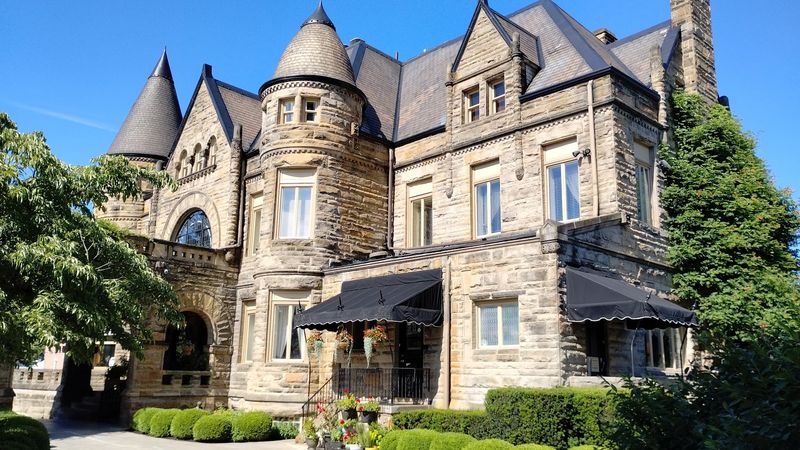
Elegant stonework, rounded turrets, and richly detailed windows give this mansion the polished glamour of a European chateau dropped into western Pennsylvania.
Unlike rougher castle-like estates, this one feels refined, intimate, and designed to impress guests as much as residents.
That sophisticated mood defines Buhl Mansion in Sharon, built in 1896 for steel and mining entrepreneur Frank H. Buhl and his wife, Julia.
The house blends Romanesque, Chateauesque, and Victorian influences into a highly decorative composition of arches, carved surfaces, and dramatic rooflines.
Its original owners were major philanthropists, and the mansion reflected both wealth and social standing at the height of Sharon’s industrial success.
Today the property is best known as a luxury inn and spa, which has helped preserve many of its historic features with notable care.
Because it functions as hospitality space, the experience here can feel more immersive than at many formal museums.
You are not just observing architecture from behind ropes, but moving through rooms meant to delight, comfort, and display craftsmanship.
That living quality makes the building’s stained glass, woodwork, and ornamental details especially easy to appreciate.
Buhl Mansion is less fortress and more fairy-tale residence, but its towers and silhouette fully earn its place among Pennsylvania castles.
8. Baker Mansion, Altoona, Blair County
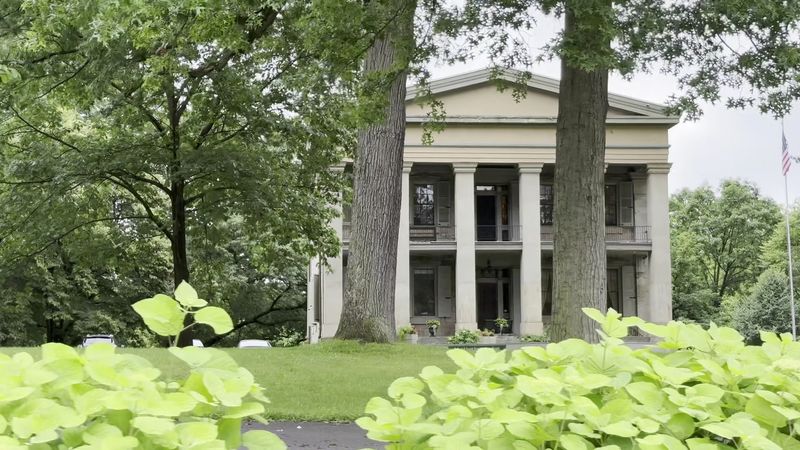
Broad lawns, a commanding portico, and the sense of railroad-era ambition all give this stop a grandeur that feels different from turreted fantasy castles.
Its power comes from symmetry, scale, and the confidence of a prosperous nineteenth century family shaping a growing city.
That presence belongs to Baker Mansion in Altoona, built between 1844 and 1849 for Elias Baker, one of the founders of the nearby Allegheny Portage Railroad.
Architecturally, it is a Greek Revival mansion rather than a literal castle, yet it earns inclusion because of its commanding stature and landmark status.
The massive columns, formal proportions, and elevated setting create a noble profile that still dominates its surroundings.
Today it houses the Blair County Historical Society, making it a key place to understand local development, transportation history, and elite domestic life.
Inside, period rooms and regional exhibits help place the family within the wider story of Altoona and central Pennsylvania.
You get a clearer sense of how infrastructure, commerce, and private wealth shaped the landscape in the decades before and after the Civil War.
That historical context gives the mansion significance far beyond its handsome exterior.
While it may be the least castle-like stop on this list, the experience is rewarding precisely because it broadens the category.
Not every grand Pennsylvania stronghold needed battlements to project authority and permanence.
9. Drumore Estate, Pequea, Lancaster County
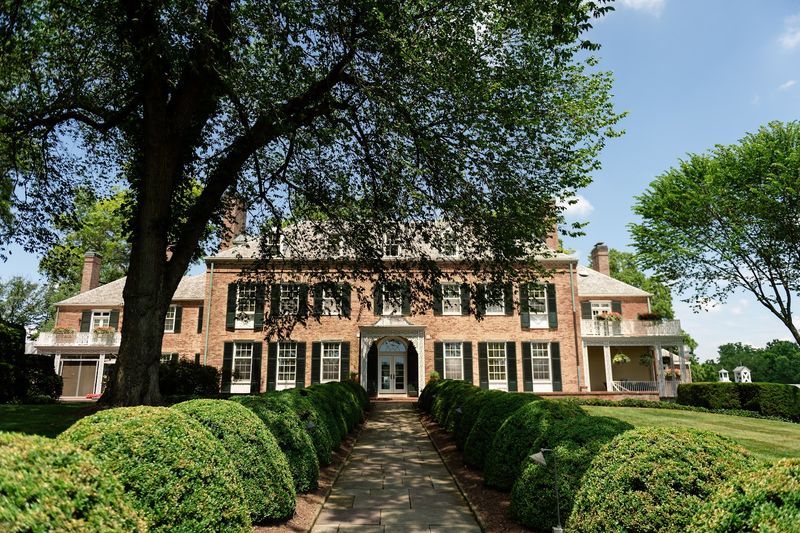
Rolling countryside, formal gardens, and a hilltop mansion with wide views create an atmosphere of calm elegance from the moment you arrive.
This is not a brooding fortress, but a grand estate where setting and architecture work together beautifully.
That refined destination is Drumore Estate in Pequea, a historic Lancaster County property whose roots go back to the eighteenth century.
The main house presents Georgian balance and dignity, while later stewardship has emphasized preservation, hospitality, and event use.
Named for Drumore in Ireland, the estate reflects both the aspirations of early landowners and the enduring appeal of rural gentility.
Its appeal on a castles list comes from the elevated site, formal character, and the feeling that you have entered a self-contained world above the surrounding landscape.
What stands out most is the relationship between the mansion and its grounds.
Terraces, gardens, and carefully framed vistas encourage you to slow down and experience the property as a complete composition rather than a single building.
That scenic quality makes Drumore especially attractive for visitors who value atmosphere and views as much as documented architectural pedigree.
Because the estate often operates as a wedding and event venue, planning ahead is wise if you want access.
Even so, its reputation for beauty is well deserved, and the landscape alone explains much of its allure.
10. Highlands Mansion, Fort Washington, Montgomery County
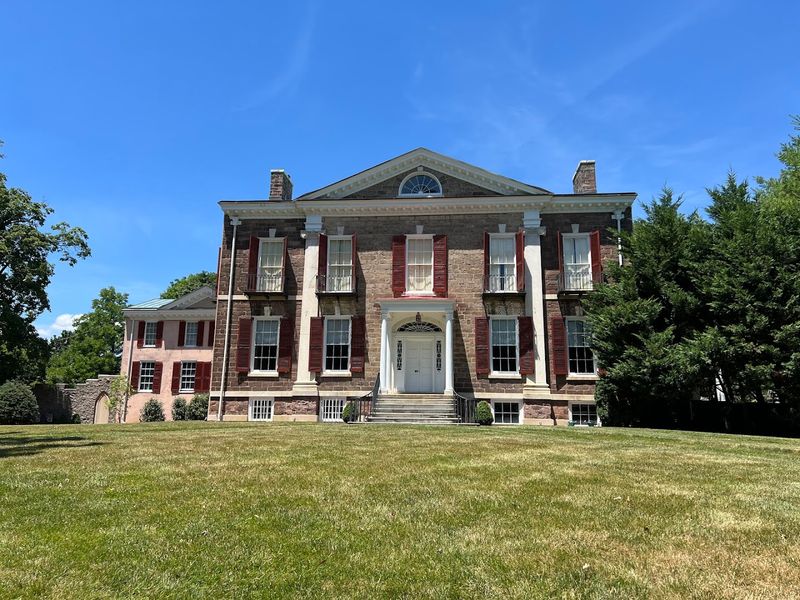
Sweeping lawns, old trees, and a beautifully proportioned country house create a first impression rooted in grace rather than drama.
Still, there is something almost aristocratic about the way the estate sits within the landscape, commanding attention without needing towers.
That understated grandeur defines Highlands Mansion in Fort Washington, a historic property dating to the late eighteenth century and later expanded through the nineteenth.
Built around 1796, the house reflects Georgian and Federal sensibilities, with balance, refinement, and a strong connection to elite country living.
Its story includes several prominent owners and changing uses, which have helped preserve both architectural character and a sense of social history.
Today, the estate is widely admired for its formal gardens, event spaces, and carefully maintained grounds.
While it is not a castle in the strict medieval revival sense, it belongs on this list because it delivers the same feeling of heritage, status, and place.
Visitors often remember the serene landscape as much as the building itself, especially when seasonal color transforms the property.
That harmony between mansion and setting makes it particularly appealing for travelers who prefer elegance to theatricality.
You come here for architecture, yes, but also for atmosphere, horticulture, and the pleasure of seeing how a historic estate can remain both polished and welcoming.
11. Hartwood Acres Mansion, Pittsburgh, Allegheny County
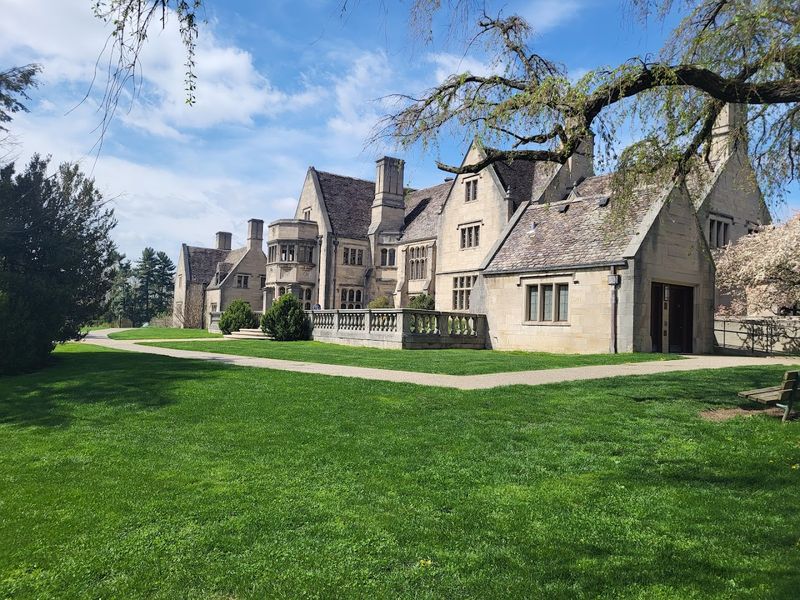
Beyond rolling parkland and tree-lined approaches, a stately mansion appears with the kind of polish that signals old money and careful design.
The atmosphere feels expansive and cultured, more estate retreat than defensive stronghold, yet every detail speaks to grandeur.
That experience awaits at Hartwood Acres Mansion in Pittsburgh, completed in 1929 for Mary Flinn Lawrence and her husband, Frank.
The house blends Tudor and French inspired elements into an impressive country estate that reflects the ambitions of a powerful Pittsburgh family.
Its interiors are known for fine furnishings, decorative arts, and rooms designed for entertaining on a lavish scale.
Because the surrounding property later became a public park, the mansion now stands within one of the region’s most accessible and beloved landscapes.
You can tour formal spaces inside, then step back into broad grounds where gardens, trails, and open views extend the experience beyond architecture alone.
That combination helps visitors understand the estate not just as a house, but as a complete expression of leisure, status, and planning.
It may not resemble a classic stone castle with battlements, but it absolutely delivers the feeling of a Pennsylvania seat of power.
The mansion’s scale, craftsmanship, and landscape presence make it worthy of inclusion on any grand homes itinerary.
12. Lynnewood Hall, Elkins Park, Montgomery County
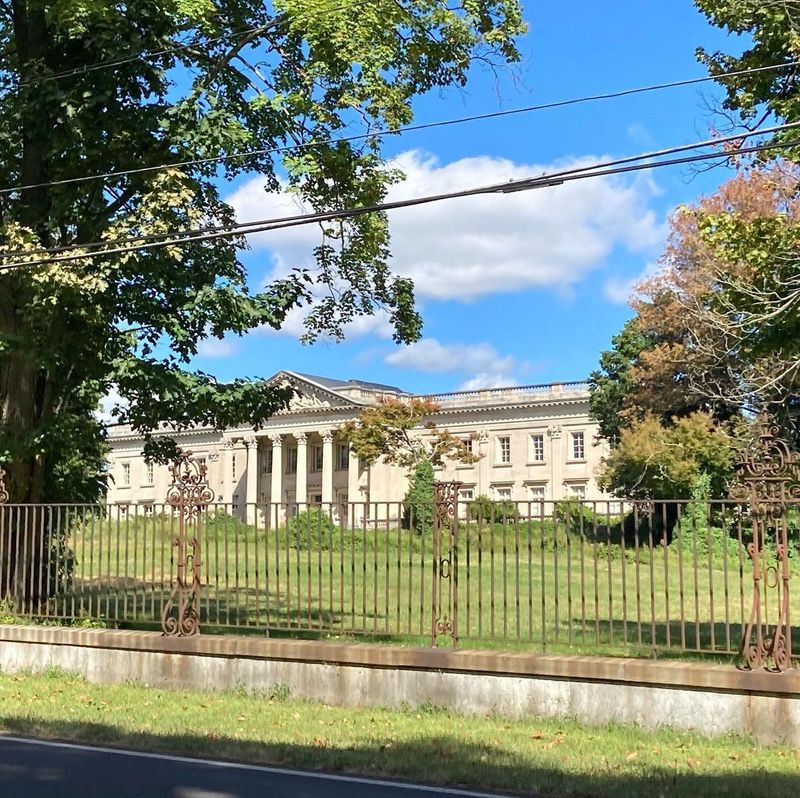
Few places in Pennsylvania inspire awe quite like an enormous mansion standing with faded grandeur and the weight of a Gilded Age dream.
Even before you learn the story, the scale alone tells you this was meant to rival Europe’s great houses.
That unforgettable monument is Lynnewood Hall in Elkins Park, commissioned by transit and streetcar magnate Peter A.B. Widener and completed in 1900.
Designed by architect Horace Trumbauer, the colossal Neoclassical estate once counted more than one hundred rooms and displayed extraordinary art collections.
Its terraces, formal planning, and sheer size made it one of the grandest private residences in America.
Although it is not a medieval castle stylistically, its dominance, ambition, and legendary status place it naturally among the state’s most castle-like destinations.
Lynnewood Hall has long stood as both masterpiece and preservation challenge, which gives it a haunting, almost mythic presence in regional memory.
You are looking not only at architecture, but at a symbol of wealth, aspiration, and the vulnerability of monumental estates over time.
Access can be limited, so it is wise to research current conditions before planning a visit.
Still, even understanding it from the outside and through its history is deeply compelling.
Lynnewood Hall is one of Pennsylvania’s most remarkable and unforgettable landmarks, especially if you are drawn to places where beauty, excess, and fragility meet.