
Pennsylvania is packed with surprises hiding along its highways and back roads, and not all of them are natural wonders.
From giant shoes to mysterious street tiles, the Keystone State has some seriously weird and wonderful man-made creations just waiting to be discovered.
Whether you are planning a family road trip or a solo adventure, these quirky stops will turn an ordinary drive into something truly memorable.
Pack your camera, fuel up the car, and get ready to see Pennsylvania in a whole new way.
Haines Shoe House (York)
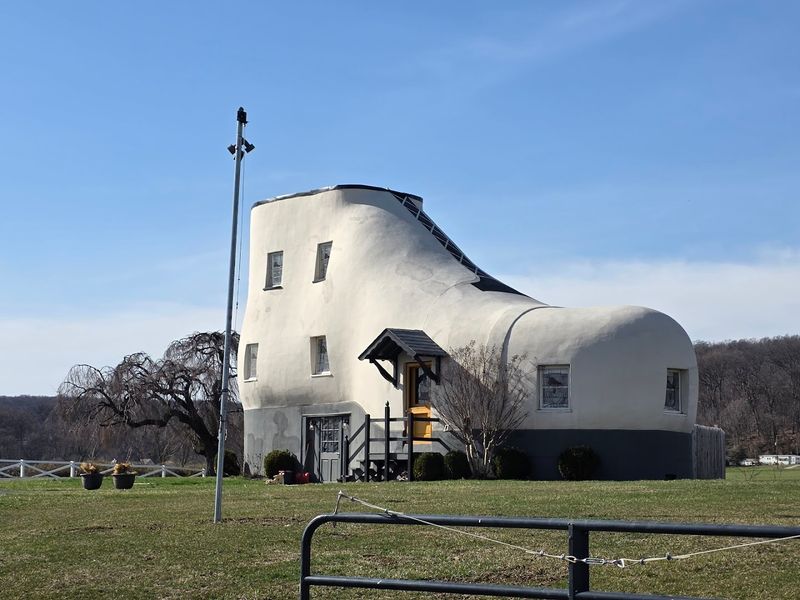
Back in 1948, a shoe salesman named Mahlon Haines had one wild idea: build a house shaped like a giant boot and use it to promote his shoe business. The result was a five-story, shoe-shaped structure that stood out from every other building on the road.
Today, it remains one of Pennsylvania’s most beloved roadside oddities.
The Haines Shoe House sits along Shoe House Road in York and is hard to miss, standing about 25 feet tall with a quirky, rounded toe-shaped entrance. For years, it served as a guesthouse where contest winners could stay overnight — imagine waking up inside a giant shoe!
Visitors today can tour the interior, which has been preserved with vintage charm and fun decor that nods to its shoemaking roots. The surrounding garden and ice cream stand make it an even more enjoyable stop for families.
Whether you are a history buff, a lover of weird architecture, or just someone who appreciates a good story, the Haines Shoe House delivers on all fronts. It is genuinely one of those places you have to see to believe.
Bedford Coffee Pot (Bedford)
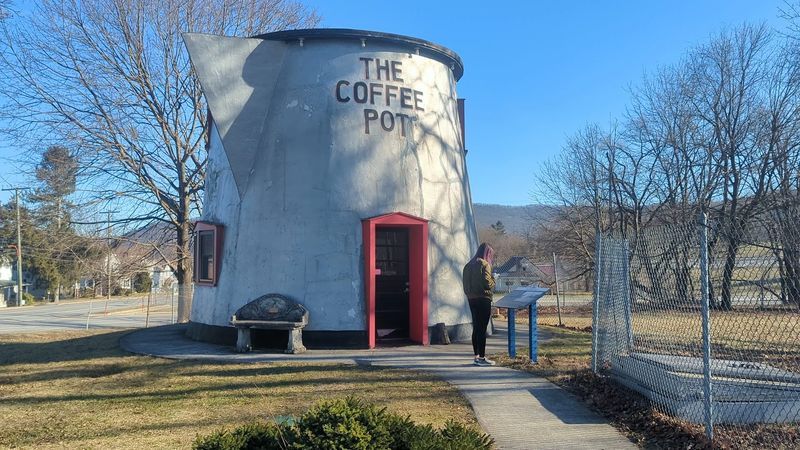
Imagine pulling over on the highway and spotting a giant coffee pot sitting right by the road. That is exactly what travelers on the Lincoln Highway experienced when this 18-foot-tall, coffee-pot-shaped building first opened as a roadside diner.
Built in the 1920s, it was designed to catch the eyes of passing motorists — and it definitely worked.
The Bedford Coffee Pot is one of the last surviving examples of “programmatic architecture,” a style popular in the early 20th century where buildings were shaped like the products they sold. Think giant hot dogs, donuts, and yes, coffee pots.
Most of these quirky structures have been torn down over the decades, making the Bedford Coffee Pot even more special.
Although it no longer serves coffee, the structure has been restored and now stands as a proud historical landmark. It sits near the original Lincoln Highway route, adding an extra layer of nostalgia for road trip enthusiasts.
Stopping here feels like stepping back into the golden age of American road travel, when every mile held a new surprise. Snap a photo, read the historical marker, and appreciate this charming slice of Americana.
Giant Cowboy Sam (Kittanning)
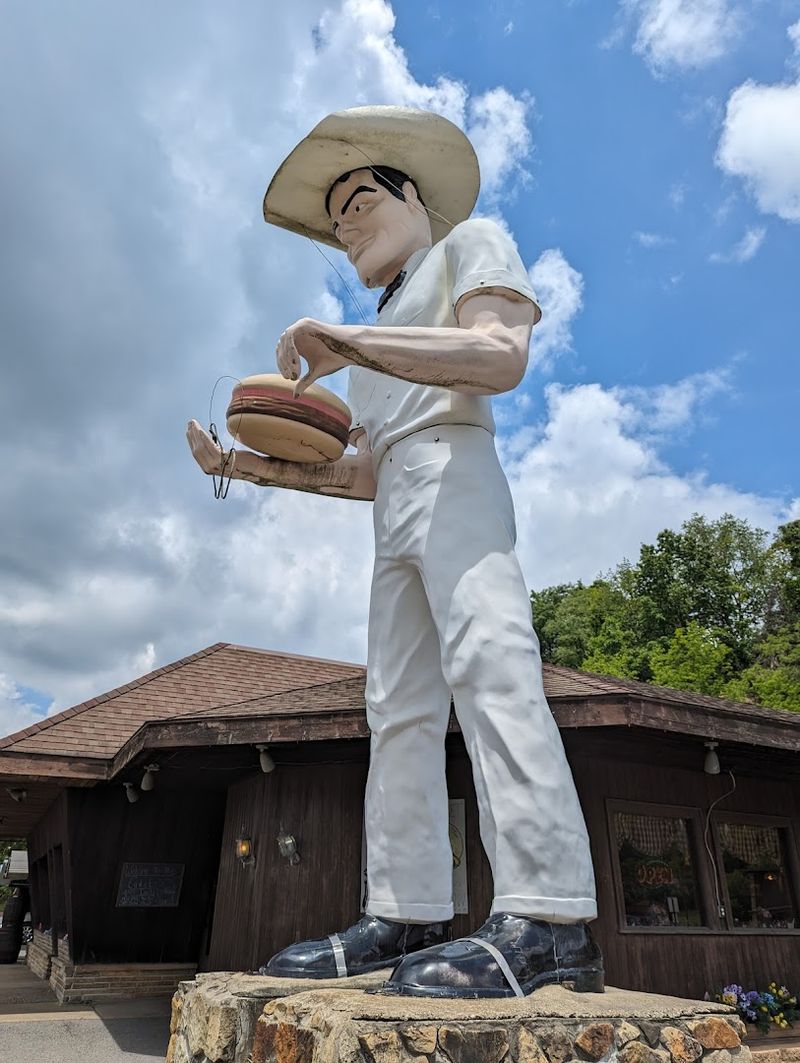
Standing over 30 feet tall and clutching a burger the size of a small car, the giant cowboy known as “Sam” has been greeting hungry travelers near Kittanning since the 1960s. He belongs to the beloved family of “Muffler Men” — those larger-than-life fiberglass giants that once lined American highways as advertising mascots for businesses big and small.
Sam stands outside the Cadet Restaurant, where he has served as the ultimate roadside billboard for decades. His weathered cowboy hat and bold stance make him impossible to miss, and he has become something of a local celebrity over the years.
Road trippers specifically detour to Kittanning just to grab a photo with this towering dude.
What makes Sam extra special is his age and condition — many Muffler Men have disappeared or fallen apart, but Sam has survived and still draws crowds. He represents a fading era of American roadside culture when businesses competed creatively for the attention of passing drivers.
If you have kids in the car, they will absolutely lose their minds when they spot him. Pull over, look up, and appreciate one of Pennsylvania’s most oversized personalities.
Kecksburg Space Acorn (Kecksburg)
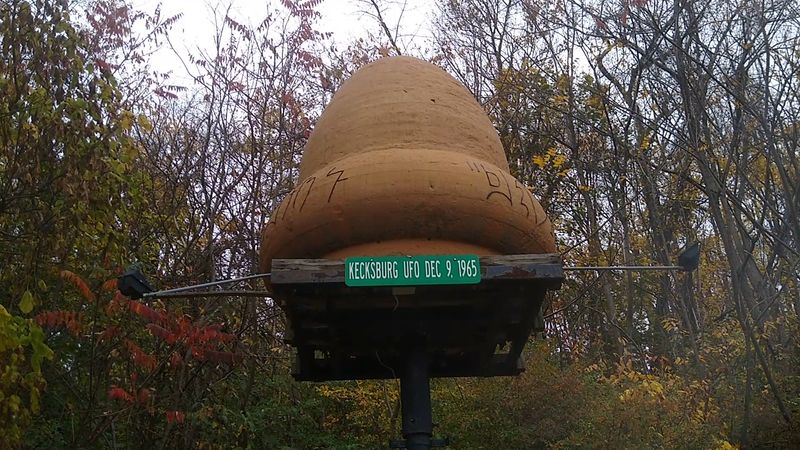
On December 9, 1965, something fell from the sky over Kecksburg, Pennsylvania — and nobody has ever fully agreed on what it was. Witnesses described a glowing, acorn-shaped object crashing into the woods, and the military reportedly rushed in to recover it.
Decades later, the mystery remains unsolved, and the town has fully leaned into its extraterrestrial fame.
The Kecksburg Space Acorn is a full-scale replica of the mysterious object, complete with strange hieroglyphic-like markings around its base. It sits outside the local fire station and serves as the centerpiece of the town’s annual UFO festival, which draws thousands of curious visitors every summer.
The monument is free to visit and makes for a genuinely eerie photo opportunity.
Whether you believe the official explanation — that it was a Soviet satellite — or prefer the alien crash theory, visiting Kecksburg adds a thrilling dose of mystery to any road trip. The surrounding area is quiet and rural, which somehow makes the whole experience feel even more atmospheric.
Standing next to that metallic acorn in a small Pennsylvania town, it is hard not to wonder: what really happened here? This stop is perfect for fans of history, conspiracy theories, and all things unexplained.
Mars Flying Saucer (Mars)
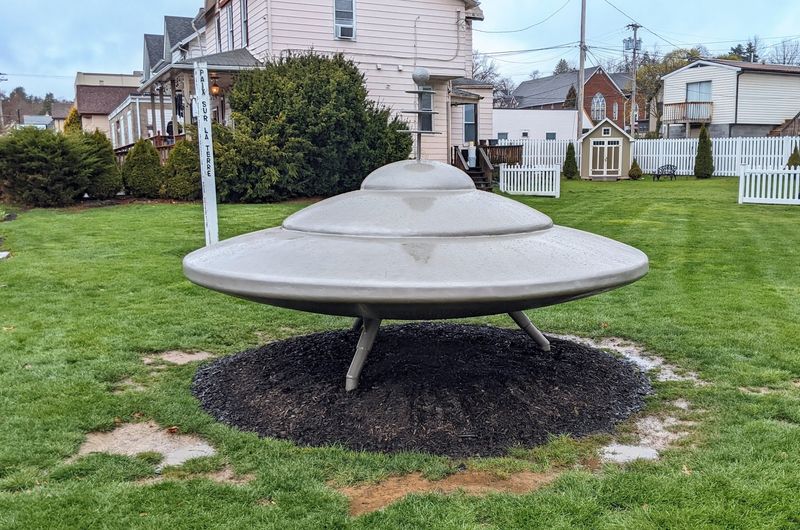
A town named Mars was practically destined to have a flying saucer. Located about 25 miles north of Pittsburgh, the borough of Mars, Pennsylvania, fully embraces its out-of-this-world name with a shiny UFO replica that greets visitors right in the heart of town.
It is campy, playful, and absolutely perfect for a quick road trip photo stop.
The saucer was installed as a fun nod to the town’s cosmic name, and locals have decorated the surrounding area with alien-themed art and signage to match. During certain community events, the area gets decked out with even more space-inspired decorations, making it feel like a mini alien festival.
Kids especially go wild for it.
What makes Mars worth the detour is not just the saucer itself, but the whole vibe of a small American town that has fully committed to a playful identity. There is something refreshing about a community that does not take itself too seriously and instead leans into the fun.
Grab a photo in front of the saucer, browse the local shops, and maybe pick up an alien souvenir or two. It is a short stop that punches way above its weight on the fun scale.
Miniature Statue of Liberty (Dauphin)
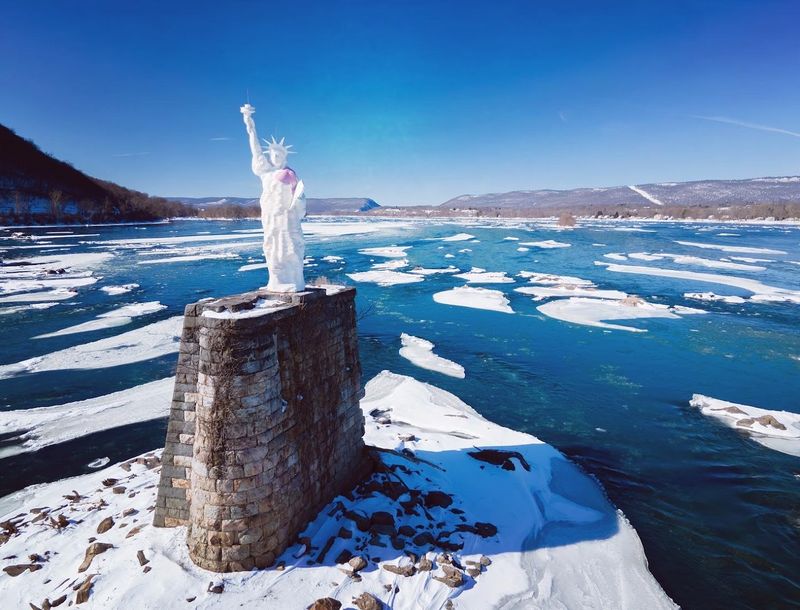
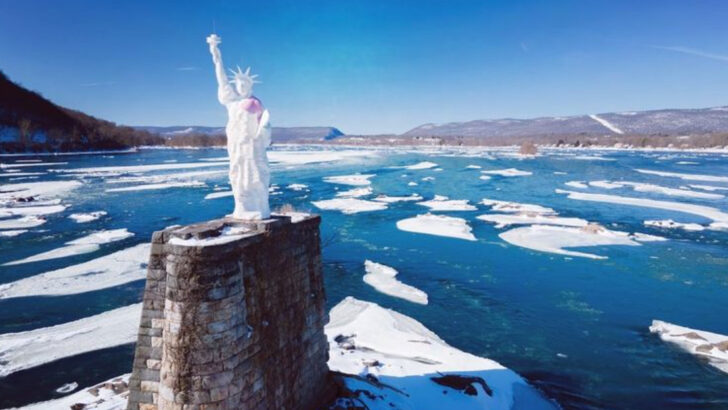
Somewhere between a patriotic gesture and a full-on prank, a 25-foot-tall mini Statue of Liberty has been planted right in the middle of the Susquehanna River near Dauphin, Pennsylvania. You can spot her from the nearby highway bridge, torch raised and crown glinting in the sunlight, looking completely out of place — and absolutely wonderful for it.
The origin story is as quirky as the statue itself. A local man reportedly placed the replica in the river as a lighthearted statement, and it has since become a beloved regional curiosity.
Unlike the original in New York Harbor, this Lady Liberty stands in moving river water, surrounded by rocks and nature, which somehow makes her even more endearing.
Drivers crossing the bridge often do a double-take when they spot her for the first time, and many pull over to get a better look or snap a photo. She has become a symbol of Pennsylvania’s knack for unexpected roadside surprises.
No admission, no parking lot, no gift shop — just a quirky little statue standing proudly in a river, reminding everyone that patriotism can also have a sense of humor. Keep your eyes open as you cross the bridge.
Gravity Hills (Multiple Locations)
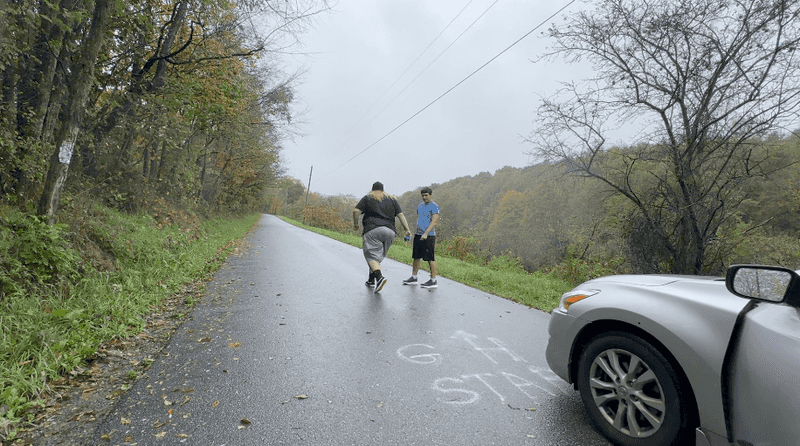
Pennsylvania has not one but several so-called “Gravity Hills” scattered across the state, and each one offers the same mind-bending experience: put your car in neutral, and it appears to roll uphill on its own. It feels like magic, defies common sense, and makes for one of the most talked-about road trip stops in the entire state.
The science behind the illusion involves the surrounding landscape tricking your eyes into misjudging which direction is actually downhill. Trees, slopes, and the horizon line all conspire to fool your brain into thinking you are rolling the wrong way.
Some of the most popular Gravity Hills are located in Sylvan Road in Lewisberry and near Magnetic Springs in central Pennsylvania.
Locals have been whispering ghost stories and legends about these roads for generations, adding a spooky layer to what is really just a fascinating optical trick. Some say the ghost of a child pushes cars to safety, while others insist it is magnetic anomalies at work.
Whatever explanation you prefer, the experience is genuinely fun and a little unsettling. Bring friends, test it out multiple times, and enjoy the confused expressions on everyone’s faces.
It costs nothing and delivers maximum bewilderment.
Schaefer’s Auto Art (Erie)
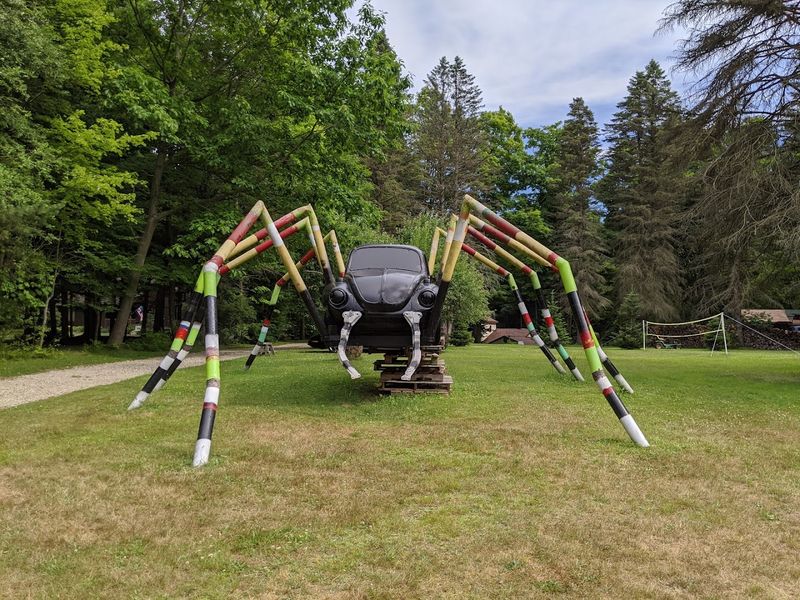
Art does not always belong in a museum — sometimes it belongs right on the side of the road, made entirely out of crushed cars. That is the philosophy behind Schaefer’s Auto Art in Erie, where a creative mind has transformed junked vehicles into massive, jaw-dropping sculptures that line the property like a metal menagerie.
Spiders, animals, and abstract figures all built from recycled auto parts greet passing drivers.
The creator, a local auto salvage artist, has been building these steel giants for years, and the collection keeps growing. Each piece is surprisingly detailed, with car hoods, bumpers, and engine parts welded together into recognizable shapes.
The scale of some pieces is genuinely impressive — these are not small crafts but towering installations that demand attention.
Schaefer’s Auto Art is the kind of place that sneaks up on you during a drive and suddenly makes you slam on the brakes to get a better look. It is free to view from the road, and the sheer creativity on display makes it worth a slow cruise past.
Erie does not always get mentioned in Pennsylvania road trip lists, but this stop alone is reason enough to include it in your route. Upcycled, unexpected, and undeniably cool.
Clothespin Sculpture (Philadelphia)
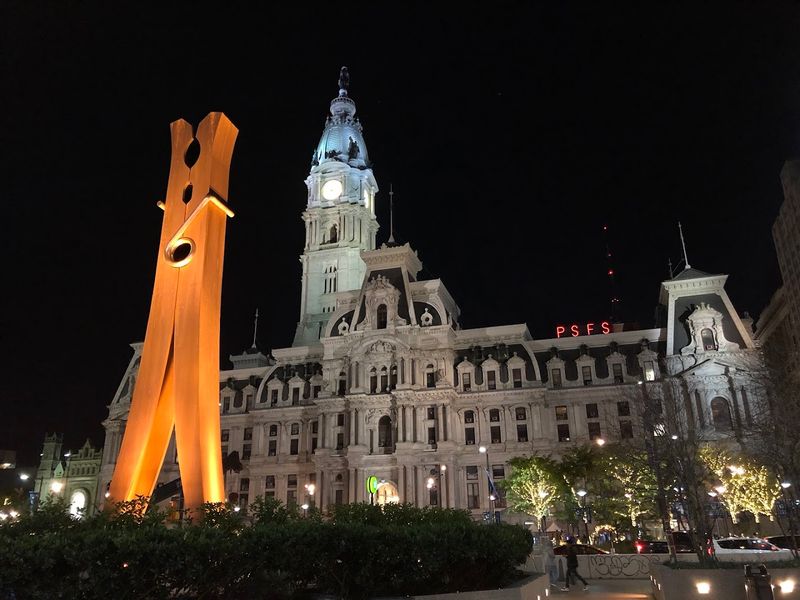
Standing 45 feet tall and weighing in at ten tons, the giant steel clothespin in Philadelphia’s Centre Square is one of the most recognizable pieces of public art in Pennsylvania. Created by legendary pop artist Claes Oldenburg and unveiled in 1976, it was a bicentennial gift to the city — and not everyone was thrilled about it at first.
Critics called it absurd. Supporters called it genius.
Today, it is simply called iconic. The sculpture is painted in a warm Cor-Ten steel tone and stands right across from City Hall, making it impossible to miss if you are walking through the heart of Philadelphia.
Oldenburg was known for turning everyday objects into monumental art, and the clothespin perfectly captures that playful, thought-provoking spirit.
Up close, the scale of the thing is genuinely surprising. What seems like a simple household item becomes something almost architectural when blown up to this size.
Many visitors notice for the first time that the two prongs of the clothespin also resemble two figures embracing — a romantic detail hidden in plain sight. Whether you are an art lover or just someone who enjoys the unexpected, the Clothespin is a must-see stop on any Philadelphia itinerary.
It proves that weird art can become beloved over time.
Toynbee Tiles (Philadelphia)
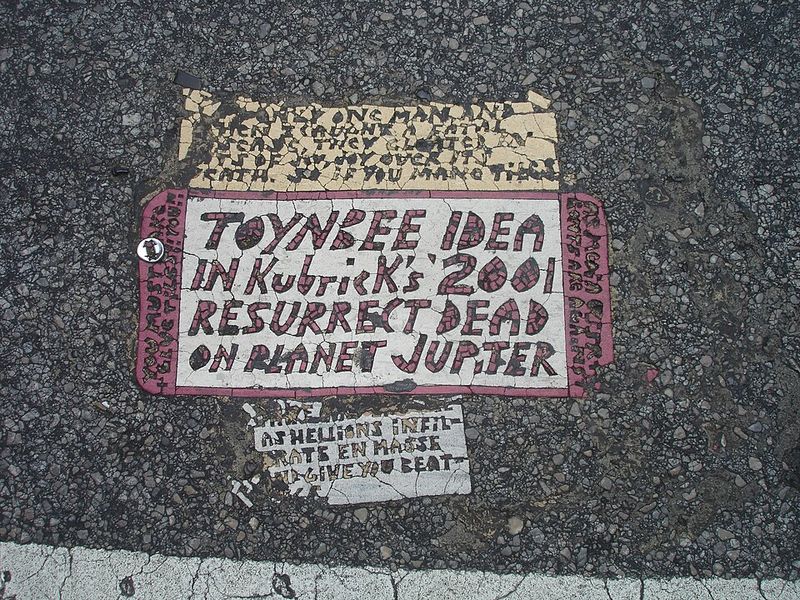
Hidden in plain sight beneath the feet of thousands of daily commuters, the Toynbee Tiles are one of America’s most enduring urban mysteries. These cryptic mosaic tiles, embedded directly into the asphalt of several Philadelphia intersections, reference historian Arnold Toynbee and contain strange messages about resurrecting the dead on Jupiter.
Nobody knows for certain who made them or why.
The tiles began appearing in Philadelphia in the 1980s and were eventually found in other East Coast cities too. The creator, believed to be a reclusive Philadelphia resident, reportedly embedded the tiles at night without anyone noticing.
A 2011 documentary called “Resurrect Dead” dug deep into the mystery and is well worth watching before your visit.
Tracking down the surviving Toynbee Tiles in Philadelphia has become a kind of urban treasure hunt for curious visitors. Several have been worn away by traffic over the years, but a handful remain visible near busy intersections in Center City.
Crouch down, look closely, and you will spot the faded, layered mosaic peeking up from the street. It is one of those rare experiences that feels genuinely eerie and thought-provoking at the same time.
Philadelphia has plenty of famous landmarks, but few are as quietly strange as these sidewalk enigmas.
PennDOT Road Sign Sculpture Garden (Meadville)
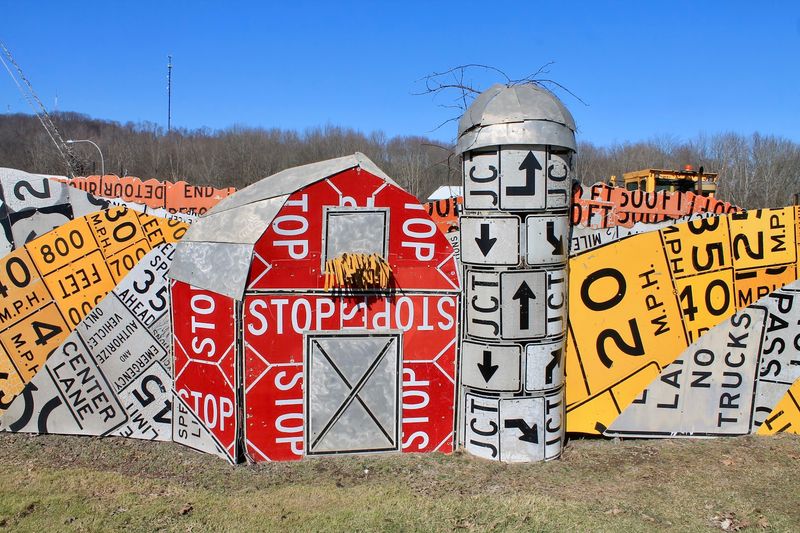
Who knew that retired road signs could become a canvas for history? In Meadville, Pennsylvania, a remarkable 1,200-foot mural stretches along a roadside wall, constructed entirely from old PennDOT signs that have been retired from service.
The result is a colorful, reflective mosaic that tells the story of western Pennsylvania through creative recycled art.
The scenes depicted range from industrial history to natural landscapes, all rendered in the bold, reflective material of highway signage. At night or in headlights, the mural practically glows, giving it an almost magical quality that daytime photos cannot fully capture.
It is a genuinely impressive feat of community creativity and environmental recycling all rolled into one.
Meadville is not a city that typically lands on top-ten Pennsylvania travel lists, but this mural alone makes it worth a stop. The sheer length of the installation means you can walk alongside it and discover new details with every step.
Local volunteers and artists worked together on the project, giving it a grassroots energy that big-budget public art sometimes lacks. For road trippers who love discovering hidden gems off the beaten path, the Road Sign Sculpture Garden is exactly the kind of surprise that makes a long drive feel rewarding.
Keep your camera ready.
Whistler’s Mother Statue (Ashland)
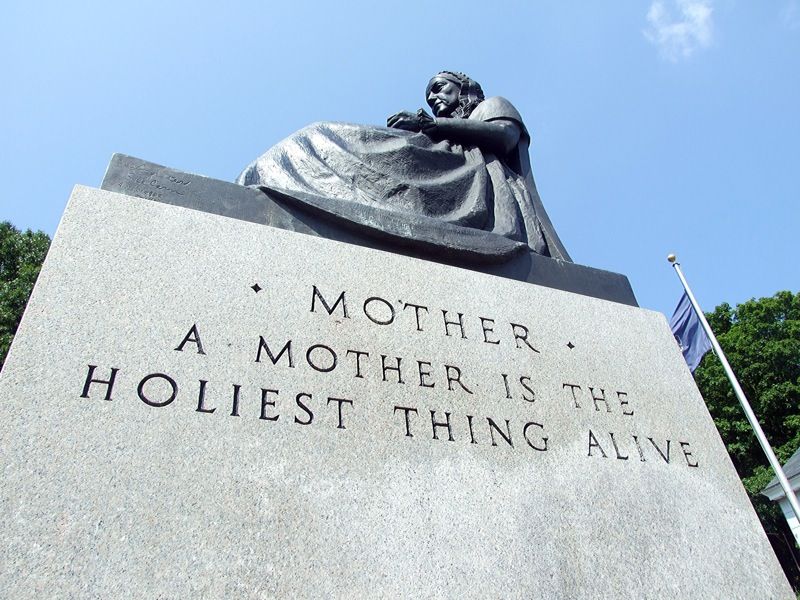
Most people know Whistler’s Mother as a famous painting — that iconic image of a stern-faced woman seated in profile, draped in black. But in Ashland, Pennsylvania, that painting has been turned into a three-dimensional roadside sculpture, and it is claimed to be the only statue of its kind in the entire United States.
That alone makes it worth seeking out.
The statue was erected to honor all mothers, using the universally recognized image from James McNeill Whistler’s 1871 painting as its inspiration. It stands in a quiet area of Ashland and has a surprisingly moving quality to it — there is something touching about a small Pennsylvania town deciding that mothers deserve a monument of their own.
Visitors often describe the experience as unexpectedly emotional, especially those who make the trip with their own mothers or children. The statue is modest in size but big in sentiment, and the backstory behind why Ashland chose this particular image adds depth to the visit.
It is not flashy or oversized like many roadside attractions, but its quiet dignity sets it apart. If you are traveling through Schuylkill County, this is a meaningful detour that offers something a little different from the usual quirky fare.
Bring flowers if you want to make it special.
Fireman’s Drinking Fountain (Slatington)
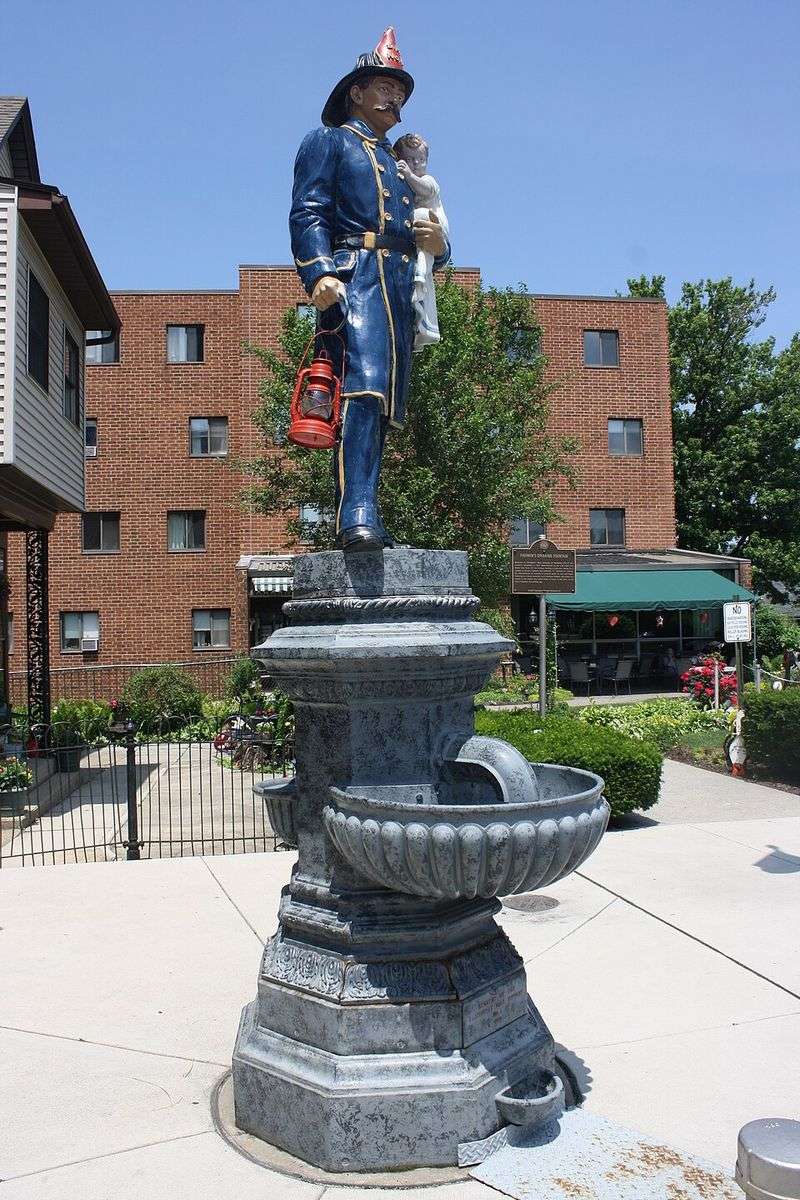
Dating all the way back to 1909, the Fireman’s Drinking Fountain in Slatington is one of those small-town treasures that most people drive right past without realizing its age or significance. Originally installed to honor the local volunteer fire department, this brightly painted cast-iron statue has been standing near Main Street for well over a century, quietly watching the town change around it.
The figure depicts a firefighter in period-appropriate gear, and the fountain was designed to provide drinking water for both people and horses back in the days when horses were still a common mode of transportation. That practical dual purpose gives it a charming historical context that most modern monuments simply do not have.
Over the years, the statue has been repainted and restored multiple times, keeping its colors vivid and its presence lively. Slatington residents take genuine pride in maintaining this old-time landmark, and it shows.
For road trippers who love discovering living history tucked into unexpected corners of small towns, the Fireman’s Drinking Fountain is a rewarding find. It does not shout for attention the way a 30-foot giant does, but its quiet resilience over more than 110 years makes it arguably more impressive.
A quick stop here feels like a genuine connection to Pennsylvania’s past.
Red Caboose Motel (Ronks)
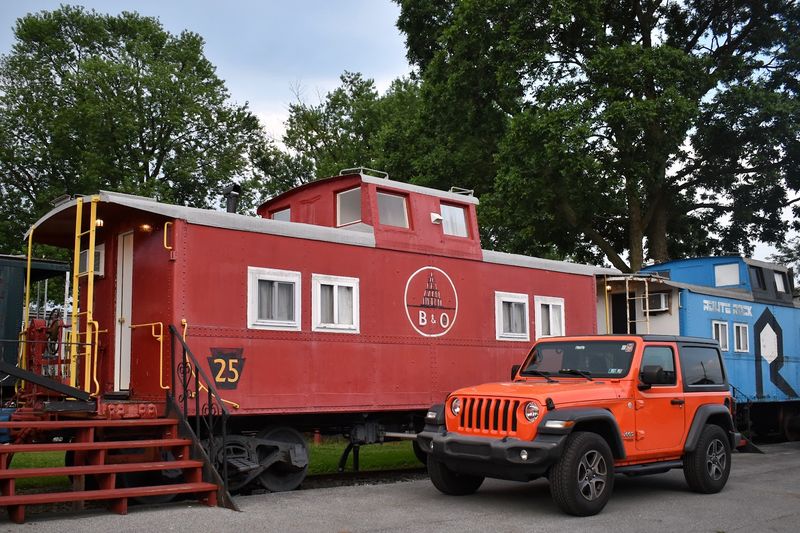
Spending the night inside a real vintage railroad caboose sounds like something from a childhood dream — and at the Red Caboose Motel in Ronks, that dream is fully available for booking. Nestled in the heart of Lancaster County’s Amish Country, this train-themed motel features actual Pennsylvania Railroad cabooses that have been converted into cozy, quirky overnight accommodations.
Each caboose has been outfitted with beds, air conditioning, and basic amenities while preserving the original railroad character of the cars. Sleeping in a narrow, curved caboose with train memorabilia on the walls is a genuinely unique experience that regular hotels simply cannot replicate.
The property also includes a restaurant, a gift shop, and a small petting zoo, making it a full-on roadside destination rather than just a place to sleep.
Even if you are not staying overnight, the Red Caboose Motel is worth a slow drive-through just to admire the rows of red cabooses lined up along the tracks. It is the kind of place that makes you feel like you have stumbled onto a movie set.
Families with train-obsessed kids will find it particularly magical. Located near Strasburg, one of Pennsylvania’s premier rail towns, the motel fits perfectly into a region that takes its railroad heritage seriously.
Book early — the cabooses fill up fast.
Mister Ed’s Elephant Museum & Candy Emporium (Orrtanna)
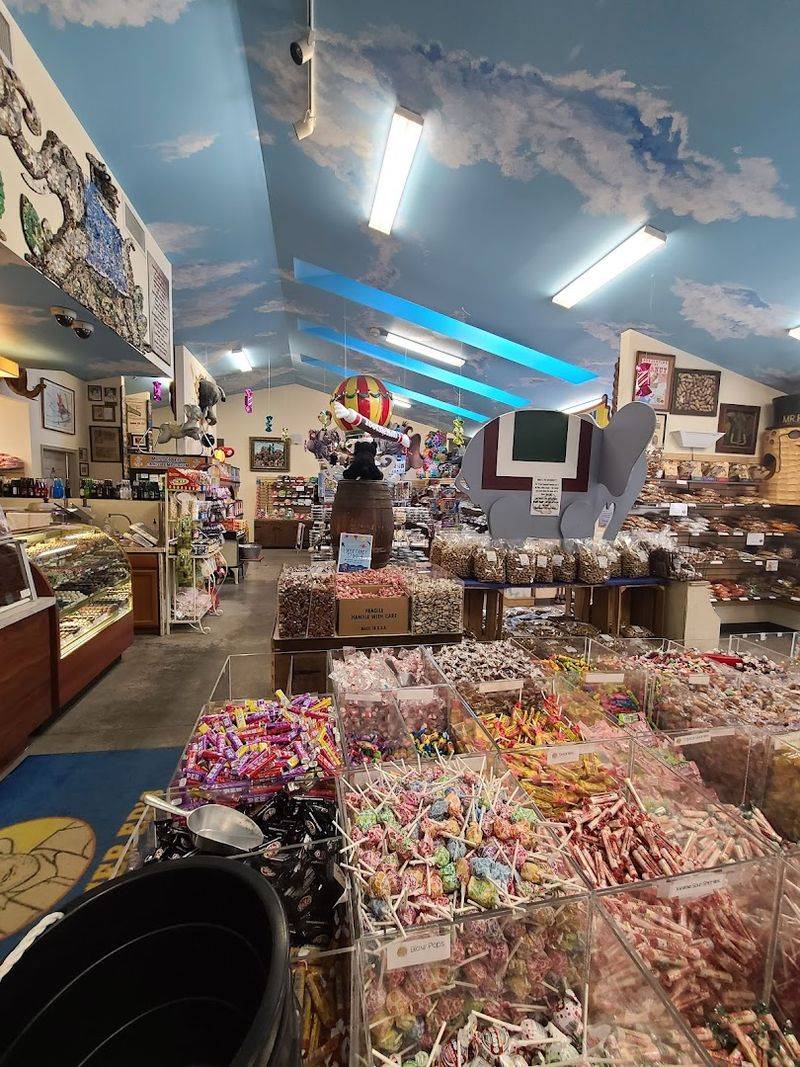
Walking into Mister Ed’s Elephant Museum in Orrtanna feels a little like stepping into the world’s most enthusiastic collector’s living room — except every single item is an elephant. Thousands of elephant figurines, statues, toys, and collectibles of every size, material, and style fill the shelves from floor to ceiling.
It is overwhelming, delightful, and completely unlike anything else on a Pennsylvania road trip.
The museum was started by Ed Gotwalt, a lifelong elephant collector whose passion grew so large it needed its own building. Today, the collection spans multiple rooms and includes elephants made from wood, glass, ceramic, metal, and just about every other material imaginable.
Admission is free, which makes it an especially easy yes for road trippers watching their budget.
The candy emporium attached to the museum is a serious bonus — rows of old-fashioned sweets, bulk candy, and novelty treats make it a sugar lover’s paradise. Located near Gettysburg in Adams County, Mister Ed’s pairs perfectly with a visit to the nearby battlefield for a day that mixes history with pure, unfiltered fun.
Children and adults alike tend to spend longer here than they planned, which is always the sign of a truly great roadside stop. Do not skip the candy on your way out.
Columcille Megalith Park (Bangor)
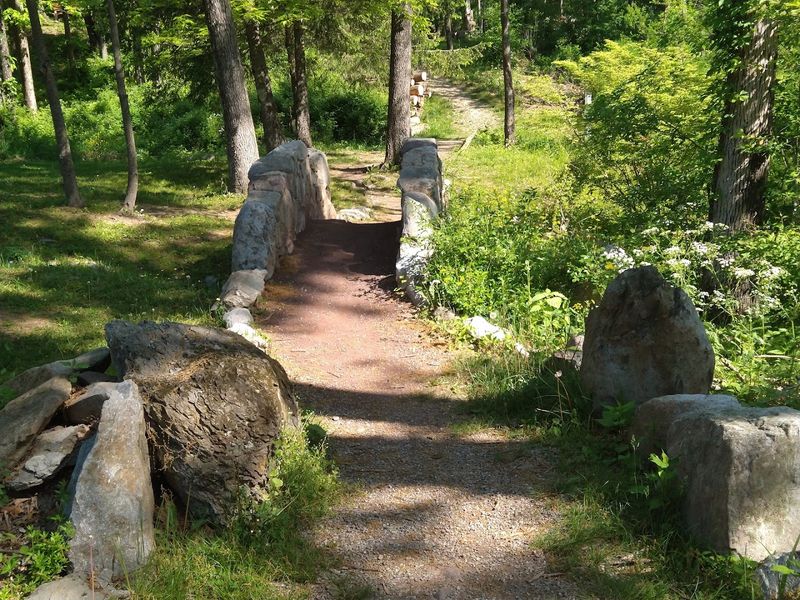
Tucked into a quiet stretch of woods in eastern Pennsylvania, Columcille Megalith Park feels like a roadside attraction you’d expect to stumble across in rural Ireland rather than along a Pennsylvania backroad.
This 19-acre site is filled with massive standing stones arranged in deliberate formations inspired by ancient Celtic traditions and sacred landscapes like Stonehenge.
What makes it especially fitting for a road trip stop is the element of surprise—one minute you’re driving through farmland, the next you’re walking among towering monoliths with names like the Thor Stone and the Bardic Circle.
Unlike more commercial roadside attractions, Columcille leans into quiet reflection and natural beauty, offering a peaceful break from the highway without losing that sense of quirky discovery. The layout encourages wandering, with winding paths, hidden clearings, and carefully placed stones that feel both artistic and mysterious.
It’s equal parts sculpture garden, spiritual retreat, and curiosity, making it ideal for travelers looking to stretch their legs somewhere truly unexpected.
Whether you’re drawn in by the mythology, the unusual design, or just the chance to see something completely different, it’s a roadside stop that lingers in your memory long after the drive continues.