
Some places have held onto their identity even as the world around them sped up. These remote villages still move at their own rhythm, shaped by traditions that have lasted for generations.
Visiting them feels a bit like stepping into a living story, where daily life is rooted in community, craft, and history.
They remind us that not every corner of the planet has traded its character for convenience. And for travelers, they offer a rare chance to see what a place can be when it stays true to itself.
Shirakawa-go – Japan
Nestled in the remote mountains of Japan, Shirakawa-go is famous for its Gassho-style houses. These traditional homes, with their steep thatched roofs, resemble hands clasped in prayer—a design well-suited to heavy snowfall.
This village, a UNESCO World Heritage Site, maintains its rustic charm with a population that’s a living testament to Japanese heritage.
Though the world outside races forward, here, life moves at a peaceful pace, grounded in deep-rooted traditions. Tourists visit, yet the essence of Shirakawa-go remains untouched, offering an authentic slice of history.
Reine – Norway
Reine, a picturesque fishing village in Norway, captivates with its stunning natural beauty. With vibrant red cabins dotting the coastline, it looks like a postcard brought to life.
The dramatic peaks of the Lofoten Islands rise majestically, framing this serene setting. While technologies advance globally, Reine thrives on its fishing heritage, with locals maintaining age-old practices.
Visitors are drawn to the tranquil charm and the breathtaking views, yet the village stands proudly untouched by modern alterations, preserving its soul amidst the fjord’s embrace.
Hallstatt – Austria
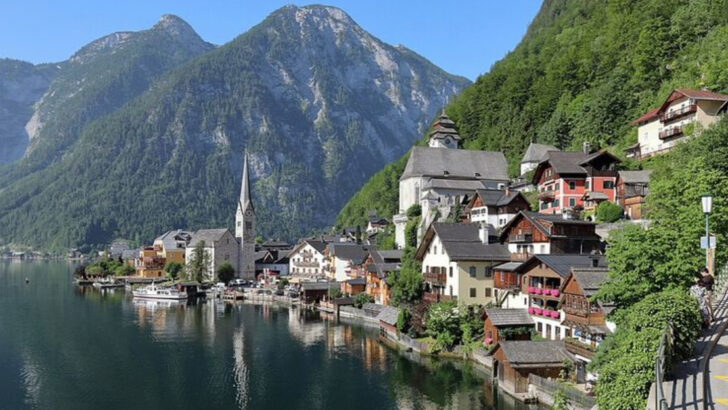
Hallstatt, often referred to as Austria’s hidden gem, lies peacefully by the serene Hallstätter See. Its pastel-colored alpine houses reflect on the crystal-clear waters, creating a picturesque tableau.
This village, steeped in history, is known for its ancient salt mines. Despite the influx of tourists, Hallstatt retains its enchanting charm, offering a timeless escape.
Here, the past whispers through the narrow streets, where each corner unveils stories of bygone eras, ensuring that modernity doesn’t overshadow its historic allure.
Oia – Greece
Perched atop the cliffs of Santorini, Oia shines with its iconic whitewashed buildings and blue domes. The sunsets here are legendary, casting golden hues over the Aegean Sea.
Despite its popularity, Oia maintains an aura of tranquility, where time seems to slow down. The narrow streets, filled with charming shops and cafés, echo tales of Greek mythology and history.
While visitors flock to capture its beauty, the village’s soul remains untouched, offering a serene retreat amidst the Cycladic architecture.
Alberobello – Italy
Alberobello, located in Italy’s Puglia region, is famed for its Trulli houses. These unique structures, with their conical roofs, create a fairy-tale-like atmosphere.
The village embodies timelessness, with narrow cobblestone streets and a strong sense of community. Despite its UNESCO status, Alberobello retains its quaint charm, inviting visitors to explore its storied past.
The Trulli, built without mortar, stand as a testament to ancient building techniques, ensuring that modern influence doesn’t erode its unique character.
Cazanele Dunării – Romania
Nestled along the Danube River, Cazanele Dunării enchants with its dramatic landscapes. The river carves through steep cliffs, creating a breathtaking natural spectacle.
This Romanian village is a haven for those who seek solitude and a connection with nature. While cities evolve rapidly, Cazanele Dunării remains a peaceful refuge, steadfast in its traditions.
Here, the rhythm of the river echoes the slow, deliberate pace of life, preserving a sense of timelessness that modernity cannot disturb.
Giethoorn – Netherlands
Often dubbed the ‘Venice of the North,’ Giethoorn is a village without roads. Instead, canals and walkways weave through, connecting charming thatched-roof cottages.
This Dutch gem is a testament to simplicity and peaceful living. Even as the world speeds up, Giethoorn remains a tranquil retreat, resonating with the sound of paddles gliding through water.
Here, the absence of cars and the abundance of nature create a serene atmosphere, ensuring its essence remains unspoiled by time.
Colmar – France
Colmar, nestled in France’s Alsace region, feels like stepping into a storybook. Its colorful, half-timbered houses line picturesque canals, exuding old-world charm.
Rich in history, the village is known for its exceptional preservation and vibrant cultural scene. Despite modern influences, Colmar maintains its whimsy and appeal.
Wander through its cobblestone streets, where flowers adorn every window, and let the medieval ambience transport you to another era, untouched by contemporary changes.
Ghandruk – Nepal
Ghandruk, a village in the Annapurna region of Nepal, offers breathtaking views of the Himalayas. Its stone houses and terraced fields reflect a lifestyle deeply connected to nature.
The Gurung community here preserves its cultural heritage, welcoming trekkers with warmth and hospitality. While cities grow and change, Ghandruk remains rooted in tradition.
This village captivates with its unaltered beauty, where the mountains stand as guardians of a way of life that endures against the tide of modernization.
Taos Pueblo – United States
Taos Pueblo in New Mexico is the oldest continuously inhabited community in North America. Its multi-storied adobe buildings stand as a symbol of resilience and tradition.
For over a millennium, this UNESCO site has been home to the Taos people, who continue to uphold their cultural practices. Despite external pressures, the Pueblo remains deeply rooted in its heritage.
Visitors are welcomed to experience a living history, where the earth-toned structures tell stories of endurance and cultural pride.
Aït Benhaddou – Morocco
Aït Benhaddou, an ancient ksar in Morocco, mesmerizes with its earthen clay architecture. This fortified village, with its labyrinthine lanes, feels suspended in time.
A backdrop for many films, it has witnessed the ebb and flow of centuries while maintaining its authenticity. The families who reside here continue to live as their ancestors did.
Amidst the arid desert, Aït Benhaddou stands as a testament to enduring cultural heritage, unyielding to the encroachments of modernity.
Paraty – Brazil
Paraty, a colonial town in Brazil, enchants with its preserved architecture and rich cultural tapestry. Its cobblestone streets and brightly painted buildings tell tales of a vibrant past.
Set against tropical scenery, Paraty offers a unique blend of history and natural beauty. Here, time seems to stand still, with the town’s character intact despite modern pressures.
The blend of Portuguese influence and indigenous culture creates a unique atmosphere, ensuring Paraty remains a treasure of Brazil’s heritage.
Český Krumlov – Czech Republic
Český Krumlov, nestled in the Czech Republic, is a fairytale town with a stunning castle overlooking winding streets and the Vltava River.
Its medieval architecture and vibrant arts scene attract visitors seeking an escape to a more enchanting time. Despite the influence of the modern world, the town retains its historic charm.
Strolling through its alleys, one can feel the echoes of the past, where each corner reveals the town’s rich tapestry of stories and culture.