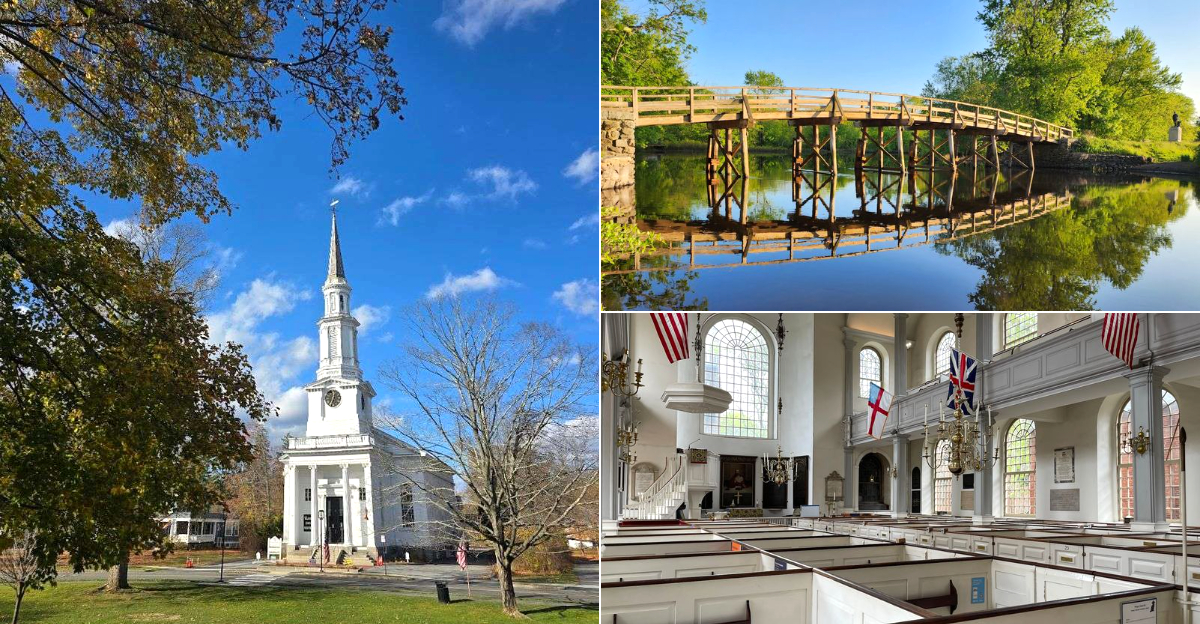
No state bears the marks of the American Revolution more visibly than Massachusetts, where the first shots of the war were fired and the seeds of independence were planted in town halls and church pews.
Boston and its surrounding towns were the beating heart of colonial resistance, home to some of the most iconic moments in American history.
The sites that witnessed those moments are still standing today, remarkably well-preserved and deeply moving to visit.
A walk along Boston’s Freedom Trail or a quiet morning at Lexington Battle Green connects you to events that shaped an entire nation.
Here are ten Massachusetts sites that changed America forever, each one worth carving out time for on your next visit to the Bay State.
1. Minute Man National Historical Park – Lincoln and Concord, Middlesex County,
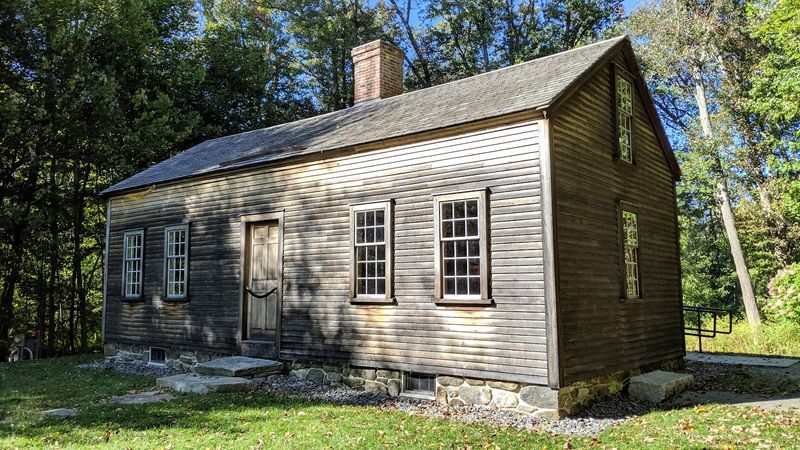
Morning mist hangs low over fields and stone walls, and the quiet feels almost too gentle for a place tied to the first violent break with empire.As you move along the road, every farmhouse, bridge, and pasture seems to hold its breath.
That tension is exactly what makes Minute Man National Historical Park so powerful today.
Spread across Lexington, Lincoln, and Concord, this preserved landscape protects key sites from April 19, 1775, when British regulars marched to seize colonial military supplies.Here you can follow the route of that expedition along Battle Road, where militia companies harassed the returning column in a brutal running fight.
The park also includes the North Bridge area, where colonial militia exchanged one of the war’s most famous opening volleys.
What changed America forever was not just the gunfire, but the proof that local communities would organize, resist, and keep fighting.The famous idea of the “shot heard round the world” is rooted in these fields because the conflict quickly grew beyond Massachusetts.
Visiting today, you see how geography, memory, and ordinary people combined to turn protest into revolution.
2. Bunker Hill Monument – Boston, Suffolk County,
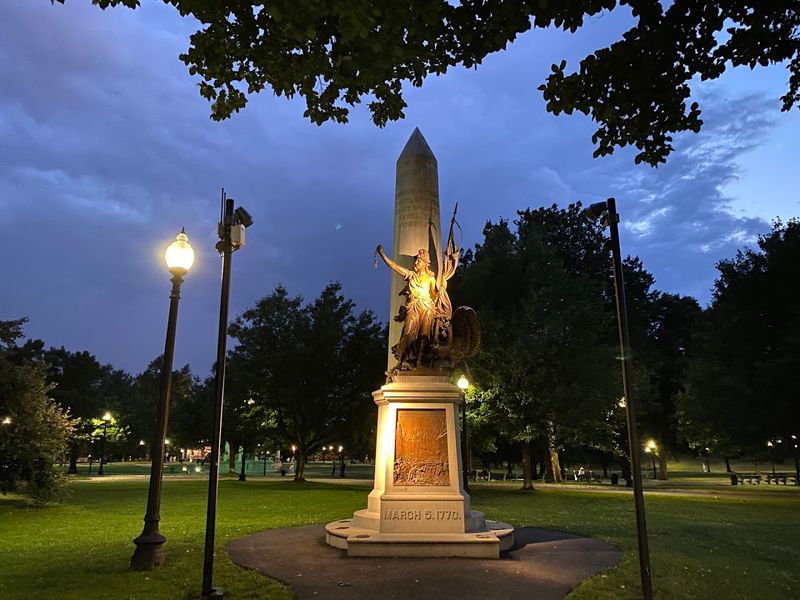
Granite rises sharply against the sky, and the neighborhood around it feels far calmer than the smoke and chaos once surrounding this hill.Standing here, you can imagine cannon fire, confusion, and raw courage under impossible pressure.
That dramatic contrast gives Bunker Hill Monument its lasting force.
The monument marks the famous June 17, 1775 battle usually called Bunker Hill, though much of the fighting happened on nearby Breed’s Hill in Charlestown.Colonial forces ultimately lost the ground to the British, but they inflicted staggering casualties on a professional army that expected a simpler victory.
The battle proved that New England militia could stand against regular troops in open combat, even without winning the field.
That message mattered across the colonies because it turned resistance from a political argument into a credible military struggle.For many observers, the British success looked painfully expensive, while the colonial defeat felt strangely encouraging.
When you visit the Bunker Hill Monument today, you are not just seeing where a battle happened, but where Americans learned that sacrifice, discipline, and determination could challenge imperial power.
3. Paul Revere House – Boston, Suffolk County,
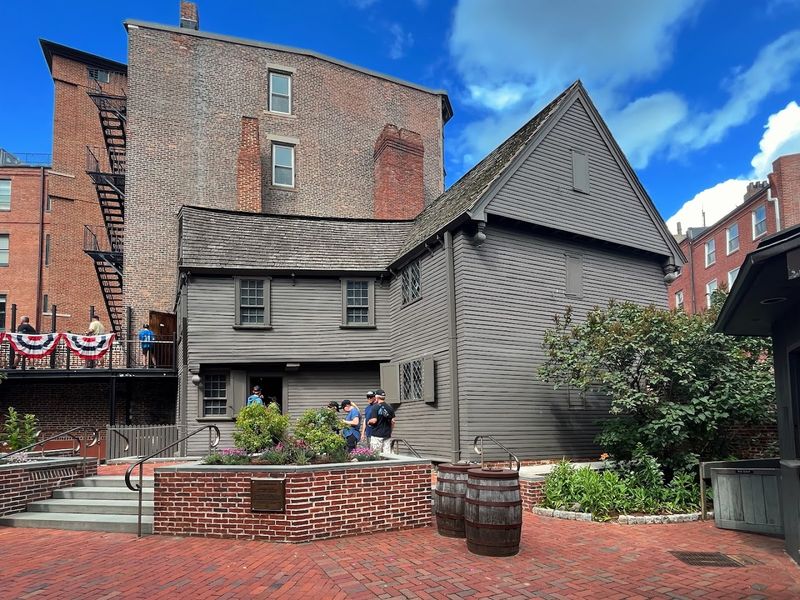
Narrow streets, old brick, and the close-packed feel of the North End make this stop feel intimate in a way many grand monuments do not.Instead of a battlefield, you are stepping into the daily world of a working family in a restless port town.
That everyday quality is what makes the Paul Revere House so revealing.
Built around 1680 and owned by Revere during the years before the Revolution, it is the oldest surviving building in downtown Boston.Revere was more than a midnight rider from legend.
He was a skilled artisan, messenger, organizer, and participant in a network of resistance that linked neighborhoods, taverns, churches, and patriot leaders.
Visiting the house helps you understand that revolutions depend on people with jobs, families, and local reputations, not only generals and lawmakers.From this home, Revere moved through a city alive with rumor, surveillance, and urgency as tensions with Britain deepened.
The site changed America forever because it connects the national myth to a real person whose information, connections, and willingness to act helped spark the chain of events leading to Lexington, Concord, and open war.
4. USS Constitution Museum – Boston, Suffolk County,
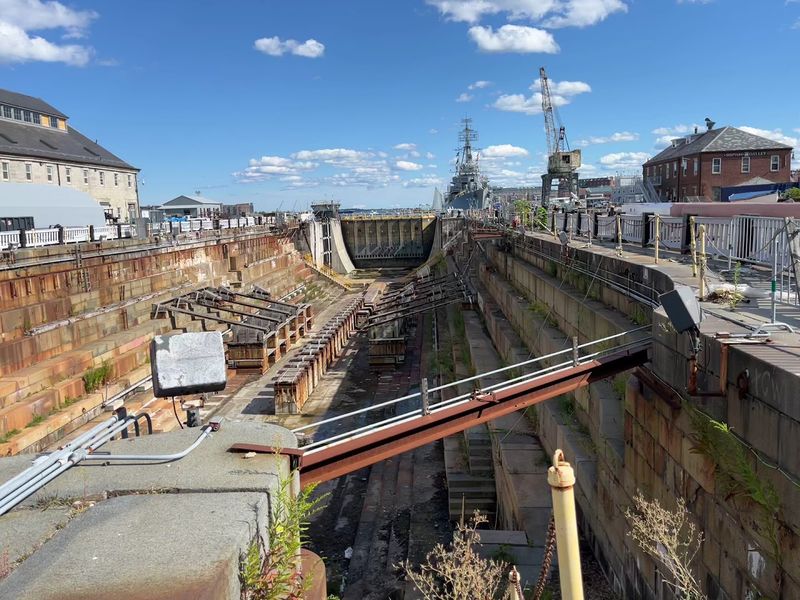
Salt air, rigging, and harbor light create a different kind of revolutionary setting, one shaped by trade, naval power, and the struggle to survive as an independent nation.The mood here is less about a single dramatic day and more about the long consequences of winning independence.
That is why the USS Constitution Museum belongs in this story.
Located in the Charlestown Navy Yard beside the famous warship, the museum interprets the creation of the United States Navy and the world the Revolution left behind.Although USS Constitution launched in 1797, after the Revolutionary War, the ship grew directly from lessons learned when the colonies lacked sufficient naval strength.
The museum helps you trace how independence required more than declarations and battles on land.
America needed institutions capable of defending commerce, projecting sovereignty, and protecting a fragile republic in a dangerous Atlantic world.By connecting visitors to sailors’ lives, shipbuilding, and early national strategy, the USS Constitution Museum shows how the Revolution reshaped military priorities and national identity.
It changed America forever because it explains what came next: a new country learning that freedom had to be secured not just in town meetings and fields, but also on the sea.
5. Old North Church – Boston, Suffolk County,
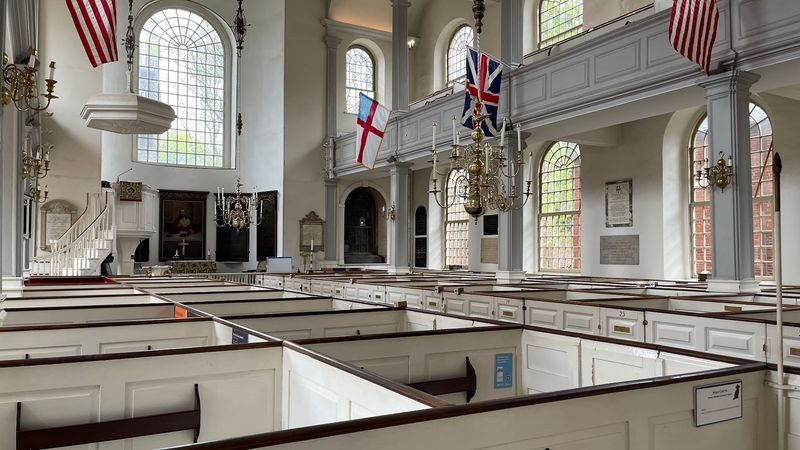
Even before you see the steeple, there is a charged feeling in the North End, as if the streets themselves remember a secret being passed in haste.Inside, the church feels elegant and still, but its most famous moment was all about speed and signal.
That contrast makes Old North Church unforgettable.
Officially Christ Church in the City of Boston, it became legendary on the night of April 18, 1775, when lanterns were displayed in its steeple.The signal, arranged within a broader patriot communication network, warned that British troops were moving by water across the Charles River.
Though the popular story can oversimplify events, the church remains central to understanding how intelligence and coordination shaped the outbreak of war.
This site changed America forever because revolutions are won not only by bravery, but by information delivered at the right moment.The lantern signal helped mobilize riders and militia communities, contributing to the rapid colonial response that met British forces the next day.
When you stand at Old North Church, you are looking at a place where planning, trust, and quiet resolve helped turn local alarm into coordinated resistance with world-changing consequences.
6. Lexington Battle Green – Lexington, Middlesex County,
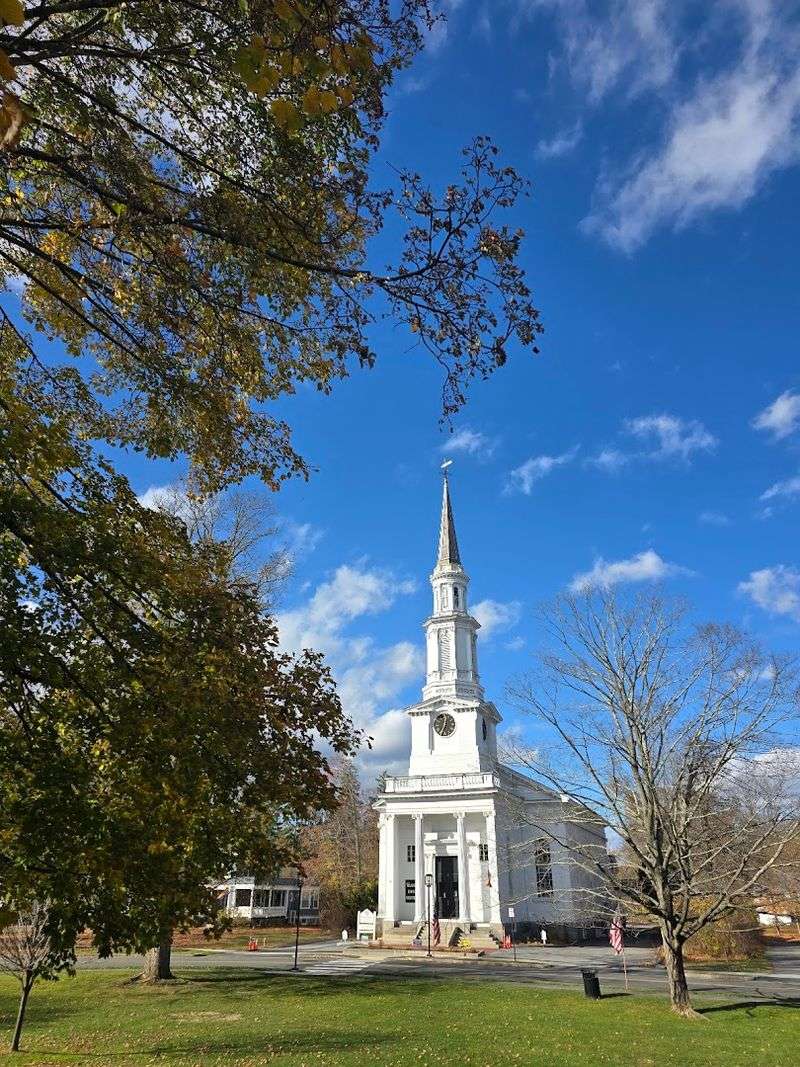
At first glance, the green looks modest, almost too small for an event remembered across the world.Yet that open space carries the weight of confusion, fear, and defiance from a dawn that changed political protest into bloodshed.
Few places make the beginning of the Revolution feel so immediate as Lexington Battle Green.
In the early hours of April 19, 1775, local militia assembled here as British regulars approached on their march toward Concord.No one knows with certainty who fired first, but the brief clash left eight colonists dead and marked the first fatalities of the Revolutionary War.
The encounter was militarily small, yet symbolically immense.
It showed that the imperial crisis had crossed a line that pamphlets and petitions could no longer contain.The green became sacred ground because ordinary townsmen stood in formation against the king’s troops, not as a grand army, but as a community determined to defend its rights.
When you visit Lexington Battle Green today, you are standing where uncertainty, restraint, anger, and courage collided in seconds, setting off a chain reaction that would transform Massachusetts, the colonies, and eventually the modern world.
7. Concord’s North Bridge – Concord, Middlesex County,
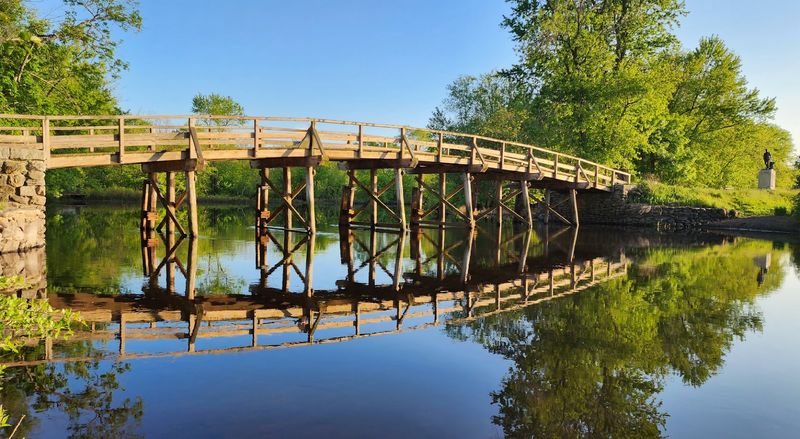
Water moves quietly beneath the bridge now, and the surrounding fields feel reflective rather than violent.That peaceful setting only sharpens the significance of what happened here, when hesitation gave way to decisive action.
Concord’s North Bridge remains one of the clearest symbols of a people crossing from resistance into war.
Later on April 19, 1775, colonial militia gathered near this bridge as British troops searched Concord for military stores.When smoke from the town suggested destruction, the provincials advanced.
At the bridge, they exchanged fire with British soldiers, killing and driving them back in a moment immortalized by Ralph Waldo Emerson as the “shot heard round the world.”
The phrase endures because the consequences extended far beyond one river crossing in Massachusetts.The clash demonstrated that colonial forces could coordinate, advance deliberately, and force imperial troops to retreat under pressure.
Visiting North Bridge today, you can feel why the site resonates so strongly: it marks a psychological turning point as much as a military one, the instant when local defense became organized rebellion and the possibility of American independence moved from argument into armed reality.
8. Faneuil Hall – Boston, Suffolk County,
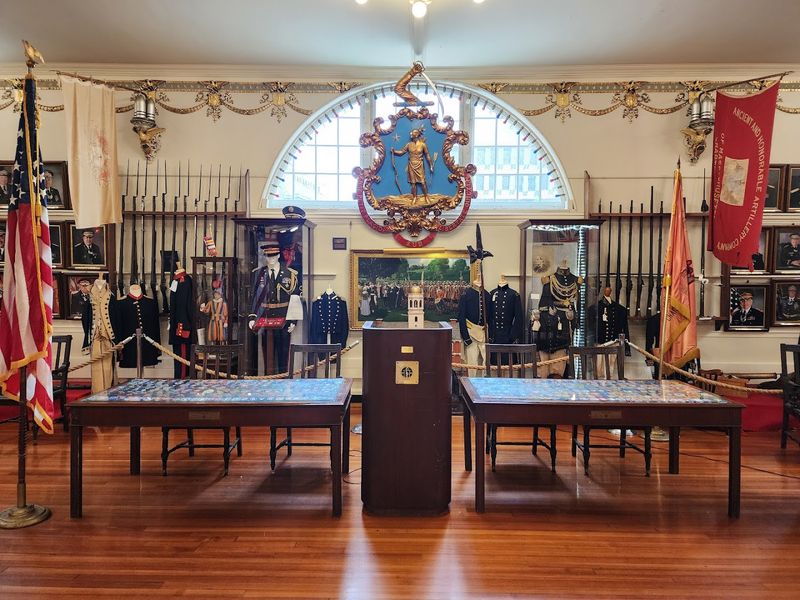
Noise, commerce, and debate have always belonged together in this part of Boston, and that energy is still easy to feel today.The building stands at the center of movement and argument, exactly where revolutionary ideas thrive best.
That civic electricity is why Faneuil Hall has long been called the Cradle of Liberty.
Before shots were fired, this meeting hall served as one of the city’s most important public spaces for protest against British policies.Bostonians gathered here to challenge taxes, condemn imperial overreach, and coordinate responses to escalating pressure from Parliament and royal officials.
Speakers and citizens alike turned local grievances into a broader political cause grounded in rights, representation, and resistance.
What changed America forever at Faneuil Hall was the habit of public political action.The Revolution did not emerge fully formed on a battlefield.
It grew in crowded rooms where merchants, laborers, artisans, and activists learned to organize, persuade, and present themselves as a people entitled to shape their own government.When you visit Faneuil Hall, you are encountering a place where language became power, where protest found structure, and where Boston’s restless public life helped prepare the colonies for independence.
9. Old South Meeting House – Boston, Suffolk County,
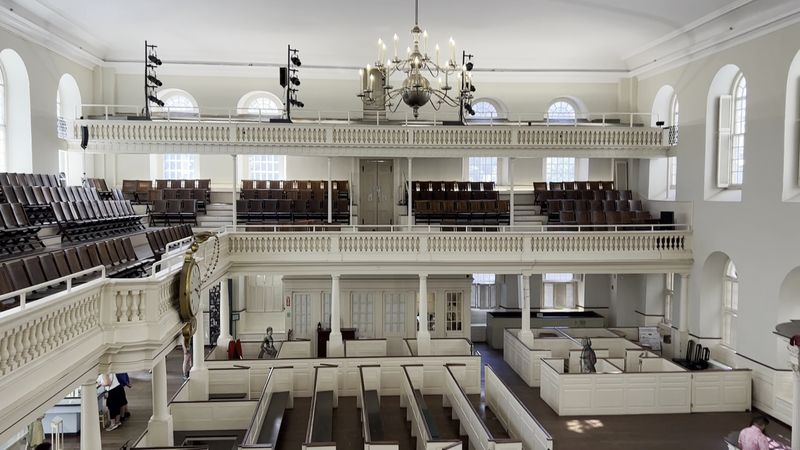
There is a special intensity in a room built for gathering, especially when you know thousands once packed inside to argue over liberty and submission.The stillness today cannot hide the pressure that once filled the air.
Old South Meeting House remains one of the most important indoor stages of the Revolution.
In the years before war, this meeting house hosted mass meetings that drew enormous crowds as Boston reacted to British taxation and occupation.Its most famous role came in December 1773, when colonists assembled here during the crisis over taxed tea.
After heated debate and failed compromise, participants headed toward Griffin’s Wharf, where the Boston Tea Party unfolded that night.
This site changed America forever because it shows how revolutionary action grew out of collective decision making.The Tea Party was dramatic, but the meeting that preceded it reveals a disciplined political culture willing to mobilize ordinary people around principle.
When you stand inside Old South Meeting House, you can imagine the frustration, urgency, and moral conviction that pushed Boston toward confrontation, helping transform imperial protest into a movement ready to accept risk, retaliation, and eventually the immense cost of independence.
10. Dorchester Heights – Boston, Suffolk County,
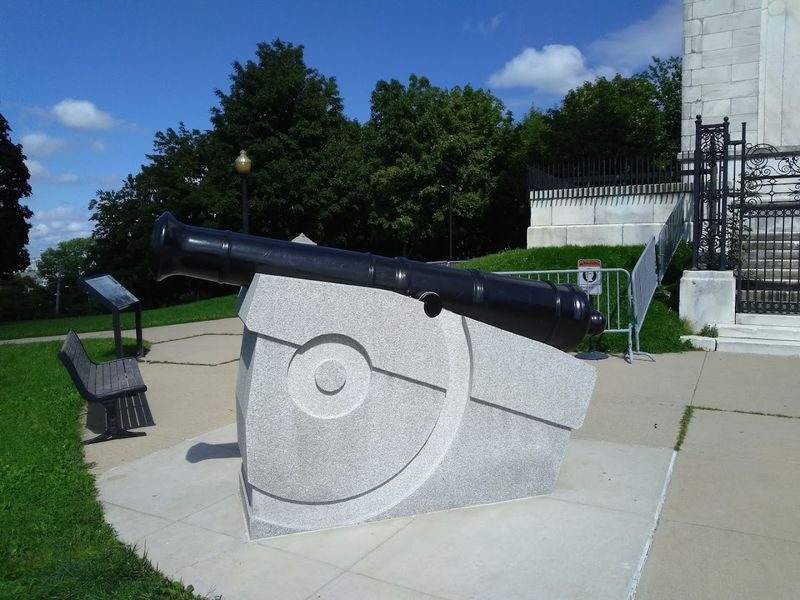
Wind off the harbor gives this hilltop a stark, commanding feel, and the view makes its military value obvious within seconds.From here, Boston and its waters seem exposed.
That simple geographic truth is what made Dorchester Heights one of the most decisive sites in the Revolutionary struggle.
During the siege of Boston in March 1776, General George Washington seized the heights and fortified them overnight with cannon hauled from Fort Ticonderoga by Henry Knox.When British leaders saw the American guns positioned above the city and harbor, they recognized the danger immediately.
Rather than launch a costly assault, British forces evacuated Boston on March 17, marking a major Patriot success.
The victory changed America forever because it demonstrated strategic ingenuity, logistical determination, and the growing effectiveness of Washington’s army.It also delivered an enormous morale boost at a moment when the revolutionary cause still seemed fragile.
Visiting Dorchester Heights today, you can appreciate how a single well-chosen position altered the balance in New England, preserved the rebel army, and proved that the struggle for independence could produce not just defiance, but clear, consequential victory against one of the world’s strongest empires.