
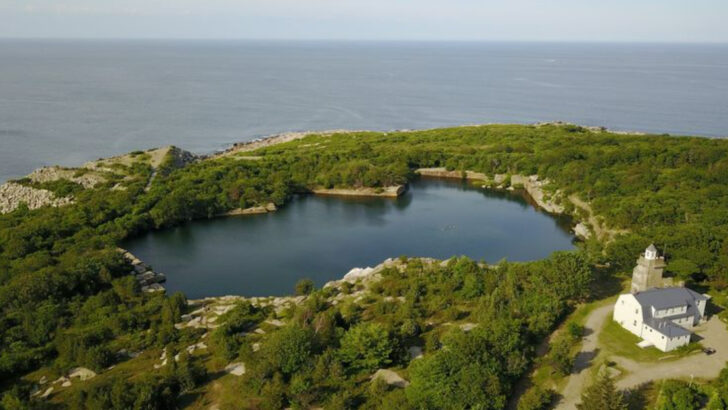
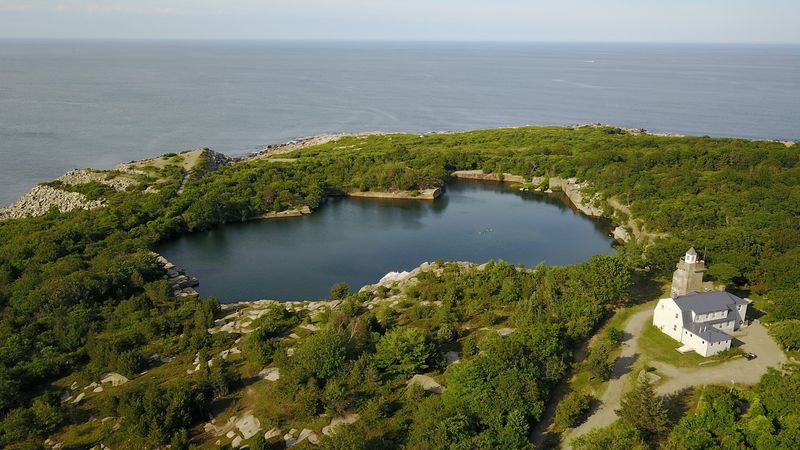
Tucked away at the northern tip of Cape Ann, Halibut Point State Park in Rockport, Massachusetts is one of those places that stops you in your tracks the moment you arrive. Ancient granite ledges, crashing Atlantic waves, and a flooded quarry that looks like something out of a painting all share the same 67 acres.
Whether you love hiking, history, or just sitting quietly by the ocean, this park has something real to offer. Pack a lunch, bring your curiosity, and get ready to explore one of New England’s most underrated coastal gems.
Arriving at Halibut Point State Park
That first breath of salty air when you step out of the car at Halibut Point State Park is something you genuinely do not forget. The park sits on Gott Avenue in Rockport, Massachusetts, just a short ten-minute drive from downtown.
You can also walk or bike from the village if you prefer to skip the parking fee entirely, which is a smart move on busy summer weekends.
The parking area is simple and straightforward, with a flat gravel lot across the road from the main entrance. Massachusetts residents pay $5 to park, while out-of-state visitors are charged $20.
Portable restrooms are available right in the lot if the visitor center facilities are closed.
Even before you reach the trail, the low rumble of distant waves sets a calm, unhurried tone for the whole visit. Bayberry bushes and low coastal shrubs line the entry path, and the air smells clean and briny.
Many visitors say the park feels like a hidden gem, even though it earns a remarkable 4.8-star rating from over 2,000 reviewers. Arriving early in the day gives you the best light for photos and the quarry’s vivid blue color.
Stepping into the Visitor Center
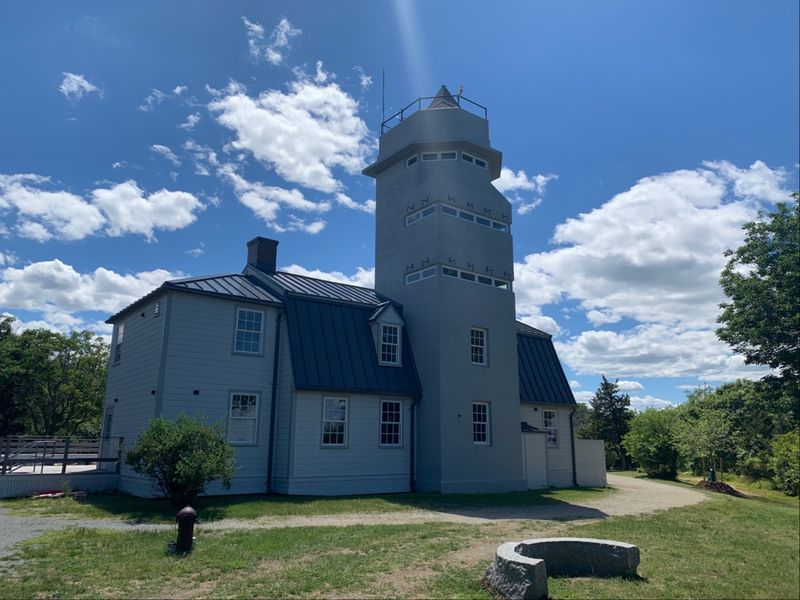
Built inside the shell of a World War II fire-control tower, the visitor center at Halibut Point State Park is one of the more unusual welcome buildings you will find at any Massachusetts state park. From the outside it looks almost like a small lighthouse, compact and sturdy, built to withstand coastal storms rather than impress tourists.
Inside, the exhibits tell two overlapping stories that most visitors never expected to find here.
One story is about granite. For decades, workers at the Babson Farm Quarry cut massive slabs of Cape Ann granite that ended up in bridges, buildings, and paving stones across the country.
Interpretive signs and old photographs bring that industrial era to life in a way that feels personal rather than textbook.
The second story is about wartime vigilance. During World War II, military personnel used this tower to scan the horizon for enemy ships moving along the New England coast.
Free trail maps are available near the entrance, and clean restrooms are inside when the center is open. Spending even fifteen minutes here before hitting the trails adds real depth to everything you see outside.
Hiking the Quarry Loop Trail
Flat, well-marked, and genuinely enjoyable for almost every fitness level, the Quarry Loop Trail is the backbone of a visit to Halibut Point State Park. The main loop runs about 1.6 to 1.8 miles depending on which spurs you add, and most visitors complete it in under an hour at a relaxed pace.
Blazes on trees and clear signage mean you are unlikely to get turned around even if this is your first time here.
What makes the trail interesting is how dramatically the scenery shifts. One stretch takes you through shady mixed woodland where the air feels cooler and quieter.
Then the trees open up and suddenly you are standing on wide, sun-warmed granite slabs with the wind coming off the water.
Gentle slopes keep the walk accessible for families with strollers, older hikers, and anyone who simply wants a peaceful coastal stroll without a serious workout. Dogs are welcome on a leash, which makes this trail especially popular with pet owners from across the region.
If you want to push the mileage a bit, connecting to the adjacent Halibut Point Reservation trails can bring your total to around 2.5 or 3 miles.
Viewing the Flooded Babson Farm Quarry
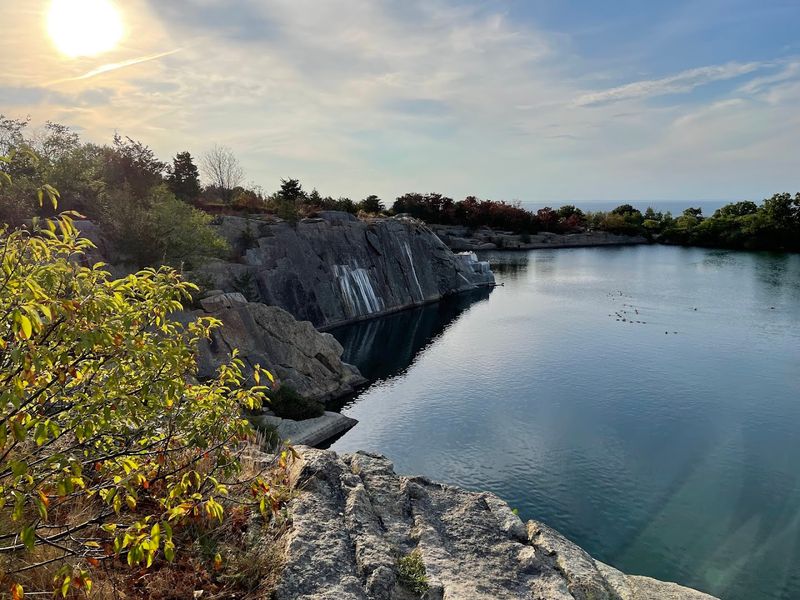
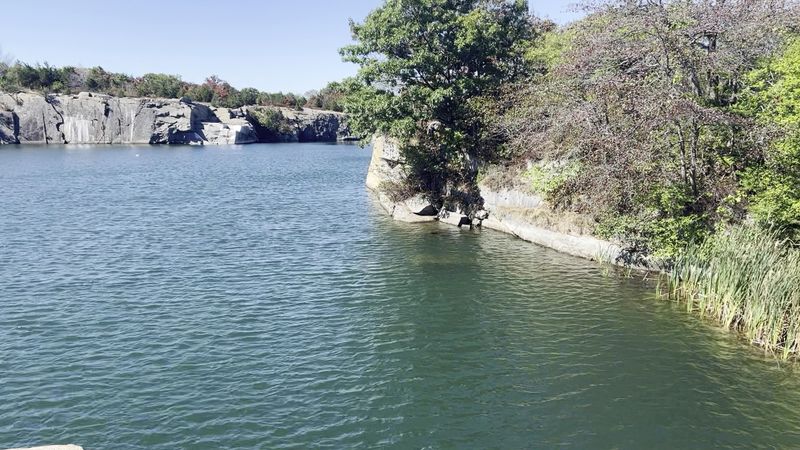
Nothing quite prepares you for the sight of the Babson Farm Quarry sitting right beside the open Atlantic. The quarry was last worked in 1929, and since then groundwater has slowly filled it to a depth of about 18 meters, creating a pool of strikingly clear blue-green water.
Old chisel marks and quarry scars are still visible on the surrounding rock walls, giving the place an eerie, time-capsule quality.
Standing at the edge and looking down at that still water while hearing waves crash just beyond the granite ridge is genuinely surreal. The contrast between the calm quarry surface and the churning ocean a short distance away is one of the most photographed sights on Cape Ann.
Visitors consistently call it one of the most unexpected and stunning things they have seen in Massachusetts.
A word of caution worth taking seriously: there are no guardrails along the quarry rim. The drop is steep and swimming is strictly prohibited for safety reasons.
Morning visits tend to reward you with the richest blue tones in the water, so try to arrive before midday if capturing that color is important to you. The reflection of the sky on calm days is absolutely worth the early start.
Scrambling Along the Rocky Shoreline Paths
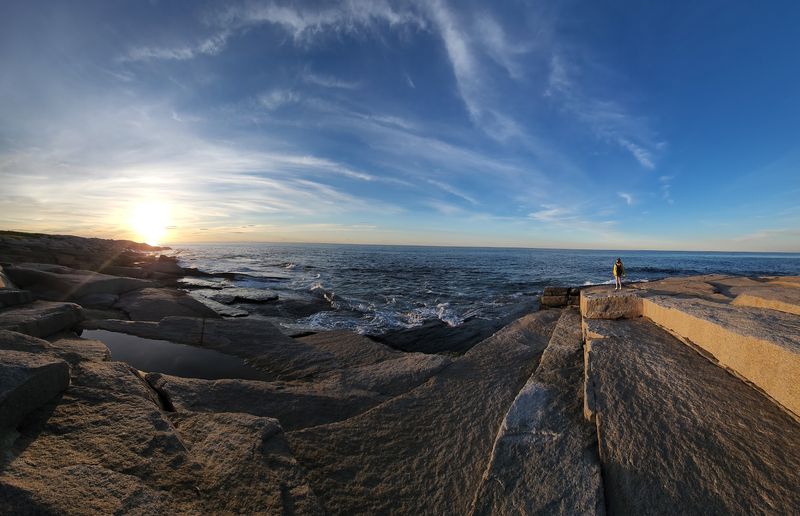
Few places in Massachusetts let you feel the raw, ancient power of the earth quite like the rocky shoreline at Halibut Point. The granite here is roughly 440 million years old, formed deep underground during a time when the land that would become New England was still being built by colliding tectonic plates.
Walking across it feels like stepping onto something that has been waiting here longer than almost anything else on the planet.
Narrow paths lead down from the main loop to the coastal ledges, where the rock surface is rough, uneven, and wonderfully grippy underfoot. Waves roll in and splash up between boulders on windy days, sending white foam flying and filling the air with a sharp, clean mist.
Sturdy shoes with good grip are genuinely important here, not just a suggestion.
Some of the boulders are car-sized or even larger, tumbled into dramatic arrangements by glaciers thousands of years ago. Picking your way carefully across them is part of the fun, though it does require attention and a sense of balance.
Children especially love scrambling here, but keep a close eye on little ones near the water’s edge where waves can be unpredictable and strong.
Checking Out the Tide Pools
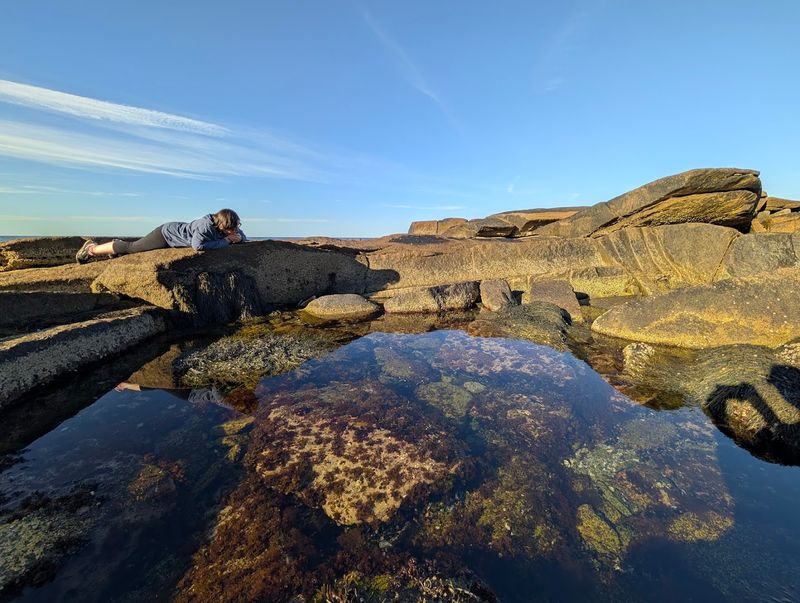
Low tide at Halibut Point reveals a whole miniature world tucked into the cracks and hollows of the granite shore. Periwinkle snails cluster in dense groups along wet rock edges, hermit crabs drag borrowed shells across sandy pool bottoms, and if you look carefully, you might spot a spiny sea star clinging to a shaded overhang.
These pools are little ecosystems unto themselves, constantly refreshed by the tide and constantly changing with the seasons.
Checking the tide chart before your visit makes a real difference. The pools are most accessible and richest with life during the two hours surrounding low tide.
Many visitors skip this step and arrive at high tide wondering where all the creatures went, so a quick search online the night before is worth the effort.
The golden rule of tide pool exploration is look without disturbing. Lifting rocks to peek underneath and then putting them back gently is fine, but removing animals or leaving rocks flipped over can damage the fragile community living there.
Mussels grow under seaweed in some pools and their shells are surprisingly sharp, so watch where small hands and bare feet land. The whole experience feels like finding a secret garden at the edge of the sea.
Enjoying the Wide Open Ocean Views
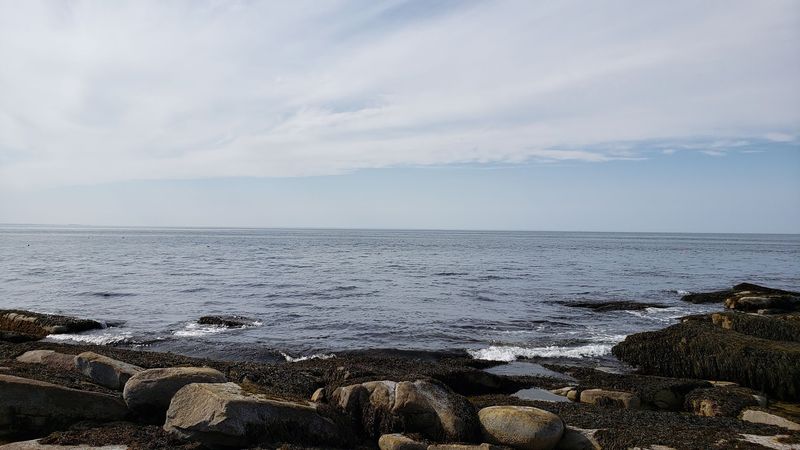
Stand on the headland at Halibut Point on a clear day and the world opens up in a way that feels almost cinematic. The Atlantic stretches out in every direction, and on the sharpest days you can see the Isles of Shoals sitting low on the horizon off the New Hampshire coast, roughly 30 miles away.
Some visitors with keen eyes and clear conditions have even spotted Mount Agamenticus in Maine, about 40 miles to the north.
There is something deeply calming about standing on solid ancient rock and watching that much open water. Fishing boats and lobster boats move slowly across the middle distance, and gulls wheel overhead on the updrafts that rise from the cliffs.
The sound is as impressive as the sight, a constant layered mix of wind, waves, and the occasional seal bark from somewhere below.
Sunsets here are legendary among locals and repeat visitors alike. The western sky catches fire while the ocean below turns shades of copper and violet, and the granite ledges glow warm orange in the last light.
Sunrise visits are quieter and equally beautiful, with softer pink and gold tones reflecting off the water before the crowds arrive for the day.
Climbing the WWII Fire-Control Tower
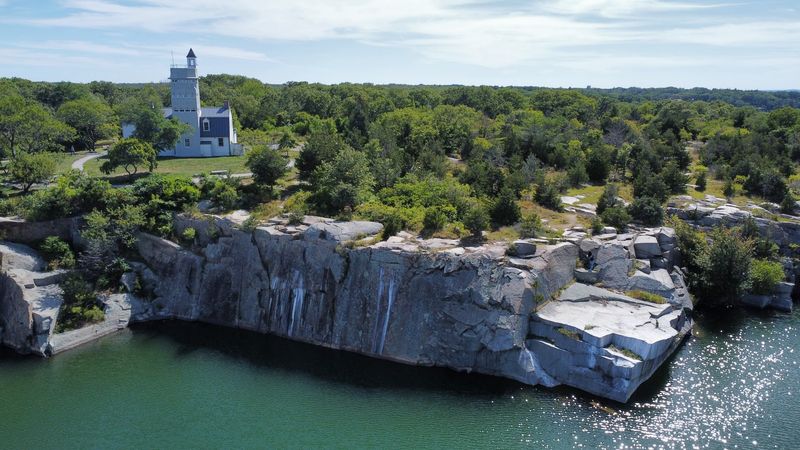
During World War II, the United States military built fire-control towers at strategic points along the Atlantic coast to watch for enemy submarines and surface ships. The tower at Halibut Point was one of these stations, manned by soldiers scanning the horizon for threats that felt very real at the time.
Standing inside it today, that history becomes surprisingly easy to imagine.
The tower now houses the park’s visitor center on its lower levels, but the structure itself still carries the weight of its wartime purpose. Climbing toward the upper observation level rewards you with views that stretch well beyond what you get from the granite ledges at sea level.
The added elevation pulls more of the coast into view, and on clear days the distant smudges of islands and headlands appear with satisfying sharpness.
Kids tend to find the tower fascinating precisely because of its military backstory, which makes it a natural conversation starter about history in a setting that feels adventurous rather than classroom-like. The combination of cold war-era architecture and wild coastal scenery is genuinely unusual.
Many visitors say the tower alone is worth adding to the itinerary, even if the rest of the park would already justify the trip.
Having a Picnic on the Granite Ledges

Eating lunch with the Atlantic Ocean in front of you and solid 440-million-year-old rock beneath your blanket is a hard experience to top. Halibut Point offers picnic tables near the visitor center, but the real prize is finding a flat granite ledge closer to the water and spreading out there instead.
The rock stays cool in the morning and warms nicely by midday, making it a surprisingly comfortable natural dining surface.
Pack everything in before you arrive, since there are no food vendors inside the park. A simple lunch of sandwiches, fruit, and a cold drink feels elevated when the background is that dramatic.
The sound of waves provides better ambiance than any restaurant playlist, and the breeze keeps things from feeling too hot even in midsummer.
One firm rule worth remembering: open fires and portable grills are not permitted anywhere in the park. This keeps the vegetation and the air clean for everyone, and it also protects the fragile coastal ecosystem from accidental damage.
Cleanup is equally important, since there are no trash cans along the trails themselves. Pack out everything you bring in, and the park stays beautiful for the next visitor, and the one after that.
Watching for Birds and Wildlife

Halibut Point sits right along the Atlantic Flyway, the major north-south corridor that millions of migratory birds follow each spring and fall. That geography makes the park a genuinely productive birdwatching spot, particularly during September and October when shorebirds, warblers, and raptors move through in waves.
Patient observers with a decent pair of binoculars can rack up an impressive species list in a single morning visit.
Year-round residents are worth watching too. Herring gulls and great black-backed gulls patrol the shoreline constantly, and common eiders float in rafts just offshore in winter.
The bluffs above the water are covered in low-growing bayberry and shadbush, which provide food and shelter for sparrows, thrushes, and finches passing through in large numbers during peak migration weeks.
Deer are spotted regularly in the wooded sections of the trail, especially in the early morning and late afternoon when they venture out from the cover of the trees. One reviewer described seeing a large deer at sunset, which turned an already lovely evening walk into something genuinely memorable.
The park’s relatively low visitor numbers compared to busier coastal spots mean wildlife encounters here feel natural and unhurried rather than staged.
Linking Up with the Atlantic Path in the Reservation
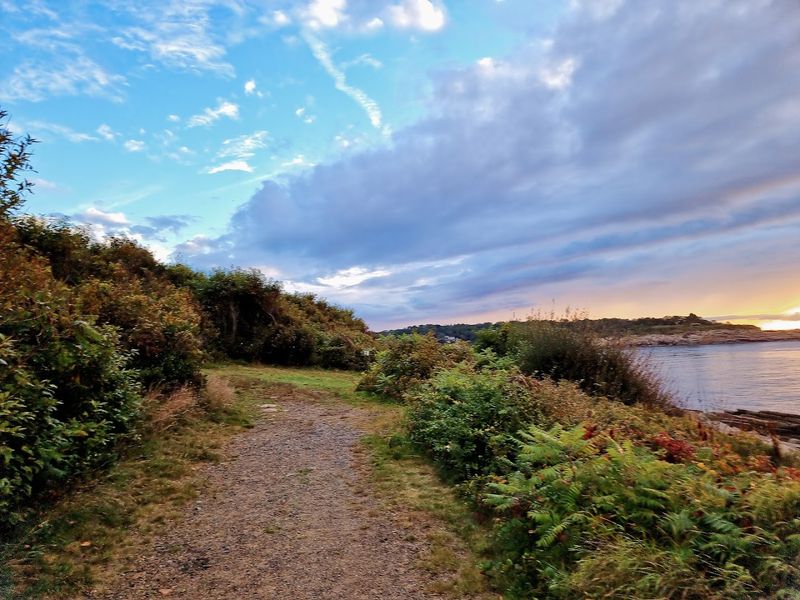
Right next to the state park, the Trustees of Reservations manages Halibut Point Reservation, a separate but adjacent property that feels like a seamless extension of the same wild coastal landscape. The two areas share a parking lot and connect via trail, so most visitors wander between them without even realizing they have crossed a property line.
Together they offer a longer, more varied experience than either one provides alone.
The reservation’s section of trail follows the bluffs along exposed, weather-beaten terrain where the vegetation grows low and wind-sculpted. Extra shoreline views open up here, including angles on the granite coast that you simply cannot get from inside the state park boundaries.
The Atlantic Path, which runs along Rockport’s outer coast, connects through the reservation for those who want to extend their walk even further.
Combining both properties gives you somewhere between 2.5 and 3 miles of walking, which is a satisfying distance without being exhausting. The shared landscape of ancient granite, salt-pruned shrubs, and open ocean horizon ties the two areas together so naturally that the whole thing reads as one continuous rocky coastline rather than two separate managed parcels.
It is a genuinely rewarding way to experience the full scope of this corner of Cape Ann.
Continuing Your Day in Nearby Rockport

After a morning at Halibut Point, the natural next move is heading into Rockport, just a ten-minute drive down the road. The town is one of those rare New England villages that manages to feel genuinely charming without trying too hard, full of independent galleries, small restaurants, and streets that are easy and pleasant to wander on foot.
Bearskin Neck is the place most visitors head first, a narrow peninsula lined with converted fishing shacks that now house art studios, gift shops, and casual eateries. At the far end you get a wide view of the harbor and the open ocean beyond.
The famous red fishing shack known as Motif No. 1 sits nearby and has been painted by more artists than almost any other building in America, which tells you something about how photogenic this whole area is.
A lobster roll from one of the harbor-side spots makes a satisfying reward after a morning on the rocks. Rockport is a dry town, meaning no alcohol is sold within its borders, which surprises some visitors but keeps the atmosphere relaxed and family-friendly.
The combination of a state park morning and a Rockport afternoon makes for a full, memorable day on Cape Ann without ever feeling rushed.